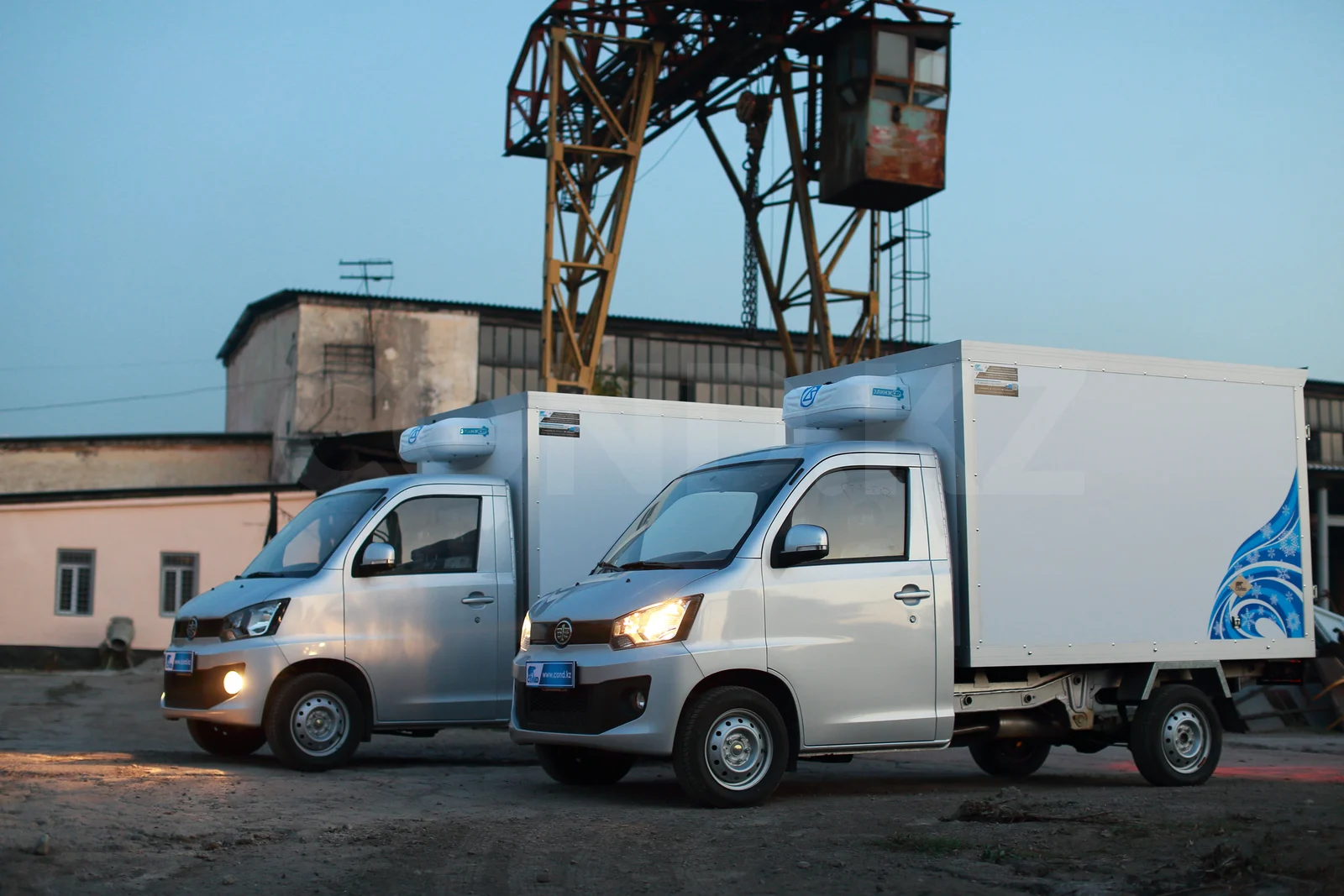
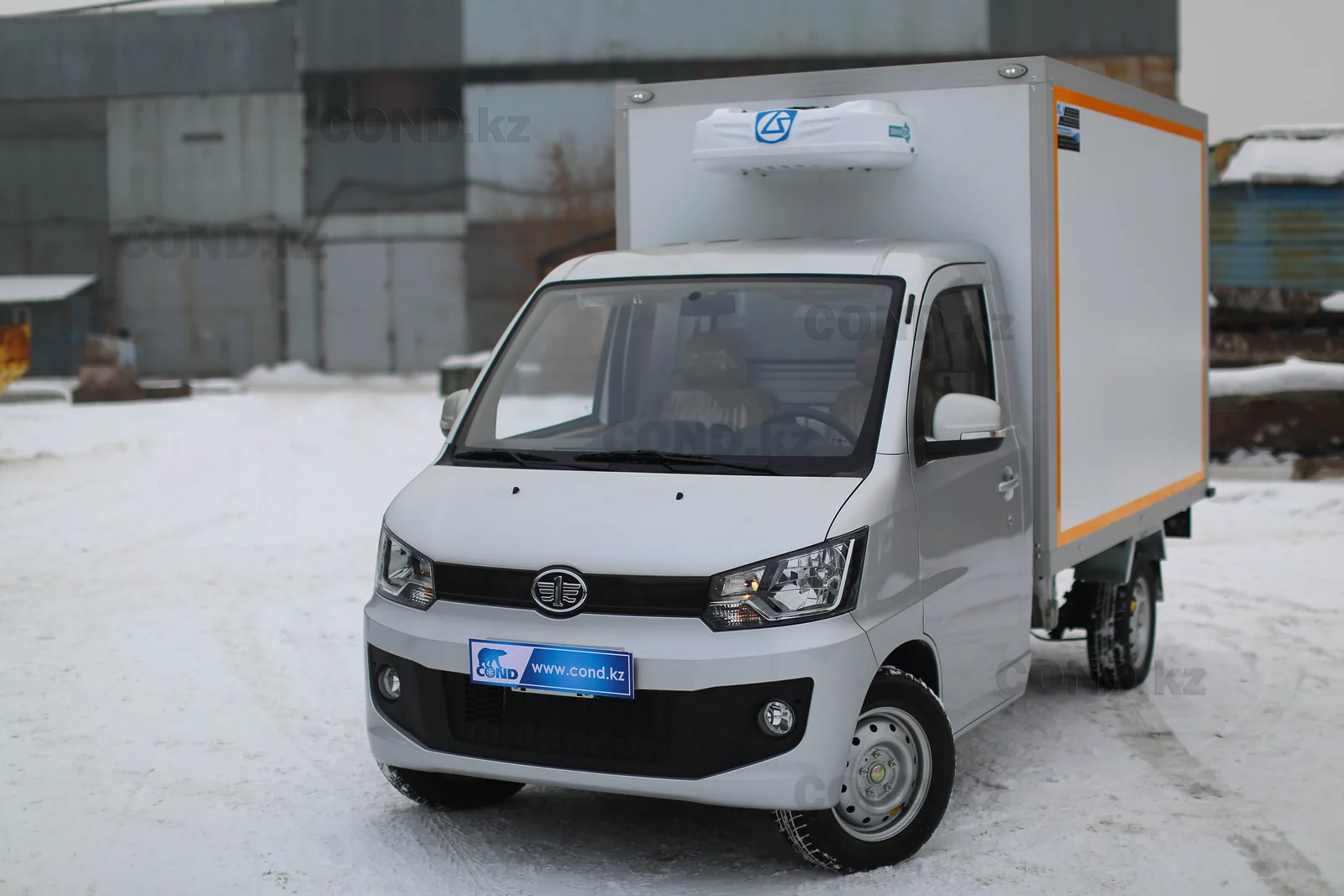
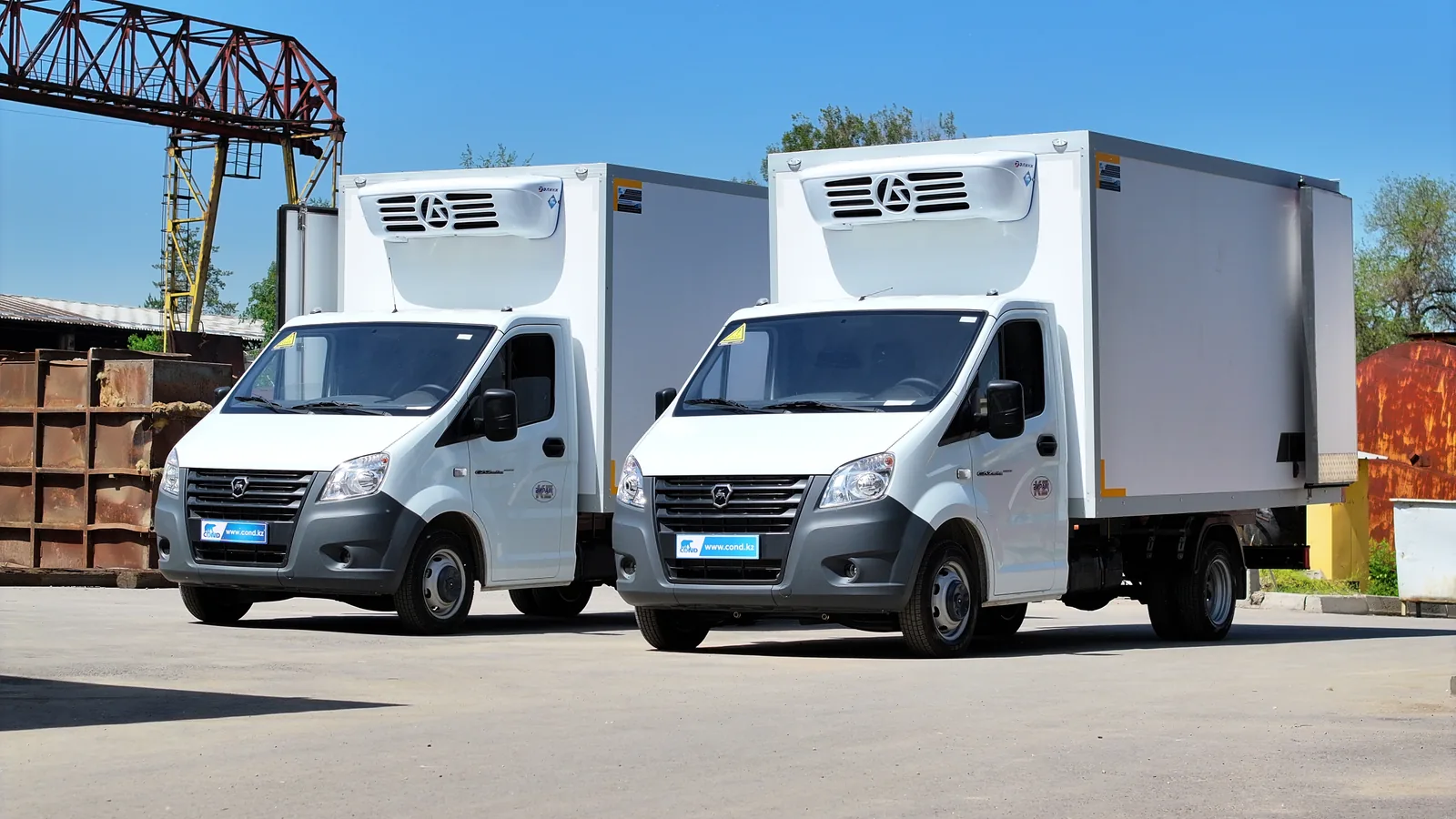
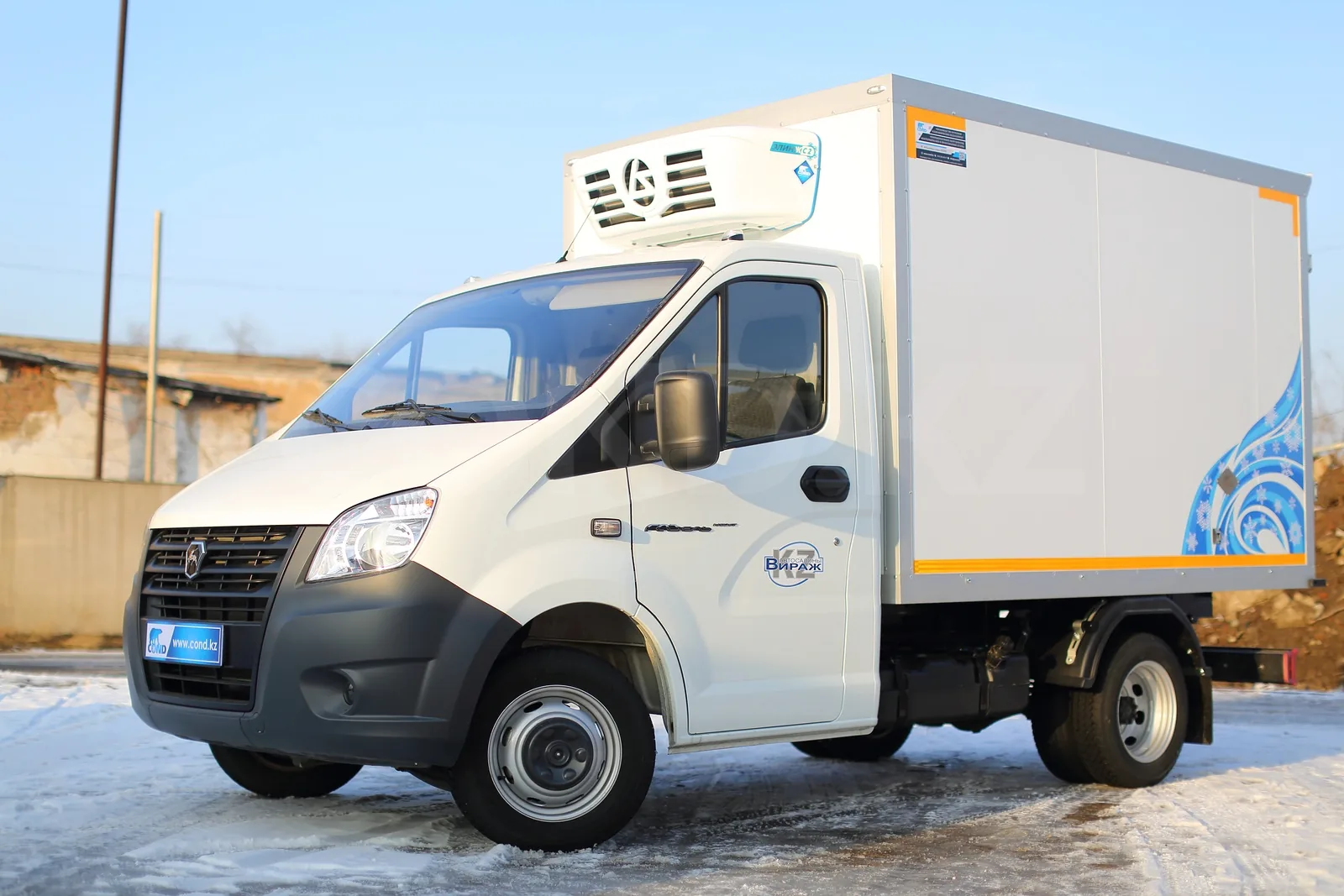
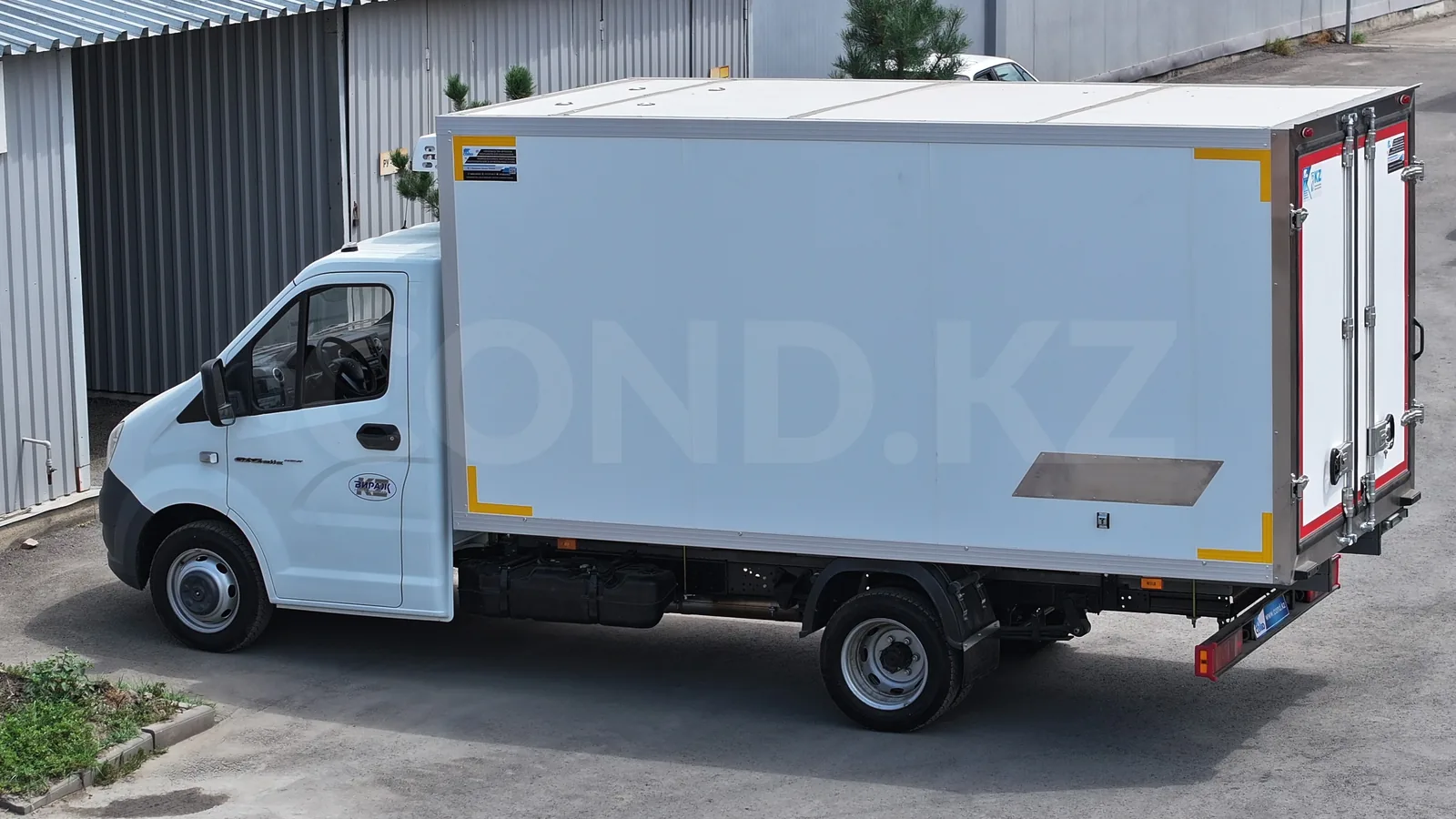
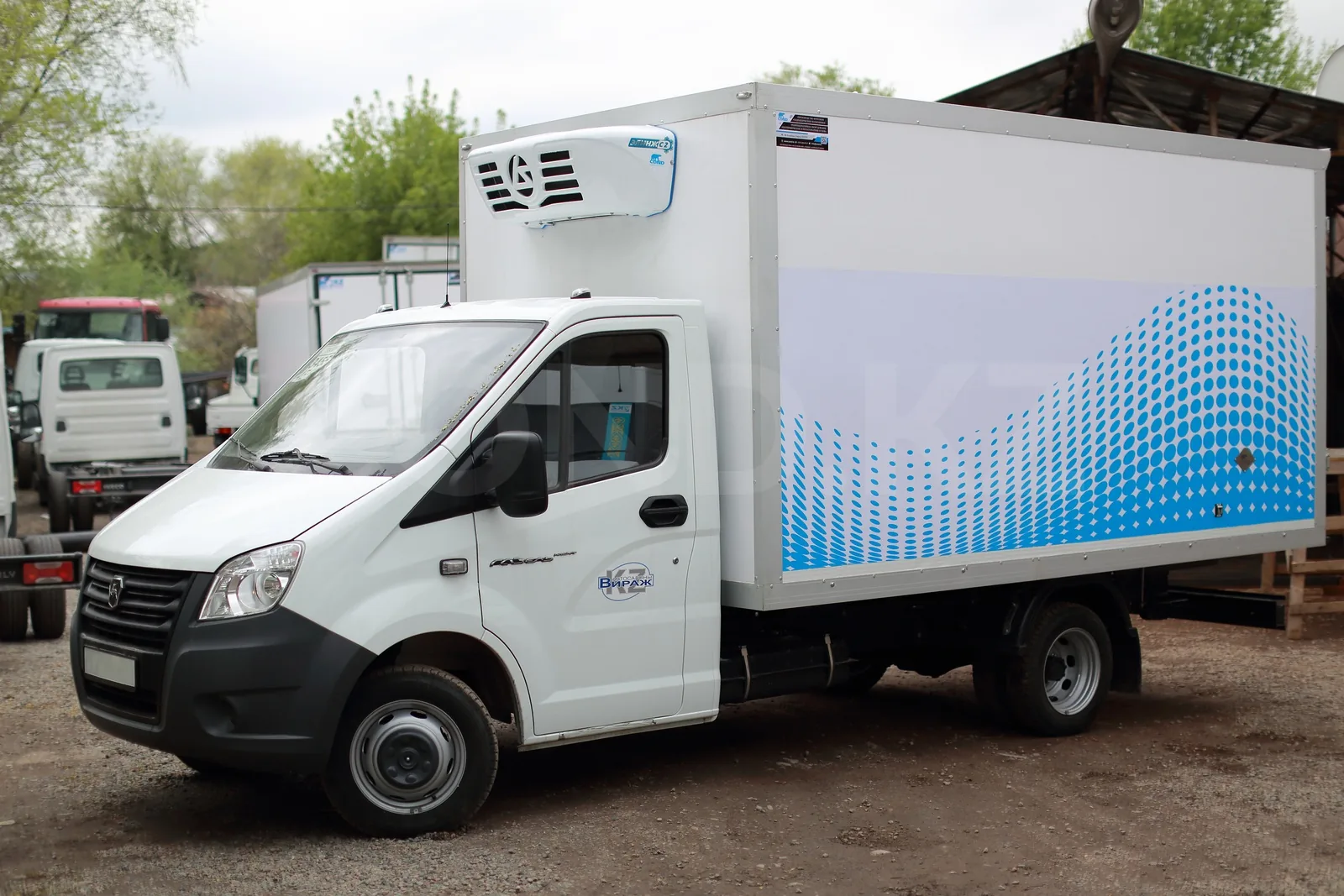
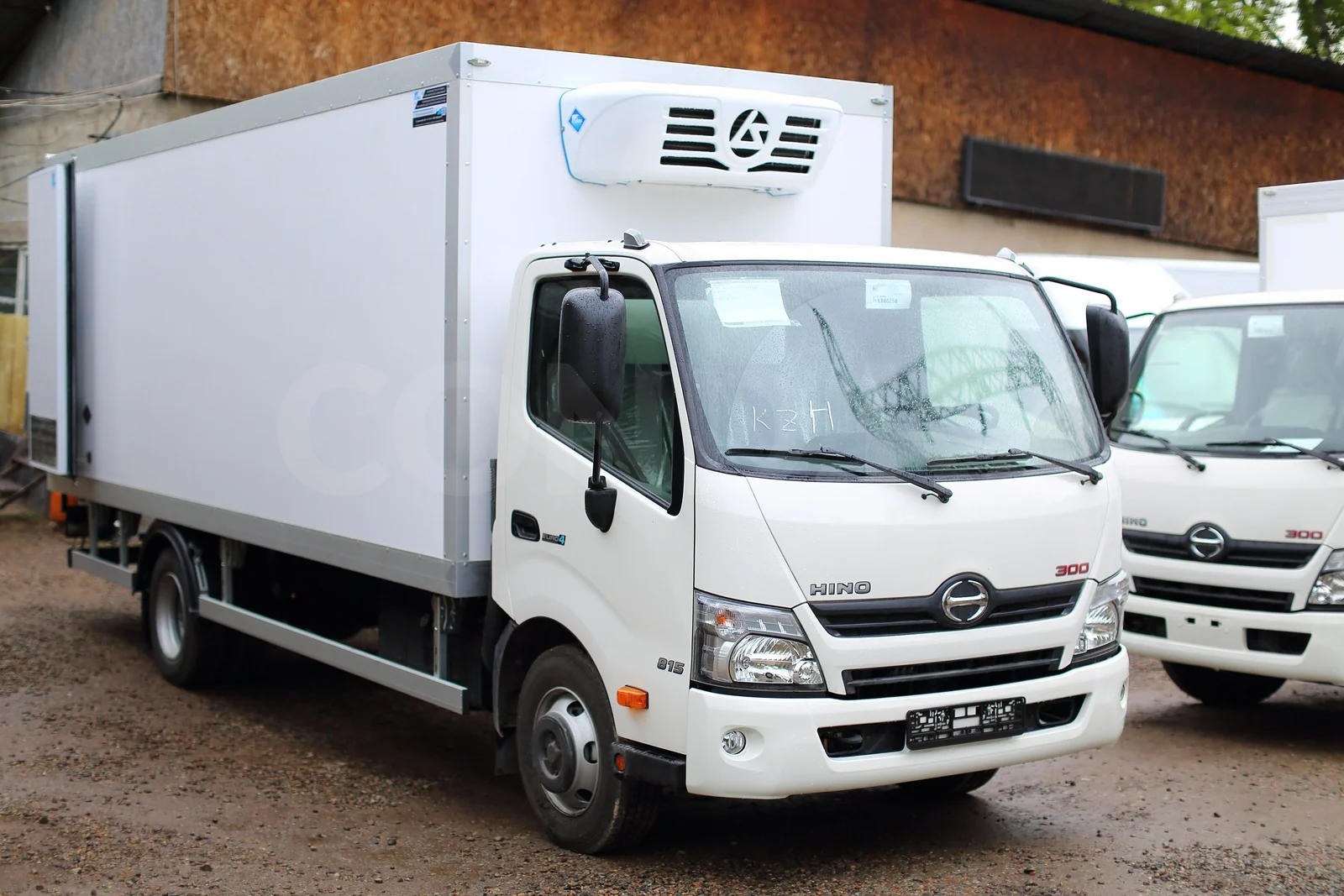
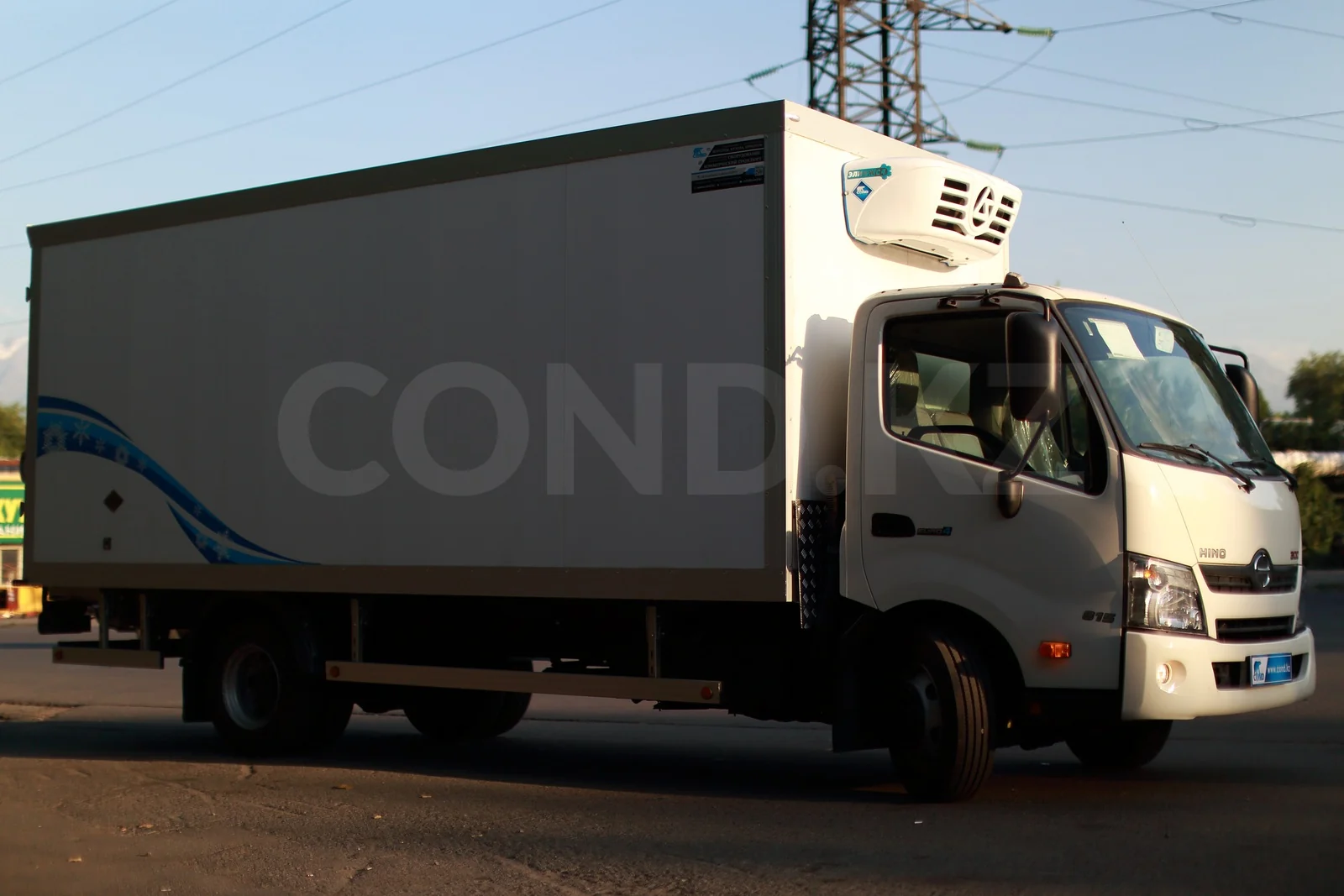
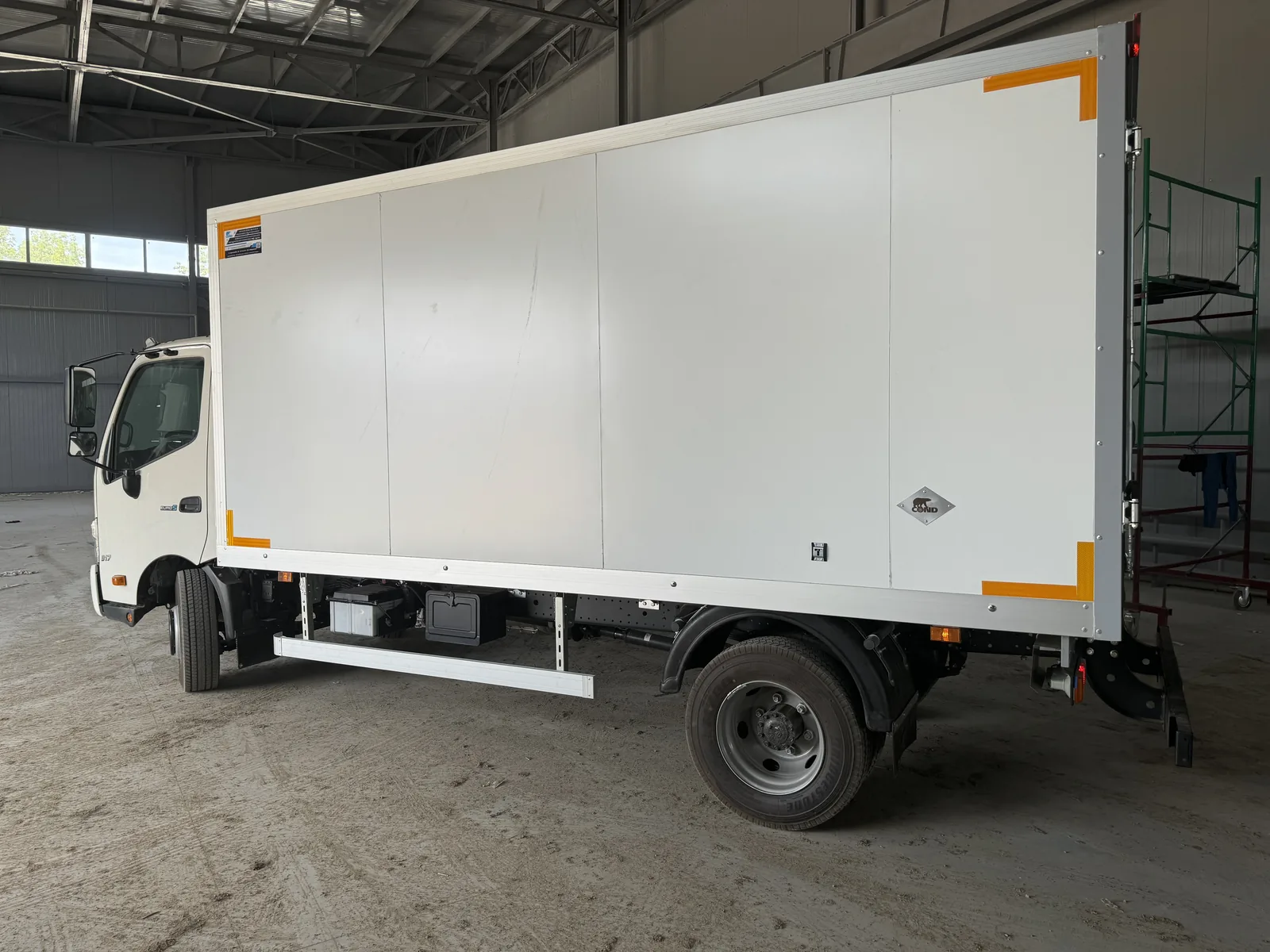
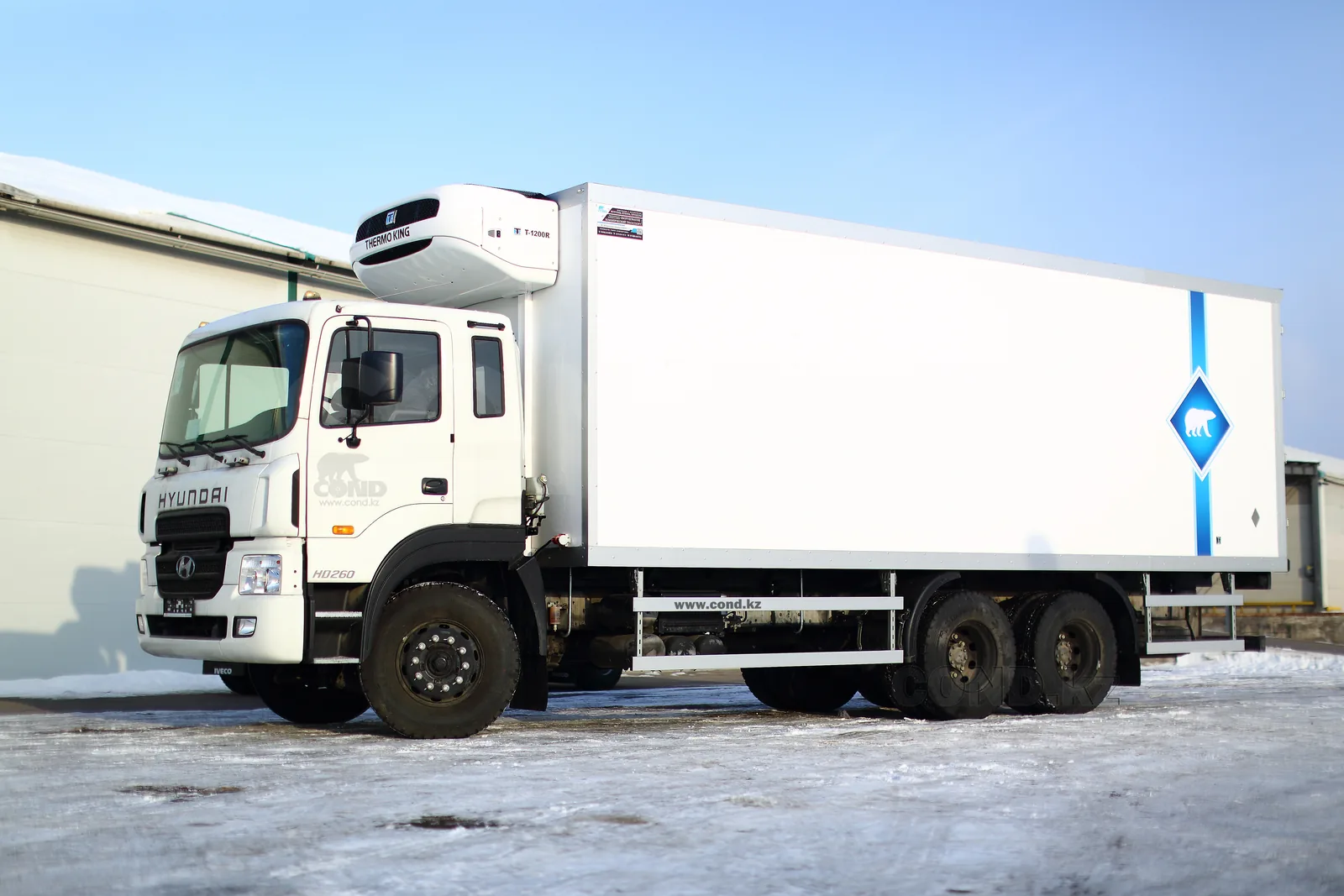
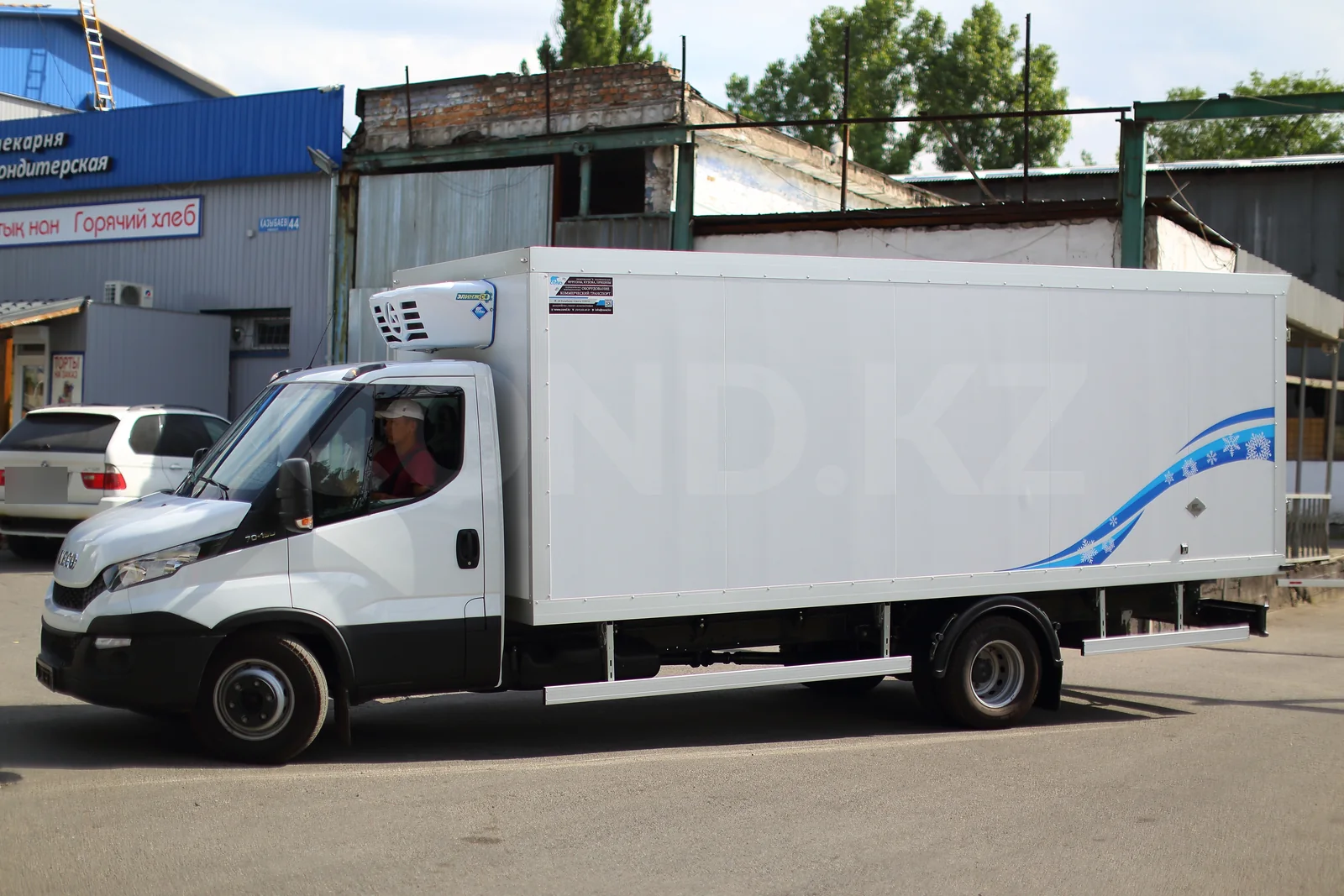
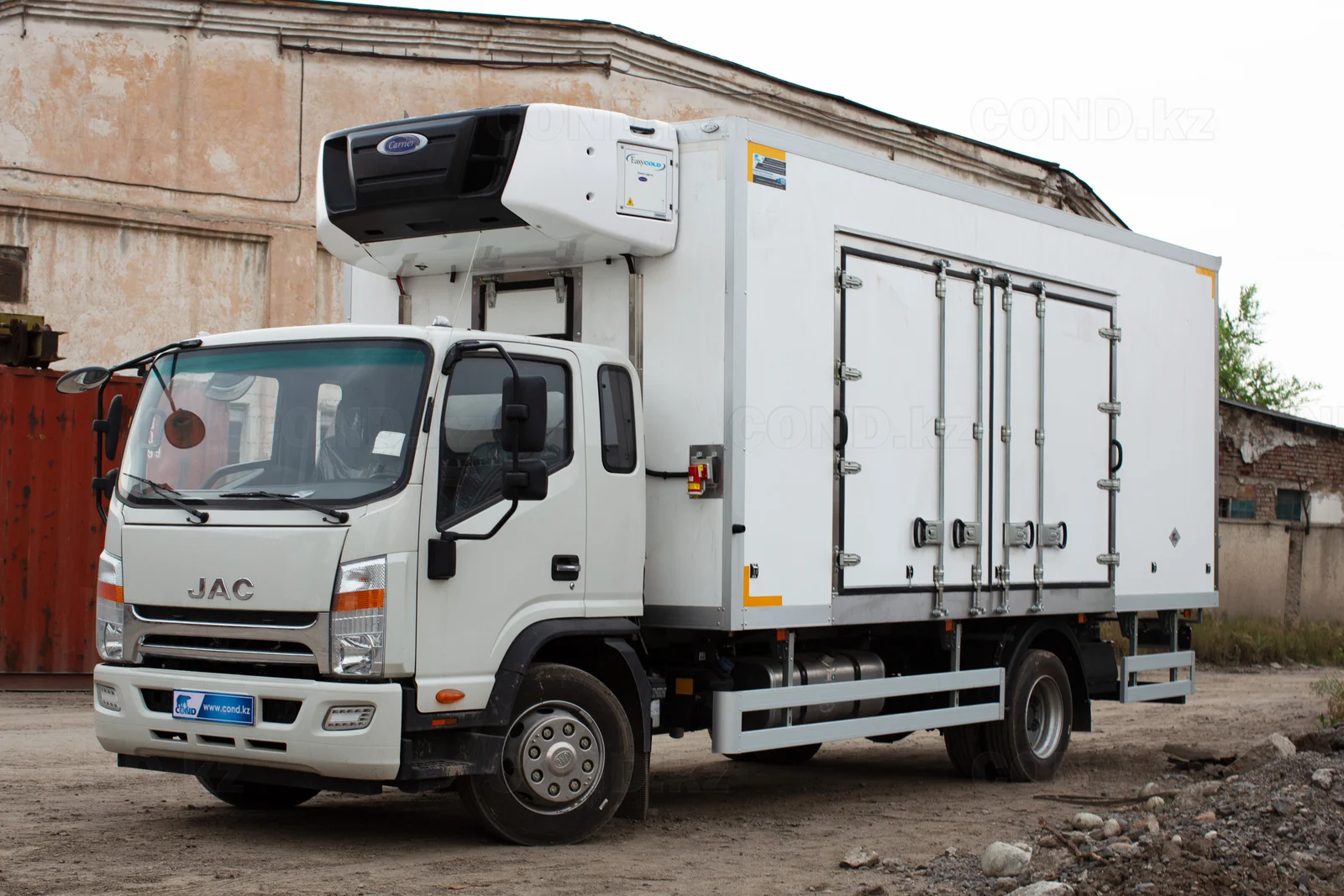
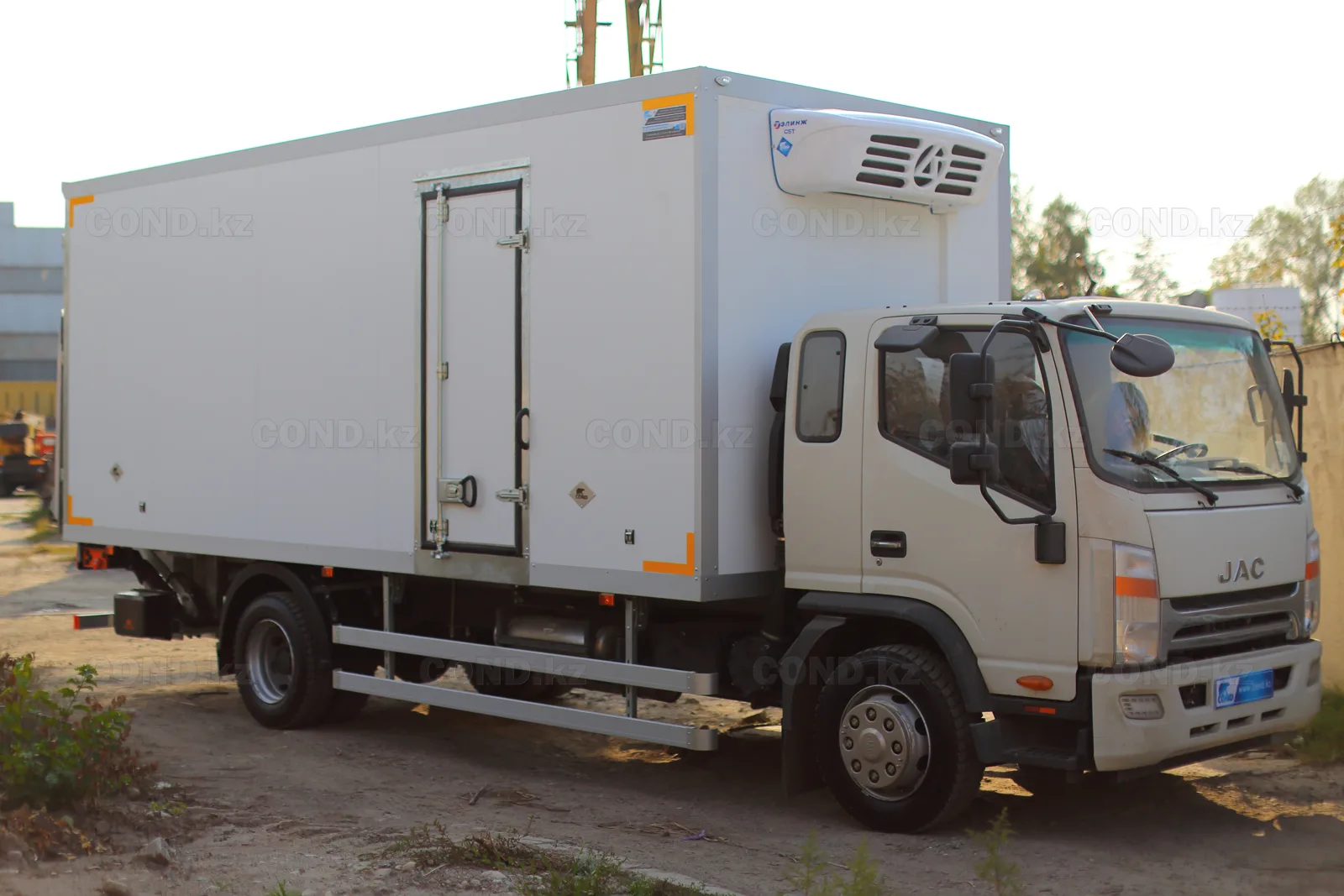
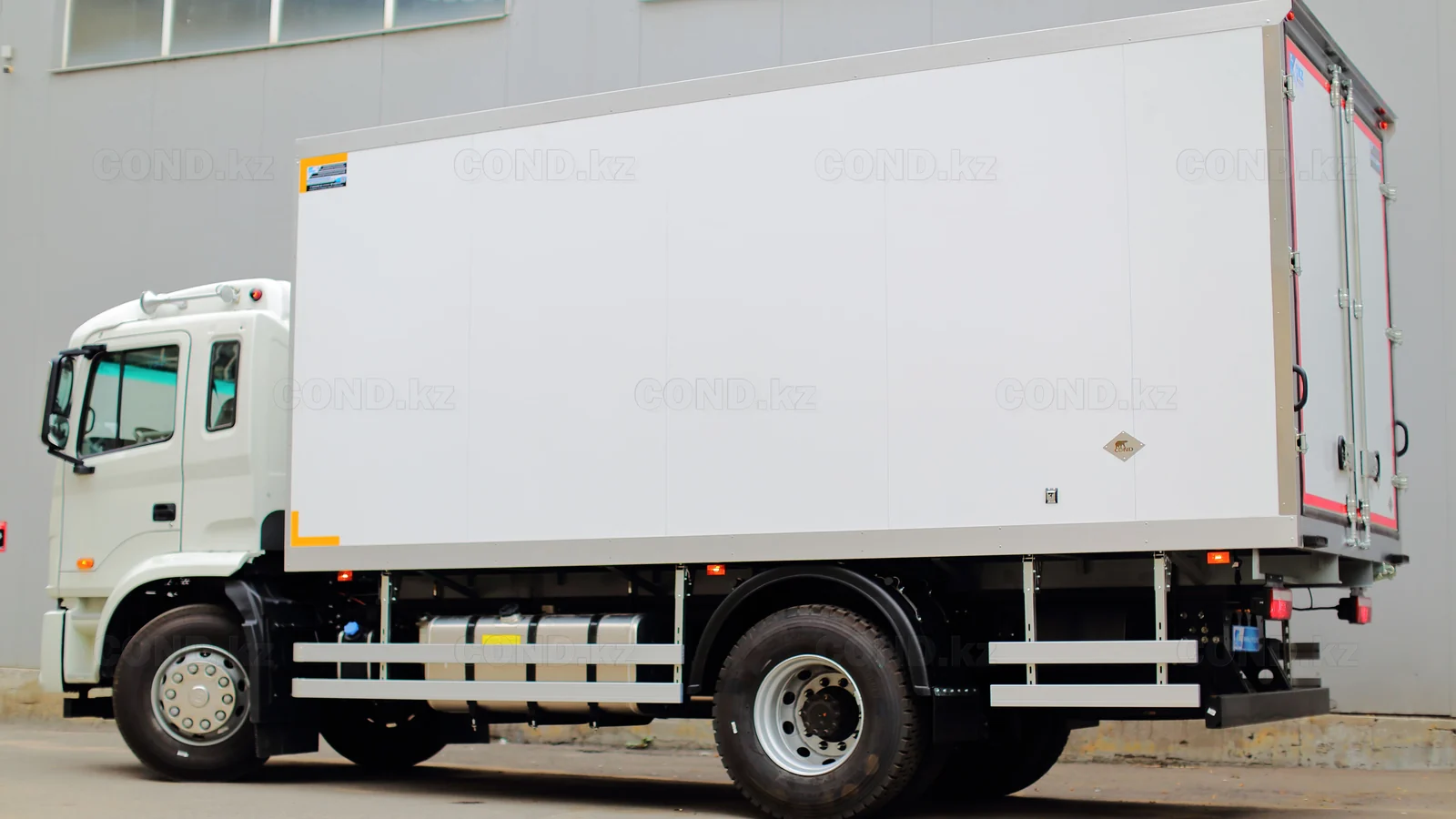
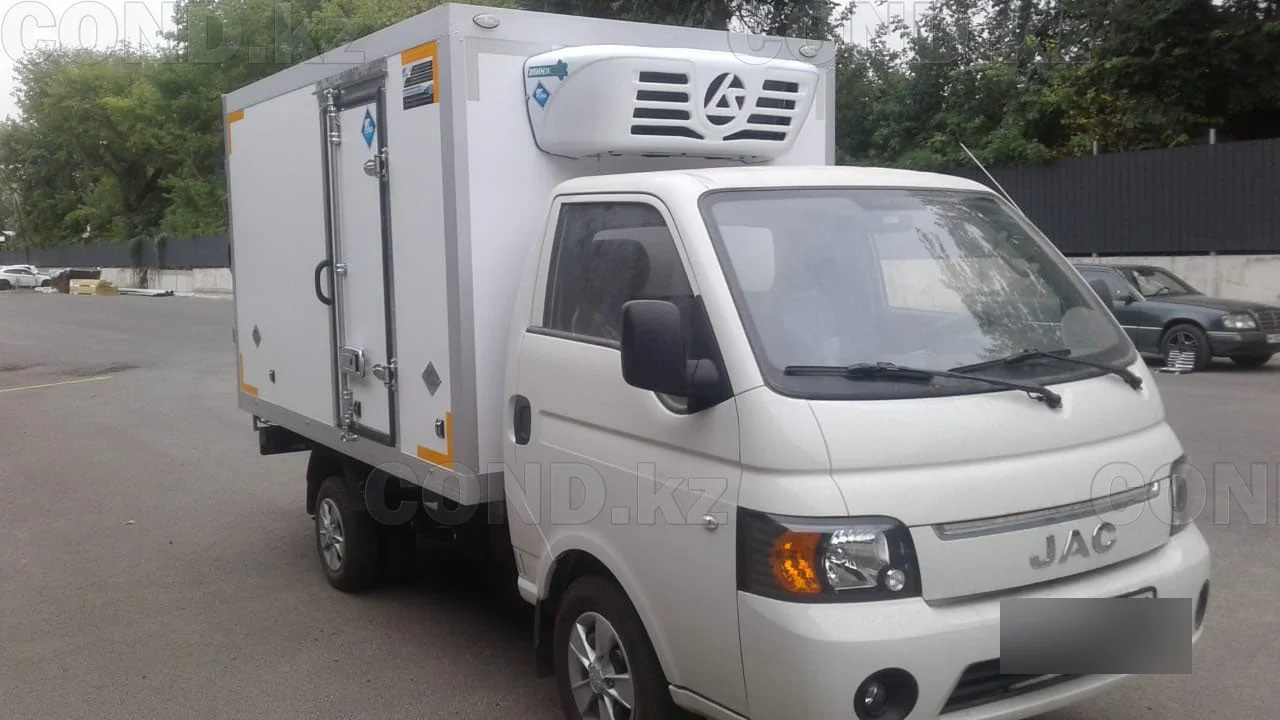
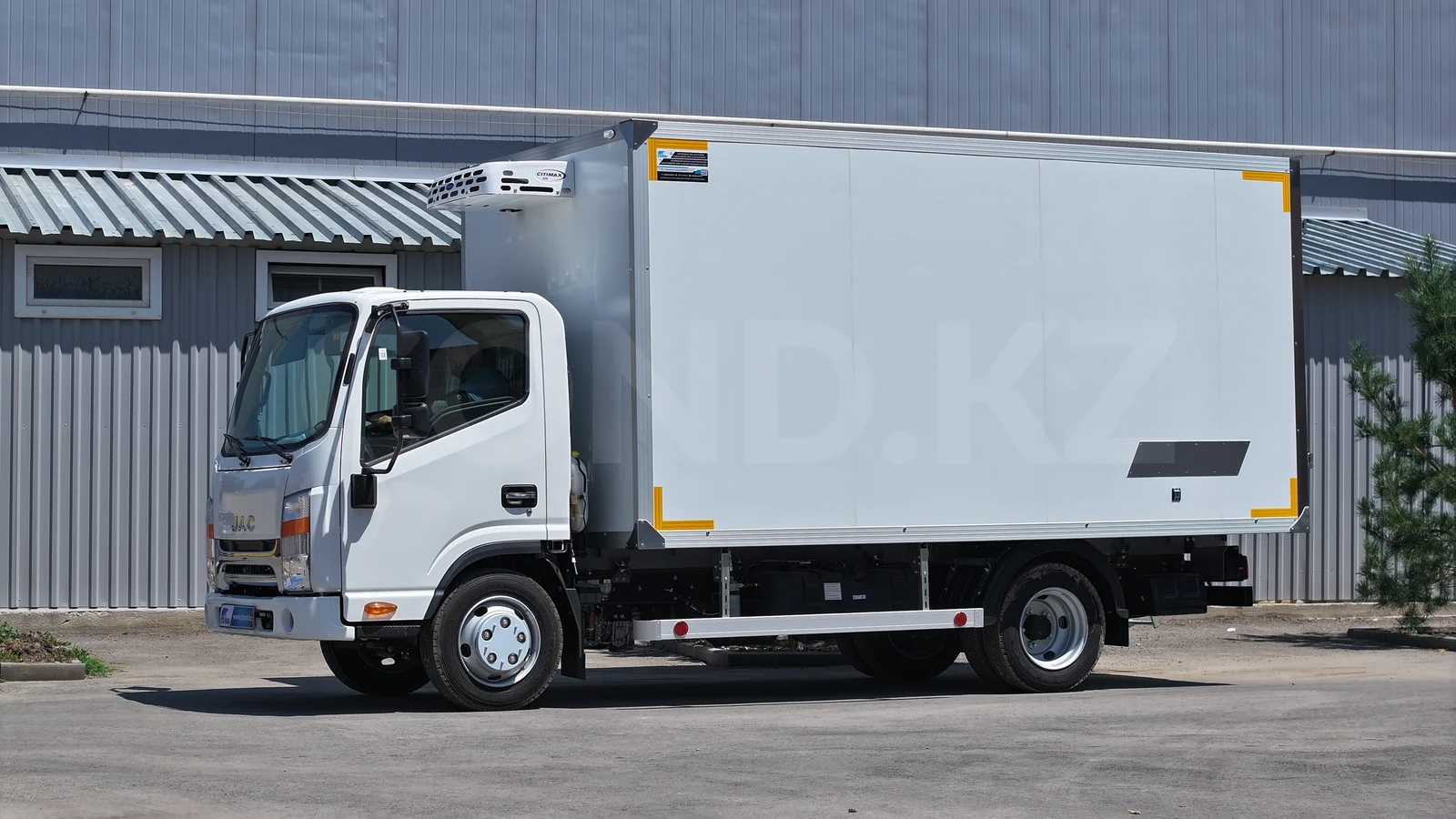
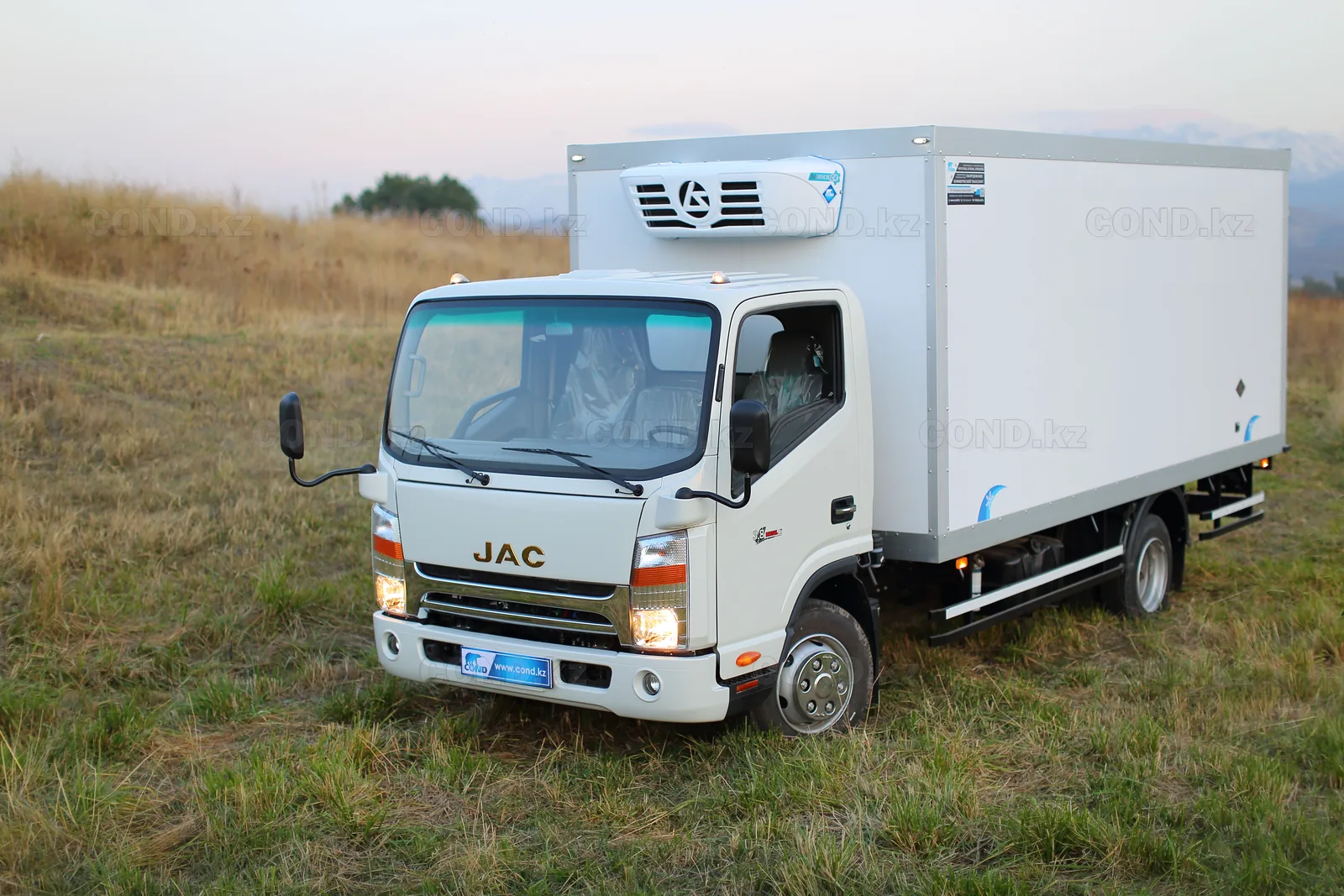
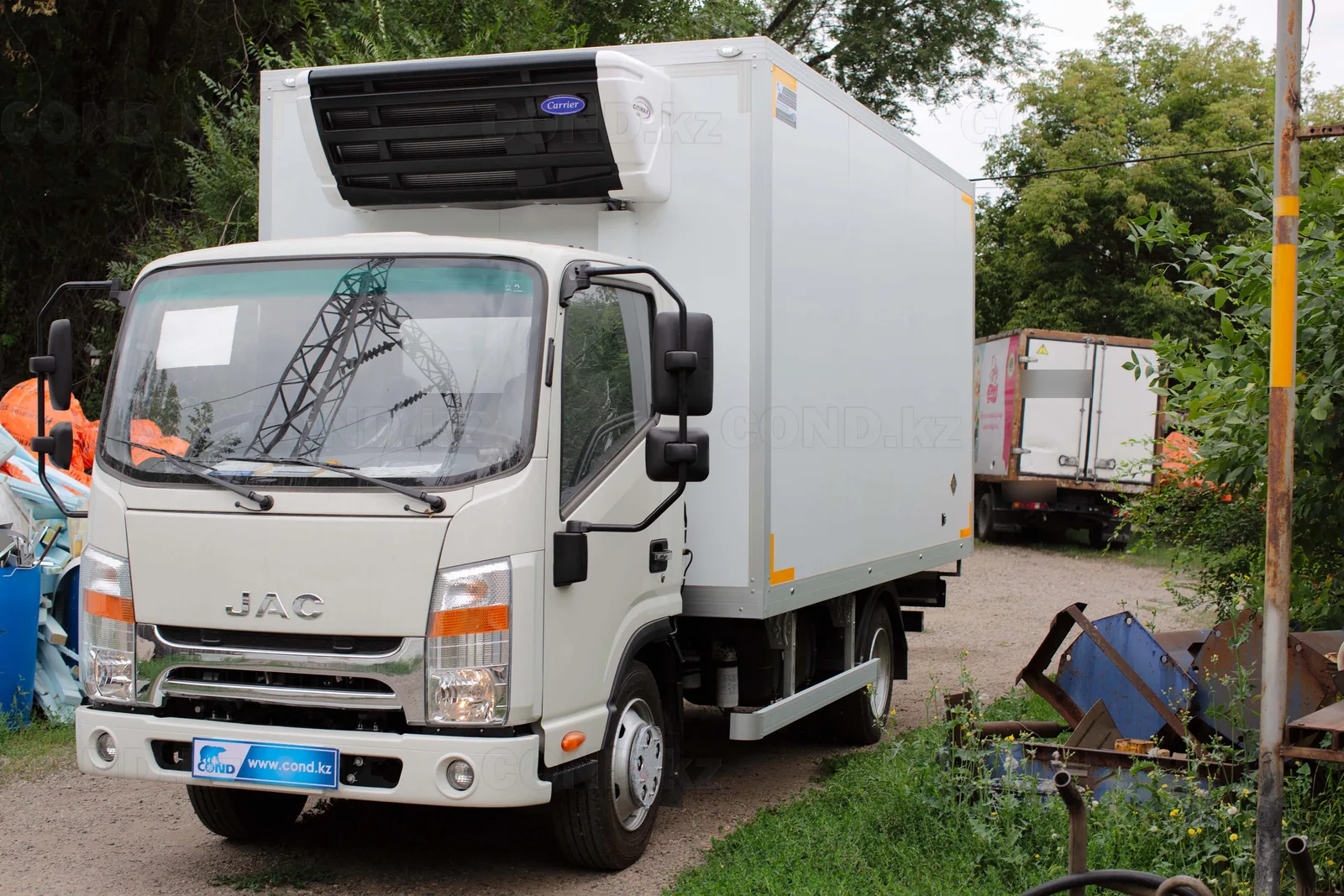
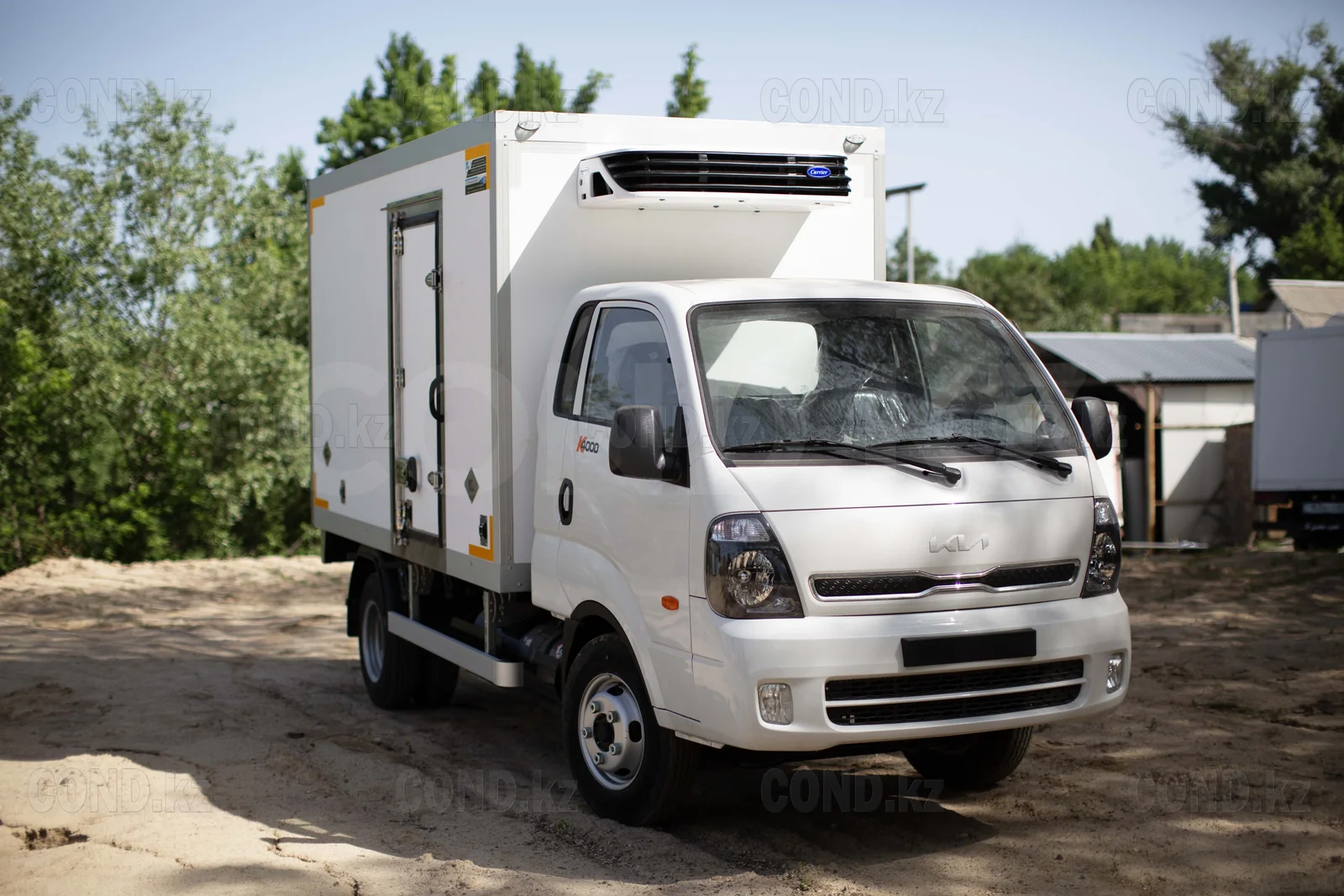
JAC M4 refrigerated panel van walk-around — compact, reliable, convenient

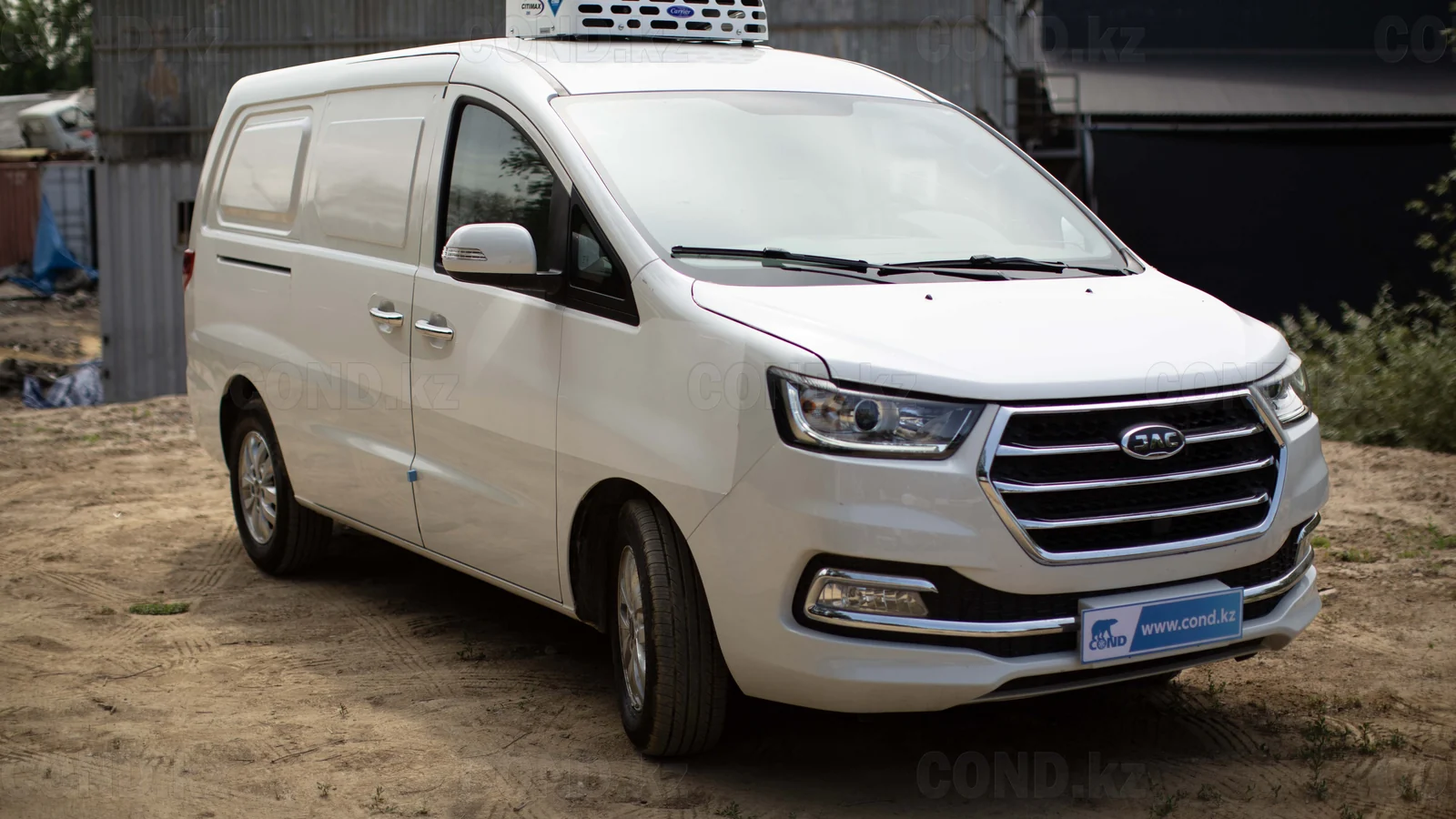

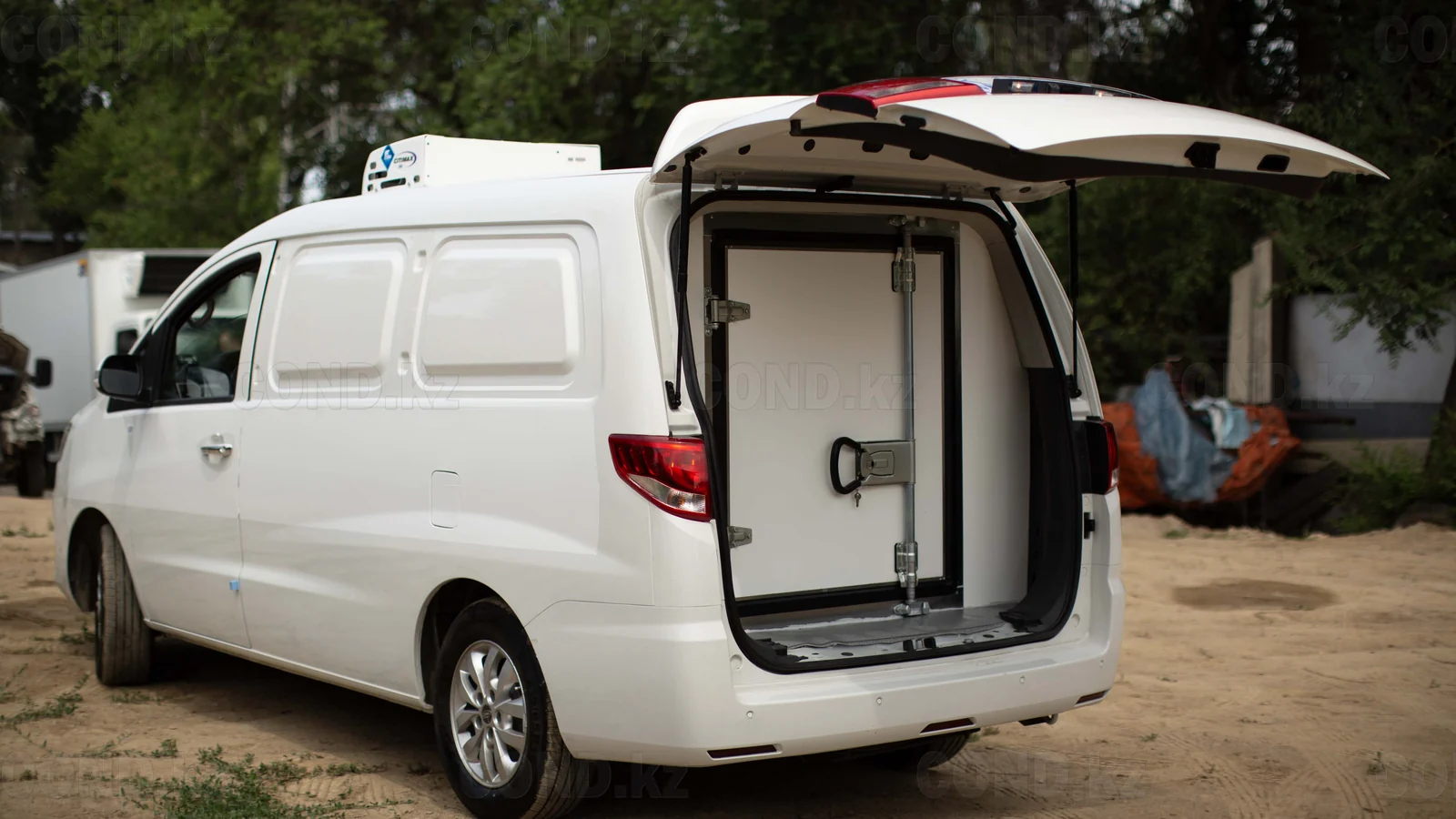
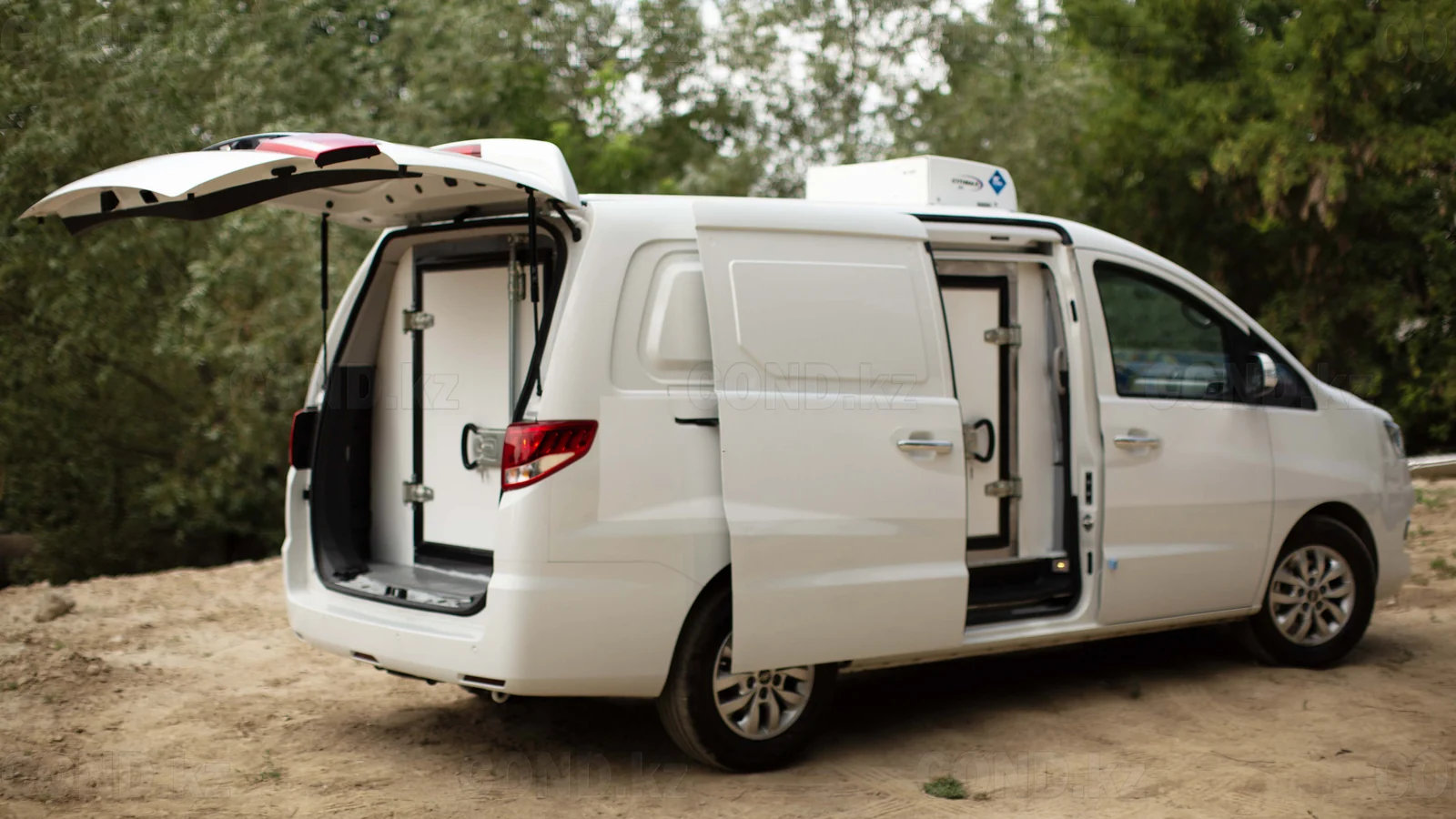
A reefer without a body build: we make the cold inside a ready JAC M4 panel van. From outside it is an ordinary category-B minivan — same dimensions, same parking, same fuel use. Inside there is a 4.3 m³ insulated envelope and a Carrier unit with the condenser on the roof. Pharmacies, laboratories, prepared-food delivery and anyone who would rather the vehicle did not stand out.
| Make / model | JAC M4 (panel van) |
| Engine | HFC4GA3-3D petrol, Euro 5 |
| Engine displacement | 1,997 cc |
| Power | 136 hp (100 kW) |
| Torque | 185 N·m |
| Gearbox | manual, 5-speed |
| Wheelbase | 3,080 mm |
| Overall dimensions | 5,200 × 1,890 × 1,980 mm |
| Gross weight | 2,900 kg |
| Vehicle category | B |
| Payload | 975 kg |
Chassis specifications are on a separate page.
| Body type | panel van with a refrigeration unit |
| Internal dimensions | 2,300 × 1,550 × 1,200 mm |
| Usable volume | ≈4.3 m³ |
| Insulation | sprayed foam and panels around the inner shell |
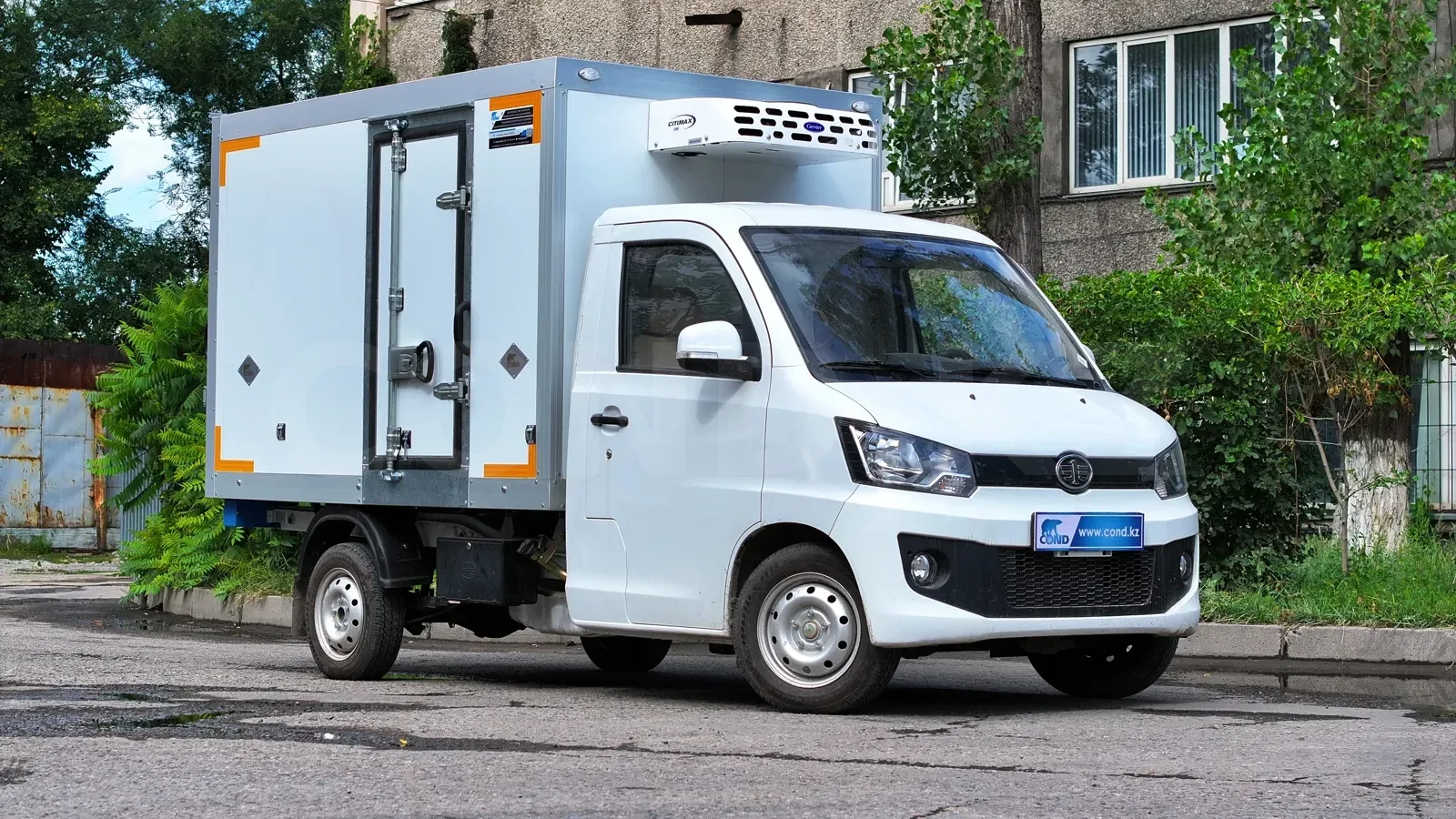
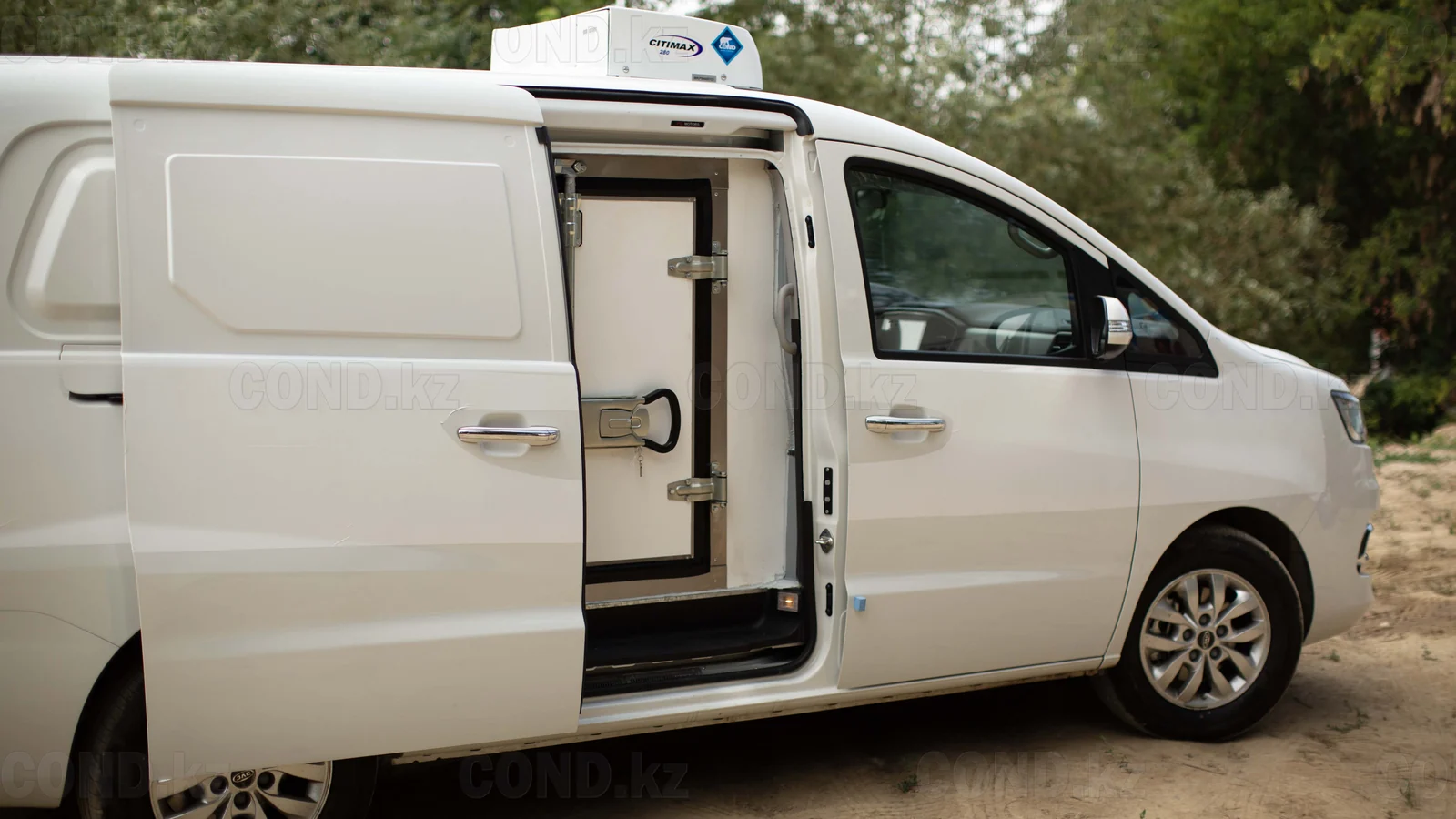
| Refrigeration unit | Carrier Citimax 280 — the plate is on the unit housing |
| Unit position | roof-mounted |
| Temperature duty | from −20 to +12 °C |
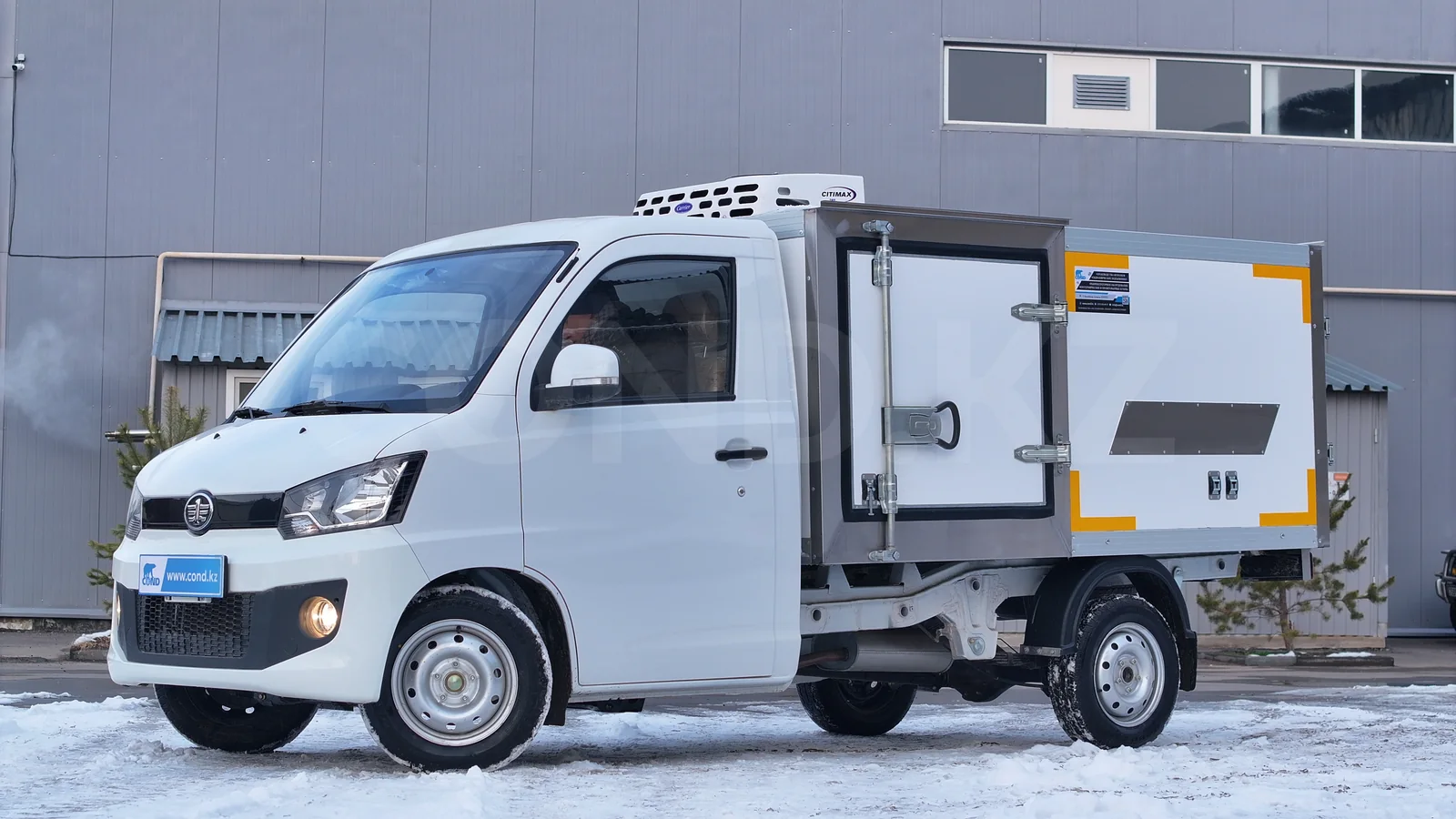
| Doors | rear lift-up with an inner insulated door + sliding side door |
| Production time | from 14 working days |
More about the design on the page refrigerated vans.
The project is based on a JAC M4 (panel van) chassis with a 3,080 mm wheelbase. The engine is HFC4GA3-3D petrol, Euro 5, 136 hp (100 kW). Gross weight 2,900 kg — a category B licence is enough.
Body type — panel van with a refrigeration unit. That leaves 2,300 × 1,550 × 1,200 mm inside: the panel thickness is subtracted on every side, floor and ceiling included. Usable volume is ≈4.3 m³, counted from the internal dimensions rather than by multiplying the external ones.
Doors: rear lift-up with an inner insulated door + sliding side door.
The refrigeration unit is Carrier Citimax 280 — badge on the unit cowl. Operating range: from −20 to +12 °C.
A side door changes distribution logistics: at each stop you open it rather than the whole rear portal — less cold escapes and the truck can park tight against its neighbour.
A body with a refrigeration unit carries anything perishable: meat and fish, dairy, ready meals, flowers, medicines. The unit holds the set temperature while parked too, so the truck also suits distribution runs with long stops. Usable volume here is ≈4.3 m³ — the block above estimates the load in pallets.
This body is not a catalogue item but a project we actually built. We will make the same one to your dimensions: length, width and height are calculated for your cargo and the chassis payload, rather than fitting the cargo to a ready-made size.
We also fit it to your own chassis: bring the vehicle, we take the frame dimensions, build the body, mount it and hand it over with the conversion paperwork.
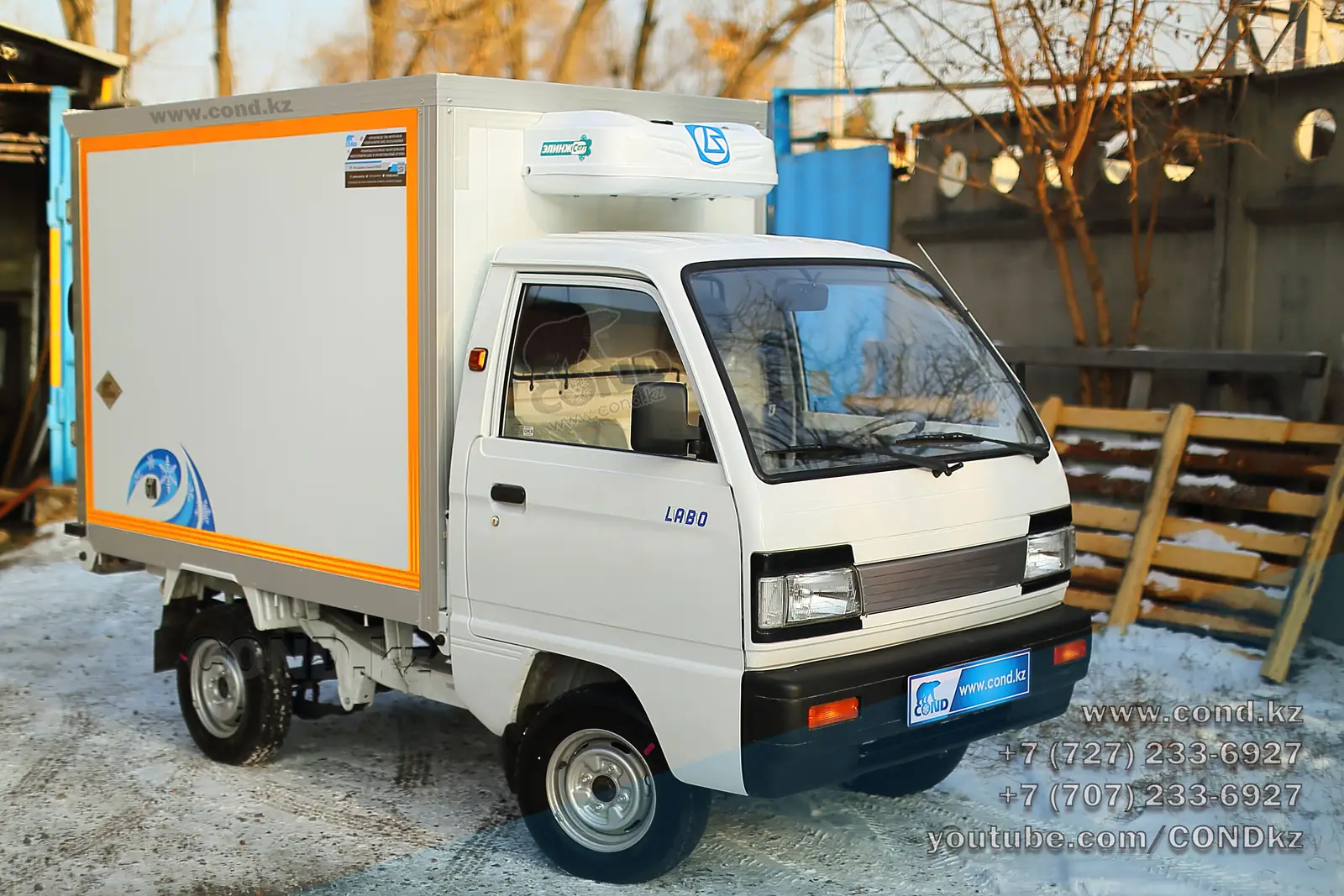
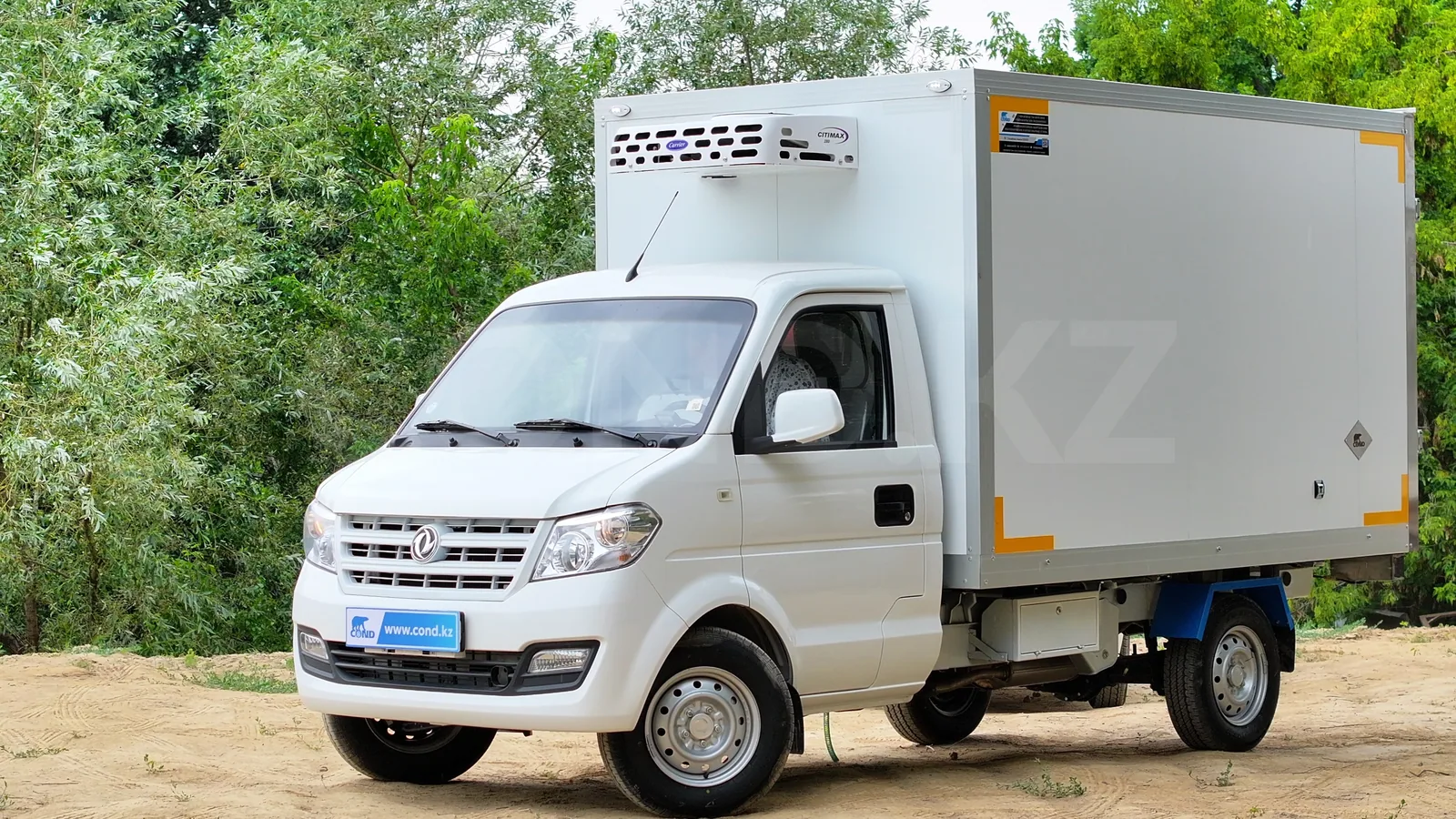
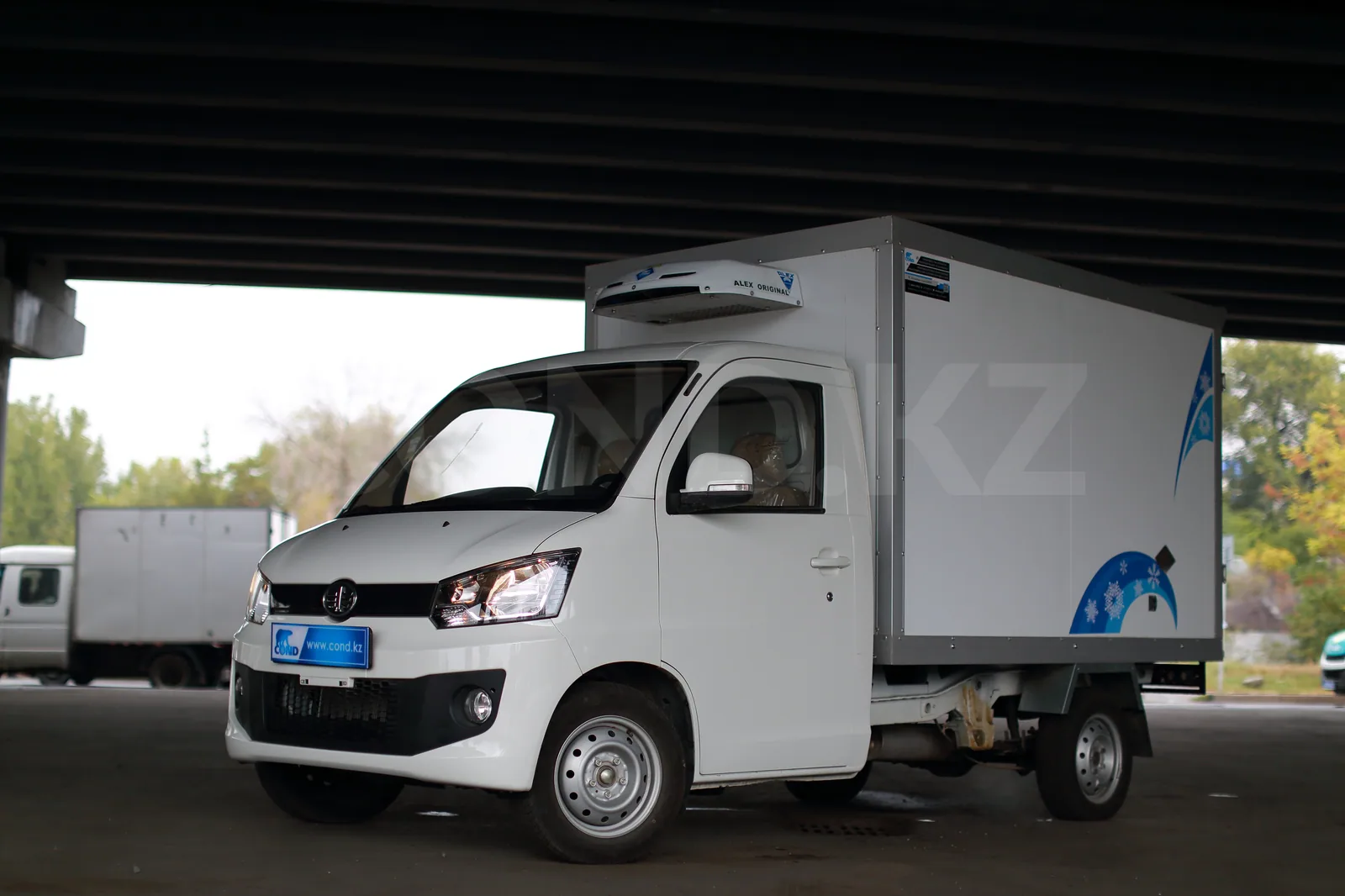
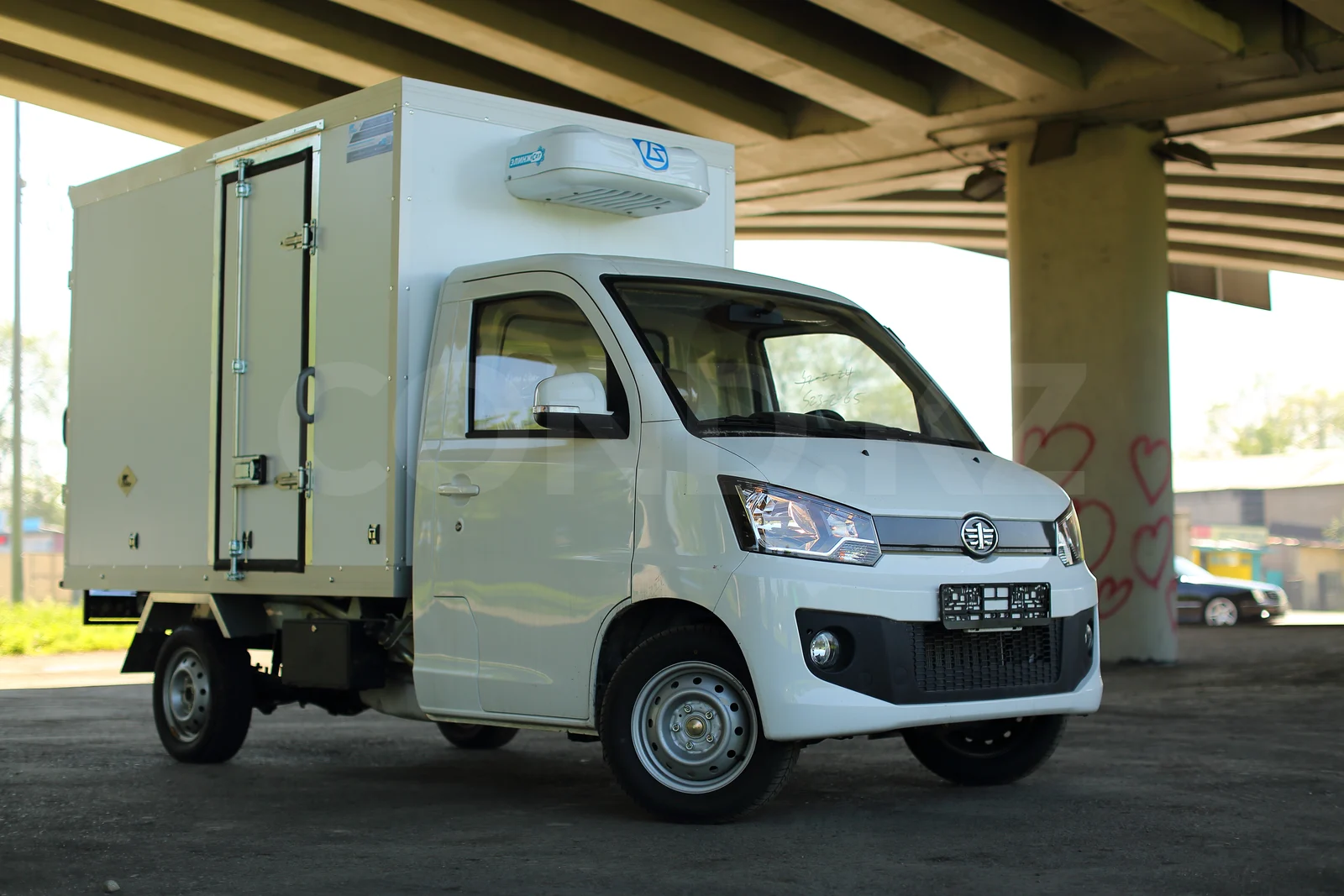
If you are still choosing a chassis, we have the same body on other bases as well: Chevrolet Labo, DongFeng C31, FAW 1027, GAZelle Business 3302. They differ in payload, frame length and licence category.
A standard 1,200 × 800 mm europallet, single tier, no restacking. Internal dimensions with a 50 mm laying allowance — a pallet will not go in dead tight.
Inside 2 300 × 1 550 × 1 200 mm · 4.3 m³
The layout scheme is on the right: it shows how the rows sit and how much room is left.
A refrigerated panel van is not a body mounted on a frame but the insulation and cooling of a vehicle that is already built. The advantages are plain: it stays car-sized to drive and park, moves through the city without truck restrictions, parks at the entrance and needs no category C licence. The gross weight of 2,900 kg puts it in category B.
The drawback is equally plain: the volume is fixed by the vehicle. On the M4 that is 2,300 × 1,550 × 1,200 mm, about 4.3 m³ and a 975 kg payload. If you need more, that means a body on a chassis — look at FAW 1027 or a Kia Bongo.
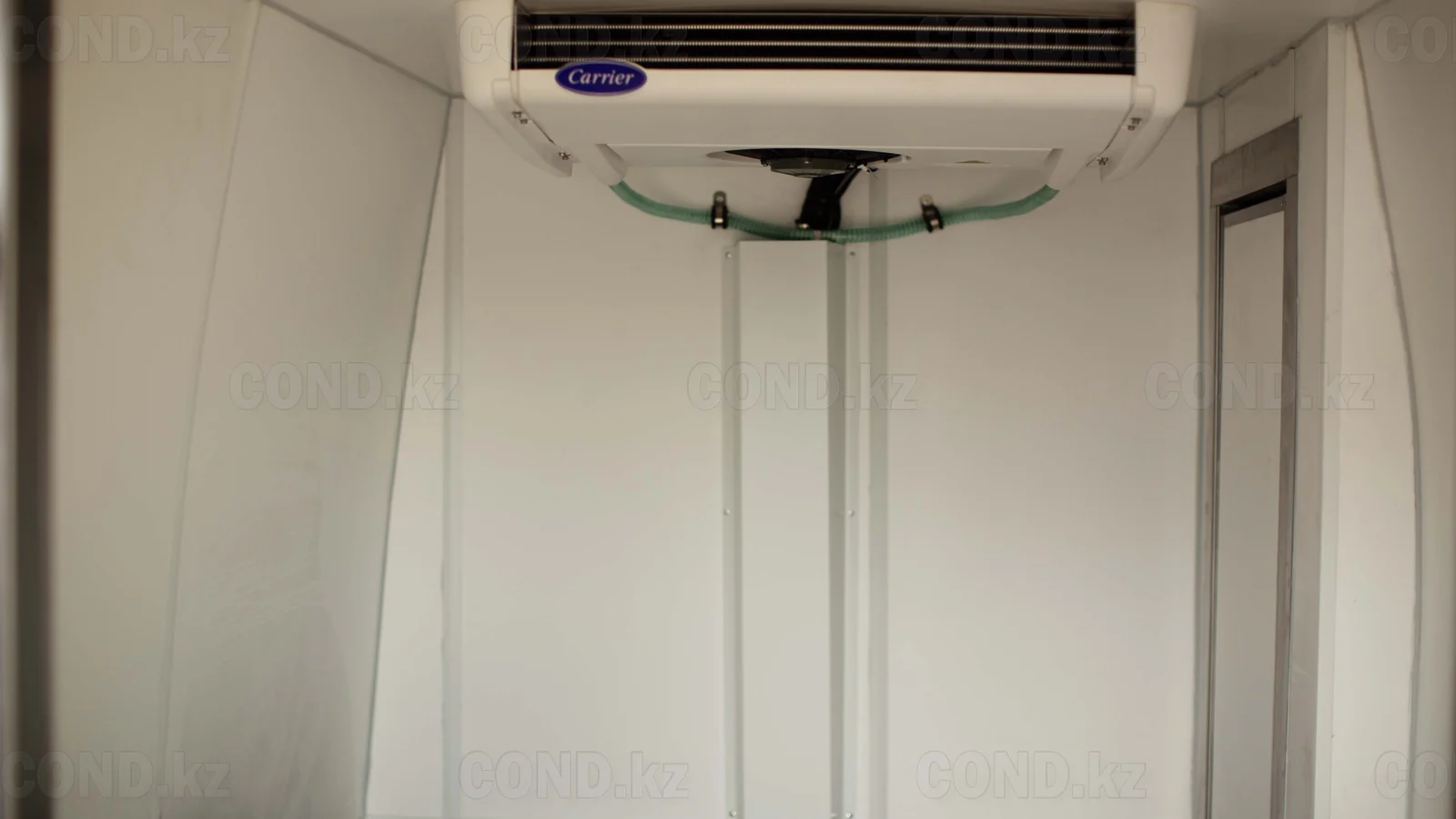
On panel vans we mount the unit on the roof — the condenser sits on the body roof. That way it takes no space inside and does not block the sliding side door. The evaporator is under the ceiling at the front wall, so air travels the full length. The range is −20 to +12 °C: frozen, chilled, pharmaceutical. COND is the official Carrier dealer in Kazakhstan, so the warranty and servicing are ours.
We insulate the inner shell over its whole surface, arches and ceiling included — working straight onto the metal, with no thermal bridges at the stiffening ribs. The floor is flat, the walls are smooth and it can be hosed down.
The rear lift-up door gets an inner insulated door: open the tailgate and the cold stays behind the second door; take the box out and close it. The sliding side door is kept and insulated too, so on a route with frequent stops the temperature holds.
Walk-arounds from our YouTube channel.
Where the number comes from:How body capacity in pallets is calculated
Leave your contact details — we will confirm availability/lead time and quote a price.
📞PhoneOur other projects in the “refrigerated van” category. All body types are in the “Vehicles” section.
 ⚪ Completed
 ⚪ Completed