The cold chain on wheels: how a vehicle for transporting medicines is validated in Kazakhstan
Published:
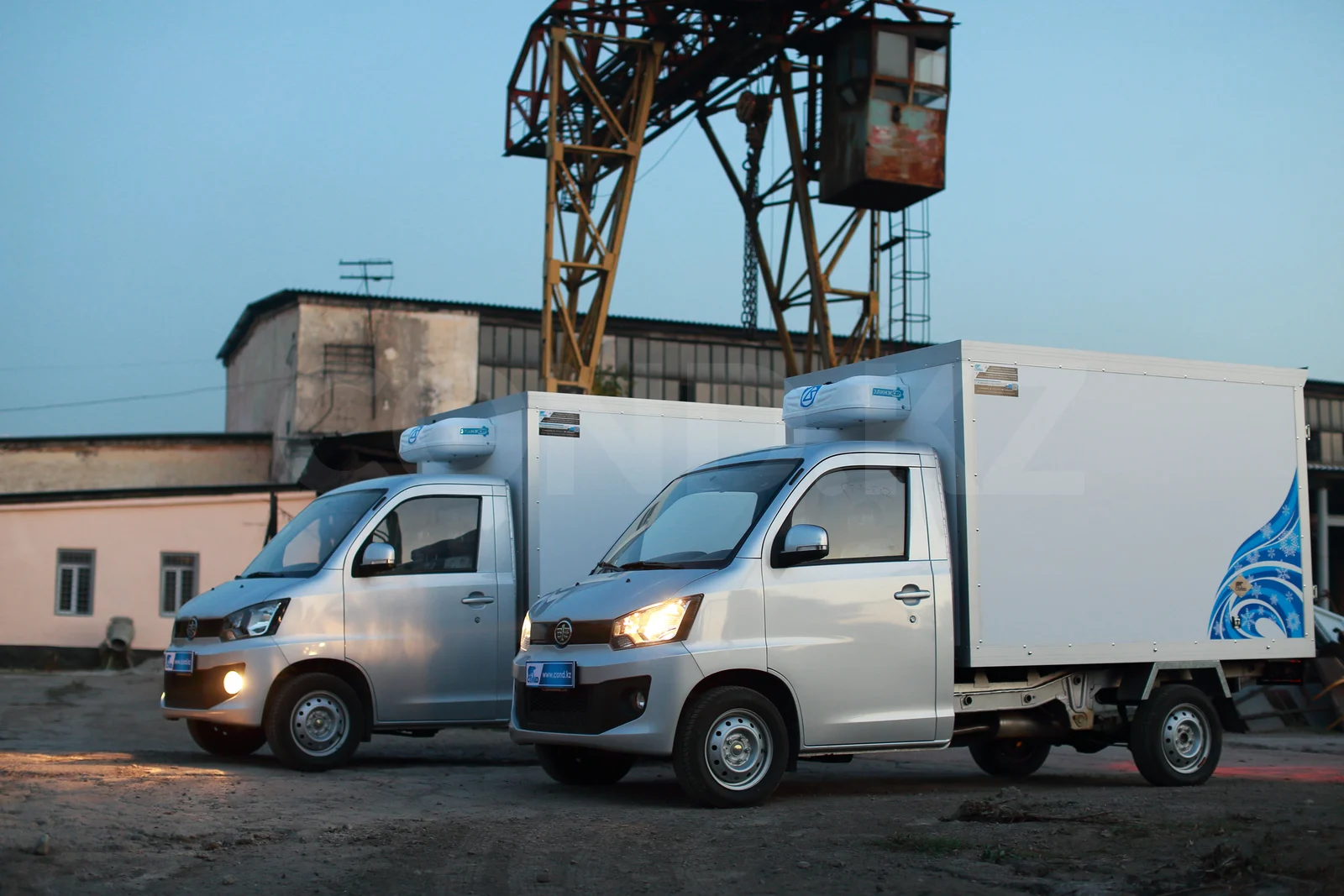
In short. Medicines may only travel in vehicles qualified under GDP rules: temperature mapping of the body, calibrated sensors, test protocols. The method comes from the WHO guidance (TRS 961, Annex 9) and the EAEU Good Distribution Practice rules. The outcome is decided at the factory: a body built with margin in insulation and cooling capacity passes mapping the first time.
A pharmaceutical distributor lives under audit: licensors, marketing authorisation holders, inspections. The auditor's first question about transport is always the same: "Show me the vehicle qualification." The words "we have a good reefer" do not count as an answer — protocols do. Let's take apart how the transport link of the cold chain works, what vehicle validation is, and which body passes it without pain.
Quote is based on body, chassis and temperature range.
The cold chain and its four levels
The cold chain is the continuity of a medicine's temperature regime from factory to patient. Sanitary rules and the WHO methodology divide it into four levels:
- Manufacturer → wholesale warehouse — the long-haul leg;
- Warehouse → pharmacies and healthcare facilities — regional and city delivery;
- Storage at the pharmacy or facility;
- Use — from the refrigerator to the patient.
Transport works at the junctions of the first three levels, and the junctions are precisely the weakest points of the chain: loading, transfers, waiting at the dock. The cold chain demands one thing at every level: the product's temperature corridor is never interrupted, and every leg of the journey proves that with documents. For a thermal container the proof is a passport and cold packs; for a vehicle — qualification and trip records.
Temperature regimes for transporting medicines
The regime is set by the product's labelling; there are four standard corridors:
| Corridor | Range | Typical cargo |
|---|---|---|
| Controlled room temperature (CRT) | +15…+25 °C | Tablets and solid forms |
| Cold chain | +2…+8 °C | Vaccines, insulins, immunobiological products |
| Frozen | −15…−25 °C | Certain biologicals |
| Deep-frozen | down to −70 °C | mRNA vaccines, cell products |
Two things follow for the vehicle. First: both borders of the corridor are dangerous — for +2…+8 °C freezing is as fatal as overheating. A batch of insulin that spends an hour in a frozen-through body looks exactly the same afterwards — and is written off entirely, at the full value of a truckload. So in winter the body needs heating, not just cooling. Second: a distributor carrying different products needs either a vehicle per regime or a multi-temperature body with independent compartments.
Validation and qualification: how it is organised
Validation proves that a process consistently delivers the required result. A pharma company validates everything: production, cleaning, storage, transport — under a validation master plan that lists what is checked, when and against which criteria. Transport is a mandatory chapter of that plan: the chain "production → warehouse → vehicle → pharmacy" is validated as a whole, and one unqualified body invalidates the entire chain.
Qualification is the same work applied to a specific piece of equipment — in our case, the vehicle. Validation of transport for medicines breaks down into four stages:
| Stage | What is checked |
|---|---|
| DQ (design) | The vehicle design meets the requirements: insulation, unit range, sensors |
| IQ (installation) | The vehicle is built as designed; sensors and recorders in place |
| OQ (operational) | Temperature mapping: does the body hold the corridor across the whole volume |
| PQ (performance) | Trials on real trips with cargo |
The standards this follows in Kazakhstan: the EAEU Good Distribution Practice rules (EEC Council Decision No. 80 of 03.11.2016, binding in Kazakhstan; clause 124 — storage conditions must be maintained for the entire journey), the WHO guidance (Technical Report Series No. 961, Annex 9, Supplement 11, "Qualification of refrigerated road vehicles" — the step-by-step method auditors cite) and EN 12830, the standard for temperature recorders.
Temperature mapping: the central test
Mapping (the OQ stage) under the WHO method looks like this:
- Calibrated loggers are installed in the body — in the corners, at floor and ceiling, by the doors and the evaporator; 9–15 points on a mid-size van.
- The vehicle runs through characteristic regimes: summer and winter, a full pull-down cycle, stabilisation.
- Stress tests: door openings as during delivery, a refrigeration unit shutdown — how many minutes the body holds the corridor without cooling.
- The records produce a map of warm and cold zones: where a pallet of temperature-sensitive goods must not stand, where the permanent sensor must be.
- The result is a protocol with the map, the curves and the verdict "suitable for regime X". Then PQ on real trips, and re-qualification every few years or after body repairs.
A failed mapping almost always comes down to hardware: thin panels with thermal bridges scatter temperatures across the volume, an underpowered unit cannot beat the summer heat load, and the lack of heating drops the body's corners below zero in winter.
The reefer printout and remote monitoring
Qualification vouches for the vehicle, but every trip must be proven separately. Two formats work, and mature distributors use both.
The recorder and its printout. A recorder with a thermal printer is a standard option on refrigeration units: it logs temperature throughout the trip and prints a receipt with the curve at unloading. The driver hands the printout over with the delivery note; the consignee files it with the batch. Simple, visual, works without connectivity or servers.
Remote monitoring. Telematics with sensors in the body streams temperature online: the dispatcher sees the regime in real time, an alert fires the moment it leaves the corridor — the incident is handled en route, not investigated after spoilage. The electronic trip archive satisfies the audit requirement to retain records.
The perfect pair for an auditor: the printout as the batch document plus the electronic archive as the investigation base. The body must be ready for both: sensor sleeves, cable glands, a recorder mount.
COND vehicles that carry pharma
Examples from the factory's completed projects:
- FAW 1027 "premium" refrigerated truck — an FRP body with fibreglass inside and out, an Elinge C07T unit with heating: a −20…+12 °C range — both freezing and winter protection of the +2…+8 °C corridor. Stated purpose: food and pharmaceutical transport.
- Multi-temperature GAZelle NEXT reefer with Carrier — two independent compartments: −18 °C and +4 °C. The format for a distributor hauling frozen goods and cold-chain products in one trip.
- FAW Tiger refrigerated truck — a medium-duty body rated down to −20 °C for volume consignments.
A body that passes validation
The fate of the qualification is decided when the vehicle is ordered. The requirements for a "validatable" body are short:
- 80–100 mm sandwich panels without thermal bridges, with margin in the K coefficient — the temperature map comes out even;
- a refrigeration unit with capacity margin for the summer heat load and a heating mode for winter;
- multi-temperature compartments if different corridors are carried;
- monitoring readiness: sensor sleeves, an EN 12830 recorder, a printing recorder or telematics;
- body documentation — materials, thicknesses, passport — the basis of the DQ stage.
The COND factory in Almaty builds refrigerated bodies in exactly this logic — with margin in insulation and capacity, engineered for mapping rather than "right at the datasheet limit". Such a body passes qualification the first time and stays inside the corridor for its whole service life: custom van body manufacturing, vehicles in stock and completed projects, sizing — in the body calculator.
FAQ
What is the cold chain and what are its levels? The continuity of a medicine's temperature regime from manufacturer to patient. Four levels: manufacturer → wholesale warehouse, warehouse → pharmacies and facilities, on-site storage, use. Transport works at the junctions of the first three — the most vulnerable links of the chain.
What are the requirements for cold chain transportation? A qualified vehicle, the product's temperature corridor maintained for the whole journey, calibrated recorders logging the trip, documented hand-overs and an investigation of every excursion — as required by the EAEU Good Distribution Practice rules (Decision No. 80).
How are vaccines transported: the basic rules? A +2…+8 °C corridor protected from freezing, a qualified reefer or a certified thermal container, continuous temperature recording and control at every hand-over. Small batches travel in thermal containers with cold packs; regular volumes — in a refrigerated vehicle with heating.
What is transport validation for medicines? Documented proof that the vehicle consistently holds the specified corridor: the DQ, IQ, OQ and PQ stages, with temperature mapping of the body by calibrated sensors at the centre — per the WHO method (TRS 961, Annex 9).
What is a reefer printout and why a printing recorder? The recorder logs temperature throughout the trip and prints a receipt with the curve at unloading. The printout is filed with the delivery note as proof of the regime; for pharma it is complemented by the telematics archive.
We already have an ordinary reefer — will it do for medicines? A body with insulation margin and a sound unit — probably yes, but mapping decides, not opinion: qualification shows whether the volume holds the corridor with winter heating and the summer heat load taken into account. The frequent causes of failure are thin panels, a unit without margin and no heating.
What vehicle is needed to transport temperature-controlled medicines? A reefer with 80–100 mm insulation, a unit with capacity margin and heating, an EN 12830 recorder and sensor readiness — qualified for the required corridor. For different regimes in one trip, a multi-temperature body.