Curtain-side versus eyelet tarpaulin: why the sliding body works better
Published:
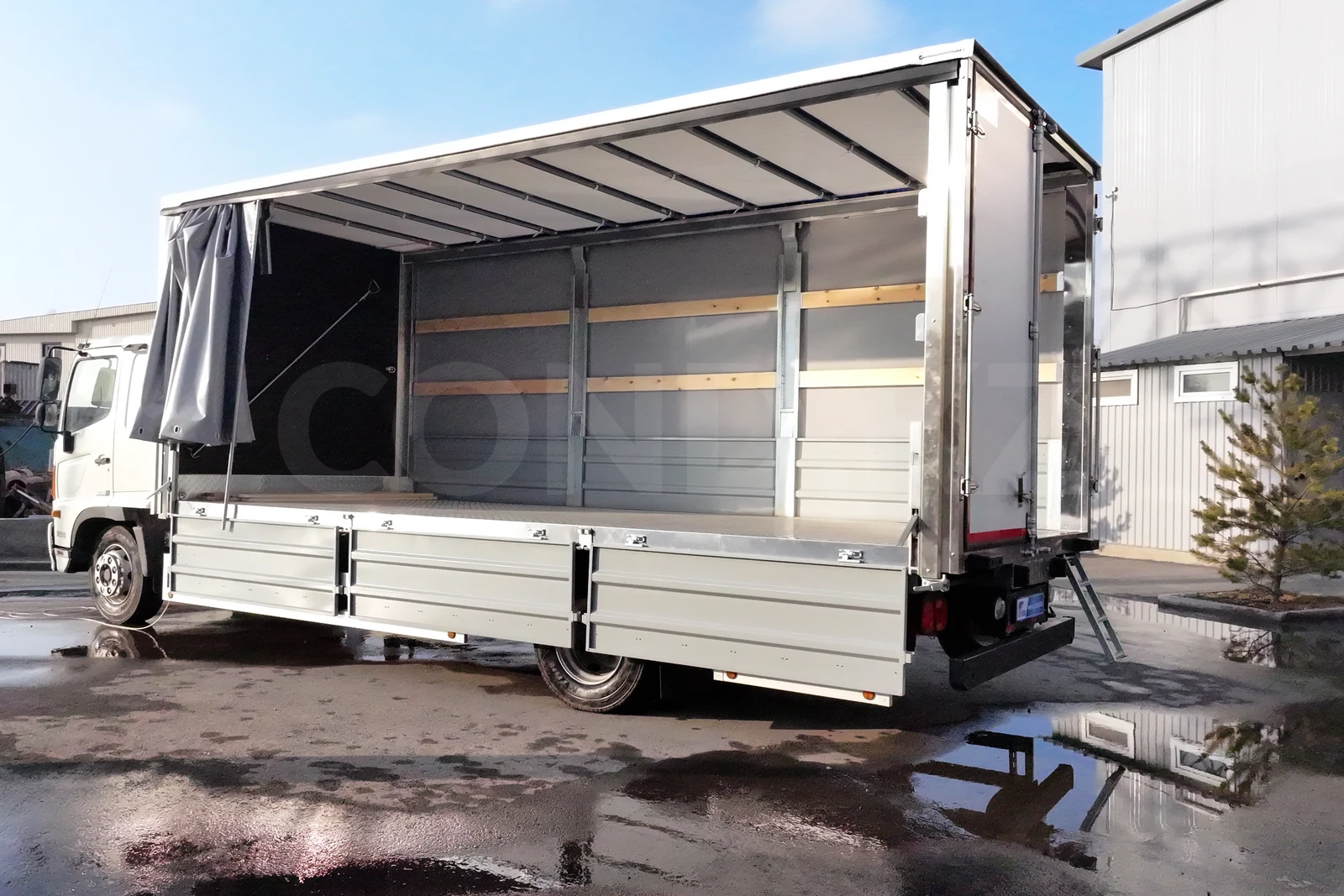
Not every tarpaulin is the same. One truck opens in five seconds with a pull of the hand; another takes a driver and a loader a quarter of an hour to unlace. The difference is in the design, and on a multi-stop route it adds up to hours.

Quote is based on body, chassis and temperature range.
What a curtain-side body is
Euro sides (also called a curtain-side or eurotent) is a platform with galvanised drop sides, a frame of upright posts and crossbars, and a curtain that runs on rollers along rails. The sheet concertinas to the front or rear wall and the side opens completely.
The roof stays solid. The curtains work on the sides only, so the load is covered from above even with a curtain open — in the rain that matters.
How it differs from an eyelet tarpaulin
An ordinary tarpaulin body uses the same sheet, but laced to the sides with rope through eyelets. Cheaper, simpler in construction and thoroughly inconvenient wherever loading is frequent.
| Curtain-side body (eurotent) | Eyelet tarpaulin | |
|---|---|---|
| How the side opens | the curtain runs on rails, the side opens along its whole length | unlace and remove the sheet section by section |
| Time to open | seconds | minutes, and usually two people |
| Side loading | a forklift can reach anywhere along the side | only where it has been unlaced |
| Top loading | remove the sheet or work through the open side | remove the sheet |
| Repair after damage | the sheet or a single post is replaced | usually the whole sheet is replaced |
| Price | higher | lower |
The conclusion is simple: if the truck opens once a day at a warehouse, there is no point paying extra for curtains. If there are five stops or more and a forklift at each, a curtain-side pays for itself in time.
What curtain-side bodies carry
Anything that fears rain and dust but needs no cold: building materials and sacks, packaged furniture, equipment and machine tools, pallets of consolidated freight, tyres, appliances. Long loads are a case of their own — pipes, sections, timber. They go in by crane from above, and no van will do at all.
What a curtain-side body will not carry is chilled and frozen goods. Curtains hold no temperature. For that there are isothermal van and reefer.
Our curtain-side bodies
What has been built and is already on the road:
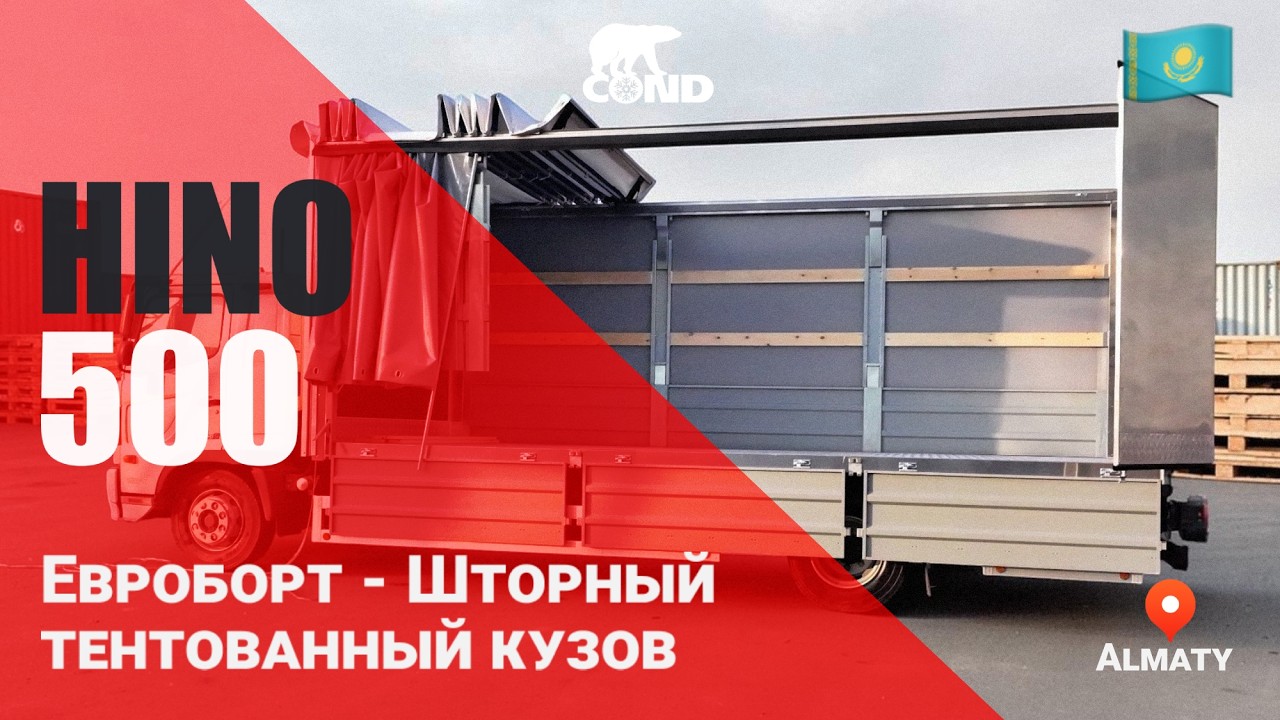
- Hino 500 (GD) — sliding curtains on both sides, a dropping rear board with a ladder.
- JAC N120 — a 6,200 mm deck, a frame with crossbars and timber battens, rear swing doors.
- JAC N56 — a 4,200 mm deck and a bolt-together frame: bend a post and one part gets replaced.
- Hino — a curtain-side body loaded from the top, from both sides and from the rear.
The full section — eurotents and curtain-side bodies.
Van, flatbed or curtain: how to choose
Van — when the load must be shut away completely and loaded only from the rear at a dock. Maximum security, minimum loading options.
An open flatbed — when the load does not mind the weather and crane work or long items matter. The cheapest option, but the load is exposed.
A curtain-side body — the compromise that covers most supply work: the load is covered, yet it can be loaded from three sides. Take the curtains off and it is an ordinary flatbed again.