
What is a refrigerated van: the equipment, the vehicle and how it all works
Published:
In brief: a refrigerated van is a goods vehicle with an isothermal (insulated) body and a refrigeration unit, which carries cargo at a set temperature — from 0…+5 °C for fresh produce down to −20 °C for frozen goods. The same word is also used for the refrigeration unit itself.
Choosing a vehicle: COND refrigerated vans in Almaty — a body on the customer’s chassis or a ready vehicle, Carrier and Elinge units.
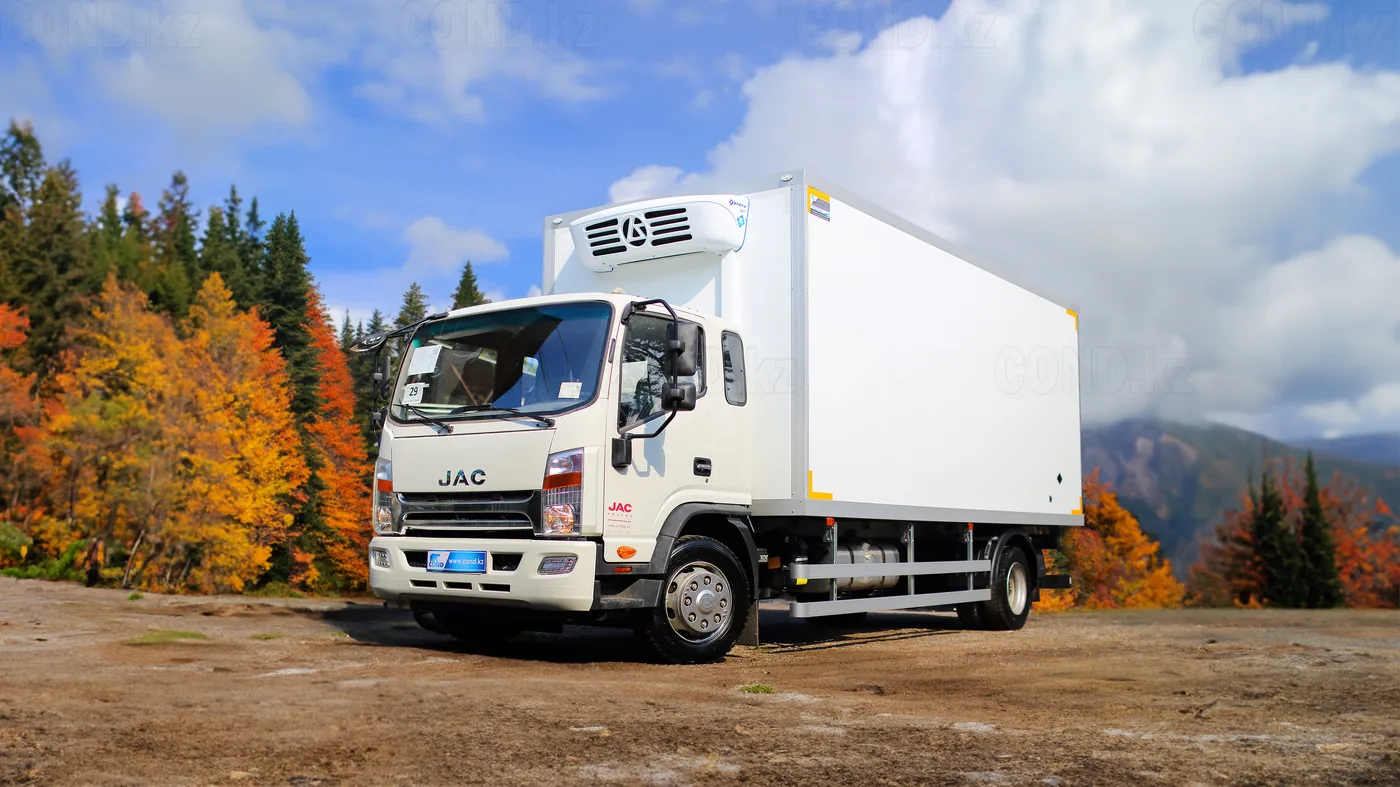
The word “reefer” is used for two different things, and the confusion begins right in the search results. Some people look for refrigeration equipment — the unit that is fitted to a van body (also called a heating-and-refrigeration unit). Others search for a refrigerated vehicle as a whole — a lorry with an insulated body and refrigeration, ready to carry food. In this article we look at both meanings: how the unit is designed, what temperature ranges there are, what happens to the refrigerant inside the circuit — and why the body matters no less than the “fridge”.
Quote is based on body, chassis and temperature range.
The reefer as a vehicle
A refrigerated vehicle (also called a reefer, fridge truck, auto-refrigerator, thermal van with a refrigeration unit, or a “fridge on wheels”) is a goods vehicle with an isothermal van body and a refrigeration unit, which carries cargo at a set temperature: from vegetables and dairy produce to deep-frozen goods and ice cream.
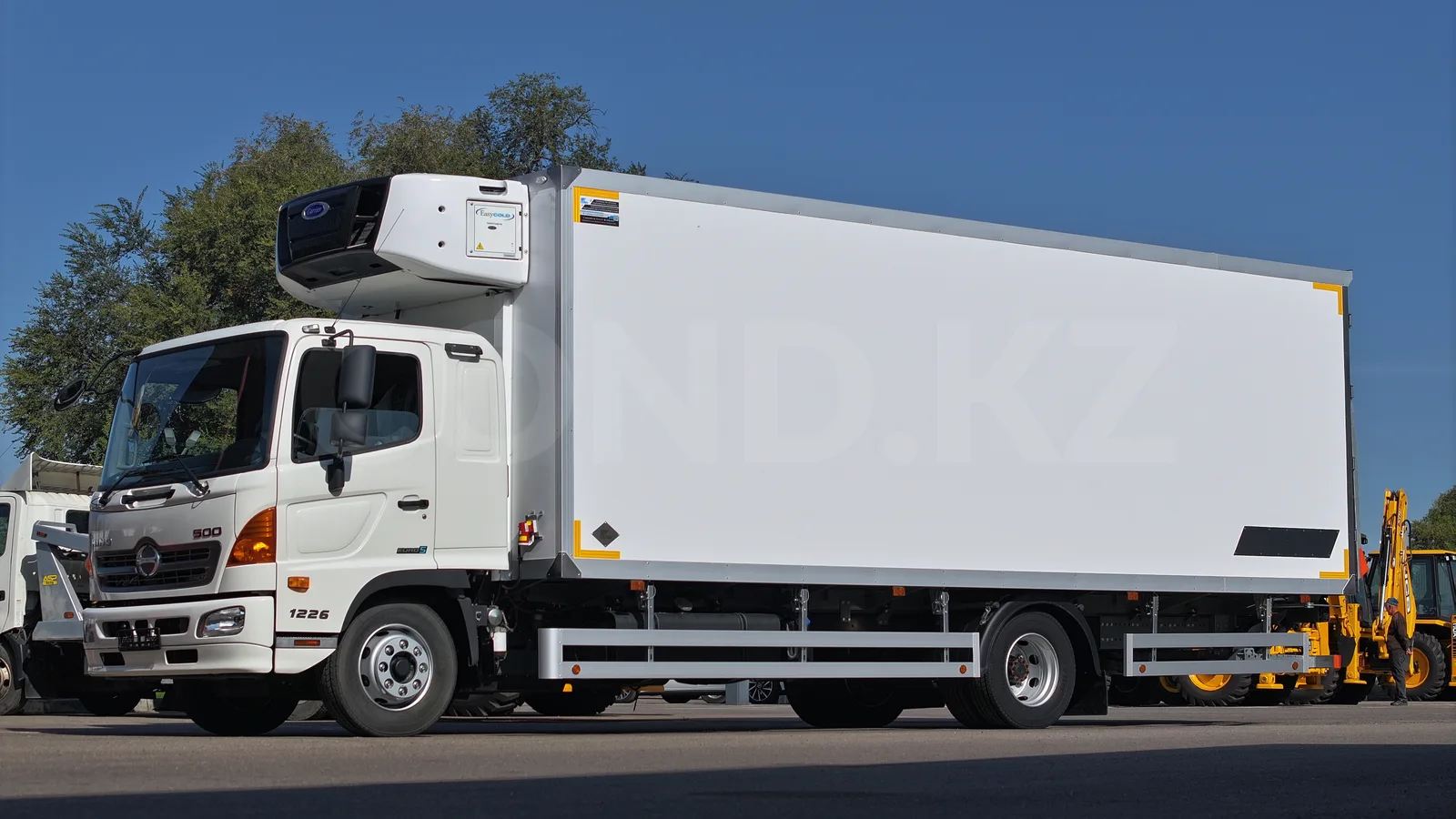
COND refrigerated body on a Hino 500 (GD 1226) chassis: Carrier Supra 1050 unit above the cab, Dhollandia tail lift at the rear.
Main temperature ranges:
| Range | Temperature | Typical cargo |
|---|---|---|
| chilling | 0…+5 °C | dairy produce, chilled meat, vegetables, fruit, flowers, confectionery |
| universal | −5…+5 °C | mixed runs, convenience foods |
| freezing | −18…−20 °C | meat, fish, frozen convenience foods |
| deep-freeze | −24 °C and below | ice cream, blast-frozen berries (we have built bodies for −35 °C too) |
| multi-mode | — | a partition divides the body into compartments with different temperatures, for example −18 °C and +5 °C at the same time |
| +heating in winter | — | combined refrigeration-heating units units keep the body above freezing in sub-zero weather: bread, drinks, cosmetics, medicines. |
How a refrigeration unit works: diagram
All transport refrigeration relies on one and the same closed cycle. The unit does not “produce cold” — it transfers heat from inside the body to the outside.
Step by step:
- Compressor compresses the refrigerant vapour — the pressure and temperature rise sharply.
- Condenser (the external radiator) is blown by a fan: the hot gas gives up its heat to the outside air and condenses into a liquid. This is where the heat is “dumped outside”.
- TXV — thermostatic expansion valve — a narrow nozzle between the high- and low-pressure sides. Liquid refrigerant is sprayed through it into the evaporator.
- Evaporator inside the body: the pressure downstream of the TXV is low, so the atomised refrigerant boils instantly at as low as −25…−40 °C. The boiling liquid draws heat from the air in the body — fans push this air through the evaporator coil and distribute the cooled flow along the ceiling. That is the working principle of convection: cold air descends through the cargo, picks up heat and returns to the evaporator.
- The vapour with the “collected” heat returns to the compressor — and the cycle repeats.
The physics is simple: liquid boils and absorbs heat where the pressure is low (inside the body), and condenses and gives off heat where the pressure is high (outside). The compressor and the TXV create this pressure difference.
The compressor is the heart of the unit
Transport refrigeration most often uses an open-type piston compressor, belt-driven from the vehicle's engine with an electromagnetic clutch. The clutch engages the pulley with the shaft when the thermostat calls for cooling and releases it once the set temperature is reached. Inside are pistons, a swash plate, a valve plate and a pressure-relief safety valve. Oil is critically important: its type and quantity are specified by the unit's manufacturer, and running short of it kills a compressor faster than anything else.

Carrier Supra 1050 on a Hino 500 body: the unit sits on the front wall above the cab.
We have covered this in detail in separate articles: compressor design and faults, as well as the pages of specific models — TM13, TM16, Sanden SD7H15, SD5H14 and SD5H11.
Types of refrigeration equipment
- Direct-drive units — the compressor is belt-driven by the vehicle's engine. Simple and inexpensive; there is cooling only while the engine is running. Examples — Elinge, Carrier, Kaida.
- Units with 220/380 V mains power (stand-by) — when parked, the unit plugs into the warehouse mains: the engine is off while the body holds its temperature all night. Saving fuel and engine life.
- Self-powered refrigeration units — with their own diesel engine. Independent of the chassis engine; used on medium and large vehicles and on intercity runs.
- Eutectic plates — “cold accumulators”: plates filled with a solution are frozen overnight from the 380 V mains and give off cold during the day without a running compressor. Ideal for delivering ice cream — see our manufacture of eutectic plates.
- Heating equipment — a refrigeration unit with a heat pump, or a heater: in winter in Kazakhstan cargo needs heating rather than cooling.
Why the body matters as much as the unit
A refrigerated body must meet three strict requirements:
- Sanitation — interior surfaces must be easy to wash and must not absorb odours or grease: food transport is sanitised regularly.
- Airtightness — any gap is a “hole” through which heat is sucked in while cold and money leak out. Door seals and the integrity of the seams are what matter.
- Low thermal conductivity — the wall must let through as little heat as possible, with no “thermal bridges” through a metal frame.
That is exactly why we at COND started producing our own bodies: so that the refrigeration unit's operating conditions match its capabilities rather than fight against them. Our panels — frameless sandwich: two layers of clad metal and extruded polystyrene (XPS) between them, 50–100 mm thick. With no through metal bridges, the wall's thermal conductivity is below 0.4 W/(m·°C).
 ▶
▶Materials built for a long service life:
- stainless steel in the rear opening — the hardest-working loading zone: it does not rust from impacts or washing;
- galvanised and stainless-steel hardware — locks, hinges, latches do not corrode;
- fibreglass on the rear doors — lighter than metal, does not rot, withstands impacts;
- anodised aluminium profile along the body edges — protecting the ribs and sealing the seams.
Kazakhstan specifics: heat is the main test
The unit and body should be chosen not “by the datasheet” but for the real climate. Summer in Kazakhstan means a steady +35…+40 °C in the south: Kyzylorda, Shymkent, Taraz, and the Turkestan and Zhambyl regions. July 2026 showed what our weather can do: meteorologists forecast a heatwave of up to +45 °C, the south recorded +43 °C, Shymkent saw +40 °C (feeling like +44 °C), and back in May temperature records that had stood for 80 years were broken.
What this means in practice: at +42 °C outside and −20 °C inside, the difference across the wall is 62 degrees. Every extra tenth of thermal conductivity and every gap means hours of compressor running, litres of fuel and the risk of the cargo defrosting in a traffic jam. That is why, for the south, we always size the unit with a heat-gain margin and recommend a thicker panel.
An important limit: every refrigeration unit manufacturer specifies a maximum outside air temperature up to which the unit is guaranteed to work (usually around +40…+50 °C according to the datasheet of the specific model). If the unit is operated beyond this limit, the condenser stops rejecting heat, the pressure in the circuit rises — and the unit fails: this is not a warranty case. That is why the rated ambient temperature range is the first question when selecting a unit for southern Kazakhstan. We are preparing a detailed breakdown of these limits by manufacturer in a separate article.
Where to order a refrigerated van in Kazakhstan
COND is a plant in Almaty, operating since 2001 and handling the full cycle ourselves: our own sandwich panels, steel structures, a design office and refrigeration equipment installation. This means the body and refrigeration unit are selected for your cargo and climate, not “whatever is in stock”. We build refrigerated vans on JAC, Kia Bongo, GAZelle, FAW, Foton, Hyundai, Isuzu and HINO chassis — from light 1.5 t models to heavy-duty ones. Production time — from 14 days, and we ship across the whole of Kazakhstan: Astana, Shymkent, Karaganda, Aktobe, Atyrau, Taraz, Pavlodar, Ust-Kamenogorsk. The calculation is free: tell us your cargo, temperature and volume — we will select the body, panel thickness and refrigeration unit with a margin for the heat.
FAQ
Are a refrigerated van and an isothermal van the same thing?
No. An insulated van — is only an insulated body: it slows warming but does not cool. Refrigerated van = isothermal body + refrigeration unit.
What is a refrigeration unit?
A heating-and-refrigeration unit: equipment that cools the body in summer and heats it in winter. We install and service: installation of refrigeration equipment.
Can an ordinary van body be converted into a refrigerated van?
Yes: we insulate the body, fit a refrigeration unit and register the changes. More details — insulation of van bodies and entry in the vehicle registration certificate.
Which refrigeration unit is needed for −18 °C?
It depends on the body volume, panel thickness and climate. We carry out heat-gain calculations free of charge — see how to choose a refrigerated van or request a quotation.
How does a reefer differ from an isothermal box?
An isothermal van body is simply an insulated body without a refrigeration unit: it keeps the cargo temperature for several hours but does not lower it. A refrigerated van is the same isothermal body plus a refrigeration unit, which actively maintains the set temperature for as long as needed. If the cargo travels for more than 2–3 hours or it is hot outside, what you need is a refrigerated van.
How much does a turnkey refrigerator cost?
The price is made up of three parts: the chassis, the body and the refrigeration unit. The spread is wide — a light-duty isothermal van with a basic unit and a heavy-duty body rated for −20 °C differ several times over. We quote for your specific task: cargo type, temperature range, body volume and city of operation. Submit an enquiry — the quotation is free.
Can a refrigerated body be mounted on an existing chassis?
Yes, this is the most common scenario: you bring your own chassis, we build the body and mount the refrigeration unit. The factory warranty on the chassis is preserved. We also process the amendments to the vehicle registration certificate — the conversion must be registered.
Bottom line. A refrigerated van is a system: the right unit + an airtight body with low thermal conductivity + honest installation. We handle all three components ourselves — COND refrigerated vans are manufactured in Almaty from 14 days; we work across the whole of Kazakhstan.
Where to order:A refrigerated van in Almaty