Carrier
Premium road and self-powered units: precise control, freezing down to −20 °C and heating up to +12 °C.
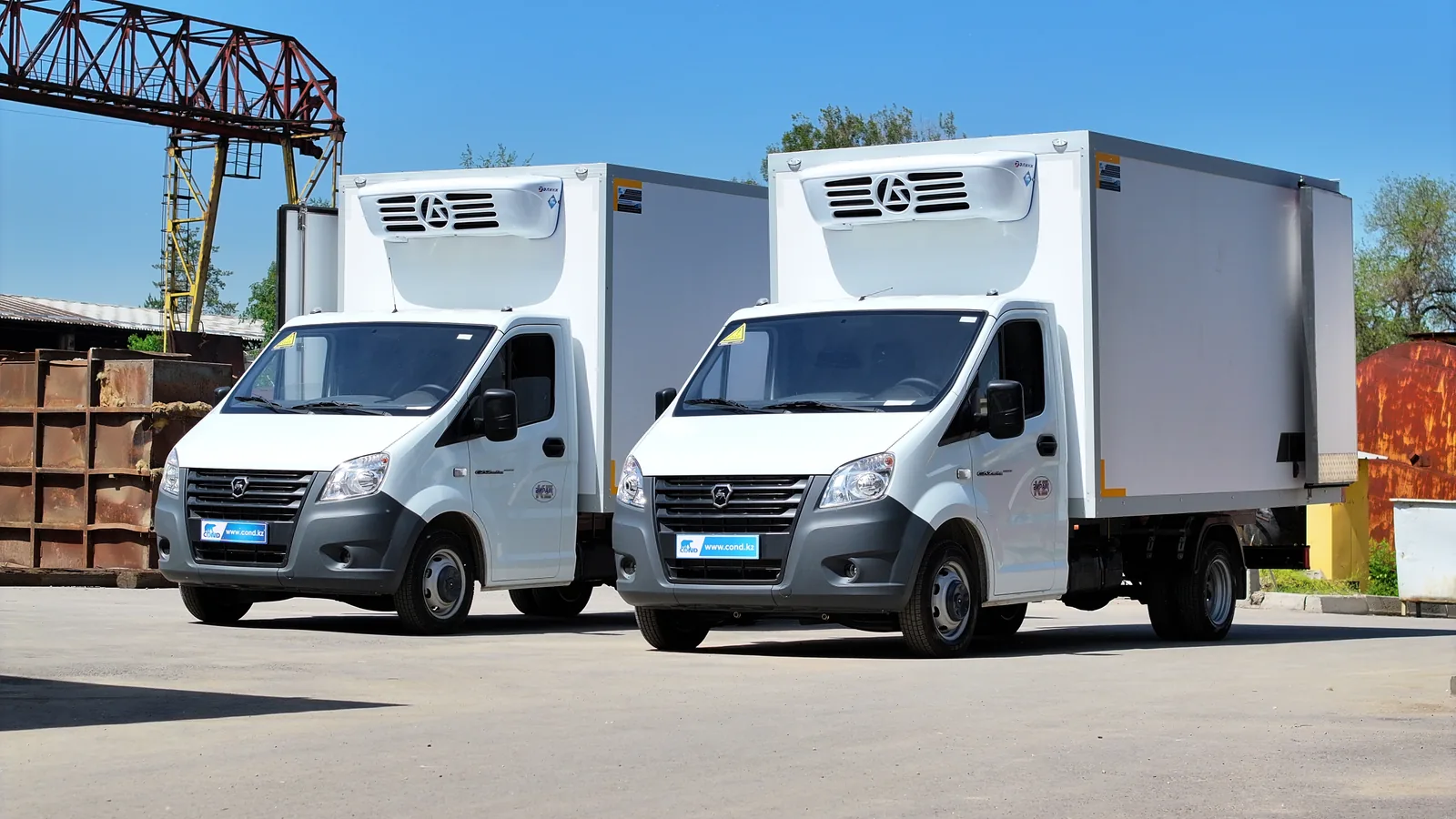
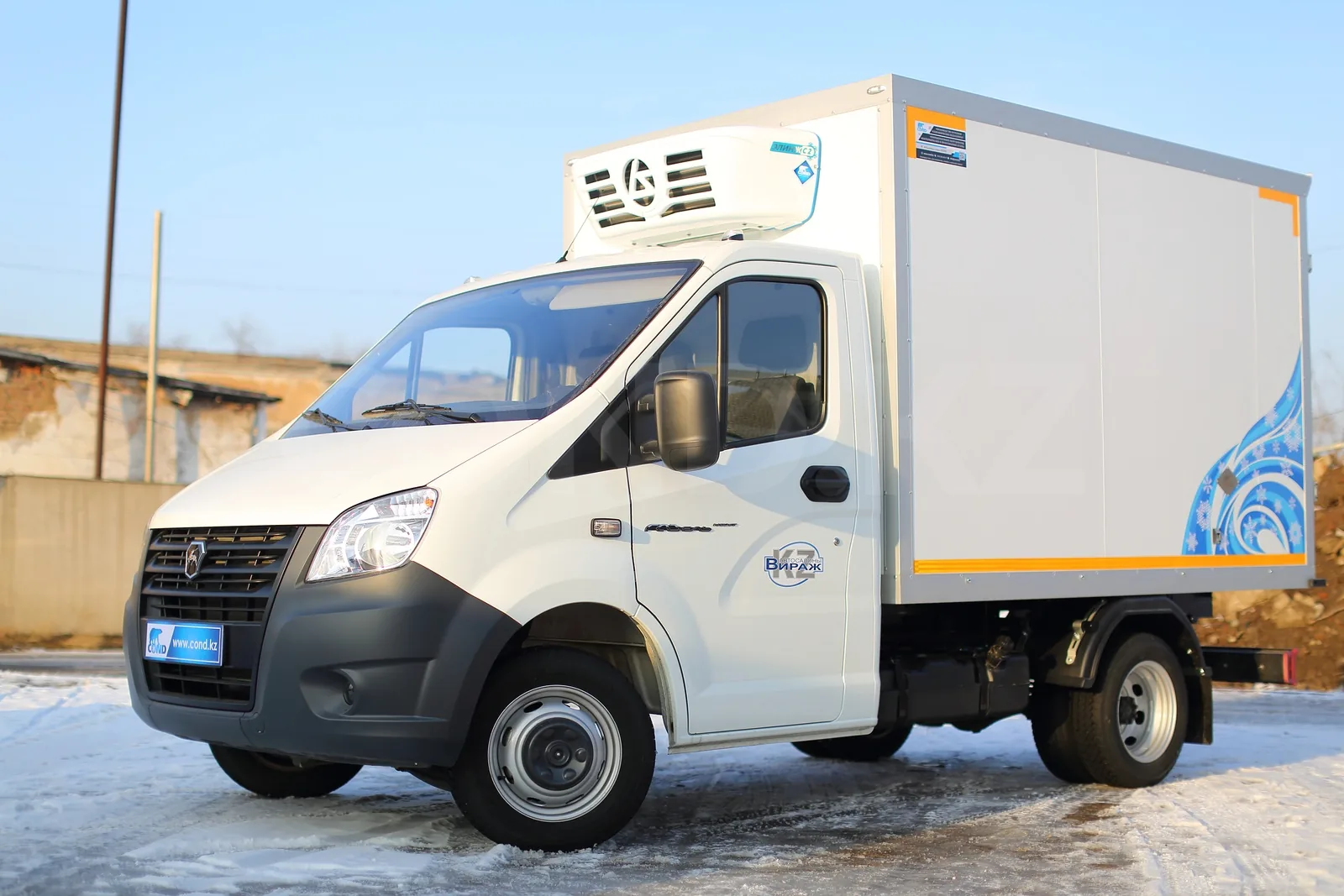
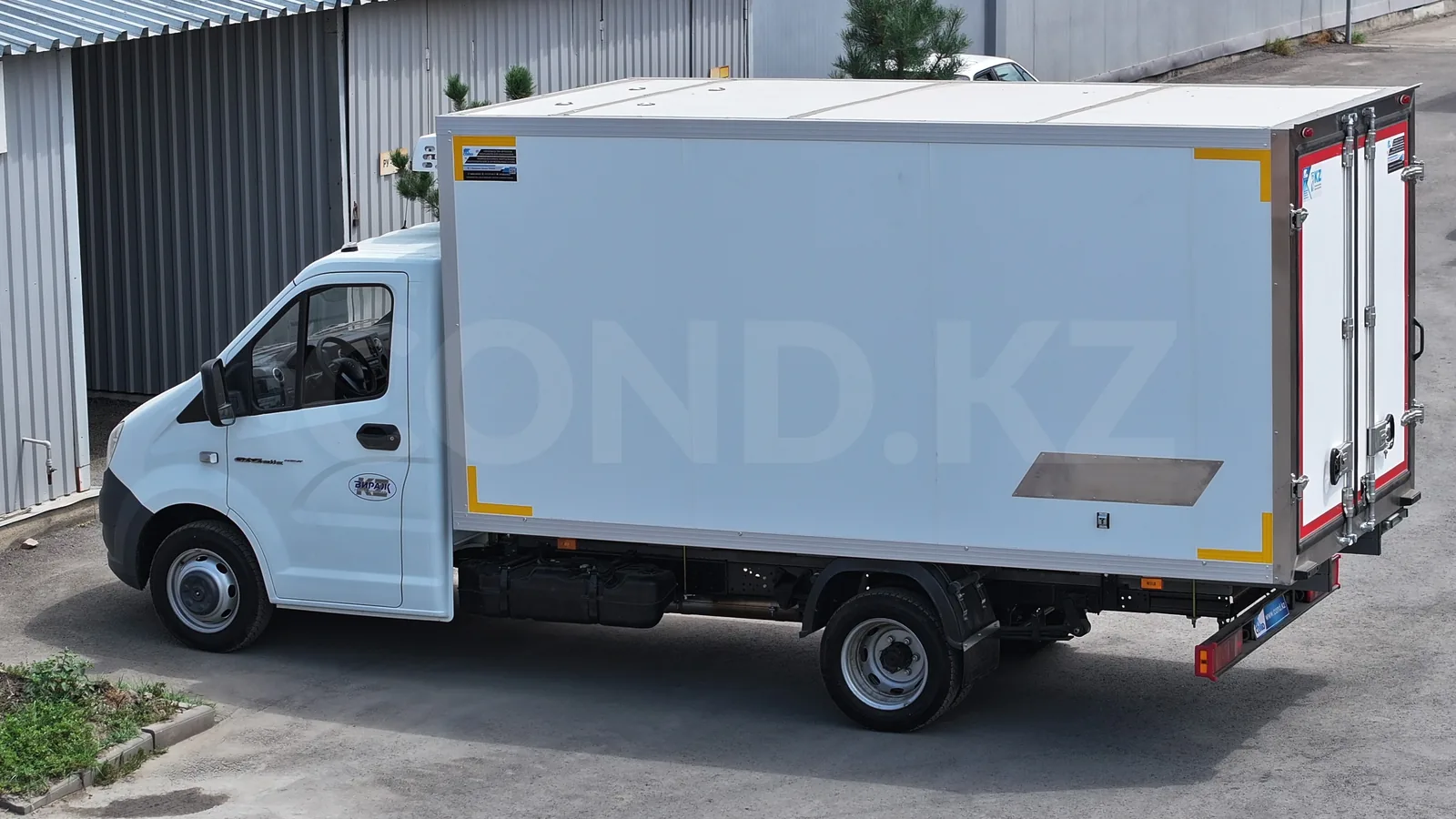
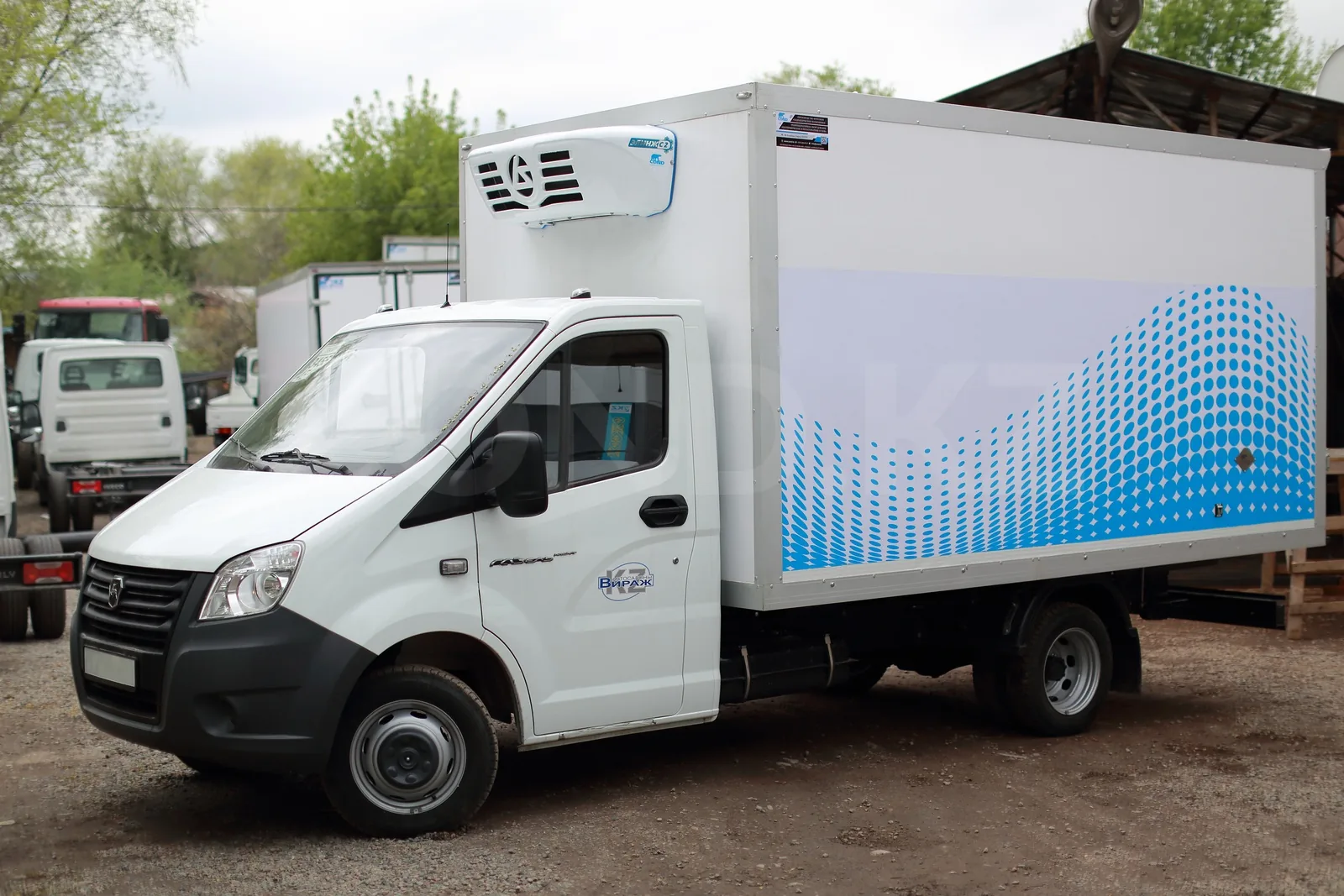
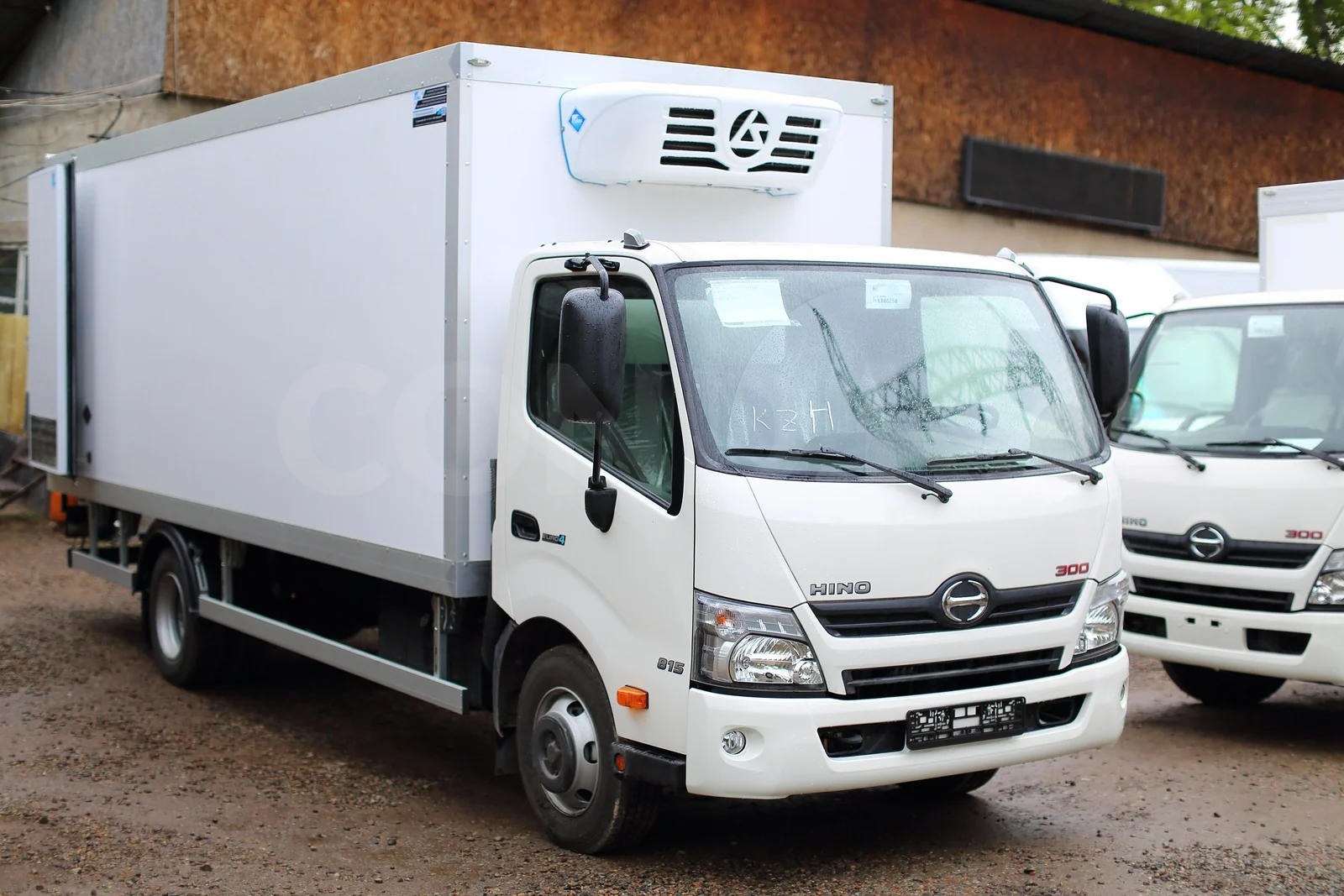
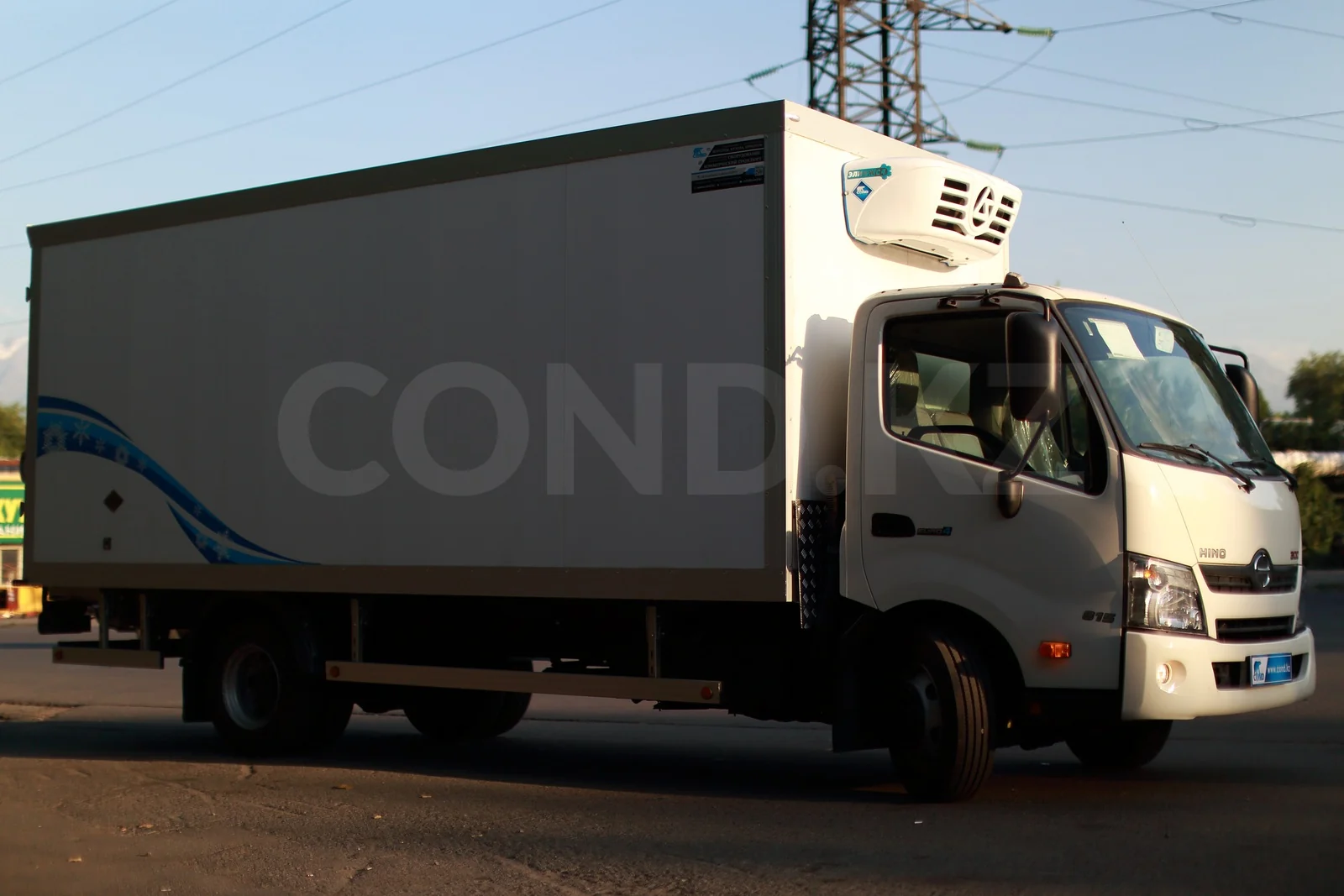
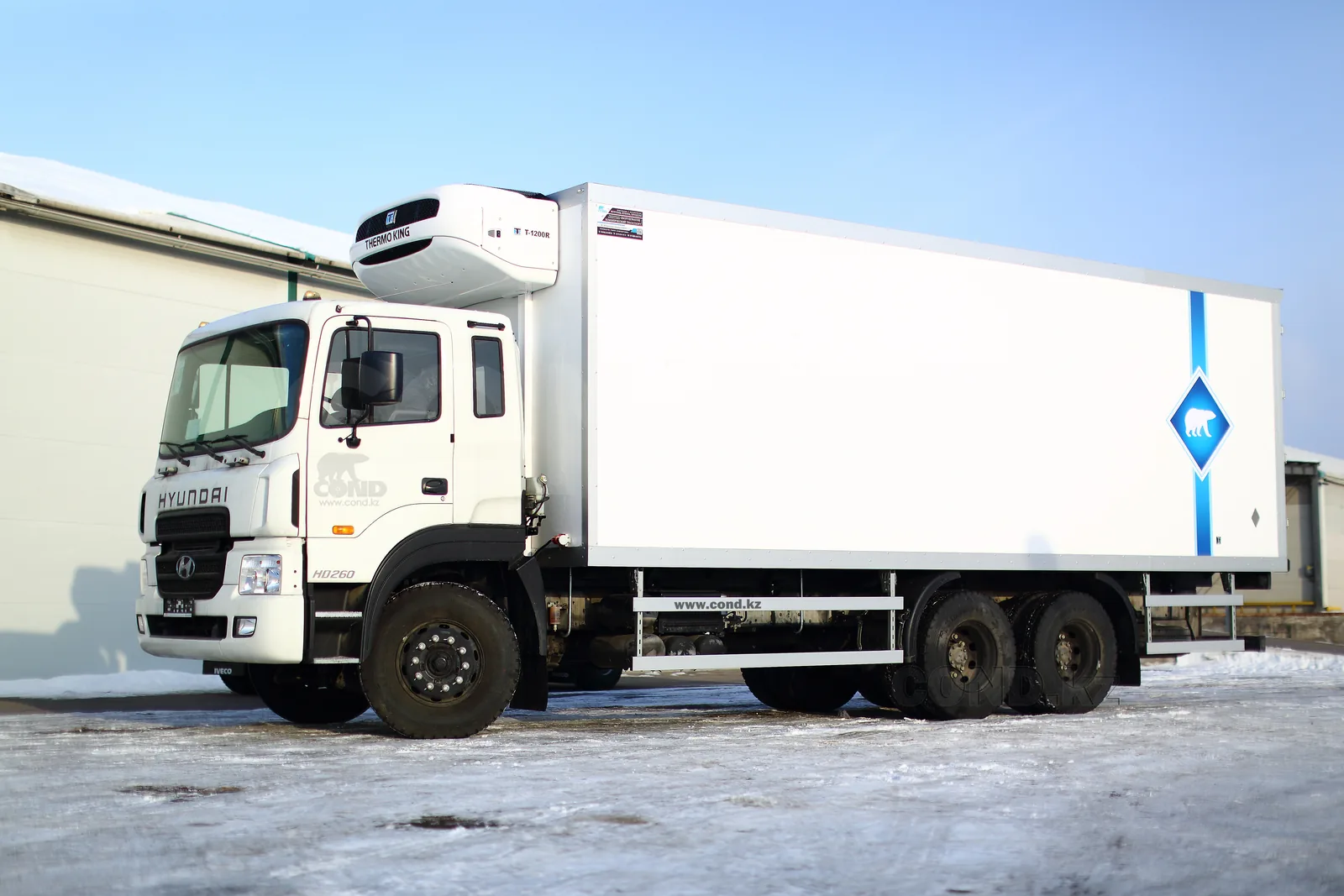
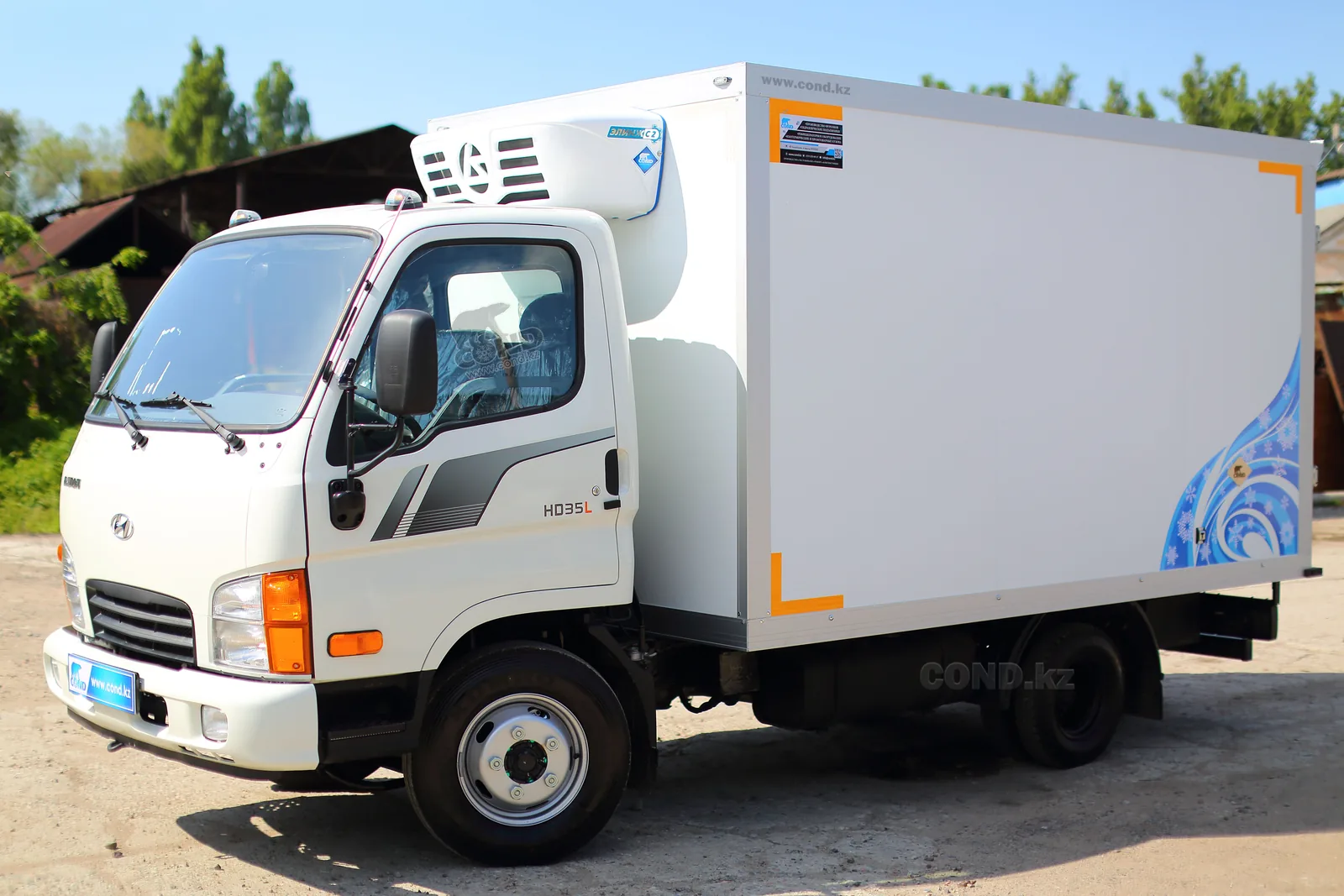
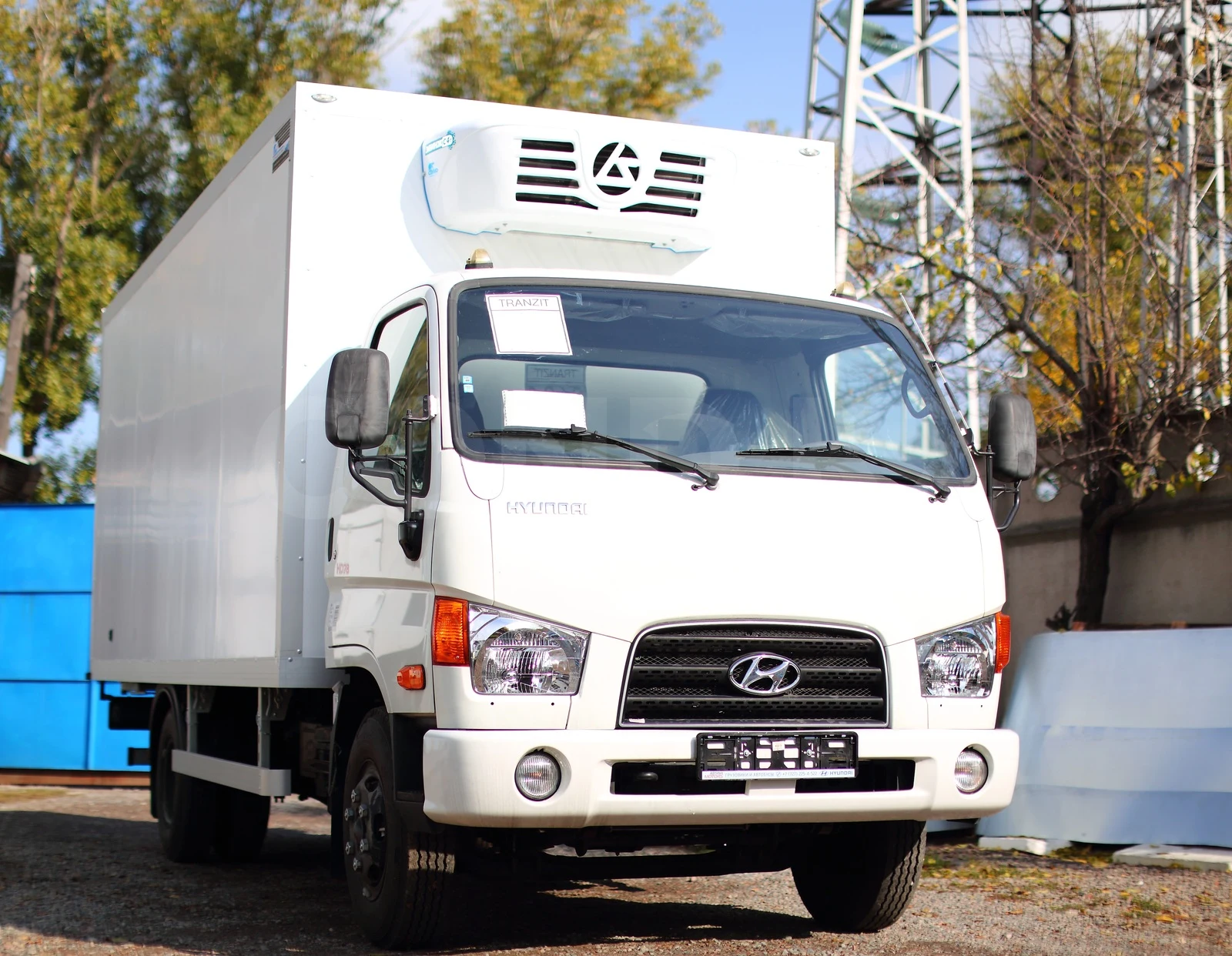
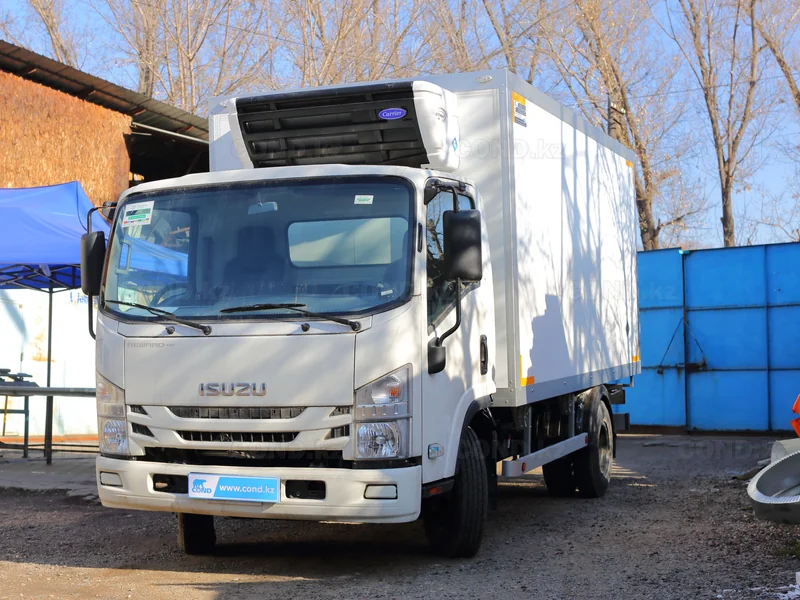
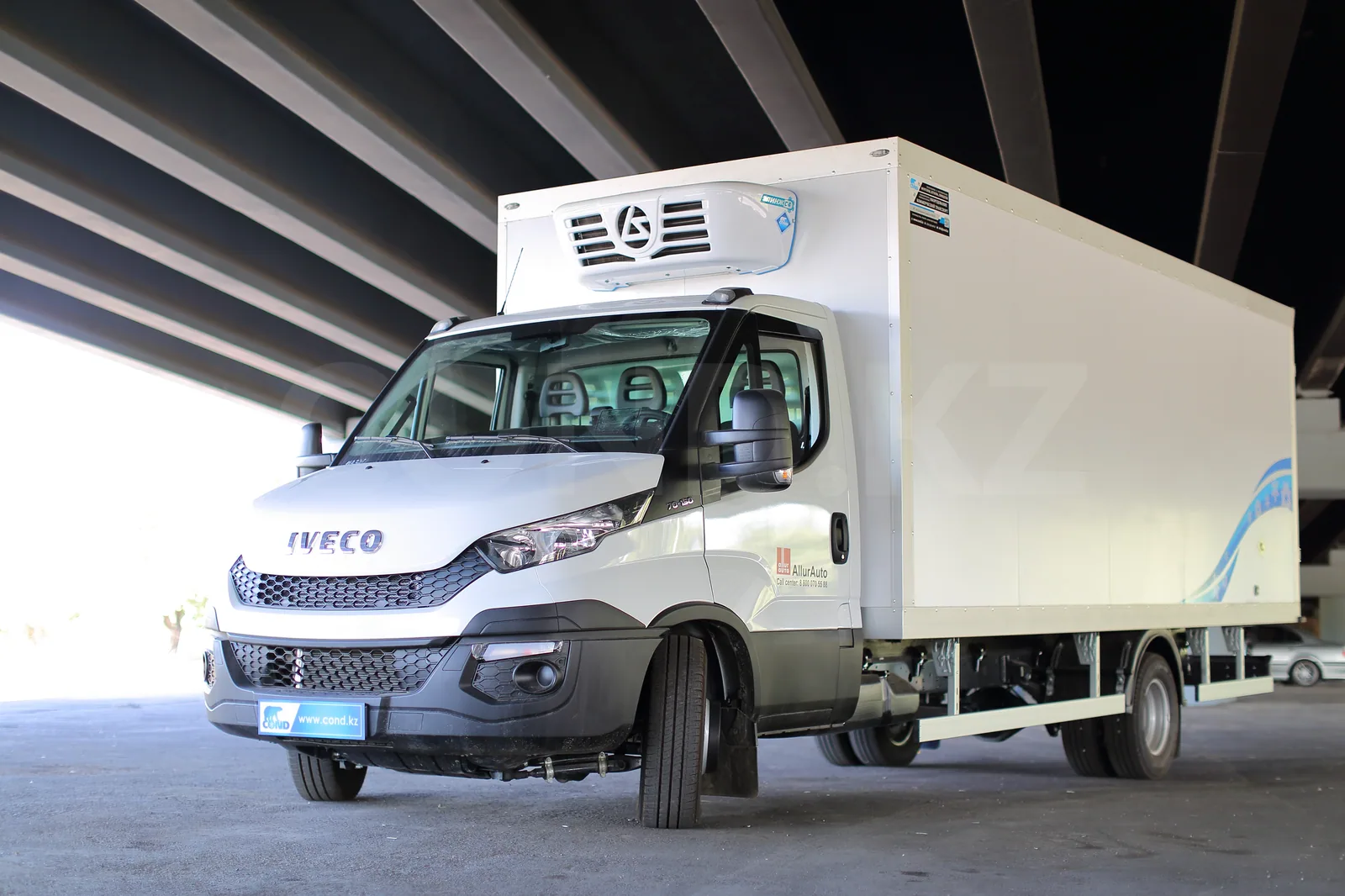
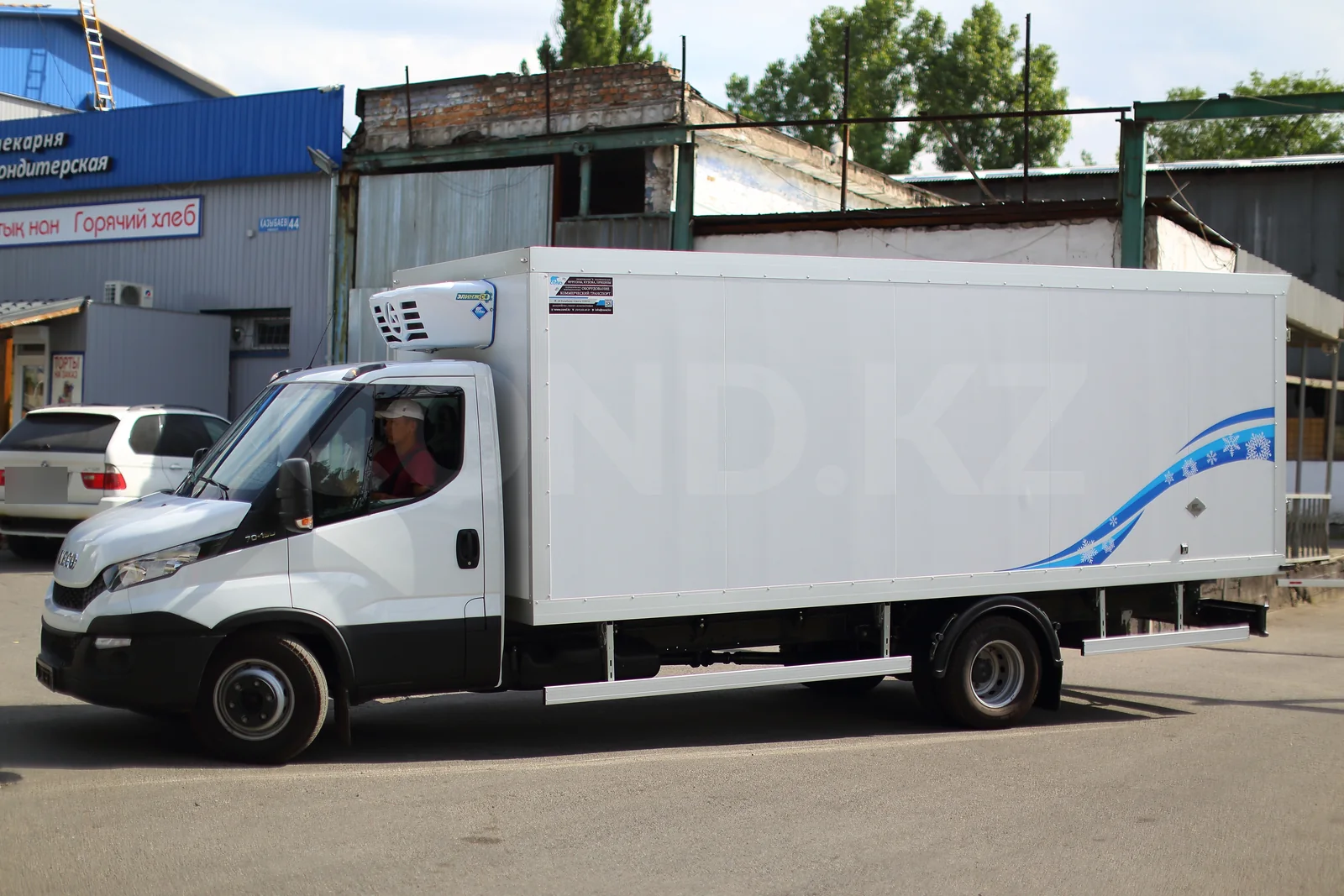
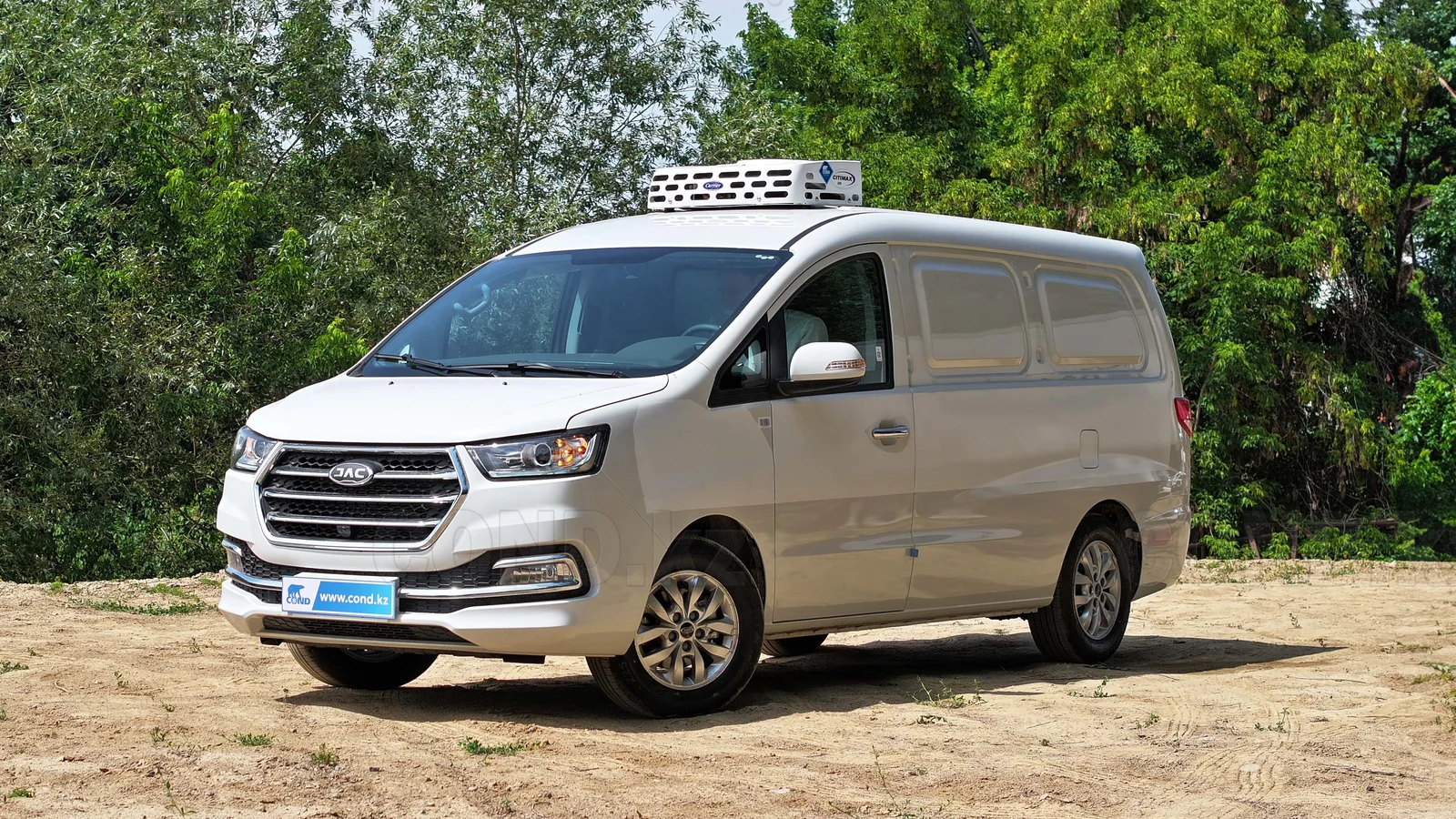
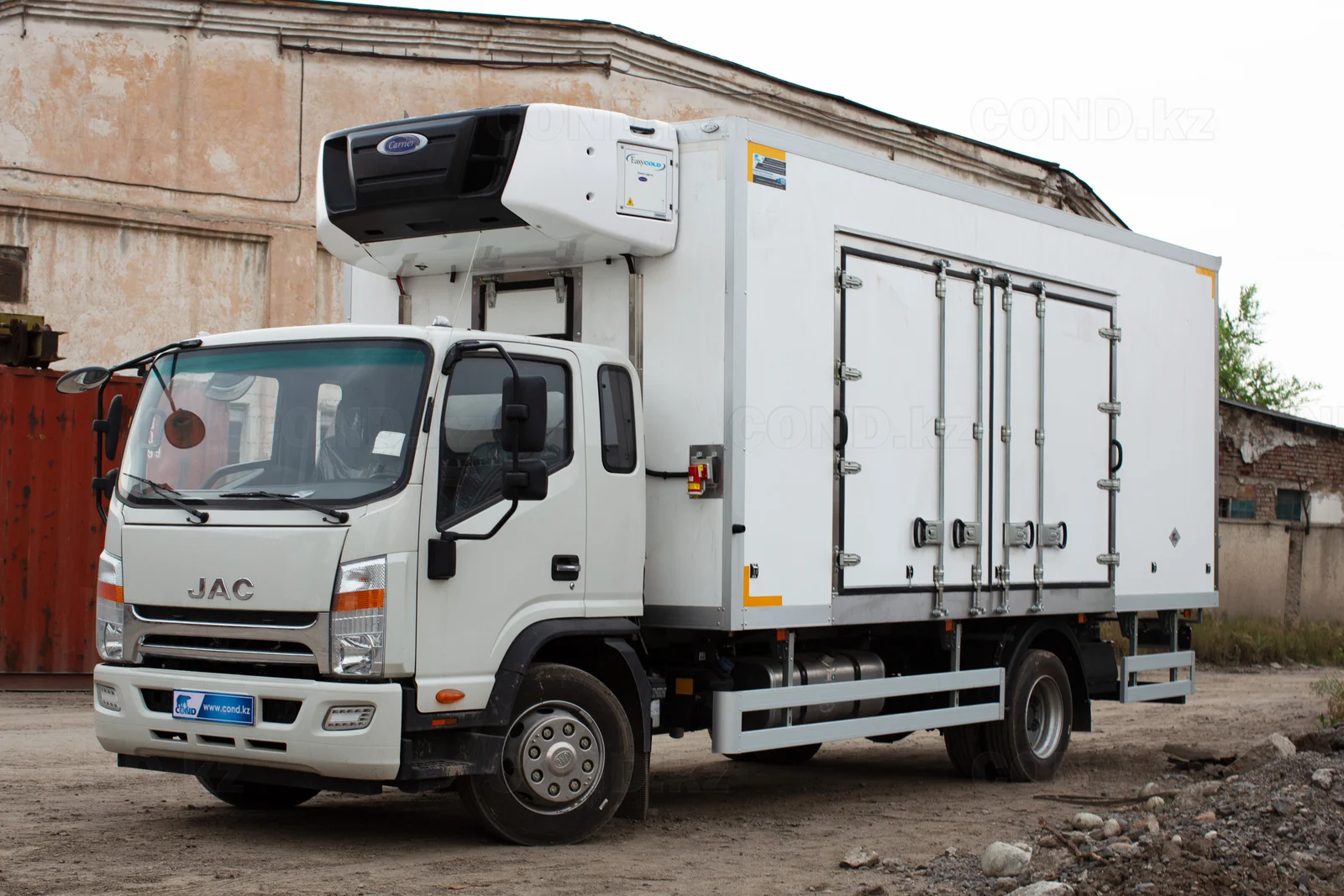
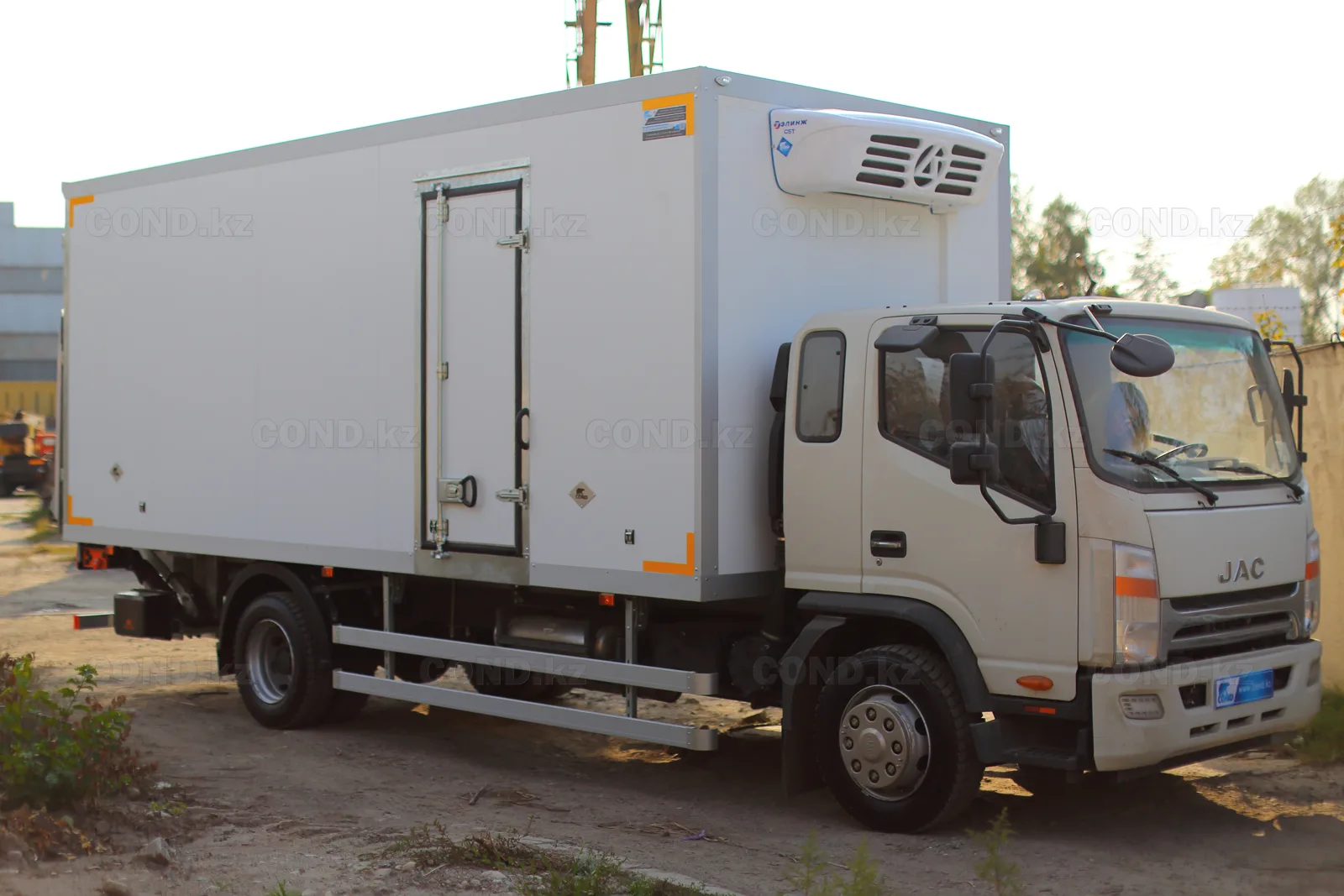
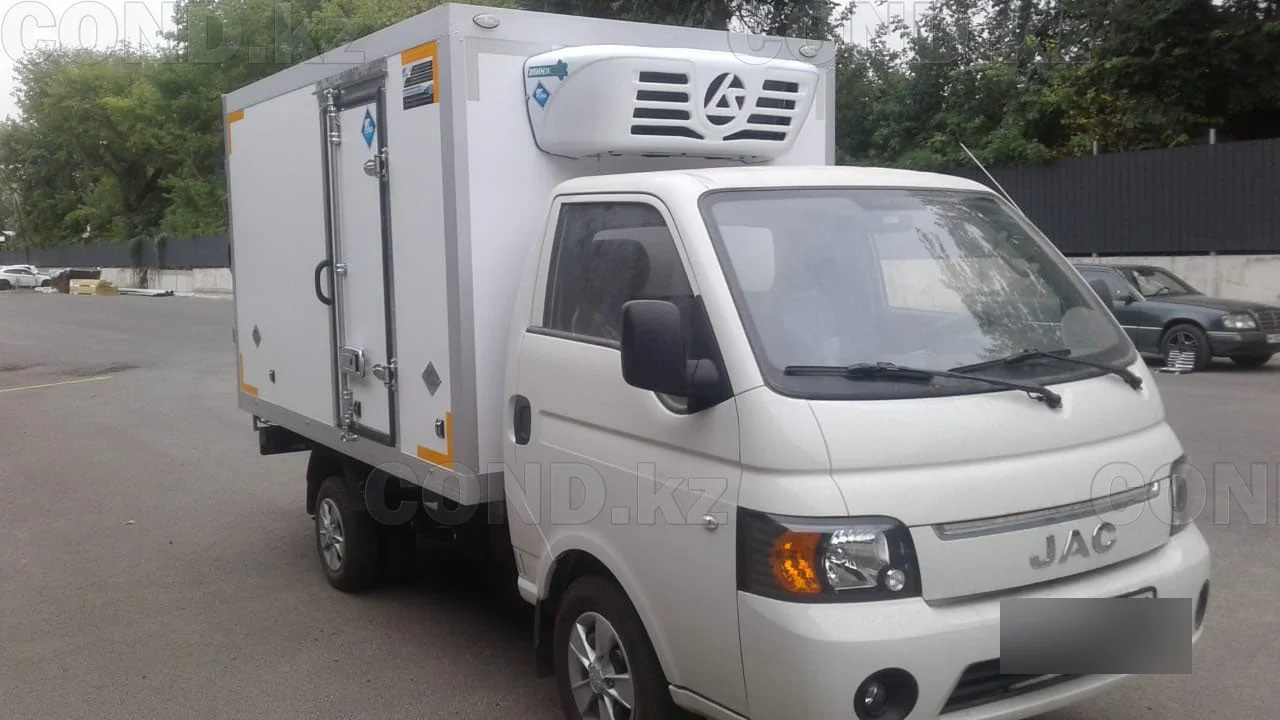
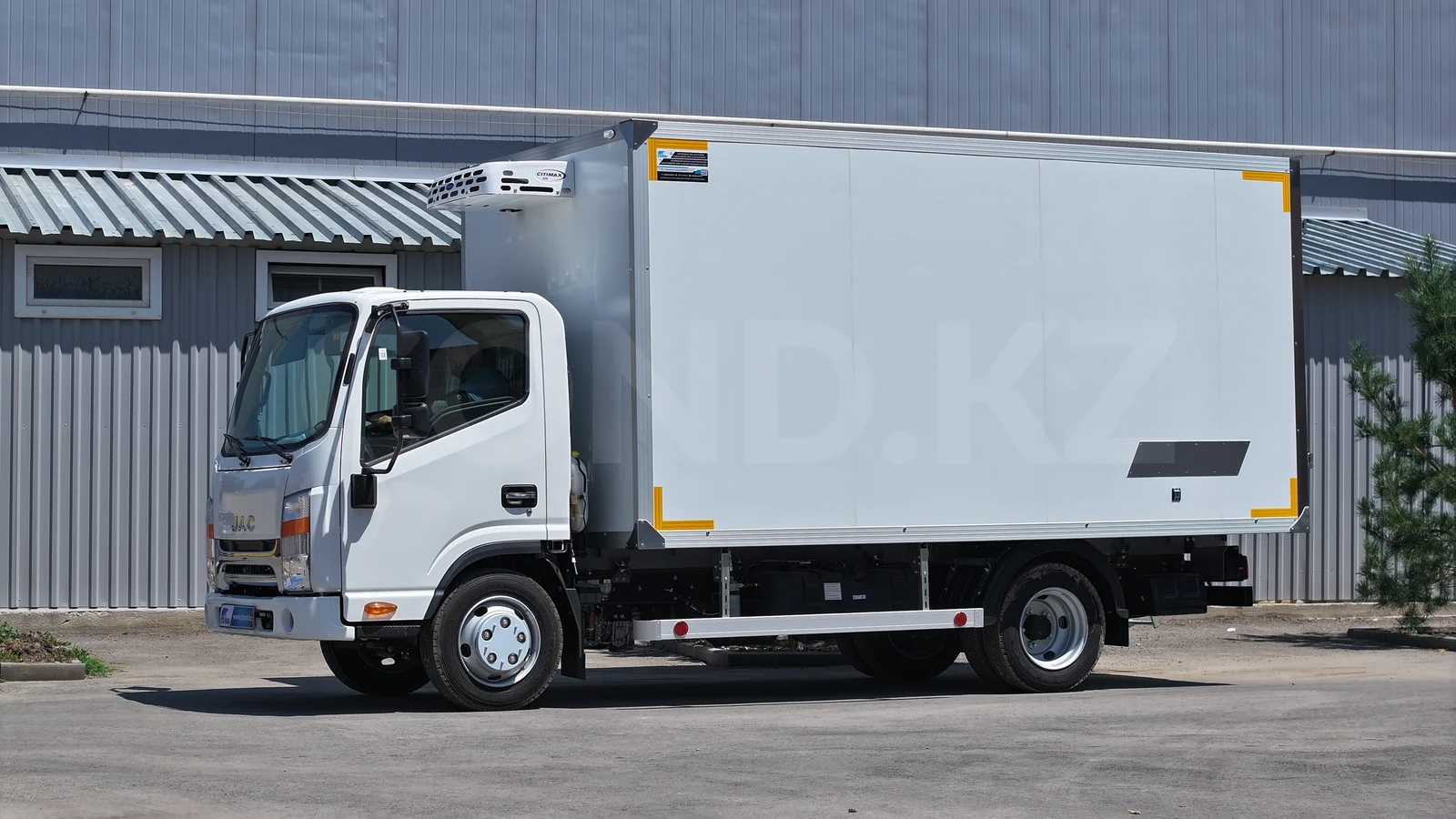
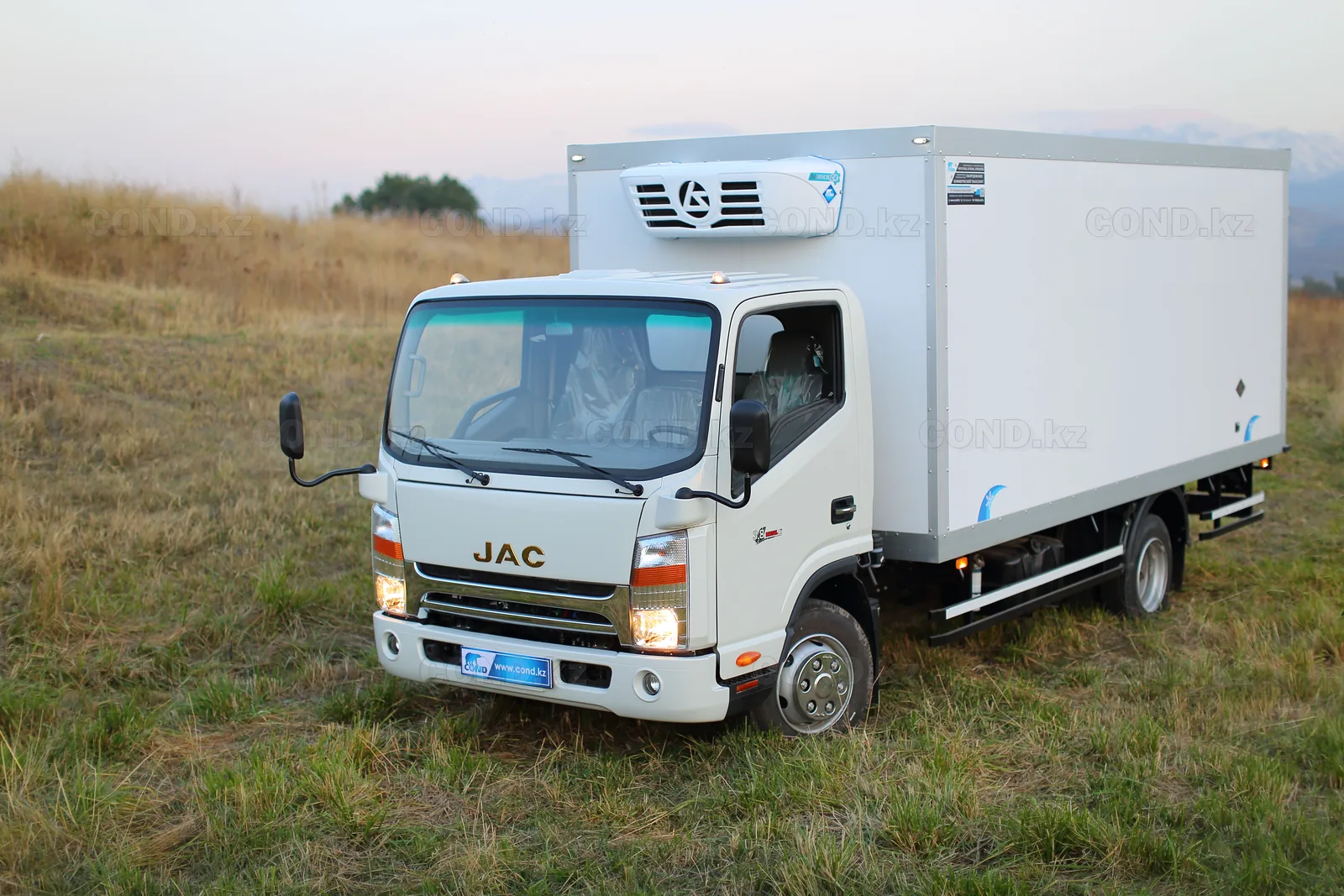
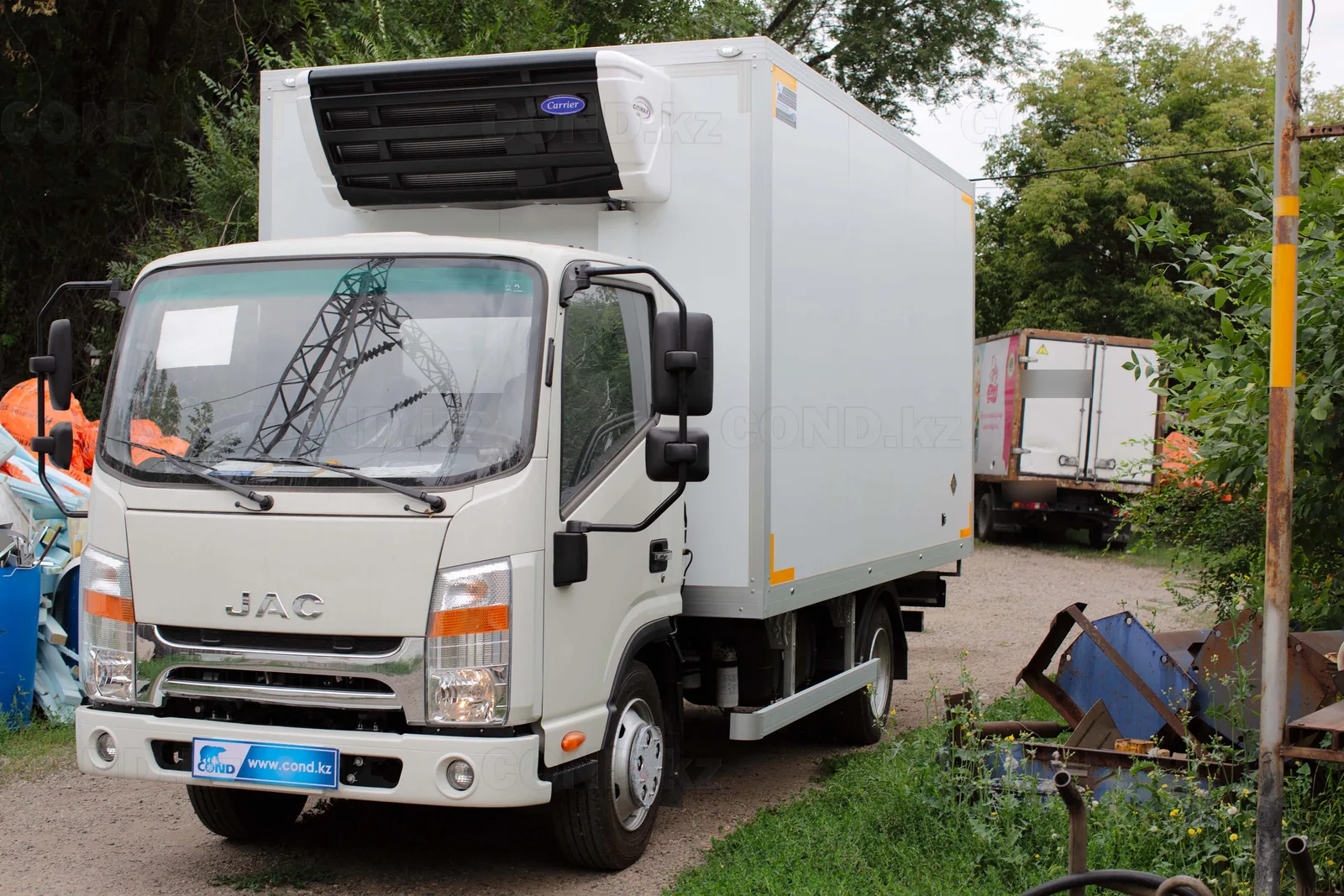
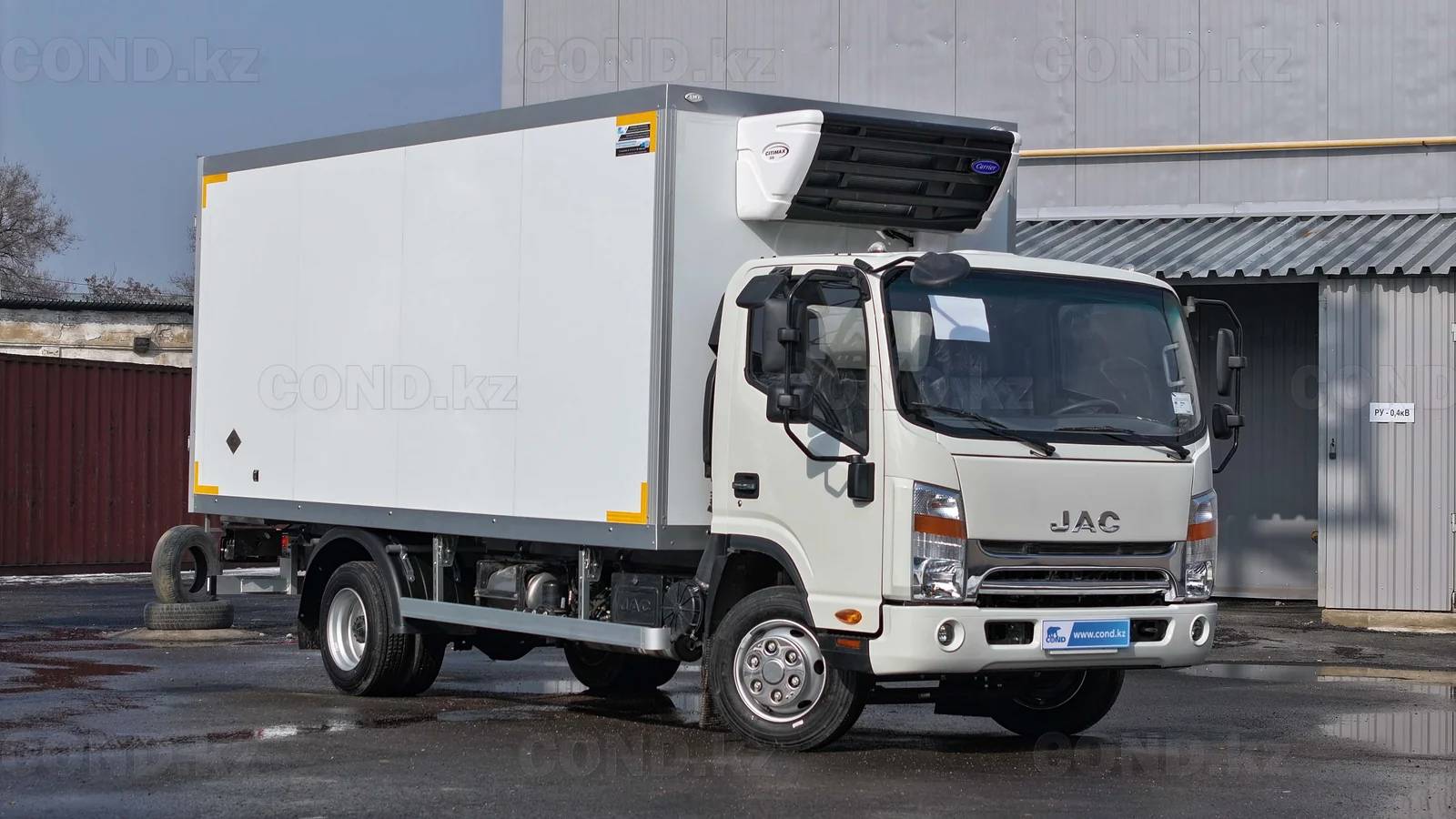
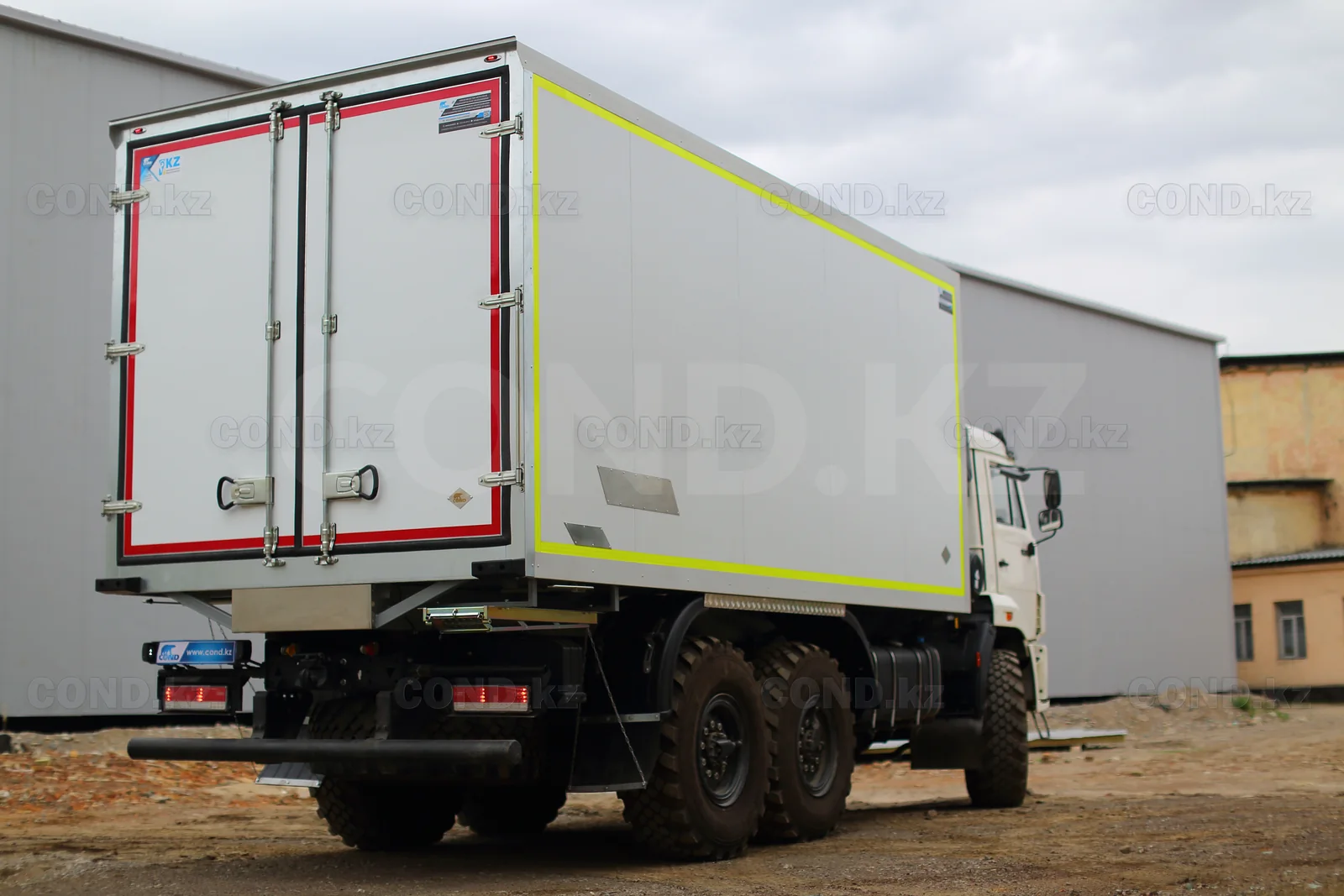
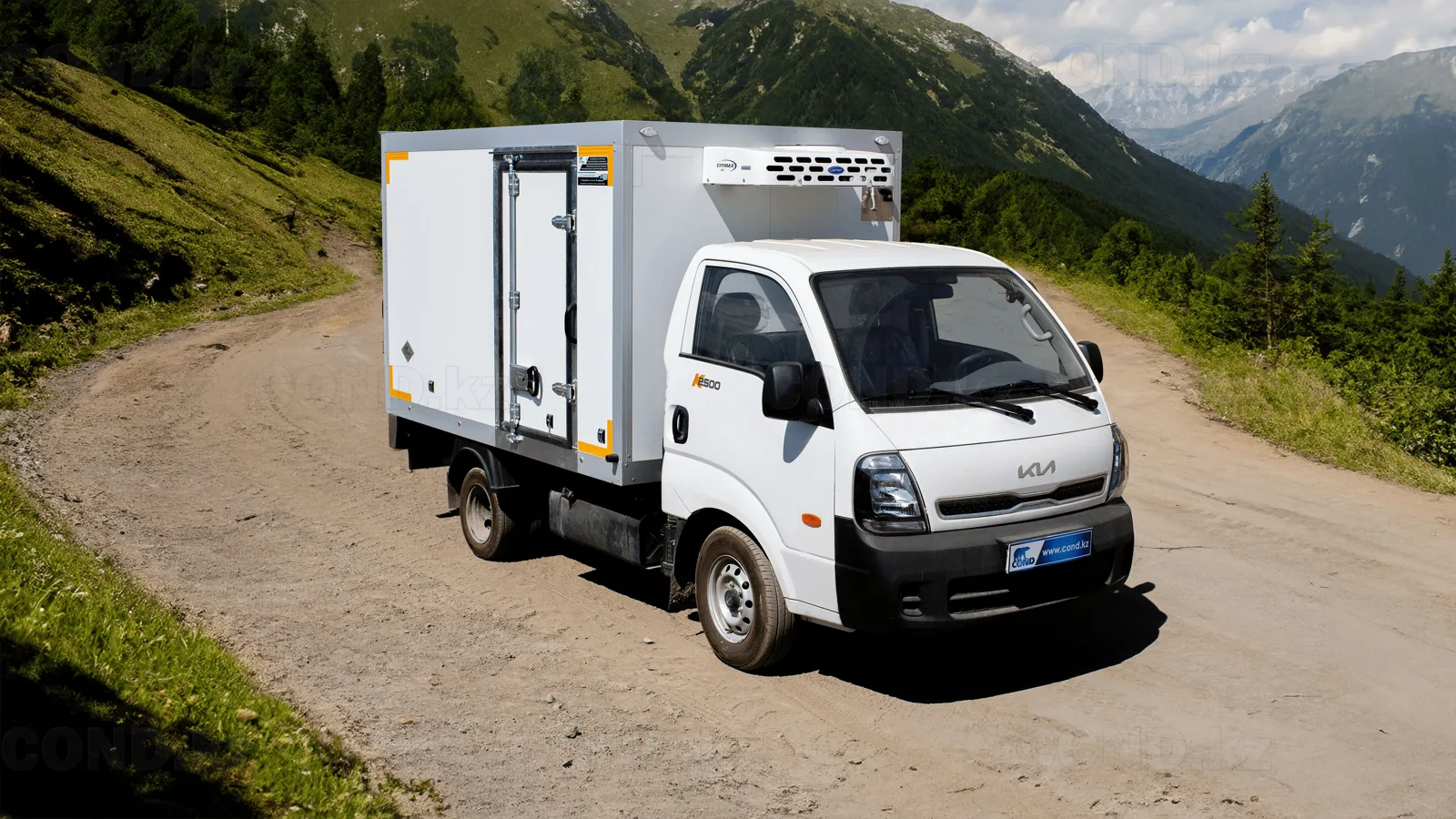
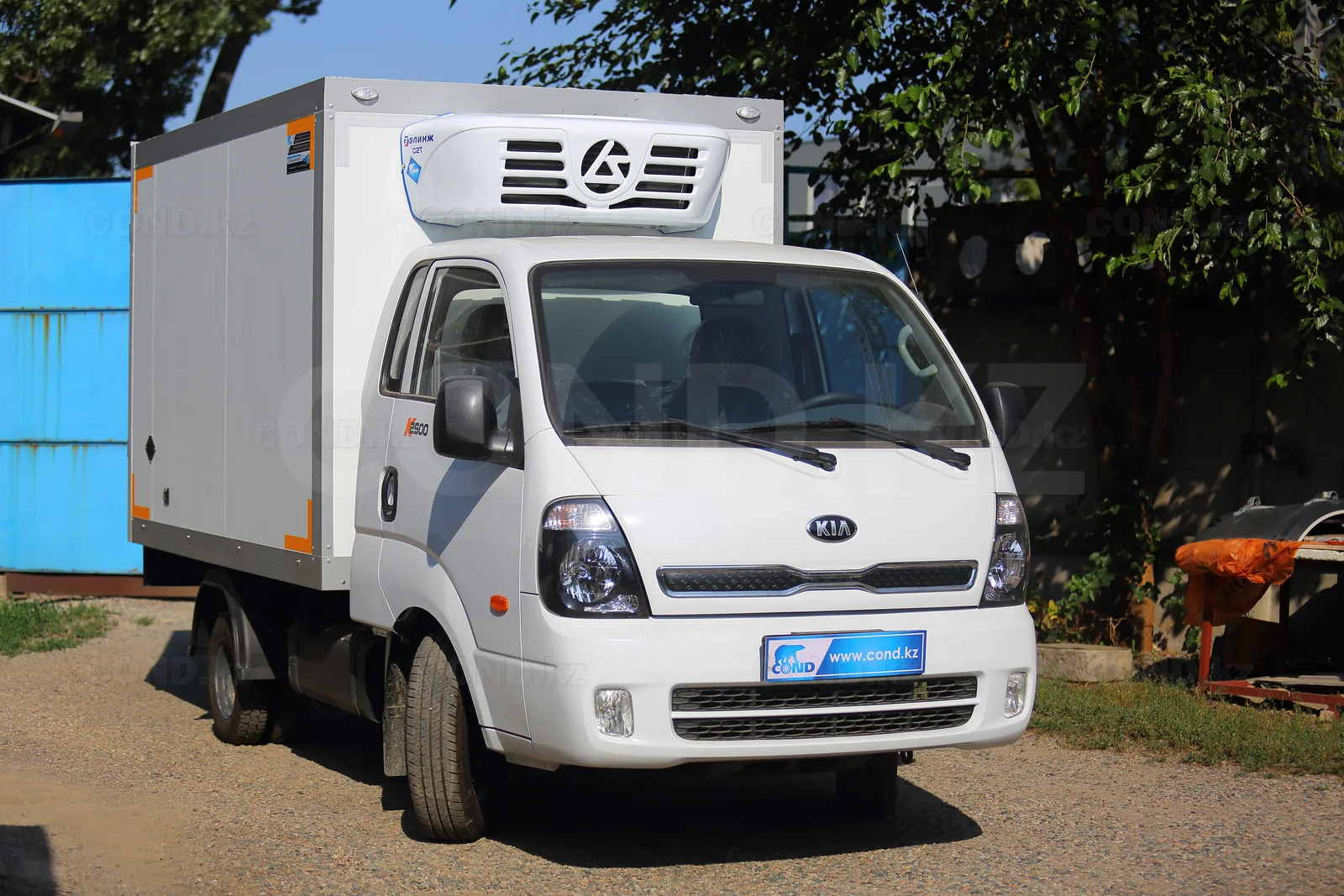
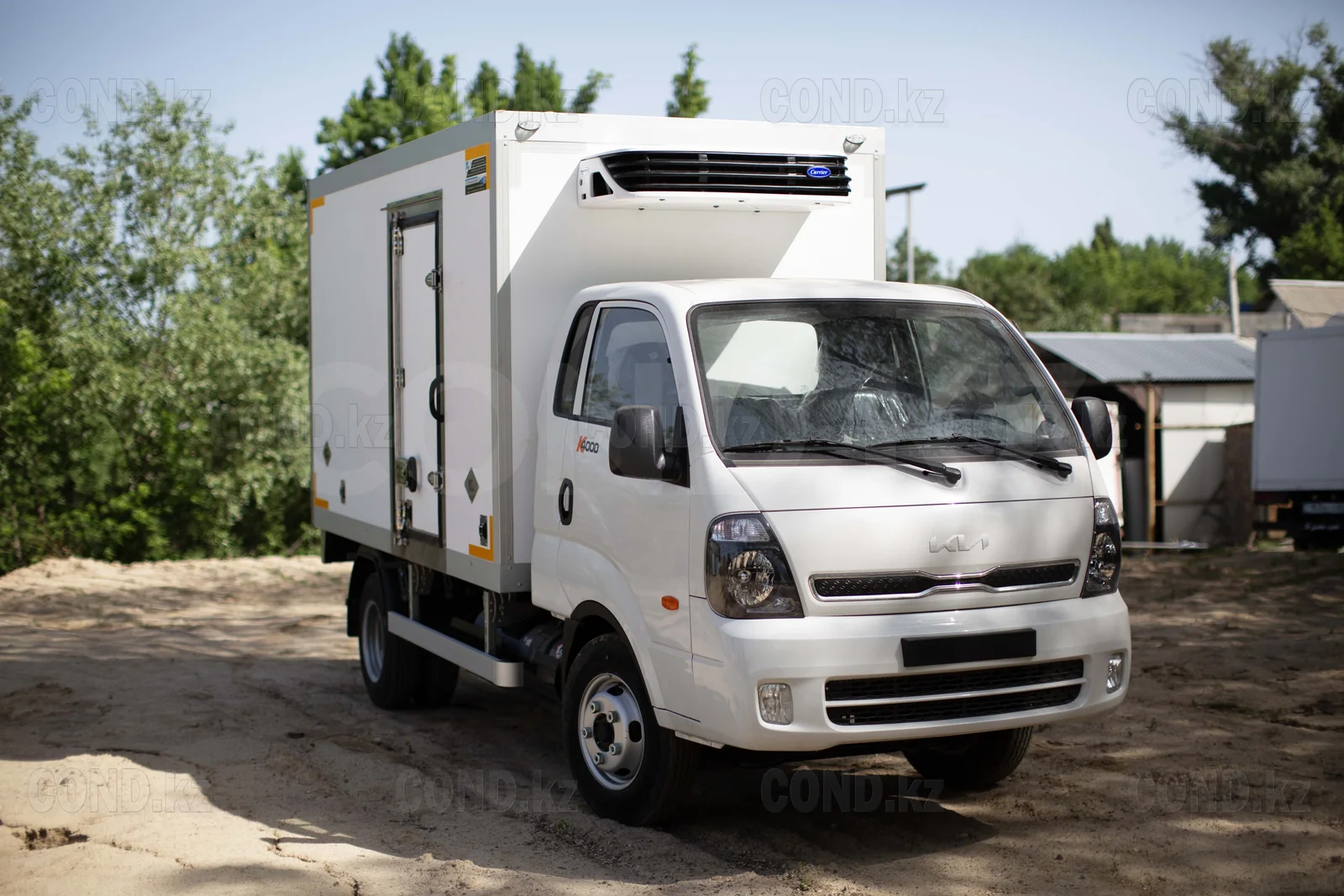
A refrigerated van, also called a cold van or freezer box, is an insulated box of 50/80/100 mm sandwich panels with a heating/refrigeration unit that we mount on your chassis. Unlike an isothermal box, a reefer actively creates and maintains a temperaturefrom −20 to +12 °C throughout the whole trip — for food, pharmaceuticals and any cargo that needs a cold chain. Own workshop in Almaty, Carrier · Elinge · Kaida units, 2-year warranty, lead time from 14 days.
The catalogue lists 42 COND refrigerated vans with prices — vehicles in stock and completed projects.
Other names: reefer, cold van, freezer box, refrigerated box body.
Not sure how a refrigerated van differs from an isothermal van body? Read our explanation: What is a refrigerated van.
The body without a refrigeration unit is covered separately: how a termobudka differs from a refrigerated van.


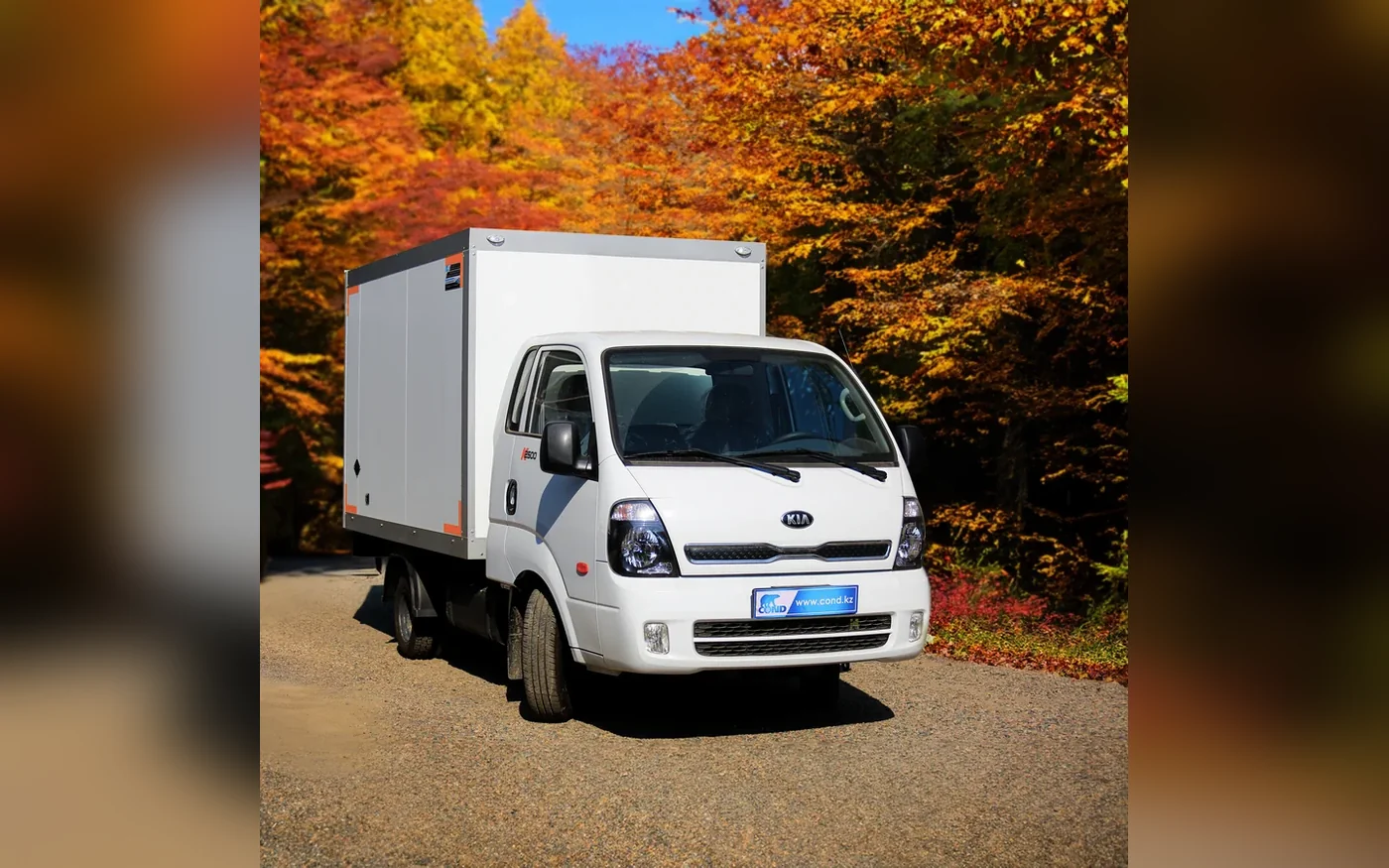
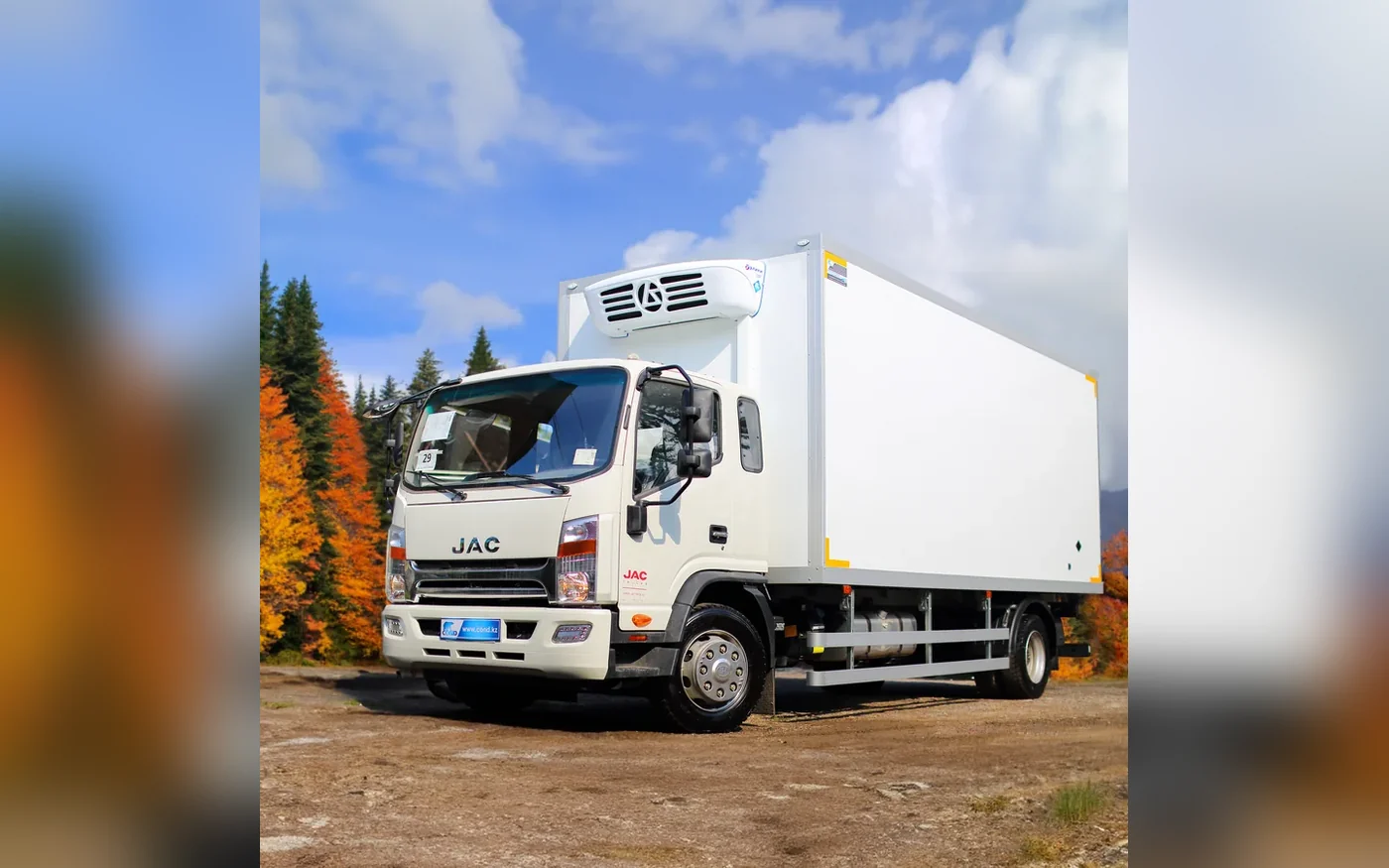
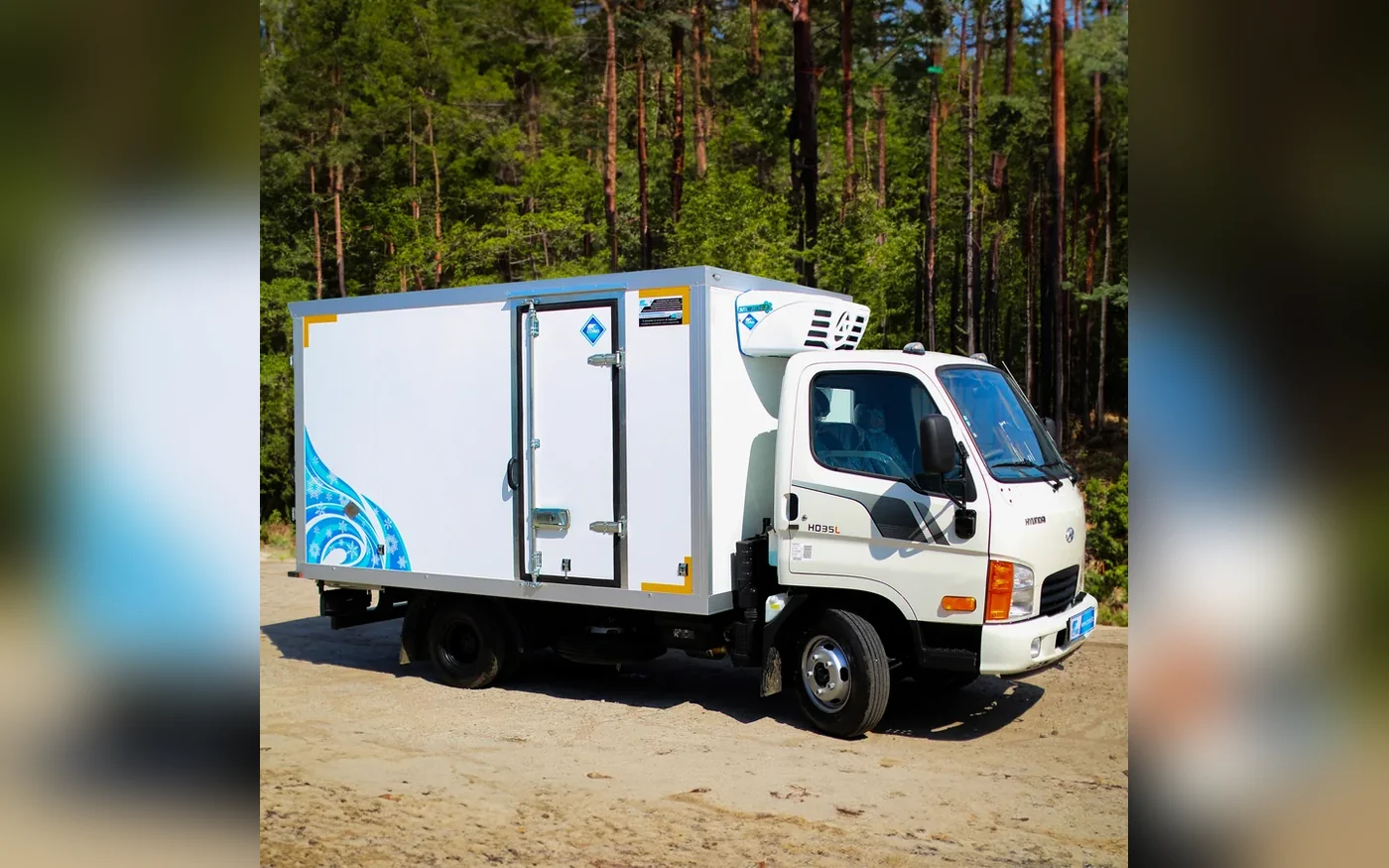
A refrigerated van is ordered in Almaty at the COND plant: 1 Khakimzhan Kazybayev Street, office 305. The body is built on your chassis from 14 working days — a 50–100 mm sandwich panel with a Carrier, Elinge or Kaida unit. Payment is by bank transfer, for legal entities with VAT; the specification, price, lead time and prepayment are fixed in the contract.
Quote is based on body, chassis and temperature range.
People mean different things by “buying a refrigerated van”, and the price of these options differs several times over. We separate them straight away so you do not spend time on someone else’s scenario.
A ready-built vehicle. Chassis and body together, ready to collect. That is the choice when the vehicle is needed this week and a standard configuration fits.
See what is in stock:Completed and ready-built vehicles
Units on their own:Refrigeration units — Carrier, Elinge, Kaida prices
Refrigerated bodies by make:ГАЗельFAWHyundaiKiaJACHinoIsuzuIvecoDongFeng
A body for your own chassis. Our main scenario: you bring a new chassis, we build a refrigerated body to fit it and mount the unit. The manufacturer warranty on the chassis stays valid.
Converting what you already have. The vehicle already carries a dry-freight or insulated body — we insulate it if needed and fit a refrigeration unit. The change of design is registered with the paperwork.
Fitting to an existing body:Refrigeration equipment installation
Paperwork after the conversion:The vehicle-document entry about a conversion
For the query “refrigerator Almaty” the first results are classified sites with used vehicles. Let us be honest about when that makes sense and when a new made-to-order body is the better buy.
A used refrigerated van is cheaper up front — and that is its only undisputed advantage. After that come the questions a seller on a classifieds site rarely can answer: how many hours the refrigeration unit has run, whether the sandwich panel has delaminated, whether the body still holds the rated sub-zero temperature or no longer reaches −18 °C. A worn-out reefer that cannot reach its mode is useless for frozen cargo at any price.
A new COND reefer is built for your task: panel thickness for the temperature mode you need, a new Carrier, Elinge or Kaida unit under warranty, the chassis of your choice and internal dimensions exactly for your pallets. A factory warranty on the body and the unit, a clear history — the vehicle was built in front of you, not bought second-hand. Lead time from 14 days.
A practical rule: if you carry frozen goods, medicines or anything with a cold-chain requirement, buy a new body with a warranty on the unit — the saving on a used one is wiped out by a single spoiled load. If the cargo is undemanding and the budget is tight, a used one makes sense, but have the panel and the unit checked by an independent specialist before buying.
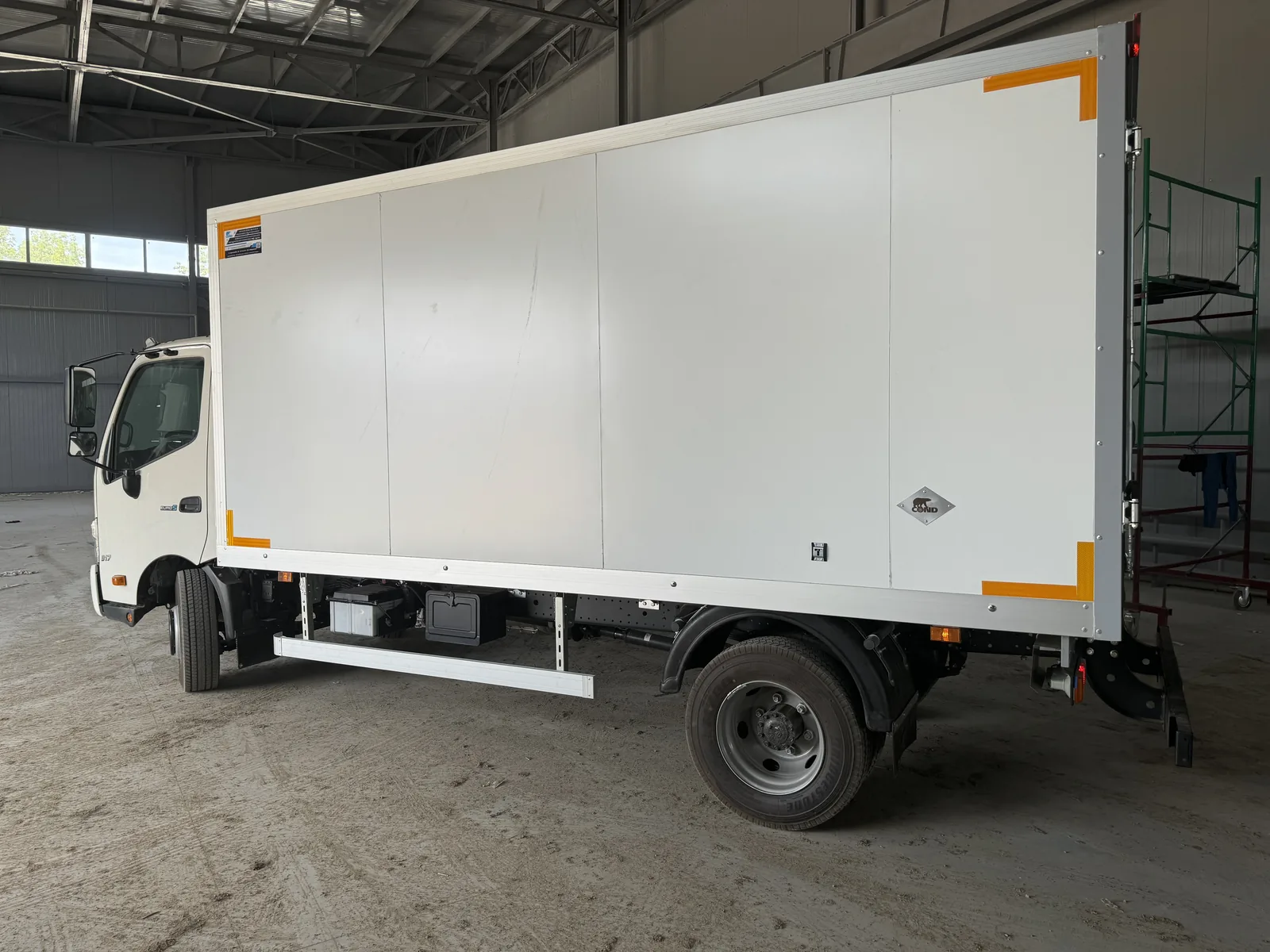
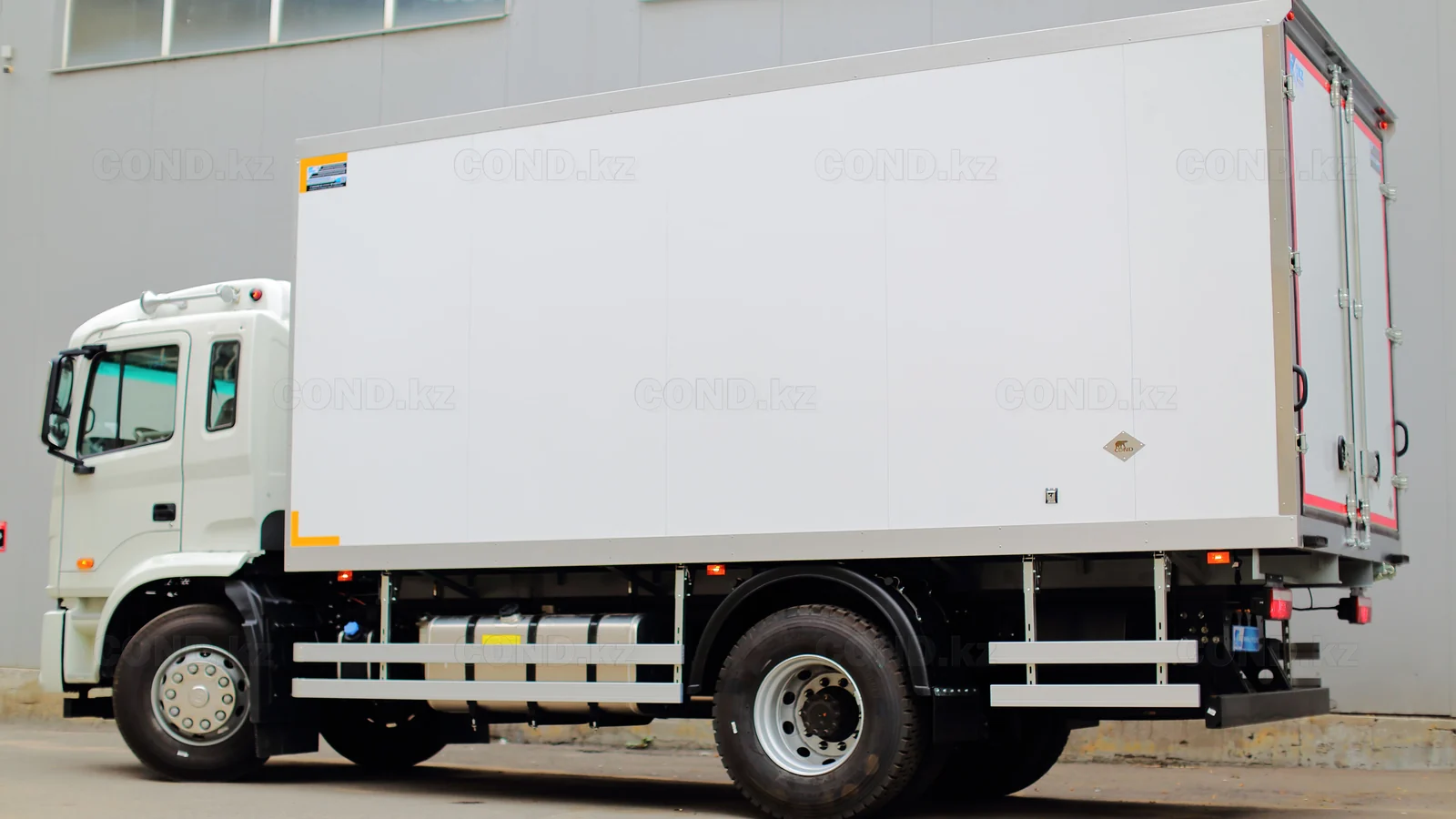
A COND refrigerated body — also called a mobile cold room, a fridge body or simply a “reefer” — is an insulated body fitted with a refrigeration unit. First, what the body itself is made of: a frameless sandwich panel, a stainless rear opening, anodised edging and fibreglass doors. Below, unit by unit: the material, why it is done that way and what it gives you.
Material: a frameless panel — two skins of clad galvanised metal with an extruded polystyrene core, 50, 80 or 100 mm thick.
Why: assembly without through-metal ties between the skins removes thermal bridges; wall thermal conductivity is below 0.4 W/(m·°C).
Your benefit: the refrigeration unit holds the set point more easily and cycles less often — lower fuel consumption and longer unit life.
Material: the rear door frame is made of stainless steel.
Why: this is the most loaded and the “wettest” zone of the body — constant contact with condensation, rain and road chemicals, where ordinary steel rusts first.
Your benefit: the frame does not corrode for years, the door always seals tight, and the body does not lose cold around the perimeter.
Material: all outer edges and panel joints are covered with anodised aluminium profile.
Why: panel edges are the vulnerable spot during loading; the profile protects them from impacts and seals the joints.
Your benefit: the body does not come apart at the seams and keeps its integrity and appearance for its entire service life.
Material: double-skin FRP fibreglass doors with insulation and rubber isothermal seal.
Why: fibreglass does not corrode and is lighter than metal; the edge does not warp from condensation and temperature swings.
Your benefit: a lighter door means more payload; the seal holds the cold longer and the door does not sag.
Material: cam locks, hinges and handles in galvanised steel as standard or stainless steel in the premium trim.
Why: opening points work dozens of times a day and are the first to fail from corrosion and ice.
Your benefit: locks do not seize in winter; stainless steel is for intensive food logistics and pressure washing.
Material: a reinforced steel subframe with steel mounting inserts for the fasteners.
Why: the subframe spreads the weight of the body, cargo and refrigeration unit onto the chassis frame and absorbs impacts on rough roads.
Your benefit: the body does not shift on the frame, fasteners do not tear out, and both chassis and body last longer even under overload.
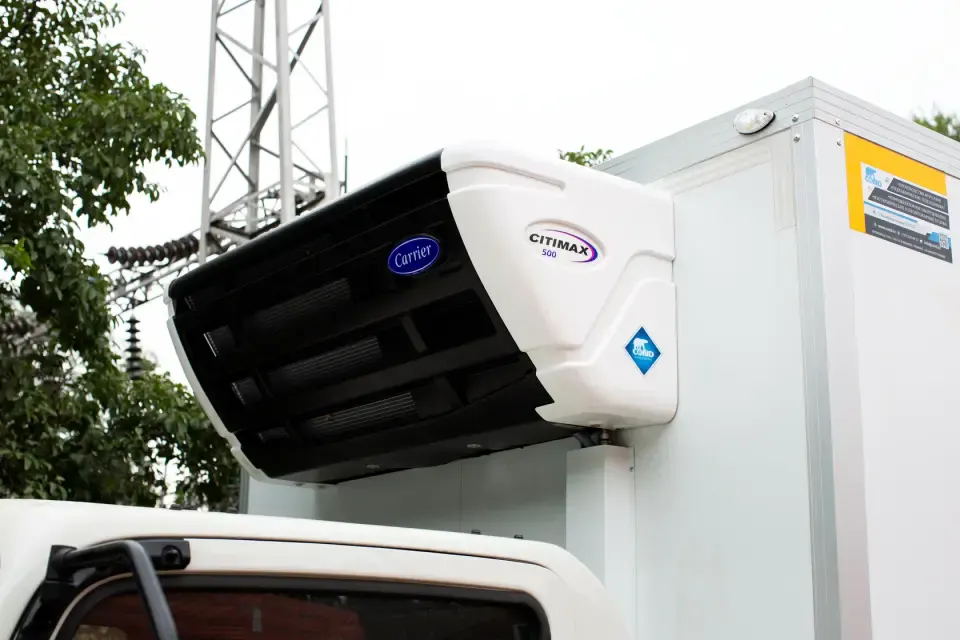
The unit is what makes a reefer different from an isothermal box: it creates and maintains the required temperature. We install Carrier, Elinge and Kaida units — selecting the model for your body volume, duty and budget, with installation and servicing in our own workshop.
Premium road and self-powered units: precise control, freezing down to −20 °C and heating up to +12 °C.
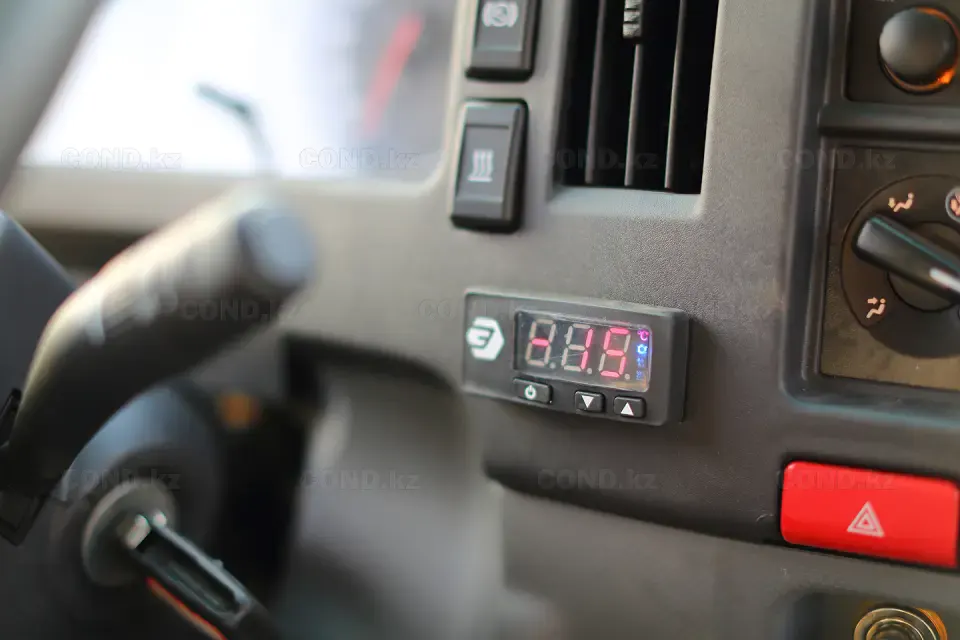
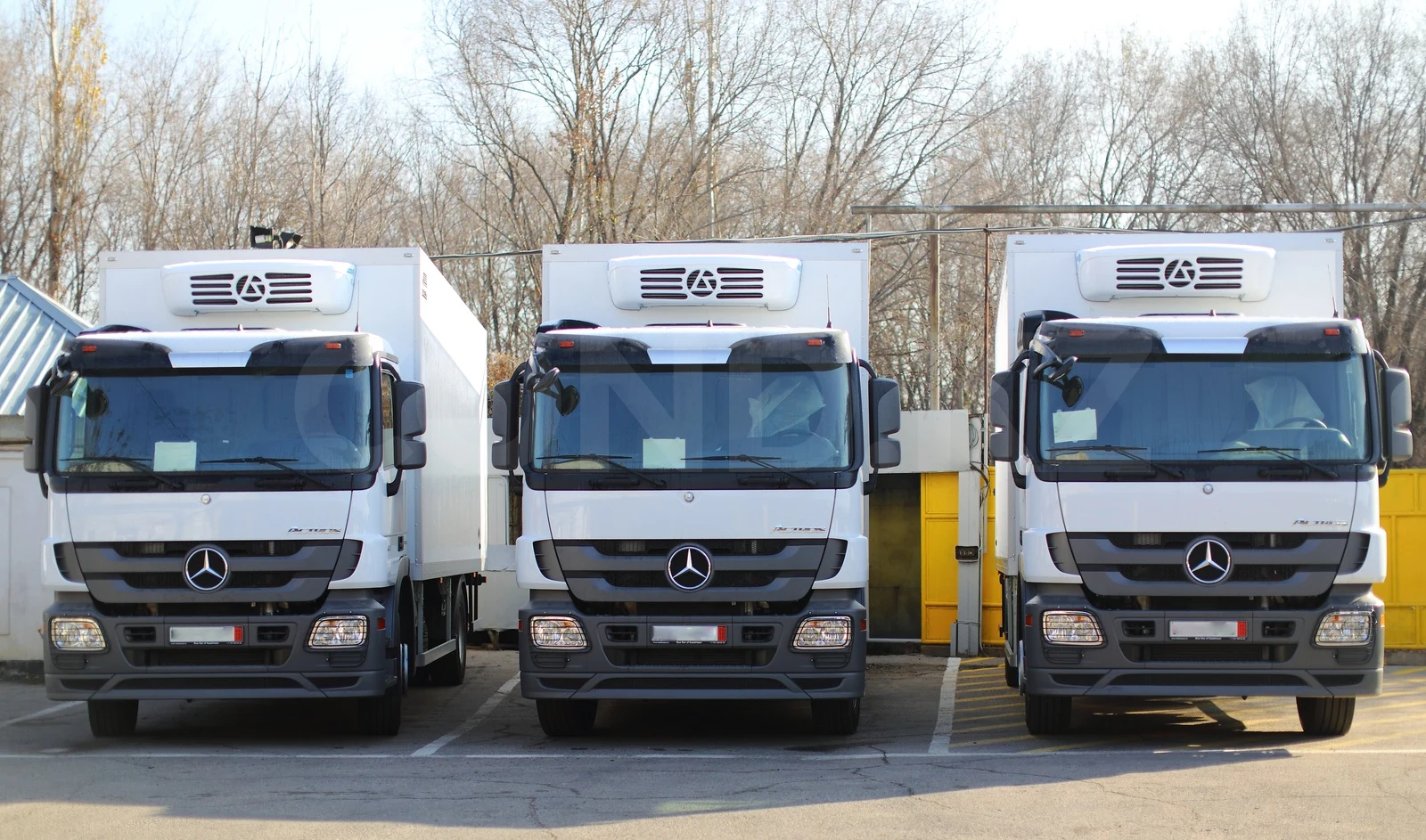
Reliable units at a sensible price with affordable servicing — the workhorse of distribution.
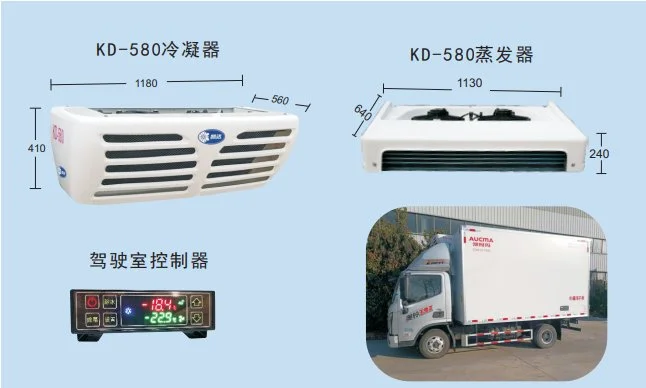
Chinese units for body volumes of 5–23 m³ — an affordable entry into refrigerated logistics.
| Drive type | How it works | Who it suits |
|---|---|---|
| Road (engine-driven) | The compressor runs off the chassis engine while driving | city and intercity distribution |
| Stand-by 220/380 V | Mains electric drive — holds the cold when parked and overnight | warehouses, overnight storage, HoReCa |
| Self-powered (diesel) | Own diesel engine, independent of the vehicle engine | long hauls, long idle periods, expeditions |
All the types explained: Types of van body — what bodies there are and how to choose
Do you need a unit at all:An insulated van or a refrigerated van — how they differ
Come to the production site:Van body and refrigerated body plant in Almaty
More on the blog:How to choose a reefer: five questions before buyingA turnkey reefer: how the vehicle is put togetherWhy a reefer does not freeze: seven causes and diagnosis
The unit’s compressor:Which compressors are fitted to refrigeration units
Two temperature modes in one body:A multi-temperature van — two independently controlled compartments
Options for your logistics — from a side door and tail lift to cargo securing. We agree the set when you order.
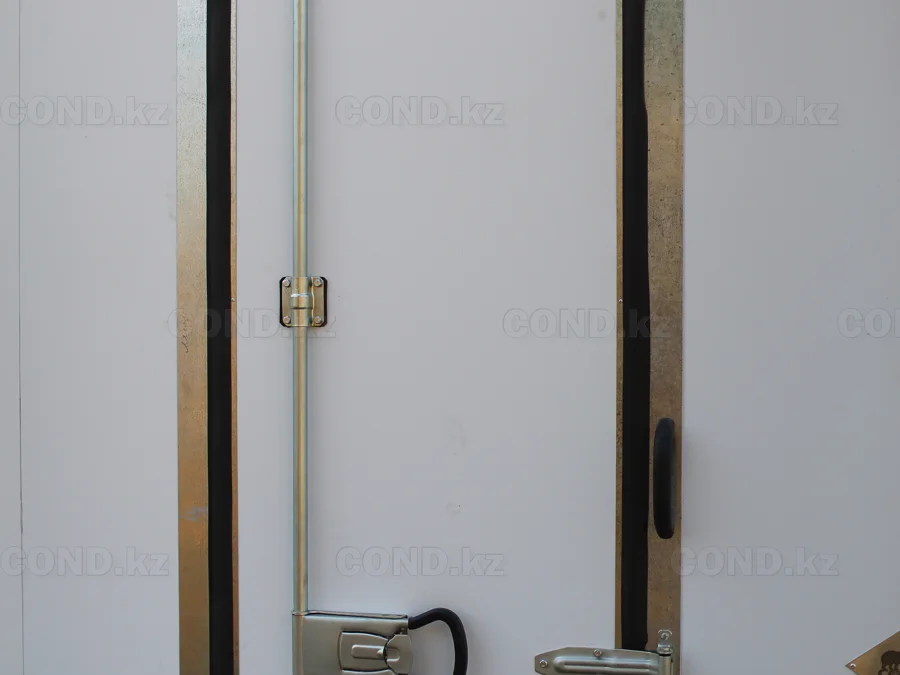
Single or double side door — fast multi-drop unloading without losing cold through the rear doors.
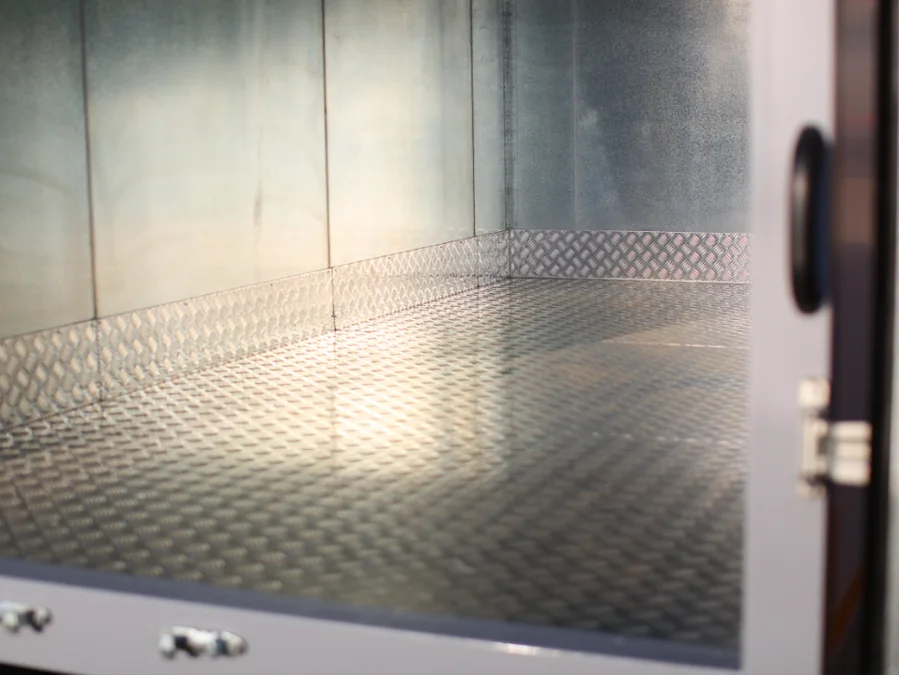
Chequered aluminium instead of plywood: absorbs no moisture, does not rot, is easy to wash and lasts longer.
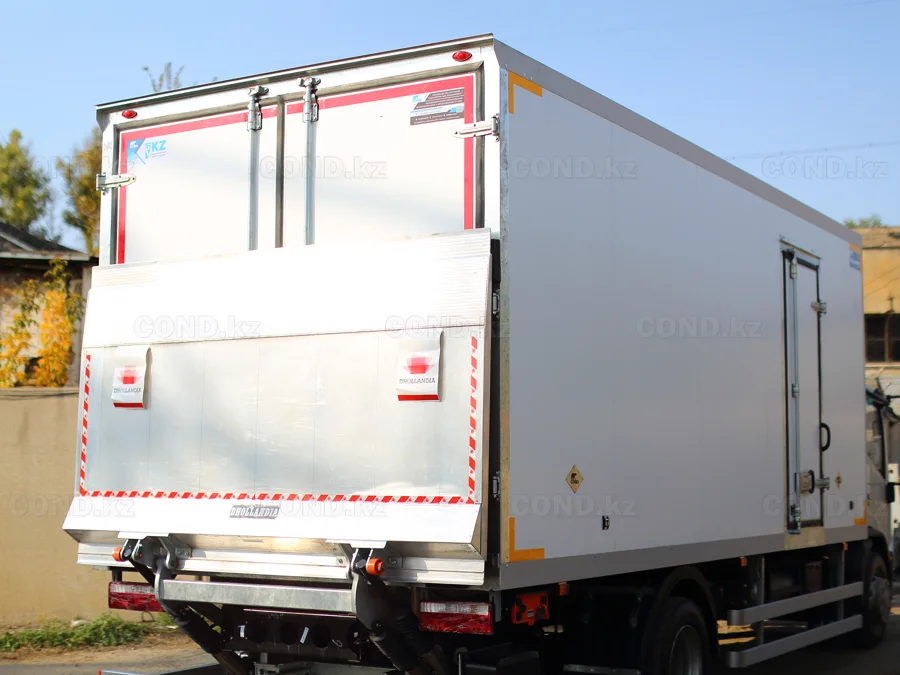
Hydraulic tail lift — loading heavy pallets without a ramp or forklift.
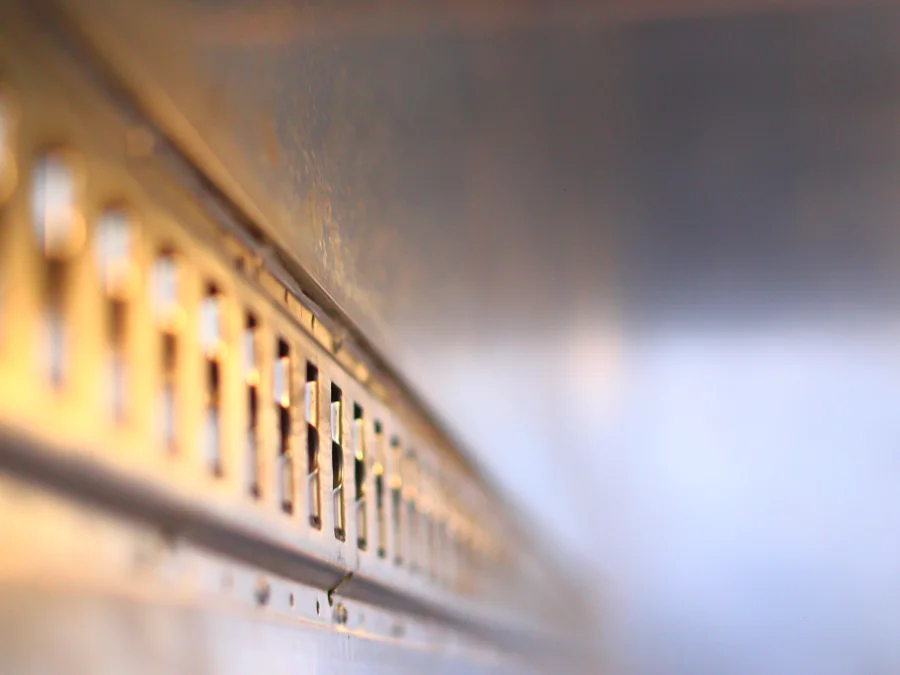
Perforated track on the walls — secure cargo with straps and partitions at any height.
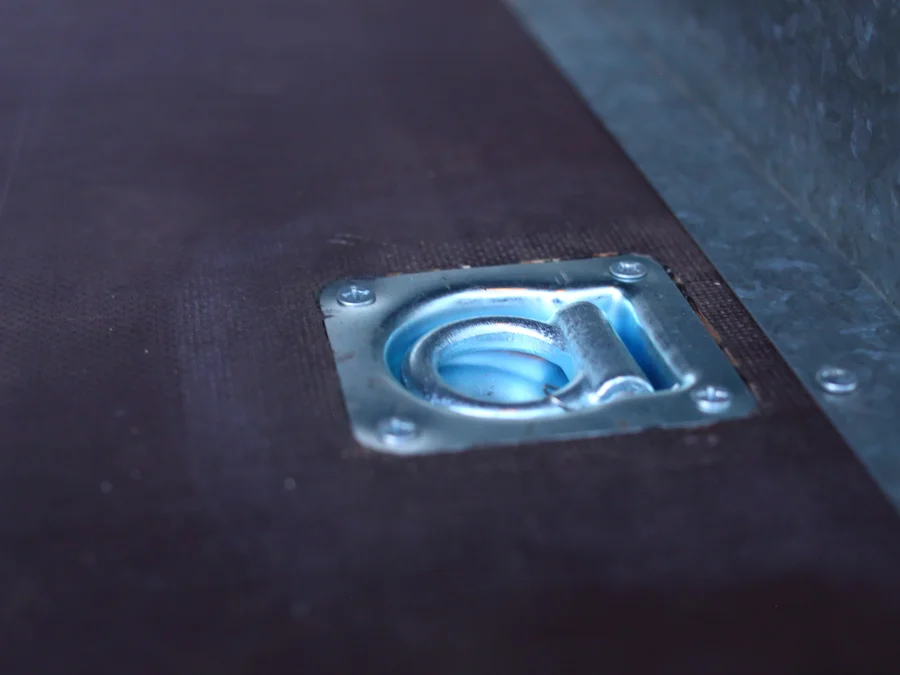
Recessed floor rings for lashing straps — cargo does not shift in turns and braking.
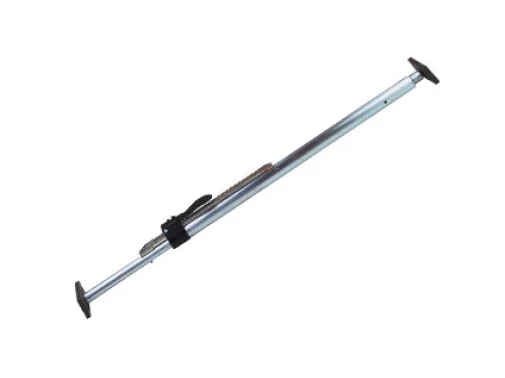
Telescopic bars braced between the walls — divide the body and keep cargo from sliding.
An insulated partition divides the body into compartments with different temperatures — frozen and chilled cargo in one trip.

PVC strip curtains keep the cold in while the doors are open for loading and unloading.
Drain holes in the floor — water runs off when the body is washed and the floor holds no moisture.
The refrigeration unit holds the temperature and the panel thickness helps keep it: 50 mm for chilled, 80 mm for −10 °C and 100 mm for −20 °C frozen cargo. Body trim — standard in metal or premium in FRP fibreglass. Exact parameters below.
| Range | Temperature | Panel thickness | Typical cargo |
|---|---|---|---|
| Chilled | 0…+5 °C | 50 mm | dairy, deli, vegetables, fruit, flowers |
| Semi-frozen | −10 °C | 80 mm | chilled meat, semi-finished products, bakery |
| Frozen | −18…−20 °C | 100 mm | frozen meat, fish and semi-finished products |
| Heating | up to +12 °C | — | winter transport — protects cargo from freezing (Carrier with heating) |
| Parameter | Standard | Premium |
|---|---|---|
| Outer cladding | clad metal | FRP fibreglass |
| Hardware | galvanised steel | stainless steel |
| Rear door frame | stainless steel | stainless steel |
| Edge trim | anodised aluminium | anodised aluminium |
| Interior finish | galvanised steel + moisture-resistant plywood | FRP fibreglass |
| Parameter | Value |
|---|---|
| Body length | up to 9.5 m — to suit the chassis |
| Width / height | up to 2.6 m / total vehicle height up to 4 m (depends on chassis height) |
| Wall thickness | 50 / 80 / 100 mm |
| Temperature duty | from −20 to +12 °C — freezing down to −20 °C, heating (Carrier) up to +12 °C |
| Refrigeration unit | Carrier, Elinge, Kaida — road, stand-by or self-powered |
| Usable volume | from 1 to 70 m³ |
| Body weight | calculated individually per project |
| Insulation material | extruded polystyrene |
| Warranty | 2 years on the body + manufacturer’s warranty on the unit |
Eight facts, each with a number and proof: own workshop since 2001, transport refrigeration experience since 1997, Carrier · Elinge · Kaida units matched to the job, panels up to 100 mm for Kazakhstan’s climate, lead time from 14 days and a 2-year warranty.
We build the bodies and install the refrigeration units in our own workshop in Almaty. Over 2,000 bodies built.
We have installed and serviced transport refrigeration units since 1997 — we know not just the body but the refrigeration equipment too.
Panels up to 100 mm and a correctly sized unit hold −20 °C even in Kazakhstan’s summer.
We fit units to the job and budget: road, stand-by and self-powered. Selection, installation, service.
A typical reefer takes from 14 working days, with the date fixed in the contract. Not the usual “wait 2 months”.
Warranty on the body plus the manufacturer’s warranty on the unit. We service the units in our own workshop.
We engineer the body and select the unit for your cargo and chassis — no forcing a standard template.
We reinforce the loaded points: a reefer works every day and must hold its duty for years.
A reefer is needed wherever the cold chain matters: it does not just protect from heat — it actively maintains the set temperature from loading to unloading. Below are the typical industries we build reefers for.
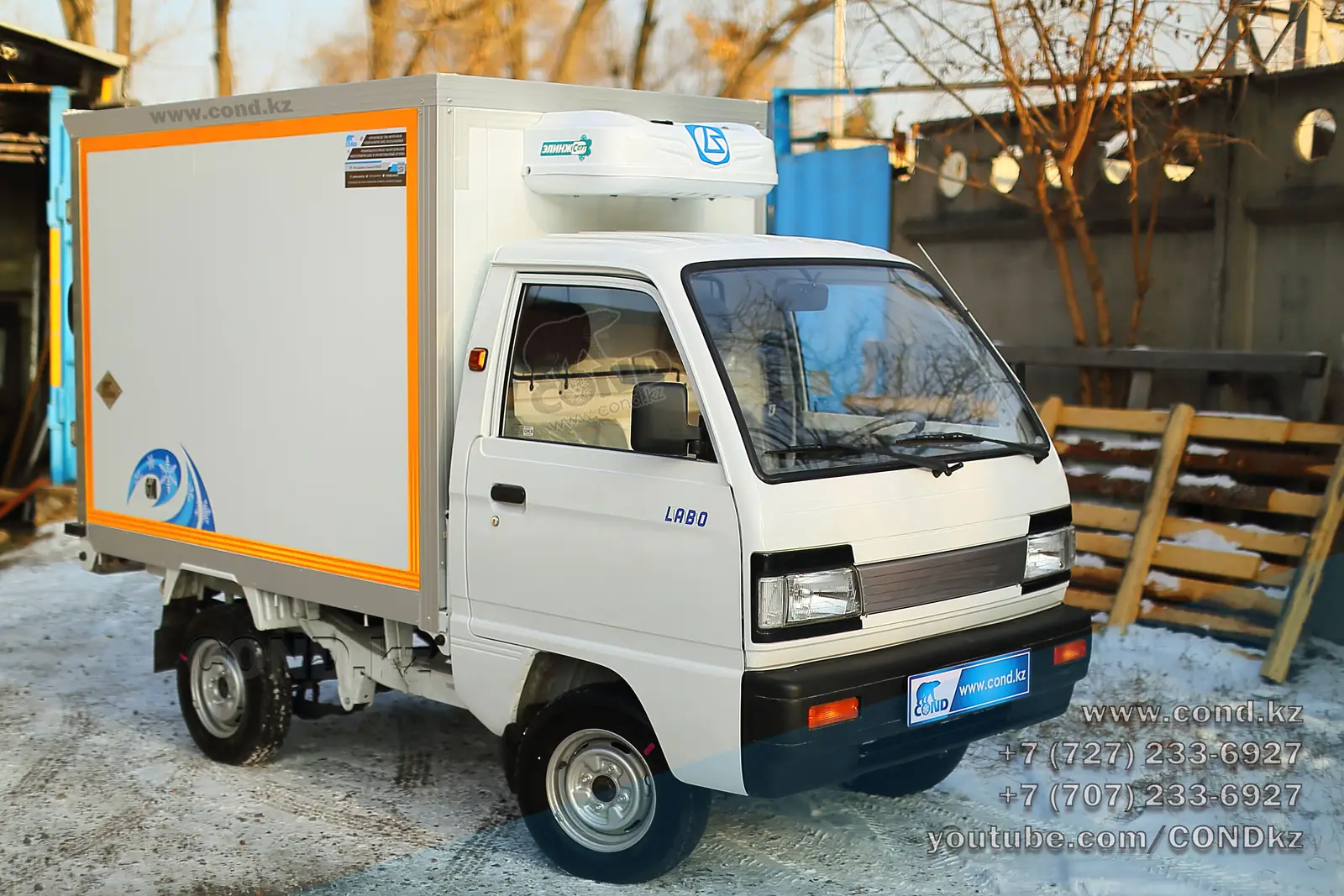
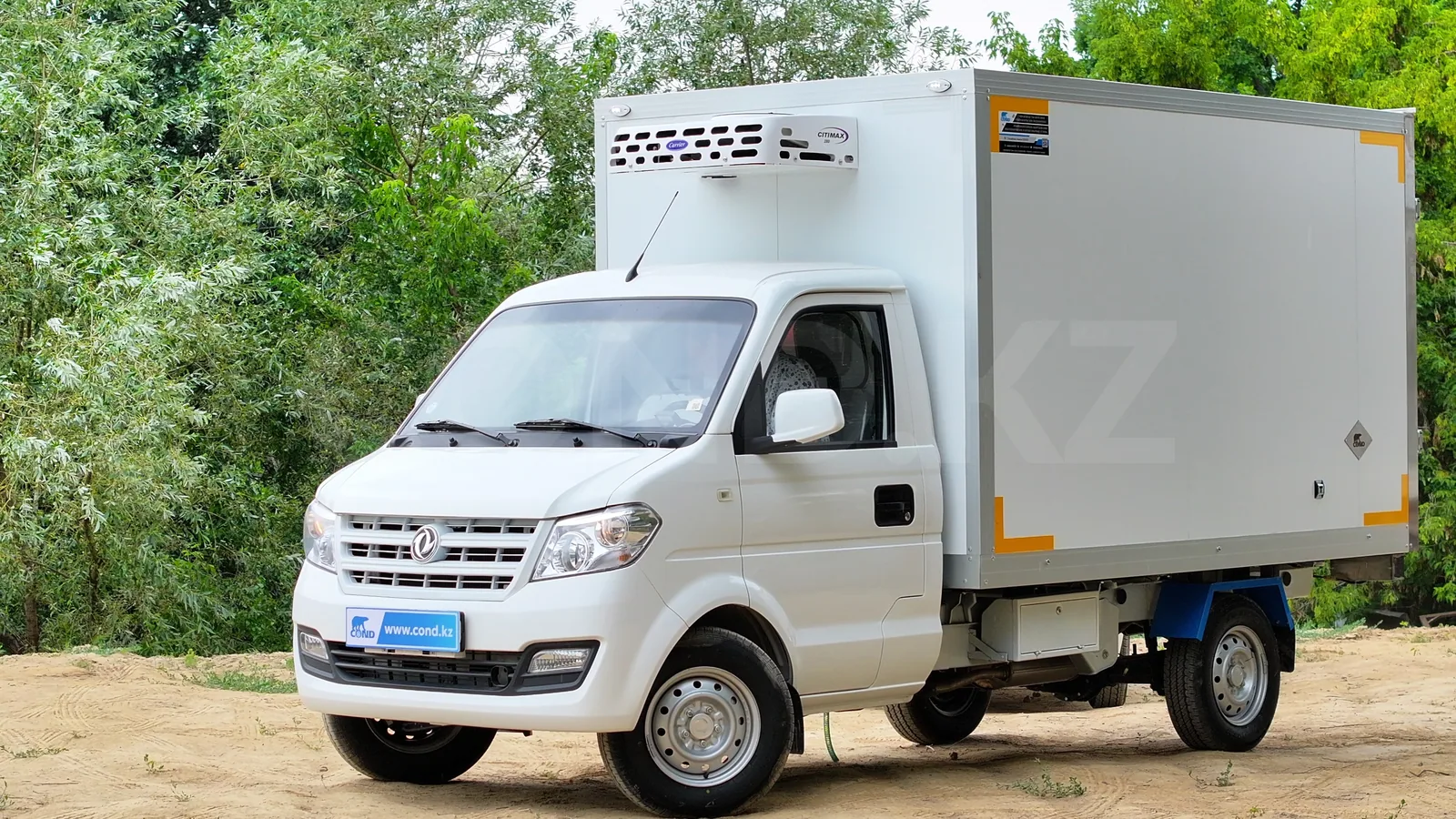
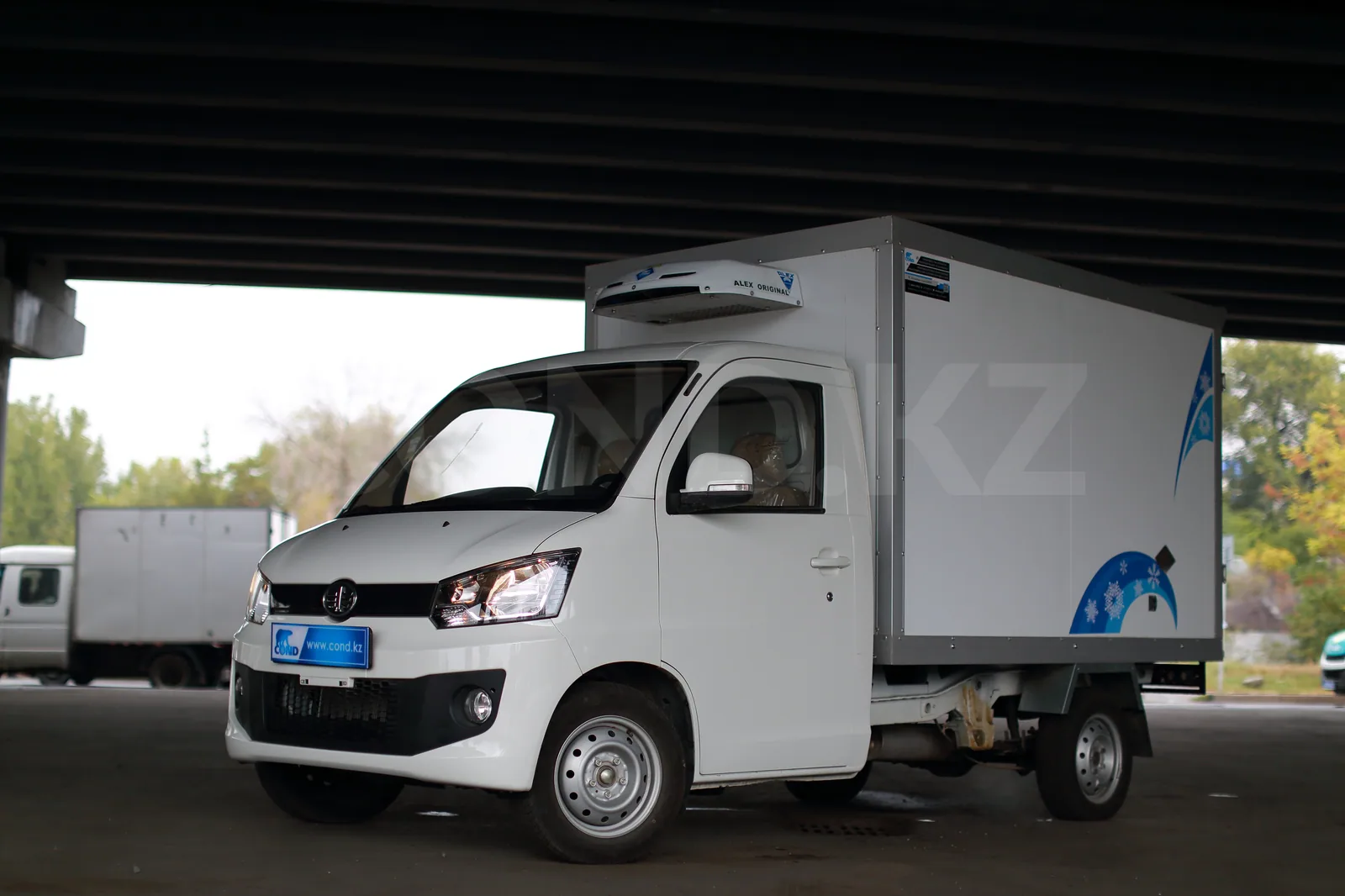
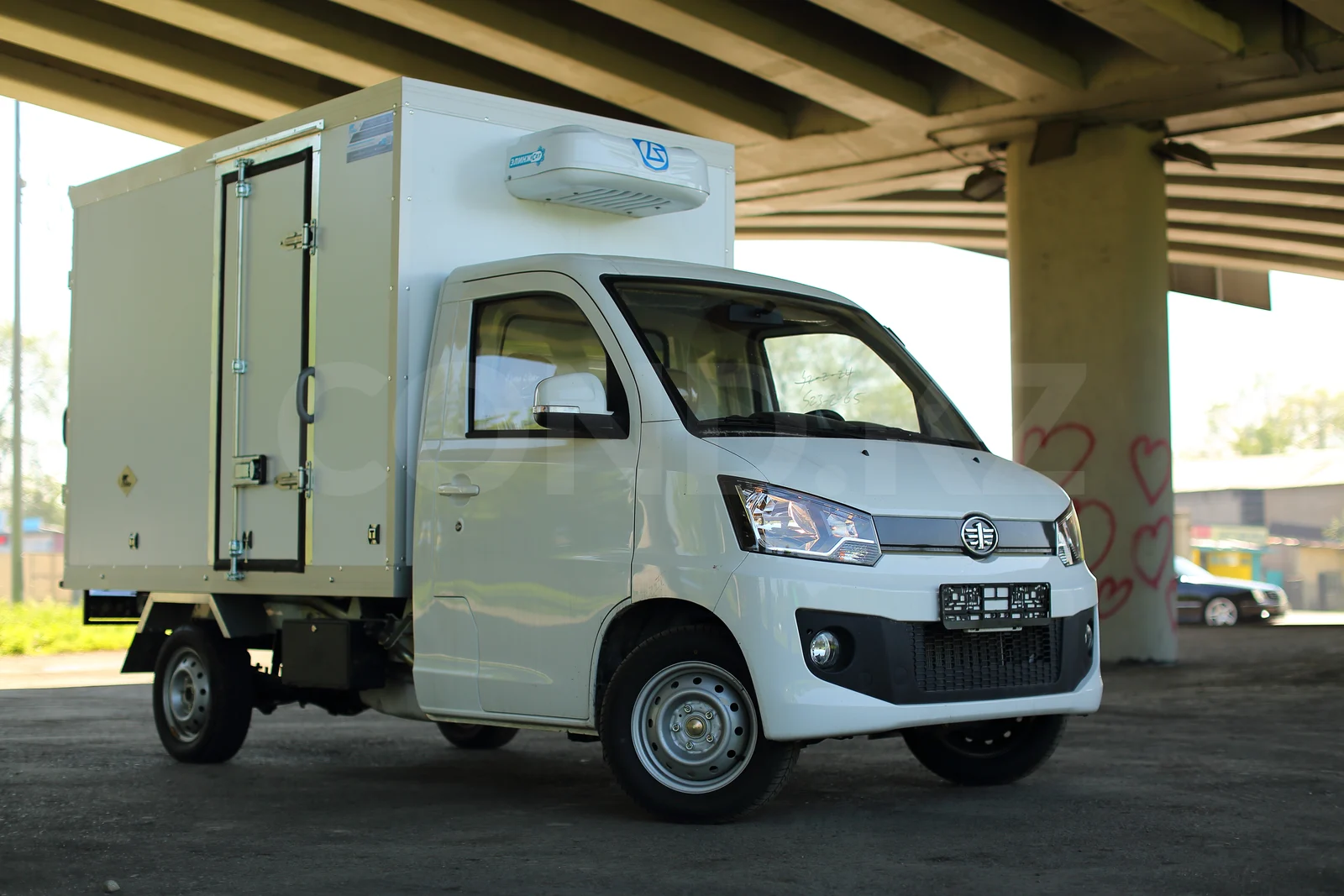
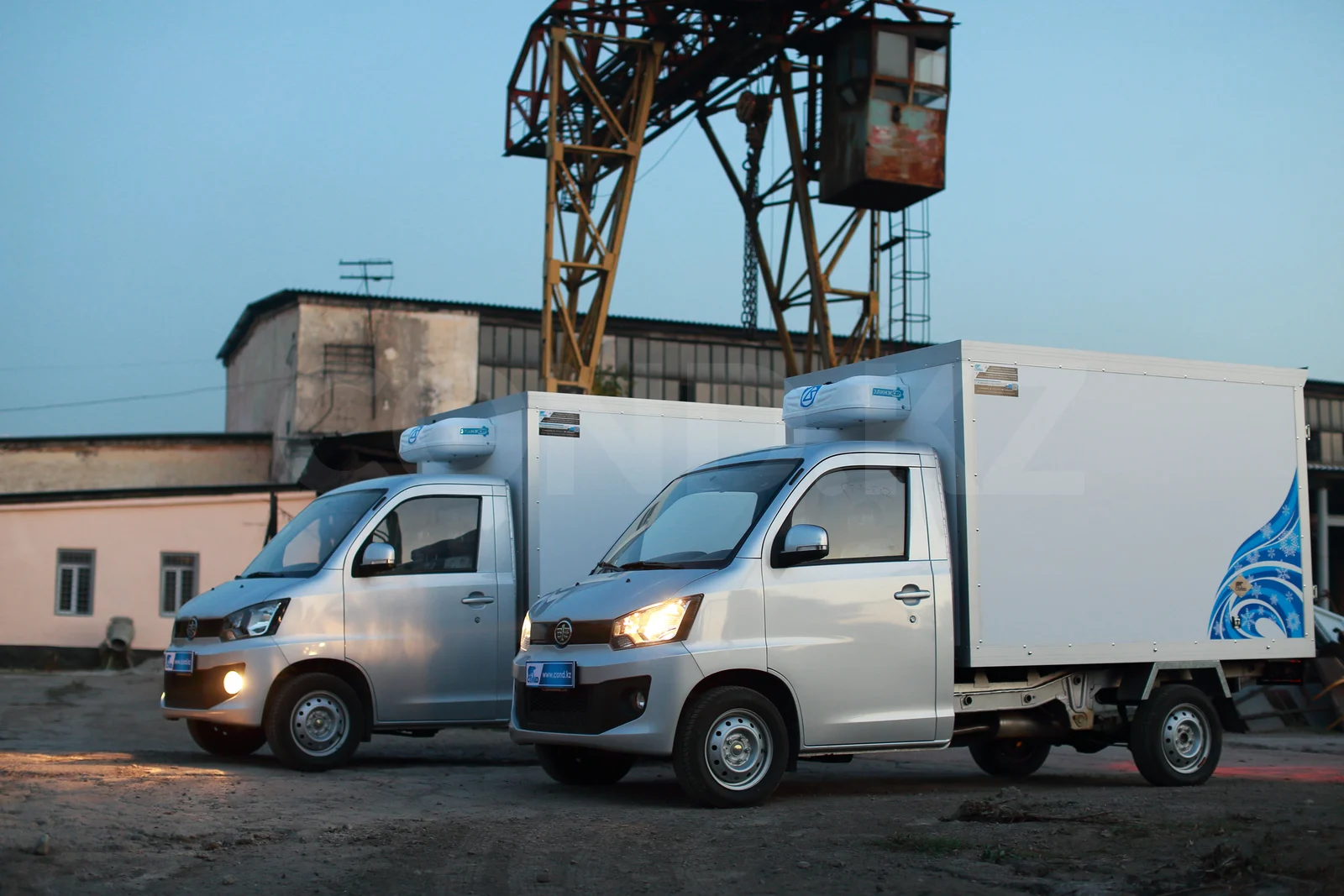
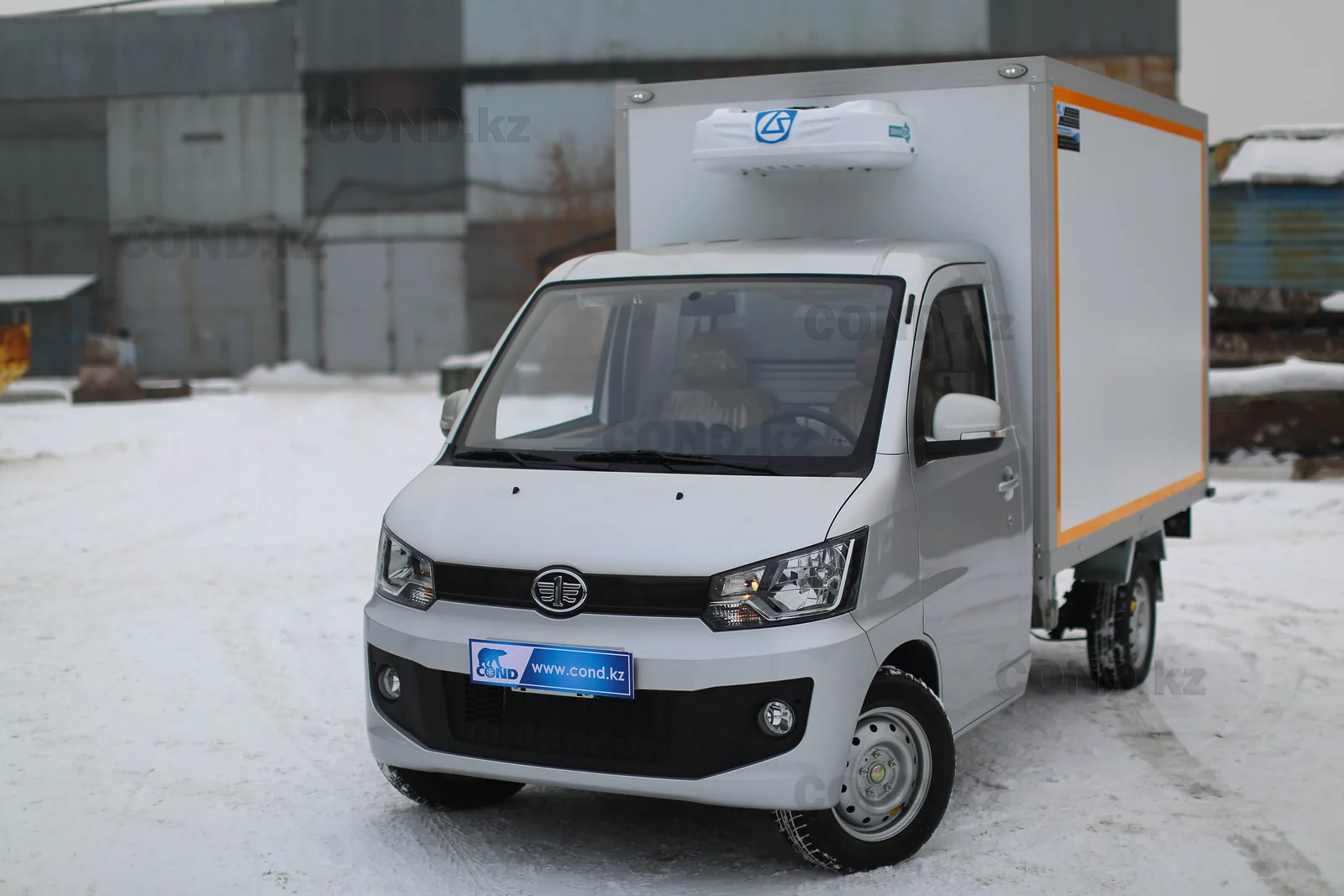
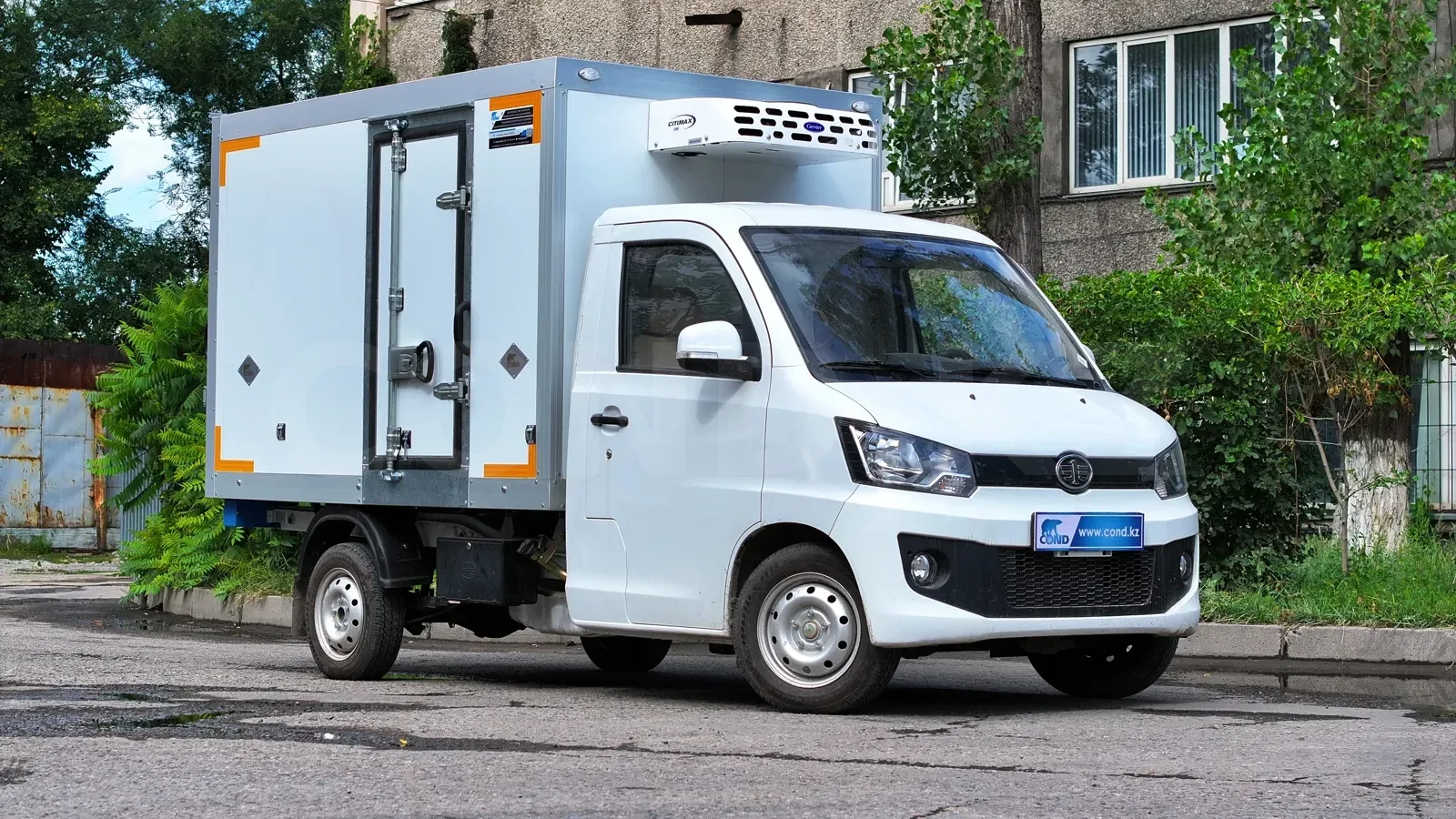
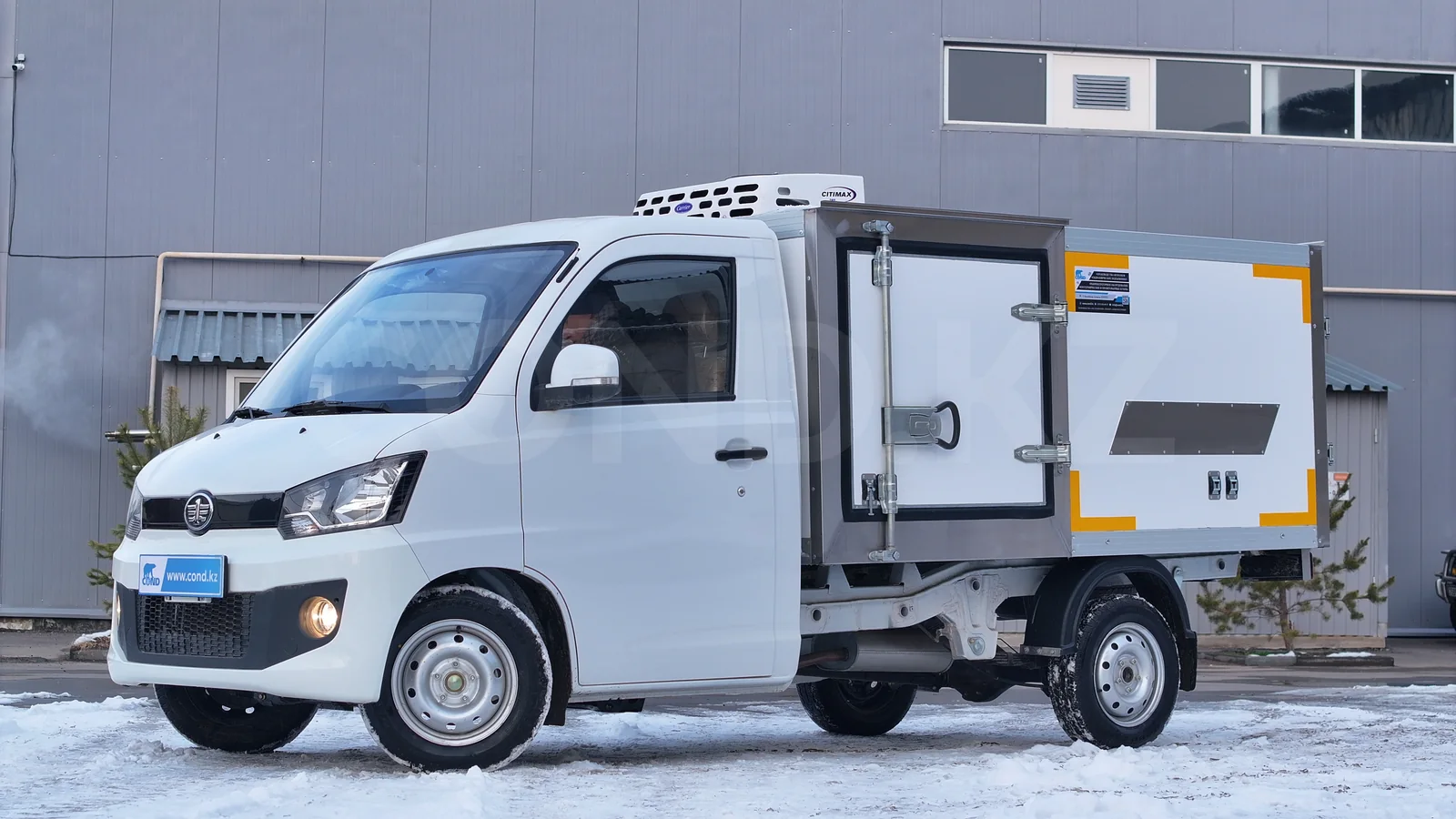
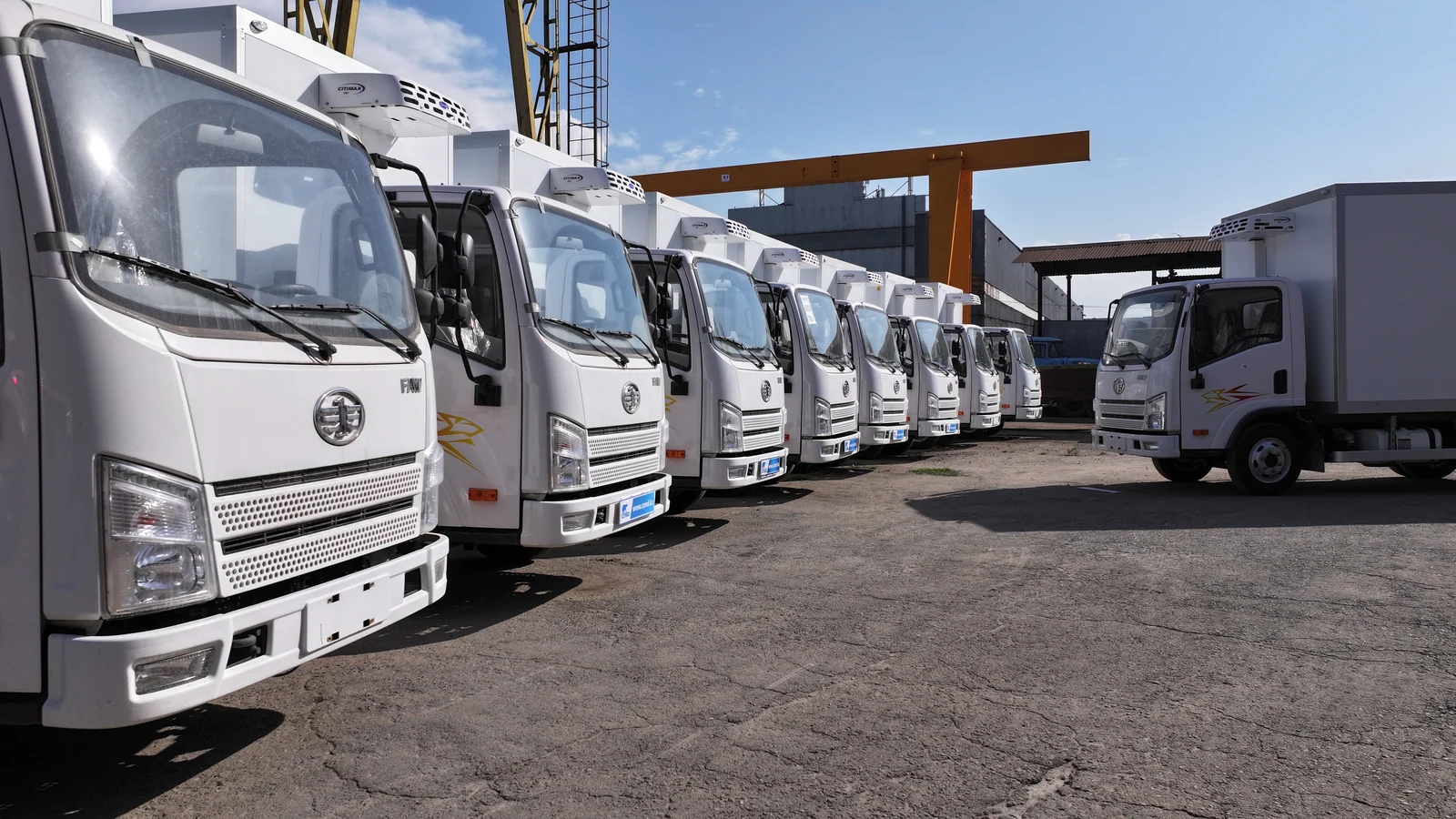
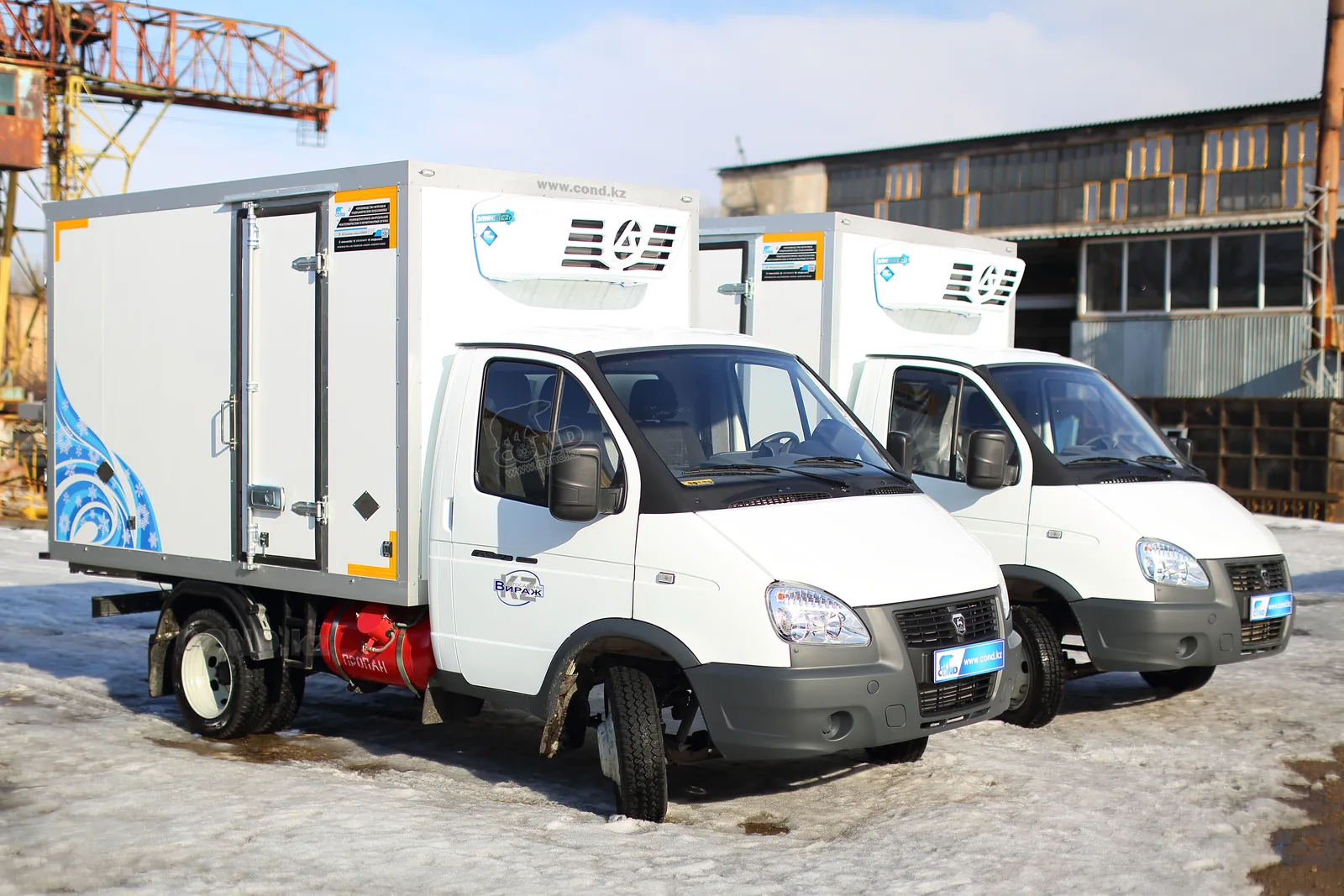
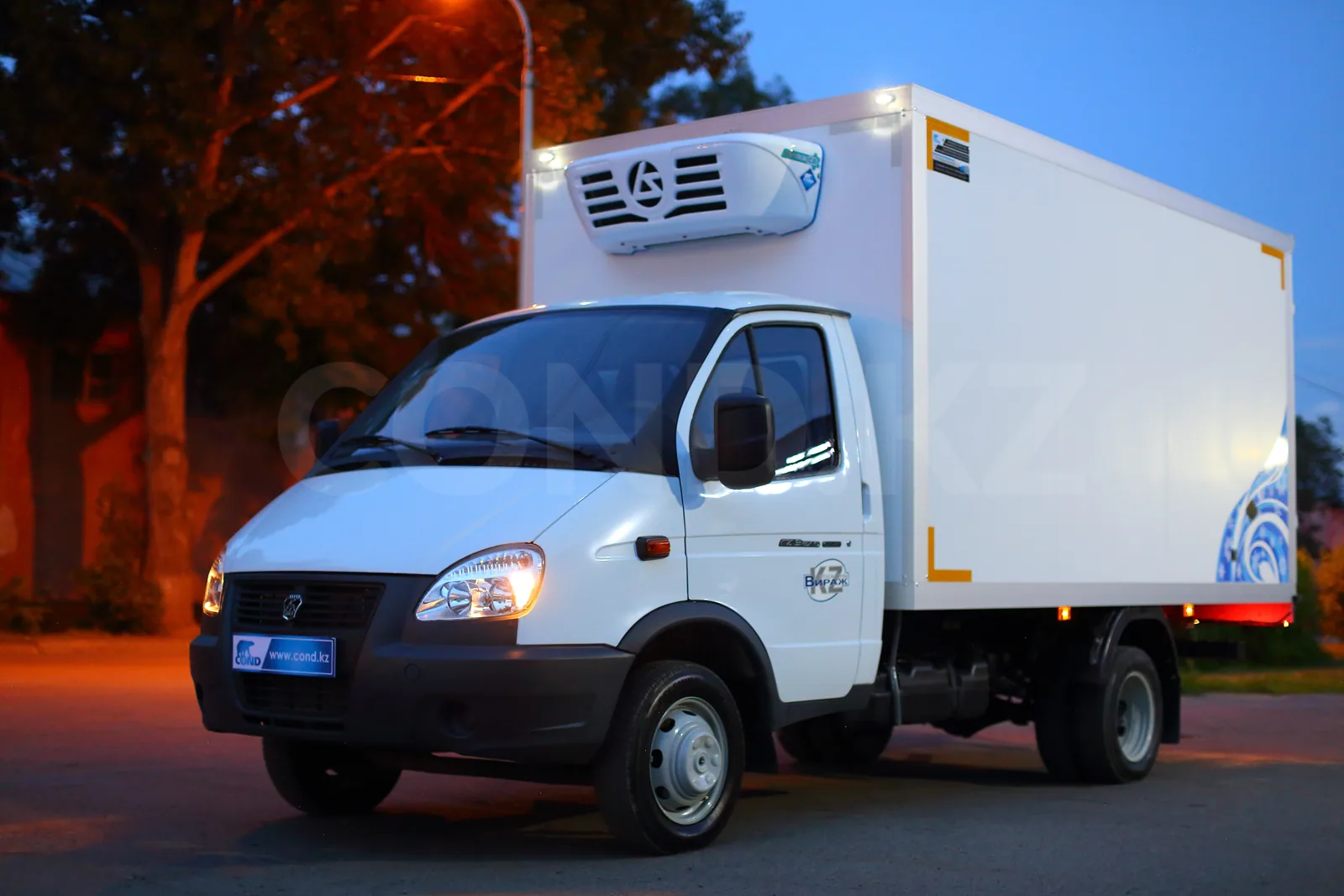
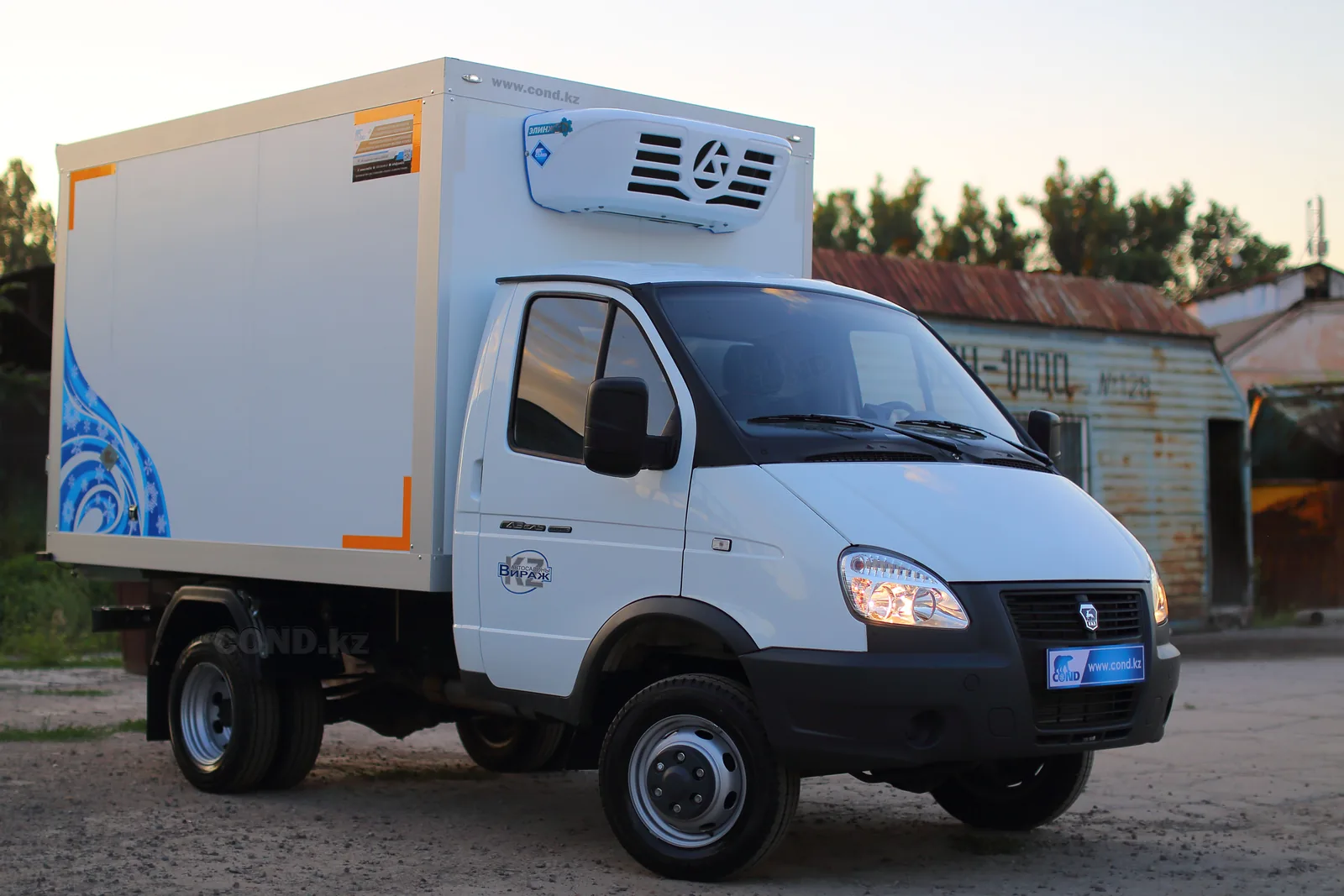
Our refrigerated vans on different chassis — real projects from the COND plant.
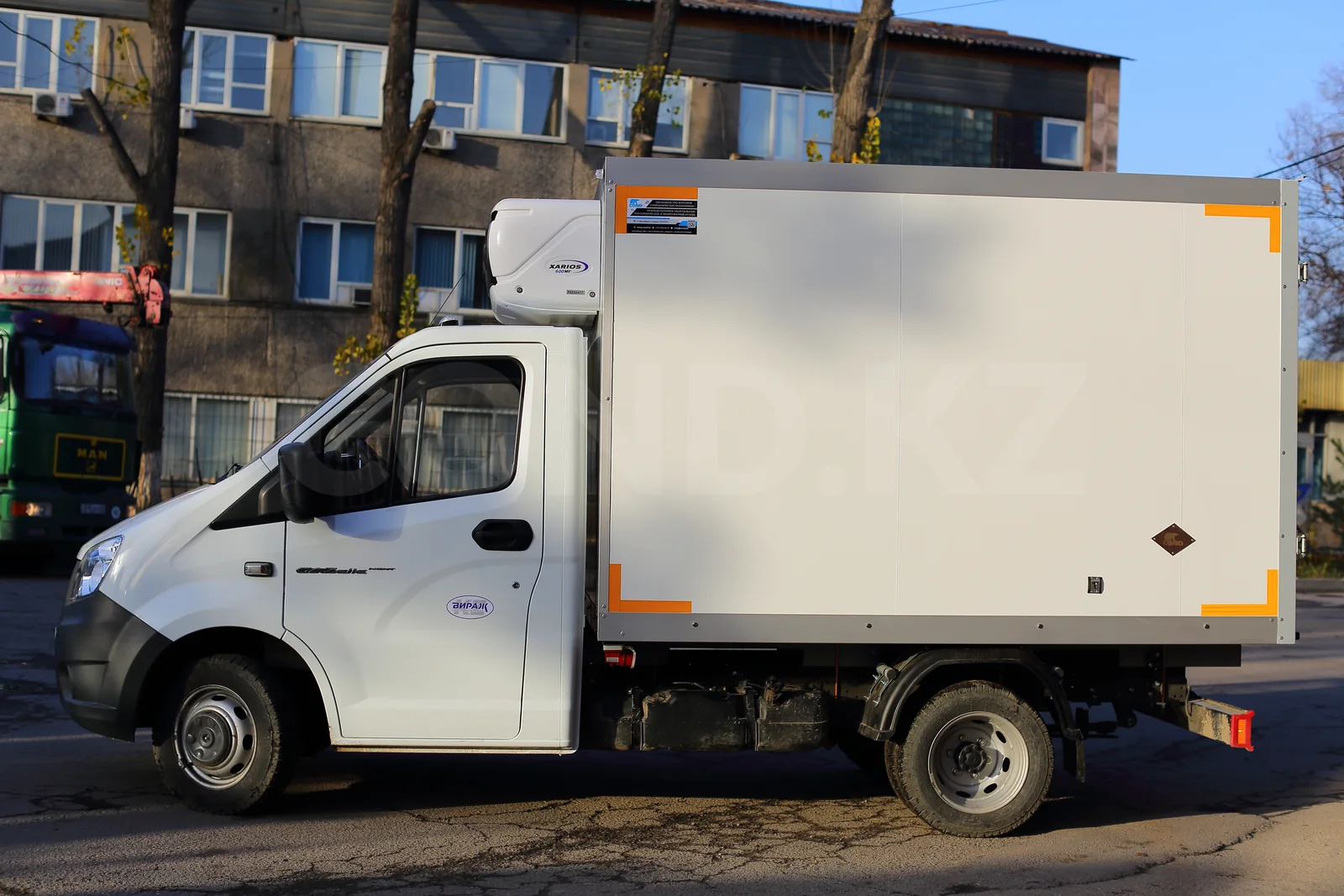 ⚪ Completed
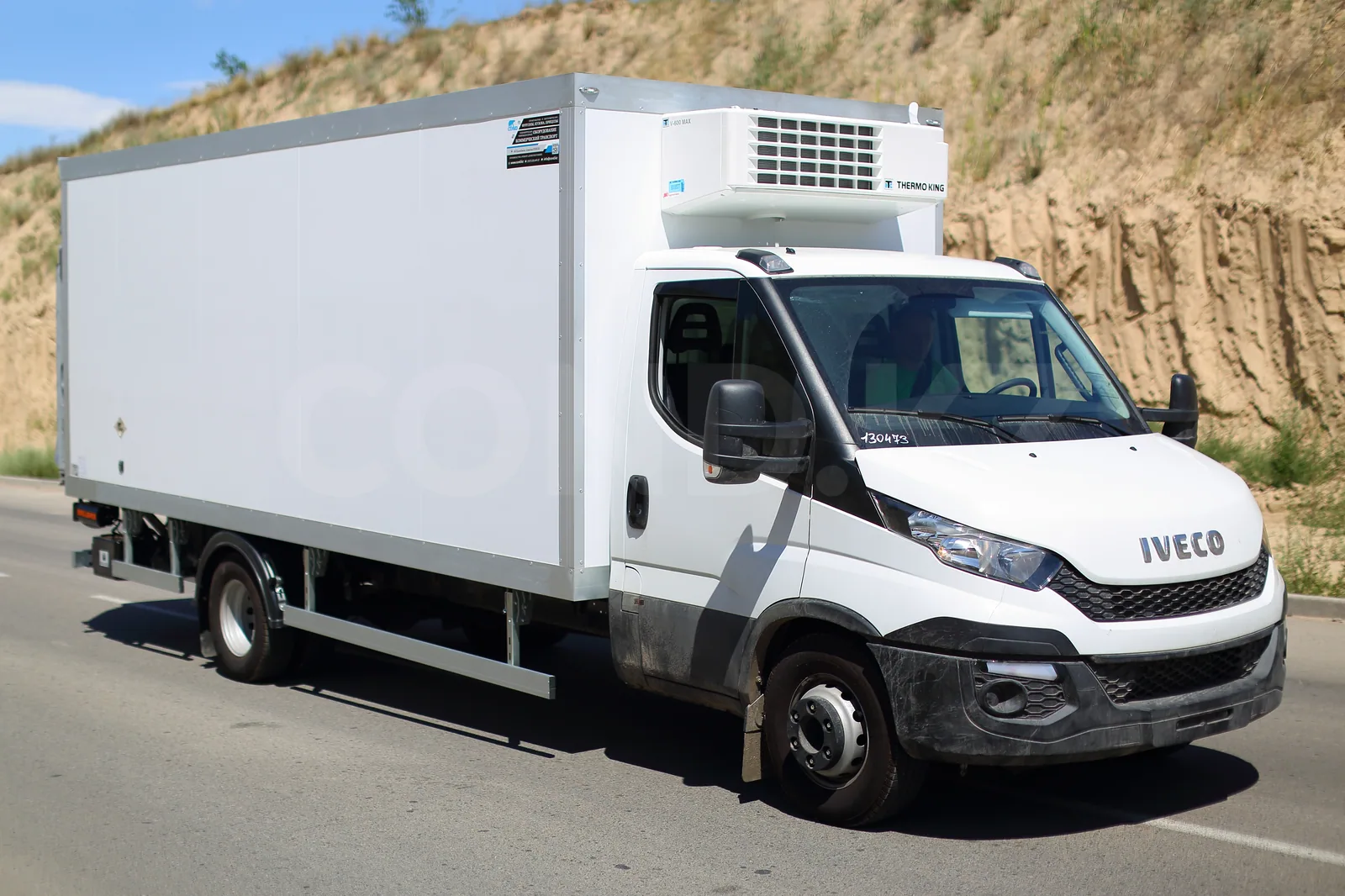 ⚪ Completed
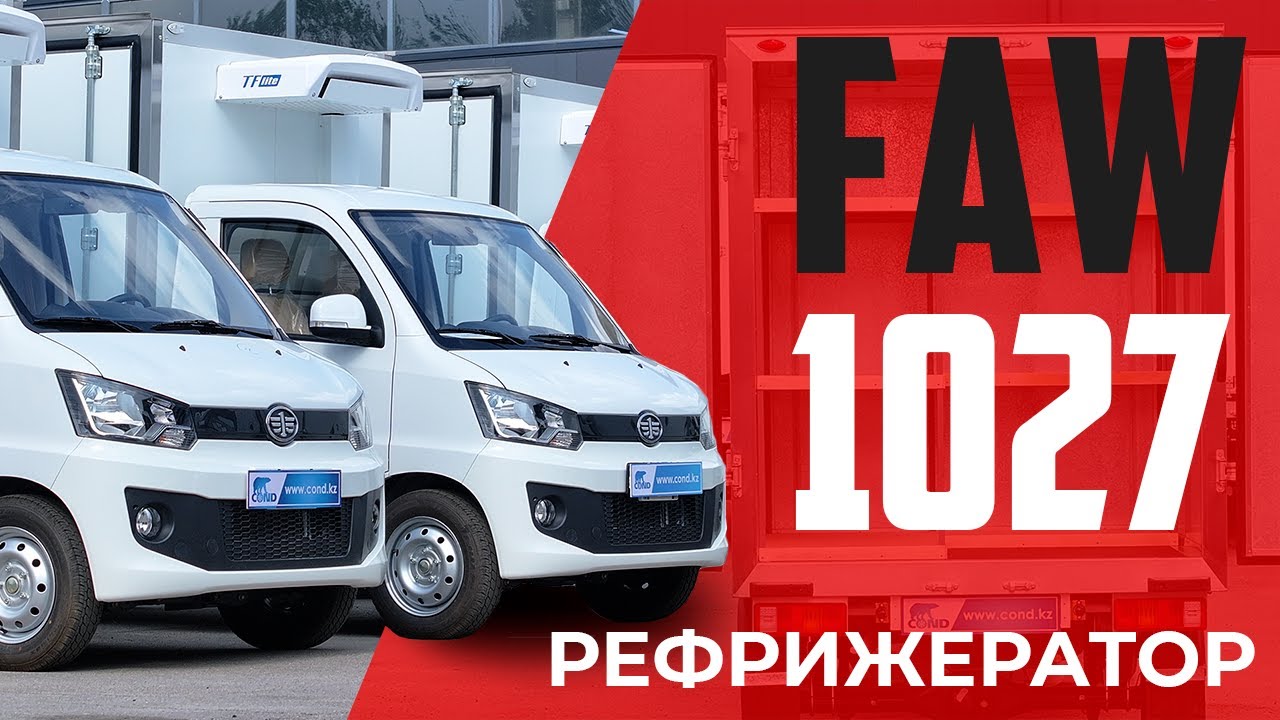
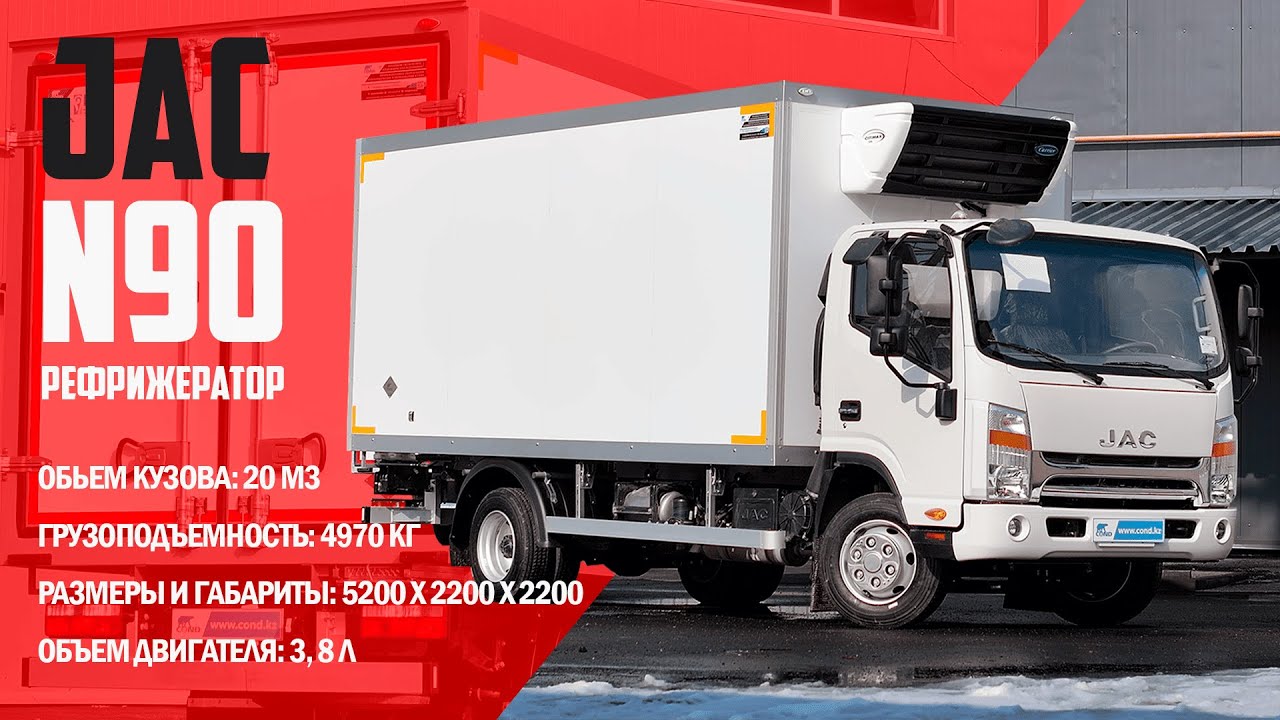
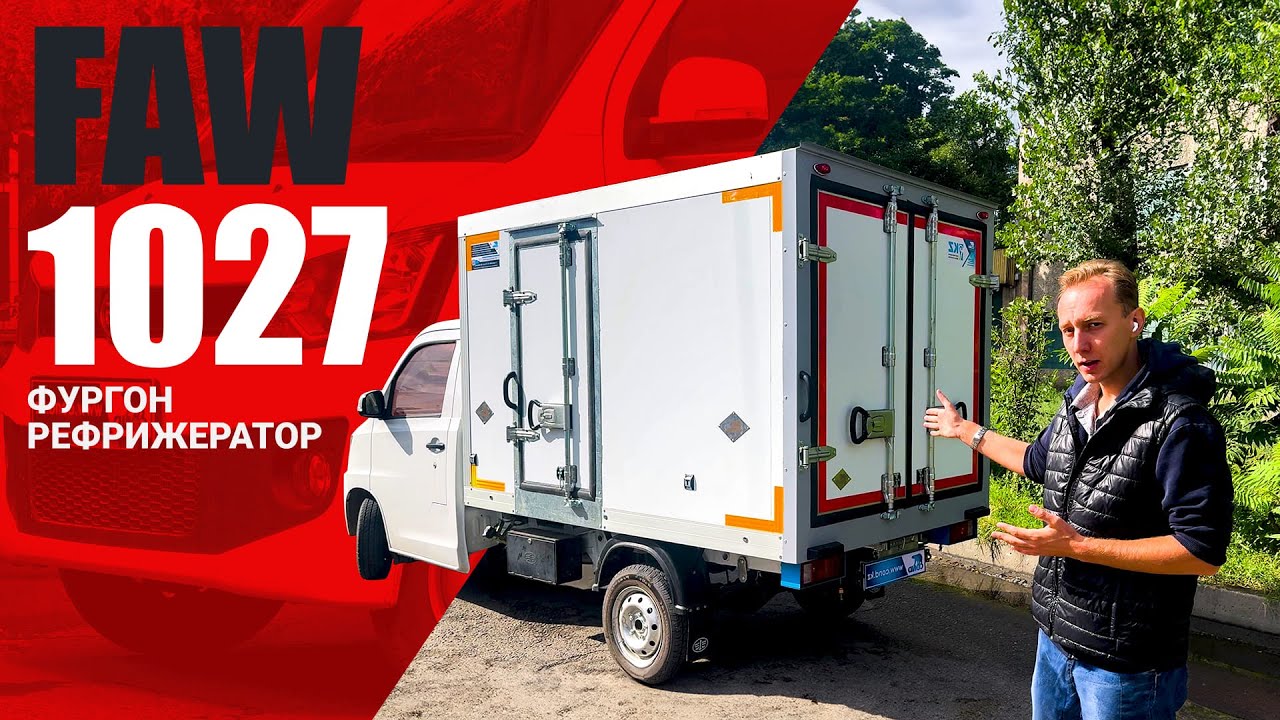
Video reviews of COND refrigerated vans on different chassis — from our YouTube channel.







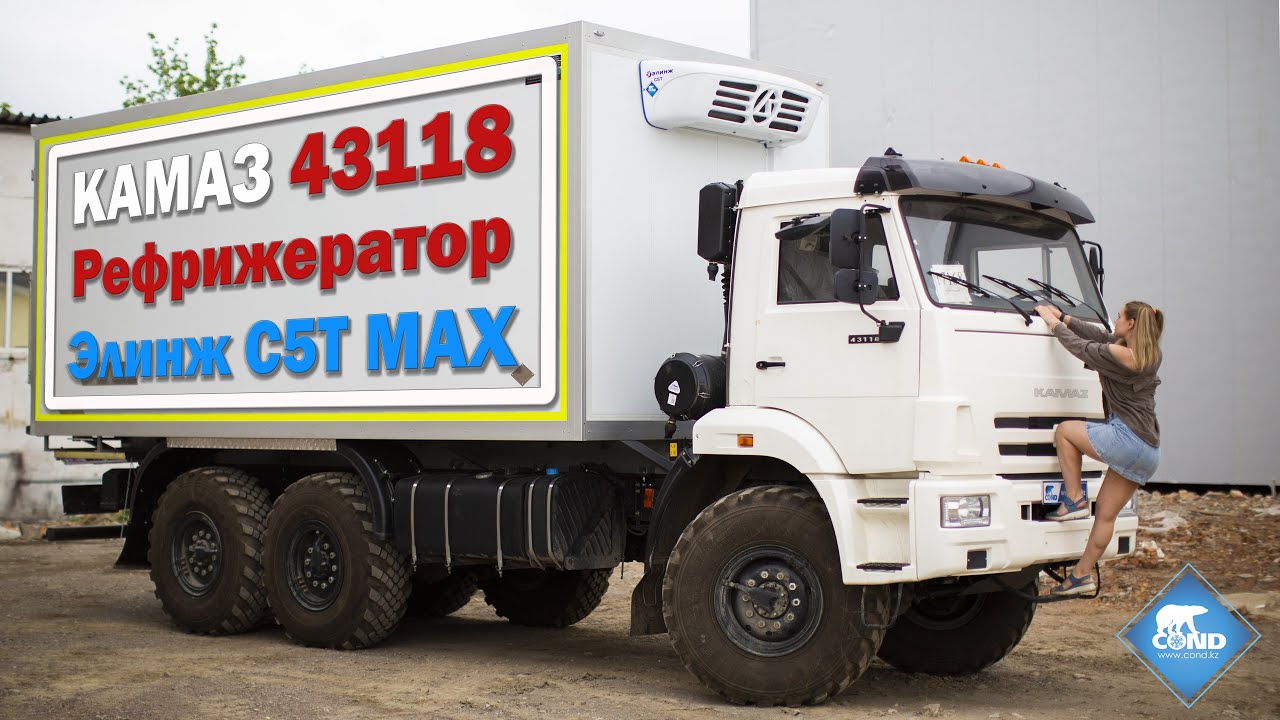


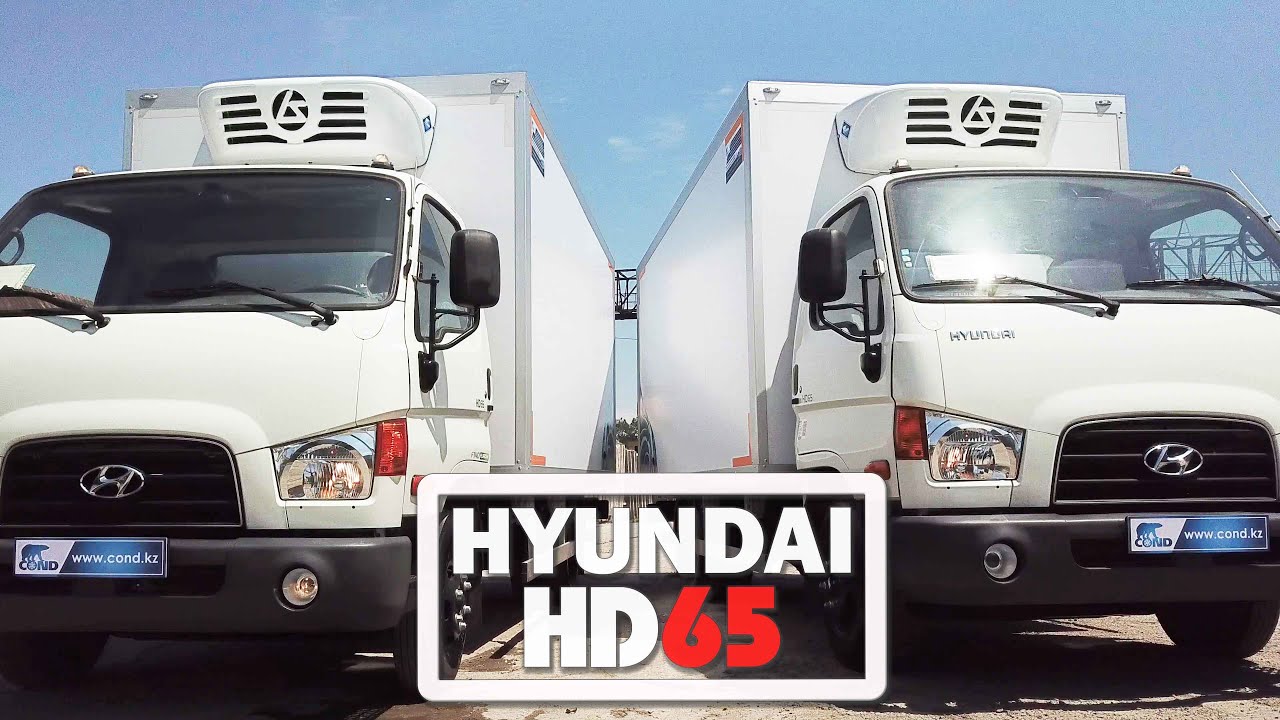


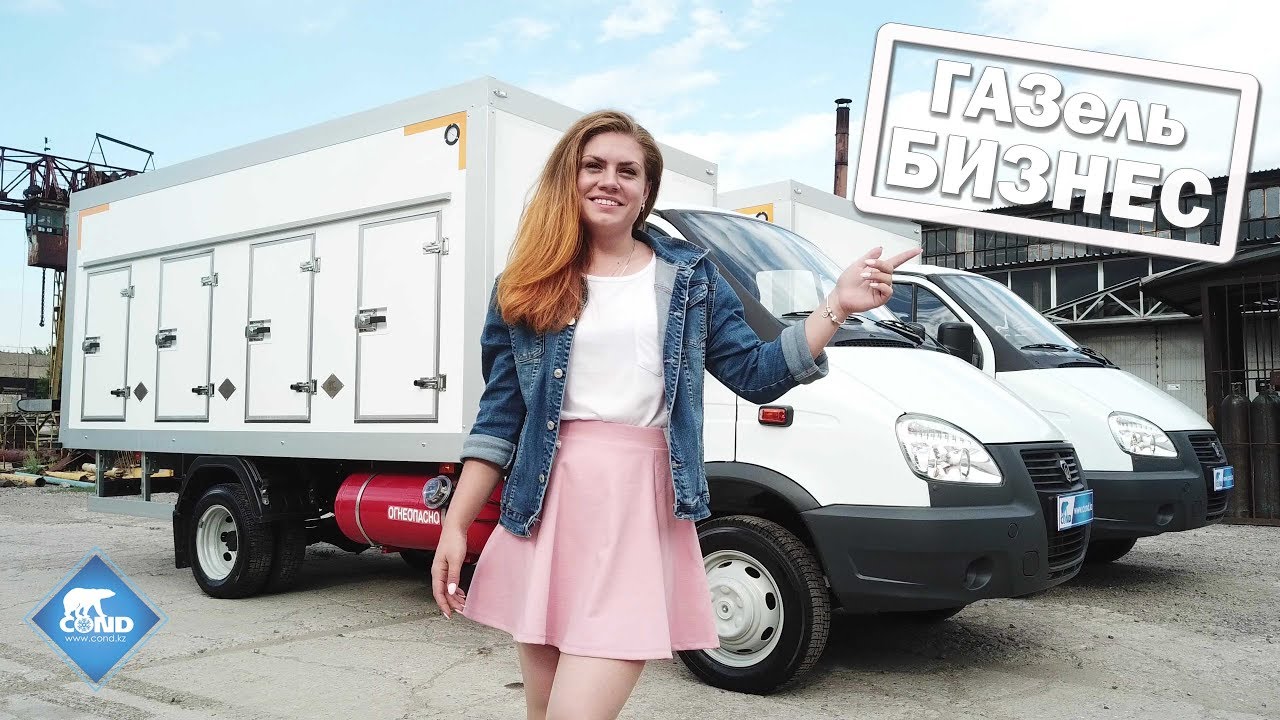


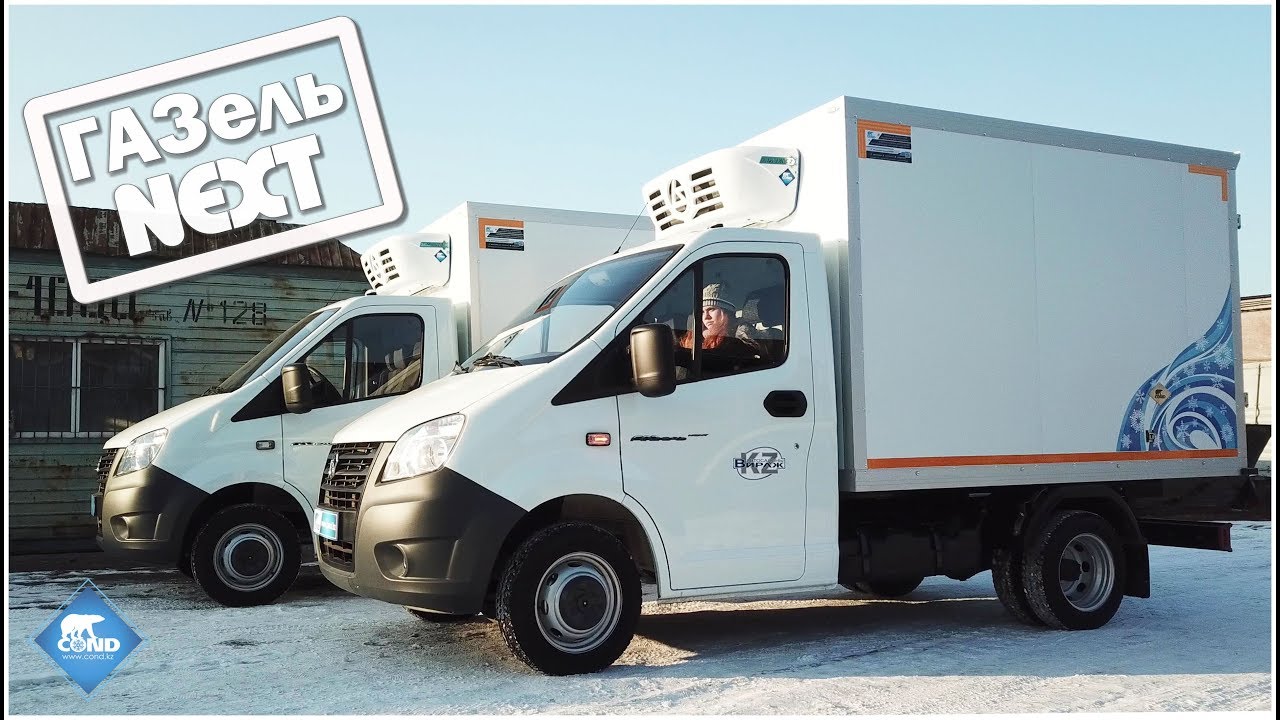

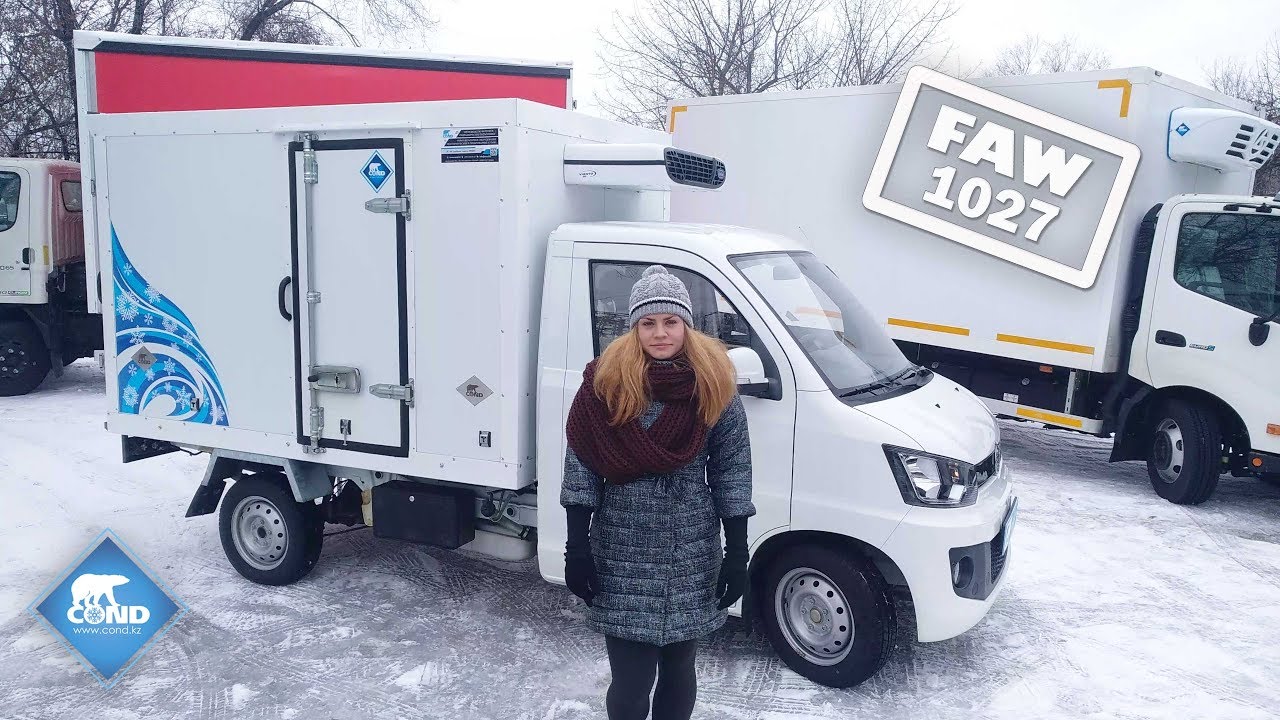

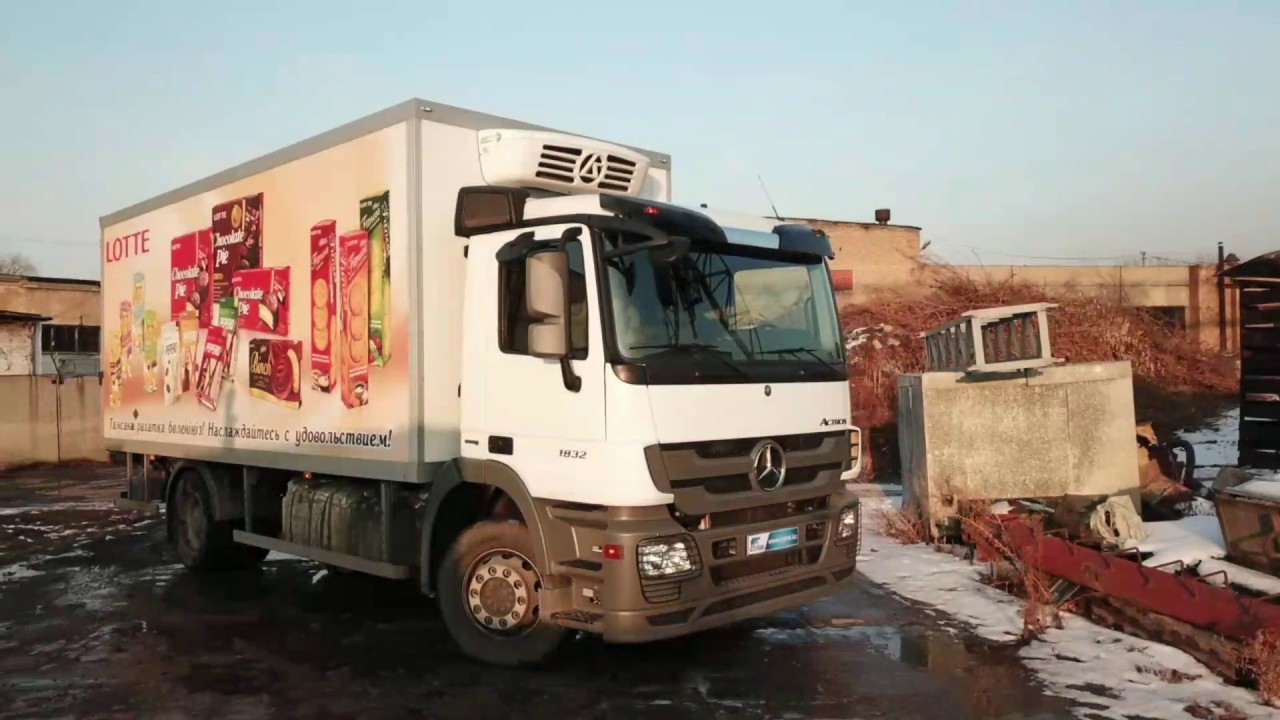


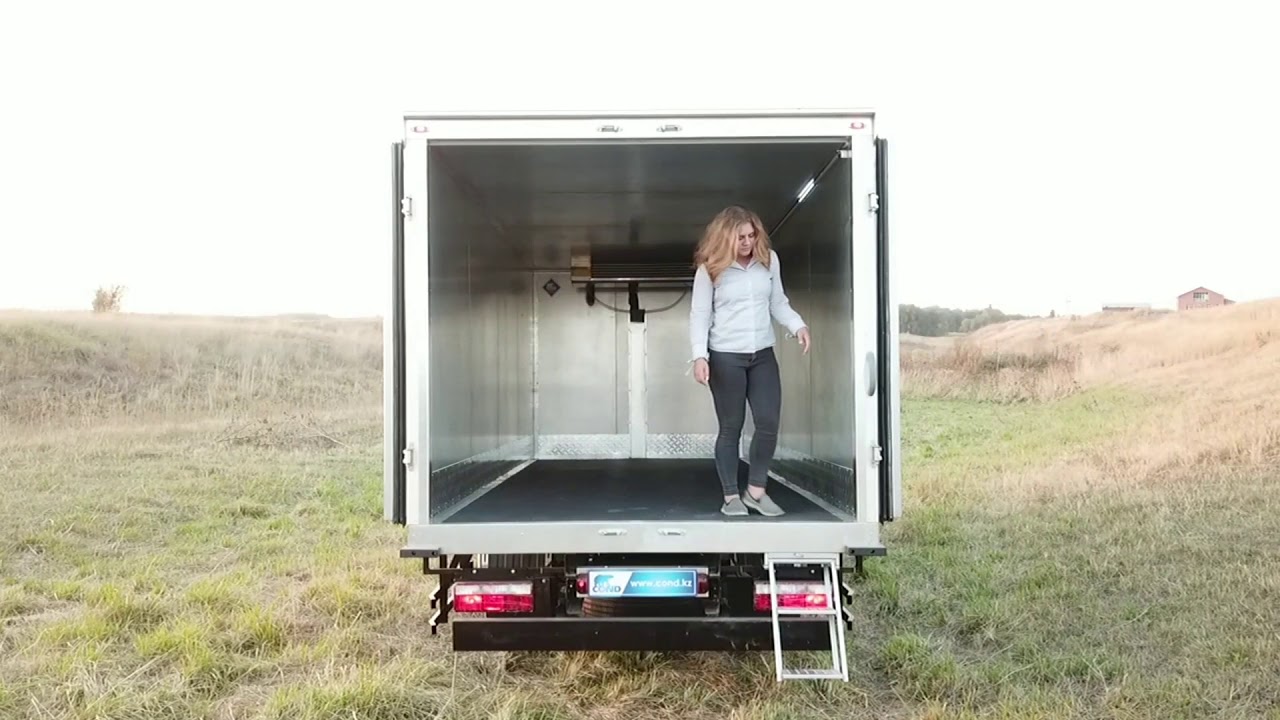
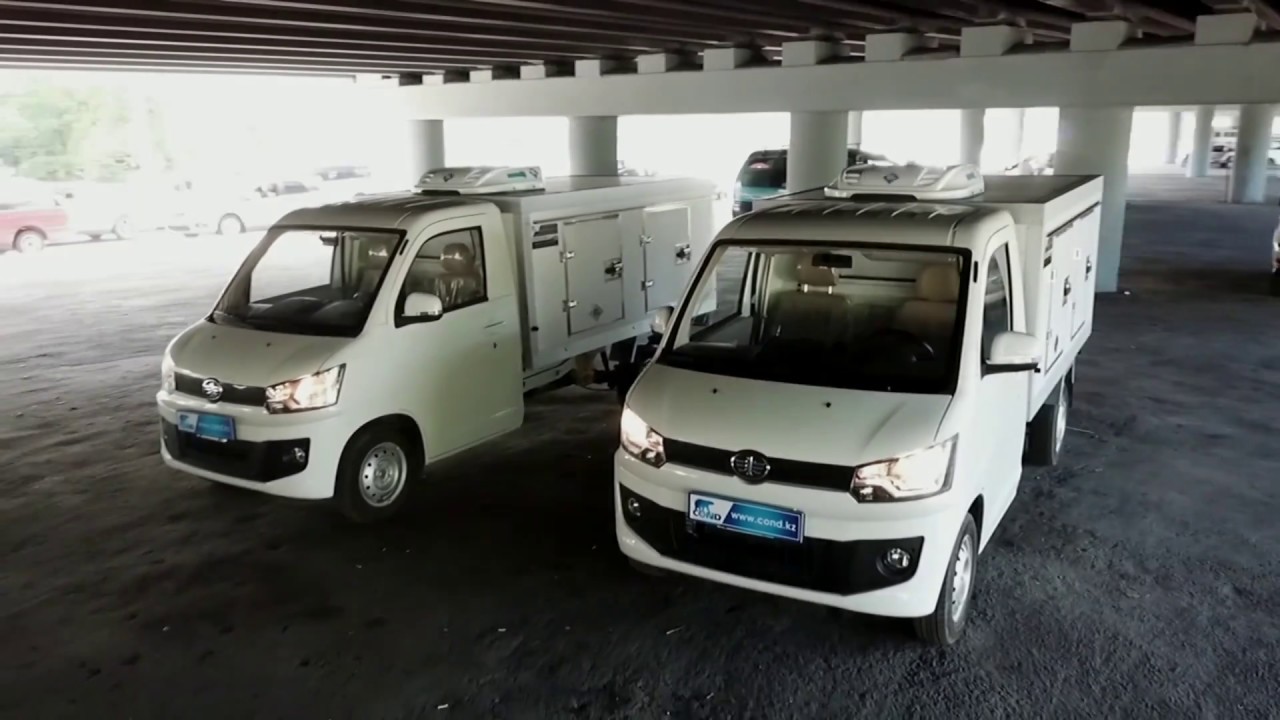


Leave your company name, your name and phone number — a manager will select the panel thickness, temperature duty and refrigeration unit for your cargo and chassis, give you an exact price and get back to you within a day.
From request to handover of the finished reefer — 5 transparent steps with deadlines. A typical body with the unit is delivered 2–3 weeks after the contract is signed.
You leave your contacts, chassis details, cargo type and temperature duty.
same dayWe price the job, select the unit and measure the chassis if needed.
1–2 daysWe fix the specification, unit model, price, deadline and prepayment.
1 dayWe build the body, mount it on the chassis and install the refrigeration unit.
from 14 daysWe test the body for tightness and pull-down, and hand it over with warranty and documents.
on completionLeave your contacts — we will select the refrigeration unit, panel thickness and trim for your cargo and chassis and give you an exact price and lead time.
📞Phone