
Why a refrigerator won't cool: 7 causes and a diagnostic checklist
Published:
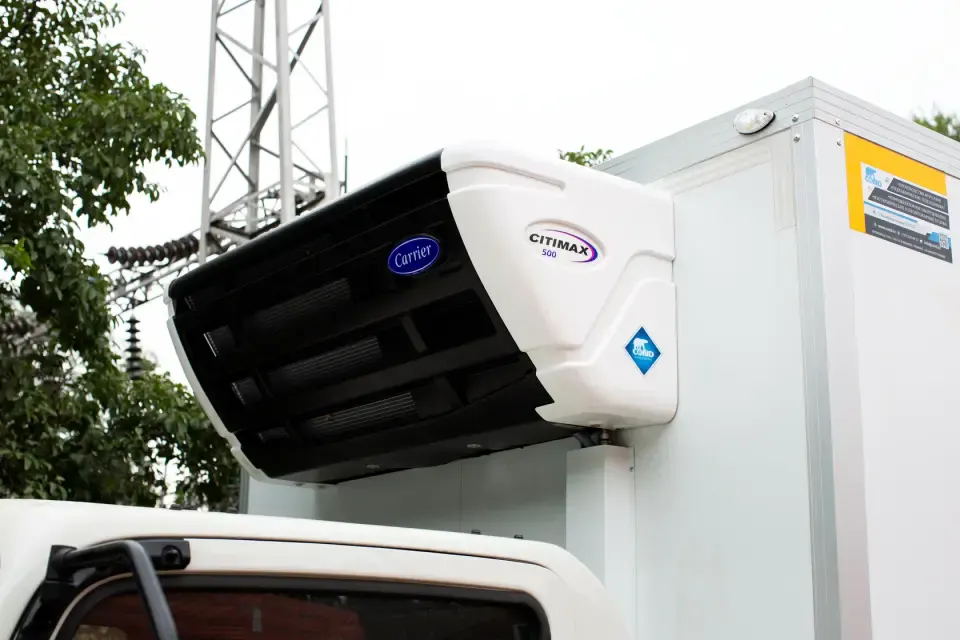
The unit runs, but inside it's warm or 'plus' instead of frozen — a common problem, especially in +40 heat. The cause is almost never just one. We go through, step by step, what to check and how, before replacing equipment.
Quote is based on body, chassis and temperature range.
First things first: a refrigerator maintains cold, it doesn't create it
A transport refrigeration unit is designed to maintain the temperature of already-chilled cargo, not to cool warm goods from scratch. If you load a product at +25 instead of +2, the unit will run at its limit for hours and still not 'catch up' to the mode. That's why before loading you measure the temperature deep in the cargo with a probe or a non-contact thermometer, and pre-cool the body itself. Half the 'the reefer won't cool' complaints are actually warm cargo or a body that wasn't pre-cooled.
If the cargo and pre-cooling are fine but there's no cold, the cause is one of the systemic problems below.
1. Refrigerant leak
Cause No. 1. In a sound system the refrigerant is not consumed — it circulates through a closed loop. If there's less of it, there's a leak: through vibrating flare joints, valves, the compressor shaft seal, or chafed lines. Meanwhile the unit runs almost non-stop and the temperature creeps up. An indirect sign is oil traces on the tubes and joints (oil escapes along with the refrigerant).
An important nuance of modern refrigerants: R-452A (which replaced R-404A on environmental grounds) is a zeotropic blend. With a partial leak its composition changes, and even after topping up the capacity doesn't recover. The right way is not to 'top up' but to find and fix the leak, recover the remainder, evacuate and recharge the system afresh strictly by weight.
Charging is done only after the leak is fixed; refrigerant charges for Elinge series and Carrier models are on the refrigerant charging page.
2. Evaporator icing and defrost failure
In freezing mode frost and ice build up on the evaporator — to remove them the unit periodically goes into a defrost cycle. If the defrost sensor or timer is faulty, the evaporator ices up 'solid', air stops passing through the heat-exchanger fins and cold doesn't reach the body. The symptom is a thick coat of ice on the evaporator and weak airflow. It's cured by diagnosing the defrost circuit and sensor.
A separate cause of accelerated icing is wet cargo. Products that give off moisture (fresh meat, strawberries and other unpackaged goods) saturate the air in the body with moisture, and it settles as frost on the evaporator. The defrost can't keep up, and the evaporator ices over faster than usual. Such cargo needs more frequent defrost cycles and, where possible, moisture-proof packaging.
3. Airflow inside the body is disrupted
Even a sound unit won't cool the cargo if the air doesn't circulate. Cold air is fed downward from the unit, passes under the cargo along the ventilated floor and rises back to the unit. Convection diagram — under the pallets (side view) and between the walls (top view):
What kills this flow:
- cargo pressed against the front wall blocks the air outlet from the unit;
- stacking to the ceiling — there's no return airflow (professional bodies have a 'red line' for maximum loading);
- no gaps between pallets and to the walls — warm pockets form;
- cargo stands directly on the floor without pallets and blocks the ventilated floor.
The rule is simple: air must freely flow around all the cargo and return to the unit. Always leave a gap near the evaporator.
4. The body doesn't hold cold
A classic mistake is to blame the unit when the body is at fault. Thin or damp panels, sagged door seals, a leaky rear portal — all of these let cold out faster than the unit can make up. A separate trouble is through-metal fasteners: they conduct heat straight through (a cold bridge) and over time rust through the full panel thickness, and the rust destroys the insulation around it.
In the Kazakh +40 heat the insulation requirements are stricter than in the rated conditions. The solution is body repair and door repair: replacing sagged seals, restoring the opening and rear portal, eliminating cold bridges and through-corrosion. If the body has run out its life — a full insulated body of 80–100 mm sandwich panels with a three-chamber seal and a stainless opening.
5. The unit is undersized in power
The unit was chosen without a margin for the climate. The rated cooling capacity is calculated for moderate conditions, but here in summer it's +40 outside and −20 inside — the body's heat gain is higher and the power isn't enough. The right choice is with a 20–30% margin for climate and mode. Calculate the body volume in the configurator and check the model with a manager so the unit reaches its mode rather than running itself into the ground.
6. A dirty condenser, overheating and compressor wear
A condenser (radiator) clogged with dust, fluff and dirt stops removing heat — pressure rises, the unit overheats and goes into protection or simply won't cool. Diagnosis is by the gauges (abnormally high pressure on the discharge line and low on the suction with a leak). Neglected overheating kills the compressor — the most expensive component. A separate story is a used unit with a worn-out life: it physically can't deliver the rated cold.
Compressors, condensers and electrics of Carrier and Elinge units are repaired in the COND workshop — refrigeration unit repair.
7. In winter — snow and ice on the condenser fan
A separate winter cause of failure. When the unit runs in winter, snow sticks to the condenser fan impeller. Wet snow is especially dangerous: it freezes and turns into a crust of ice that jams the impeller. The electric motor can't turn the fan, the current in the winding rises sharply — and as a result the fuse blows or the fan-motor winding burns out, and the unit fails.
Recommendation: when operating the refrigeration unit in winter, clear the condenser radiator and fan impeller of snow and ice after every snowfall, and before starting make sure the impeller turns freely by hand. Five minutes of cleaning saves replacing the fan motor and fuses.
Checklist: what to check in 5 minutes before booking a repair
- Was the cargo chilled before loading? Was the body pre-cooled?
- Do the doors close tightly, are the seals intact?
- Is the air outlet at the evaporator not blocked by cargo, are there gaps to the walls and between pallets?
- Is there no coat of ice on the evaporator? Is wet cargo packaged?
- Is the condenser clean, not clogged with fluff and dirt, and in winter with snow and ice?
- Does the fan impeller turn freely?
- Are there no oil traces on the tubes? Isn't the unit running 'non-stop'?
If everything on the checklist is fine but there's no cold, diagnostics are needed: measuring pressures, checking sensors and the defrost circuit, finding the leak. All this is included in refrigeration unit service and repair at our service in Almaty. Important: we service and repair refrigeration units only for equipment supplied and installed by COND (Carrier, Elinge, Kaida).
If the display shows an error code, it tells which component to start with: Carrier Citimax error codes, Elinge error codes.
FAQ
The refrigerator won't reach temperature, but the refrigerant is fine — what's the matter?
Can I just top up the refrigerant so the reefer cools again?
Why does a reefer cool worse in summer than in winter?
The compressor itself:Compressors — models and specifications