How big companies run their truck fleets: lessons from DHL, Amazon, PepsiCo and X5
Published:
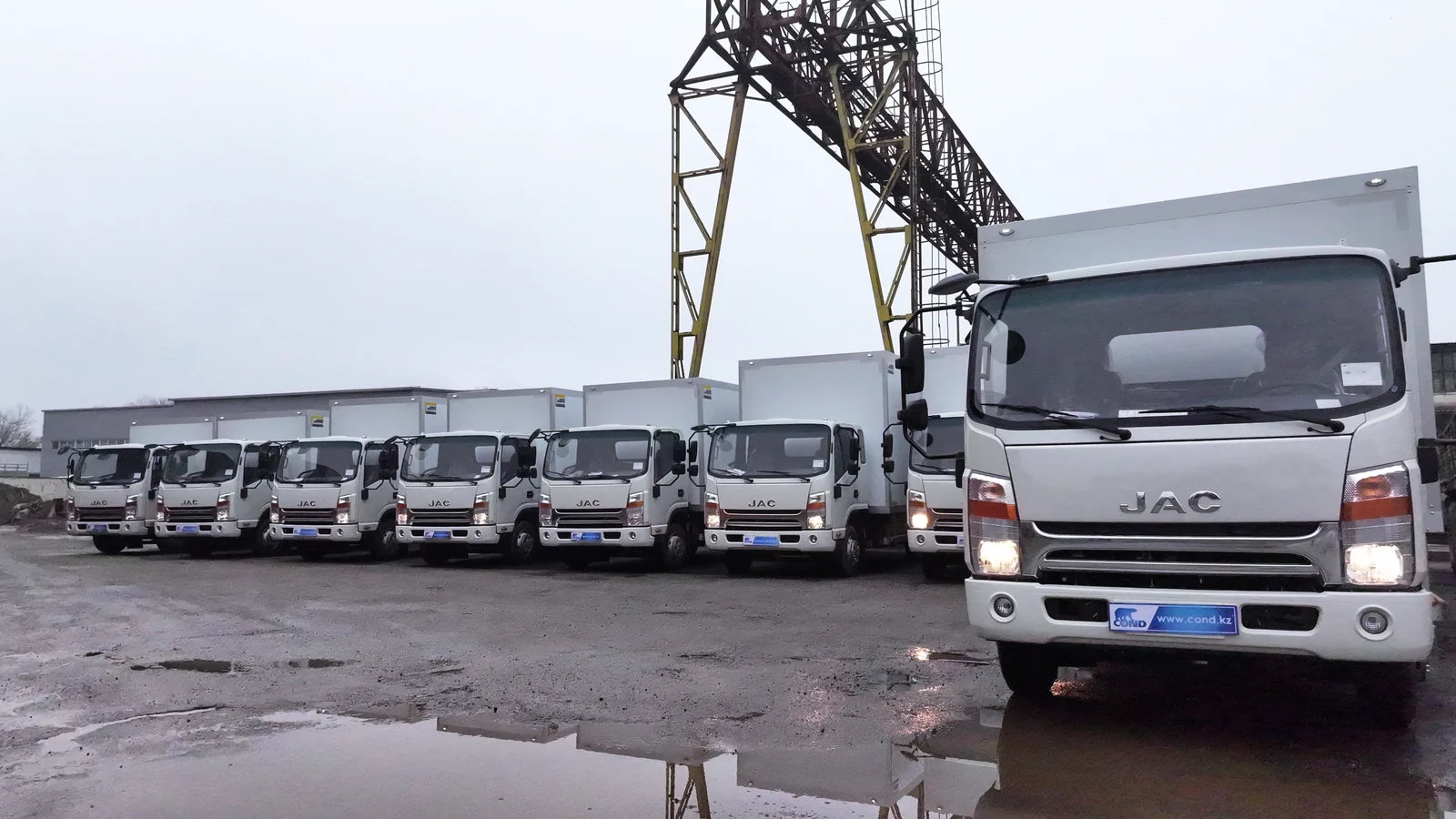
In short. Large fleets sell their trucks long before anything starts breaking — at the point where a kilometre costs the least. Depreciation eats about 38% of what a truck costs to own, more than fuel does. And owning the vehicles turns out to be optional: Amazon delivers billions of parcels in vans it does not own.
The world's biggest vehicle fleet belongs to the US Postal Service — over 220,000 vehicles. Next come UPS, DHL, Amazon and FedEx. Curiously, none of these companies calls itself a trucking firm: they are postal operators, couriers and retailers. The record holders haul their own goods — and count every kilometre harder than any carrier does. For a carrier the truck earns money; for them it is a pure cost line they have spent years learning to squeeze.
That schooling produced a few rules. They work equally well for Frito-Lay's 22,000 vehicles and for an Almaty distributor running three GAZelles.
Quote is based on body, chassis and temperature range.
Rule one: sell the truck while it is still in shape
Sounds odd. The truck runs, nothing is broken — why touch it?
Because the cost of a kilometre has its own mathematics. In the first years a vehicle loses value fast but barely needs repairs. Then the curves swap places: the price has little left to lose, while repair bills grow every year. Between the two curves lies the point where a kilometre is at its cheapest. For light commercial vehicles it comes at 3–5 years or 120,000–160,000 km; for heavy trucks, between 800,000 and 1.2 million.
Miss the point and you enter what American fleet managers call the red zone: the annual repair bill of an ageing truck can exceed everything spent on it in all previous years combined. Add downtime — a parked truck hauls nothing while insurance and the driver's wage keep running.
Hence replacement schedules instead of running trucks into the ground. A new tractor loses 20–30% of its price in the first year and 50–60% by year five. Waiting for it to "pay off completely" is not an option — selling on time, while the market still pays real money, is. Which is exactly what Frito-Lay, America's seventh-largest fleet, does.
The whole calculation — fuel, repairs, insurance, value lost at resale — is called TCO, total cost of ownership. Its heaviest line is not diesel: depreciation takes about 38%.
Rule two: you don't have to own the vans
Amazon has around a hundred thousand branded delivery vans. Almost none of them belongs to the company.
The scheme is called DSP, Delivery Service Partner. Amazon supplies the routes, the brand, the standards and the software; a contractor — a small firm with 20–40 vans — takes on the vehicles, the drivers, the repairs and the depreciation. There are already 4,400 such firms with 390,000 drivers and a combined revenue of 58 billion dollars. Amazon got a scale that an in-house fleet would have taken twenty years to build.
In the opposite camp are DHL, with 119,000 vehicles of its own (every fourth one already electric), and PepsiCo. Americans joke that its Frito-Lay division is a trucking company dressed as a chip maker. The reason to own is simple: a Frito-Lay driver delivers the goods and stacks them on the store shelf personally. Try delegating that to a third-party carrier.
Coca-Cola found a third way: the brand owns no fleet at all — the vehicles belong to regional bottlers.
Rule three: the cold chain stays in-house
X5, Russia's largest food retailer, runs 7,210 trucks of its own across 43 transport depots. A large share of the fleet is insulated vans and reefers.
The cargo dictates it. Dairy and frozen goods cannot be "slightly spoiled": one defrost writes off a whole truckload. Holding temperature is easier on your own vehicles with your own telematics than through penalty clauses in a carrier's contract. X5 hires outside trucks too — but for seasonal peaks, when its own are not enough.
The five biggest fleets in the world
| Fleet | Size | What stands out |
|---|---|---|
| US Postal Service (USPS) | over 220,000 vehicles | The world's largest civilian fleet |
| UPS | over 125,000 vehicles | 65% of the daily fleet runs on natural gas |
| DHL Group | about 119,000 units | A quarter of the fleet is already electric |
| Amazon | around 100,000 vans | Spread across 4,400 DSP contractors; 40,000 are electric Rivians |
| FedEx | about 82,000 vehicles | Delivers to 220 countries; all-electric pickup and delivery by 2040 |
All five haul parcels and their own product. There is no classic trucking company in the top five.
What a small fleet can take from this
| Model | Who uses it | When it works |
|---|---|---|
| Own fleet | DHL, Frito-Lay, X5 | Quality, temperature and customer contact are critical |
| Full outsourcing | Amazon (DSP) | Fast scale without capital costs |
| Hybrid | X5 and most retailers | An owned core plus hired trucks for peaks |
And the one thing they all share: vehicles leave the fleet at the point of minimum cost per kilometre, long before the end of their physical life — while the used market still pays a good price.
FAQ
What do large commercial fleets actually choose? First the ownership model and the replacement schedule; the badge comes second. DHL and PepsiCo own their vehicles and replace them on schedule; Amazon's delivery fleet sits entirely with contractors. One thing is universal: the truck is sold before it becomes expensive to keep.
When is it worth replacing a commercial vehicle? At the point of minimum cost per kilometre. For vehicles up to 3.5 tonnes that is usually 3–5 years or 120,000–160,000 km; for heavy trucks, 800,000–1.2 million km. Beyond that, repairs eat everything the ageing truck earns.
What is TCO — total cost of ownership? Every expense over the service life — purchase minus resale, fuel, repairs, insurance, downtime — divided by mileage. The biggest line is depreciation, around 38%. Fuel only comes second.
Which commercial vehicle is the most economical? The one matched to its duty cycle. In Kazakhstan, at August 2026 prices, the cheapest kilometre belongs to LPG vehicles and to electric vans charging at 70 tenge per kWh; diesel wins on intercity and long-haul routes. A detailed per-100-km breakdown is in the article on cost of ownership by fuel type.
What fuel should a truck run on? Look at the routes. City work and moderate mileage — petrol with LPG (GAZelle, Shineray). Intercity, medium tonnage — diesel (JAC, Foton, FAW). Long haul — a diesel tractor (KamAZ, Sitrak, Shacman). High urban mileage with a charger of your own — an electric van.
Own fleet or hired transport — which is cheaper? Own — when a carrier's mistake costs more than the saving: cold chain, pharma, shelf merchandising. Hired — when you need scale right now. Most often the hybrid wins: an owned core plus hired trucks for the peaks.
Where truck bodies come into this
The rule "sell the truck in good shape" has an awkward corollary: the body has to survive until the sale without hurting the price. A shabby box with rusty seams takes more off the resale value than its timely repair would have cost — the buyer sees the body before opening the hood.
The COND factory in Almaty builds bodies for the full life of the chassis: insulated and refrigerated vans, flatbeds and dry-freight boxes on sandwich panels that do not rust — custom van body manufacturing. If you are fitting out a whole fleet, ready-built vehicles are the shorter path: in stock and completed projects, light-duty vans and reefers. Size the body for your pallets in the body calculator.