
The multi-temperature van: two modes in one body
Published: Updated:
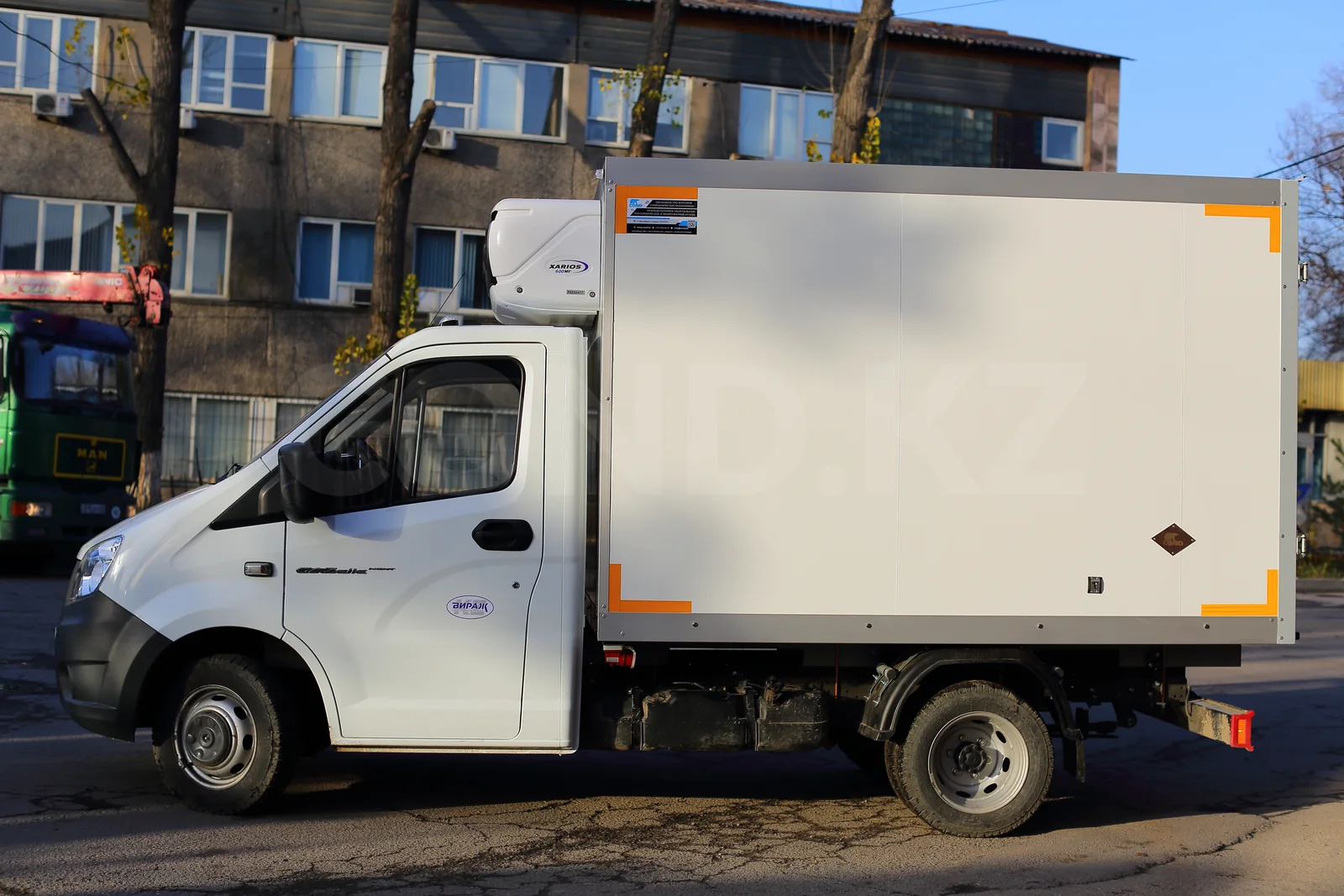
Frozen and chilled goods on the same run is not a matter of “adding a partition”. Here is what a multi-temperature body is actually made of, where it pays for itself, and where an ordinary reefer is the cheaper answer.

Quote is based on body, chassis and temperature range.
What it is
A multi-temperature van is one body split by an insulated bulkhead into two temperature compartments, each holding its own temperature. One can sit at −18 °C while the other holds +4 °C at the same time. Such a truck carries what normally takes two: dumplings and dairy, ice cream and drinks, frozen meat and chilled ready meals.
The economics are simple: one truck runs the route instead of two. One driver, one service schedule, one insurance policy, one fuel bill. For a distributor with mixed orders that is usually the whole argument.
What it is made of
Three things, without which “multi-temperature” is just a word in an advert.
1. The bulkhead. Not a plywood board but the same sandwich panel the walls are made of. An uninsulated bulkhead bleeds cold from the frozen side into the warm one, the unit never stops, and what you actually end up with is one body at an average temperature.
2. A separate evaporator for each compartment. It is the evaporators that multiply; the compressor stays single, sits over the cab and serves both circuits. That is where the MT (multi-temperature) suffix in the unit’s name comes from.
3. A controller with independent circuits. In the cab the driver sees two channels and gives each its own setpoint. On our Carrier project they are labelled right on the panel — COMP 1 and COMP 2.
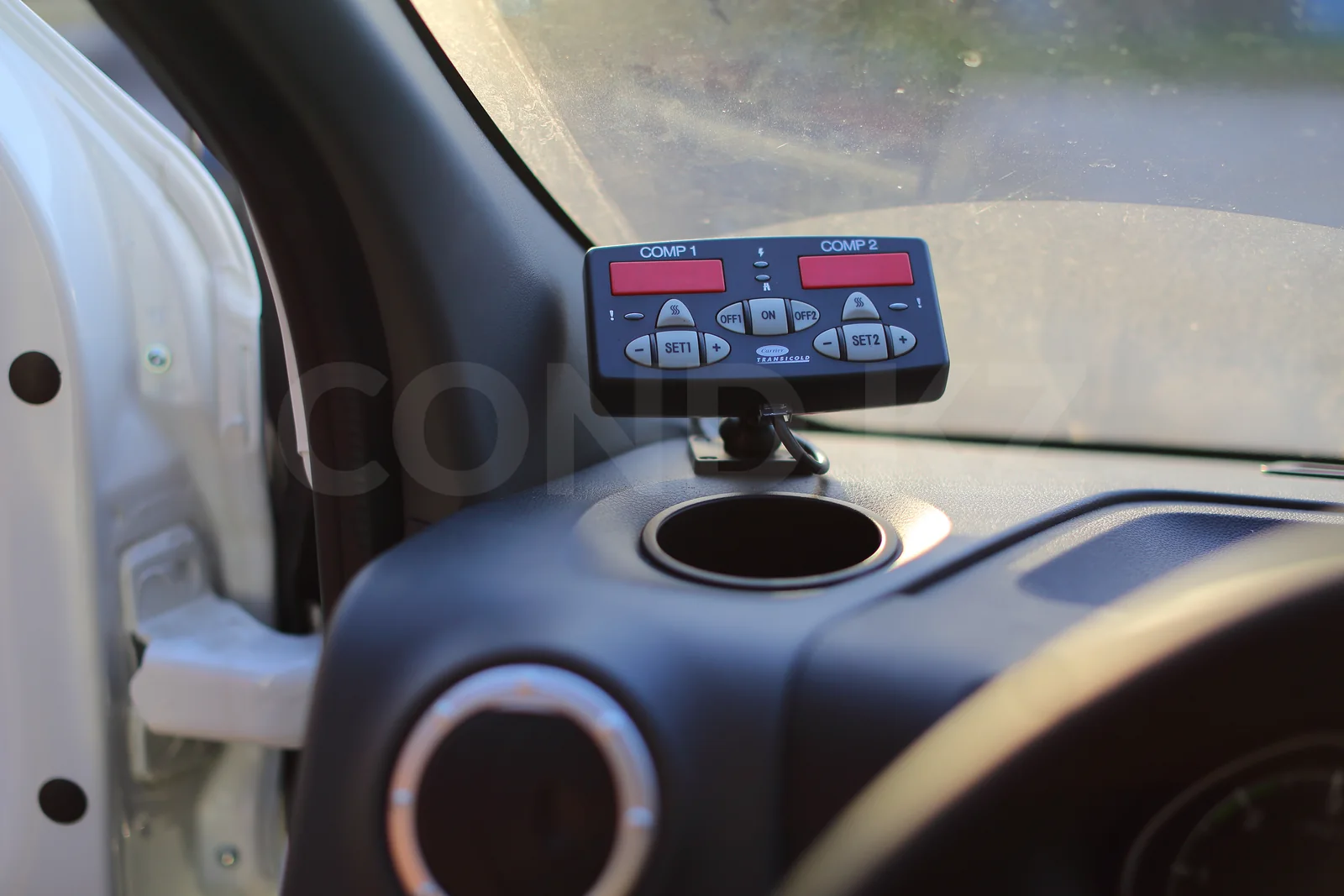
The in-cab controller: two circuits, each with its own setpoint.
Where the bulkhead goes
This is decided before the body is built and for your specific goods. The split between compartments is a figure from your delivery notes, not from a catalogue: how many cubic metres go frozen and how many go chilled. The bulkhead can be moved later, but that is rebuilding the body rather than adjusting it, so it is worth working out up front.
A rule of thumb: leave headroom on the frozen side. Freezing is less forgiving of heat ingress, and a compartment sized to the millimetre will keep the unit running flat out in summer. The chilled side forgives more.
Why a 100 mm wall and not 50
Fifty millimetres is enough for an insulated body on a short run. For −18 °C you need the full hundred: the colder it is inside, the bigger the gap to the outside air and the faster heat leaks through the wall. On a thin panel the unit in the frozen compartment will never reach its setpoint in a Kazakh summer — it will run non-stop and still fall short. Both of our multi-temperature bodies are built with a 100 mm panel.
How it is loaded
The rear portal is opened for loading. At the stops the work is done by the side door into the second compartment: two or three boxes come out without throwing the whole body open and chilling down the frozen side. On a route with frequent stops that is not a convenience but a direct saving in degrees — and in the fuel the unit burns to win them back.
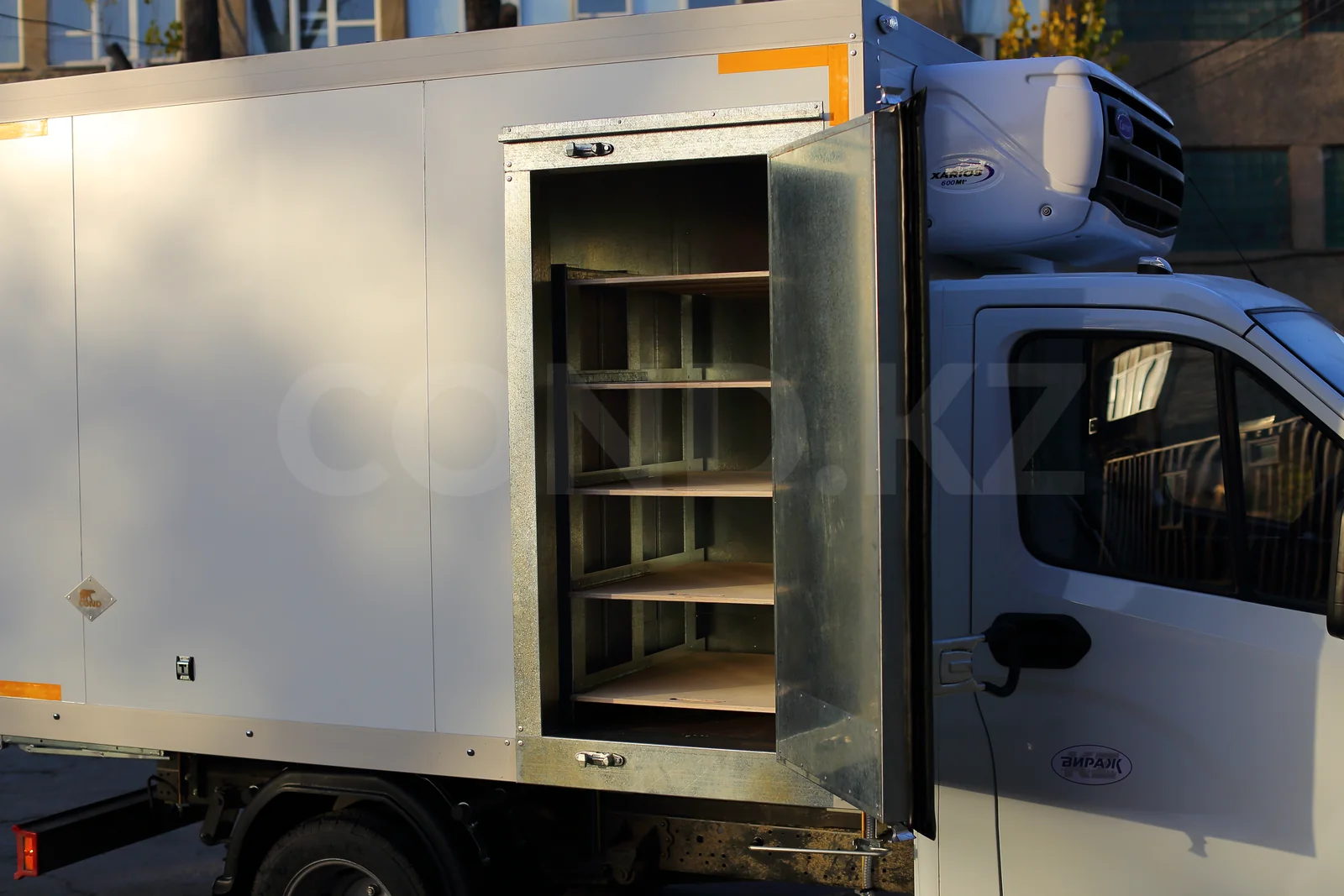
The second compartment loads through the side door; inside there is shelving for small packaging.
Our two trucks, and how they differ
We have built a multi-temperature body twice, and differently each time — the comparison helps if you are choosing for yourself.
| The Elinge project | The Carrier project | |
| Chassis | GAZelle Next | GAZelle Next A21R23 |
| Body length | 4,250 mm | 3,200 mm |
| Installation | Elinge | Carrier Xarios 600 MT |
| Wall | 100 mm | 100 mm |
| Category | B | B |
Both are category B, that is, an ordinary car licence: the chassis gross weight stays within 3,500 kg. They differ in length and in the make of unit; the principle is the same. See the projects with photographs: the multi-temp reefer with a Carrier Xarios 600 MT and the 4,250 mm multi-temperature body.
When you do not need one
Honestly: it costs more than an ordinary reefer and is more involved to service — two circuits, two evaporators, more places for things to go wrong. Do not buy one if:
- Your cargo is all one kind. If the whole run is chilled only or frozen only, an ordinary refrigerated body will do, and it will cost less.
- The two modes travel at different times. If the morning run is frozen goods and the afternoon run is dairy, it is simpler to reset a single body between trips.
- The volumes call for two trucks anyway. Then a multi-temperature body saves nothing and costs more.
What to ask yourself before ordering
- What share of the load is frozen and what share is chilled? That sets where the bulkhead goes.
- How many stops a day, and in what packaging do you hand goods over? That decides whether you need a side door.
- What low temperature do you actually need: −18 °C, or is −5 °C enough? That drives the choice of unit and whether you stay within category B.
- What are you carrying in the hottest month? A unit is sized for the worst case, not the average one.
Send the answers in your own words — we will work out the compartment volumes and pick the unit. The body is built at our own plant in Almaty, for your specific chassis.
The section on the site:A multi-temperature van — specifications and projects