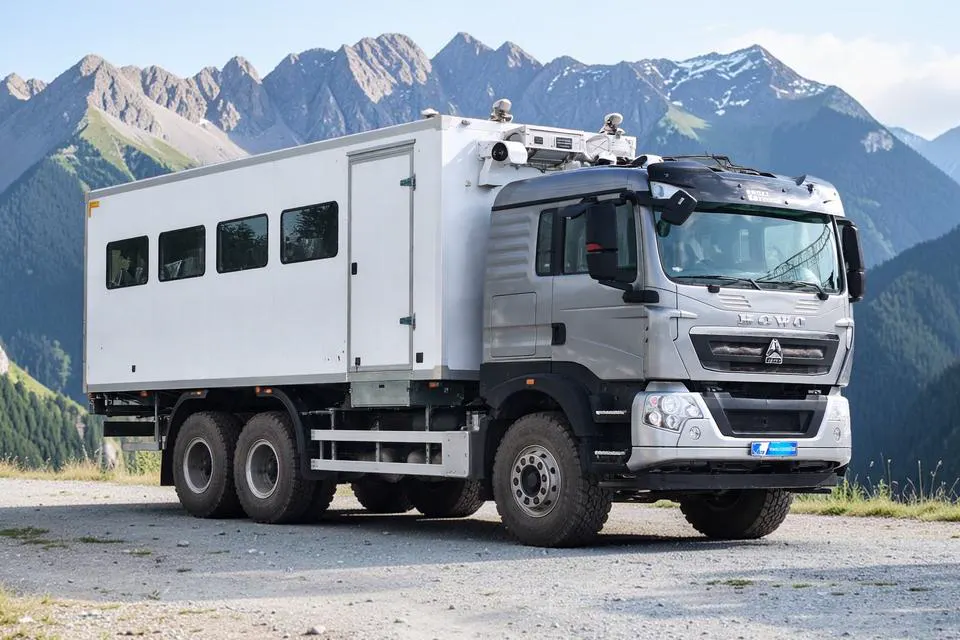
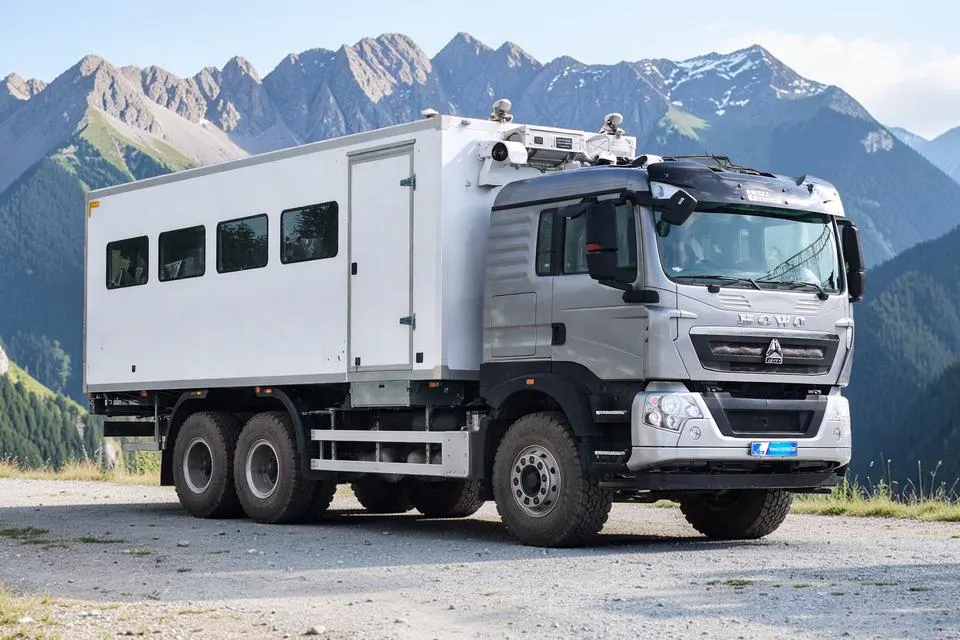
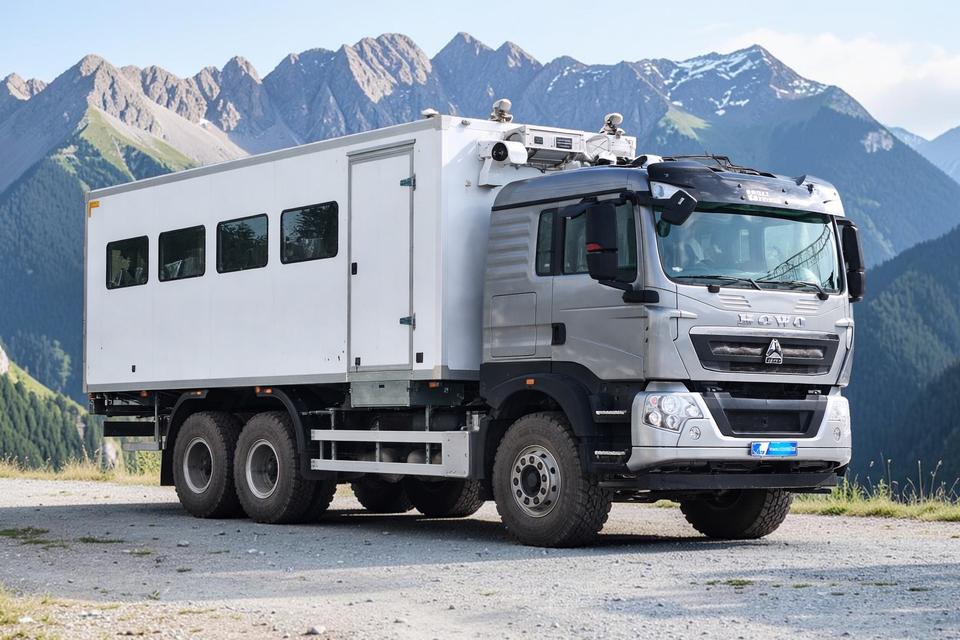
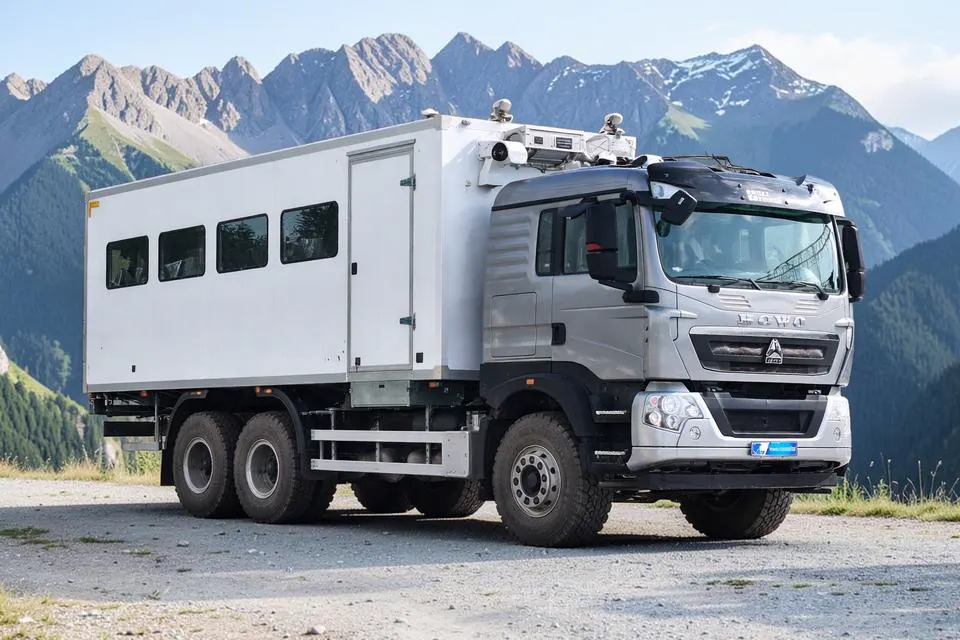
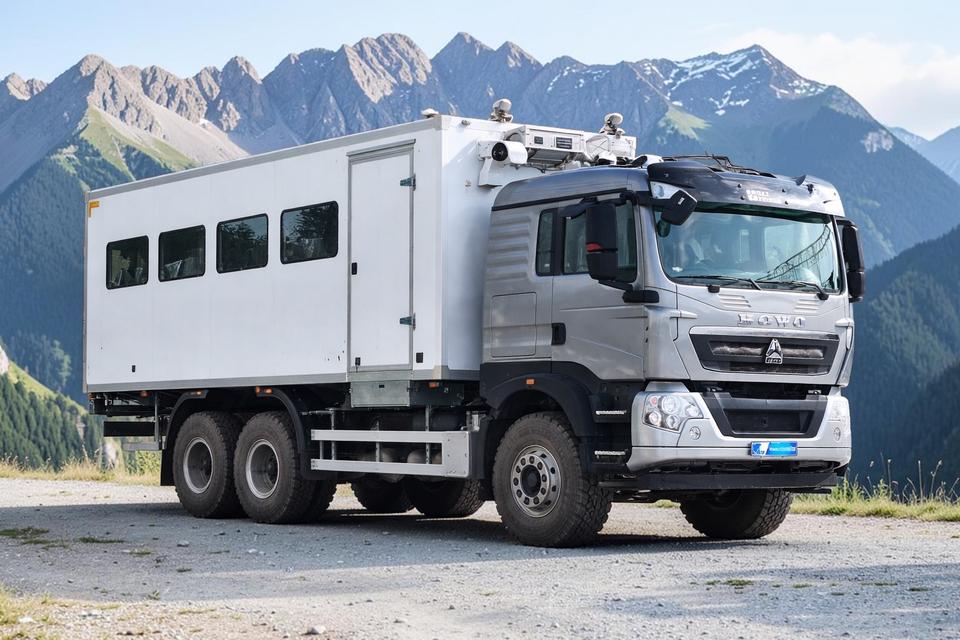
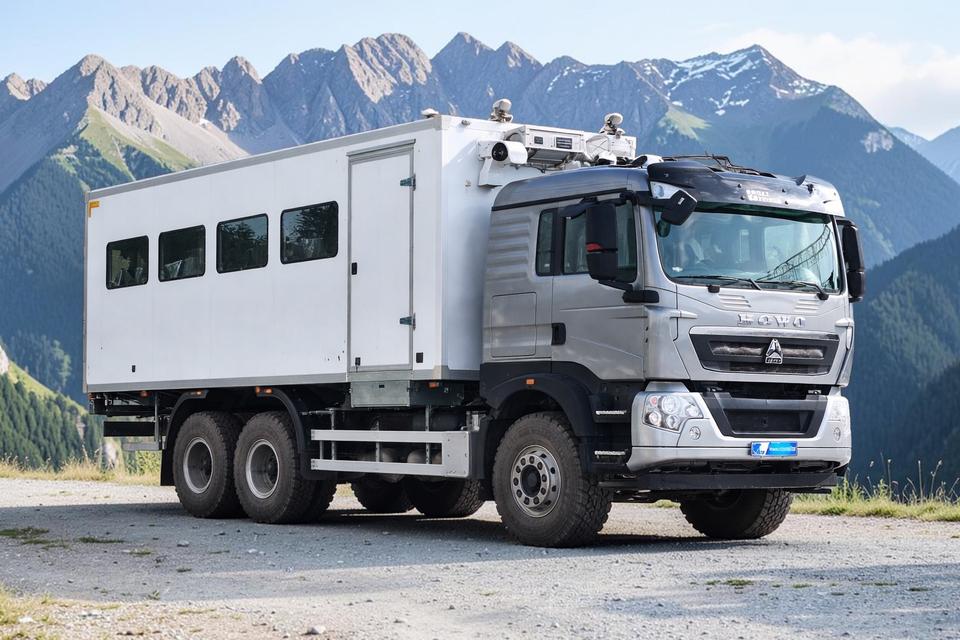
Crew bus (vakhtovka)
The quote is based on the body, the chassis and the temperature duty.
Specifications
- ✓ The COND design is based on a reinforced steel-profile frame and reliable, highly insulating sandwich panels
- ✓ Dirt protection: plastic wheel-arch liners with rubber mudflaps and side guards keep stones and dirt out, extending the life of chassis components
- ✓ Our own sandwich panels deliver excellent insulation, while the reinforced frame guarantees passenger safety
- ✓ The number of passenger seats sets the module length, and the route conditions set the chassis: all-wheel-drive 6×6 units go onto field roads
- ✓ The heater is selected by the number of seats and the regional climate: a module for 20 people heats differently in winter than one for 8. Air conditioning is optional
| Body type | crew |
| Climate | heating — in the base version; air conditioning — optional |
| Capacity | 12–28 seats; TBM and living modules — 4–6 berths |
| Vehicle category | C |
| Chassis | KAMAZ 43118 (6×6), KAMAZ 43502 (4×4), Ural NEXT, HOWO, Shacman 6×6, GAZon NEXT, Hino 300, JAC N90 |
Versions of crew buses, TBM and living modules
Eight standard arrangements with layouts. The number of seats, module length and equipment change to suit the customer's task.
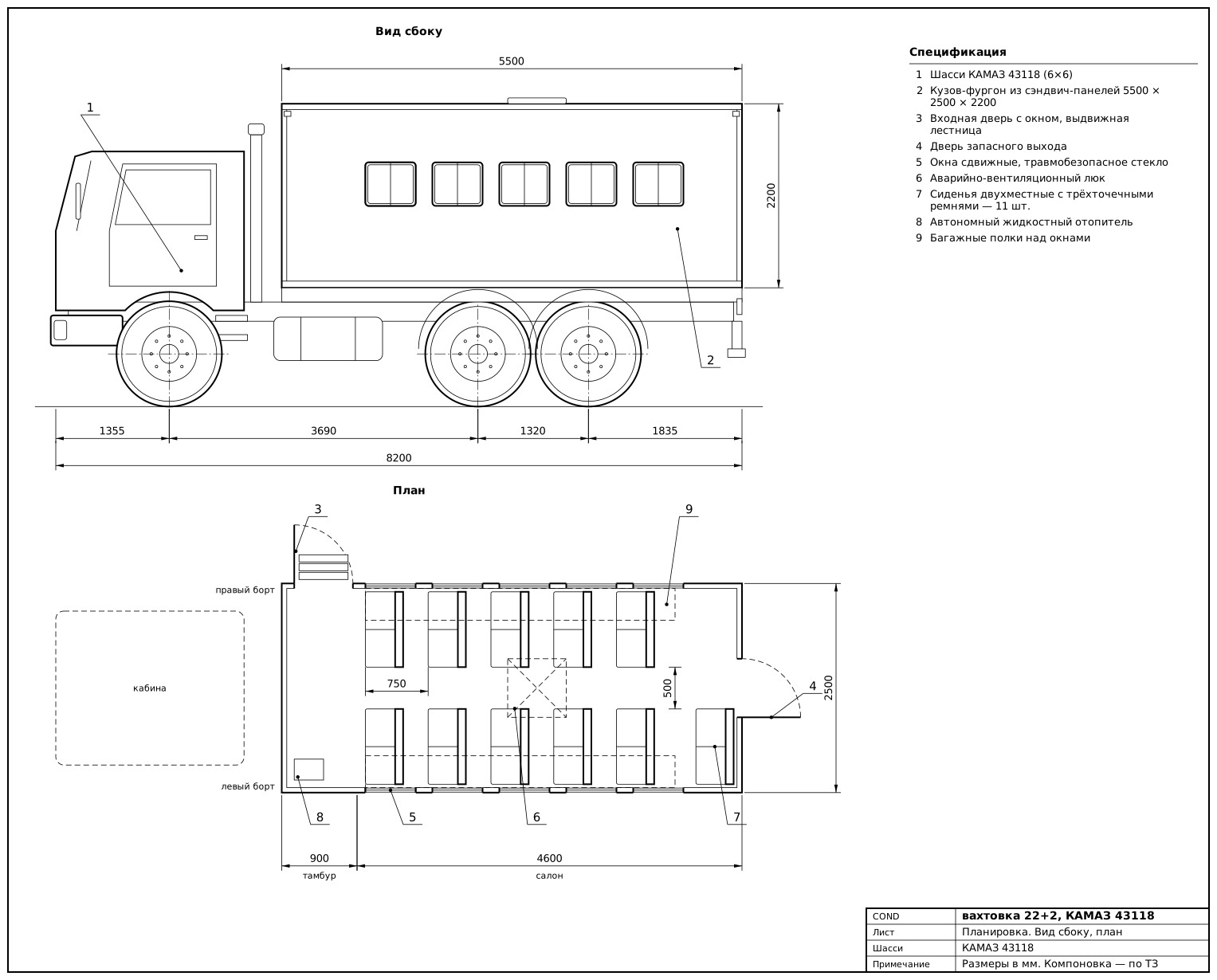
Crew bus KAMAZ 43118, 22+2 seats (6×6)
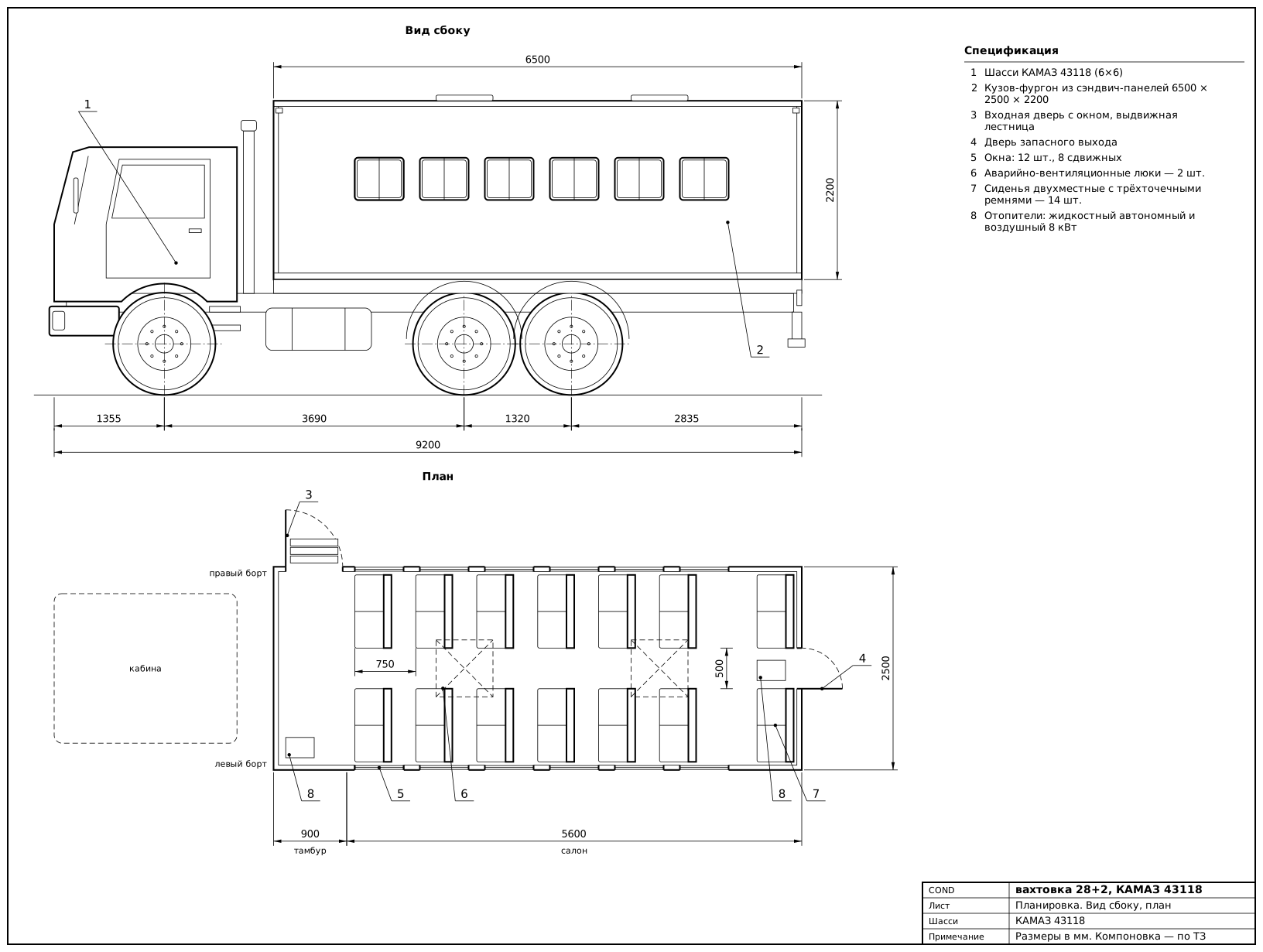
Crew bus, 28+2 seats: KAMAZ 43118 (6×6), Ural NEXT
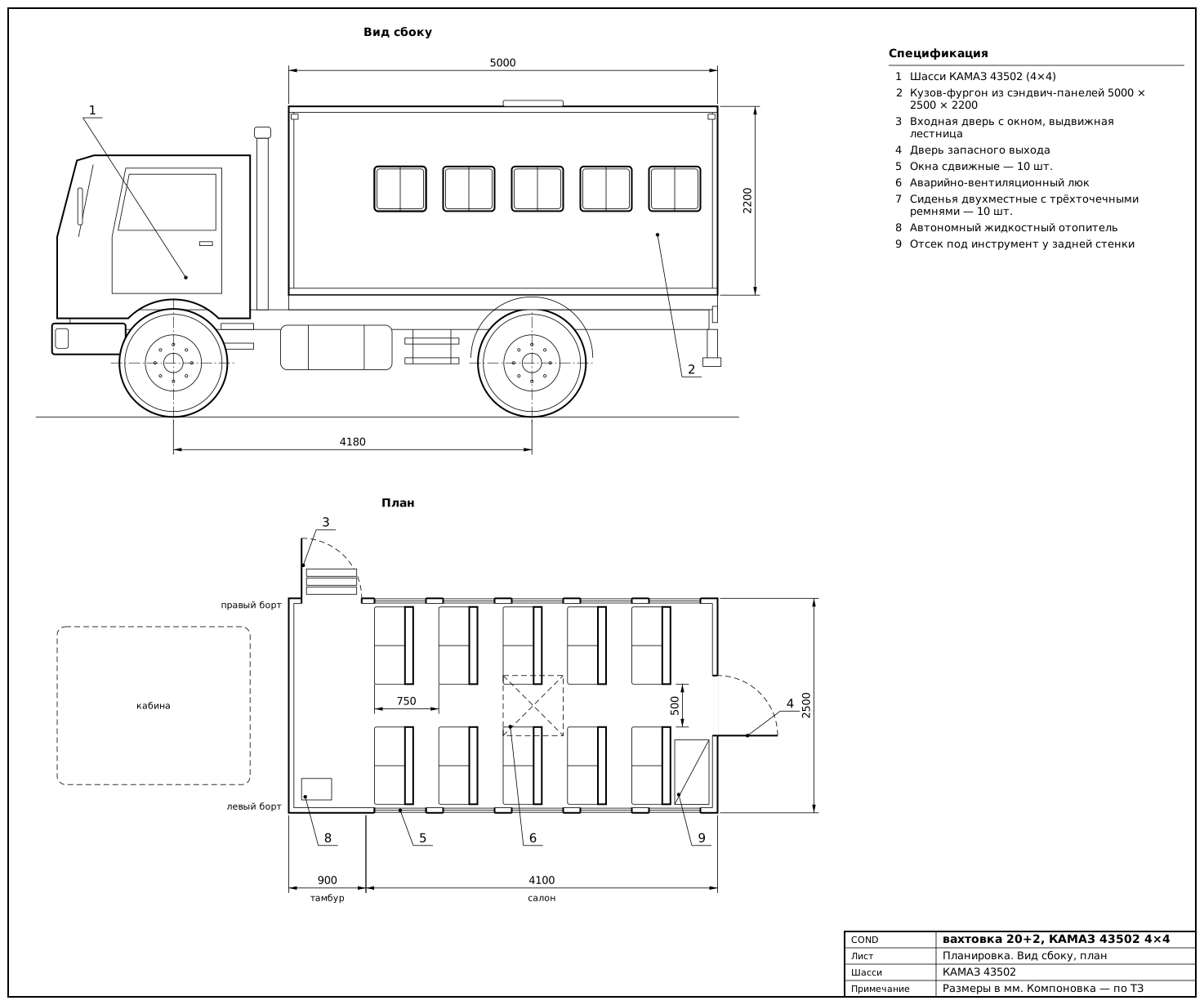
Crew bus KAMAZ 43502 (4×4), 20+2 seats
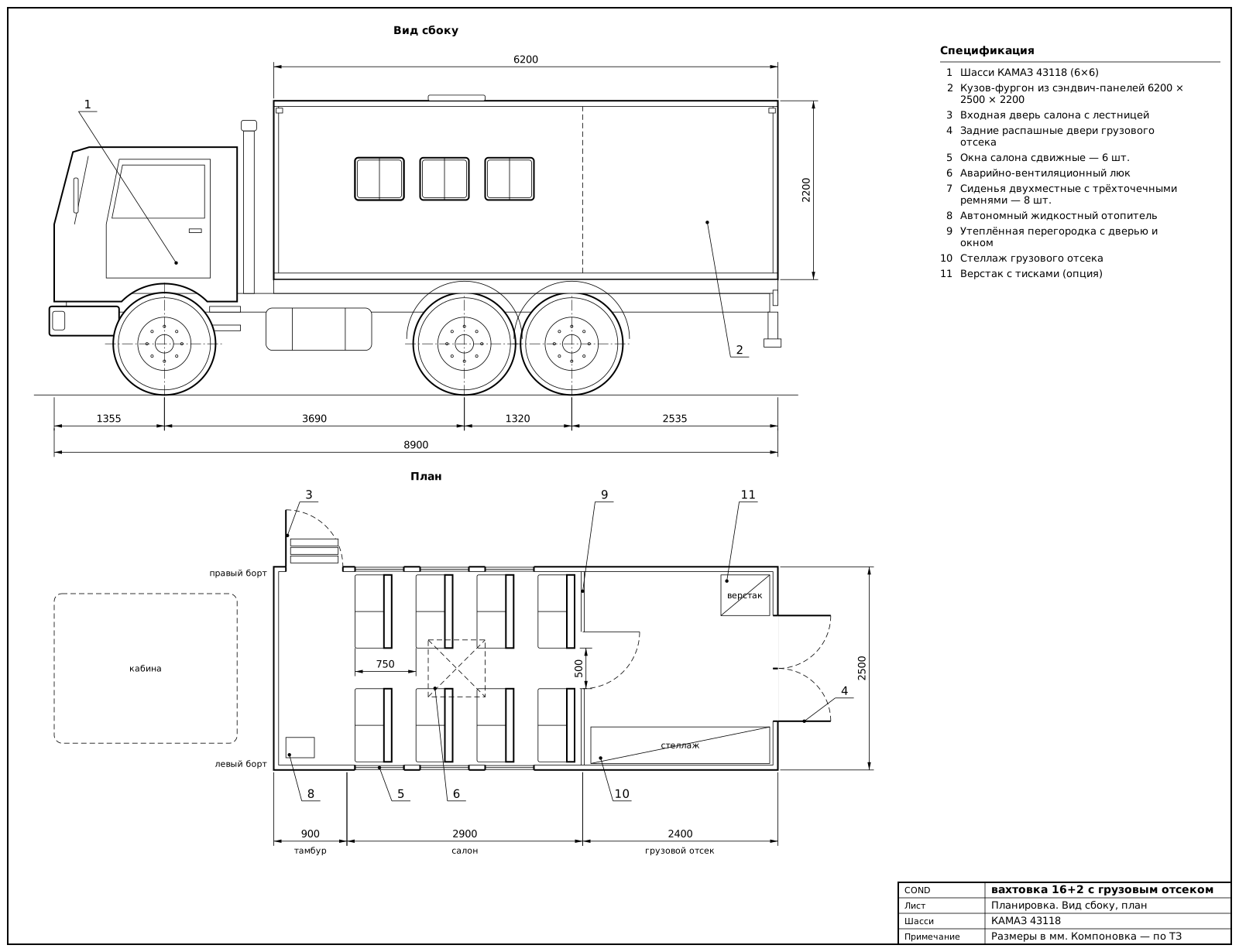
Crew bus KAMAZ 43118 with cargo compartment: 16+2 seats and a 2.4 m compartment
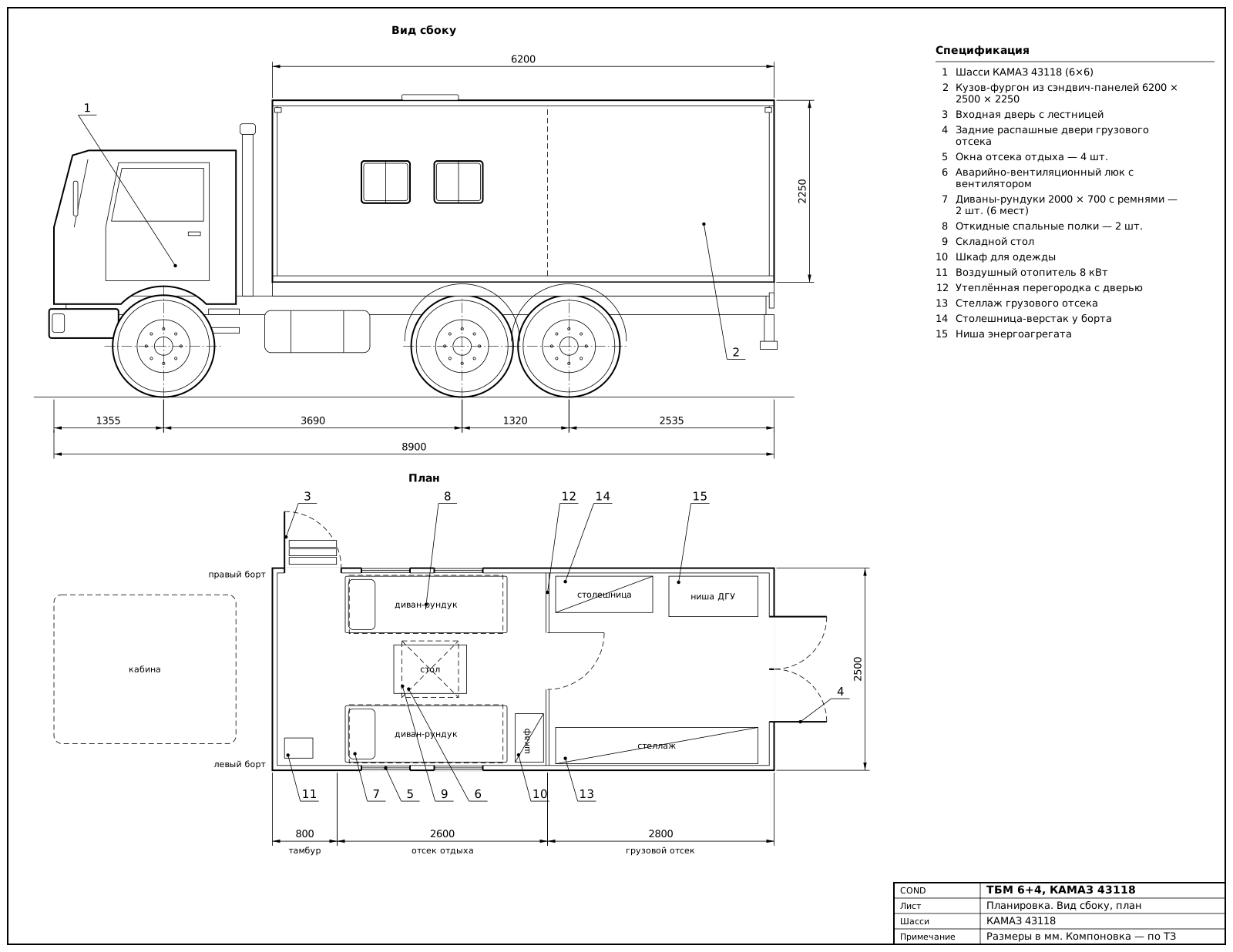
TBM KAMAZ 43118: crew utility vehicle with rest and cargo compartments
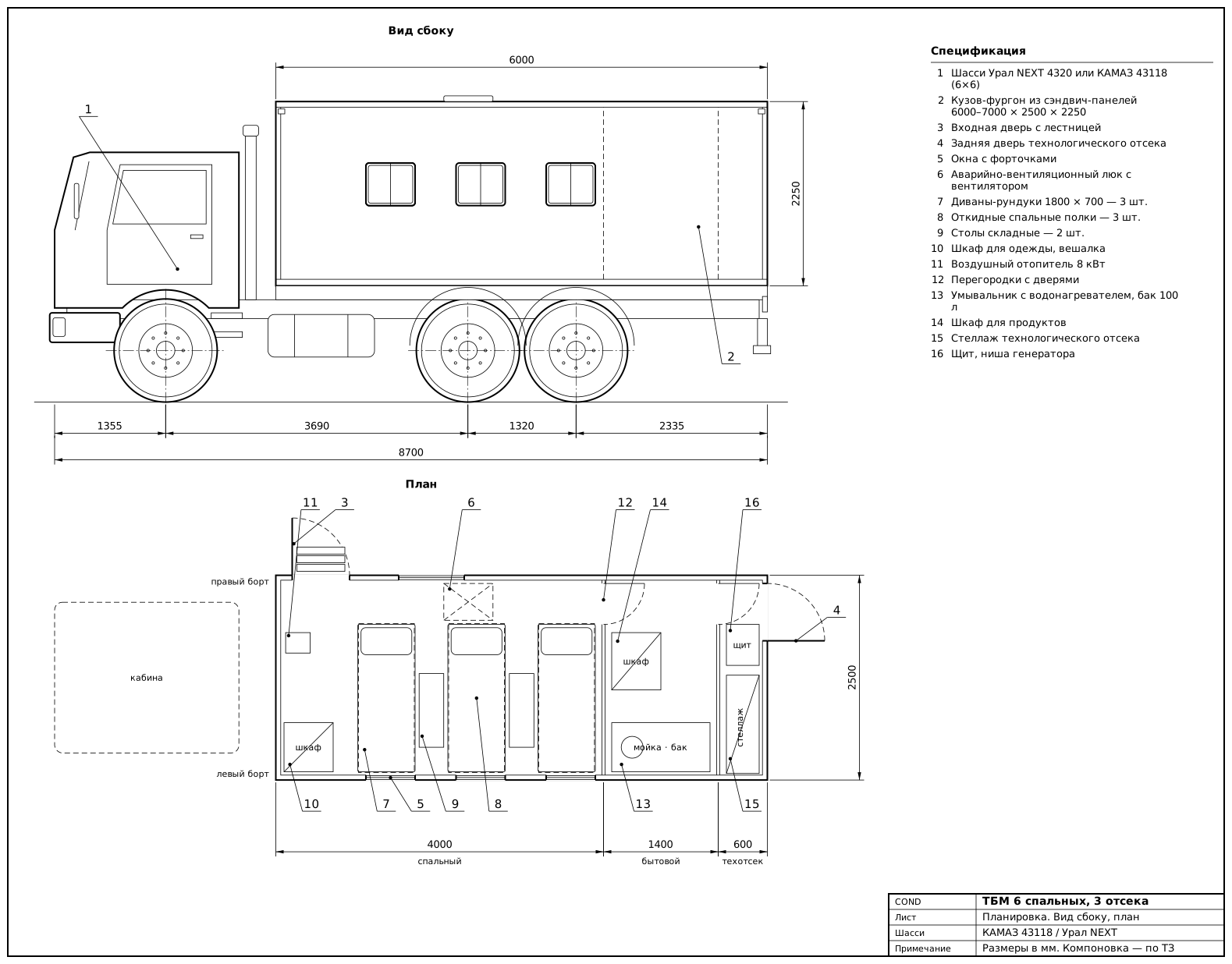
Crew utility vehicle (TBM) for 6 berths: Ural NEXT, KAMAZ 43118
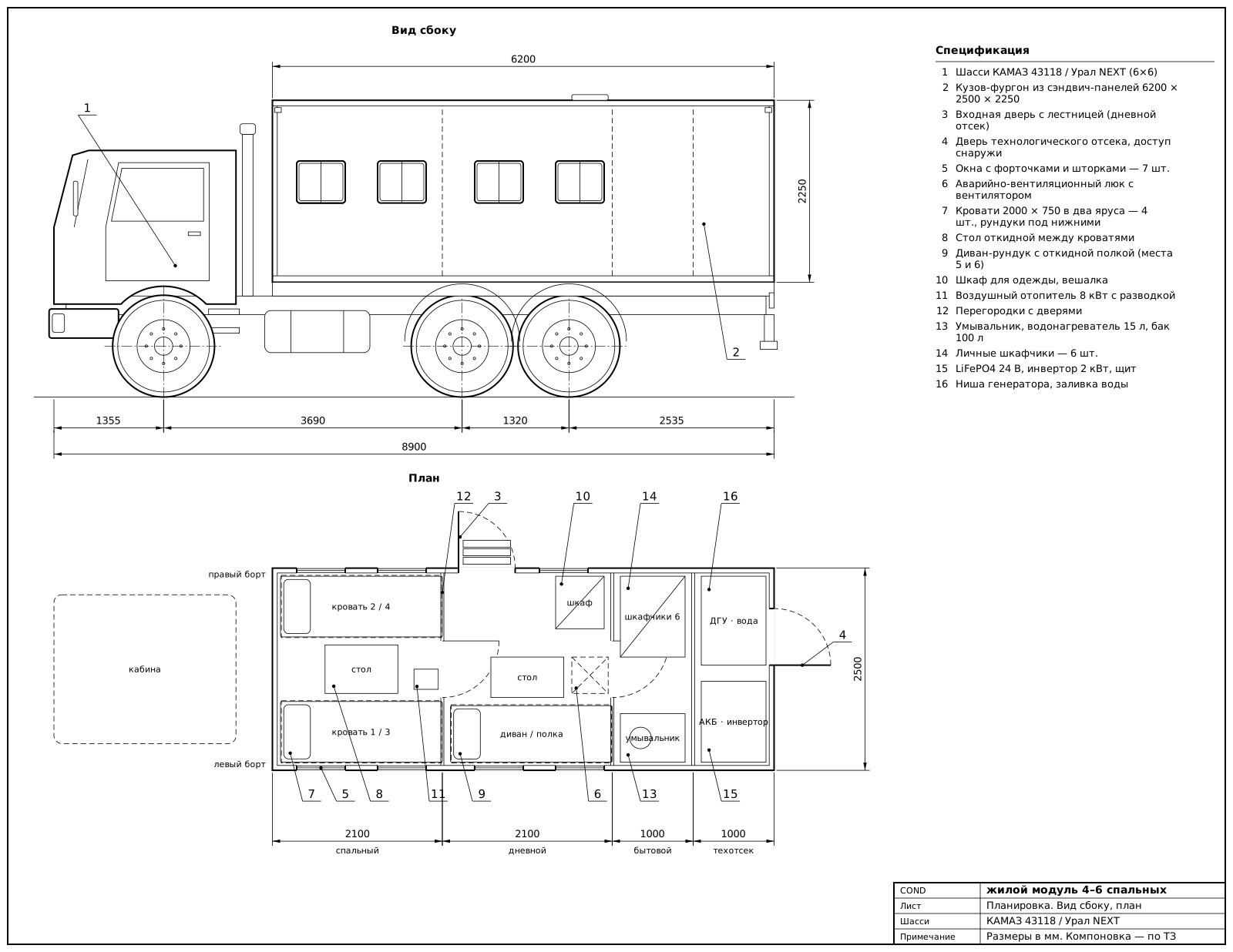
Living module on a 6×6 chassis (mobile crew cabin): 4–6 berths
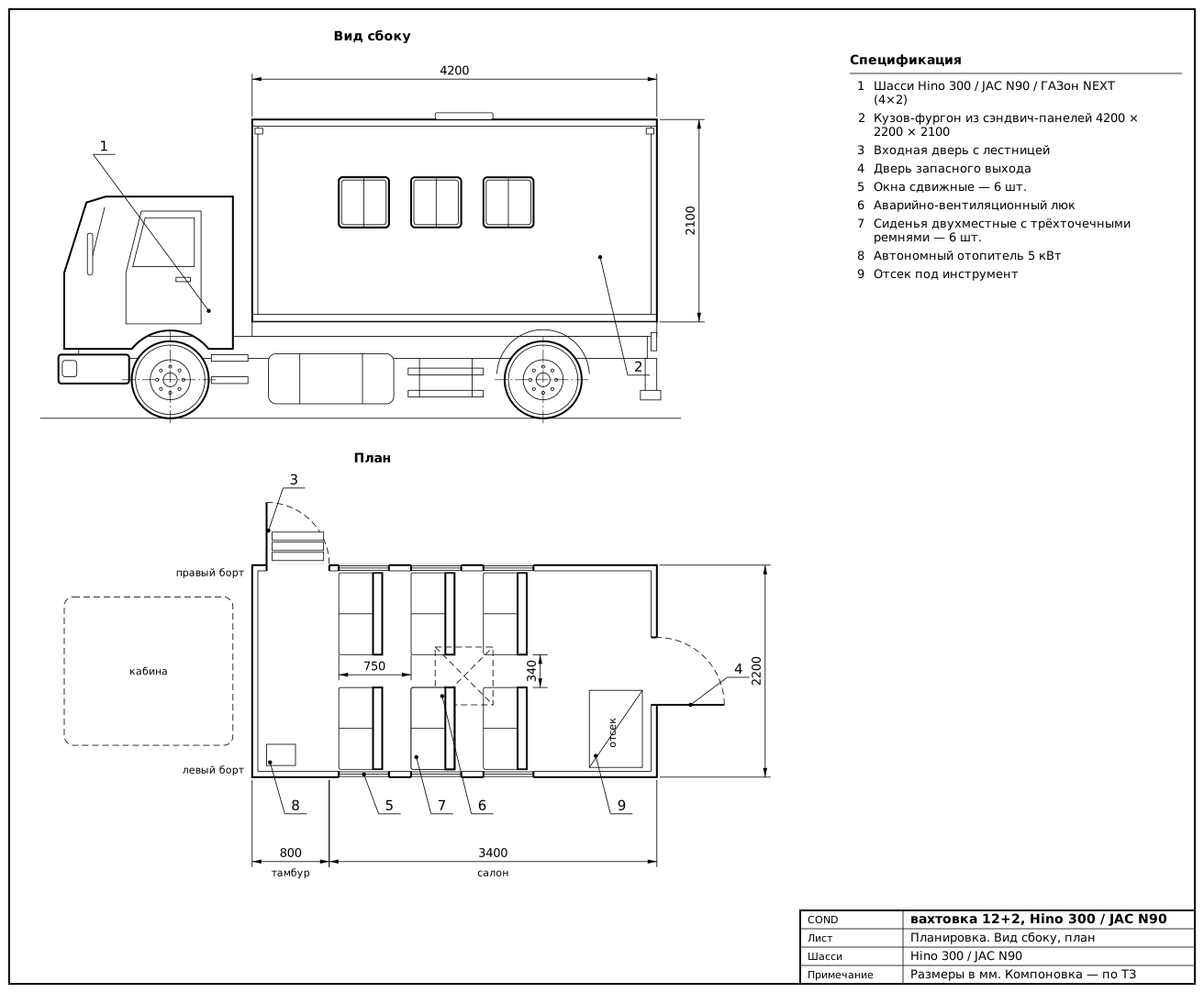
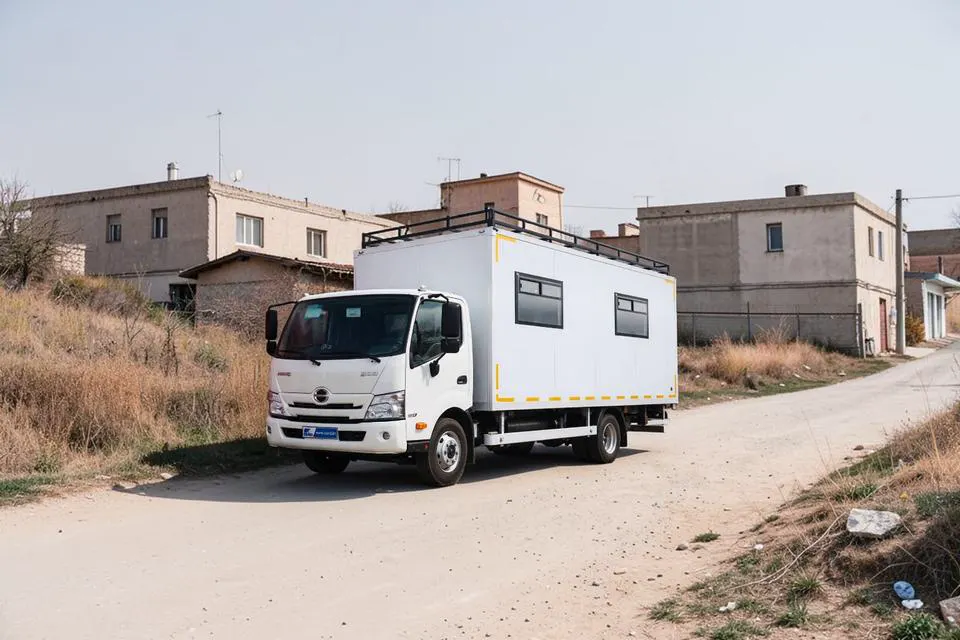
Crew bus, 12+2 seats: GAZon NEXT, Hino 300, JAC N90 (4×2)
About crew buses
What it is for
A crew bus carries work crews to remote fields and sites where an ordinary bus cannot get through. The body is mounted on all-wheel-drive chassis and designed for Kazakhstan's winters and off-road conditions.
Design
An insulated sandwich-panel body, autonomous heating, soft seats with belts, luggage racks and emergency exits to passenger-transport standards. On request — sleeping berths, a tool compartment, air conditioning.
Who it suits
For mining companies, drilling and construction contractors, and service companies with rotation crews.
How to order
Capacity — 8 to 28 seats on KamAZ, Shacman, Hino and Ural chassis. Sized by headcount and route.
Is a “vakhtovka” the same thing?
Yes — “vakhtovka” is the working name for a crew bus. On paper the vehicle is registered as a special-purpose bus or a goods-and-passenger vehicle; out on site people call it a vakhtovka, a crew carrier or simply “the vakhta”. It is the same machine: a truck chassis carrying a passenger module instead of a cargo body.
How it differs from an ordinary bus
A road bus is built for asphalt: low floor, little ground clearance, soft suspension. A crew bus sits on a truck chassis, usually all-wheel drive, and is built for dirt, broken field roads and winter tracks. Hence the high floor, the ladder with a handrail, the reinforced module frame, and an independent heater that keeps the cabin warm with the engine switched off.
The second difference: the module is removable and built to the job — with racks for tools, a locker for workwear, separate entrances. The passenger saloon of a road bus cannot be rebuilt that way.
How many seats, and on what chassis
From 8 to 28 seats. The seat count sets the module length, and the module length sets the wheelbase required, so the order of choice is: first the crew, then the vehicle. Short village routes take a KamAZ or a Hino; oilfields and winter roads take all-wheel-drive KamAZ and Shacman 6×6.
Seats are certified, fitted with belts, and spaced so a person can sit in winter clothing: the layout is calculated from the seat count, not from how many will squeeze in.
See also: PARM mobile workshop
Crew bus on KAMAZ, Ural, HOWO, Shacman, GAZon NEXT
Crew bus on KAMAZ
KAMAZ 43118 (6×6) is the main chassis: a 5.5 m module for 22 seats and 6.5 m for 28 seats. The two-axle KAMAZ 43502 (4×4) takes a 5 m module for 20 seats.
KAMAZ 43118, 22 seats · KAMAZ 43118, 28 seats · KAMAZ 43502 4×4, 20 seats
Crew bus on Ural
The Ural NEXT 4320 (6×6) with a bonnet-type cab takes a module of up to 7 m: 28 seats in the passenger version or a crew utility vehicle for 6 berths.
Crew bus HOWO and Shacman 6×6
The same modules as on the KAMAZ 43118 are fitted to the all-wheel-drive HOWO and Shacman 6×6: the module length is selected by the usable frame length of the specific modification.
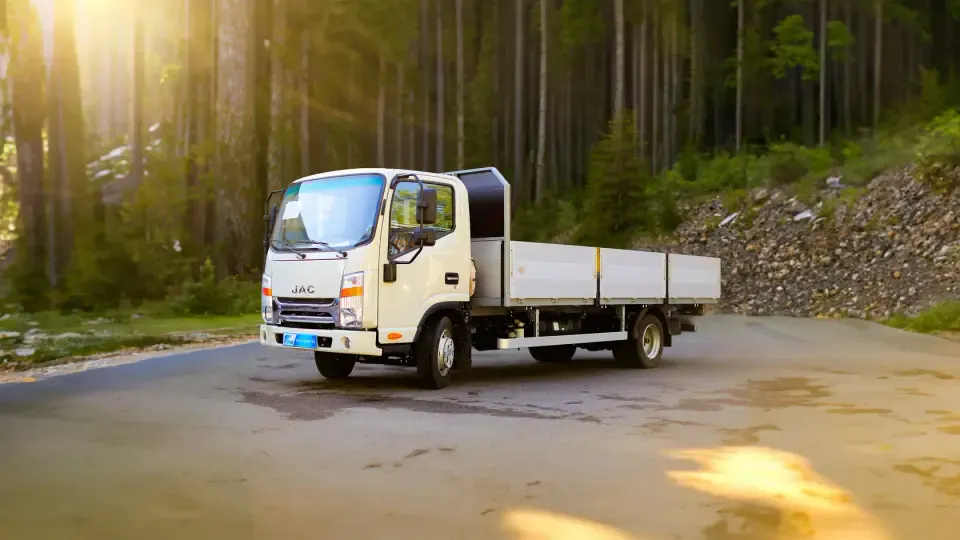
Crew bus GAZon NEXT, Hino, JAC
Medium-duty 4×2 chassis take a 4.2 m module for 12 seats: service crews, sites with an access road.
What the COND crew module is made of
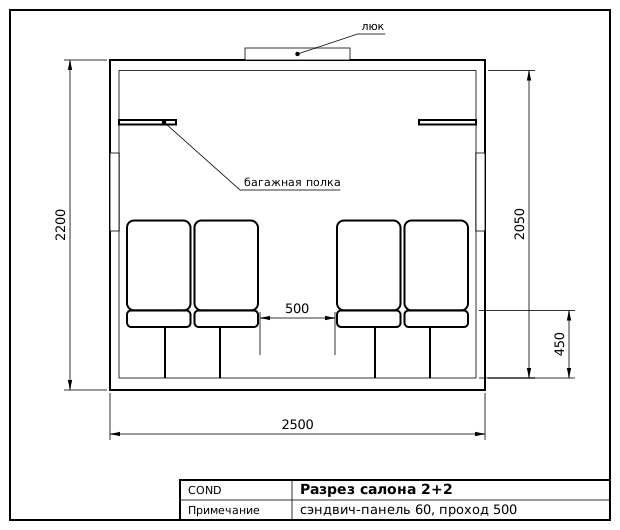
Panel-type van body of multilayer frame sandwich panels. The outer skin is galvanised sheet with a polymer coating; the inner skin is impact-resistant FRP plastic, which can be washed and withstands blows from tools and footwear. Panel thickness is 60 mm, 80 mm to order.
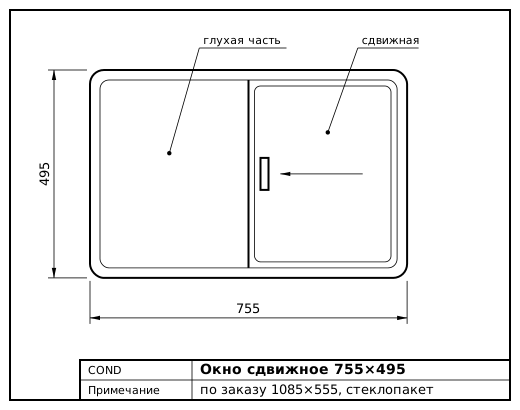
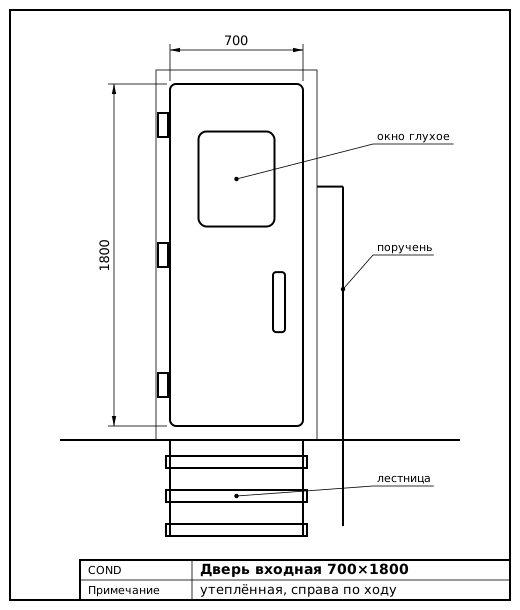
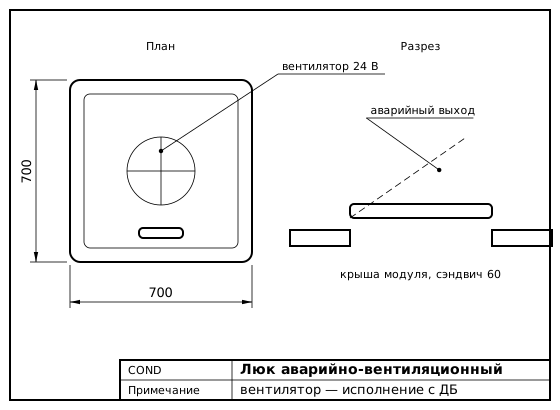
The entrance door is single-leaf, insulated, moisture- and dust-proof, with a fixed window; it is located on the right in the direction of travel. The emergency exit door is on the rear wall, of the same construction. Side windows are sliding, of safety glass, fixed on the angled corners. An emergency ventilation hatch is in the roof.
The main heating is an autonomous liquid heater; the emergency one is from the cooling system of the chassis engine. 24 V lighting, a “cabin — cab” intercom, a fire extinguisher, and an additional protective device (rear underrun protection) on the rear overhang of the chassis.
| Body panels | sandwich 60 mm; 80 mm — to order |
| Outer skin | galvanised sheet with a polymer coating, colour to order |
| Inner skin | impact-resistant FRP plastic |
| Floor | plywood with insulation, covering — automotive linoleum or checker-plate aluminium |
| Doors | entrance on the right in the direction of travel with a window, emergency exit on the rear wall |
| Module windows | sliding, safety glass; double-glazed unit — to order |
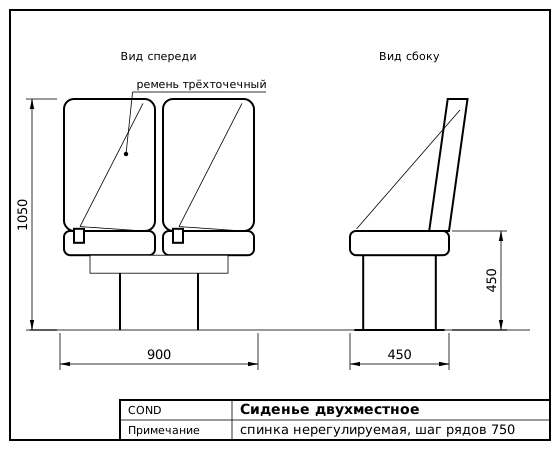
| Passenger seats | double, upholstered, fixed backrest, three-point belts |
| Module heating | autonomous liquid + from the engine; 8 kW air — from 24 seats |
| Cabin air conditioning | option, not included in the base equipment |
| Module electrics | 24 V, ceiling lamps, intercom; 220 V from an inverter or generator — optional |
| Mounting to the frame | subframe with steel embedded plates, U-bolts |
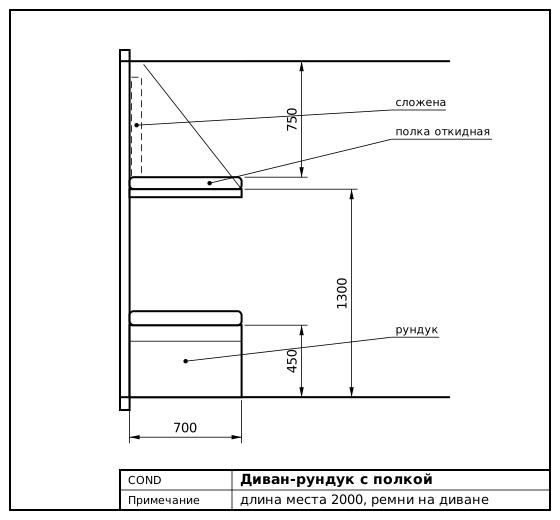
Module elements: sketches
How the module length is calculated
A 2+2 row of seats takes 750 mm of length and gives four seats — at this pitch the crew sits in winter workwear without knees touching the seat back. The vestibule at the entrance door is 800–900 mm. Hence: 12 seats — a 4.2 m module, 20 seats — 5.0 m, 22 seats — 5.5 m, 28 seats — 6.5 m.
The module length is determined by the chassis, not the other way round. Up to 5 m fits the two-axle KAMAZ 43502 and 4×2 medium-duty trucks, up to 6 m — the KAMAZ 43118 with a standard frame, 6.5–7 m — the KAMAZ 43118 with an extended rear overhang and the Ural NEXT.
A cargo compartment, rest compartment or utility compartment is separated by an insulated partition with a door; each metre of compartment removes four passenger seats. Layouts of the eight standard versions are in the cards above, each with a drawing and a numbered equipment legend.
When the crew needs more than just a ride
Crew utility vehicle (TBM)
A crew bus in which part of the cabin is given over to rest: benches with storage and belts, fold-down bunks, a table, a cabinet, a washbasin with a water heater, a generator niche.
TBM: 6 seats, 4 berths and a cargo compartment · TBM for 6 berths with a utility compartment
Living module on a chassis
For housing a crew for weeks: 2000 mm beds in two tiers, personal lockers, a table for everyone, lithium batteries for two days without a generator.
Crew bus with cargo compartment
People and tools in one vehicle: a 16-seat cabin and a 2.4 m compartment with rear doors and a rack.
Get an exact price
Leave your contacts — we will discuss your job and select the right option.
📞Phone+7 777 233-69-28💬WhatsApp
Message us