RU | KZ | EN
Van bodies
Vehicles
Equipment
Components
Services
Trucks in stockRepairBlogFAQGet a quote
Home / Catalogue / Crew bus / crew bus 16+2 with cargo compartment
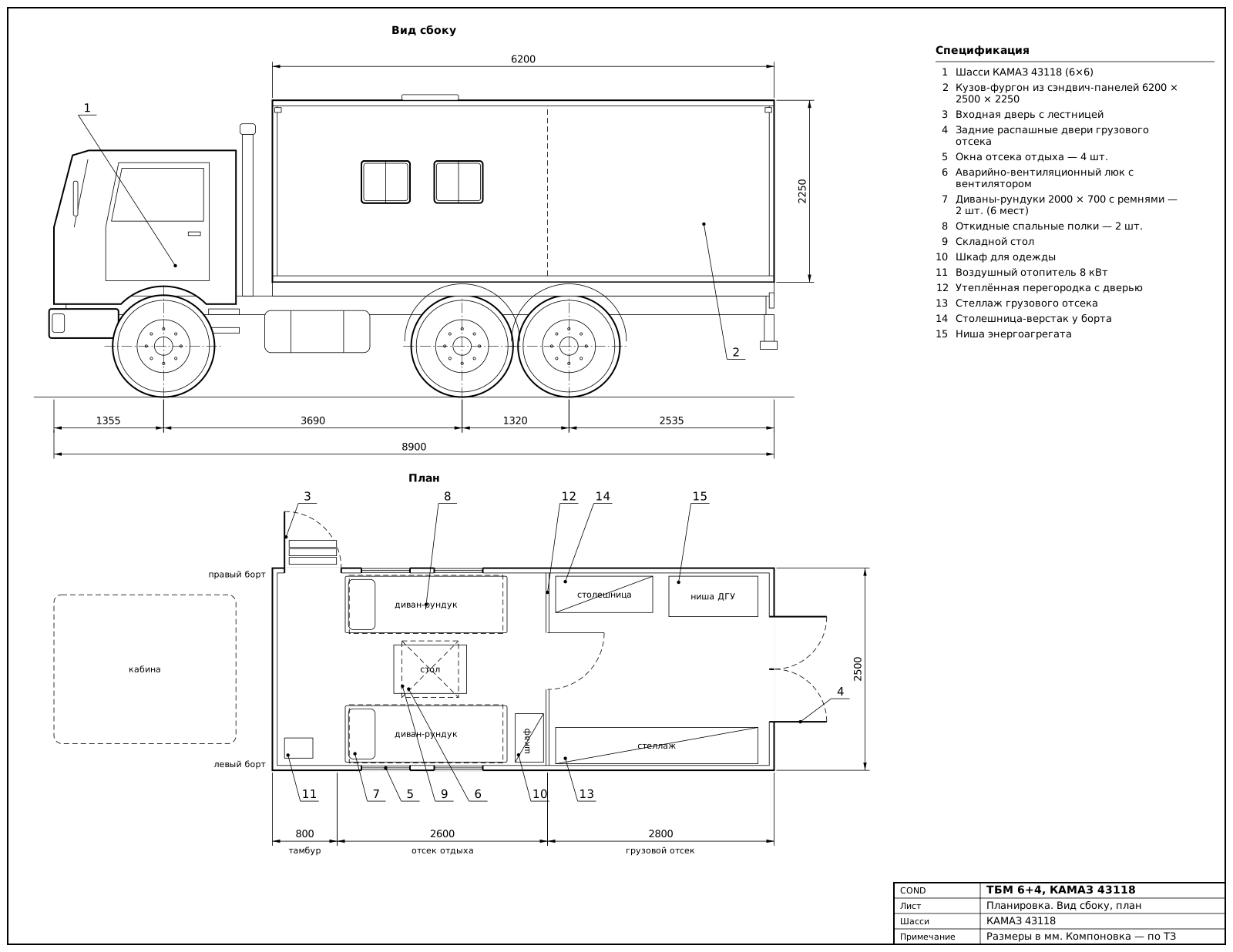
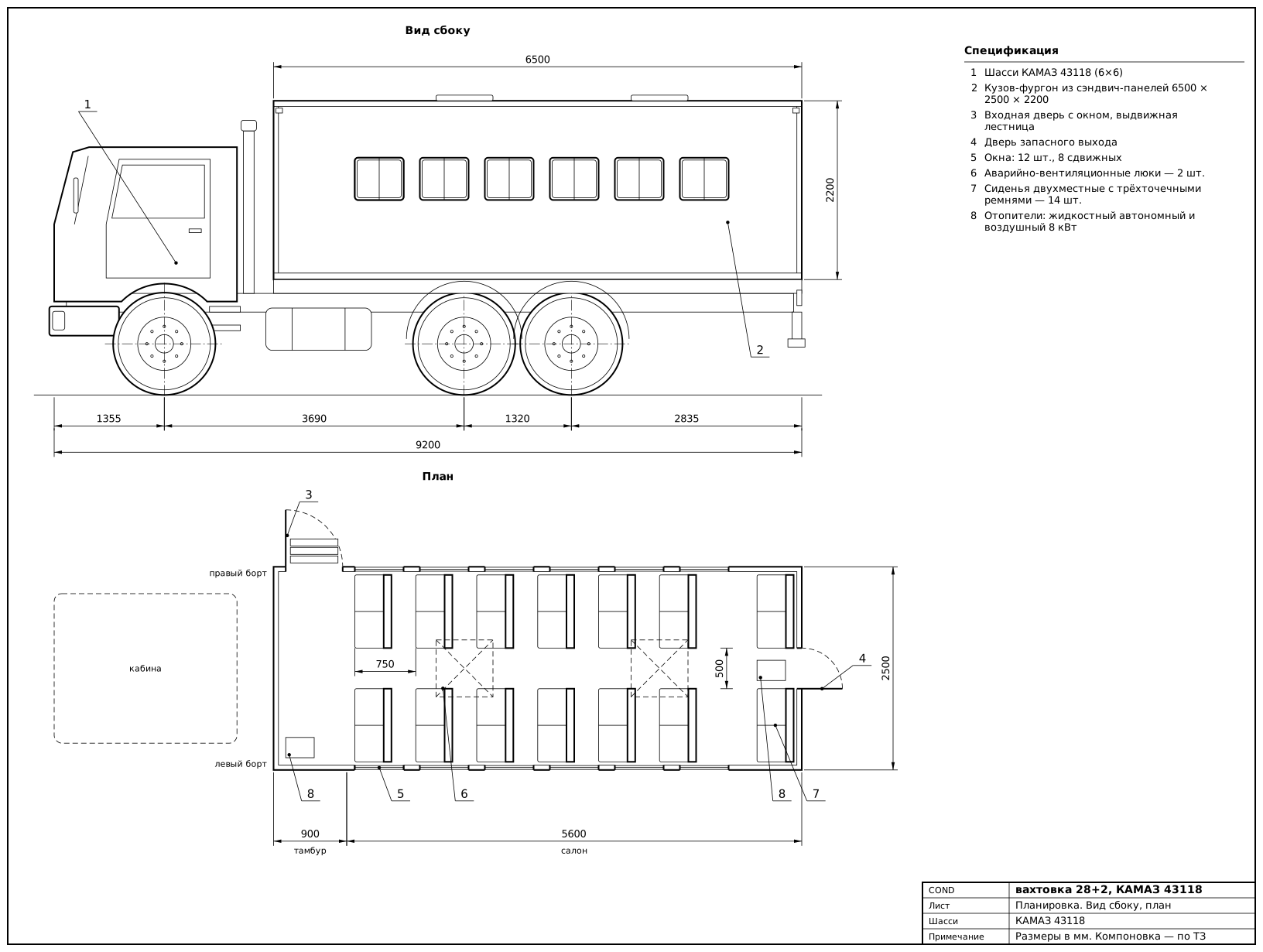
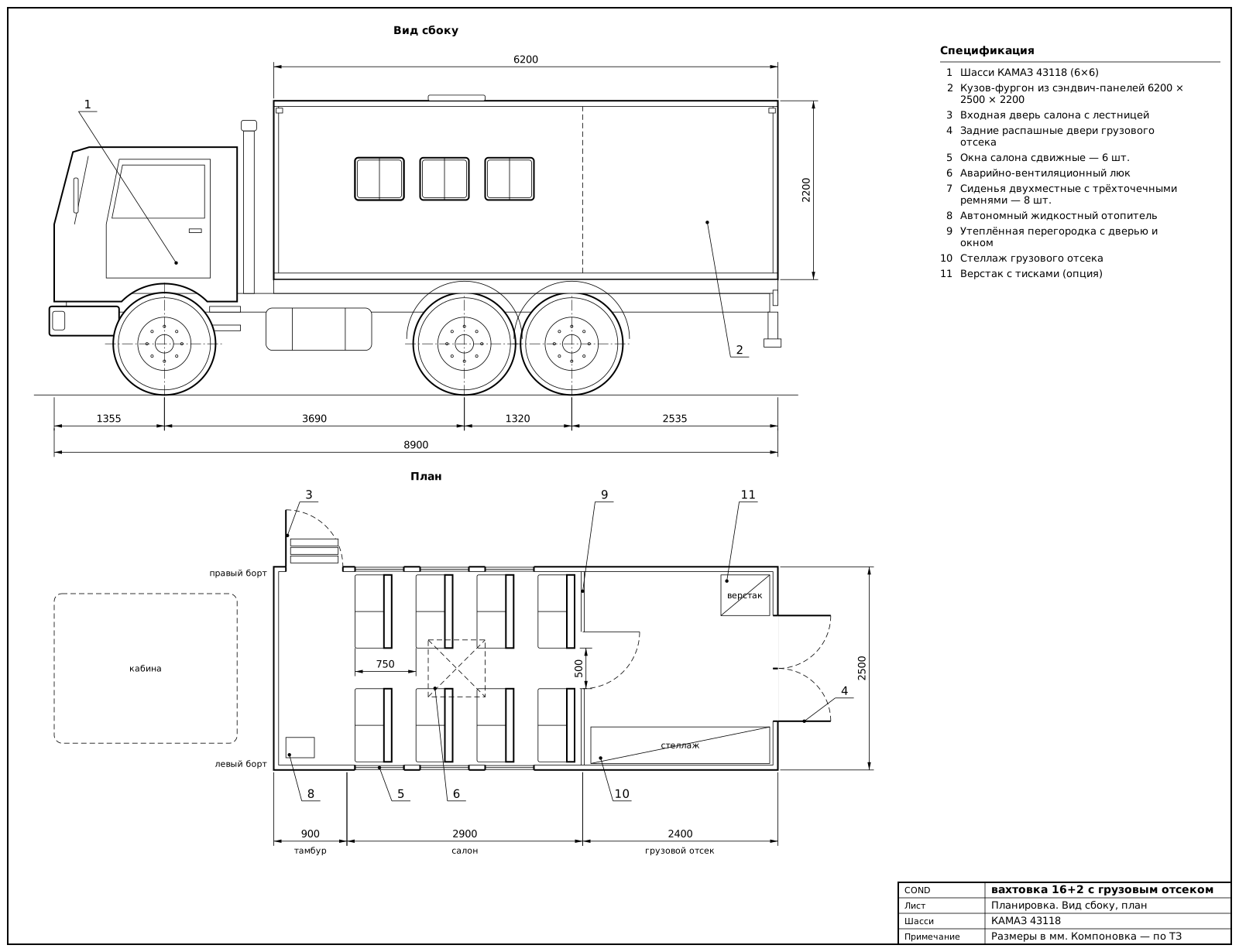
Drawing: Crew bus KAMAZ 43118 with cargo compartment: 16+2 seats and a 2.4 m compartment — side view and plan with compartment dimensions and equipment positions
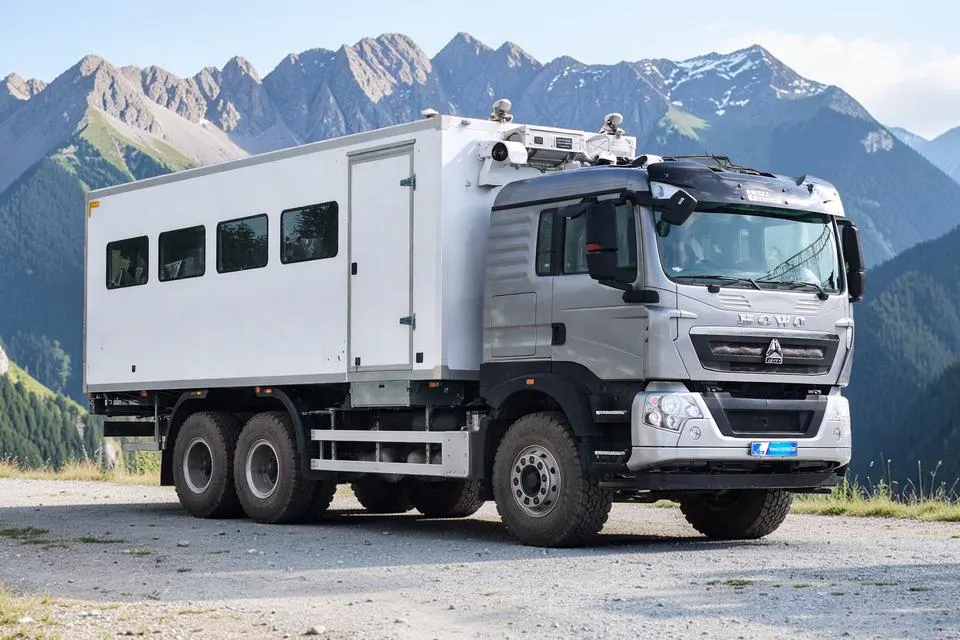
COND crew bus — whole vehicle on a 6×6 chassis
COND crew bus — passenger module, side view
crew bus with cargo compartment

Crew bus KAMAZ 43118 with cargo compartment: 16+2 seats and a 2.4 m compartment

The crew and its tools in one vehicle: a 16-seat cabin with three-point belts and an insulated 2400 mm cargo compartment with rear hinged doors, a rack and cargo tie-down rings.
The cost is calculated by configuration: chassis, module length, number of seats, equipment and options.

Technical specifications

  • ✓ An insulated partition with a window between the cabin and the cargo compartment — fuel odour and dust do not reach the people
  • ✓ Cargo compartment 2400 mm: rear hinged doors opening 180°, rack along the side, cargo tie-down rings, floor — checker-plate aluminium
  • ✓ A 16-seat passenger cabin following the 22+2 version scheme, shortened by two rows
  • ✓ Option: 250 kg davit crane at the rear doors and a workbench with a vice
  • ✓ Option: a second side door to the cargo compartment and a roof ladder
Version typeCrew bus with cargo compartment
ChassisKAMAZ 43118-50 (6×6), 300 hp
Wheel arrangement6×6
Number of seats16 in the module + 2 in the cab
Berths—
Module dimensions, external6200 × 2500 × 2200 mm
Module dimensions, internal6040 × 2340 × 2050 mm
Body panelssandwich 60 mm; 80 mm — to order
Module heatingautonomous heater — in the base version
Cabin air conditioningoption, not included in the base equipment
Module weightup to 3,600 kg with equipment
Vehicle categoryC
Production time60–90 days
Place of deliveryAlmaty, mounting on the customer's chassis or a new chassis to order
Module layout

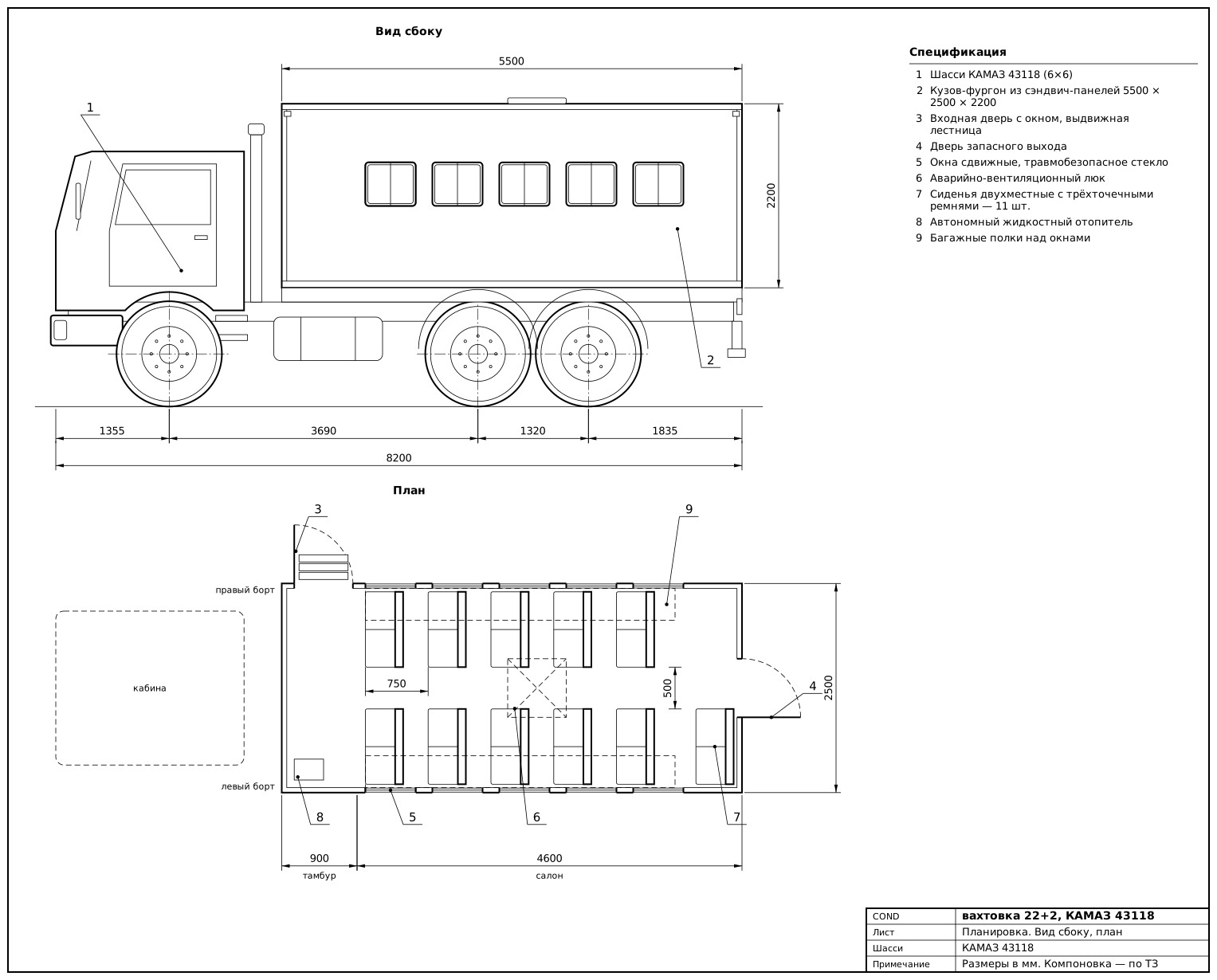
Drawing and layout: crew bus 16+2 with cargo compartment

Drawing: Crew bus KAMAZ 43118 with cargo compartment: 16+2 seats and a 2.4 m compartment — side view and plan with compartment dimensions and equipment positions
  1. KAMAZ 43118 (6×6) chassis
  2. Van body of sandwich panels, 6200 × 2500 × 2200
  3. Cabin entrance door with a ladder
  4. Rear hinged doors of the cargo compartment
  5. Sliding cabin windows — 6 pcs.
  6. Emergency ventilation hatch
  7. Double seats with three-point belts — 8 pcs.
  8. Autonomous liquid heater
  9. Insulated partition with a door and a window
  10. Cargo compartment rack
  11. Workbench with vice (optional)

In the drawing the cab is on the left; the side view shows the left side, and in the plan the right side with the entrance door is at the top. The seats face the cab.

Vestibule 900 mm and cabin 2900 mm: four 2+2 rows — 16 seats, windows, shelves, heater under the first row.

Partition 3800 mm from the front wall: insulated, with a 700 mm door and a window — the cargo is visible from the cabin, and no cold or odour reaches the cabin from the cargo compartment.

Cargo compartment 2400 mm: rack along the left side, tie-down rings in the floor and on the walls, rear doors opening 180°, checker-plate aluminium floor, 24 V ceiling lamp. Optionally — a workbench at the right side and a davit crane.

The arrangement in the drawing is the base one. The number of rows and the positions of partitions, doors and equipment are recalculated for the customer's task and the usable frame length of the specific chassis.
Module composition

What the version includes

Base equipment

  • 60 mm sandwich panels, outer skin — galvanised sheet with a polymer coating, FRP plastic inside
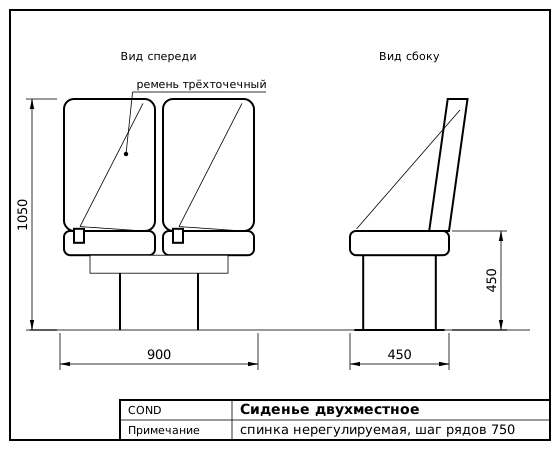
  • Double seats, upholstered, injury-safe, with a fixed backrest; three-point seat belts
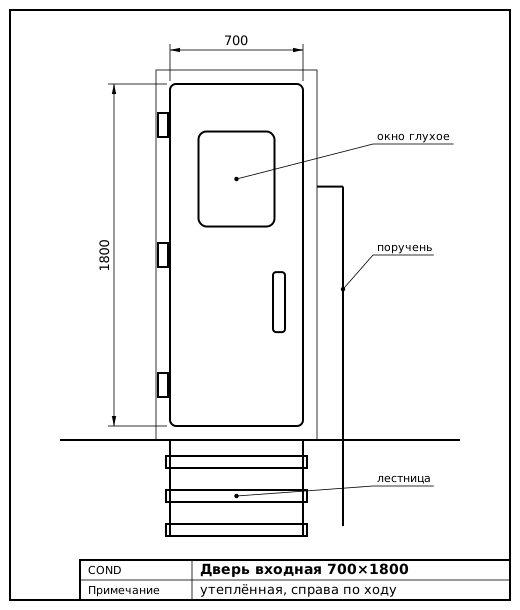
  • Entrance door on the right in the direction of travel — insulated, moisture- and dust-proof, with a fixed window
  • Emergency exit door on the rear wall
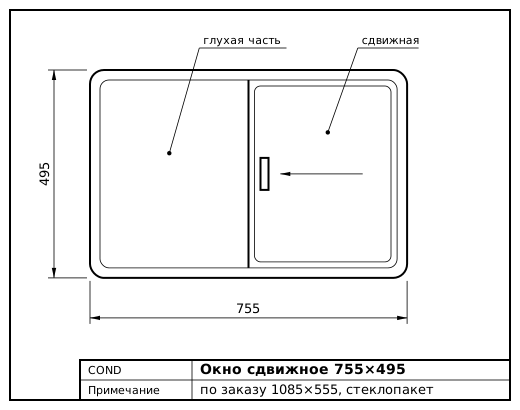
  • Side sliding windows of safety glass, fixed windows on the angled corners
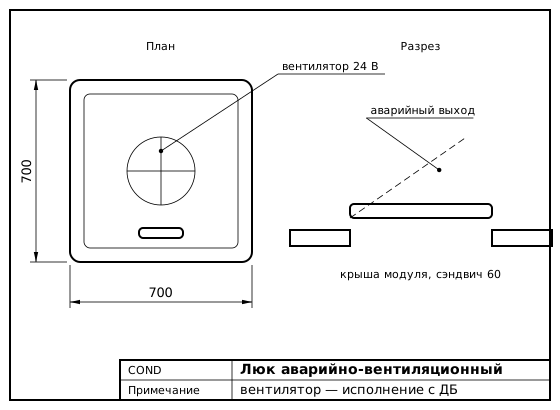
  • Emergency ventilation hatch
  • The main heating is an autonomous liquid heater; the emergency one is from the engine cooling system
  • 24 V lighting
  • “Cabin — cab” intercom
  • Fire extinguisher, first-aid kit, emergency stop sign
  • Rear underrun protection on the rear overhang, mudguards, wheel arch liners, side protection

Options

  • Roof air conditioner, 24 V or 220 V, with ducting through the cabin (not included in the base equipment)
  • A second, air, heater of 4–8 kW with separate piping
  • Luggage shelves above the windows, hangers for workwear
  • Sleeping bunks above the seats, folding tables
  • Cargo compartment with a separate door, rack and tie-down rings
  • Enhanced insulation: 80 mm panels, double-glazed windows, insulated floor
  • Roof ladder, roof rack, pull-out ladder at the rear door
  • USB sockets at the seats, 220 V sockets from the inverter, entrance lighting
  • Tachograph, video surveillance in the cabin, passenger monitoring system

Module elements

Double seat with three-point belts — COND sketch
Double seat with three-point belts
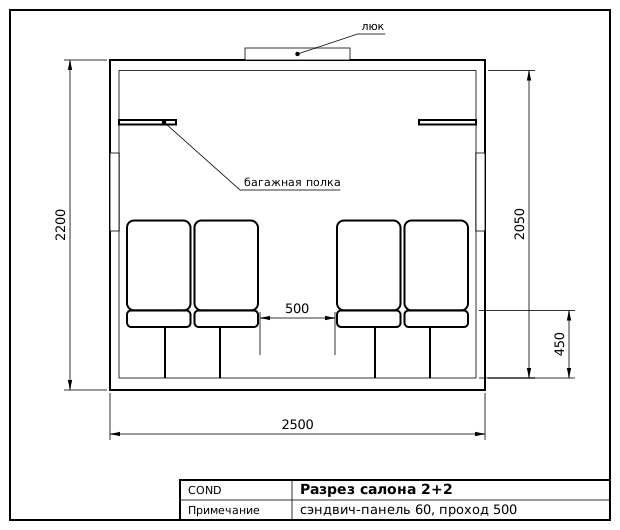
Cabin cross-section: 2+2 seats, 500 mm aisle, luggage shelves — COND sketch
Cabin cross-section: 2+2 seats, 500 mm aisle, luggage shelves
Sliding window of safety glass — COND sketch
Sliding window of safety glass
Entrance door with a window, handrail and pull-out ladder — COND sketch
Entrance door with a window, handrail and pull-out ladder
Emergency ventilation hatch — COND sketch
Emergency ventilation hatch

Module design

Panel-type van body of multilayer frame sandwich panels. The outer skin is galvanised sheet with a polymer coating; the inner skin is impact-resistant FRP plastic, which can be washed and withstands blows from tools and footwear. Panel thickness is 60 mm, 80 mm to order.

The entrance door is single-leaf, insulated, moisture- and dust-proof, with a fixed window; it is located on the right in the direction of travel. The emergency exit door is on the rear wall, of the same construction. Side windows are sliding, of safety glass, fixed on the angled corners. An emergency ventilation hatch is in the roof.

The main heating is an autonomous liquid heater; the emergency one is from the cooling system of the chassis engine. 24 V lighting, a “cabin — cab” intercom, a fire extinguisher, and an additional protective device (rear underrun protection) on the rear overhang of the chassis.

Frame, panels, doors and subframe of COND crew modules

Other versions

Request

Get an exact price

Leave your contacts — we will discuss your job and select the right option.

📞Phone
+7 777 233-69-28
💬WhatsApp
Message us

Leave a request

FAQ

Questions on the version: crew bus 16+2 with cargo compartment

Compartment 2400 × 2340 × 2050 mm — about 11 m³. By mass — within the payload of the chassis less the module and people: on the KAMAZ 43118 this is about 4 t. Heavy equipment is secured to the rings in the floor.
Yes, the partition can be placed at any row. Each 2+2 row is 750 mm of length and four seats; a 1.6 m cargo compartment gives 20 seats, a 3.2 m compartment — 12 seats.
There is a door in the partition — the crew takes tools without going out into the frost. At the customer's request the partition is made solid, in which case the compartment is accessible only from outside.
A TBM adds a rest compartment with sleeping bunks and household equipment. A cargo-passenger crew bus only carries people and cargo, without berths.