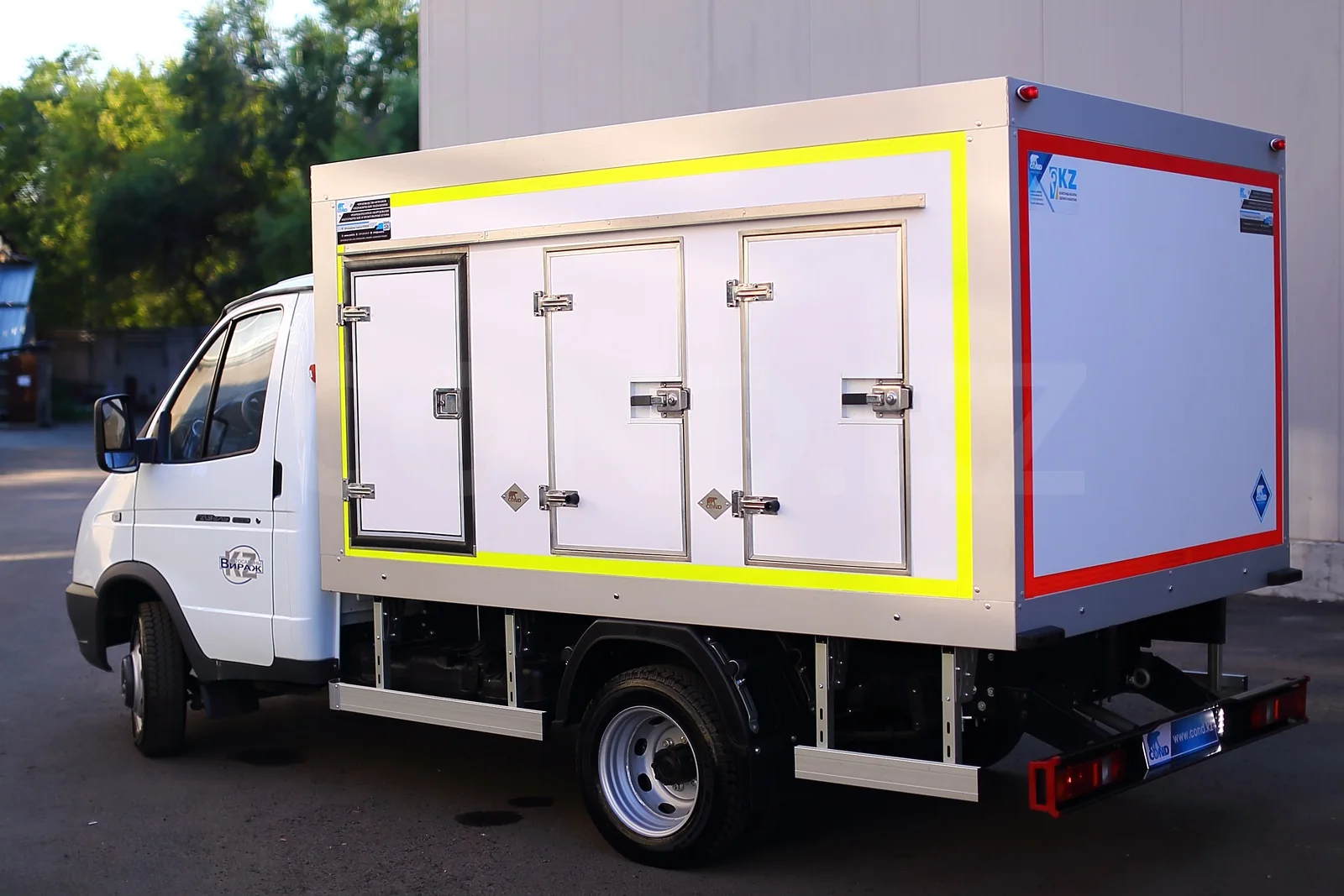
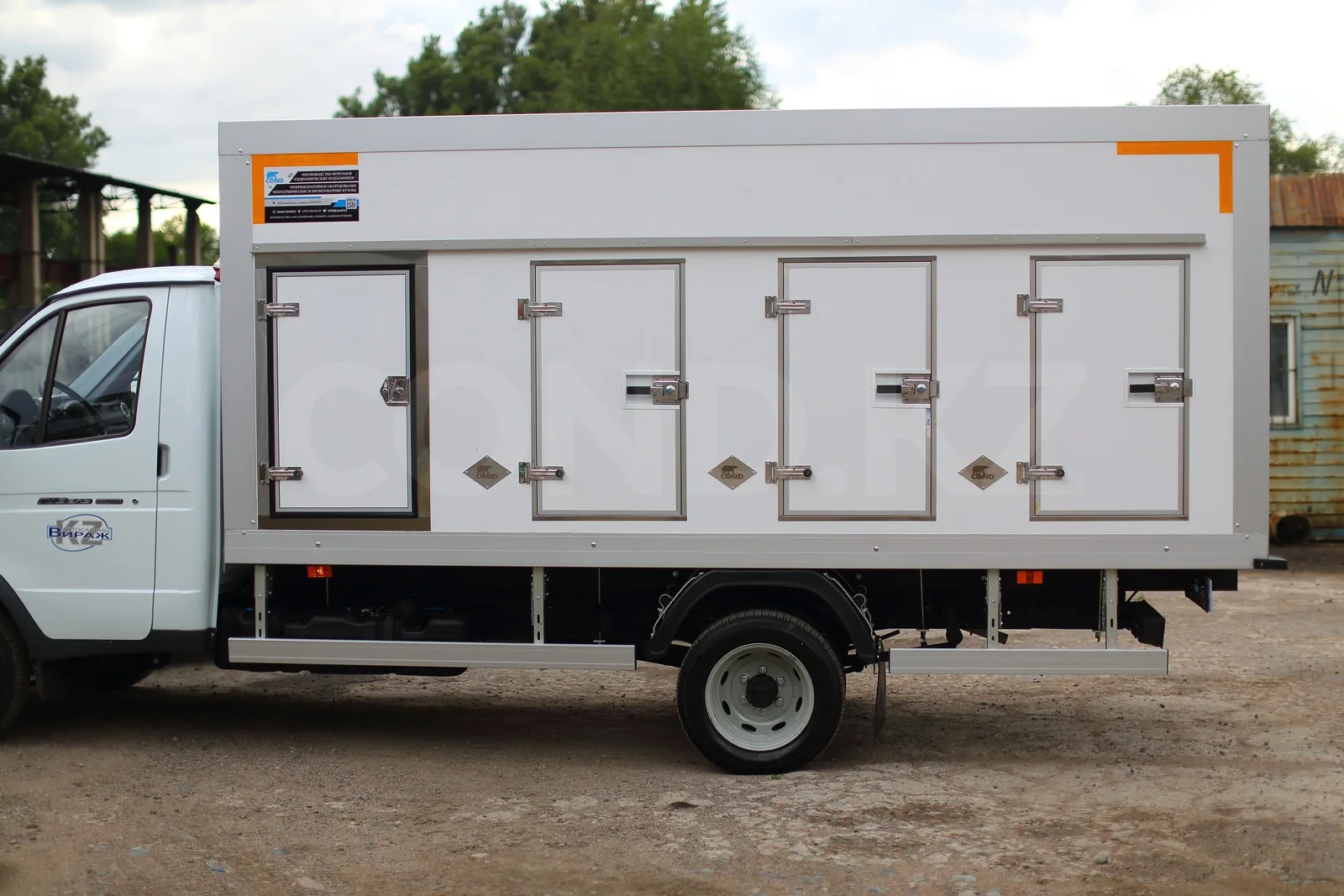
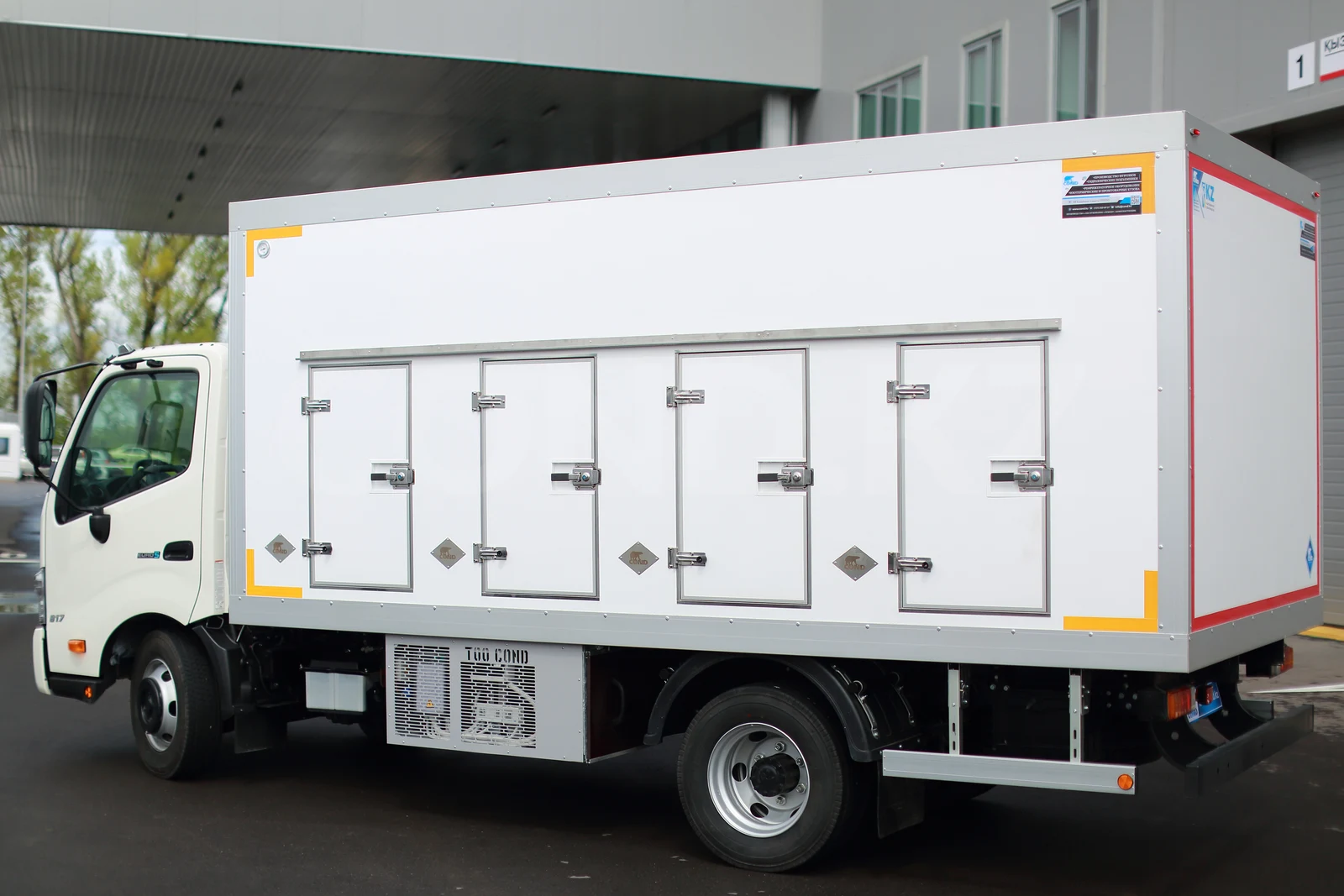
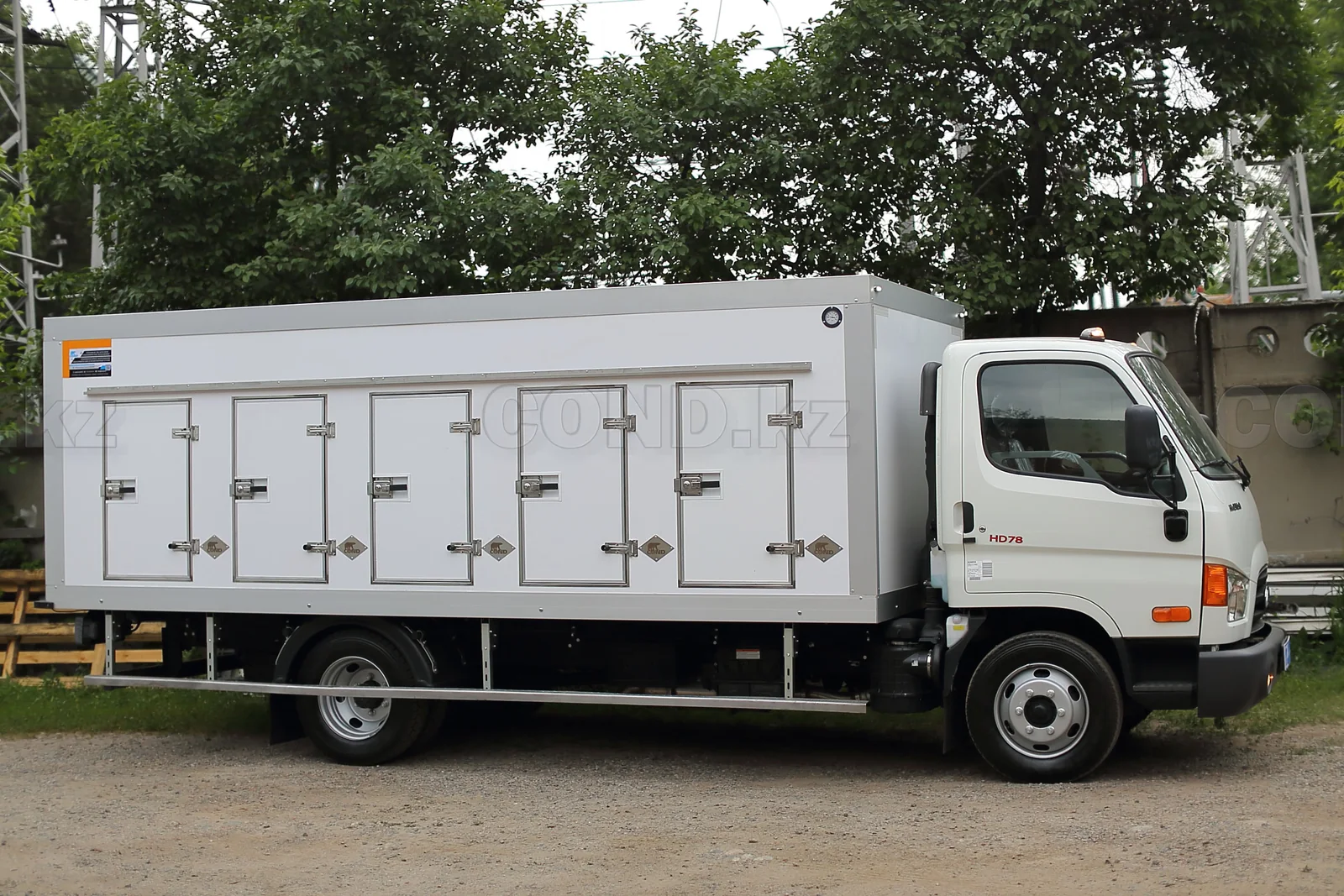
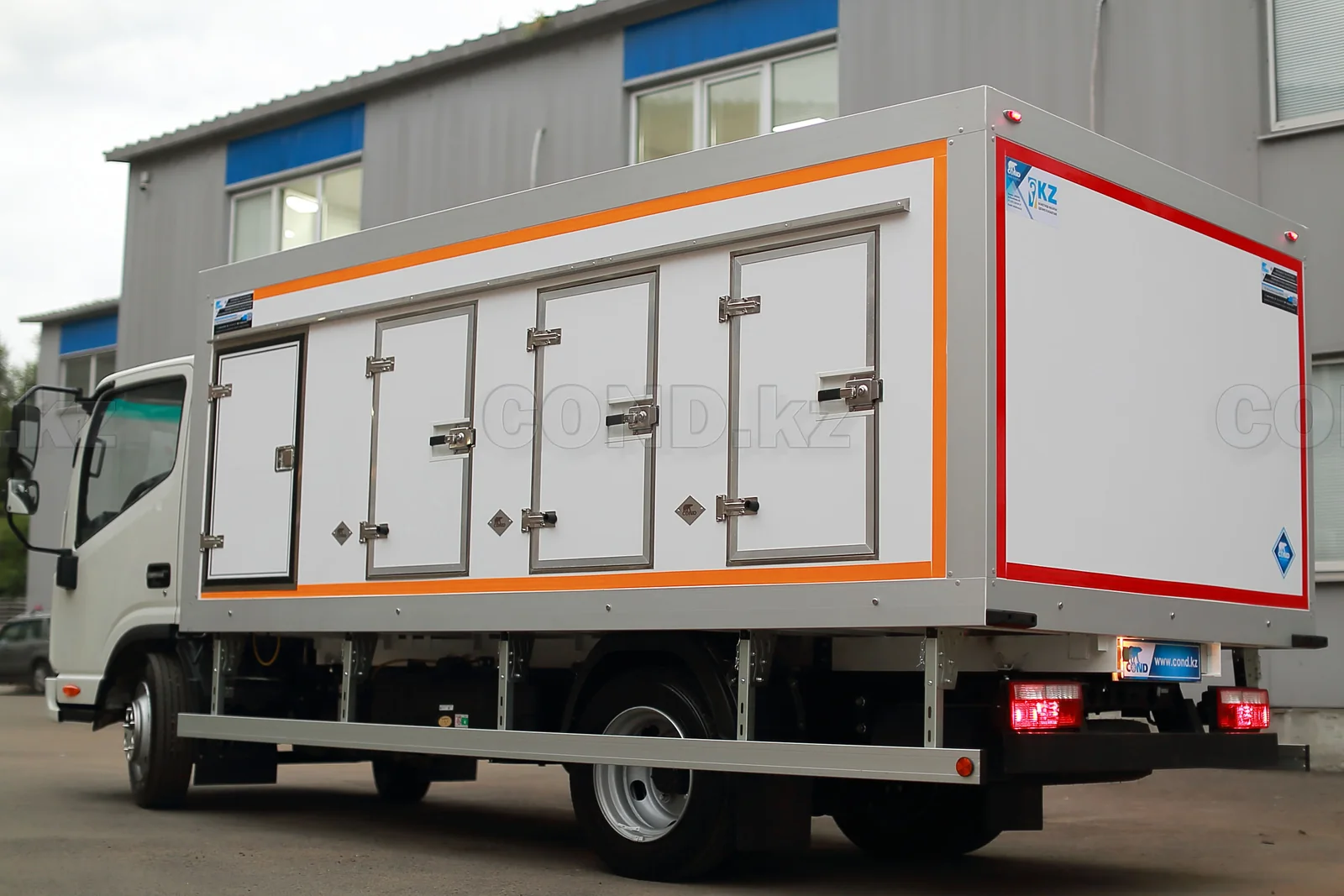
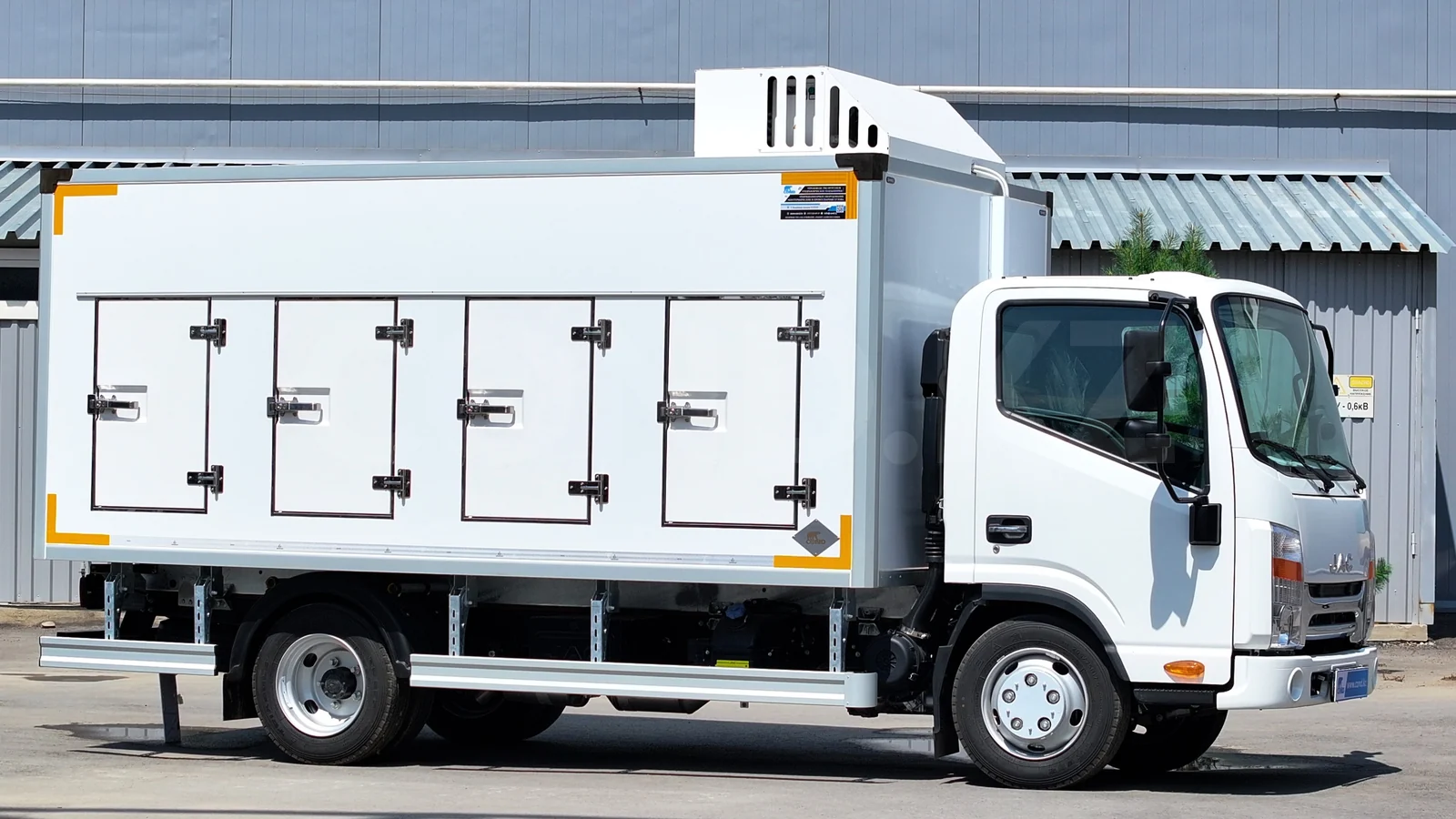
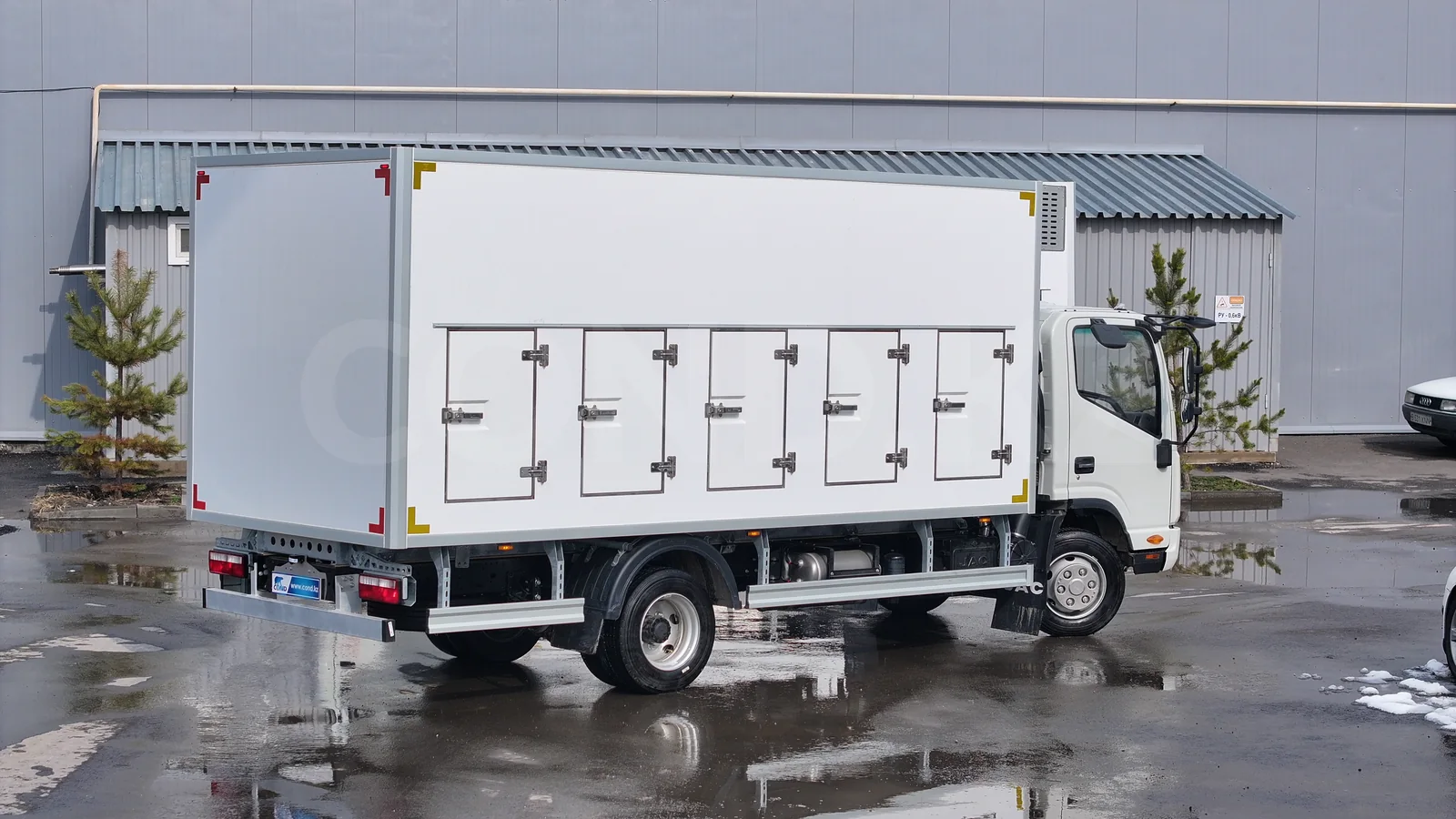
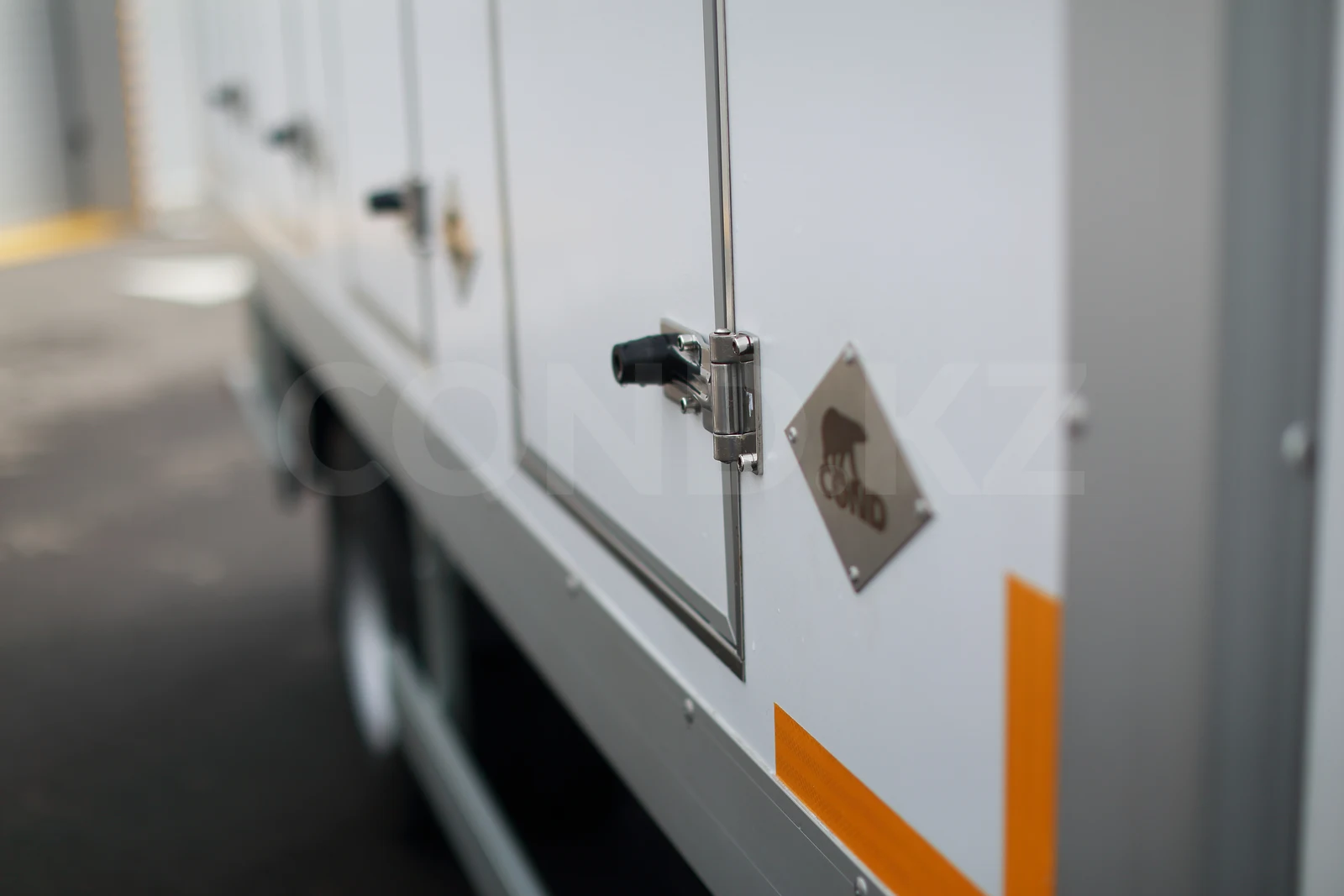
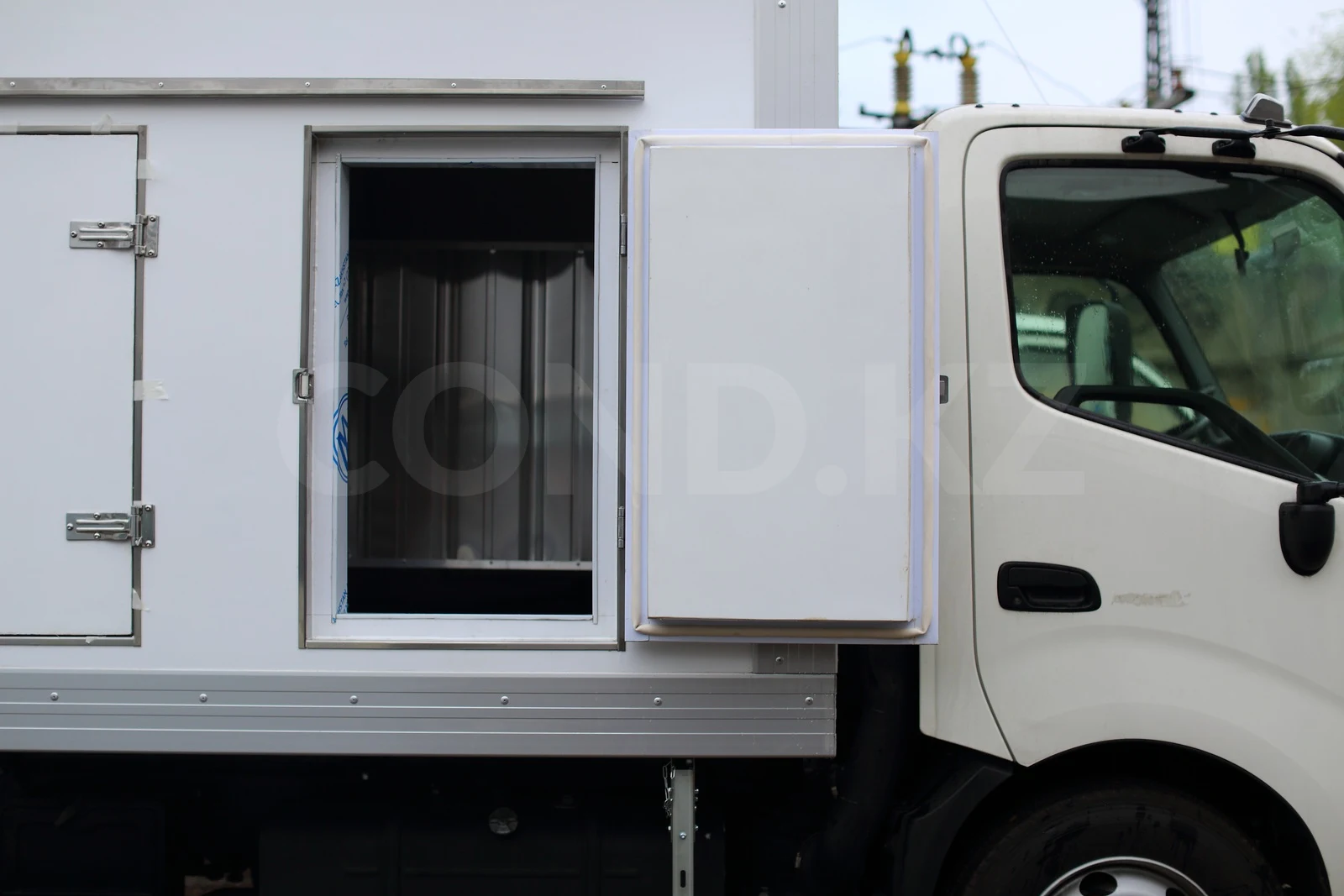
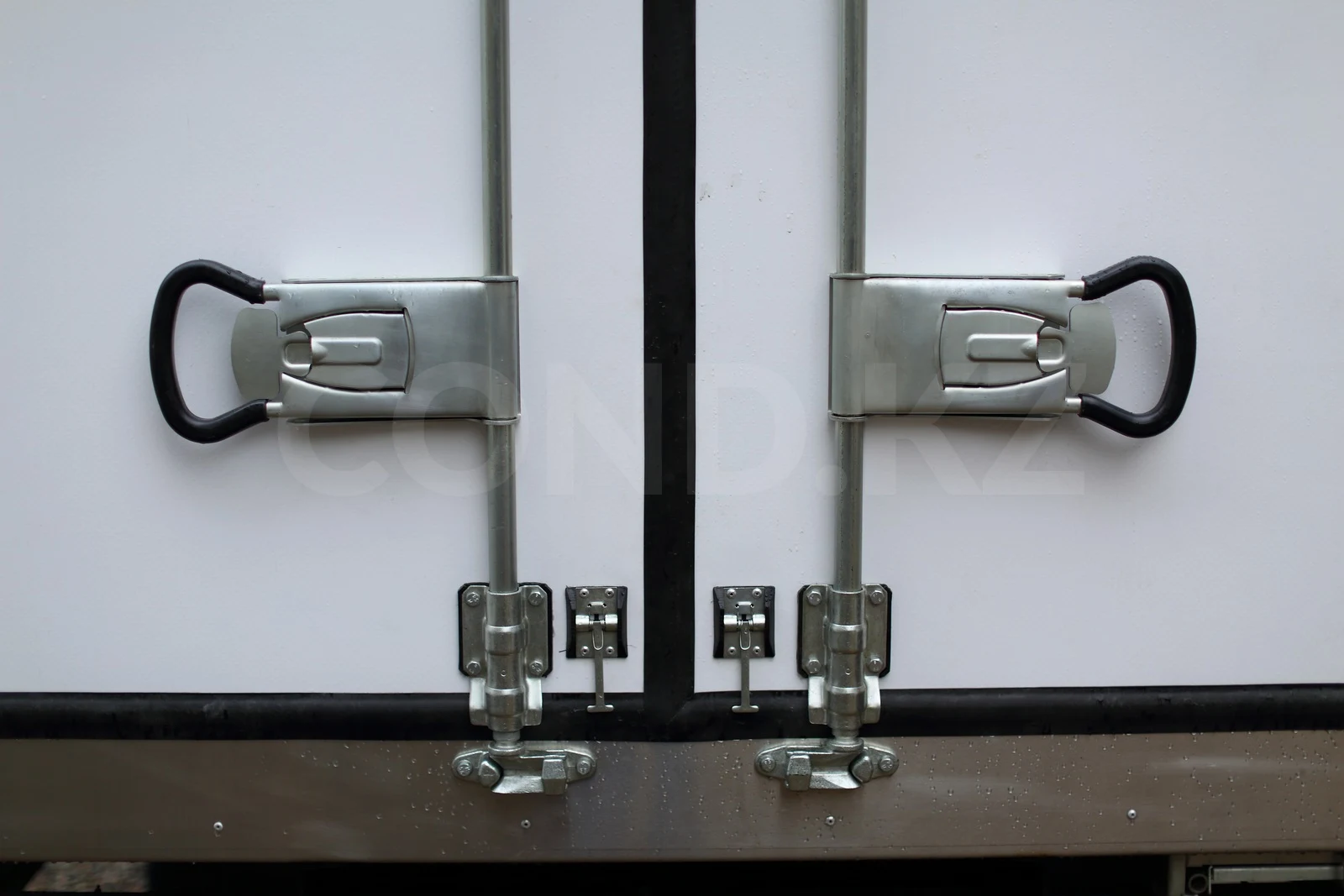
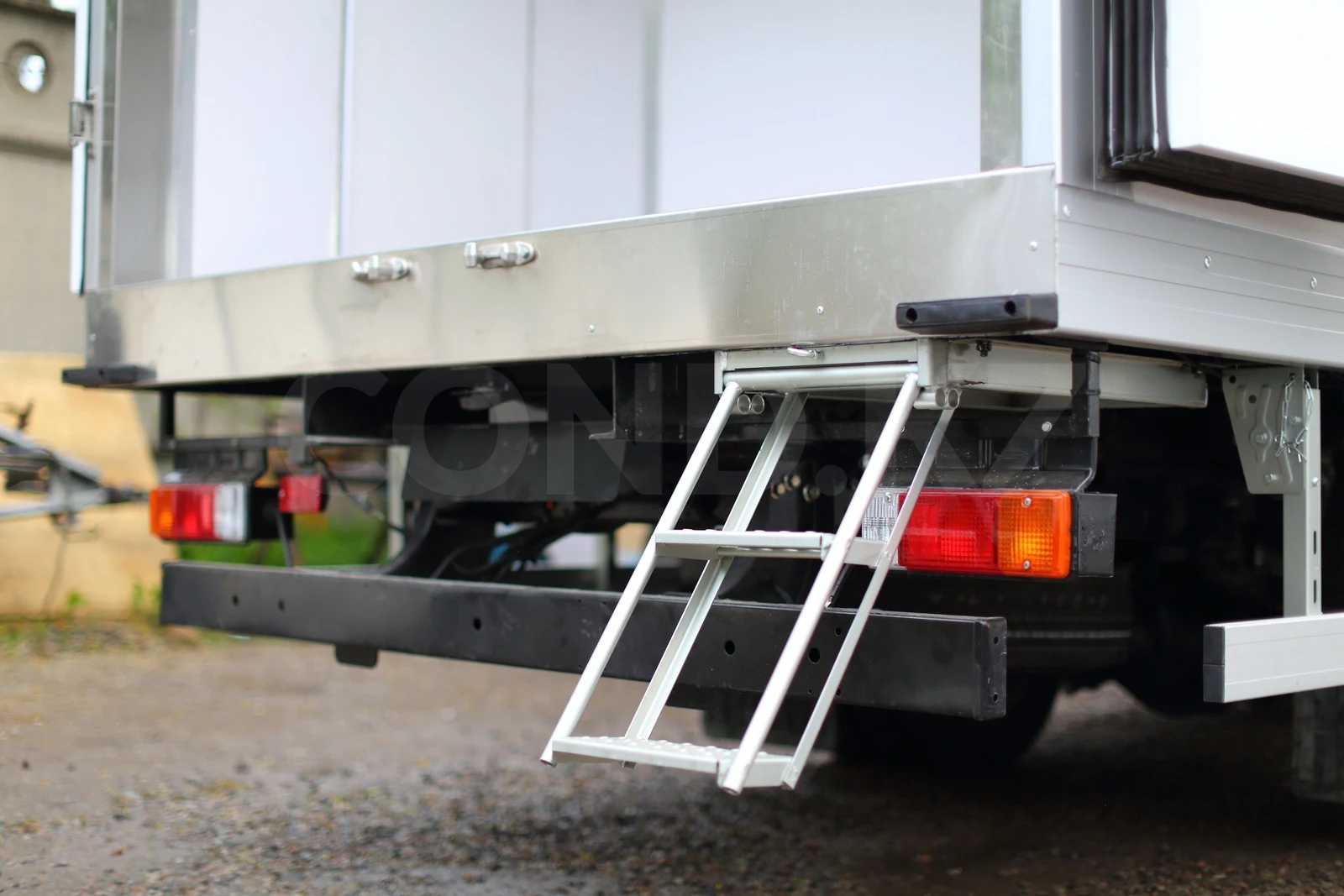
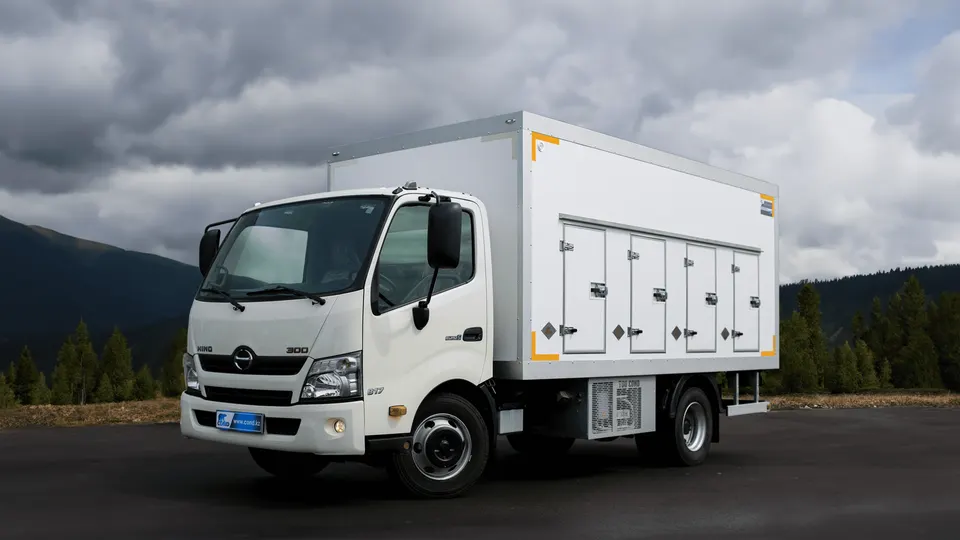
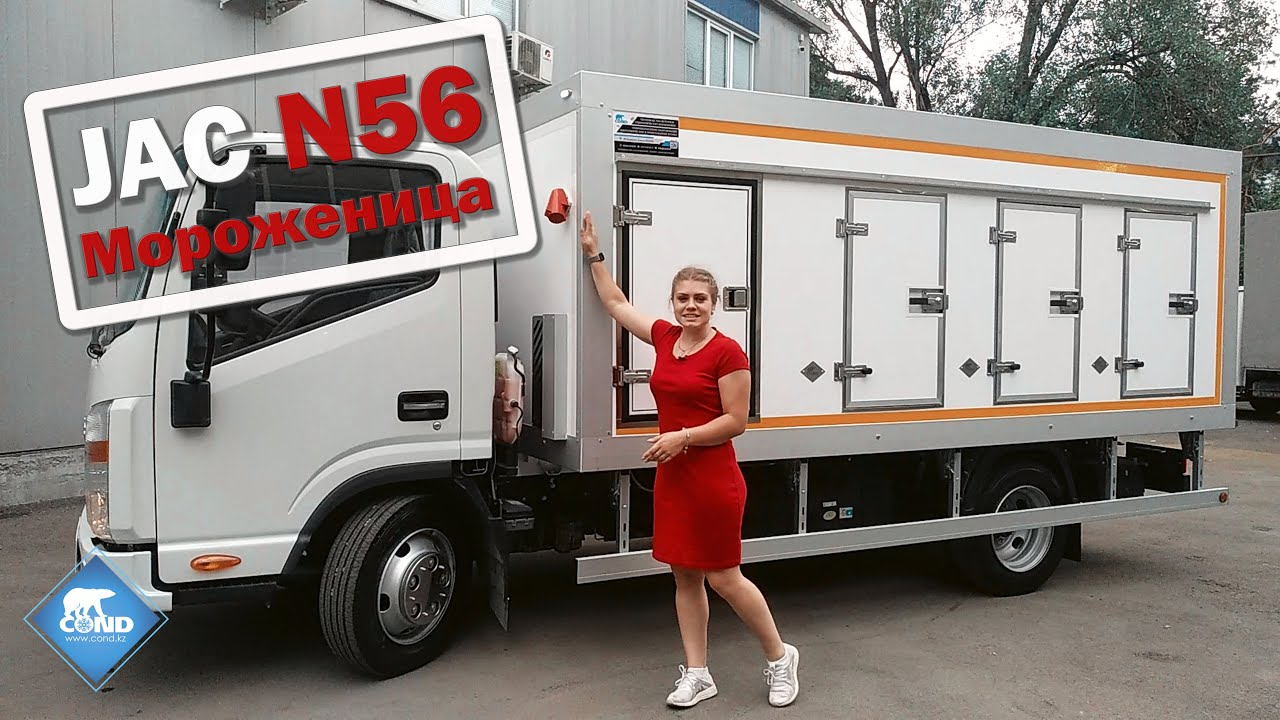
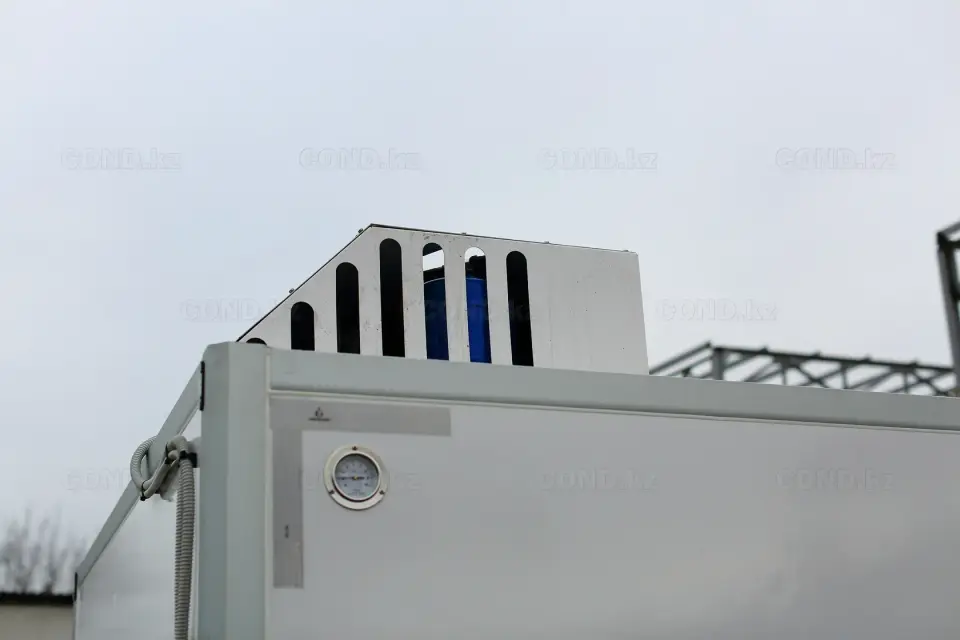
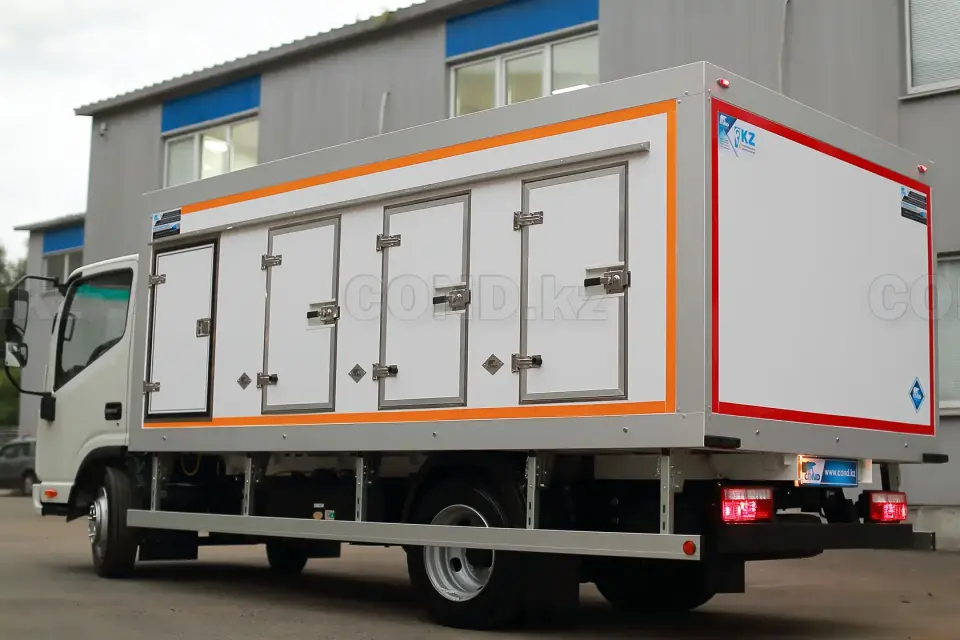
Eutectic “ice-cream” van on a JAC N56, built by COND
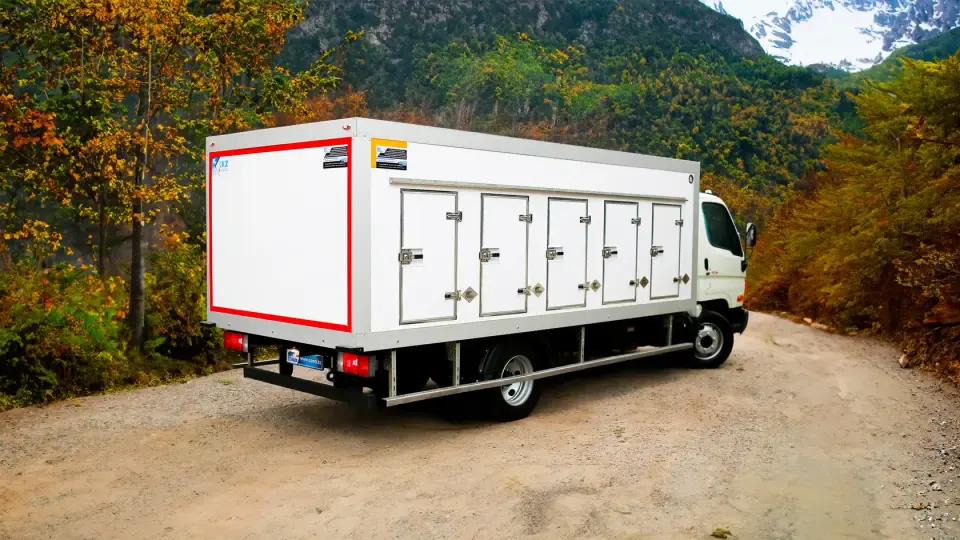

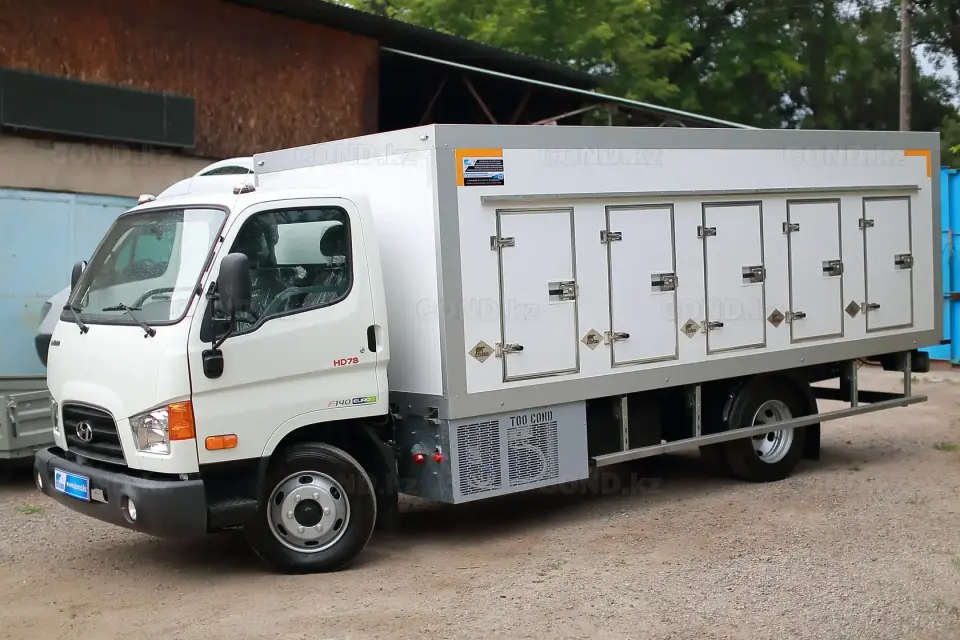
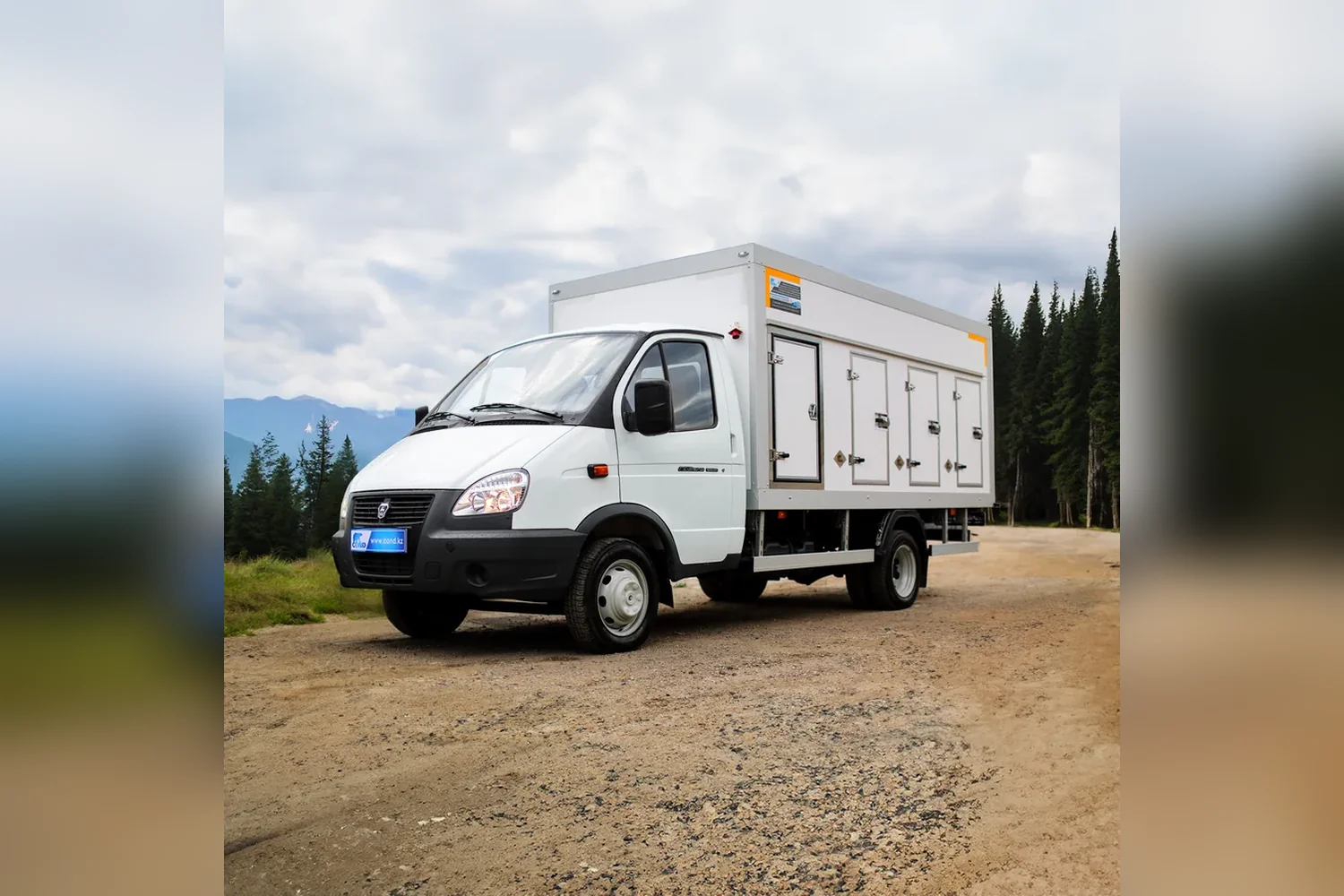
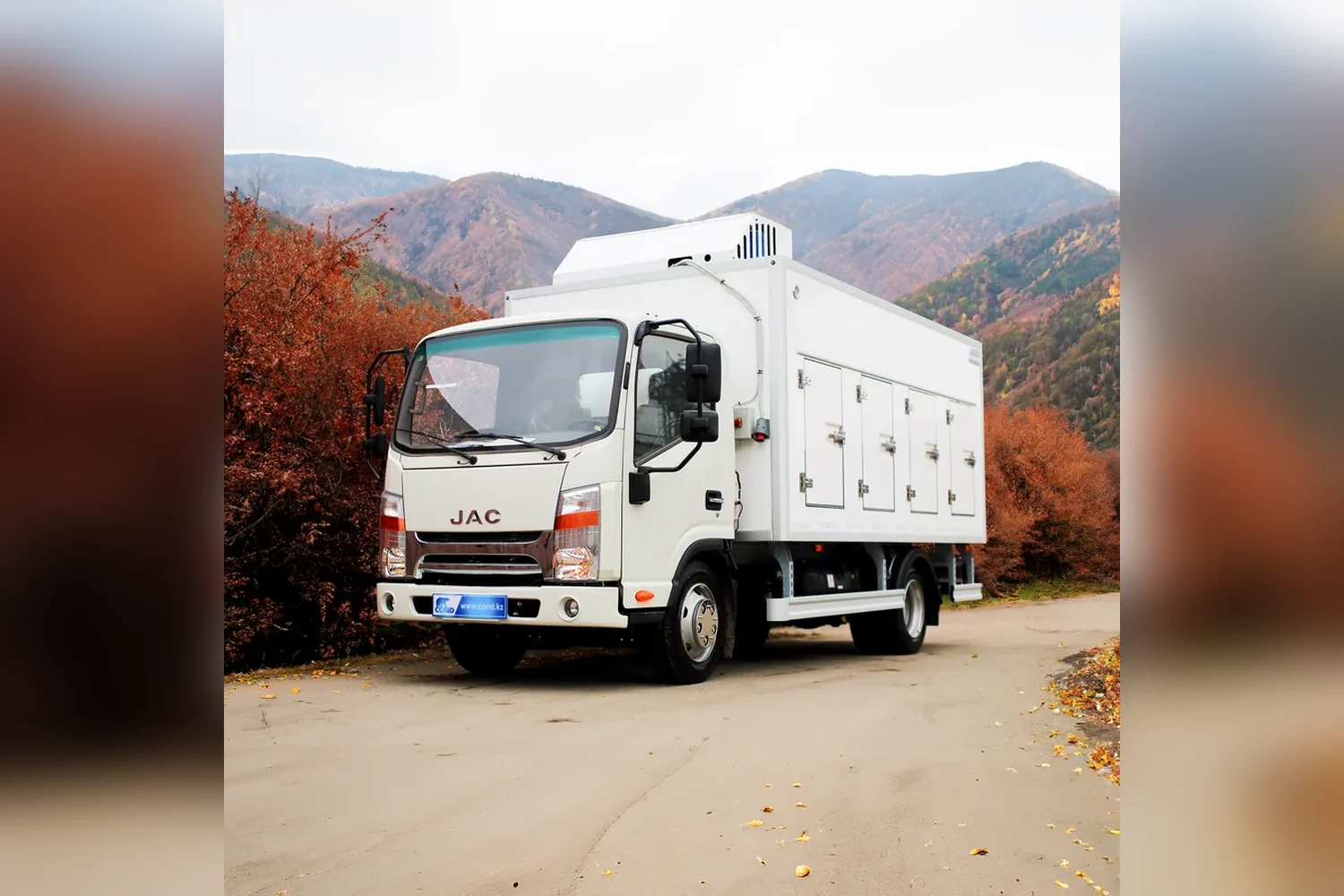
Quote is based on body, chassis and temperature range.
| Size | depends on the chassis |
| Body wall thickness | sides 120 mm, floor and roof 140 mm |
| Construction material | extruded polystyrene |
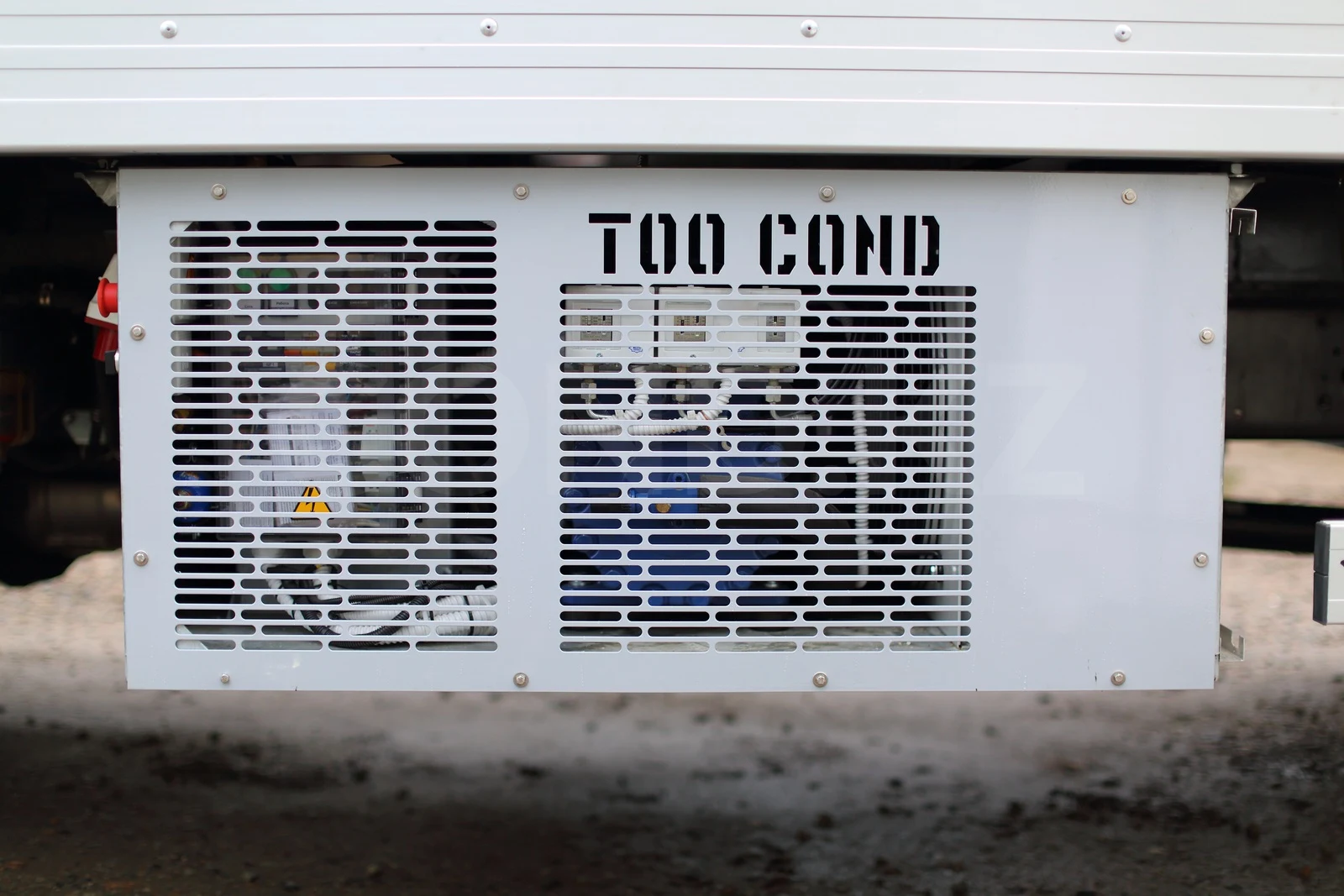
| Refrigeration unit | eutectic equipment |
| Temperature duty | down to −33 °C |
| Plate manufacturer | FIC (Italy) |
| Compressor manufacturer | Dorin (Italy) |
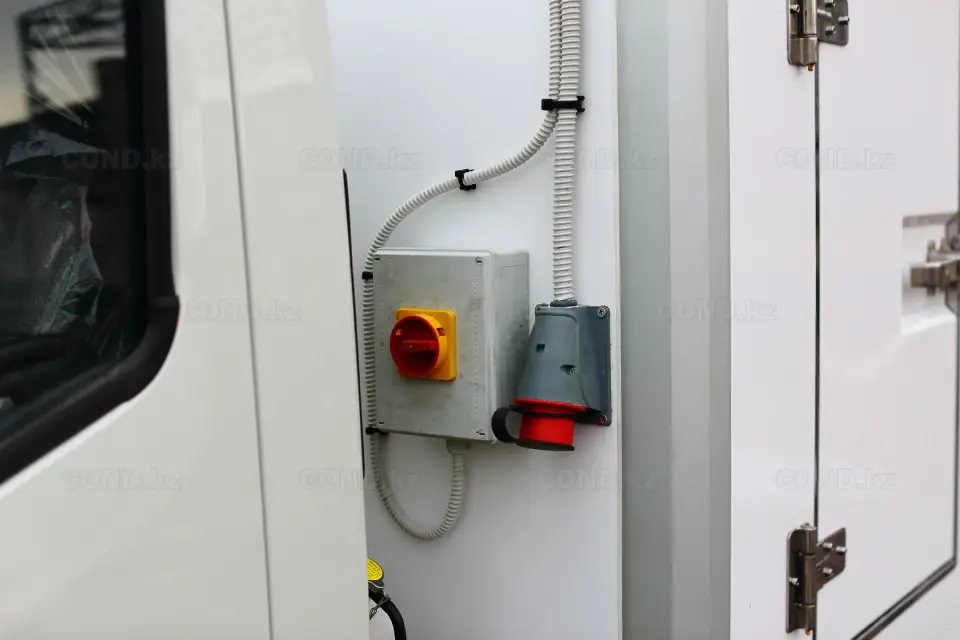
| Unit power | from a 380 V supply |
| Pull-down time | ~8 hours |
| Body outer skin | reinforced fibreglass |
| Body edging | anodised aluminium profile |
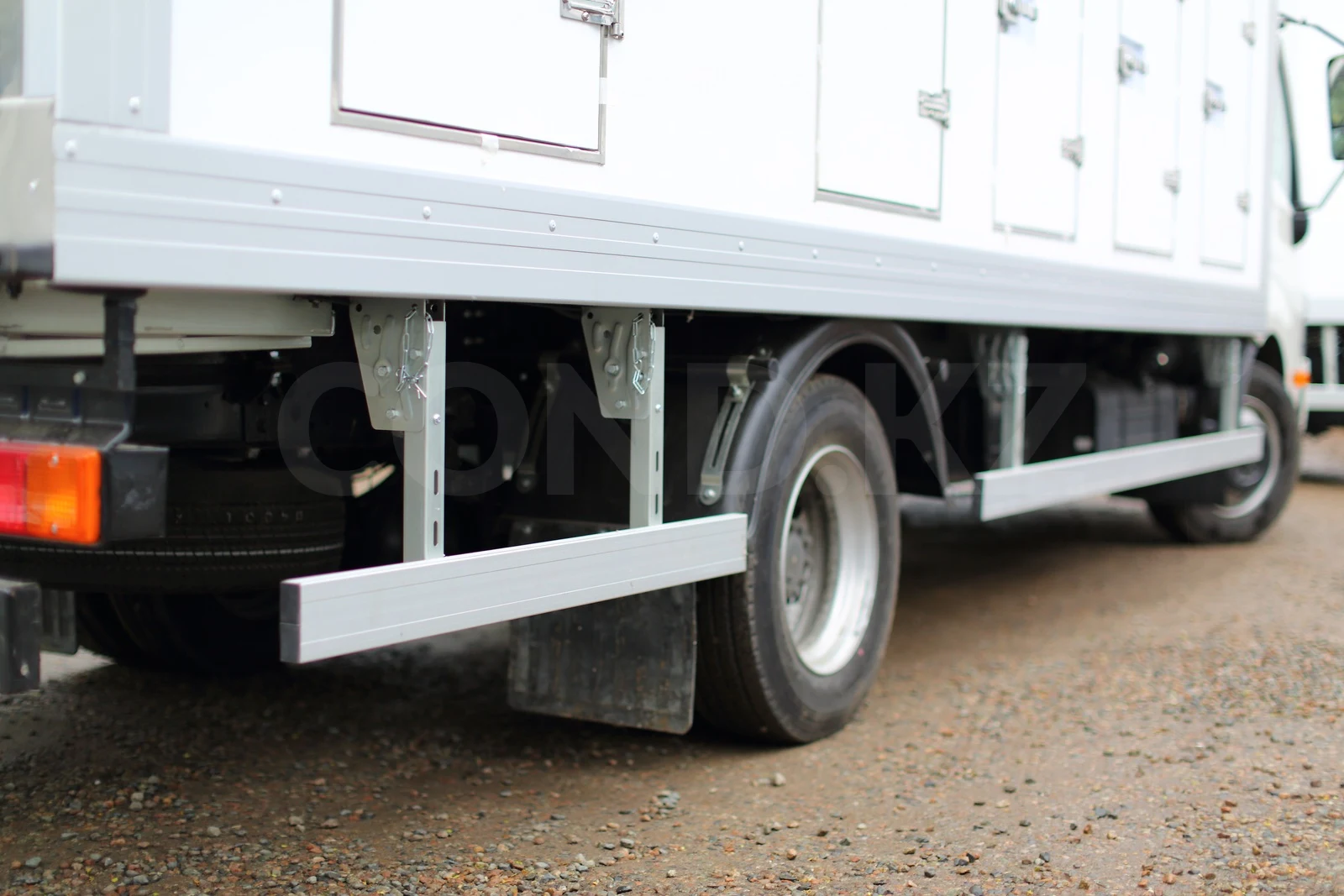
| Doors | sectional layout with side doors |
| Door seals | rubber isothermal |
| Hardware | stainless steel |
| Marker lights | white front and red rear |
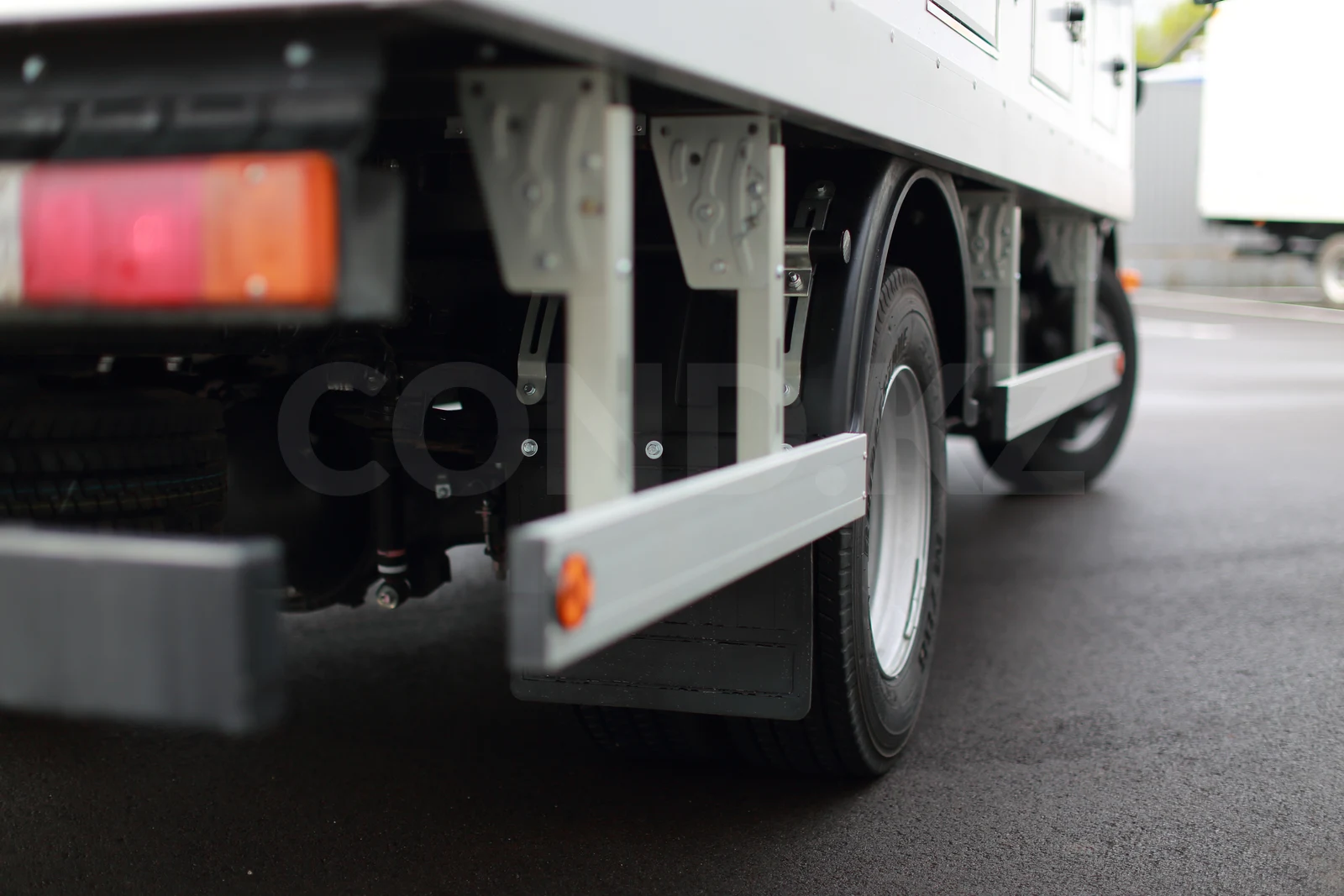
| Fenders | one-piece moulded plastic covers |
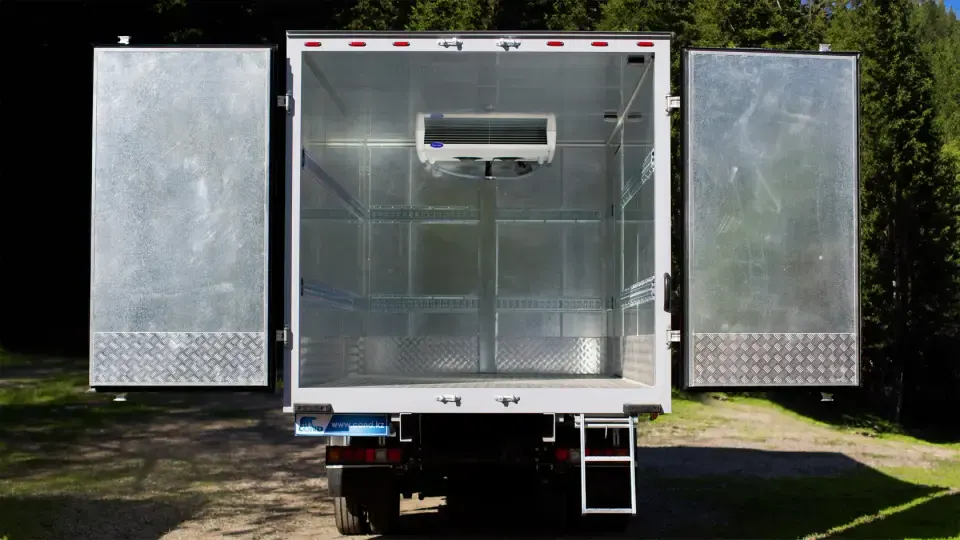
| Interior lining material | reinforced fibreglass |
| Body lighting | LED lights |
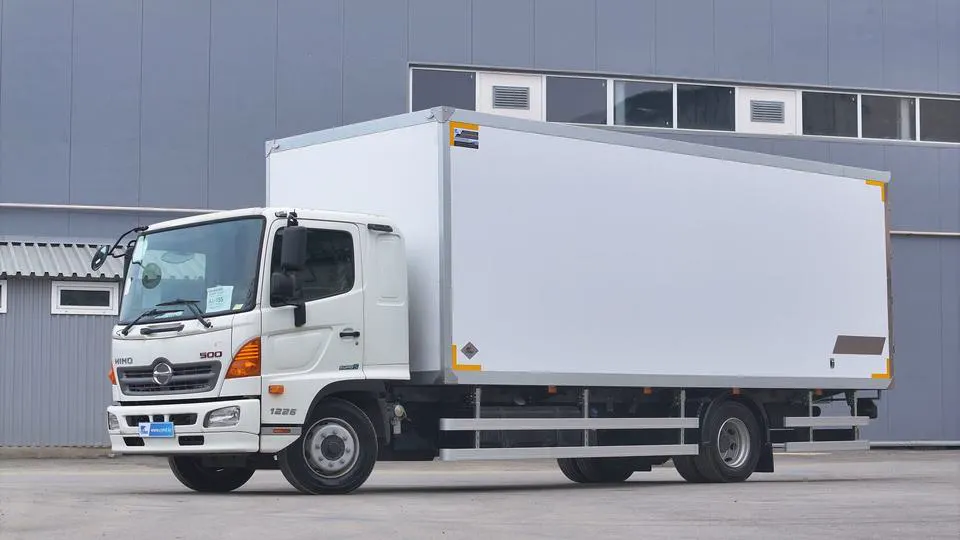
Our eutectic vans on various chassis — real projects from the COND factory.
Eutectic van bodies built by COND — figures taken from the project pages.
| Make / model | Body length | Panel thickness | Temperature duty | Charging the plates | Project |
|---|---|---|---|---|---|
| GAZ-3302 — GAZelle Business, 2,900 mm wheelbase | 3,200 mm | sides 120 mm, floor and roof 140 mm | down to −33 °C (eutectic plates) | from a 380 V supply at the depot, 8–10 hours | Details → |
| GAZ-330202 — GAZelle Business with a 3,500 mm extended wheelbase | 4,200 mm | sides 120 mm, floor and roof 140 mm | down to −33 °C (eutectic plates) | from a 380 V supply at the depot, 8–10 hours | Details → |
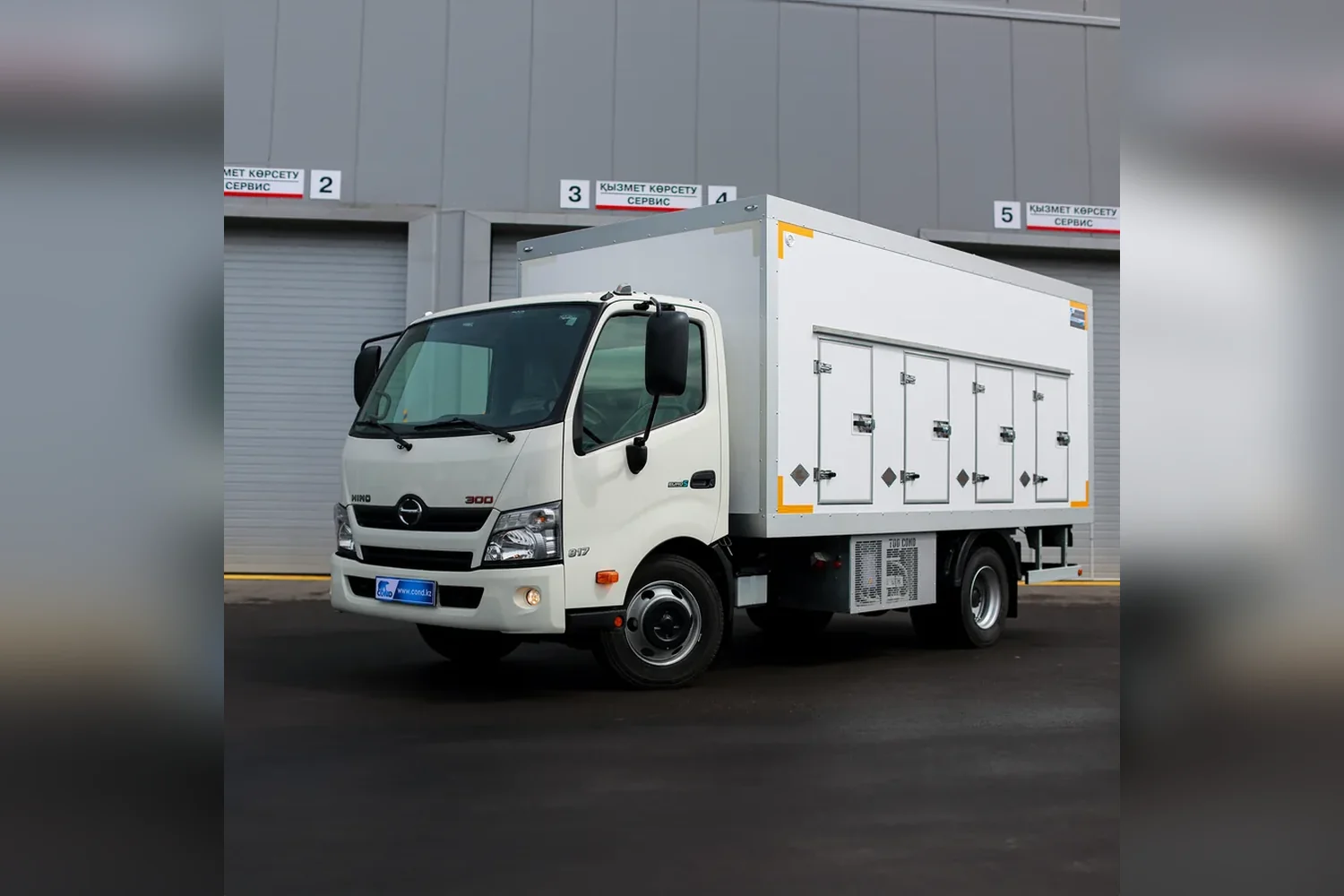
| HINO 300 | 6,200 mm | 120–140 mm | −33 °C (eutectic plates) | — | Details → |
| HINO 300 | 4,200 mm | 120–140 mm | −33 °C (eutectic plates) | — | Details → |
| Hyundai HD78 | 5,200 mm | sides 120 mm, floor and roof 140 mm | down to −33 °C (eutectic plates) | from a 380 V supply at the depot, 8–10 hours | Details → |
| JAC N56 | 4,200 mm | sides 120 mm, floor and roof 140 mm | down to −33 °C (eutectic plates) | from a 380 V supply at the depot, 8–10 hours | Details → |
| JAC N56 (roof-mounted unit) | 4,200 mm | sides 120 mm, floor and roof 140 mm | down to −33 °C (eutectic plates) | from a 380 V supply at the depot, 8–10 hours | Details → |
| JAC N90 | 5,200 mm | sides 120 mm, floor and roof 140 mm | down to −33 °C (eutectic plates) | from a 380 V supply at the depot, 8–10 hours | Details → |
| Foton Aumark S35 | 4,200 mm | sides 120 mm, floor and roof 140 mm | down to −33 °C (eutectic plates) | from a 380 V supply at the depot, 8–10 hours | Foton chassis → |
| Foton Aumark S80 | 5,200 mm | sides 120 mm, floor and roof 140 mm | down to −33 °C (eutectic plates) | from a 380 V supply at the depot, 8–10 hours | Foton chassis → |
Two body types suit frozen food and semi-finished products. A eutectic body is for city delivery: the plates charge at the depot from 380 V in 8–10 hours and hold down to −33 °C with no unit running. A long run with a constant duty needs a refrigerated van with a unit that works while driving.
Every component a class above the standard build. Click a tab.
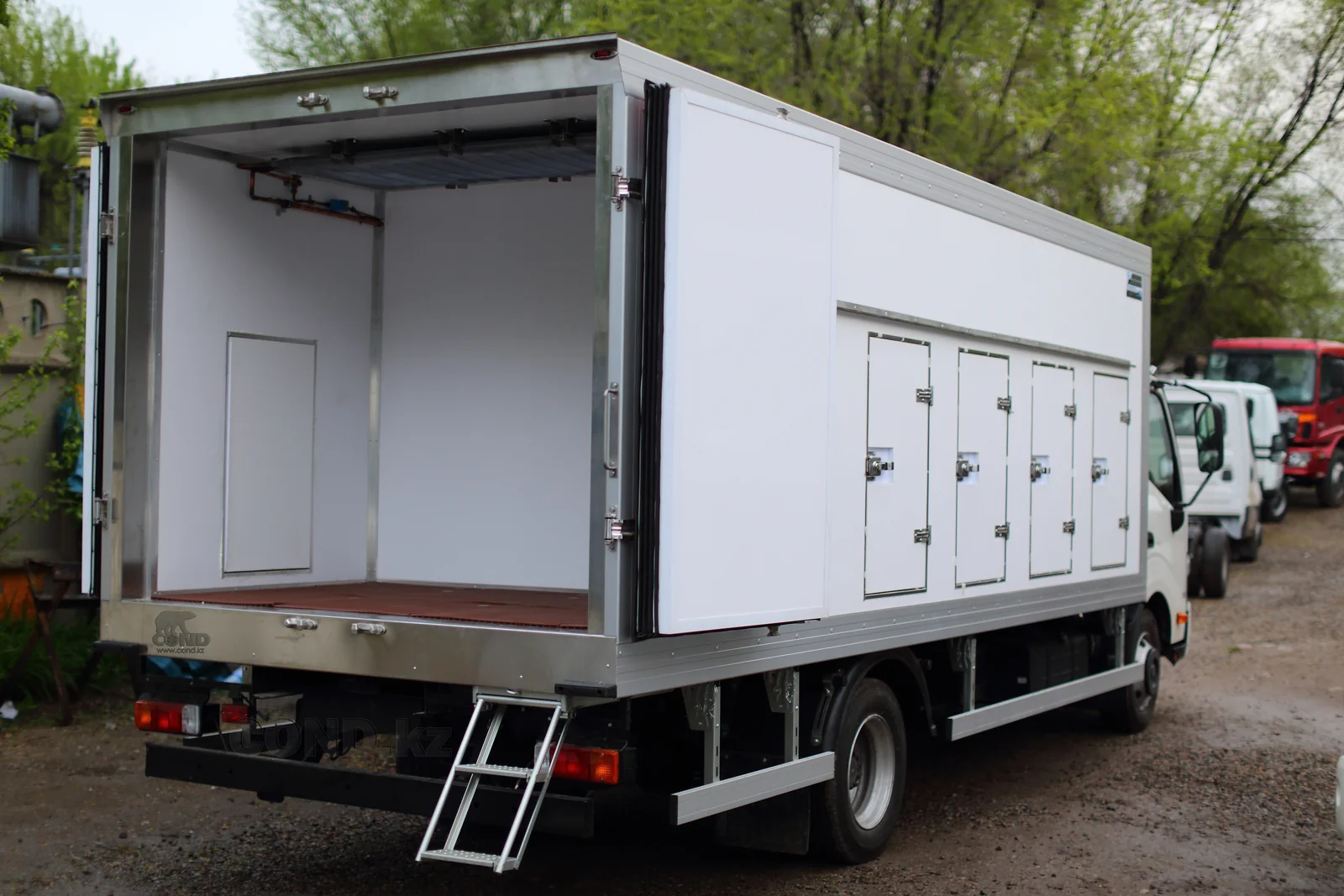
An ice-cream van is built around a specific delivery round: first you count how many cases must go out per shift and across how many stops, and only then choose the body length and the number of compartments. Five sizes cover almost every task — from city rounds on a GAZelle to trunk deliveries on a medium-duty truck.
| Body length, mm | Doors (compartments) | External dimensions, mm | Internal dimensions, mm | Usable volume | Plates, pcs | Plate capacity at −33 °C |
|---|---|---|---|---|---|---|
| 3200 | 3+3 (6) | 3200×2100×1600 | 2950×1850×1320 (1220 to the plates) | 6.6 m³ | 4 | 12,400 W |
| 3600 | 3+3 (6) | 3600×2100×1700 | 3350×1850×1420 (1320 to the plates) | 8.2 m³ | 5 | 15,500 W |
| 4200 | 4+4 (8) | 4200×2200×1800 | 3950×1950×1520 (1420 to the plates) | 10.9 m³ | 6 | 18,600 W |
| 5200 | 5+5 (10) | 5200×2200×1900 | 4950×1950×1620 (1520 to the plates) | 14.7 m³ | 7–8 | 21,700–24,800 W |
| 6200 | 6+6 (12) | 6200×2250×2000 | 5950×2000×1720 (1620 to the plates) | 19.3 m³ | 9–10 | 27,900–31,000 W |
Dimensions are typical: exact width and height depend on the chassis and on whether an extra rear door is fitted. In every version the walls are of mixed thickness: sides 120 mm, floor, roof, front and rear 140 mm. The range goes down to −33 °C. Plates are calculated from the body volume: one plate delivers about 3,100 W of cooling at −33 °C.
Inside a eutectic plate there is no refrigerant but a water-salt solution whose freezing point is lowered to the temperature required — −33 °C for ice-cream vans. At night the refrigeration unit drives refrigerant through a heat exchanger inside the plate and the solution crystallises: it changes from liquid to solid.
The whole point is the phase change. To melt the frozen solution back you have to return all the energy that went into freezing it — the latent heat of fusion. That is dozens of times more than the heat needed to warm the same substance by one degree. So while the plate is melting it holds the temperature almost constant — the way ice in a glass keeps water from rising above zero until the last piece has melted. The van is not being cooled on the road; it slowly spends a store of cold accumulated in advance.
The truck returns to the depot and the driver plugs the van in. What it needs is a three-phase 380 V supply — the unit will not start on a domestic 220 V line, it is not a household appliance. The compressor runs all night and freezes the plates down to their working −33 °C in 8–10 hours. Electricity is consumed only here, at the depot, on the night tariff.
During the day the refrigeration is switched off. The plates melt slowly and give back the stored cold for the whole shift: with a normal load and disciplined door handling that covers 10–12 hours of the route. The engine spends no power on cooling, no fuel goes into refrigeration, and unloading points stay quiet — an ice-cream van can be unloaded at night in a residential courtyard without waking anyone.
Every door opening throws out cold air and draws in warm air. Ice cream is delivered to 20–40 stops per shift, and if the body were a single volume the heat would eat the entire reserve of the plates by mid-route.
So the body is divided into compartments with separate doors along the sides — 3+3, 4+4, 5+5 or 6+6. Goods are loaded into compartments in route order, and at each stop only the door holding the case required is opened. The rest of the volume stays shut and cold. Compartmentalisation here is not a loading convenience but the way to make the plate charge last to the end of the shift.
The walls of an ice-cream van are of mixed thickness: the sides are 120 mm, while the floor, roof, front and rear walls are 140 mm. That thickness is what the insulation performance requires: the body has to hold −33 °C inside whatever the heat outside. For comparison, an ordinary insulated van uses 50–100 mm panels all round.
The gap between −33 °C inside and +40 °C outside on a July day is 73 degrees; at that gap a thin panel loses cold faster than the plates can replace it. For the same reason the door frames are heated: without heating the seal and hinges ice up, the door stops closing tightly, and a leaking door on an ice-cream van cancels out the whole design.
Grid floor mats are laid down to lift the load above the surface. At −30 °C packaging freezes to the floor solid: the box then comes away with its cardboard torn. The mats create a gap and air movement beneath the load — boxes lift off freely and condensate drains away instead of sitting under the goods.
Over weeks of work frost and ice build up on the walls, the plates and in the corners. It eats into usable volume, adds dead weight and, above all, degrades heat transfer from the plates, so the charge stops lasting to the end of the shift. During scheduled servicing the body is warmed, the ice is scraped off and the interior is dried. This is a routine procedure, not a fault.
Defrosting must be gentle: while the body is being warmed, the temperature inside must not exceed +30 °C. Above that the GRP skin and the adhesive seams of the sandwich panels begin to distort, and the seals and the eutectic solution itself suffer. No heat guns aimed inside, and no “drying” of a closed body in the sun on a hot day.
With an insulated van you can take the simple route: use a truck already in the fleet and build the body around its frame. With an ice-cream van that does not work.
A body with 120 and 140 mm walls, a full set of eutectic plates and a refrigeration unit weighs considerably more than an ordinary insulated van, and the plates are also concentrated mass under the roof and along the sides, which raises the centre of gravity. So the order is reversed: first you calculate the daily delivery volume, the number of stops, the number of compartments and plates — and that gives you the body. Only then is a chassis selected for it: by payload with a margin, by wheelbase, by rear overhang and by whether the truck can carry that weight distribution.
This is an expensive project with demanding operating requirements, and in Kazakhstan those requirements are above average. In the south — Shymkent, Kyzylorda, Turkestan — summer means a steady +40 °C in the shade and scorching asphalt, while the van must still hold −30 °C inside all day long. A mistake in chassis selection here is not a minor inconvenience: it means axle overload, a sagging suspension and a body that stops holding its temperature by the end of the route.
That is why our calculation starts with questions about the run, not about the truck: how many stops, what volume per shift, which city it works in and when the peak season falls. The chassis follows from that.
Ice cream is the most demanding cargo in cold logistics: it needs temperatures down to −33 °C while the doors open dozens of times per shift on delivery rounds. An ordinary reefer loses its cold after every opening in such duty.
We build eutectic vans with a sectional layout: the body is divided into compartments with separate doors, so while one compartment is unloaded the rest stay closed. The cold comes from eutectic plates that work without a compressor.
For ice cream and frozen food distributors with multi-stop routes, manufacturers with their own delivery, and carriers of deep-frozen pharmaceuticals.
Tell us your daily delivery volume and number of stops — we will size the sections and plates for your shift. Lead time from three weeks.
All the types explained: Types of van body — what bodies there are and how to choose
Where we build them:Ice-cream bodies in Almaty
The unit’s compressor:Which compressors are fitted to refrigeration units
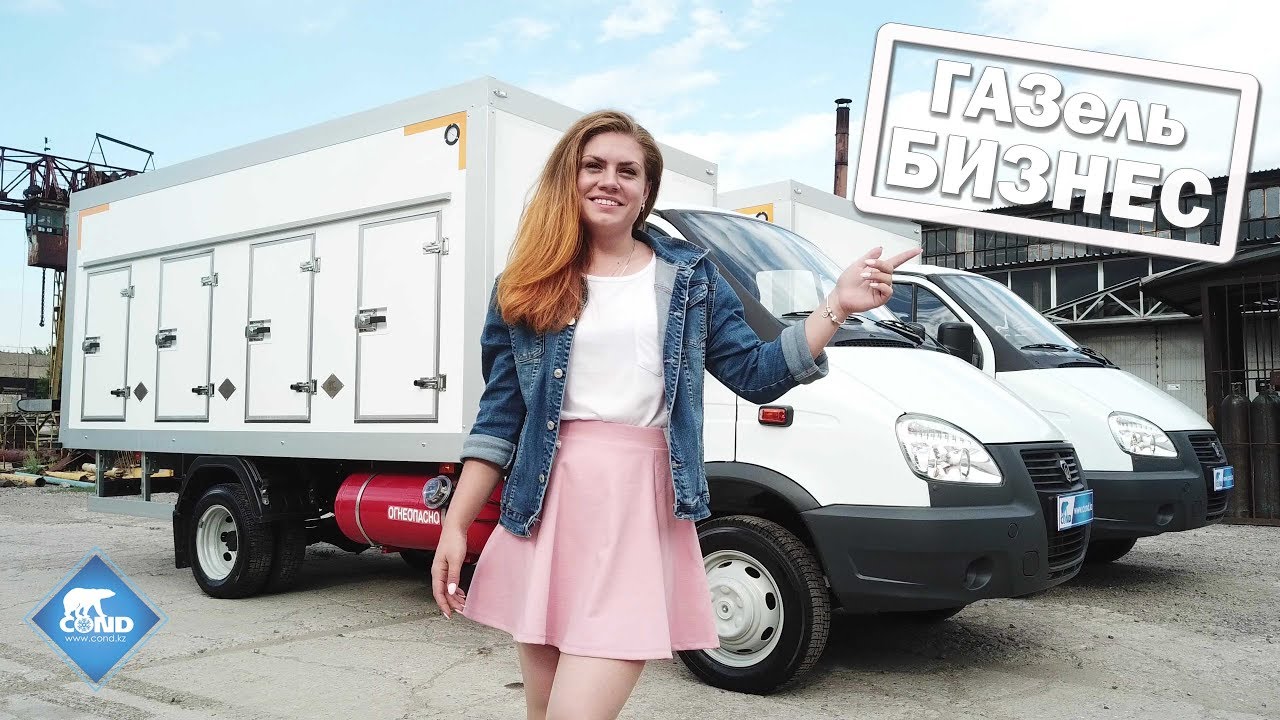
Walk-arounds of our ice-cream vans from the COND YouTube channel.

Leave your contacts — we will discuss your job and select the right option.
📞Phone