Service
Stationary cold rooms
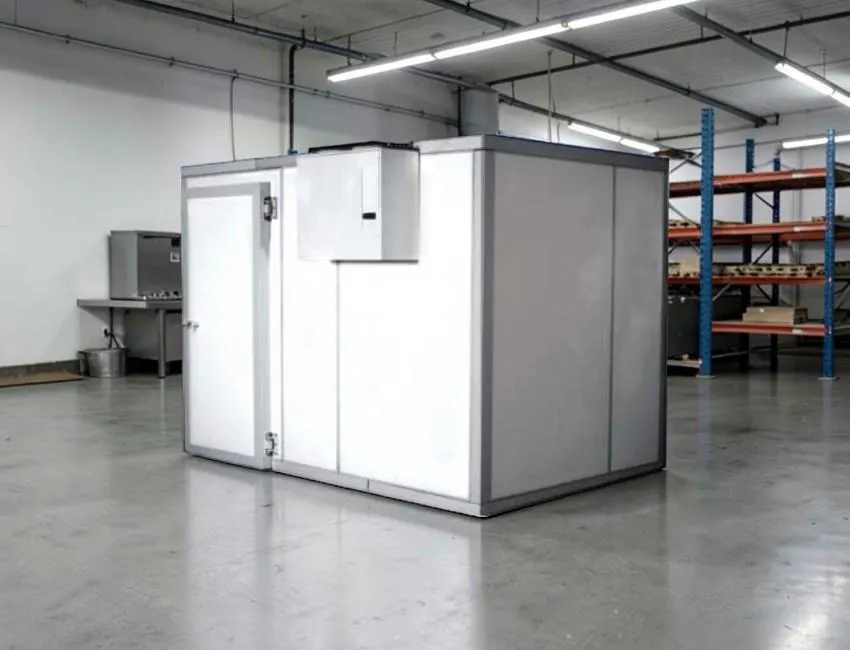
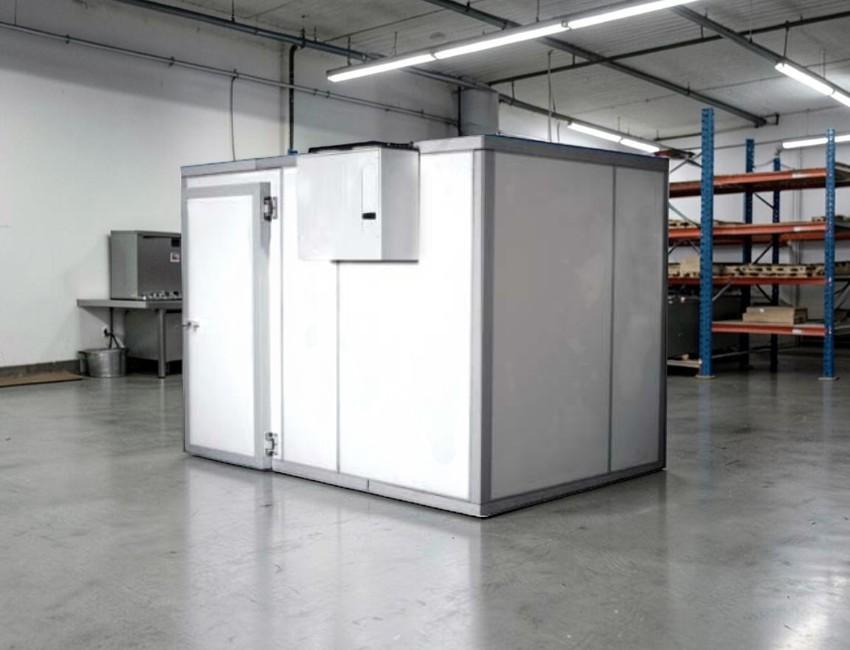
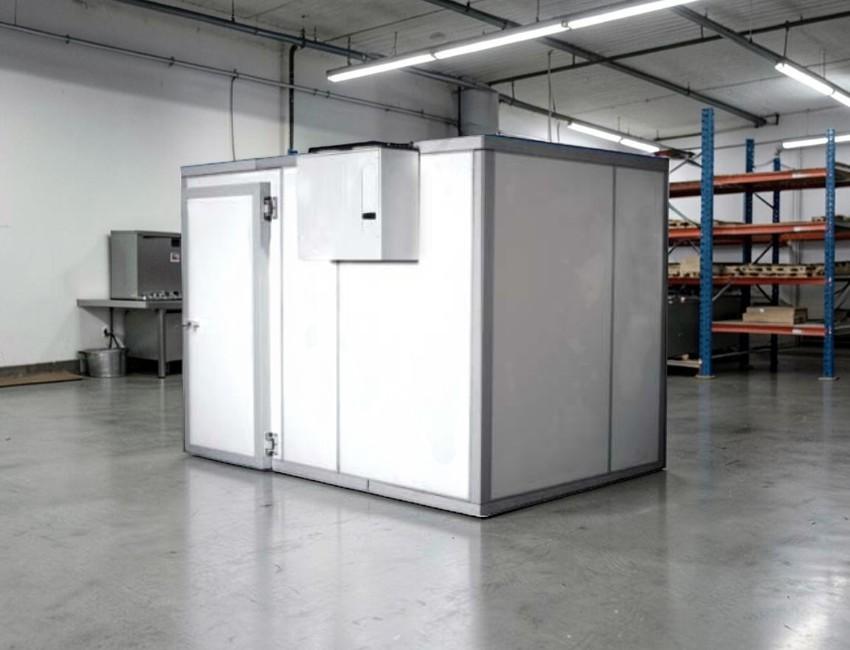
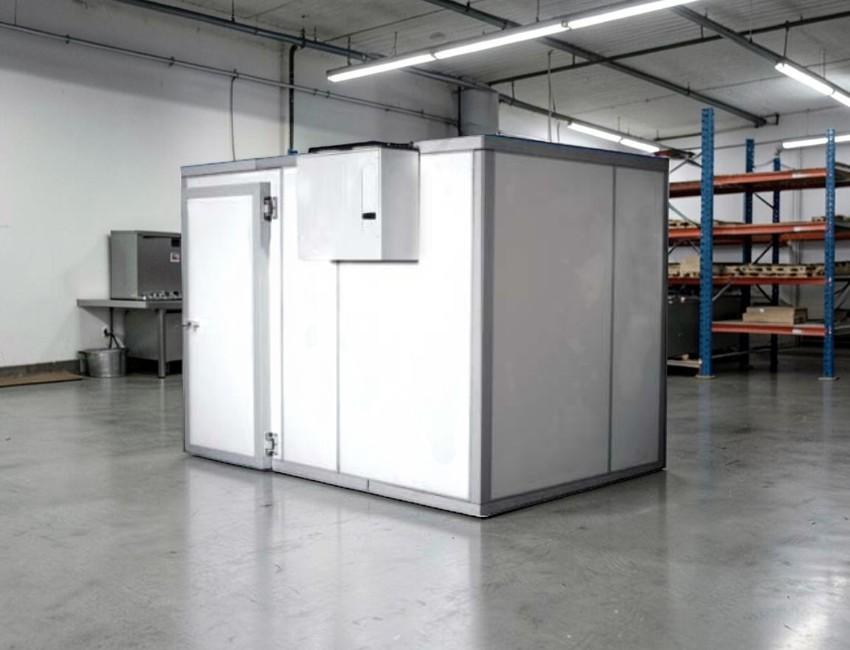
Chilled and frozen rooms are assembled from in-house sandwich panels — for shops, warehouses, catering and production. Turnkey: from design to commissioning.
Quote is based on body, chassis and temperature range.
Measuring, layout, and calculation of volume and temperature range for the product.
Our own panels with cam-lock joints — fast assembly and airtightness.
Hinged and sliding doors with frost-resistant seals and reliable hardware.
Unit selection and installation for the duty: chilling at 0…+6 °C or freezing to −20 °C and below.
Moisture-protected lighting, temperature monitoring and deviation alarms.
The room is assembled on site and brought up to temperature; staff are trained in its use.
The temperature range determines everything else — panel thickness, unit output and door design.
| Range | What is stored | What changes in the room |
|---|---|---|
| 0…+6 °C | chilled meat and fish, dairy, vegetables, ready meals | a medium-temperature unit, standard panel thickness, a hinged door |
| −18…−20 °C | frozen goods, semi-finished products, ice cream | a low-temperature unit, a thicker panel, and door-frame heating against icing |
| lower −20 °C | blast freezing and long-term storage | a unit matched to the range, a reinforced envelope, temperature monitoring with alarms |
The room is assembled from the same sandwich panels used for refrigerated bodies, with a locking joint, so the structure can be taken apart and moved elsewhere without losing its seal.
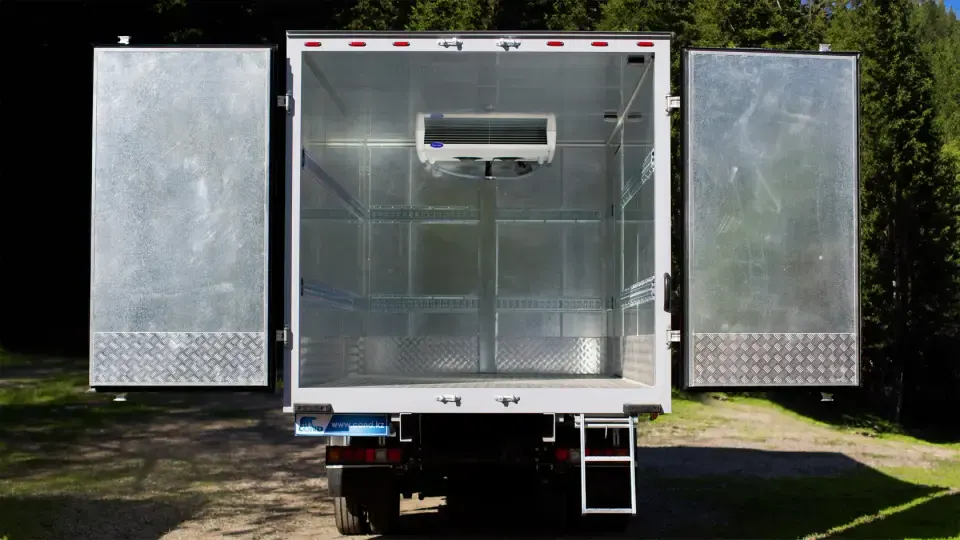
The same, on wheels:Refrigerated vanAn insulated vanEutectic plates
The sandwich panel is made in-house, by the same technology as the bodies of refrigerated vans.
From a room of a couple of cubic metres to an industrial warehouse — the design is modular.
Cam-lock panel joints — installation in days, not weeks.
The refrigeration equipment is serviced and the seals are replaced.
Describe the job — we will discuss the details and timing.
📞Phone