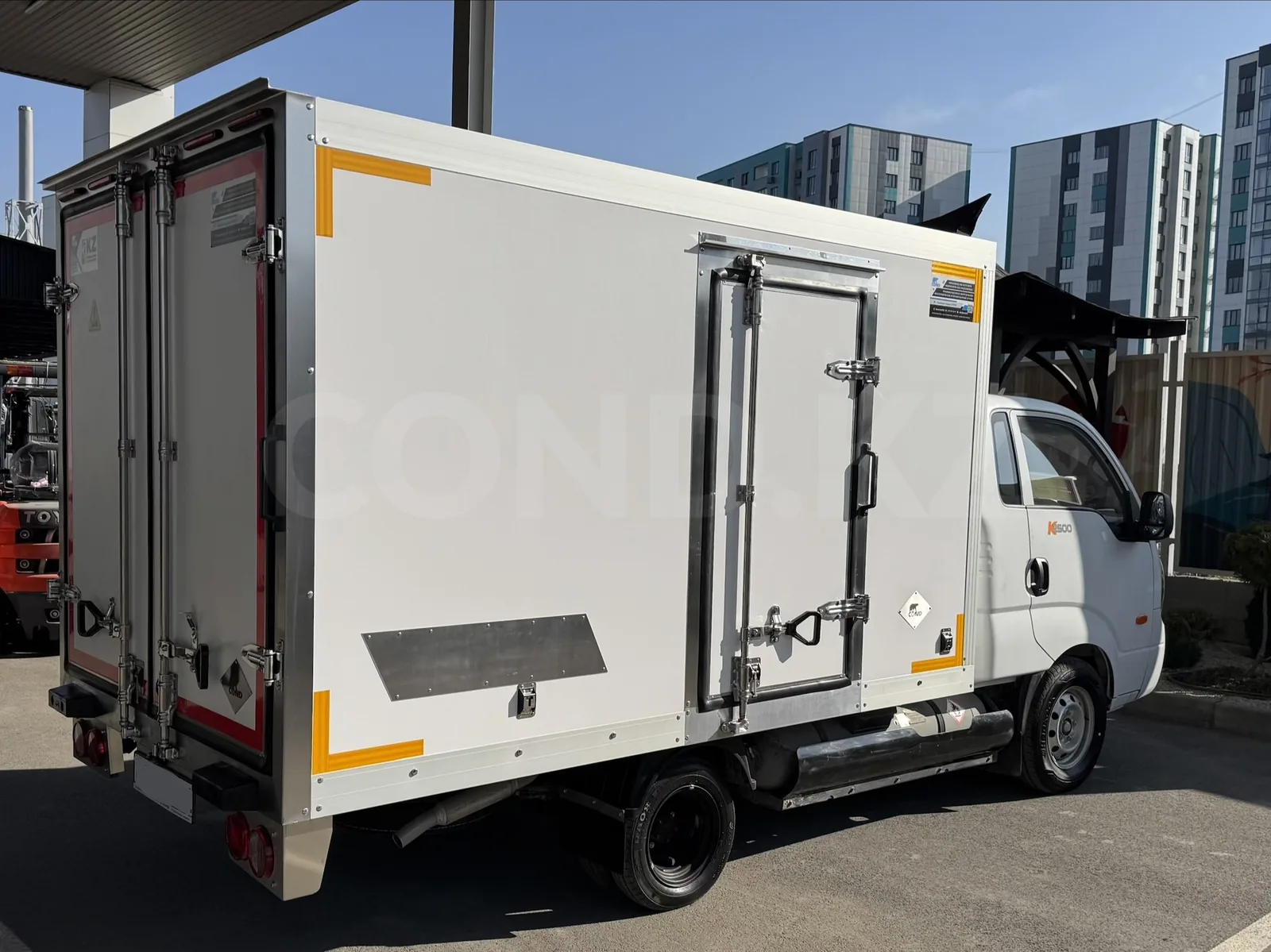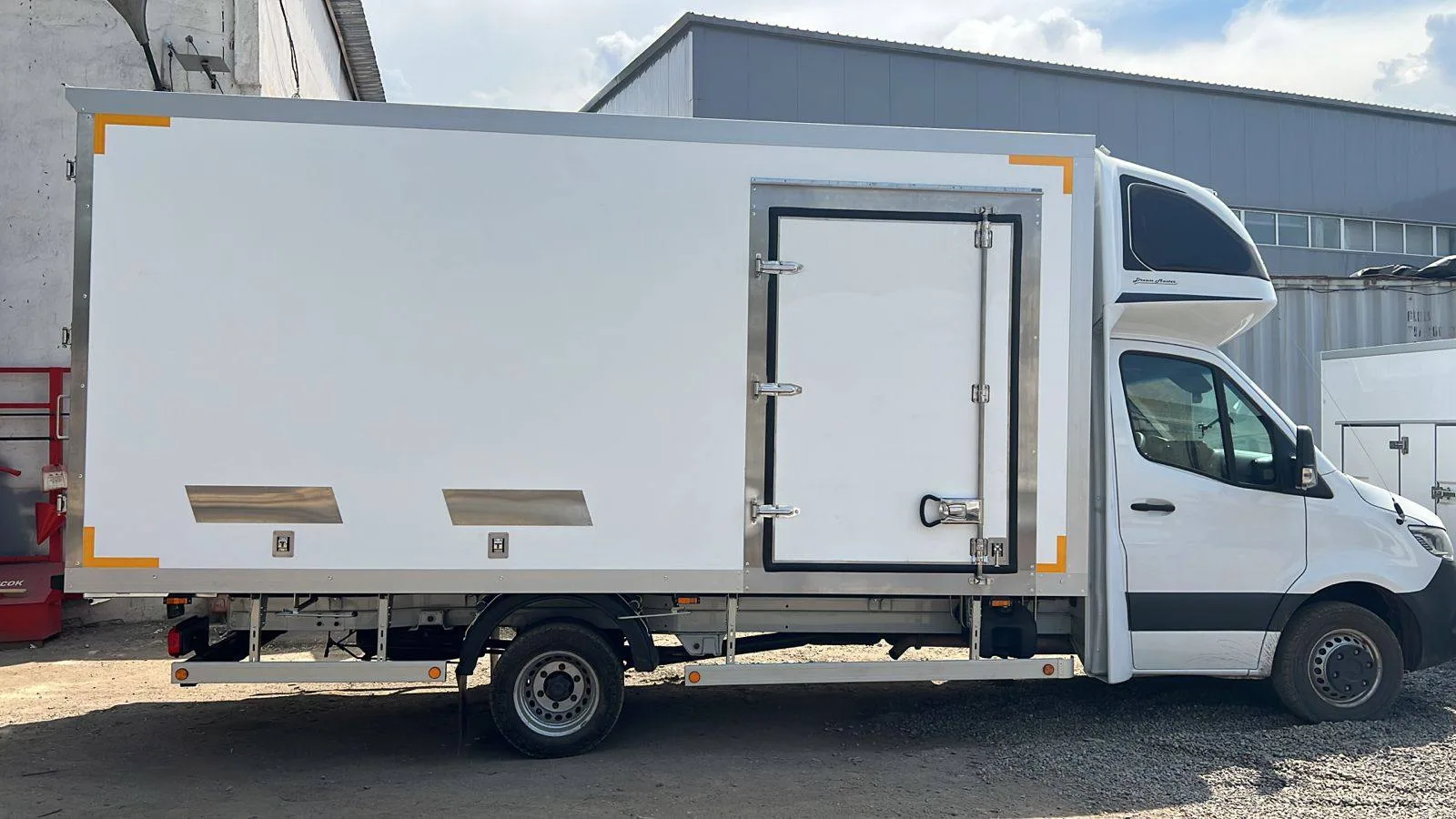
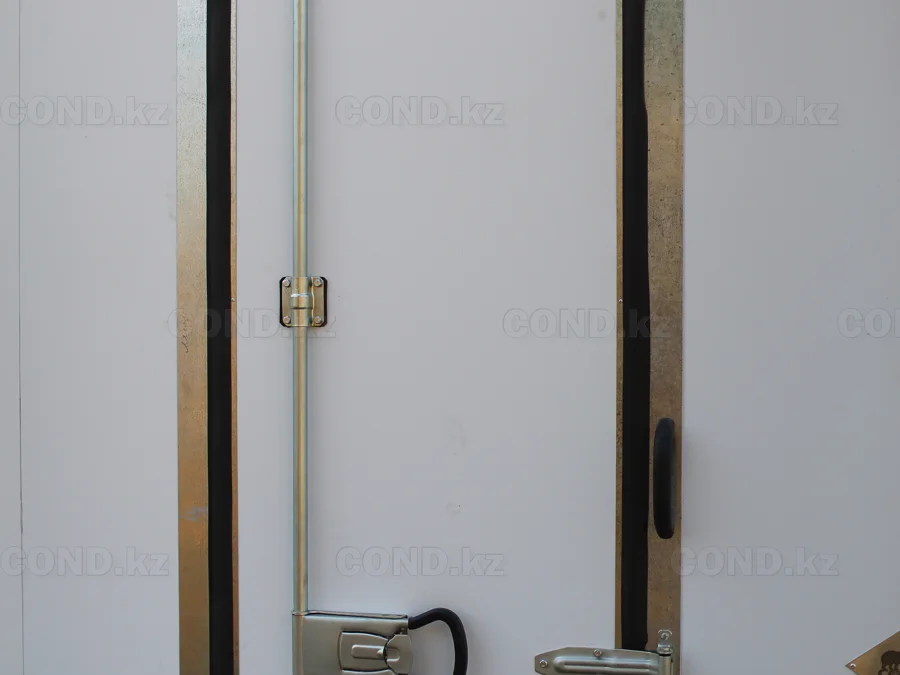
Side door
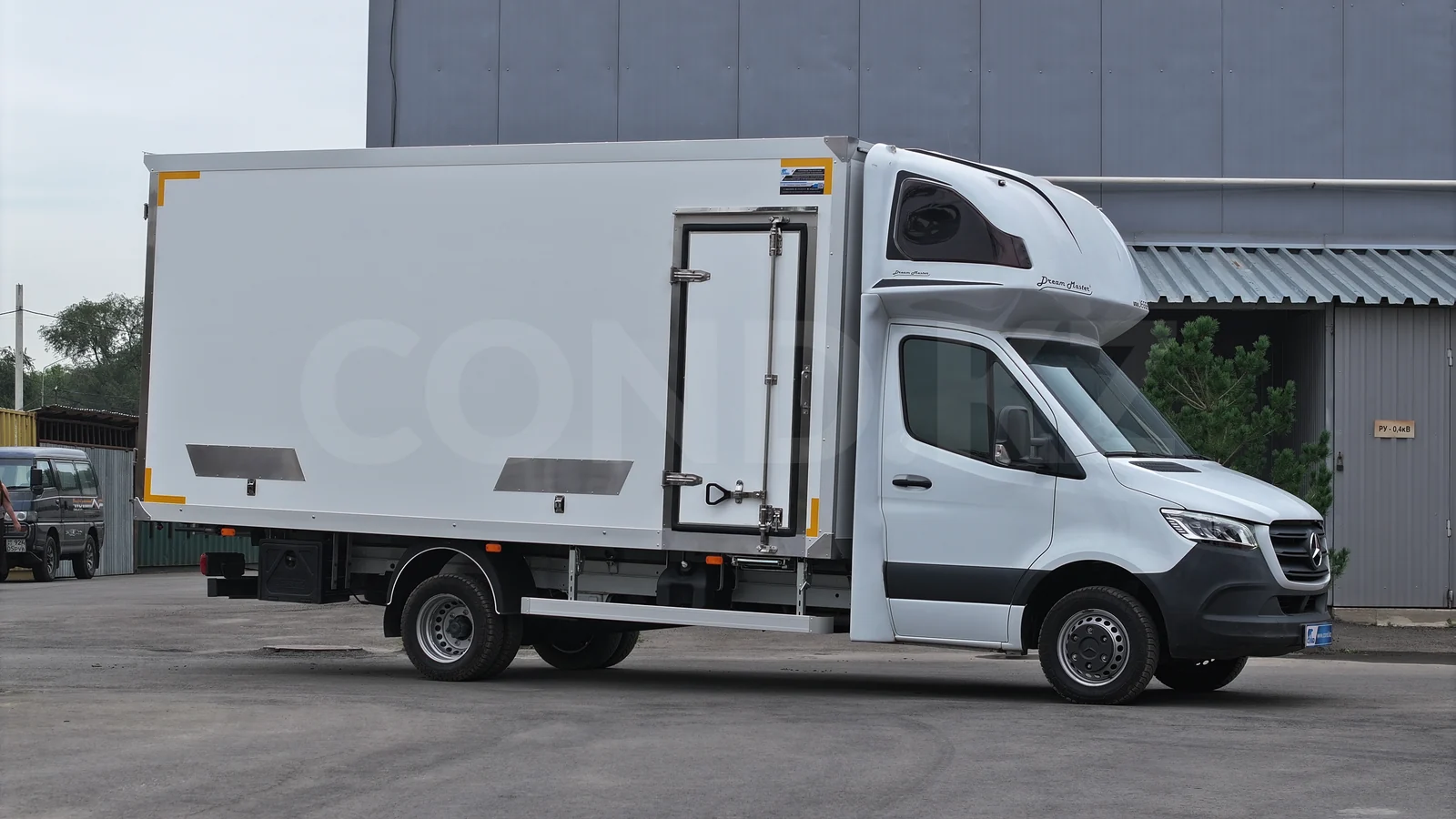
Single or double door in the side wall — fast multi-drop unloading without opening the rear doors.
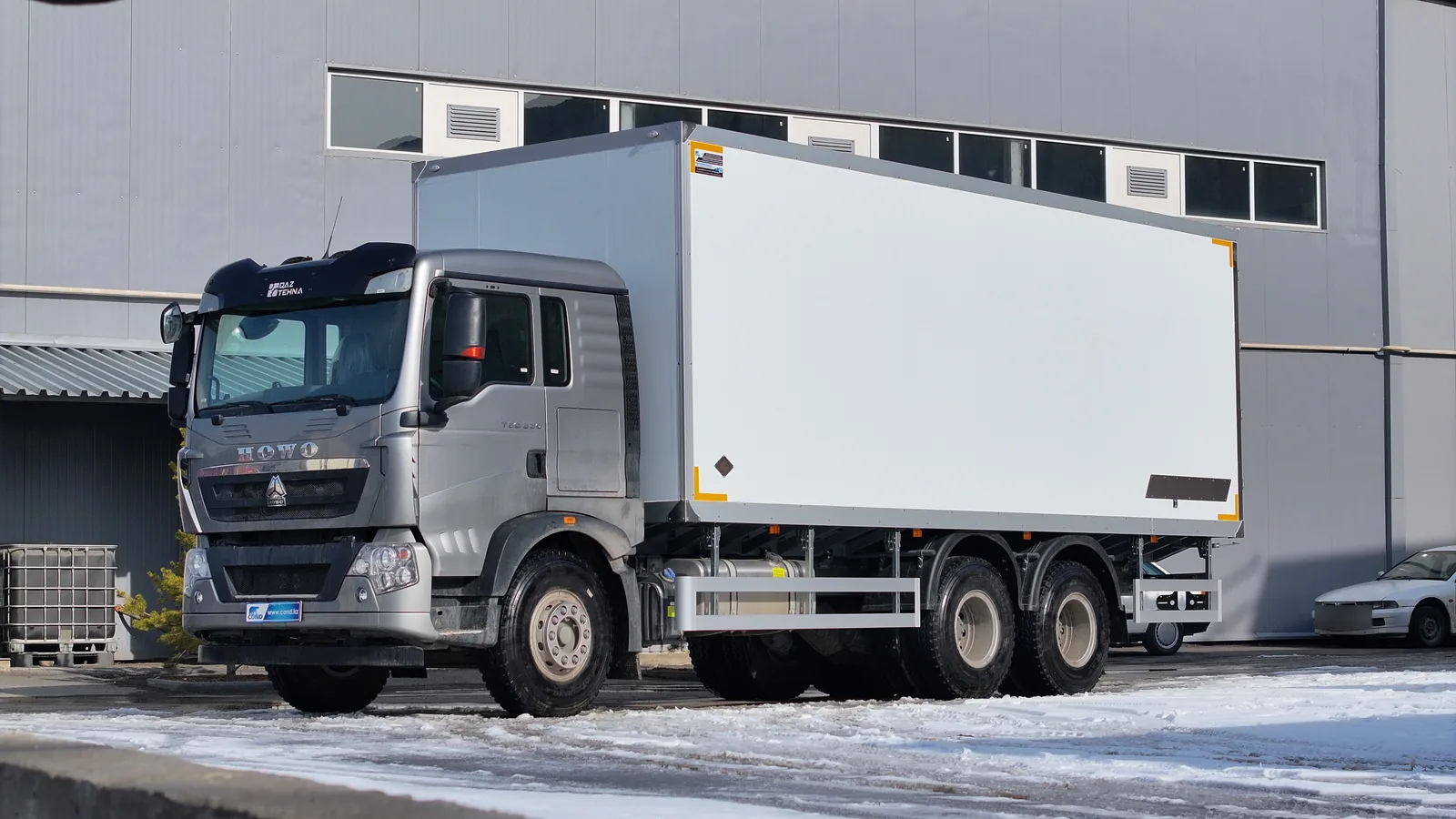
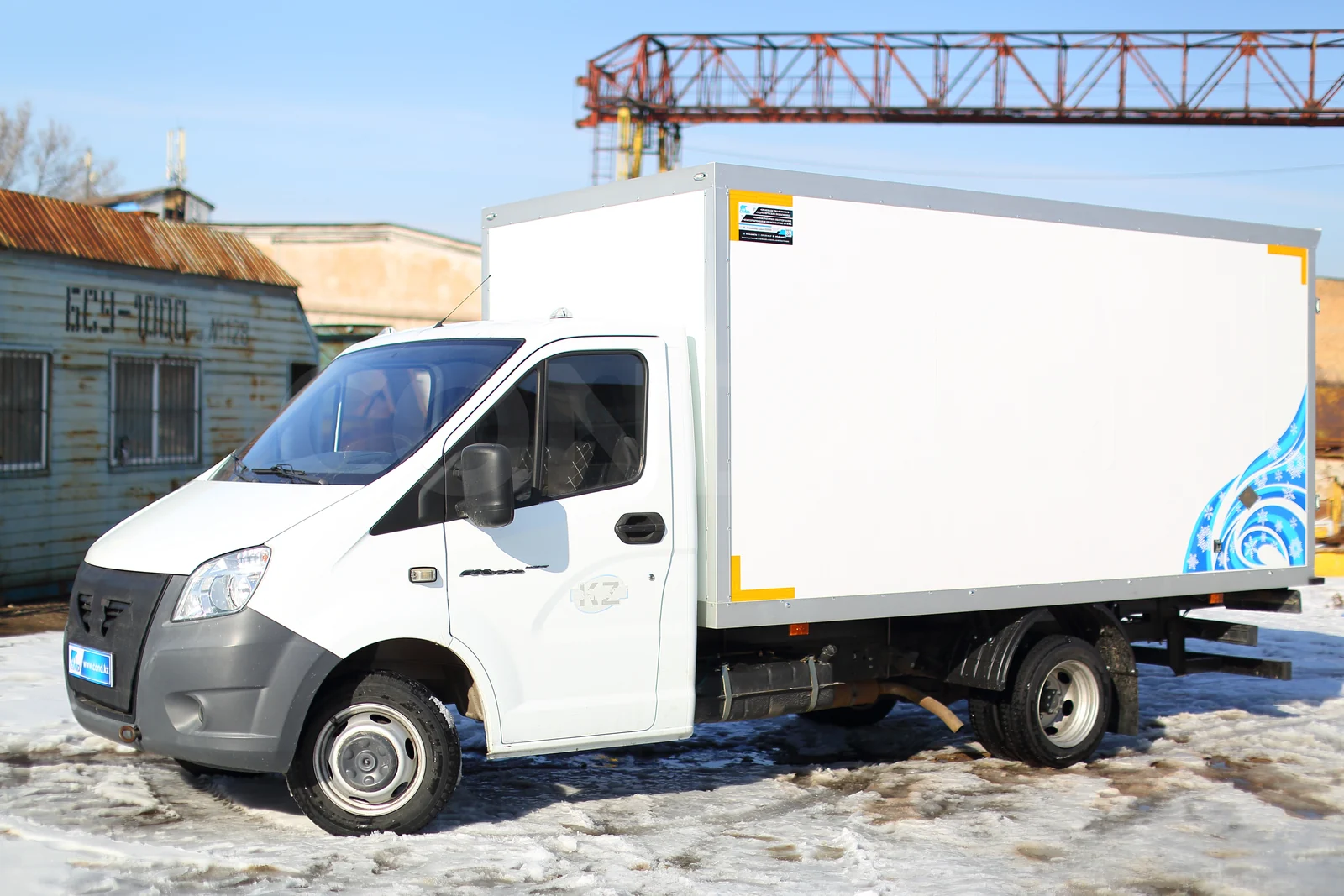
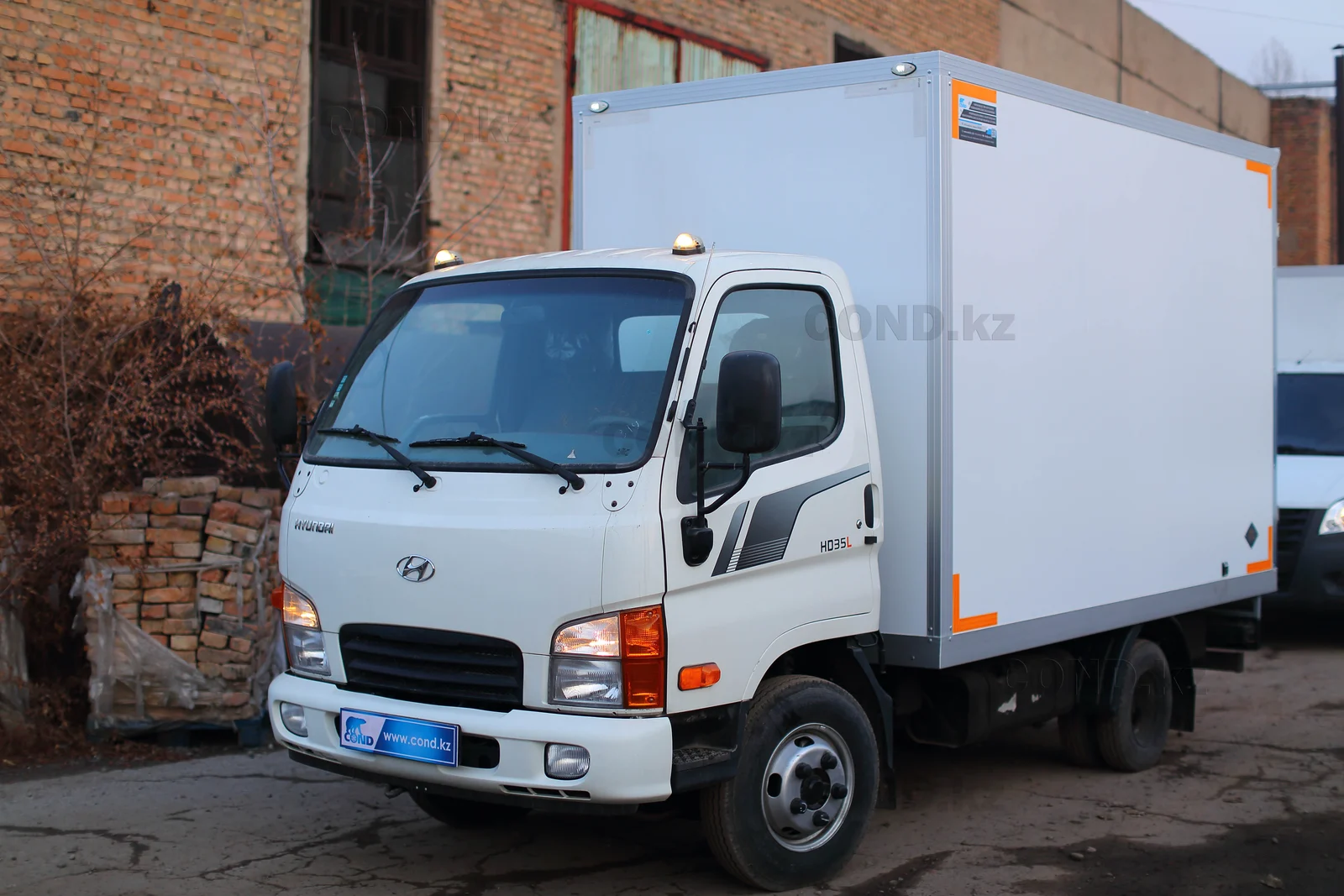
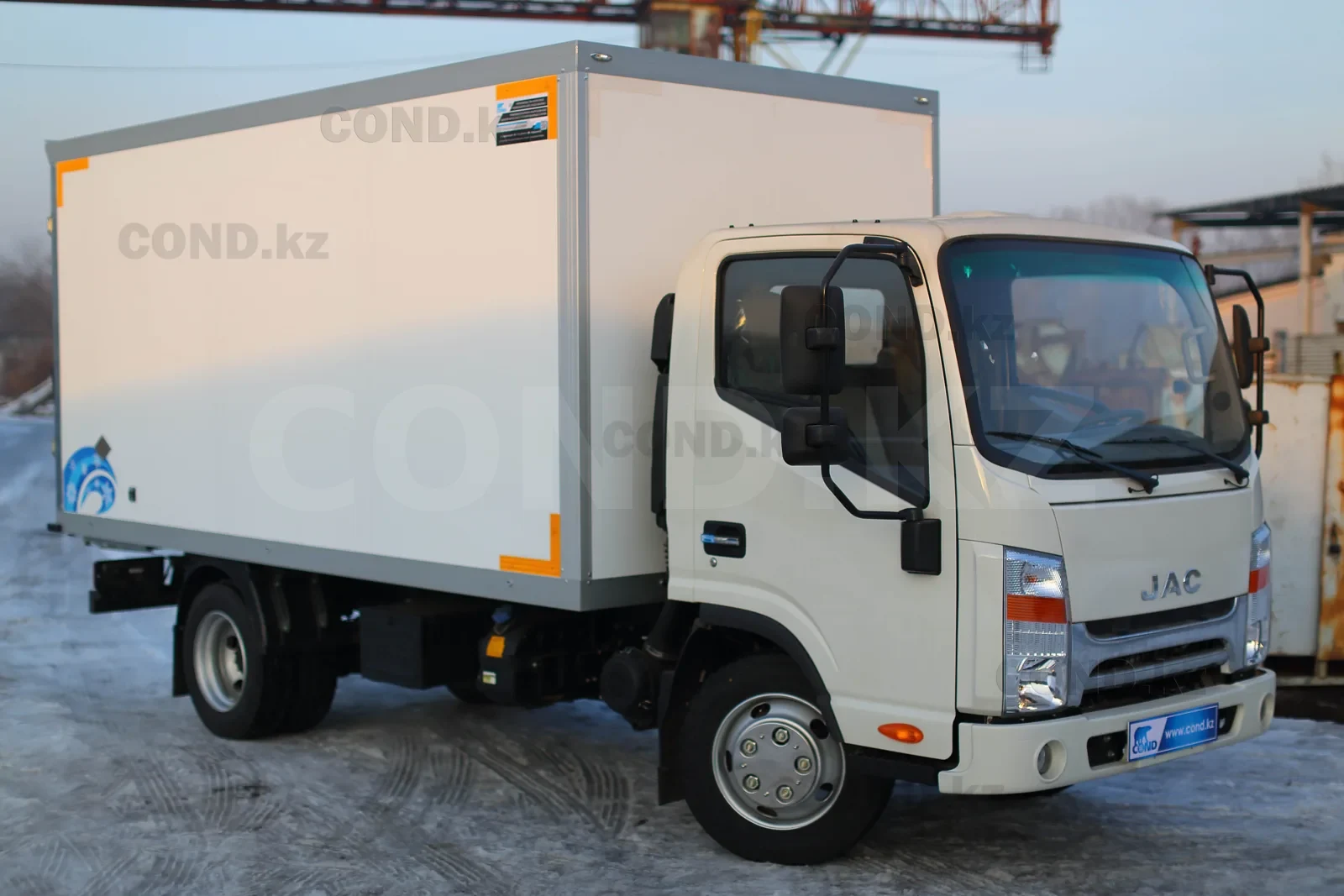
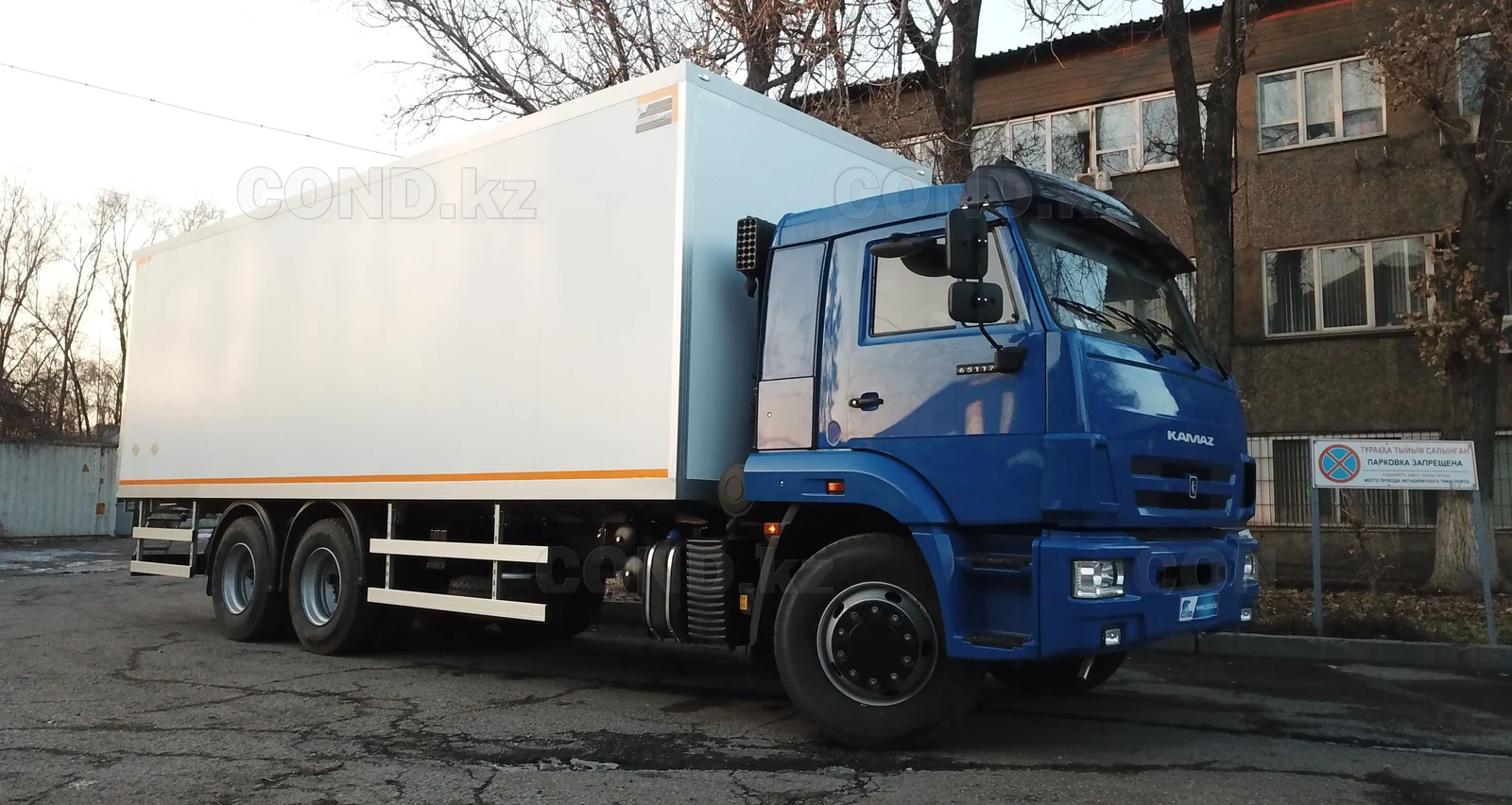
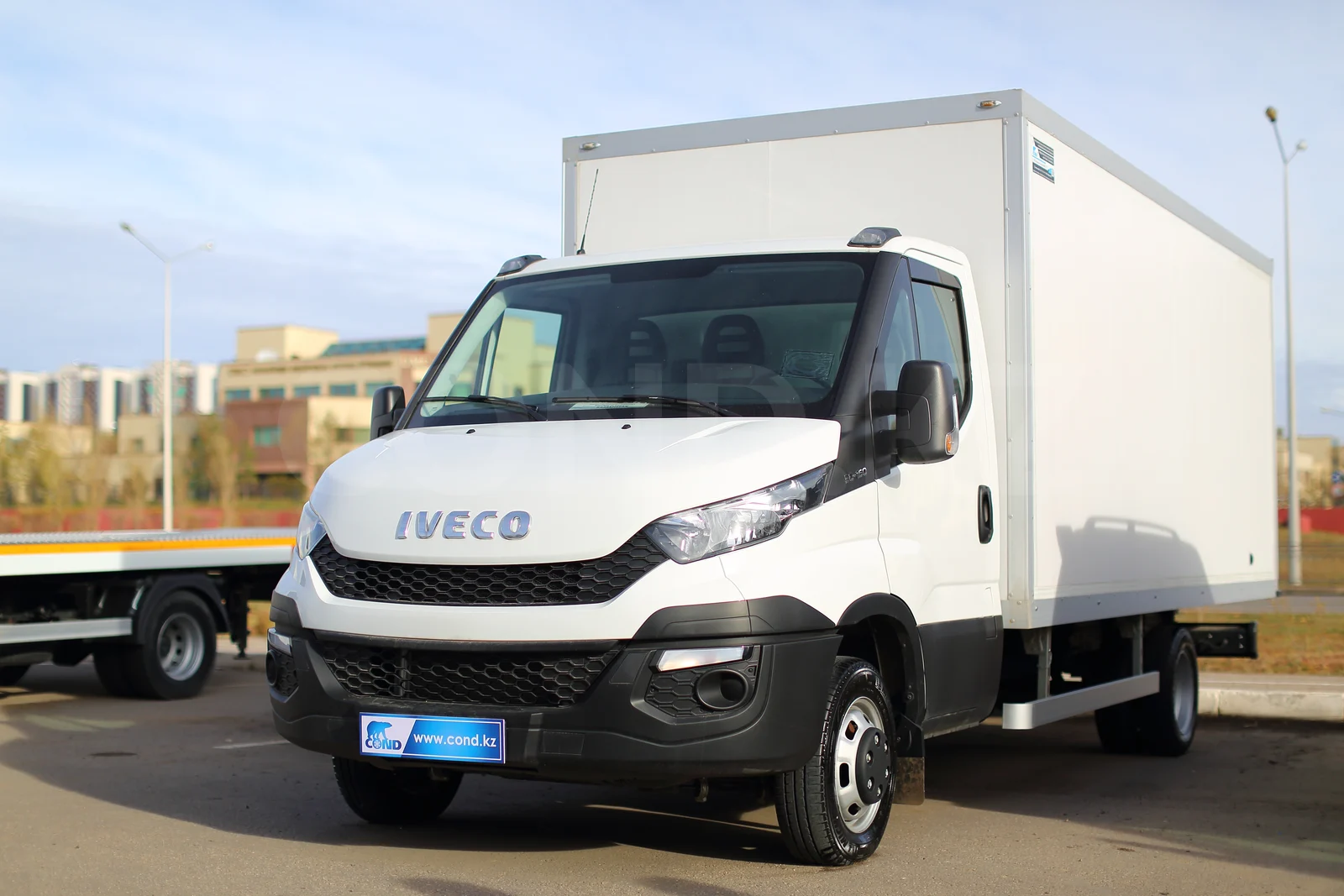
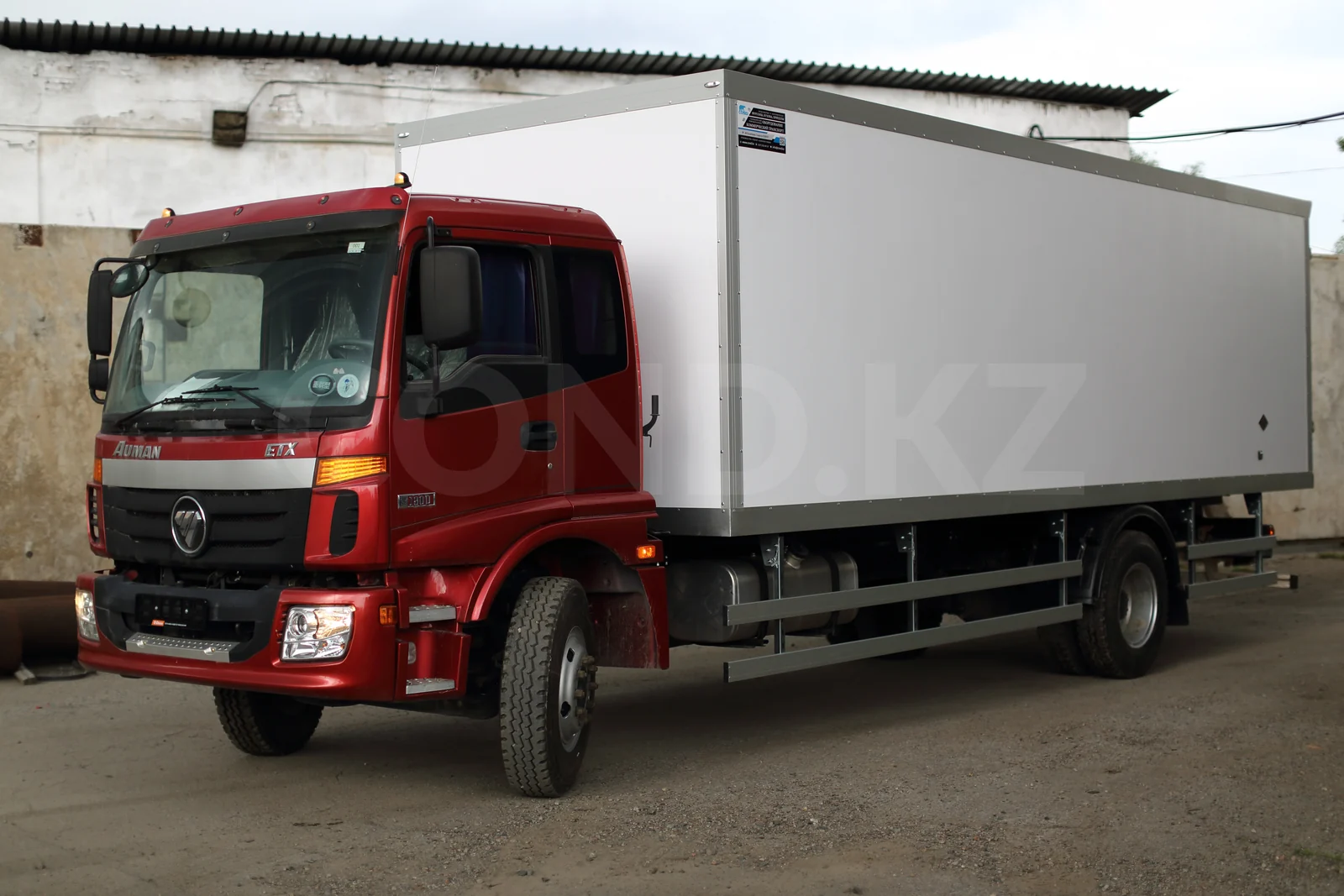
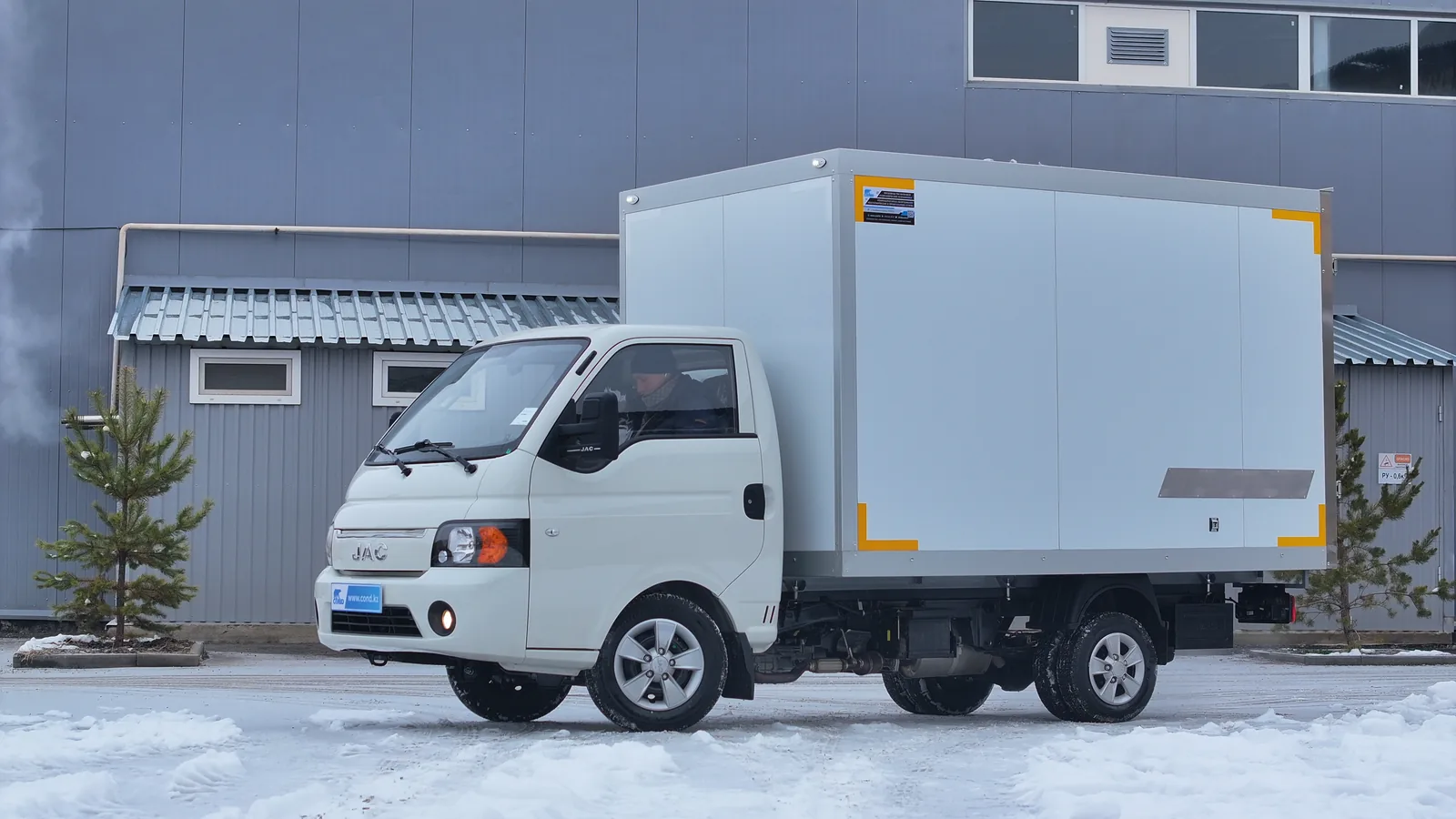
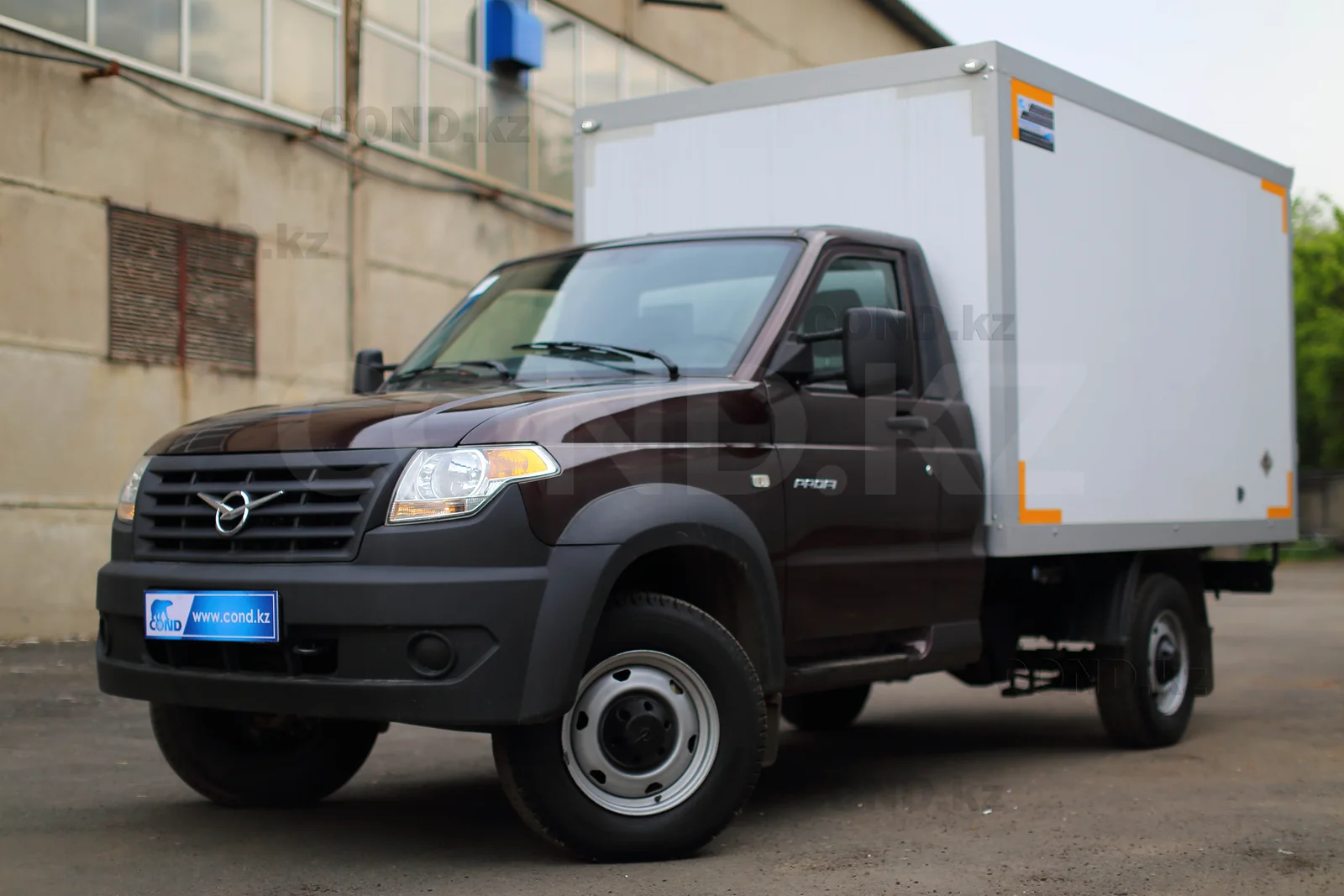
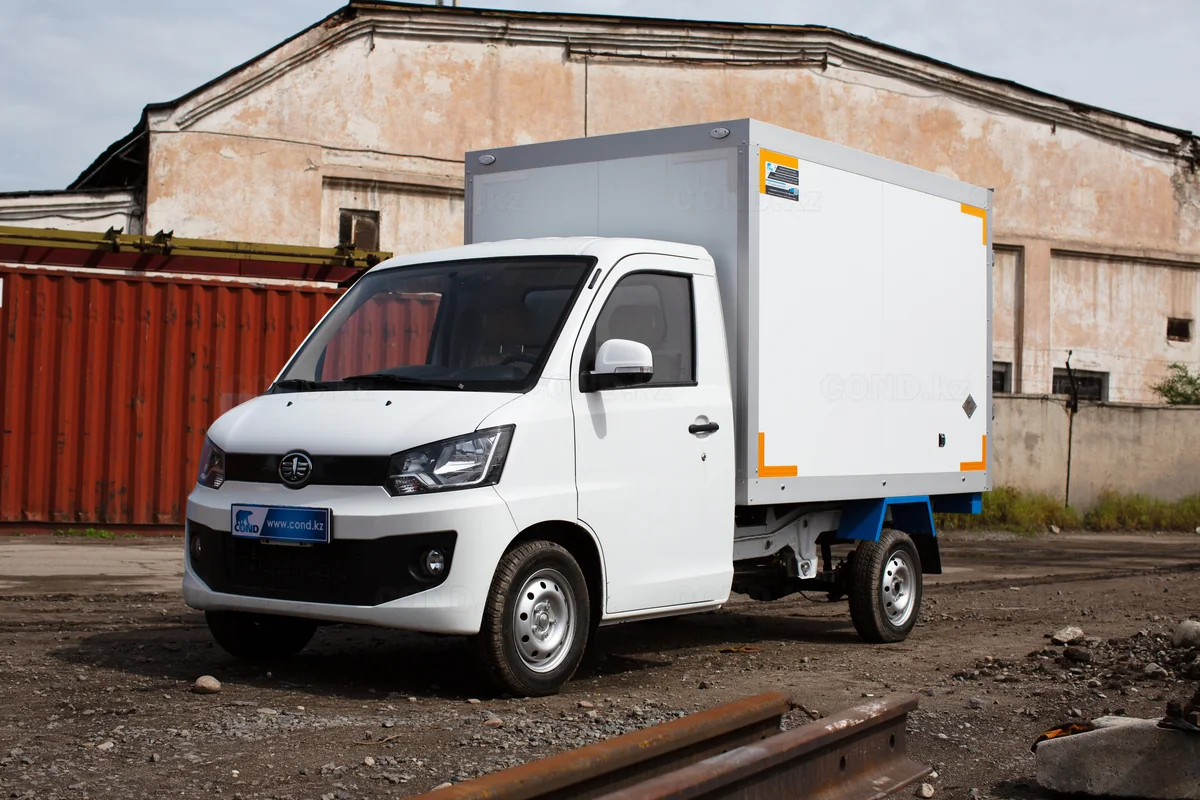
An isothermal box body is a thermally insulated box built from 50/80/100 mm sandwich panels that we mount on your chassis. It slows down heating and cooling of the cargo without its own refrigeration unit. Suitable for dry goods, equipment and other cargo that needs no temperature control — and for food or pharma the body is easily upgraded with a refrigeration unit. Own workshop in Almaty, 2-year warranty, fast production time. In everyday speech this body is called a termobudka — it is one and the same product.
The catalogue lists 20 COND insulated vans with prices — vehicles in stock and completed projects.
Not sure how a refrigerated van differs from an isothermal van body? Read our explanation: What is a refrigerated van.
An insulated van body is a cargo box made of 50, 80 or 100 mm sandwich panels: it slows down how fast the load warms up or cools down, but it produces no cold of its own. It is mounted on a chassis instead of a flatbed and carries dry goods, bread, drinks and chilled food on short runs. Fit a refrigeration unit and it becomes a refrigerated van.
Quote is based on body, chassis and temperature range.
Termobudka — is the most common Russian word for it in conversation and in search. In documents the same product is called an an isothermal van body or insulated body superstructure, while classified ads use thermal van, thermal body or simply thermos box. It is also often misspelled as “termobutka”. It is always the same thing: a closed sandwich-panel body that slows the cargo down from warming up or cooling off.
A detailed breakdown — what a termobudka (insulated van body) is and how it differs from a refrigerated van: what it is made of, how long it holds temperature and what it costs.
Termobudka keeps the temperature the cargo was loaded at, but it does not create cold. Load chilled goods and they stay chilled longer; load warm goods and they will not get colder. How fast the interior warms depends on panel thickness: 50 mm — dry goods and short city routes, 80 mm — chilled food, 100 mm — a margin for extreme heat or for fitting a refrigeration unit later.
If the cargo must travel at a set temperature rather than merely “not warm up”, a refrigeration unit is fitted to the insulated body — and it becomes a reefer. The body itself is identical: a reefer is an insulated body plus a refrigeration unit.
A frameless sandwich-panel body: GRP skins outside and inside with extruded polystyrene between them. We bond the panels on vacuum tables, tie the corners with anodised aluminium profile, insulate the floor without thermal bridges and build the door frame from stainless steel with a triple-chamber seal. The absence of a frame matters here: in a framed body the ribs act as thermal bridges and the stated insulation thickness stops meaning anything.
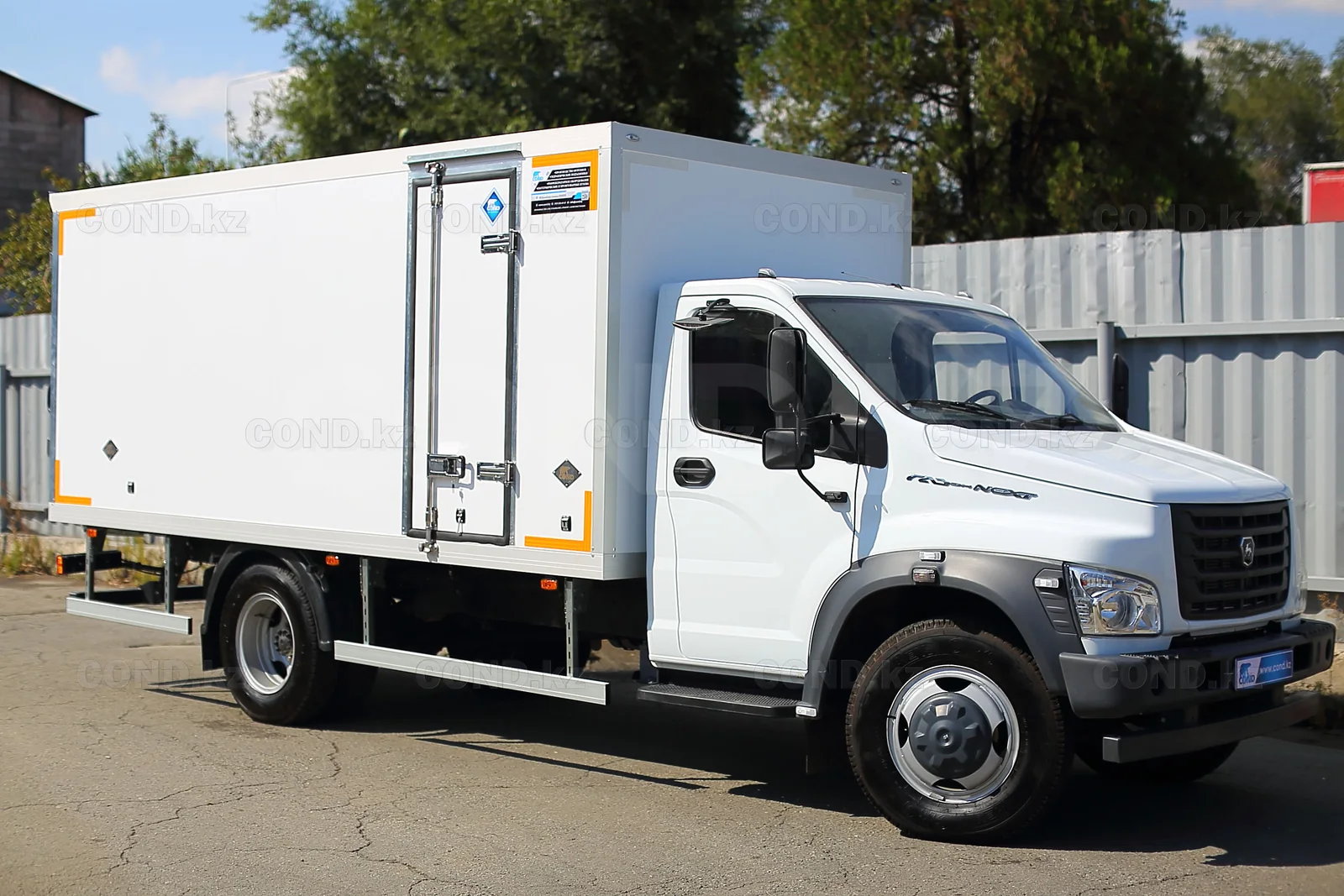
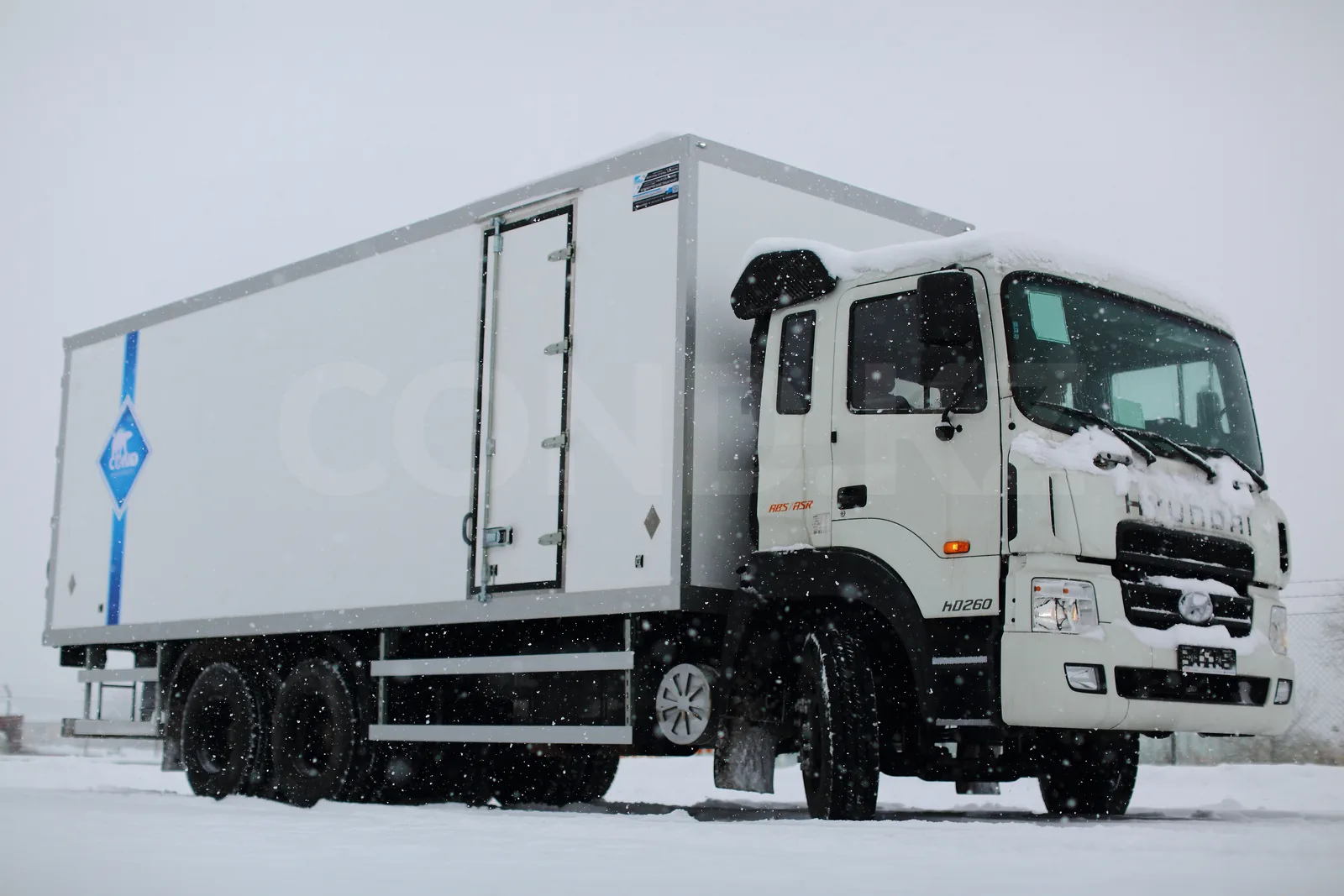
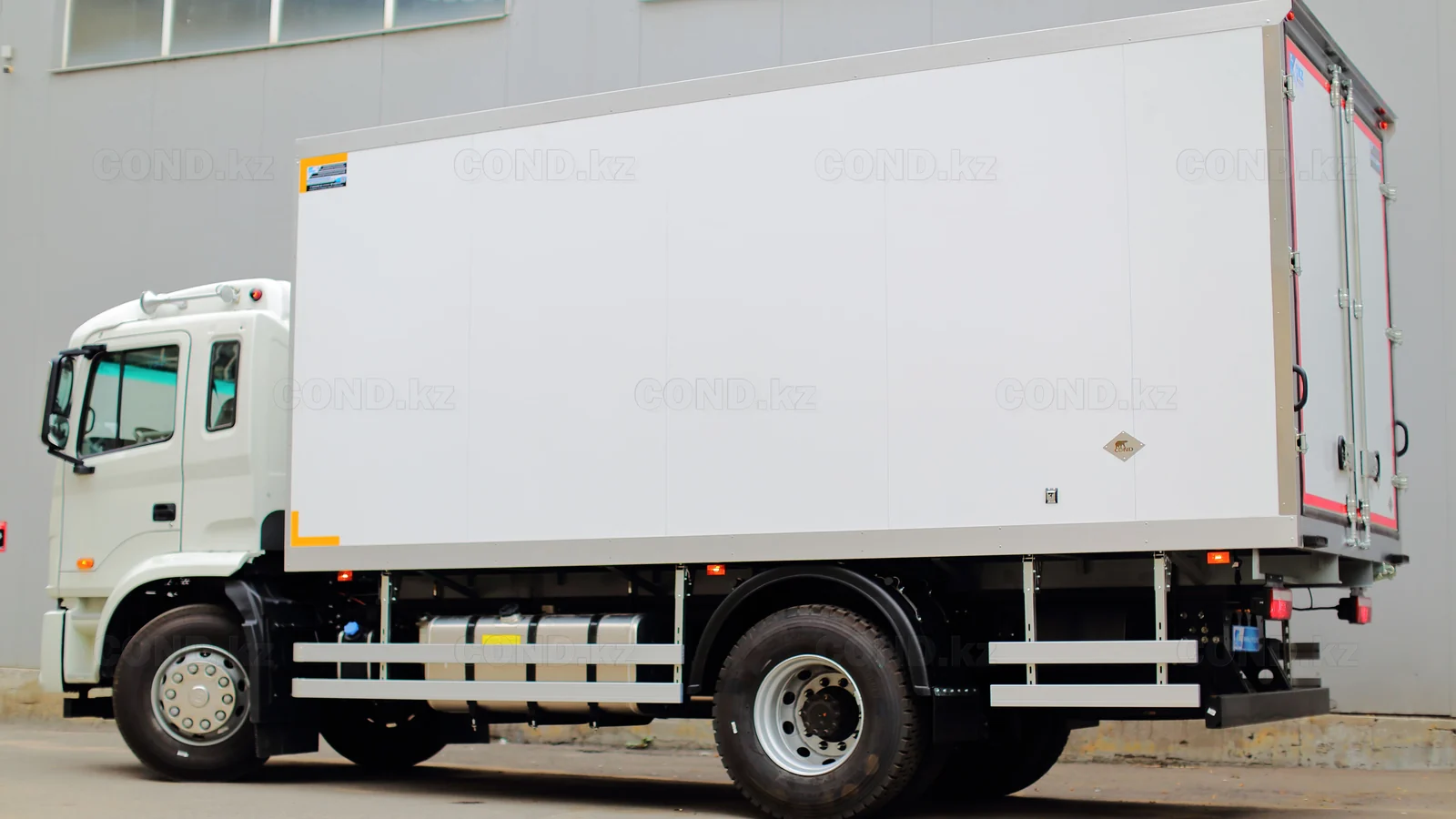
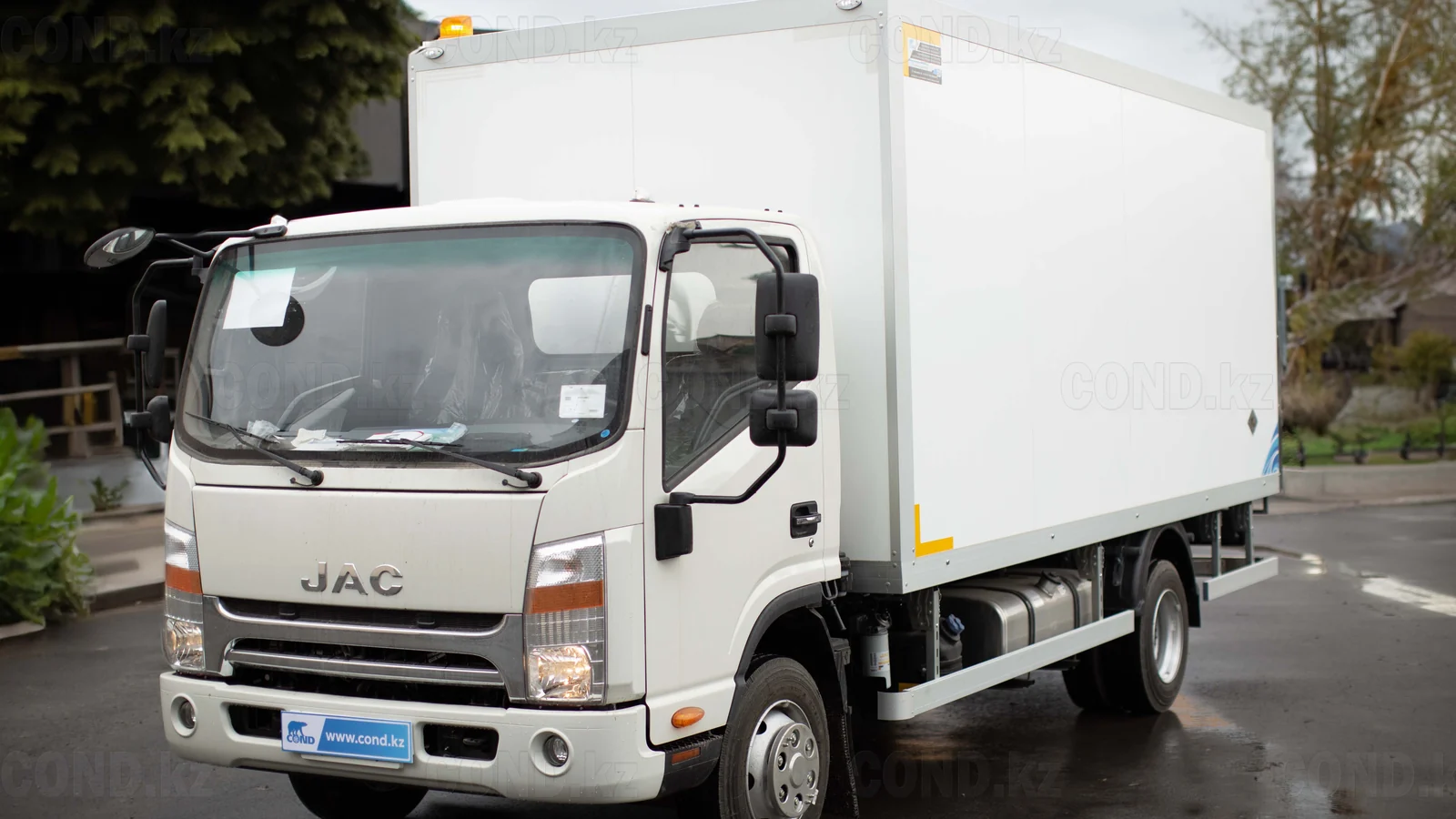
An insulated body is built for a specific chassis — from a GAZelle and Kia Bongo up to the JAC N90 and medium-duty trucks. We fit it to a new vehicle or to yours, keeping the manufacturer’s chassis warranty; where required we arrange changes to the vehicle registration document. Lead time from 14 working days, body warranty 2 years.
All the types explained: Types of van body — what bodies there are and how to choose
When active cooling is needed:An insulated van or a refrigerated van — how they differ
If you need active cooling:A refrigerated van body in Almaty
Production:Insulated vans — the Almaty workshop
The panel eats space:Counting pallets by internal dimensions
One request covers three different scenarios, and their cost differs several times over.
A chassis with an insulated body already fitted, collected straight away. Suits the case where the standard length and volume are acceptable. Trucks in stock
The insulated body is built for a specific chassis and mounted on it. The chassis factory warranty stays intact. This is the main production scenario — internal dimensions are set to the cargo and the pallets. Calculate body
A dry-freight van is insulated from the inside with sandwich panel and becomes an insulated one. The change of design is documented. Van insulation · entry in the vehicle registration certificate
Searches for insulated vans return classified listings of used equipment first. A used body is cheaper up front, and that is its only verifiable advantage.
The condition of a sandwich panel cannot be read from the outside. Wet insulation adds mass and loses its thermal properties, delamination shows up only under load, and a worn seal lets heat in around the whole door perimeter. An insulated body does not produce cold — it holds a temperature difference already achieved, so a loss of insulation shows up not at once but on a long run.
A new body is built to the task: panel thickness to suit the temperature range — 50, 80 or 100 mm, internal dimensions to the pallet, galvanised sheet or fibreglass lining, and a factory warranty. Lead time from 14 days.
An insulated body does not meet cold-chain requirements: a refrigeration unit is fitted there and the body becomes a refrigerated one.
If a temperature range is required:Refrigerated vanAn insulated van or a refrigerated one
The body is built for the customer’s chassis: length, panel thickness and equipment are selected for the cargo and the route.
| Price | from 2,400,000 ₸ |
| Lead time | from 14 working days |
| Warranty | 2 years on the body |
| Panel | 50 / 80 / 100 mm |
What an insulated box body is — a blog explainerAll insulated vans
Every element of the COND insulated body is a class above the typical build: sandwich panel with extruded polystyrene, insulated floor without thermal bridges, stainless steel door frame, anodised edging, triple-chamber door seal, white roof, one-piece moulded fenders, fibreglass doors and corrosion-resistant hardware. Below — element by element: the material, why we build it that way, and what it gives you.
Material: frameless 50/80/100 mm sandwich panel: clad metal skin (standard) or FRP fibreglass (premium), with extruded polystyrene core.
Why: extruded polystyrene is the least hygroscopic insulation: it does not absorb moisture and does not lose its insulating properties over time. Thermal conductivity — 0.032 W/(m·K), high mechanical strength in compression, tension, bending and shear — the panel absorbs dynamic loads from wind and vibration.
Your benefit: the body holds the cold equally well in its first and its tenth year of service — no “tired” insulation and no growing refrigeration costs.
Material: the floor is the same sandwich construction with extruded polystyrene; the body is fastened to the subframe without through-bolts.
Why: through-bolts in the floor create thermal bridges that drain the cold into the frame. Our mounting scheme eliminates them.
Your benefit: cold does not “leak” through the floor — the unit runs less, saving fuel and refrigeration unit life.
Material: all outer edges and panel joints are covered with anodised aluminium profile.
Why: panel edges are the vulnerable spot during loading; anodised aluminium protects them from impacts, seals the joints and does not corrode.
Your benefit: the body does not come apart at the seams and keeps its integrity and appearance for its entire service life.
Material: the rear door frame is made of stainless steel.
Why: this is the most loaded and the “wettest” zone of the body — condensation, rain, road chemicals; the frame architecture distributes static and dynamic loads evenly.
Your benefit: the frame does not corrode for years and the door always seals tight — the body does not lose cold around the perimeter.
Material: rubber sealing profile with three chambers around the entire door perimeter.
Why: three successive chambers create three sealing contours — they keep cold in and dust and moisture out noticeably better than single-chamber seals.
Your benefit: minimal heat loss through the doors: stable temperature and less work for the refrigeration unit.
Material: the outer roof skin is white clad metal.
Why: a white surface reflects the sun: a white roof runs roughly a third cooler than a dark one — which directly affects the temperature inside the van.
Your benefit: in Kazakhstan’s +40 °C summer the body heats up less from above — faster pull-down and less load on the refrigeration unit.
Material: one-piece moulded plastic wheel arch covers.
Why: plastic does not rust or dent from stones, and the seamless one-piece shape does not come apart or rattle.
Your benefit: arches and body are protected from dirt and stones, the vehicle keeps its look without touch-ups.
Material: double-skin FRP fibreglass doors with insulation and rubber isothermal seal.
Why: fibreglass does not corrode and is lighter than metal; the edge does not warp from condensation and temperature swings.
Your benefit: a lighter door means more payload; the seal holds the cold longer and the door does not sag.
Material: cam locks, hinges and handles in galvanised steel as standard or stainless steel in the premium trim.
Why: opening points work dozens of times a day and are the first to fail from corrosion and ice.
Your benefit: locks do not seize in winter; stainless steel is for intensive food logistics and pressure washing.
Options for your logistics — from a side door and tail lift to cargo securing. We agree the set when you order.
Single or double door in the side wall — fast multi-drop unloading without opening the rear doors.
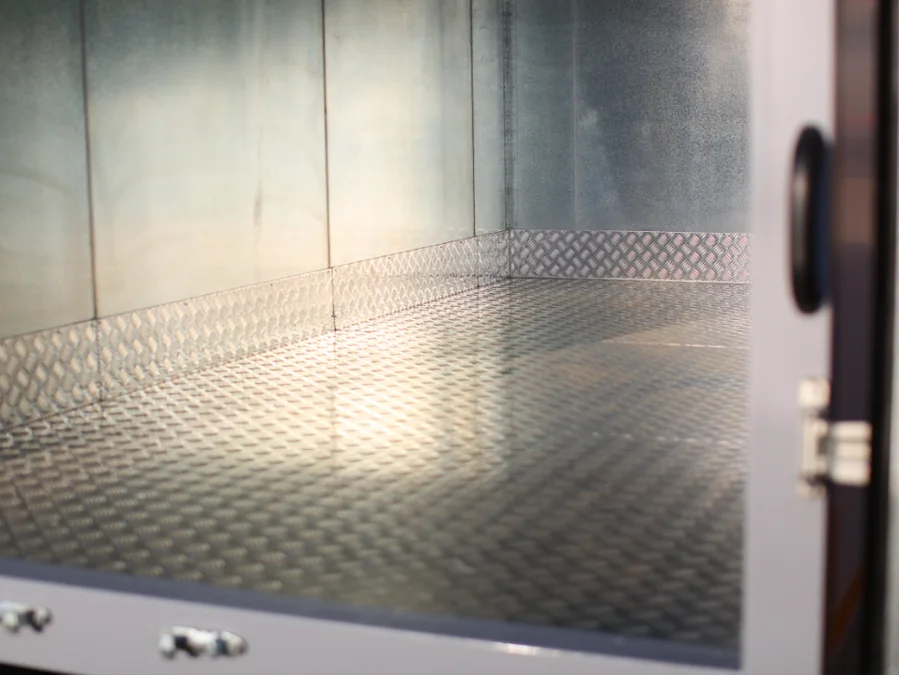
Chequered aluminium instead of plywood: absorbs no moisture, does not rot, is easy to wash and lasts longer.
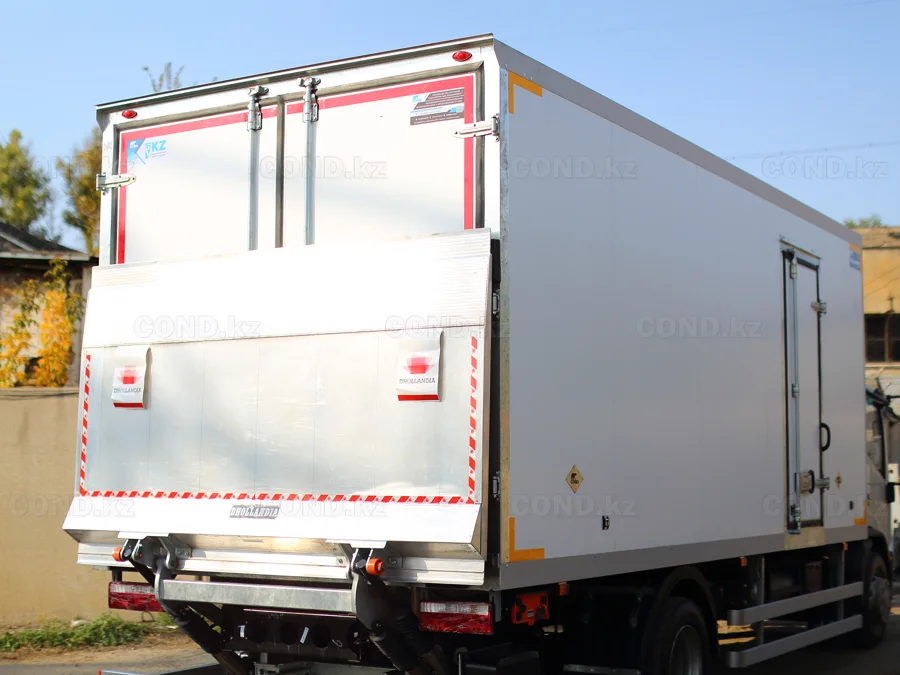
Hydraulic tail lift — loading heavy pallets without a ramp or forklift.

Perforated track on the walls — secure cargo with straps and partitions at any height.
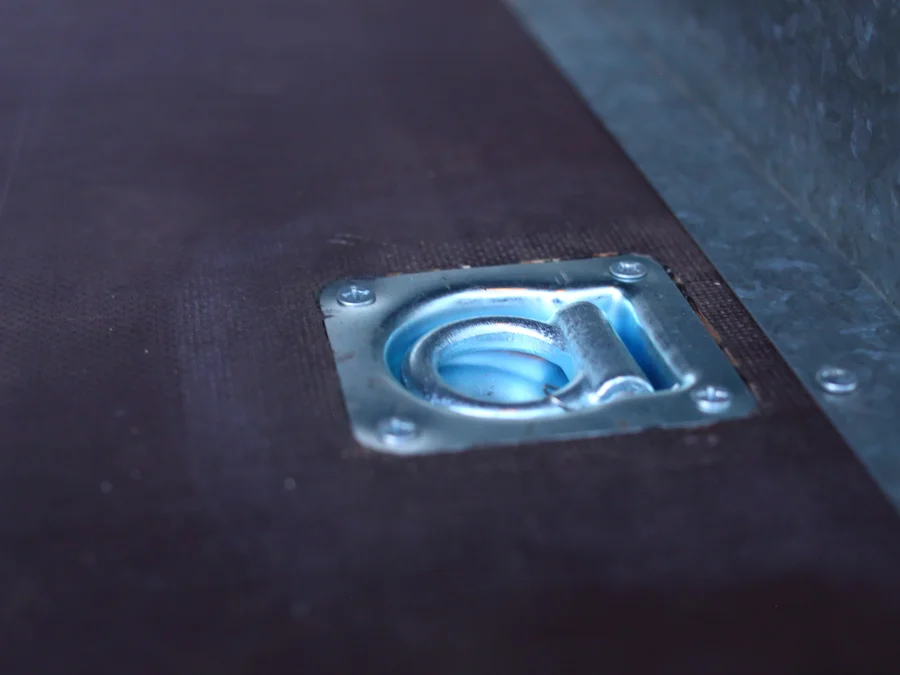
Recessed floor rings for lashing straps — cargo does not shift in turns and braking.
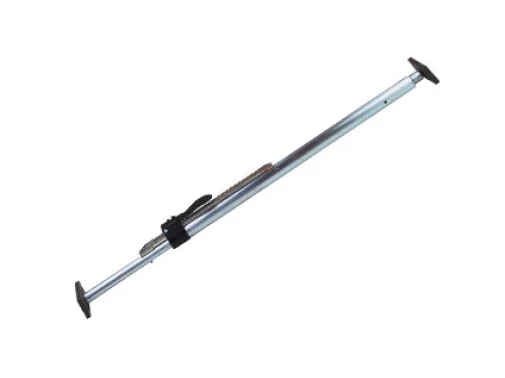
Telescopic bars braced between the walls — divide the body and keep cargo from sliding.
Panel thickness is matched to the temperature duty: 50 mm for 0 °C, 80 mm for −10 °C and 100 mm for −20 °C frozen cargo. Trim — standard in metal or premium in FRP fibreglass. Exact parameters below.
| Temperature duty | Sandwich panel thickness | Typical cargo |
|---|---|---|
| 0 °C — chilled | 50 mm | dairy, deli, vegetables, fruit |
| −10 °C — semi-frozen | 80 mm | semi-finished products, chilled meat, bakery |
| −20 °C — frozen | 100 mm | ice cream, frozen meat and fish |
| Parameter | Standard | Premium |
|---|---|---|
| Outer cladding | clad metal | FRP |
| Hardware | galvanised steel | stainless steel |
| Rear door frame | stainless steel | stainless steel |
| Edge trim | anodised aluminium | anodised aluminium |
| Interior finish | galvanised steel + moisture-resistant plywood | FRP |
| Parameter | Value |
|---|---|
| Body length | up to 9.5 m — to suit the chassis |
| Width / height | up to 2.6 m / total vehicle height up to 4 m (depends on chassis height) |
| Wall thickness | 50 / 80 / 100 mm |
| Wall thermal conductivity | below 0.4 W/(m·°C) |
| Usable volume | from 1 to 70 m³ |
| Body weight | calculated individually per project |
| Temperature duty | without refrigeration unit — ambient temperature |
| Insulation material | extruded polystyrene |
| Warranty | 2 years with scheduled servicing |
Eight facts, each with a figure and proof: our own workshop since 2001, a design department, experience in vehicle refrigeration since 1997, a 2-year warranty on the body.
We produce sandwich panels and assemble bodies in our own workshop in Almaty. Over 2,000 bodies built.
A frameless panel without thermal bridges passes heat more slowly — pre-chilled cargo keeps its temperature longer on short runs. We measure it on every body.
We match the thickness to the duty: 50/80/100 mm. In Kazakhstan’s summer that is the difference between “delivered” and “spoiled”.
A typical body takes from 14 working days, with the date fixed in the contract. Not the usual “wait 2 months”.
The stainless door frame and anodised edging do not rust. The body can later be converted into a refrigerated van without replacement.
We engineer the body before building it and work through every detail — we do not force a standard template onto your chassis.
We have worked with transport air conditioning and refrigeration since 1997 — we know not just the body but the refrigeration equipment too.
We build for the workload of large fleets — reinforcing the spots that suffer most during loading and daily use.
An insulated body is for cargo that needs no controlled temperature in transit: it protects from heat, cold, dust and precipitation but does not maintain a set temperature. If you need a cold chain for food or pharma, the body is easily converted into a refrigerated van by installing a refrigeration unit.
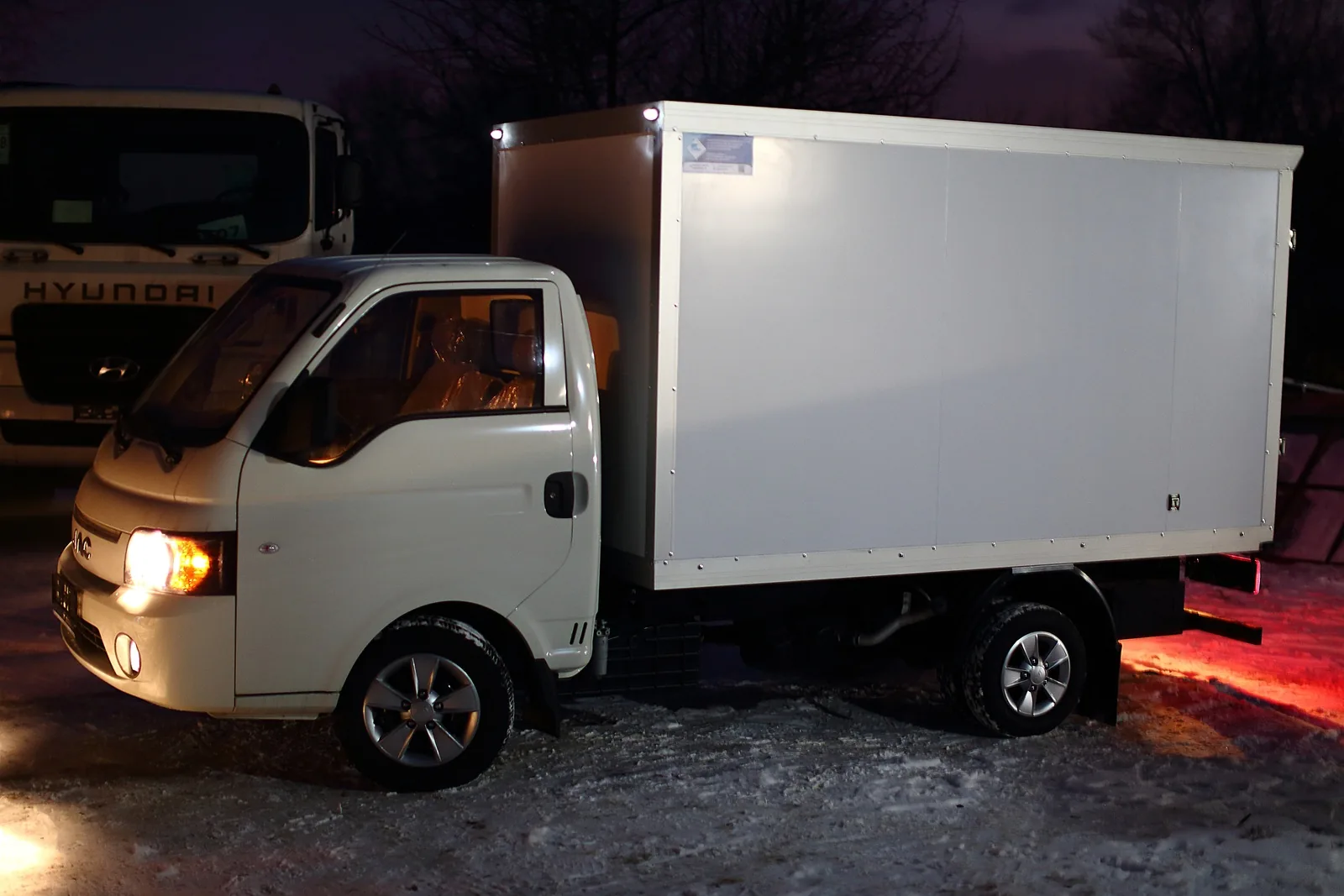
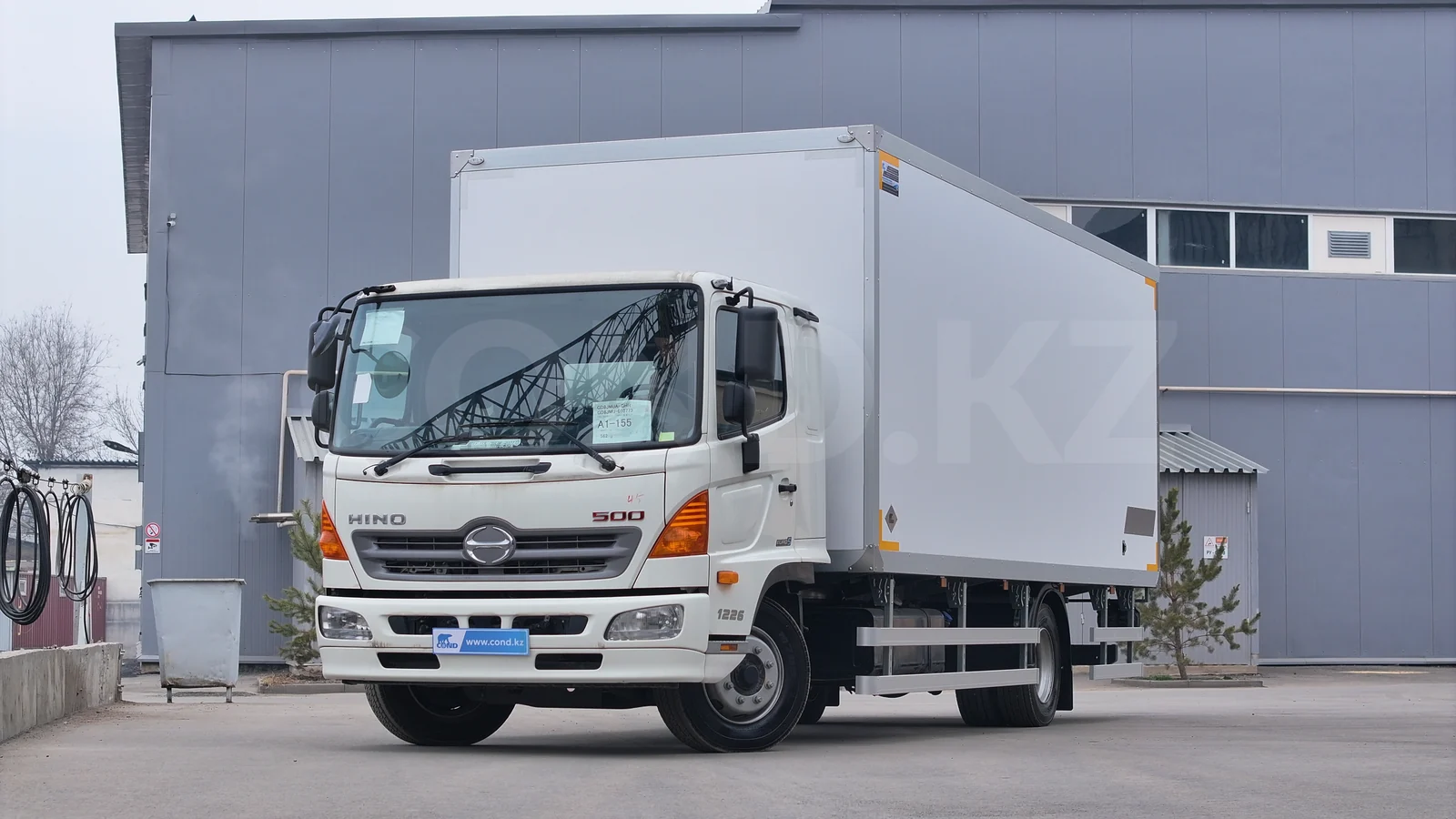
Our insulated bodies on different chassis — real projects from the COND plant.
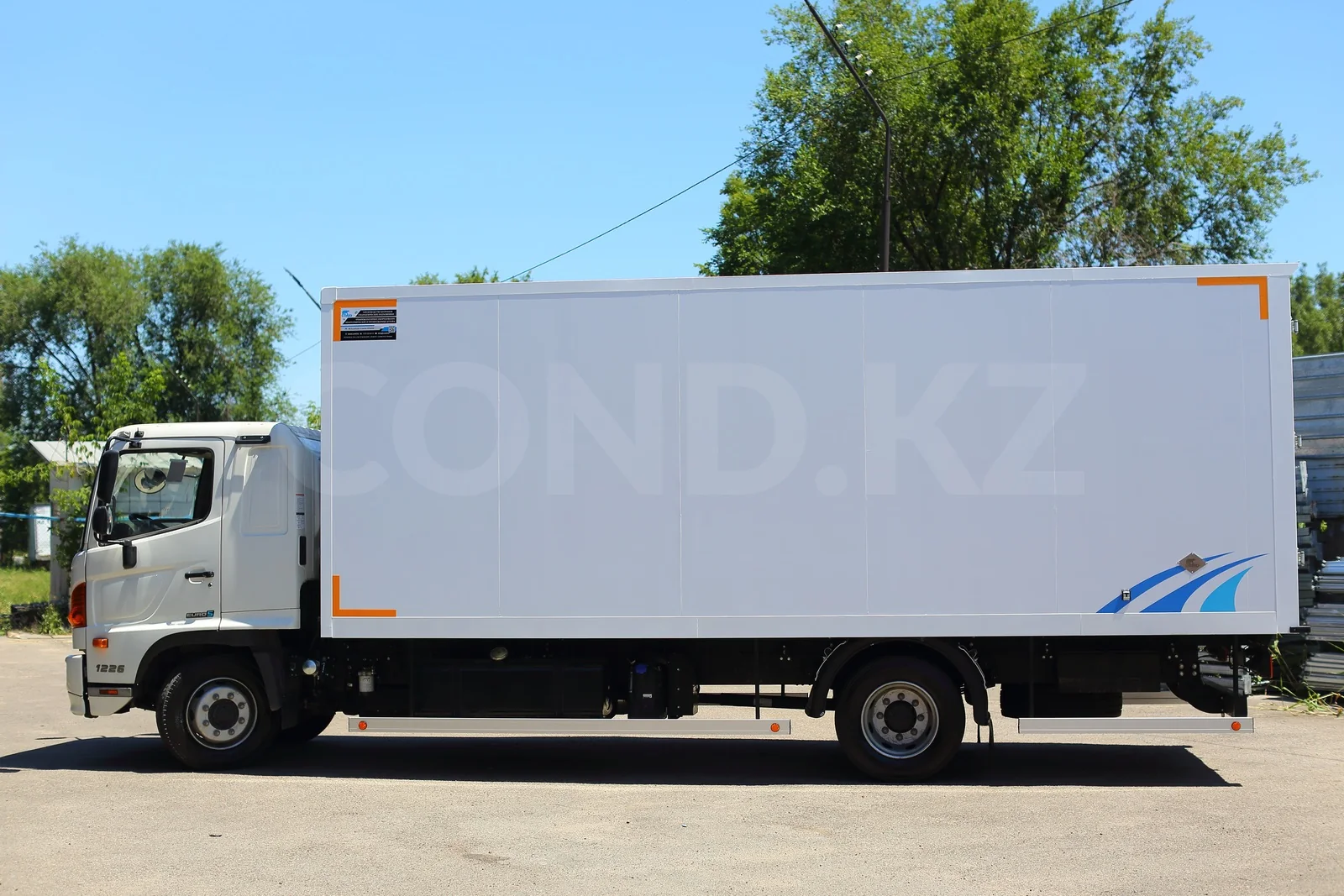 ⚪ Completed
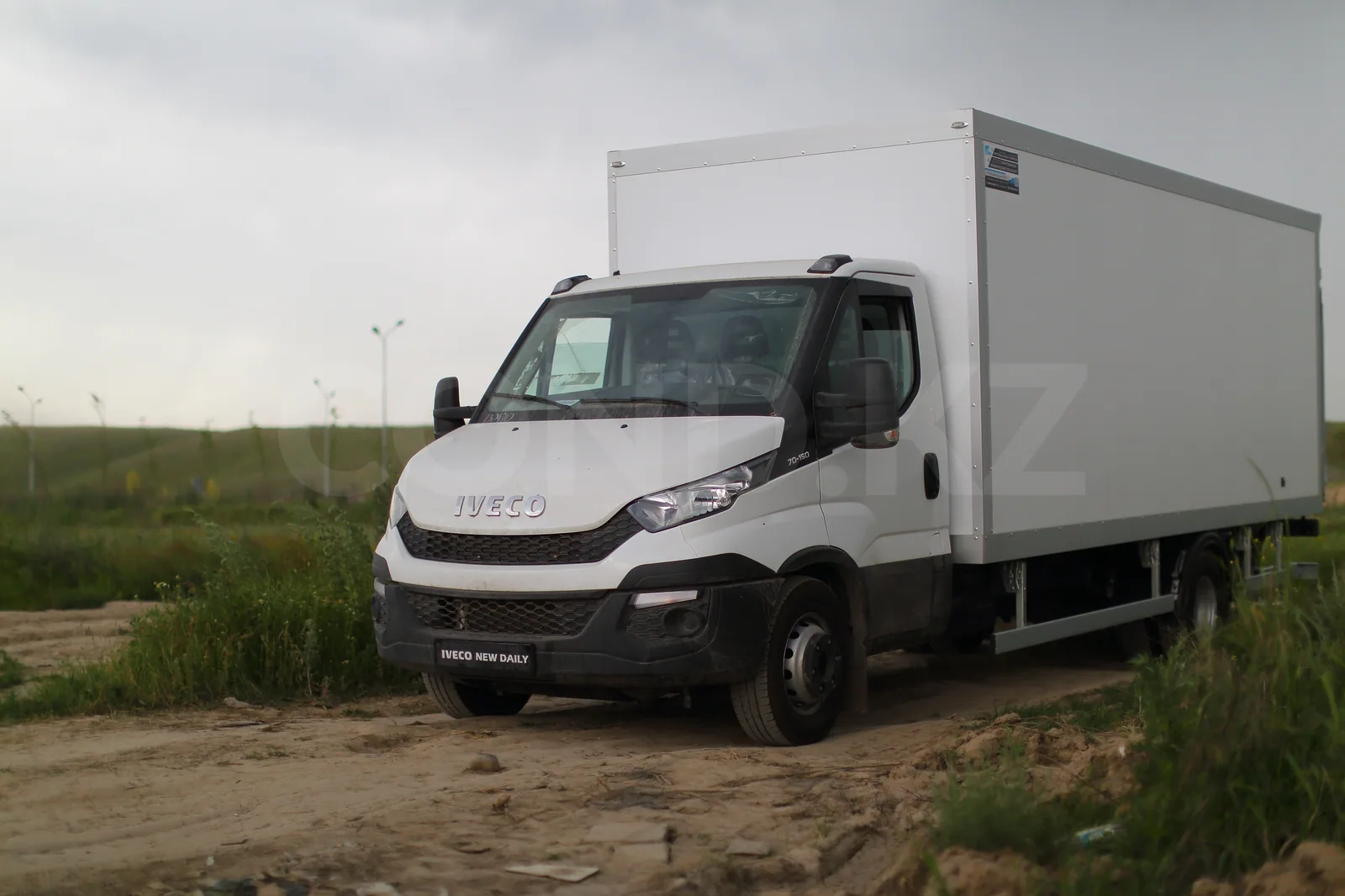 ⚪ Completed
Video reviews of COND isothermal box bodies on different chassis — from our YouTube channel.



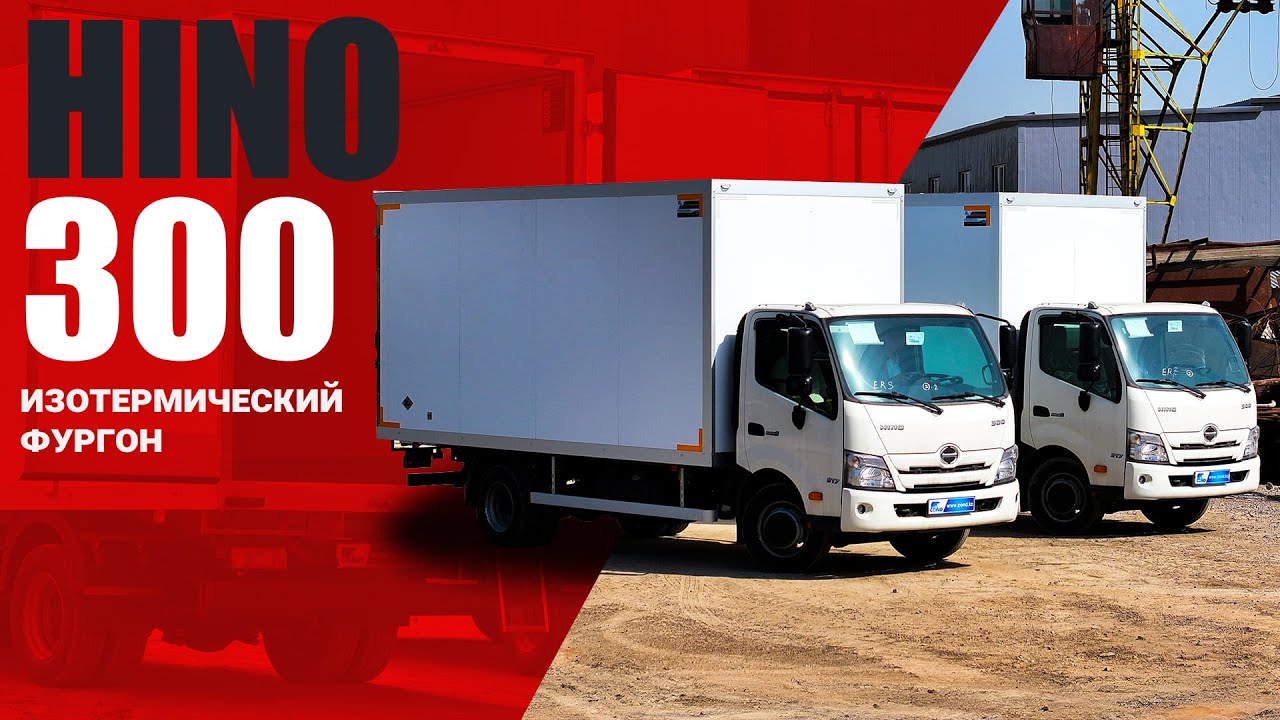


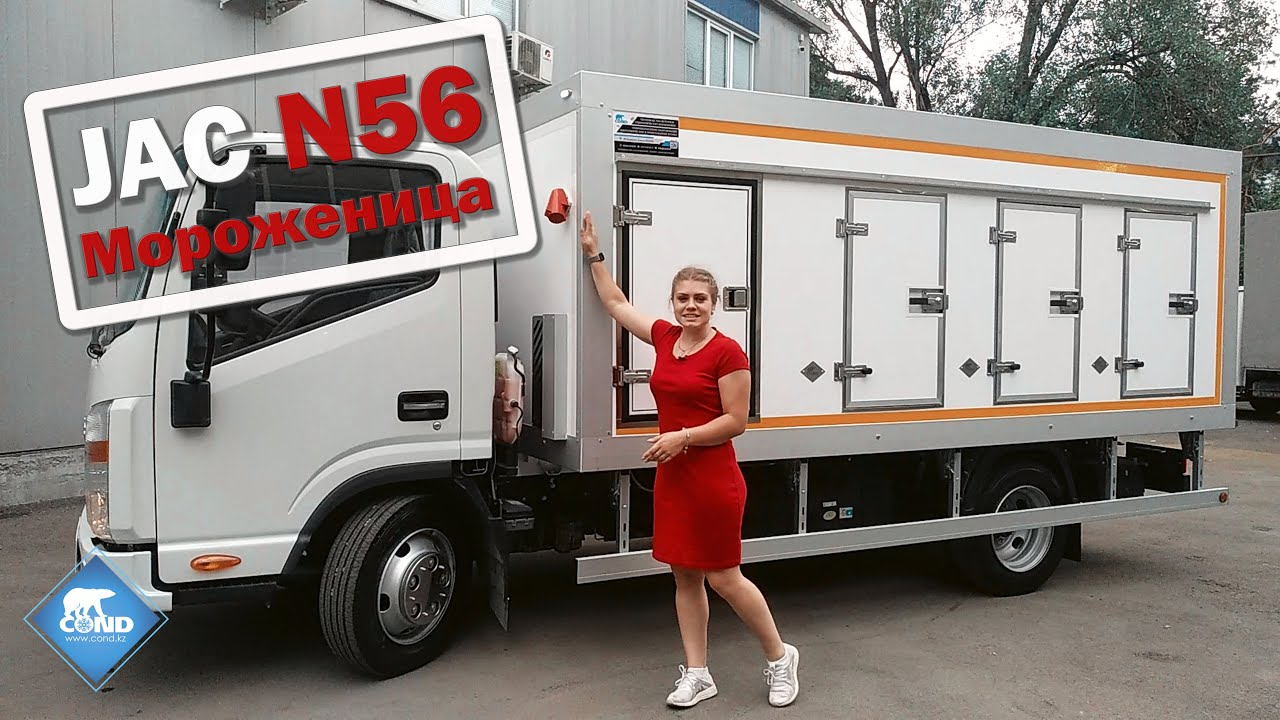


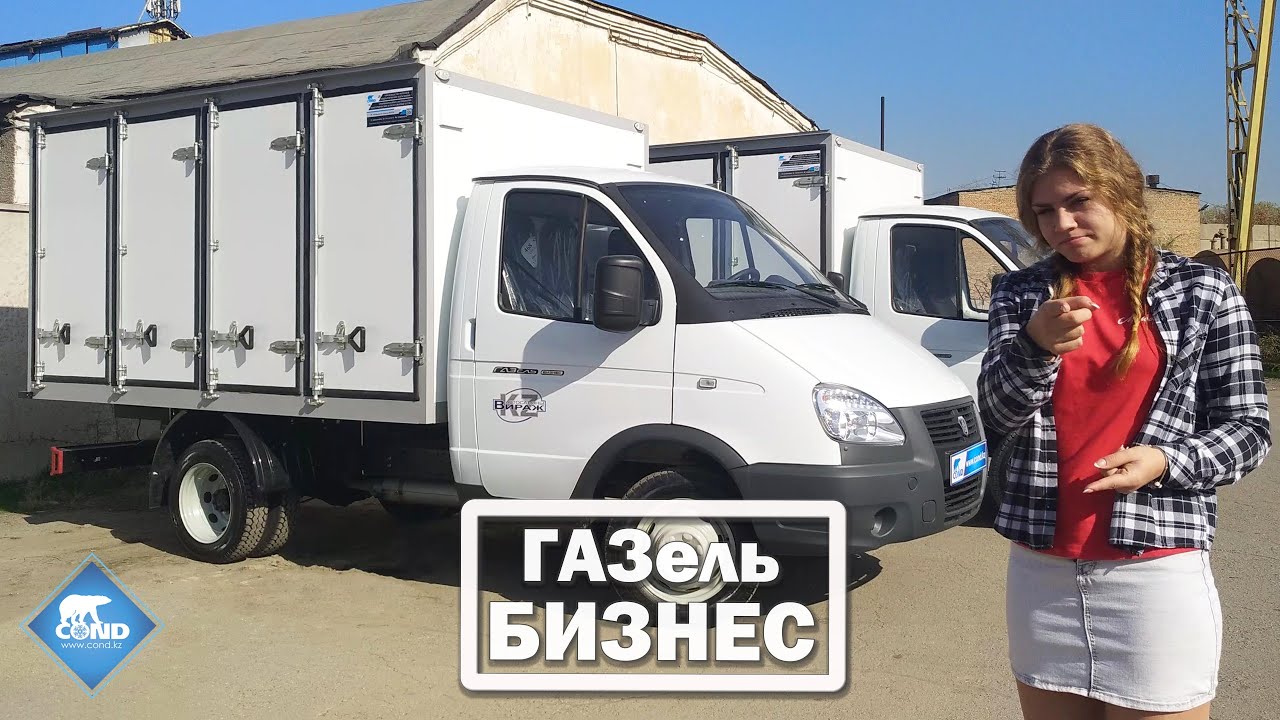

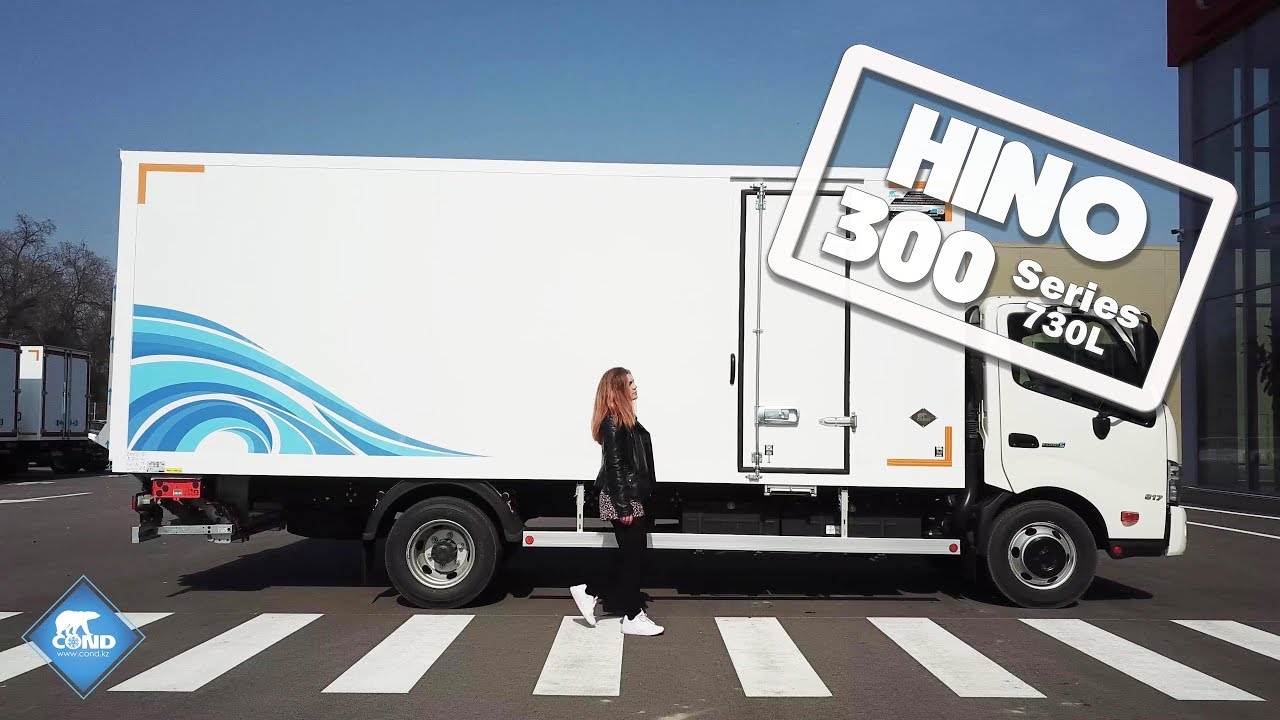

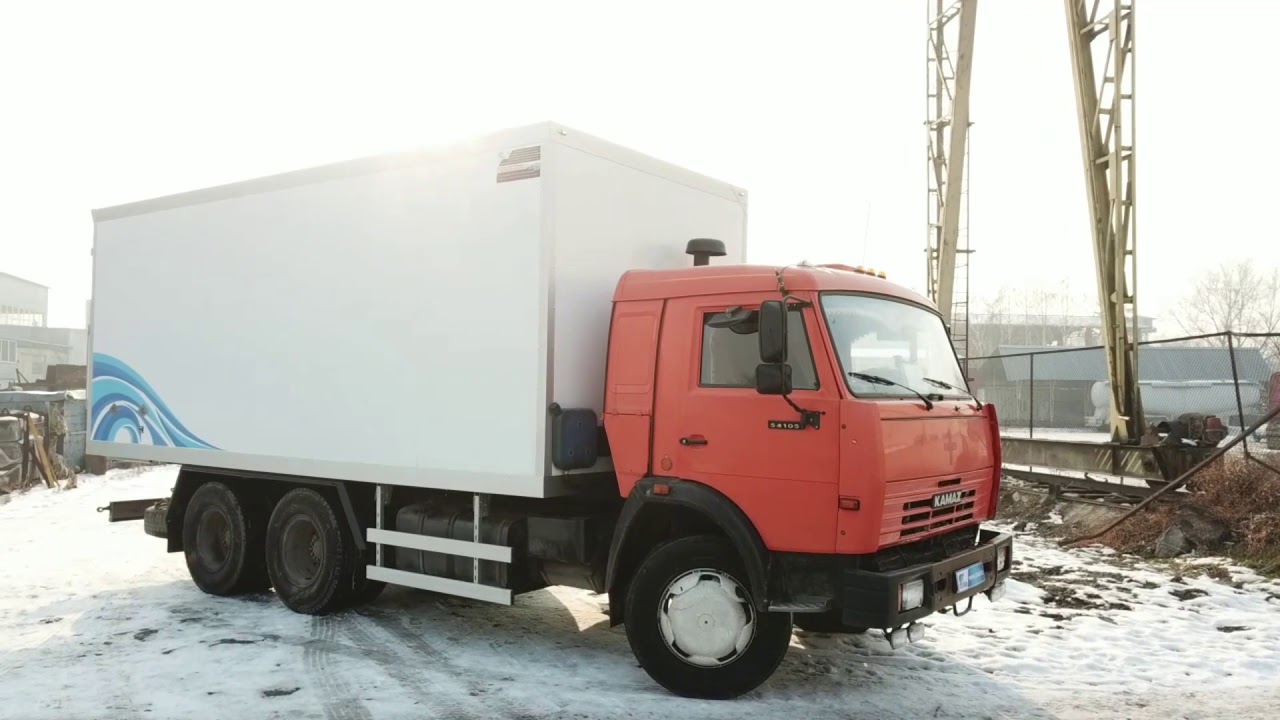
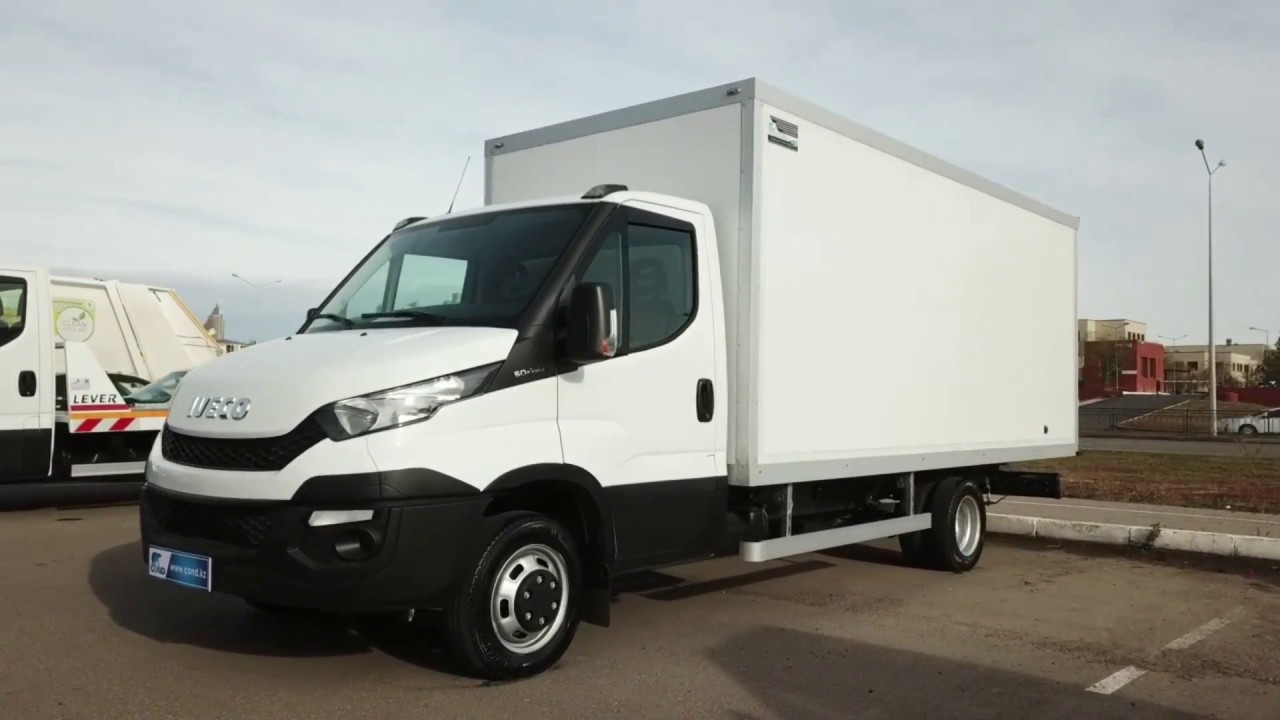
Leave your company name, your name and phone number — a manager will price the body for your chassis, length and trim and get back to you within a day.
From request to handover of the finished van — 5 transparent steps with deadlines. A typical body is delivered 2–3 weeks after the contract is signed.
You leave your contacts, chassis details, cargo type and temperature duty.
same dayWe price the job and measure the chassis if needed.
1–2 daysWe fix the specification, price, deadline and prepayment.
1 dayWe build the body and mount it on the chassis in our own workshop.
fast turnaroundWe test the body for tightness and hand it over with warranty and documents.
on completionLeave your contacts — we will select the panel thickness and trim for your cargo and chassis and give you an exact price and lead time.
📞Phone