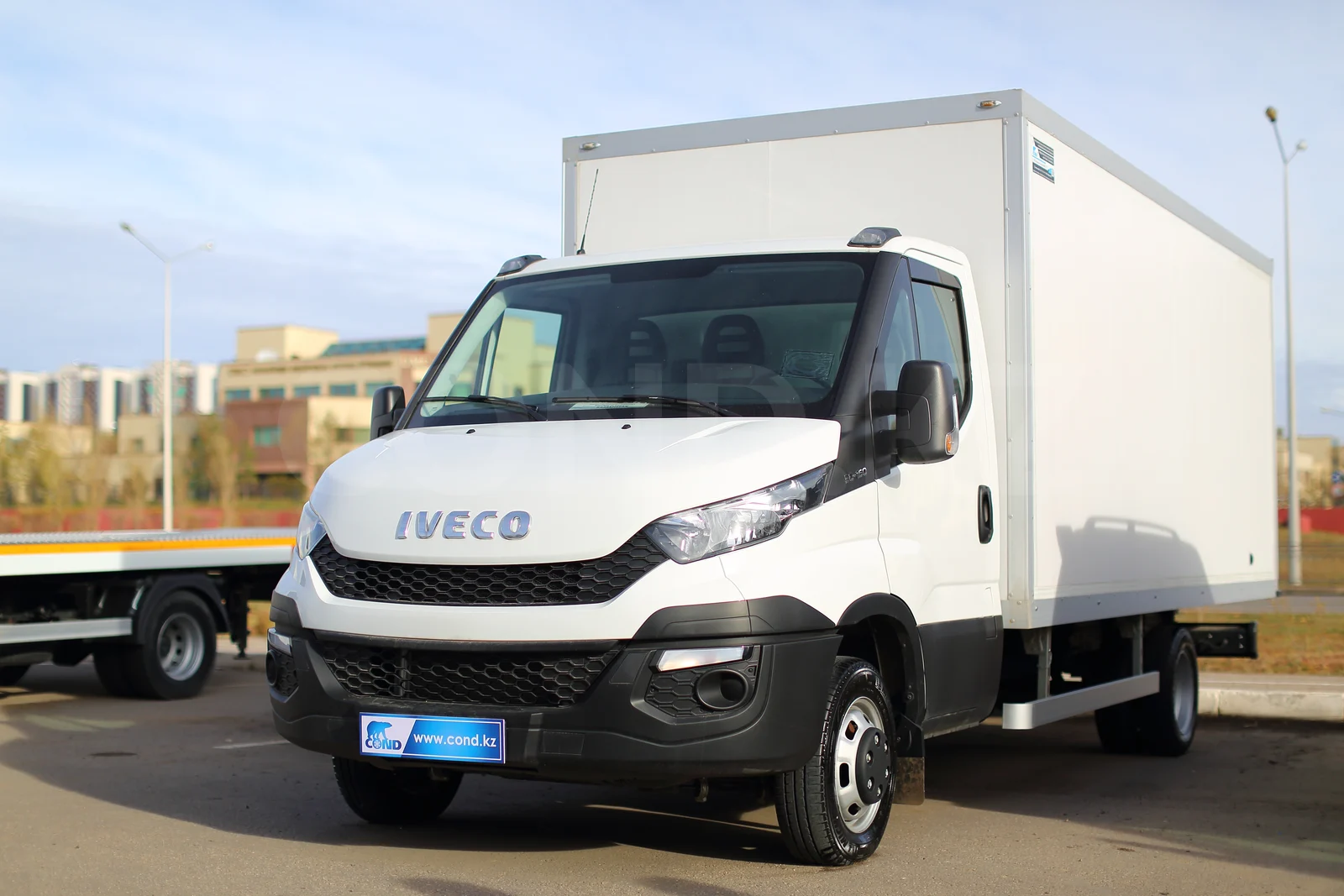
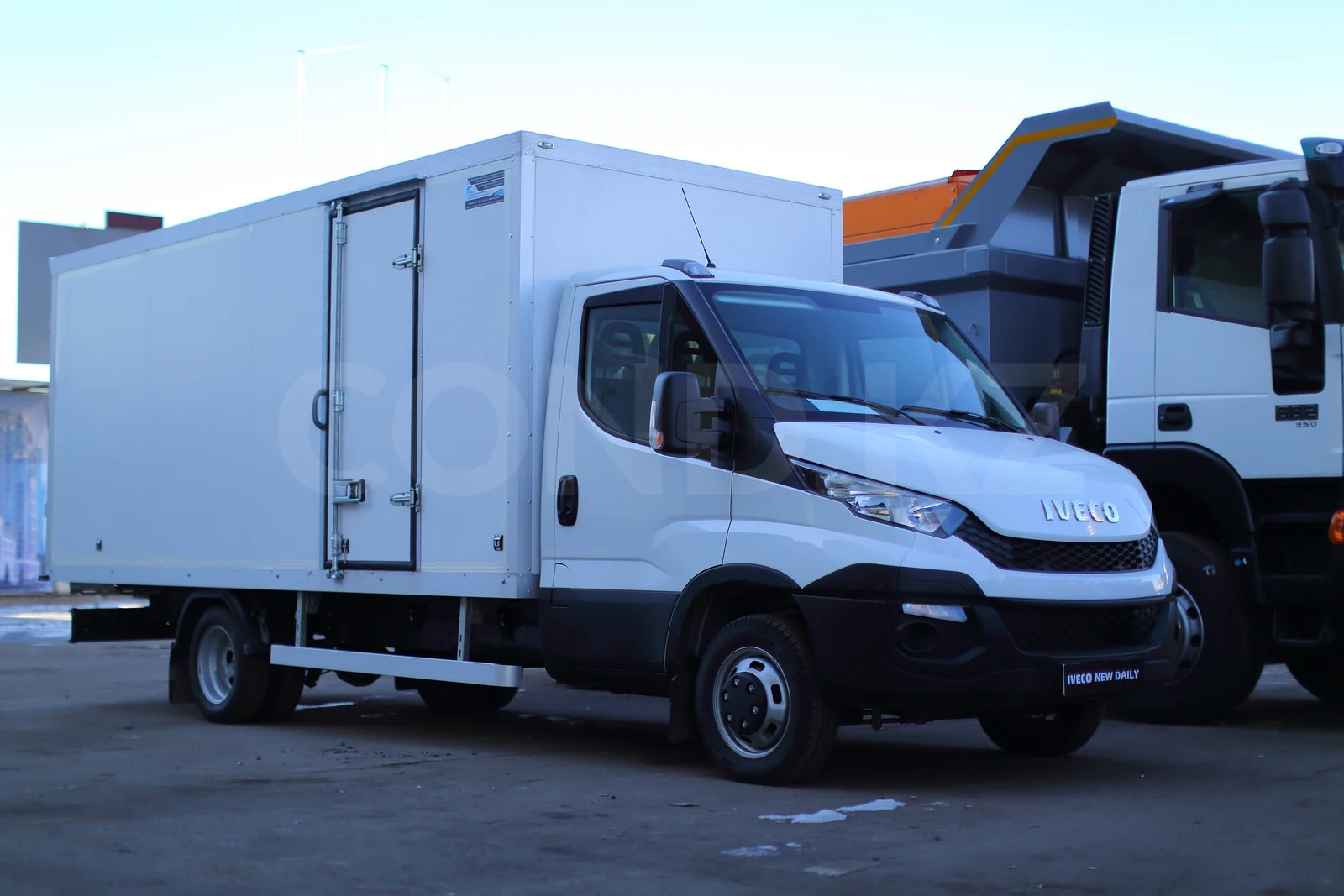
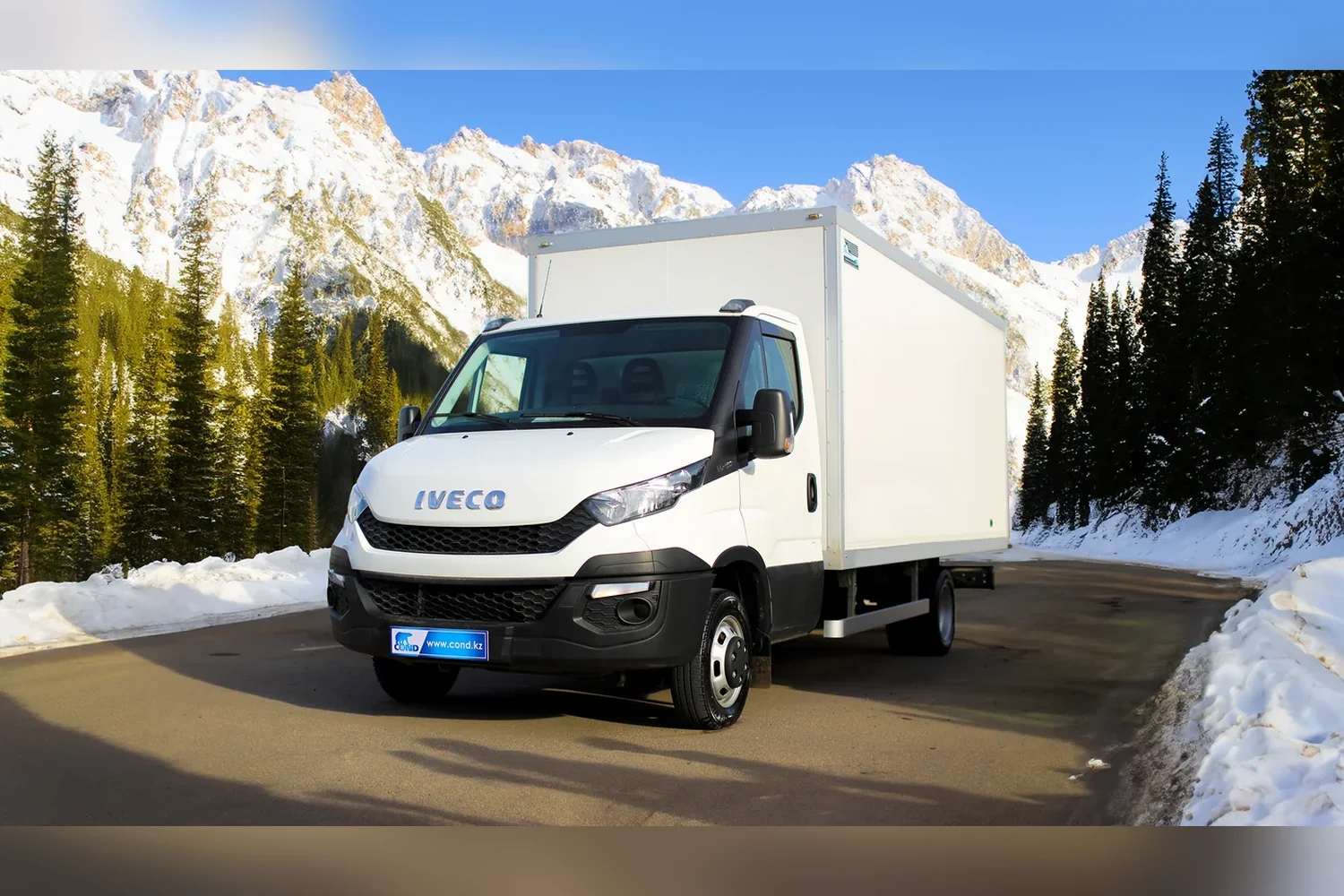
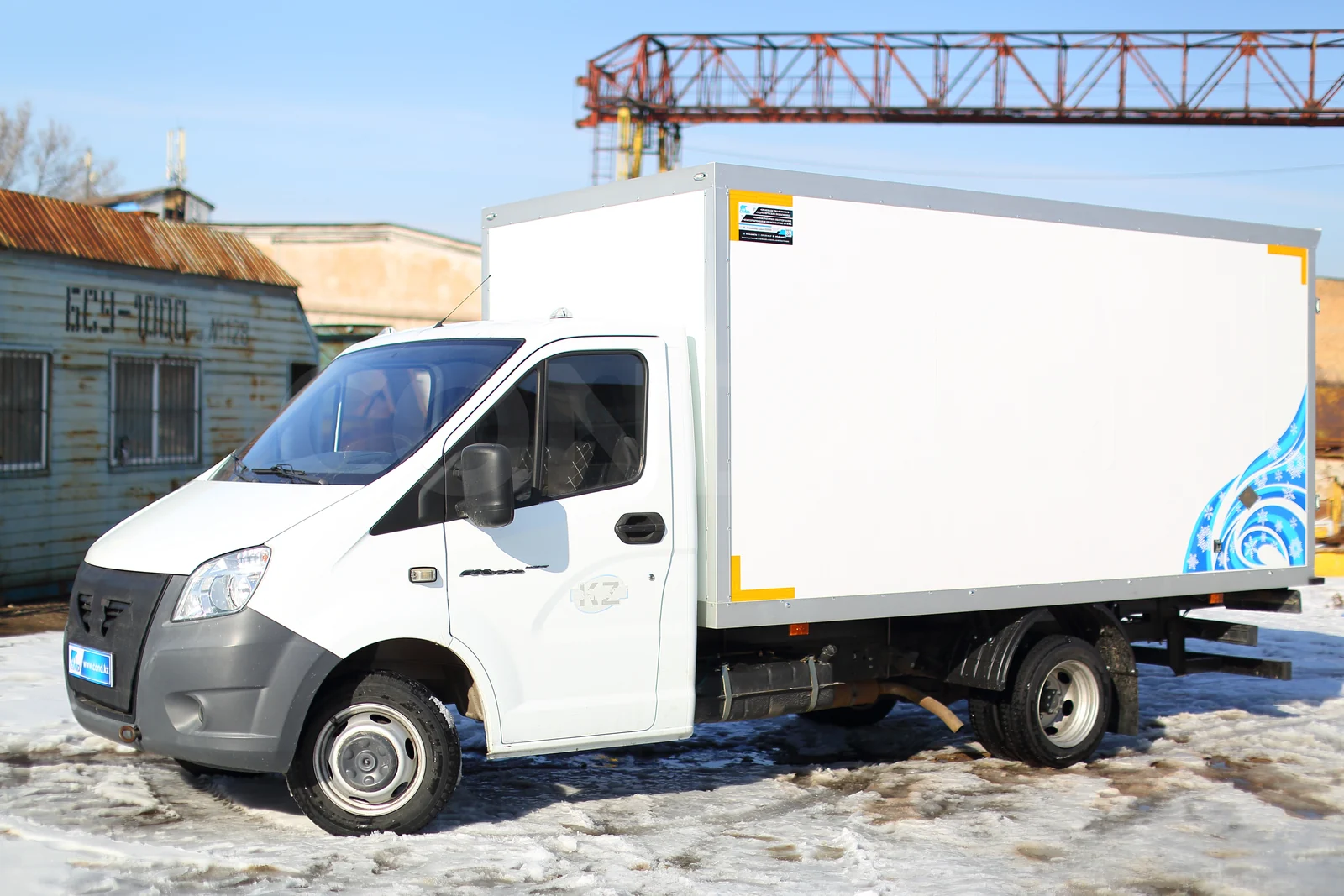
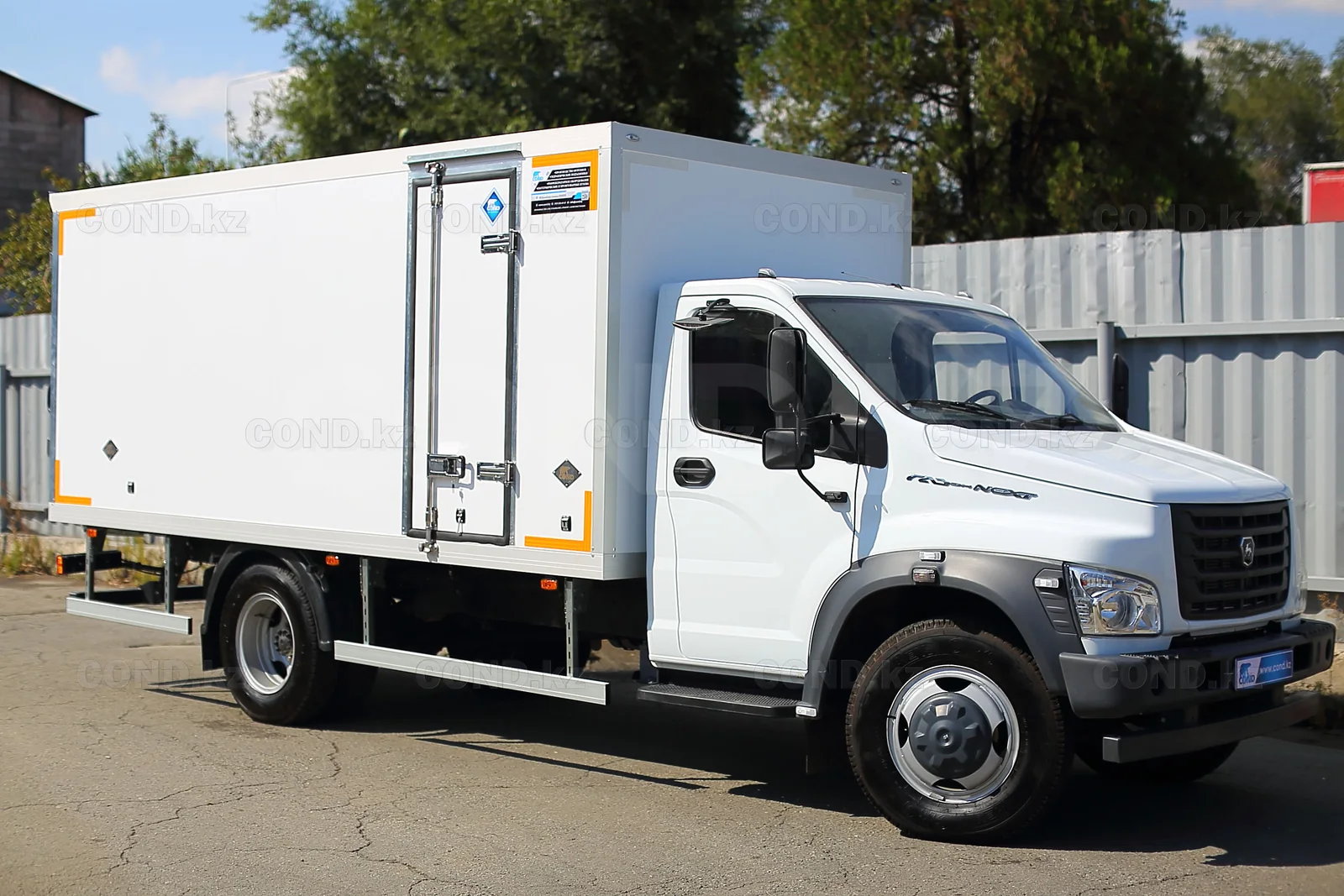
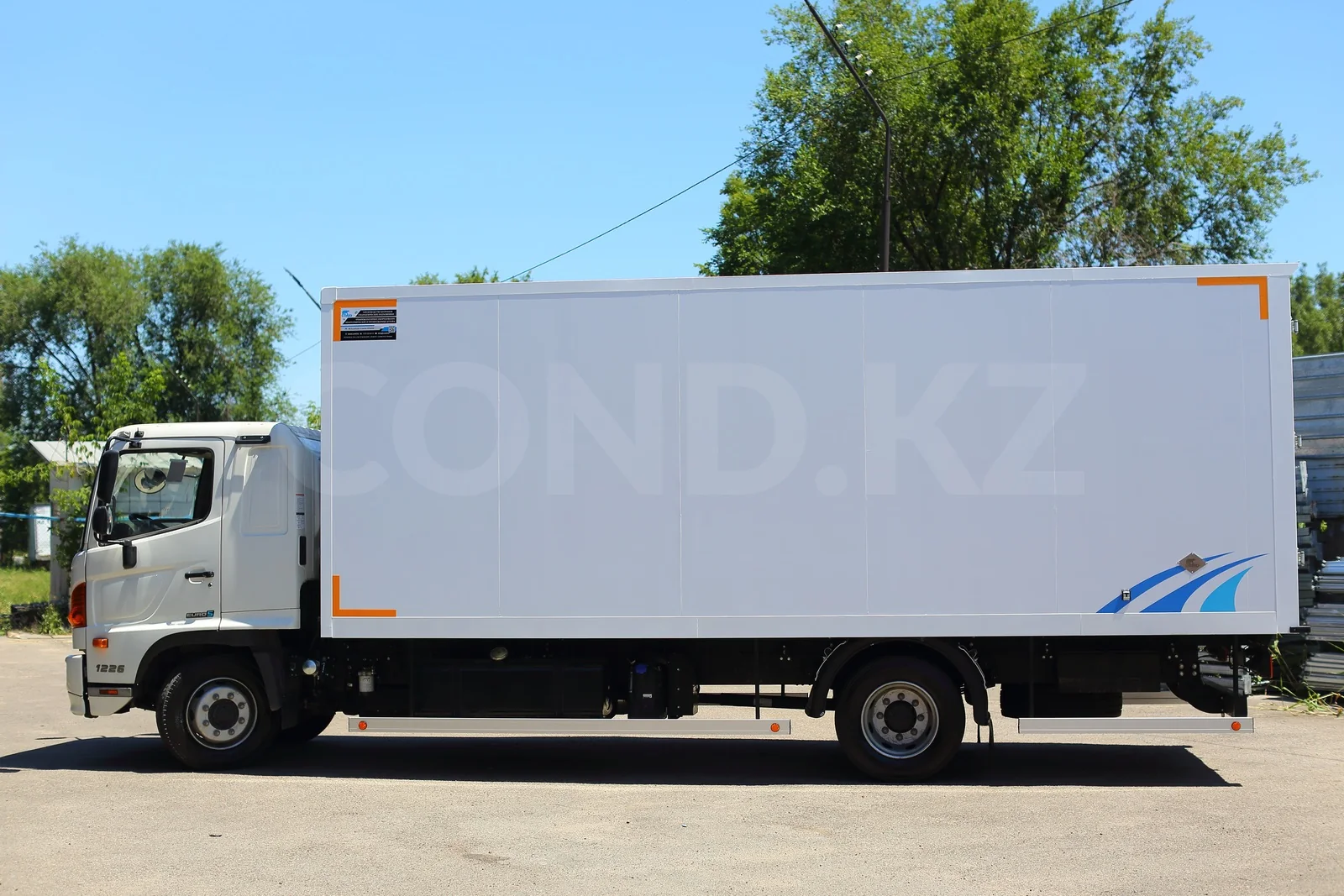
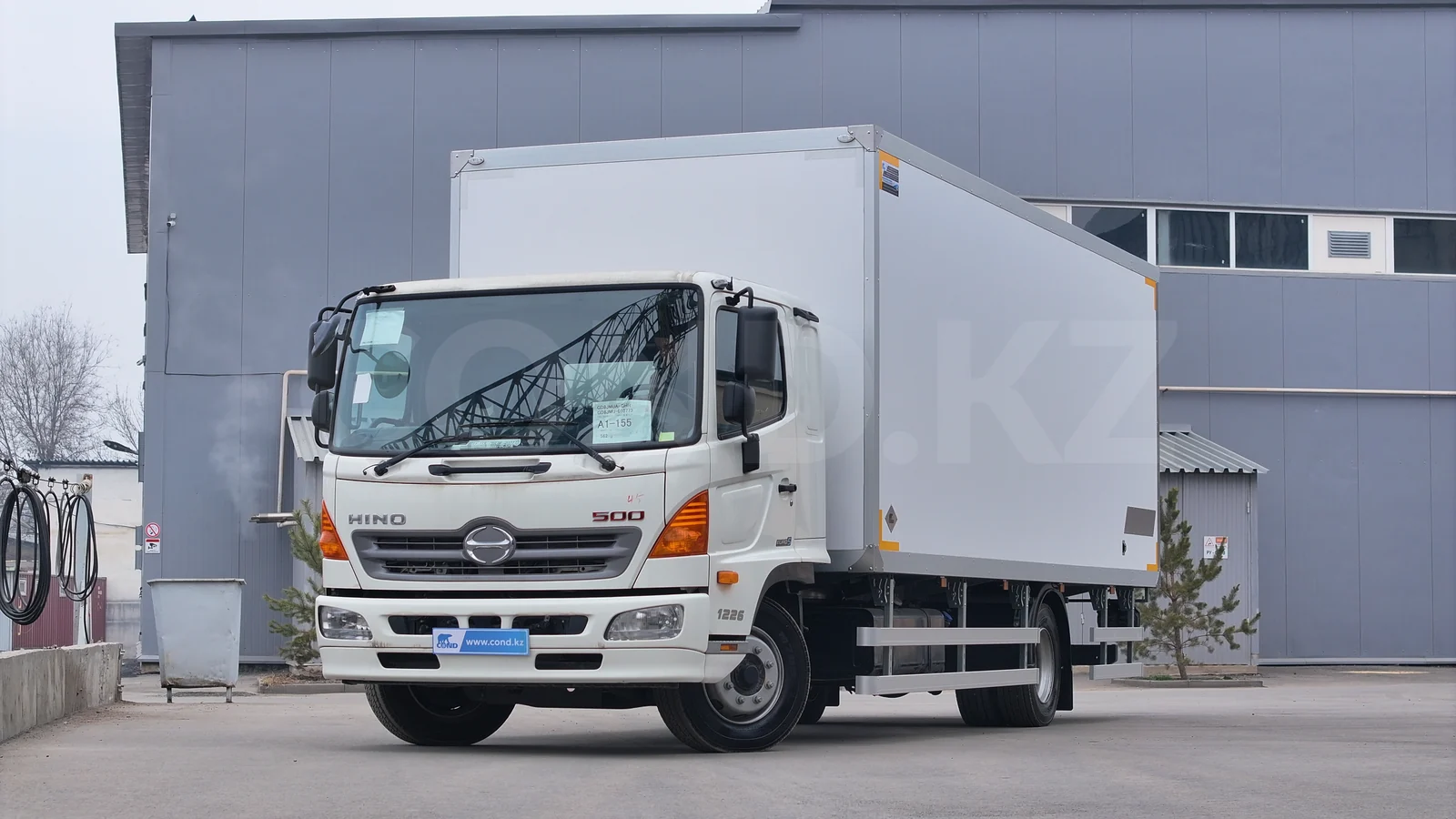
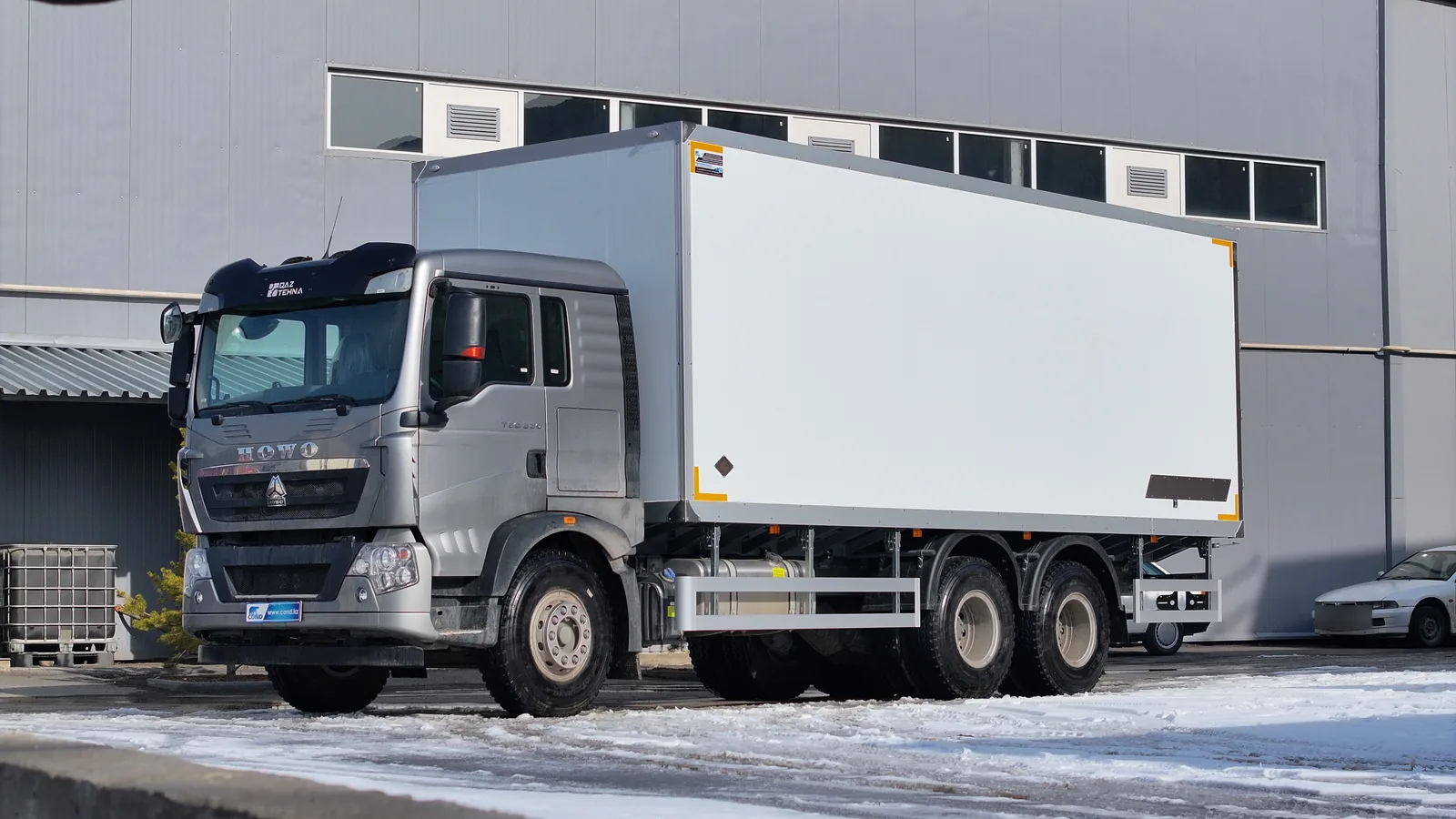
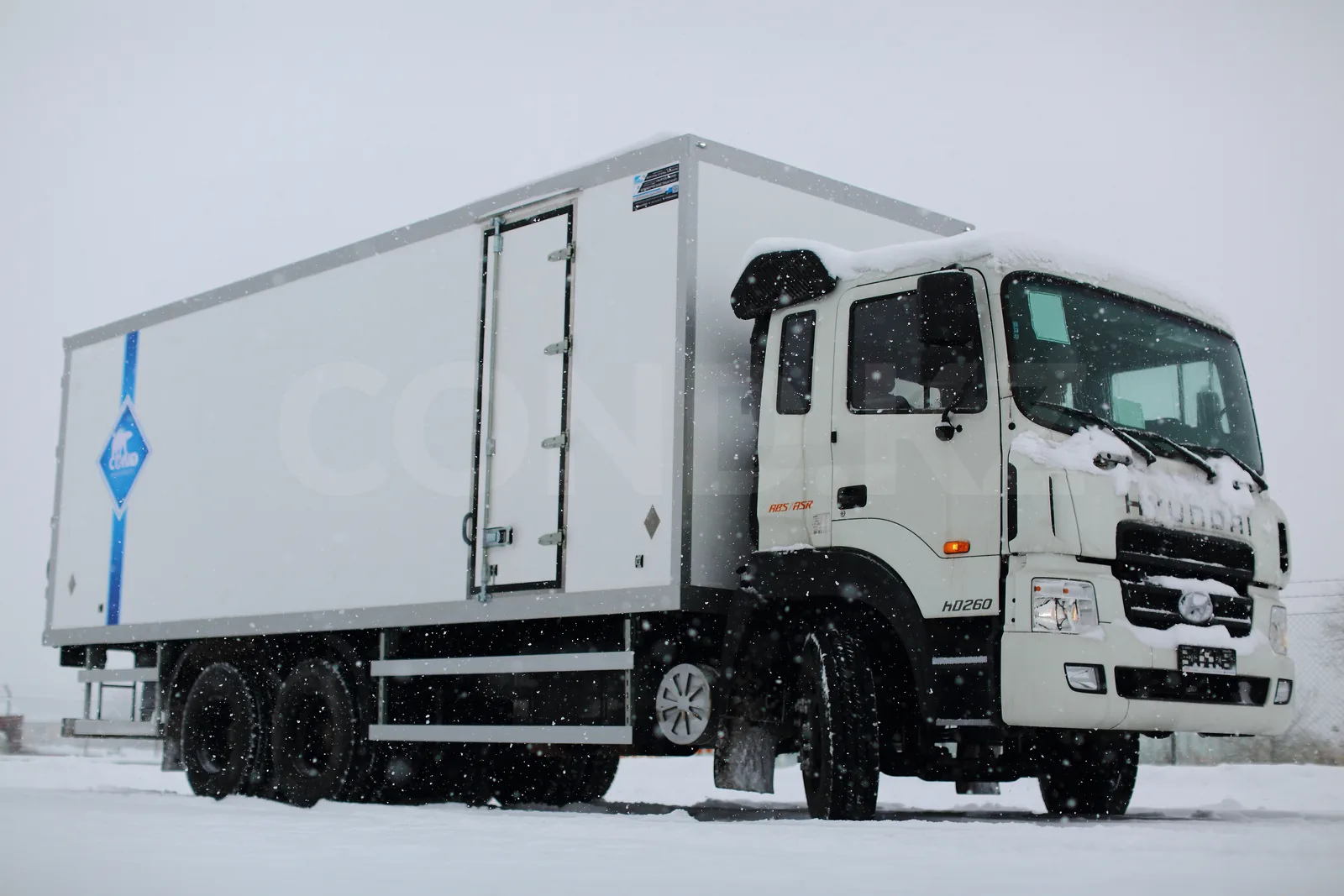
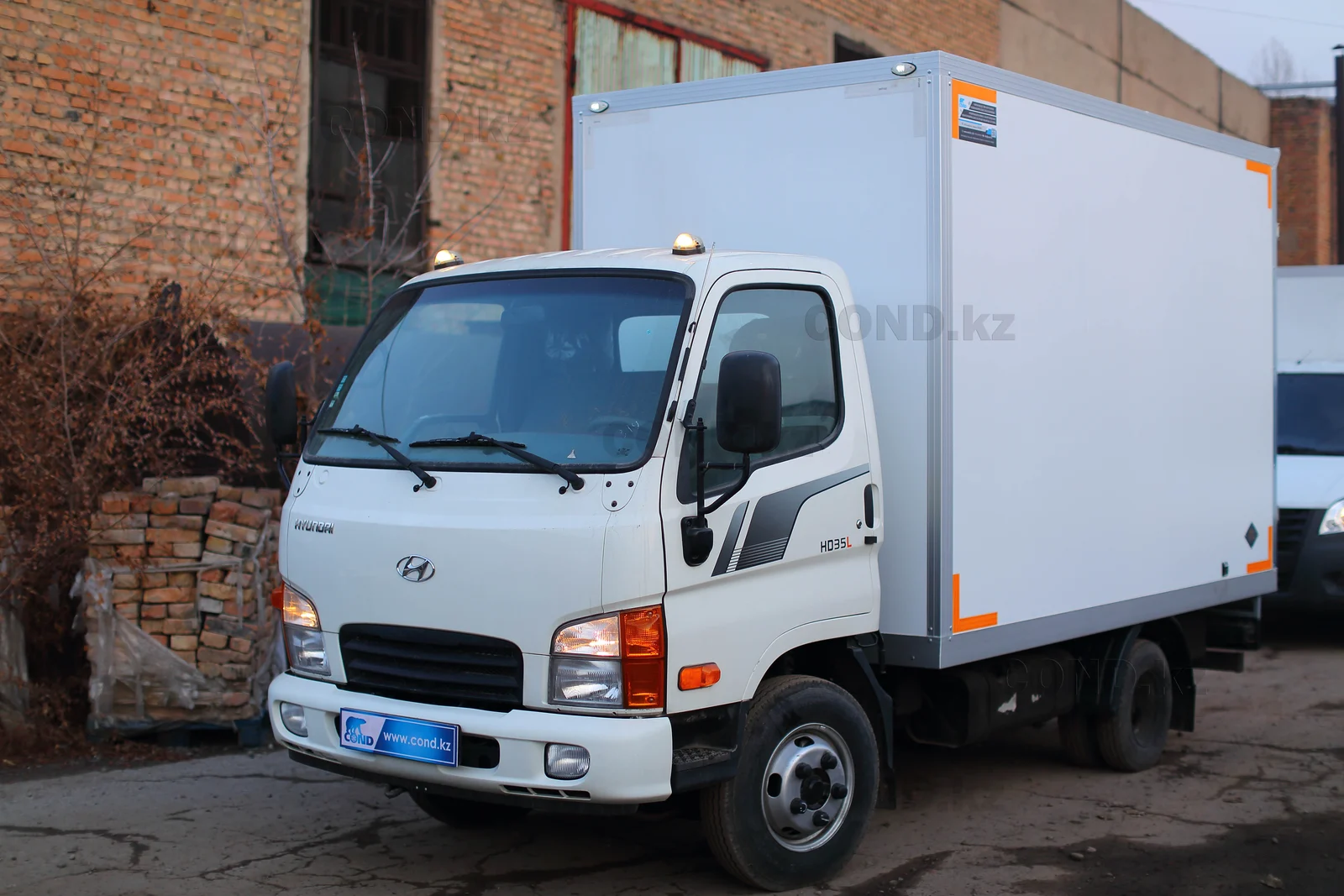
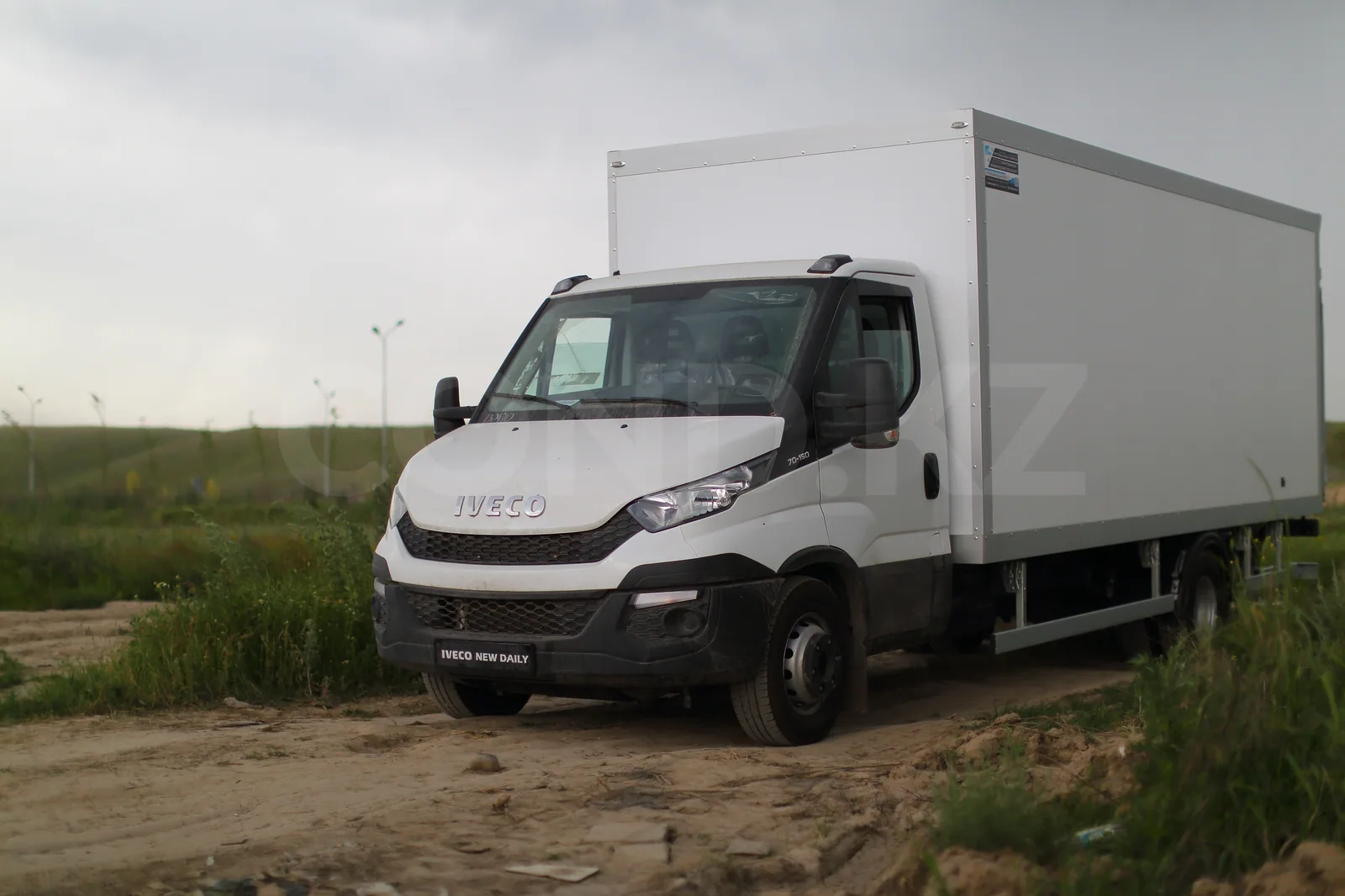
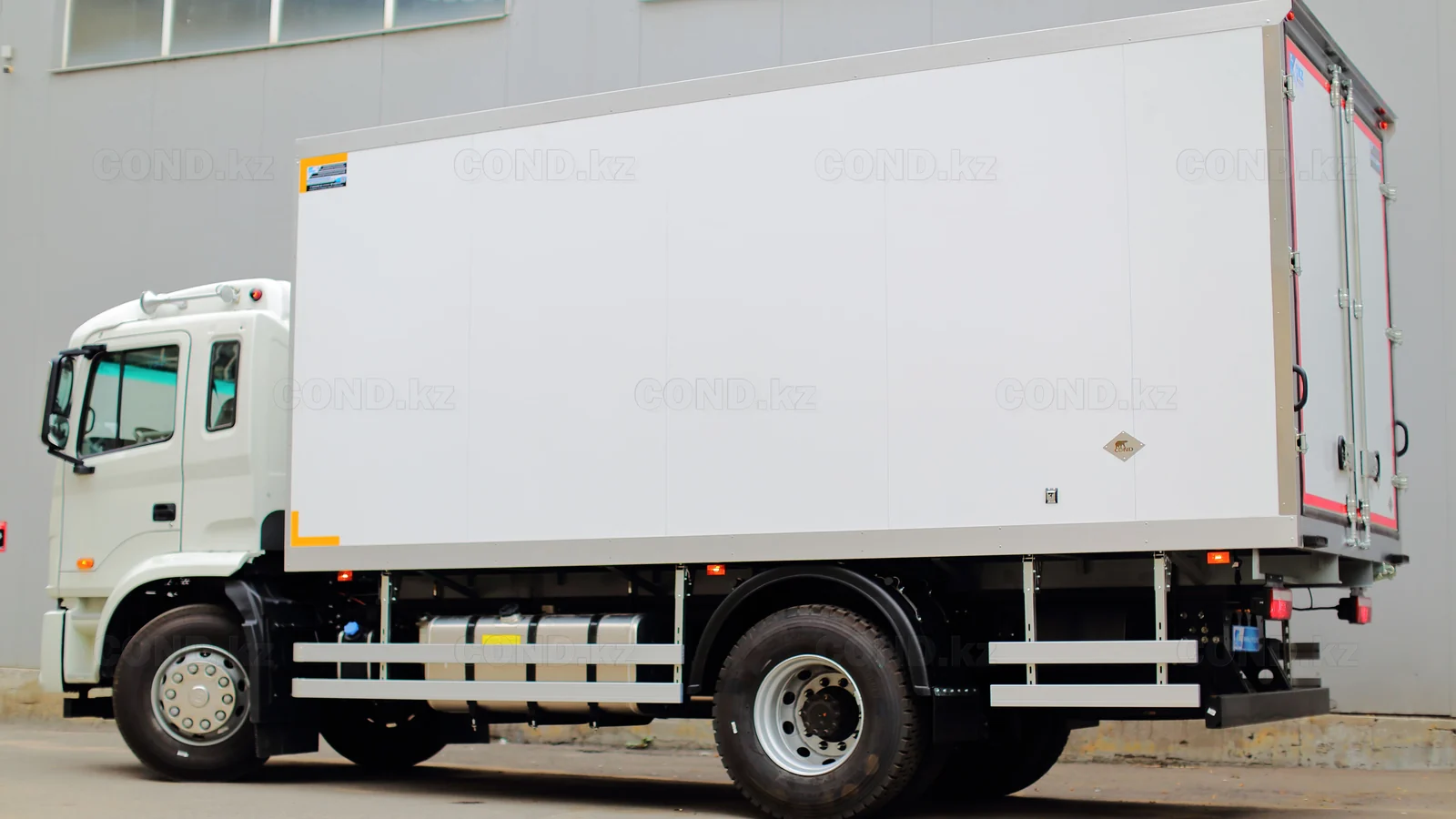
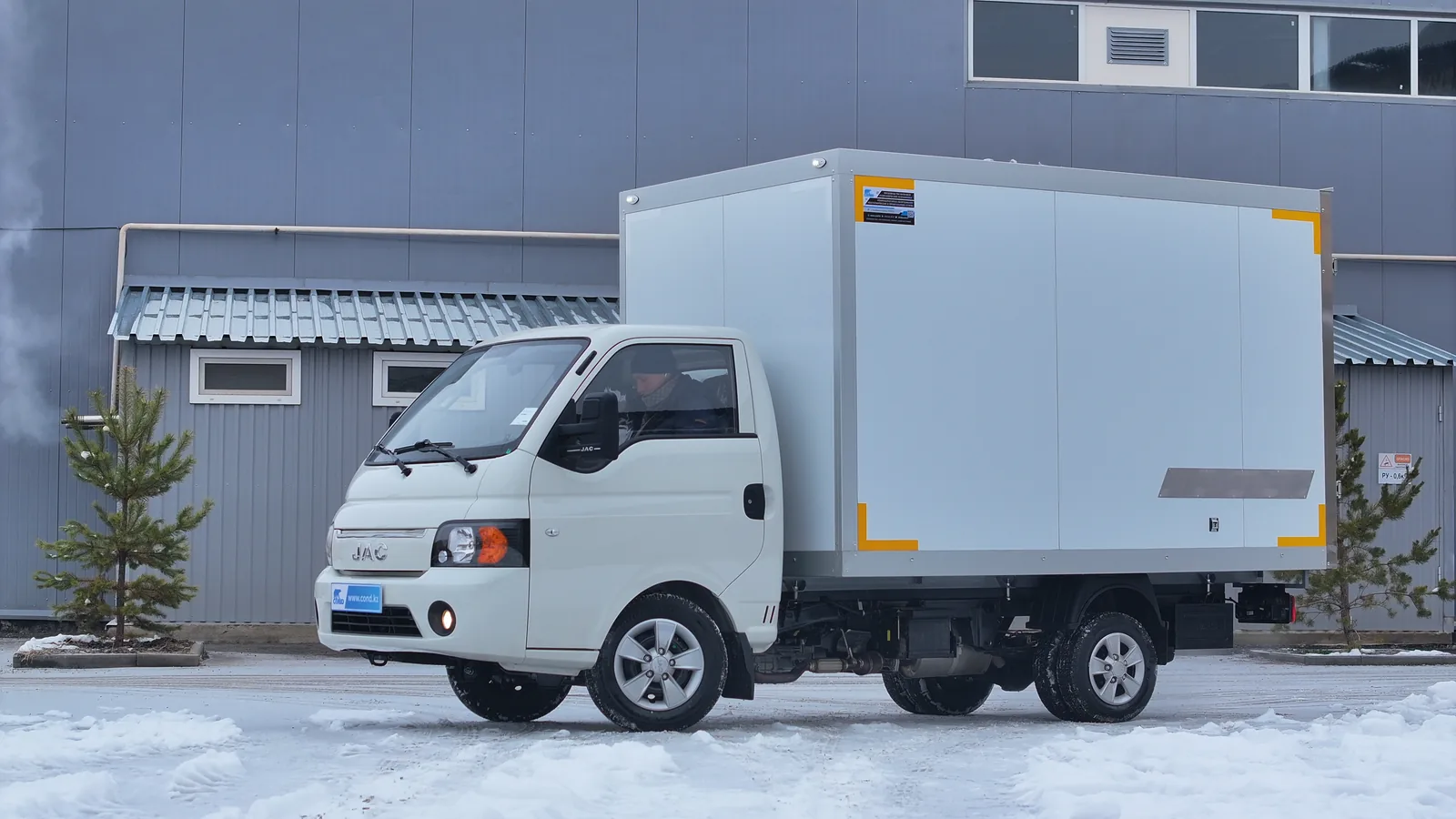
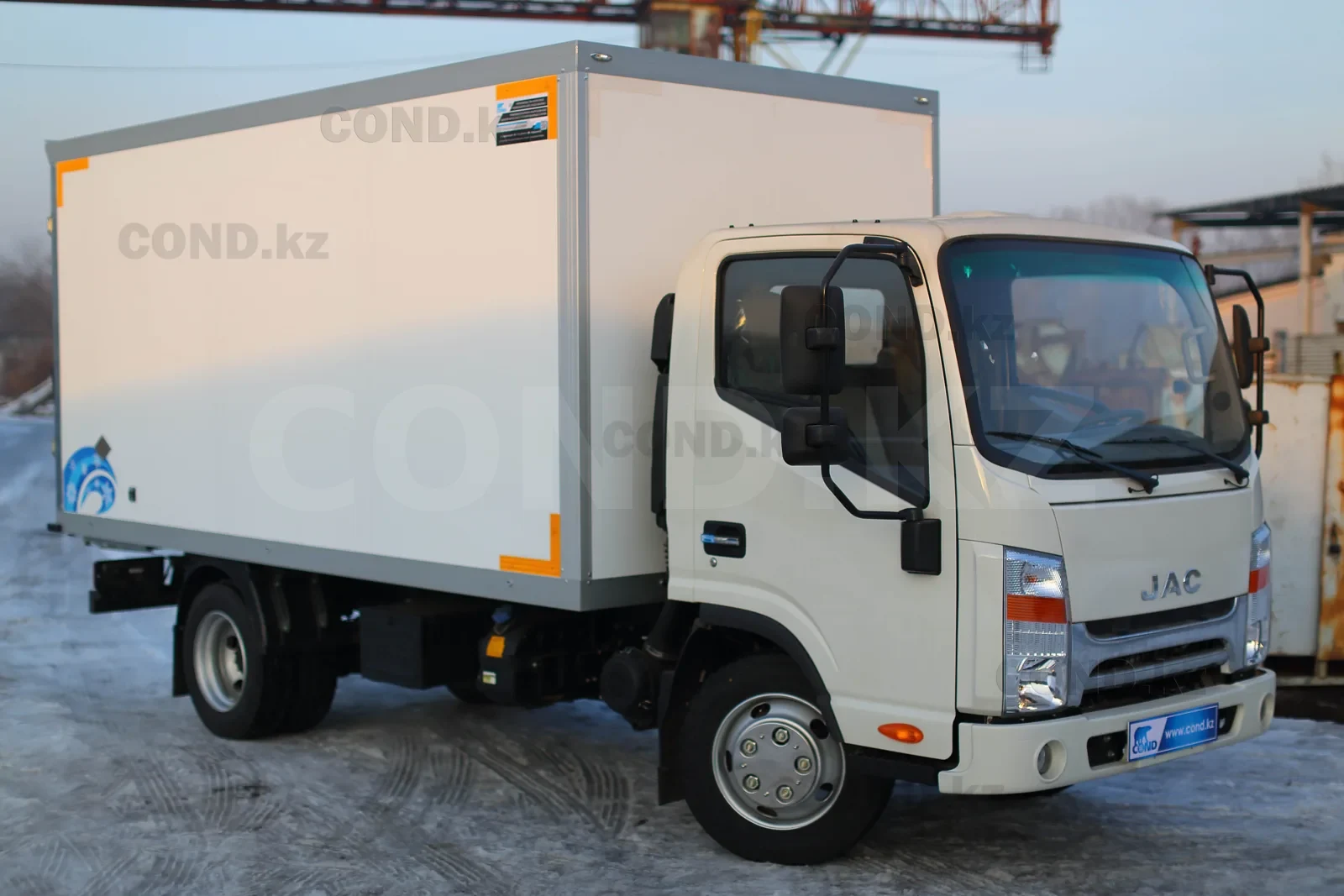
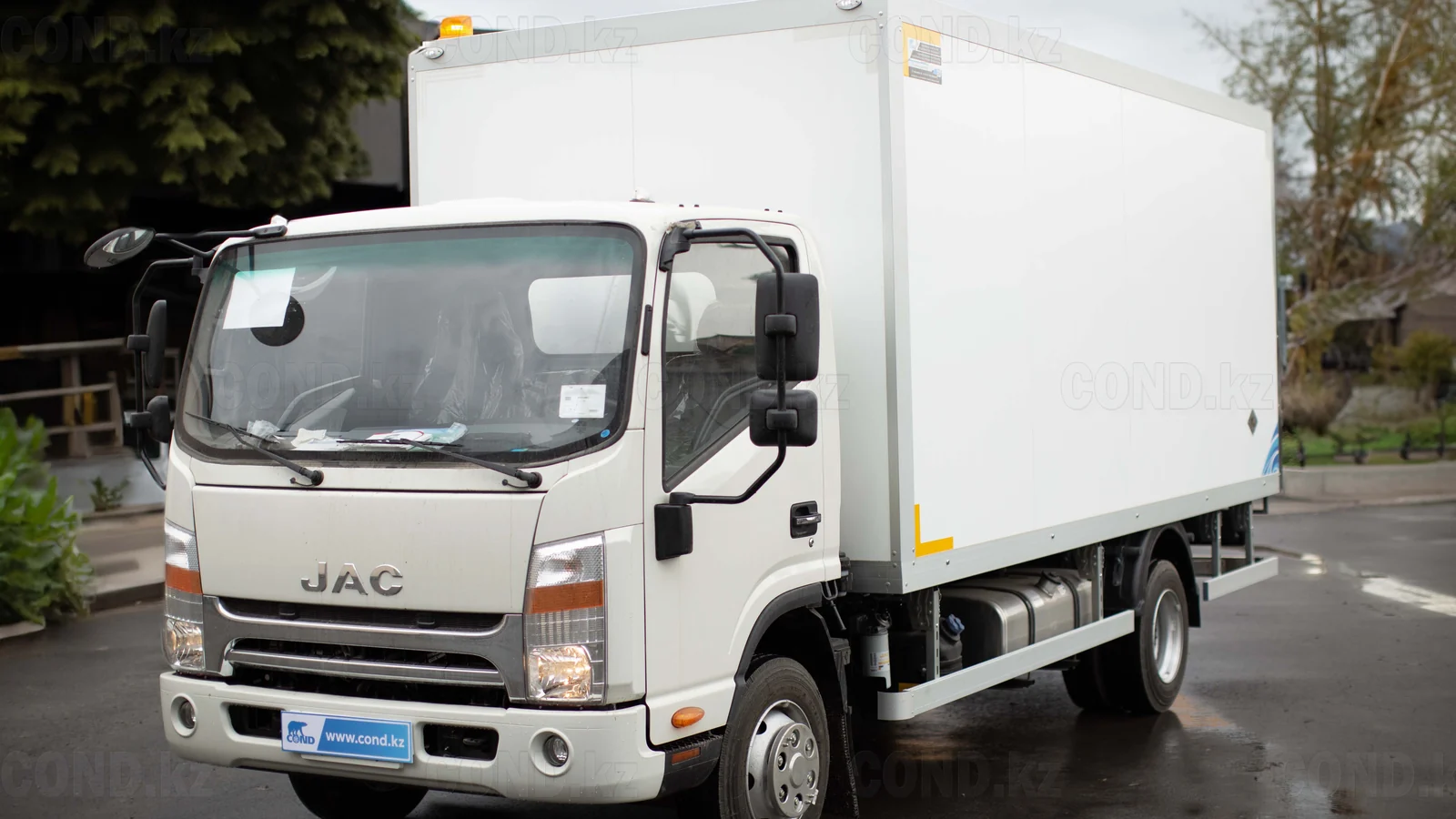
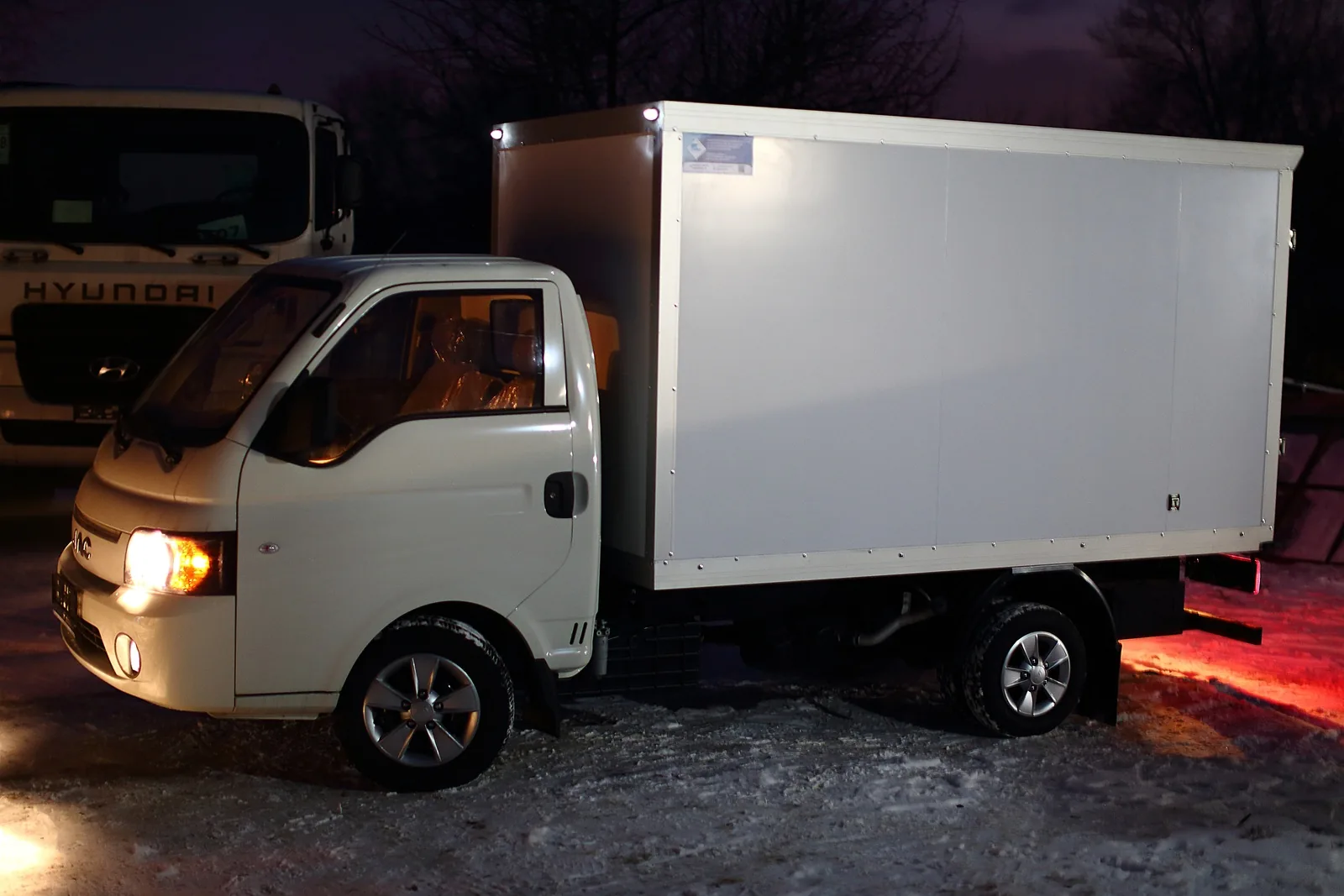
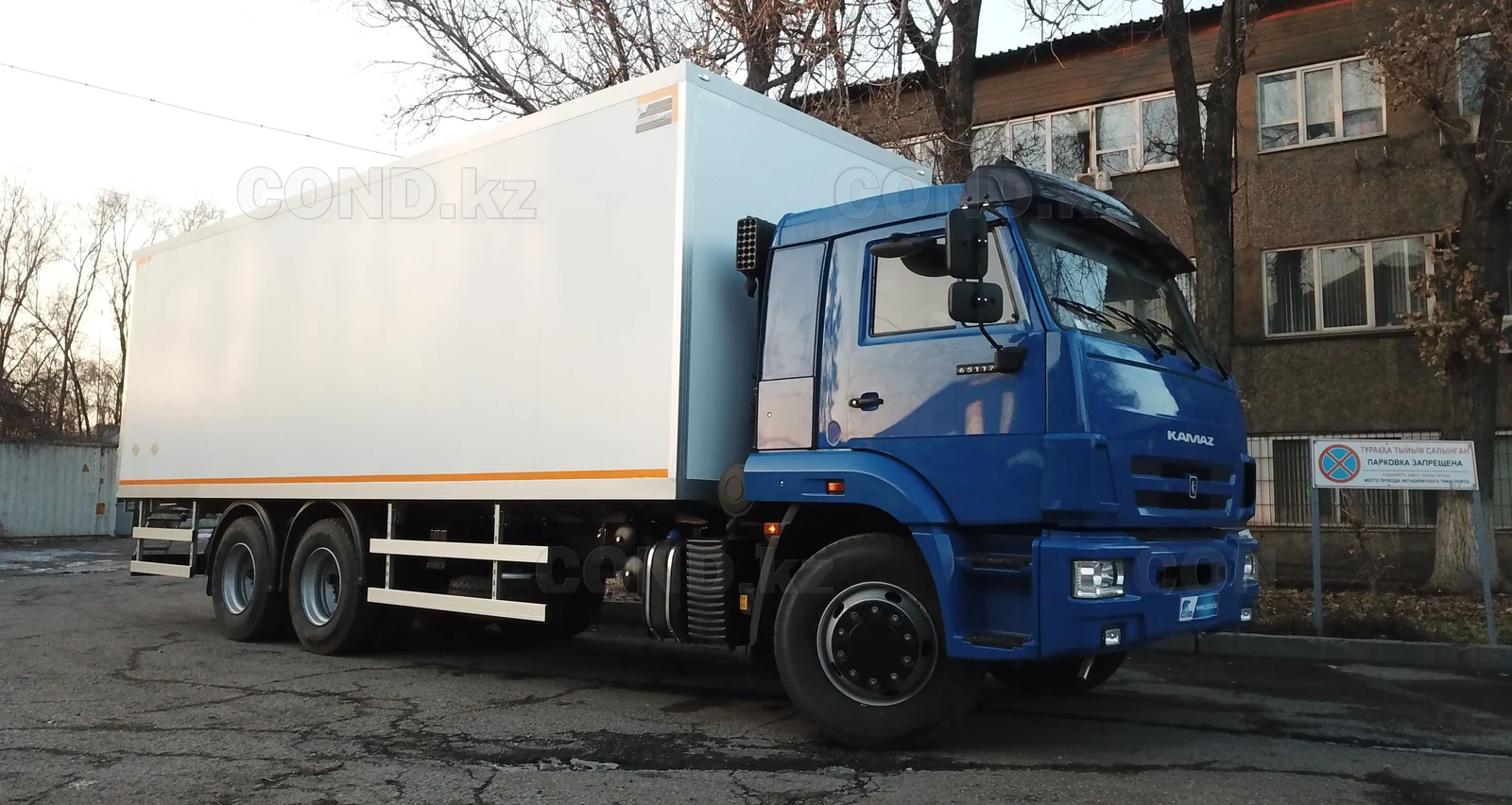
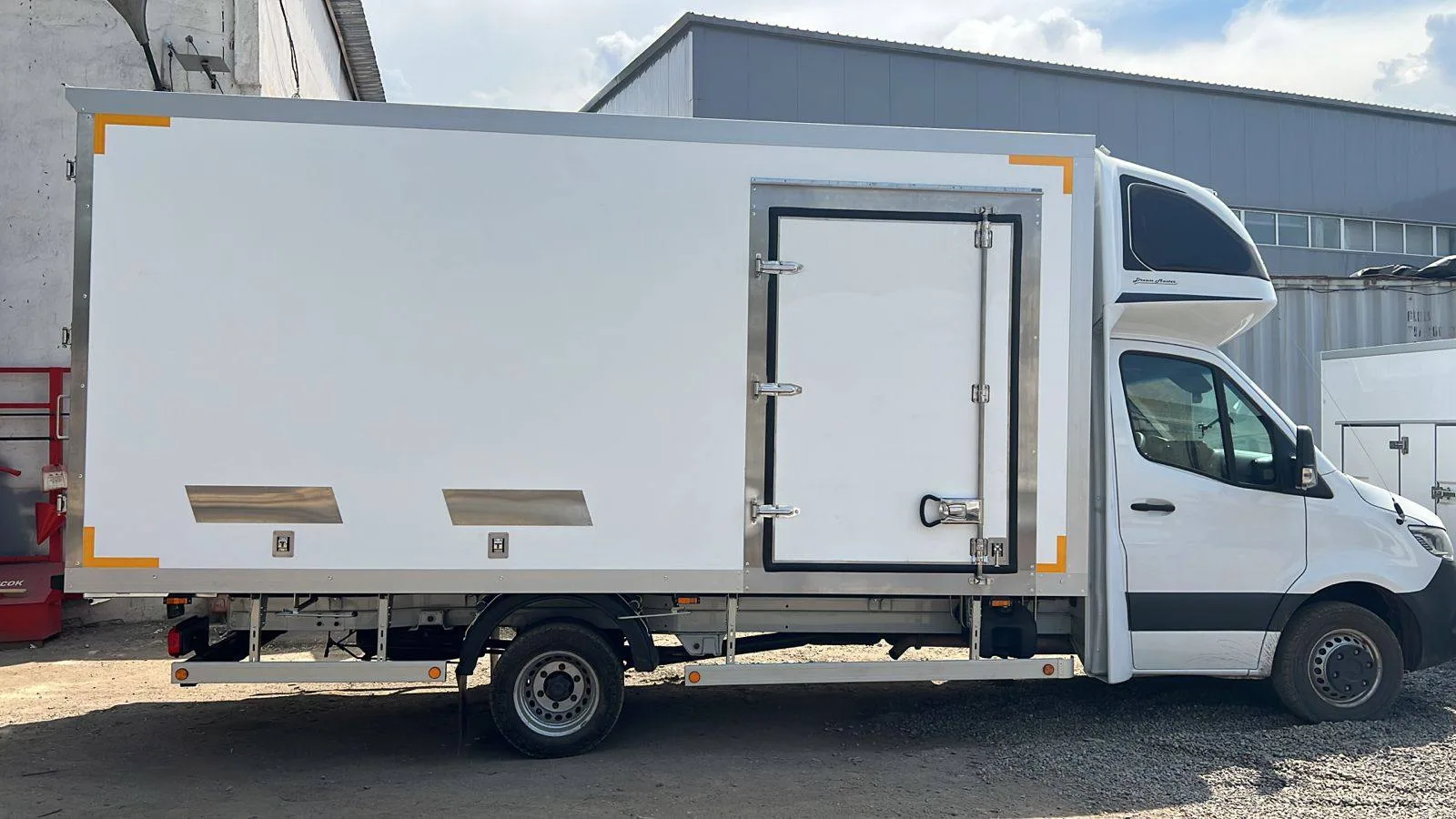
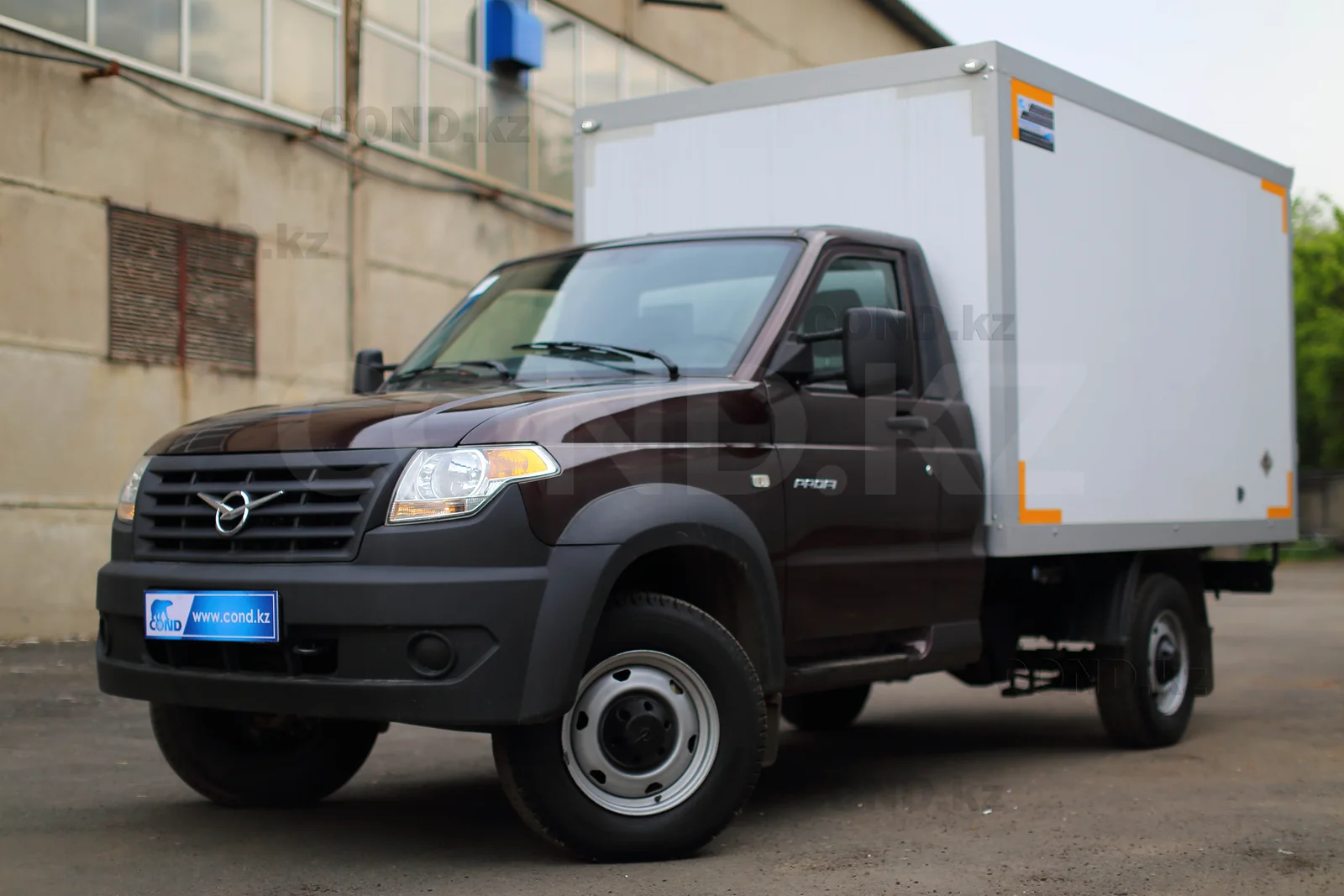
The vehicle is built on a Iveco Daily 50C15 chassis.
This is a insulated body, sandwich panel; externally the body is 5,200 × 2,200 × 2,200 mm. That leaves 5,000 × 2,000 × 2,000 mm, 100 mm panel inside: the panel thickness is subtracted on every side, floor and ceiling included. Usable volume is ≈ 20 m³ (5,000 × 2,000 × 2,000 mm), counted from the internal dimensions rather than by multiplying the external ones.
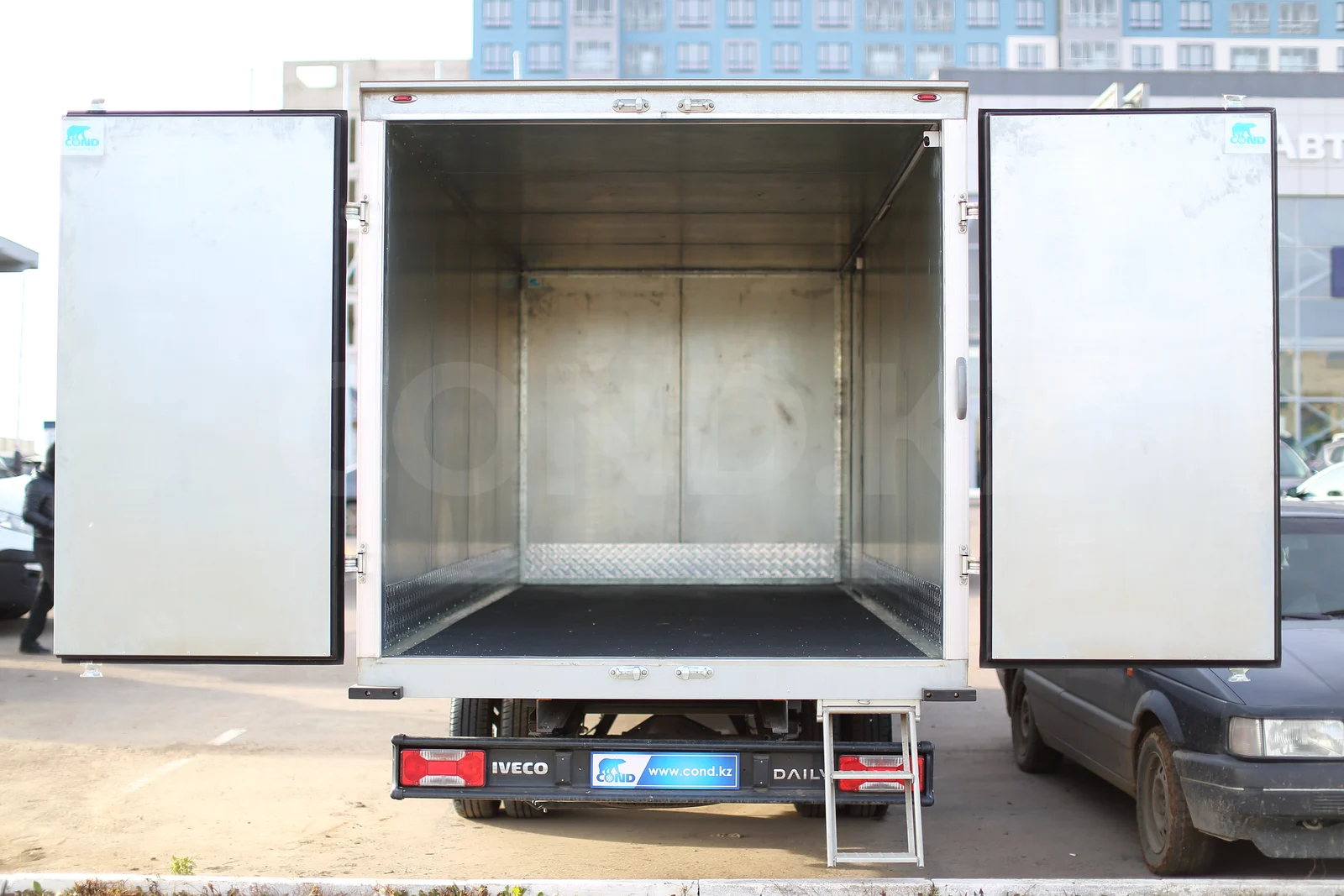
The floor is chequered aluminium. Doors: hinged rear.
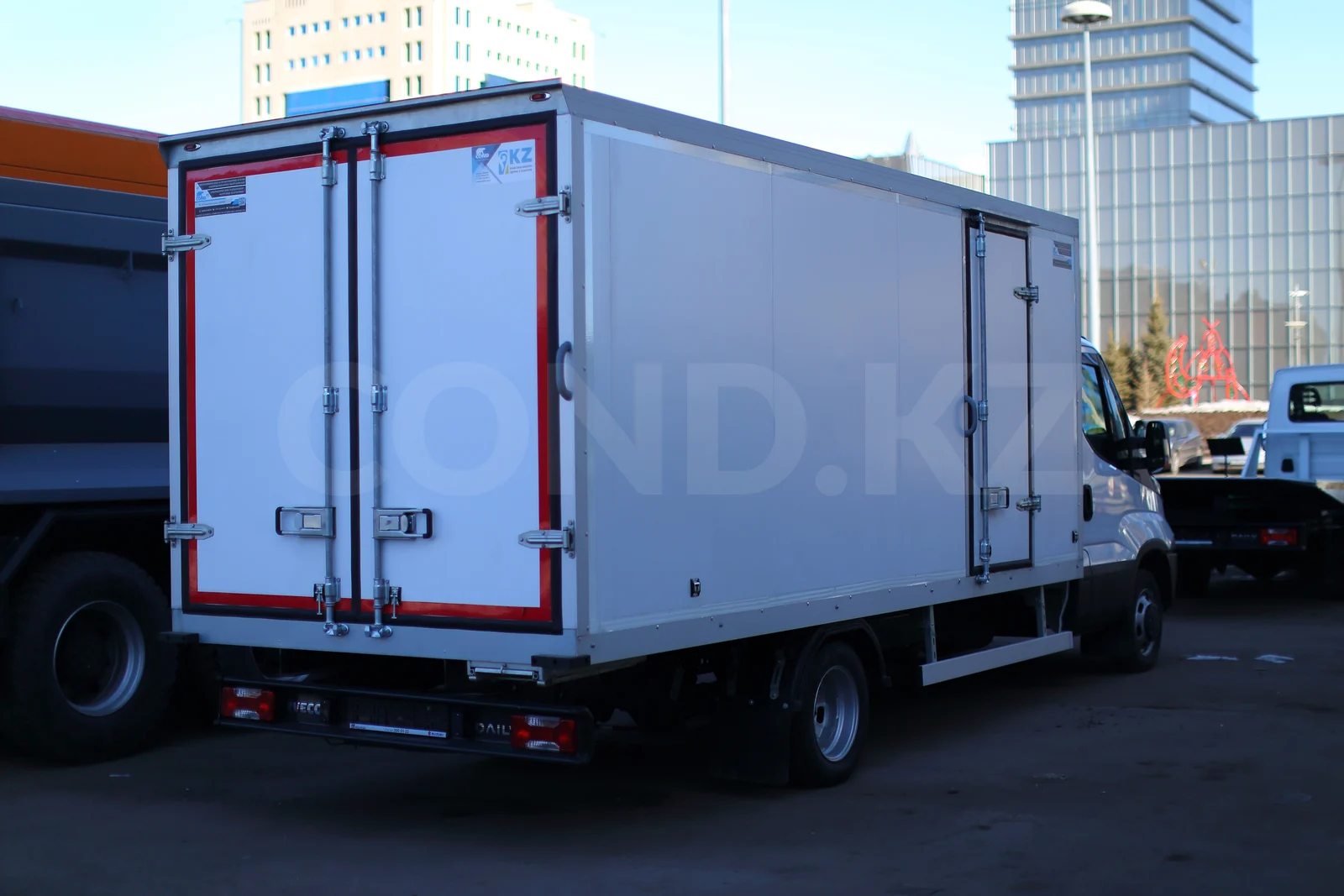
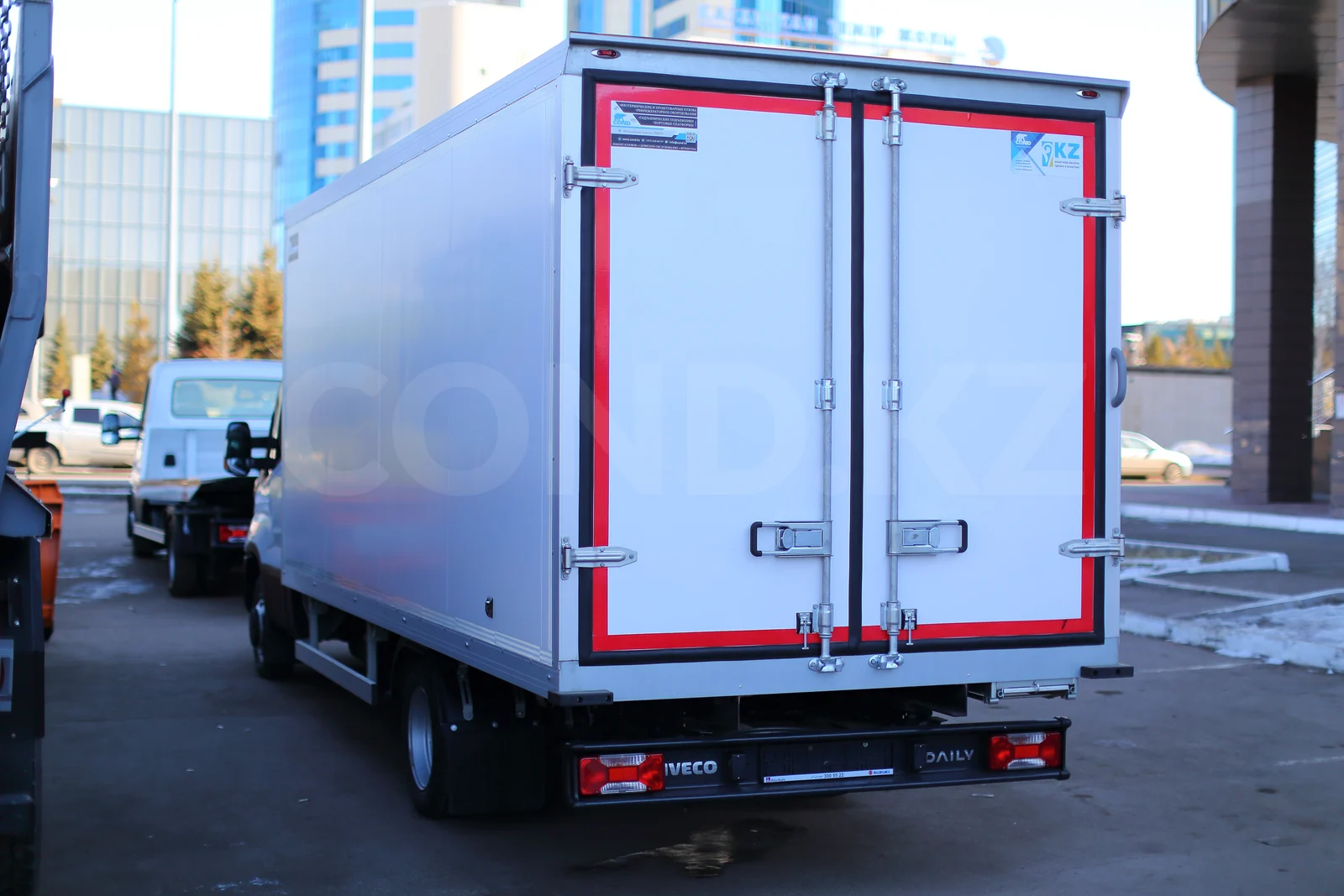
The refrigeration unit is none fitted; the body is prepared for installation. Fitted equipment: side underrun protection, rear underrun bar.
Why it is built this way
Ribbed aluminium flooring is chosen where cargo moves on trolleys: the sheet takes no moisture, hoses down and does not delaminate under wheels. It is heavier than plywood but outlasts it severalfold.
What is in the photos
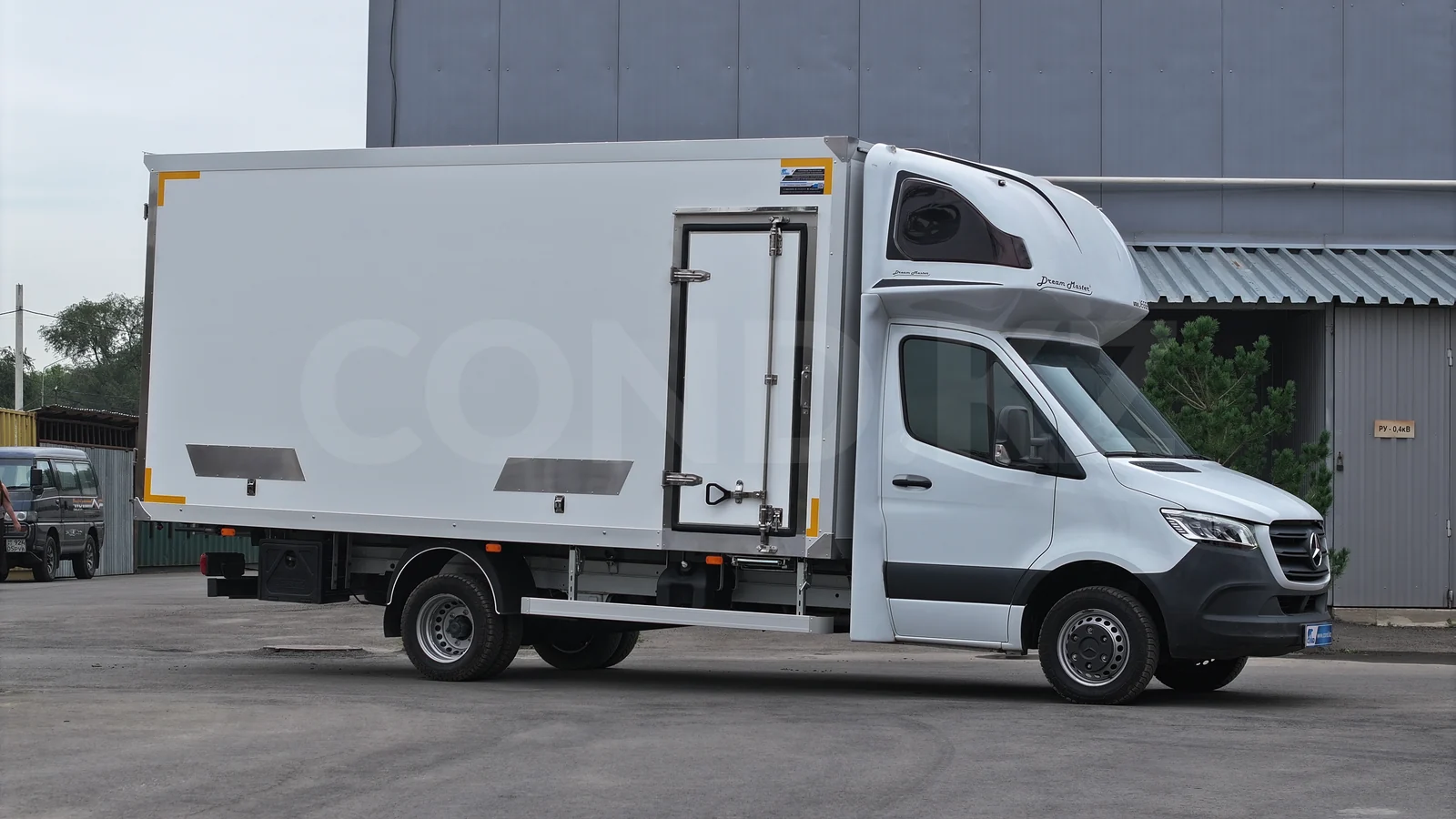
- The whole truck, front three-quarter view
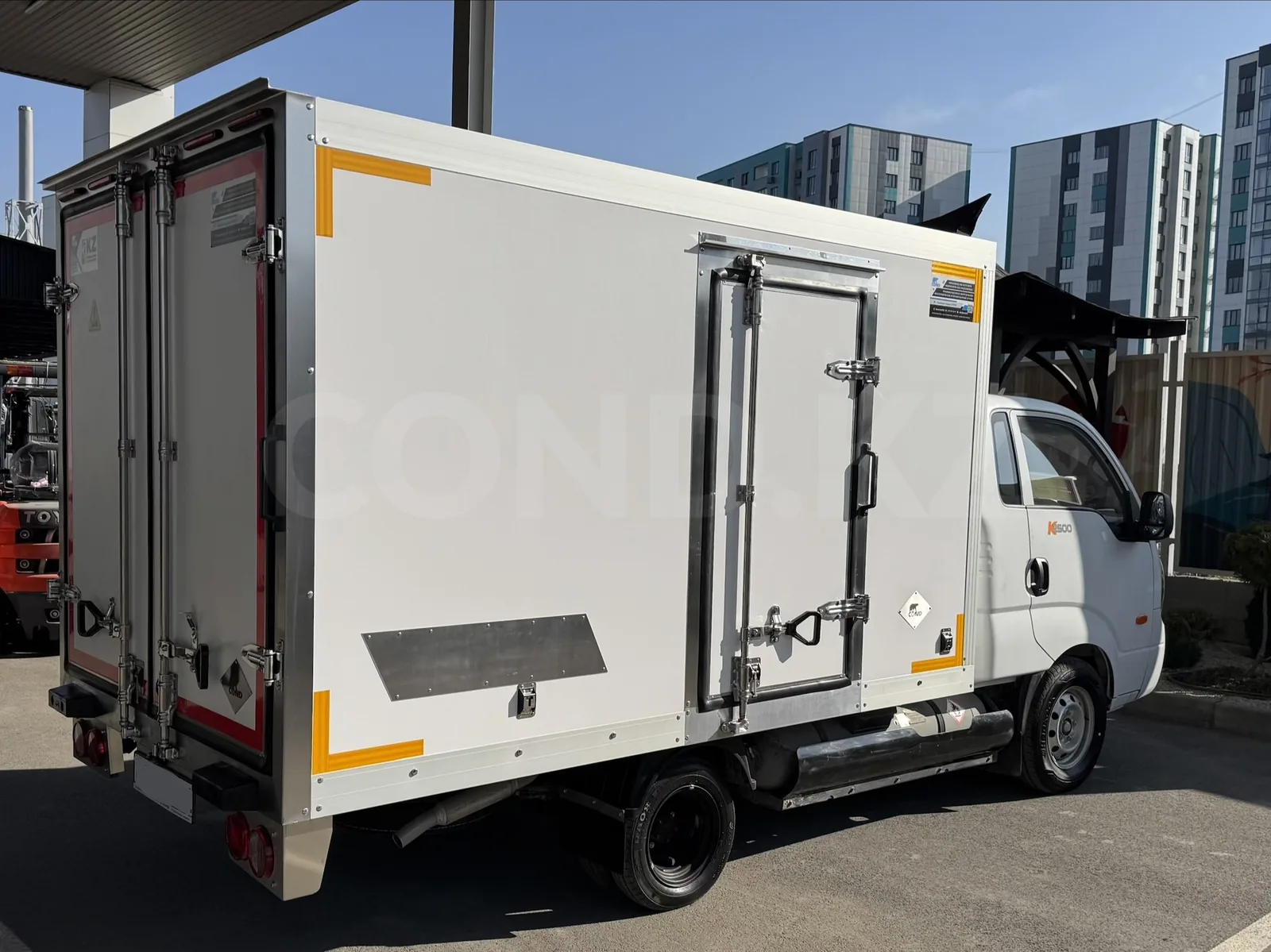
- The right side: the side door and the body along its full length
- Rear three-quarter view, doors with a seal around the opening
- The rear from the other side, reflective markings
- Doors open: body inside, the ribbed aluminium floor
Who it suits
An isothermal body does not produce cold — it slows heat exchange with the outside. Such a van is chosen for short runs and for cargo loaded already chilled: bread, confectionery, drinks, groceries. Usable volume here is ≈ 20 m³ (5,000 × 2,000 × 2,000 mm) — the block above estimates the load in pallets.
We will build the same — to your size and your chassis
This body is not a catalogue item but a project we actually built. We will make the same one to your dimensions: length, width and height are calculated for your cargo and the chassis payload, rather than fitting the cargo to a ready-made size.
We also fit it to your own chassis: bring the vehicle, we take the frame dimensions, build the body, mount it and hand it over with the conversion paperwork.
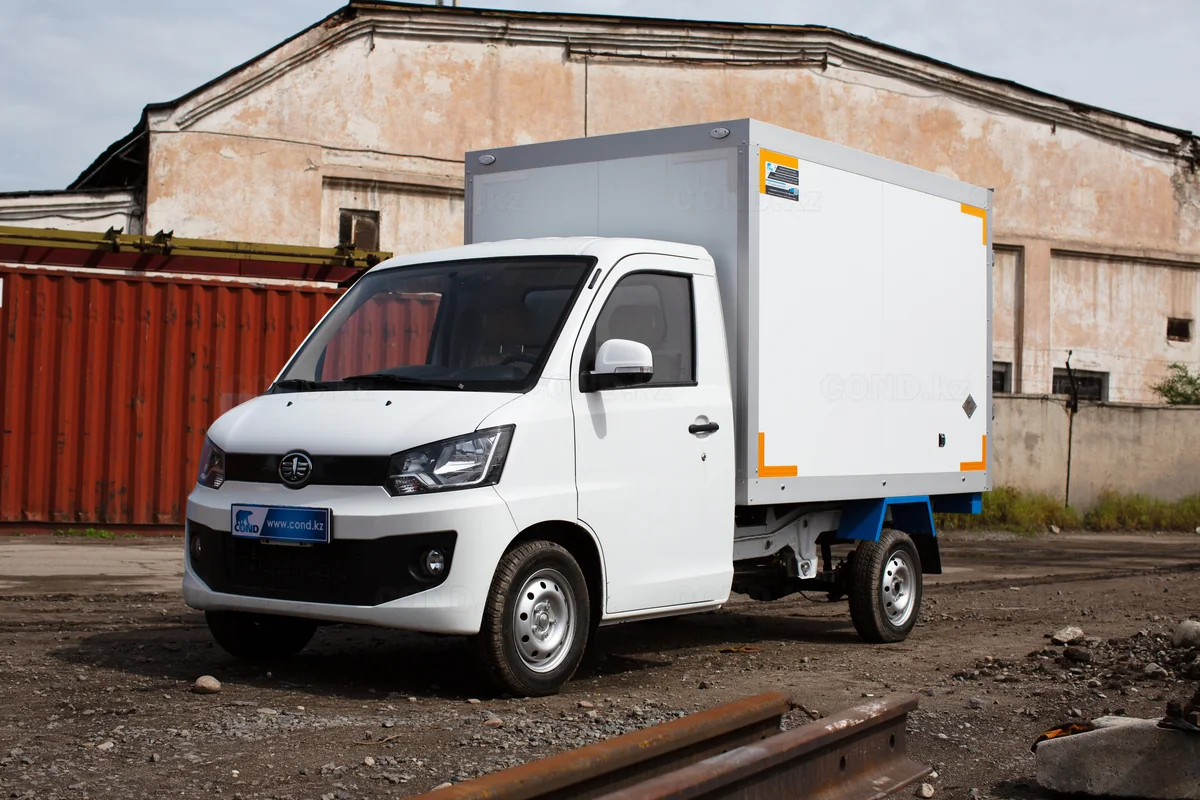
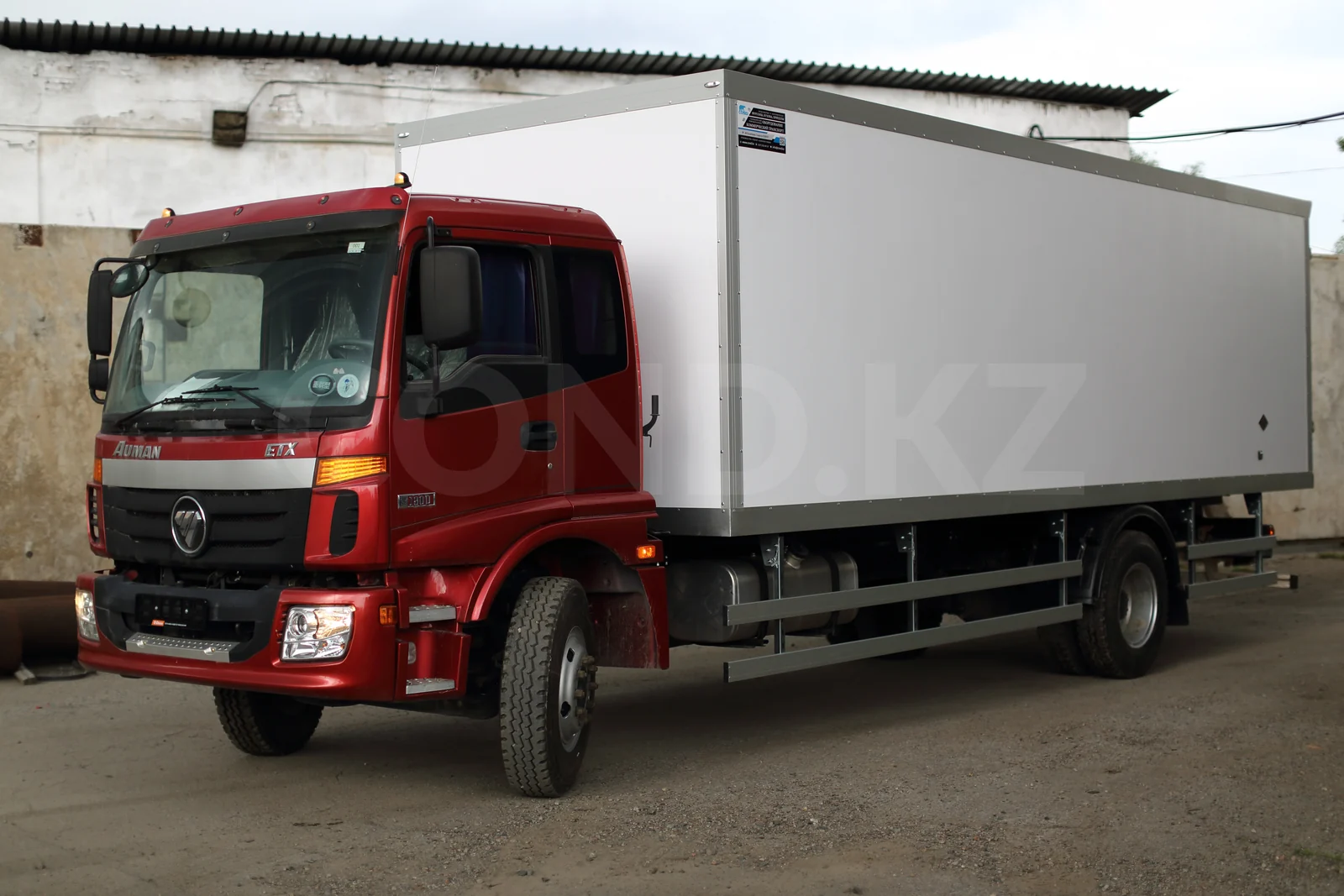
If you are still choosing a chassis, we have the same body on other bases as well: FAW 1027 (T80), Foton 5163, GAZelle Next A21R32, GAZon NEXT. They differ in payload, frame length and licence category.