
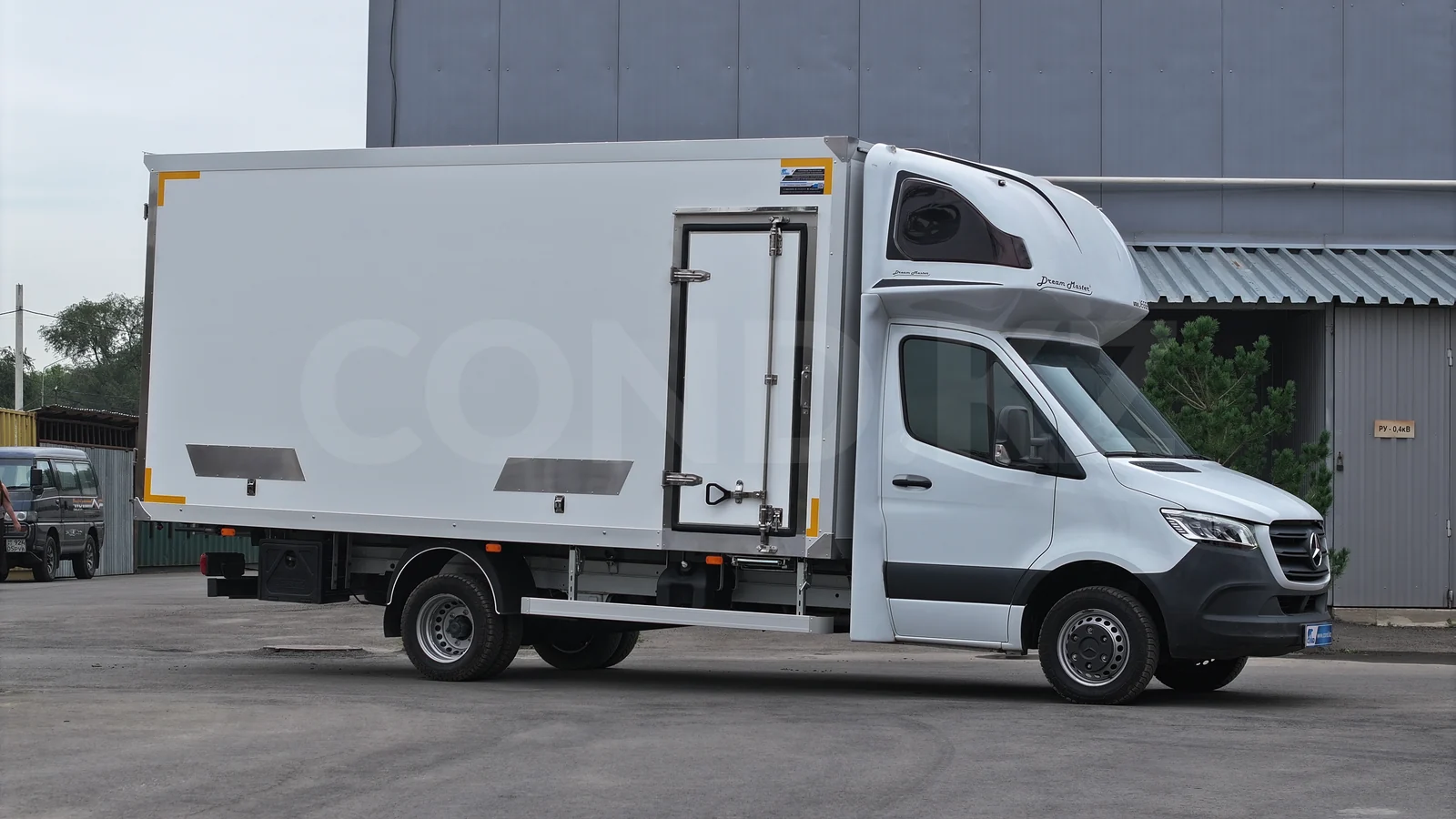
Insulated van on Mercedes-Benz Sprinter chassis
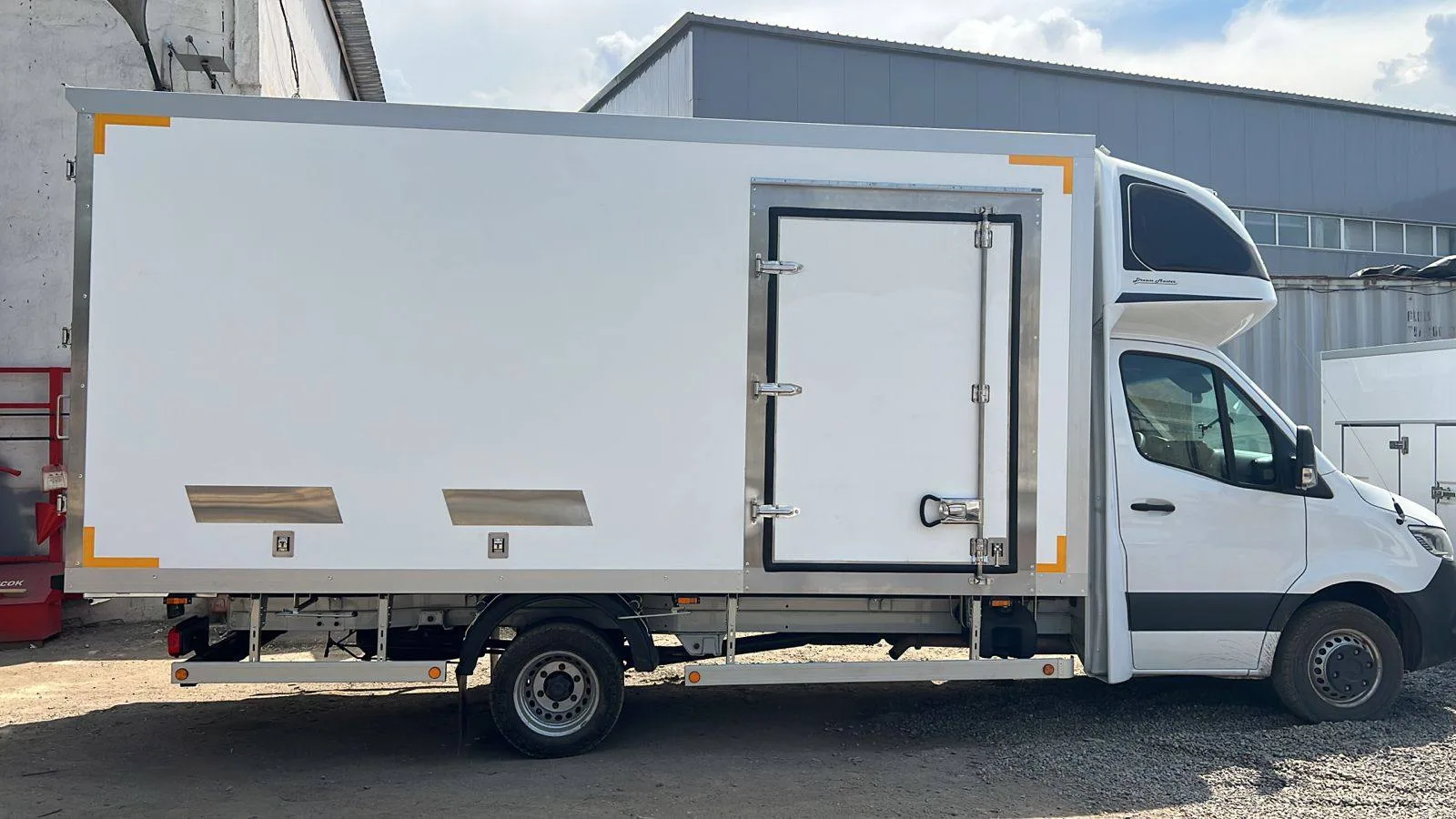
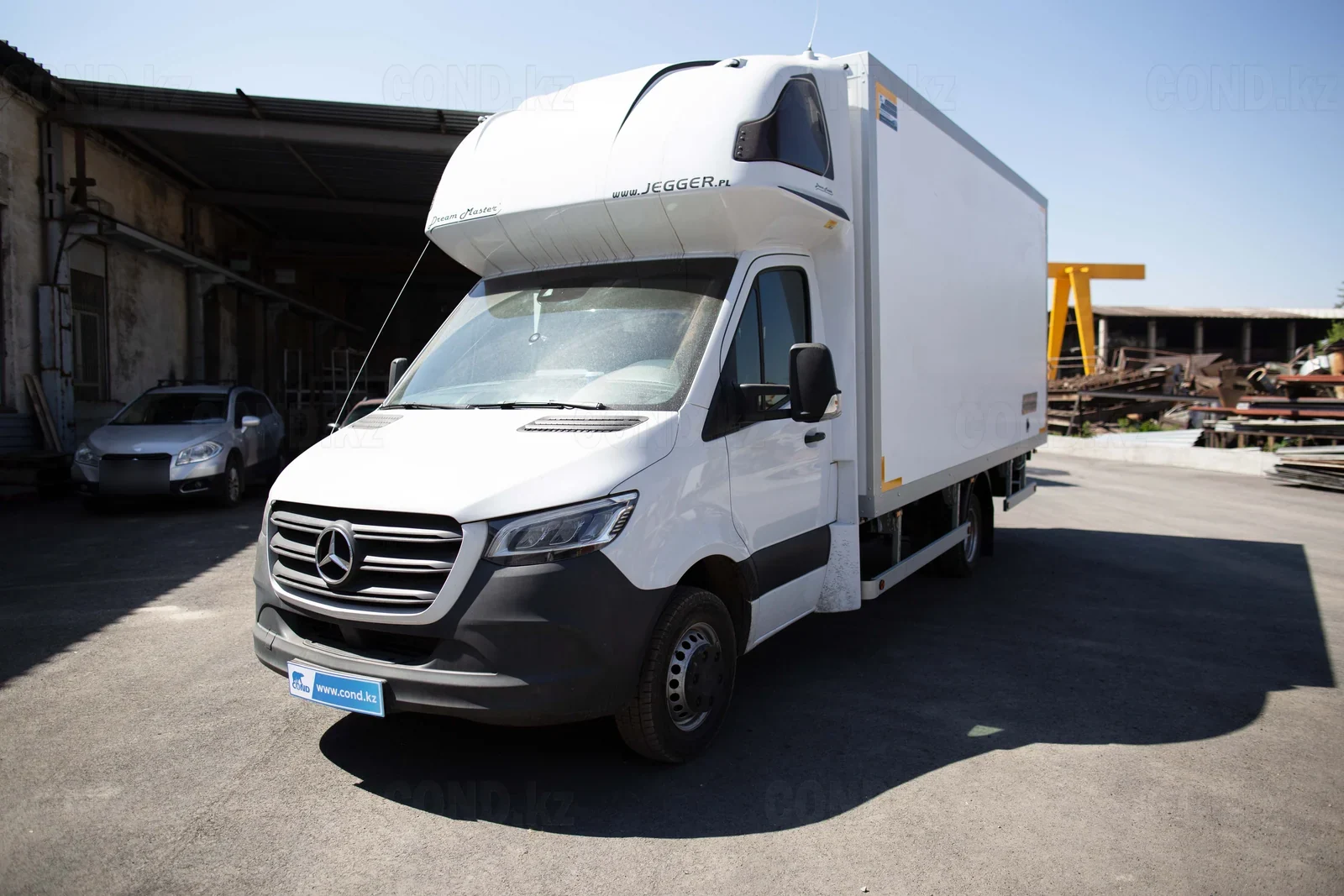
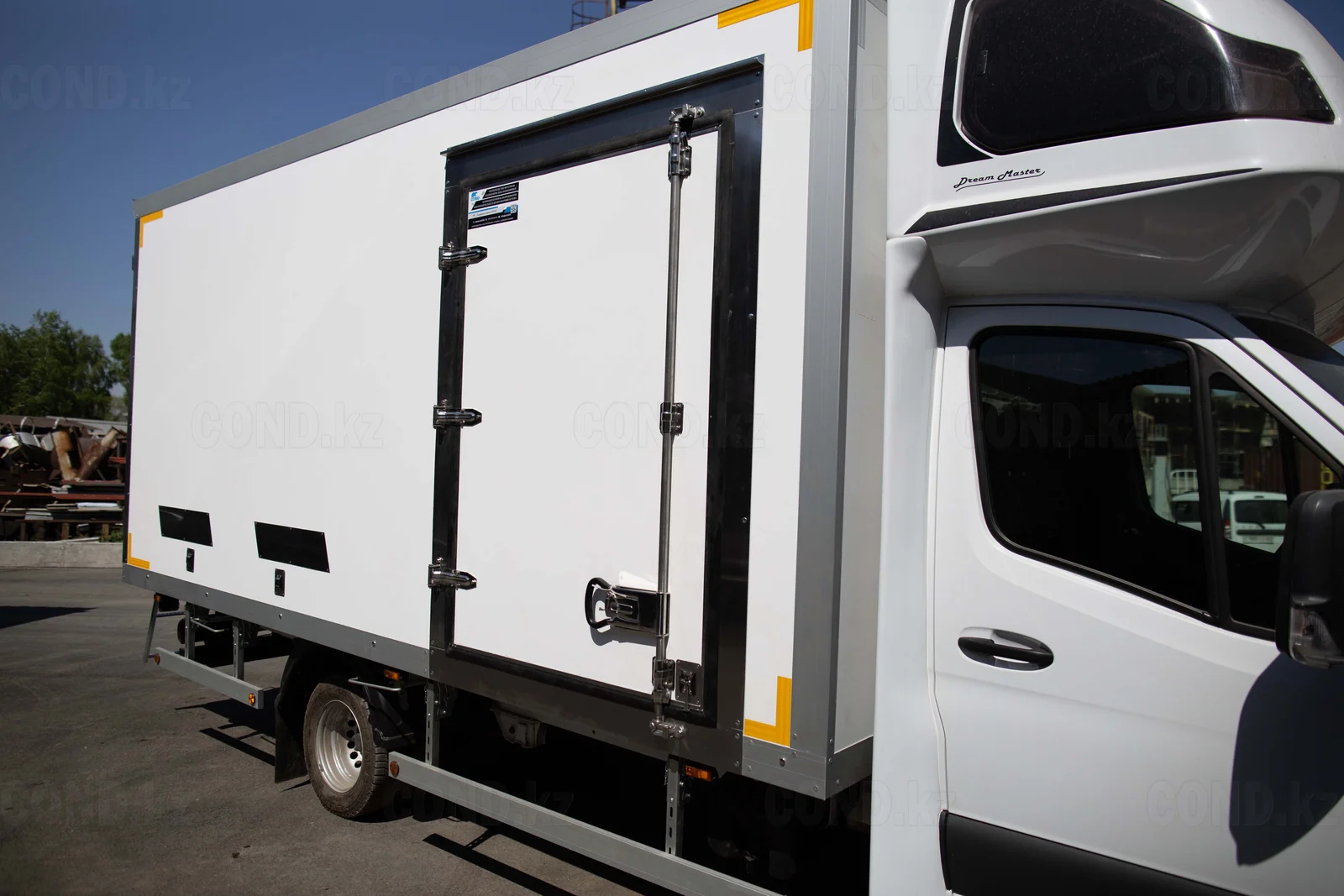
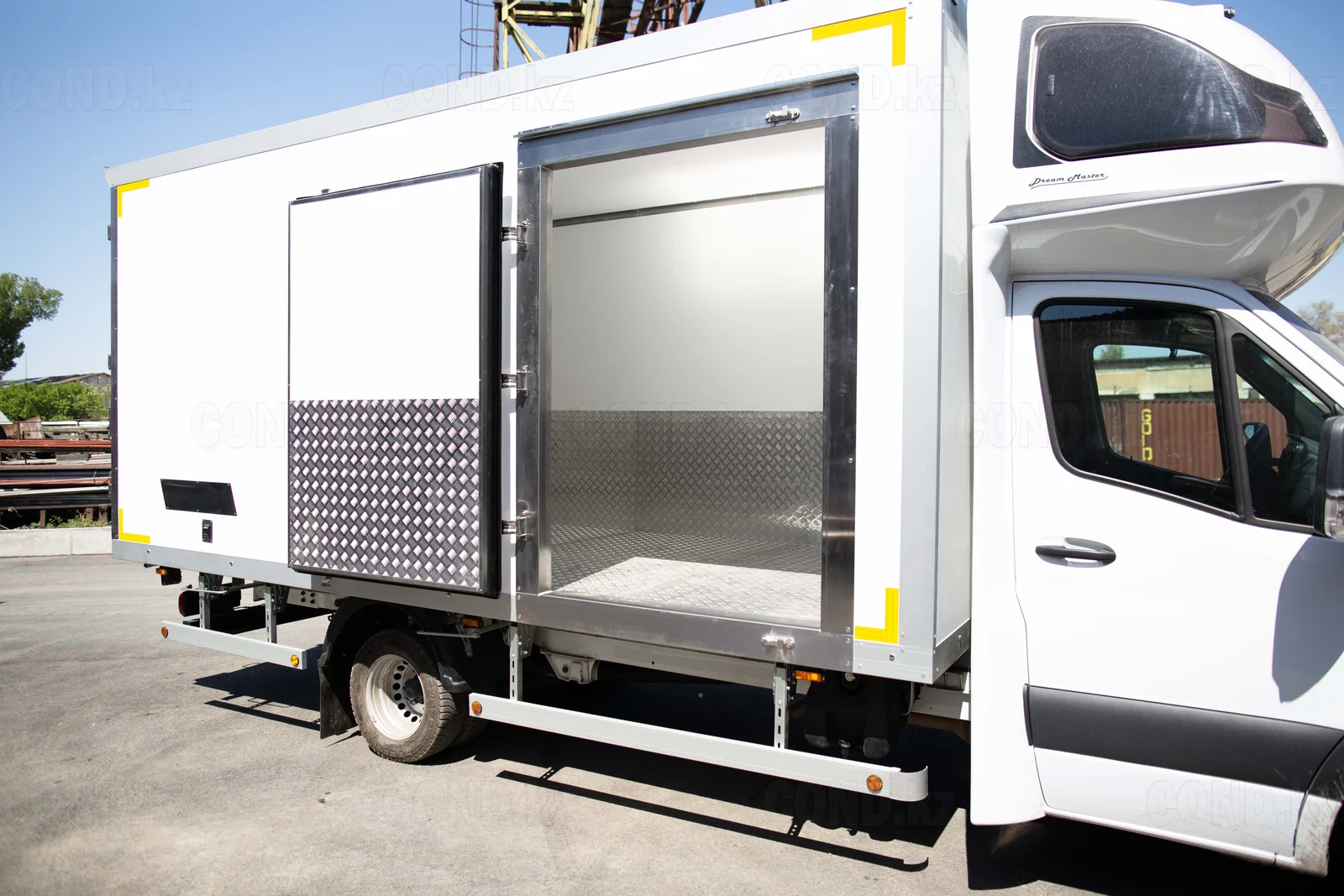
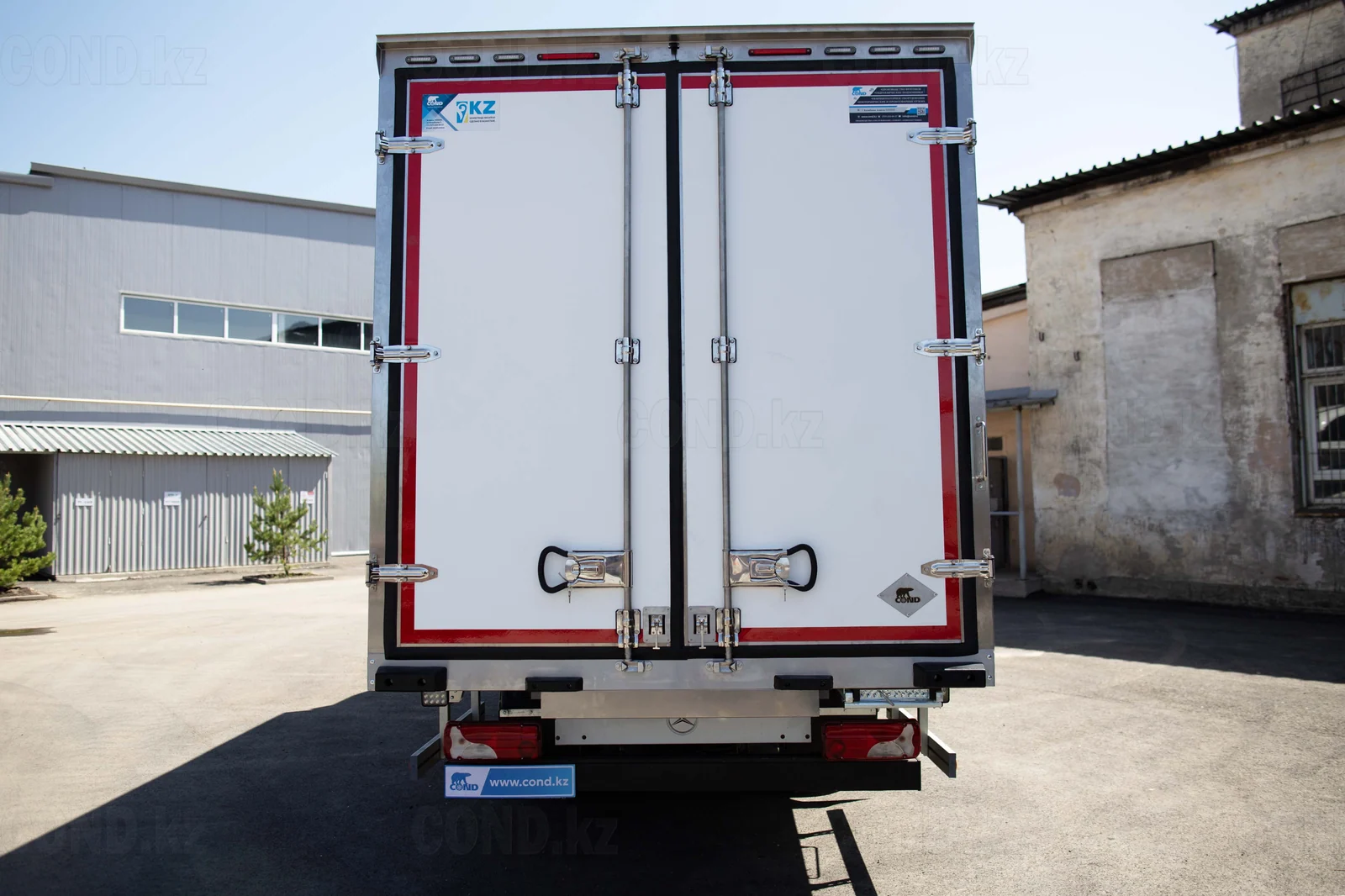
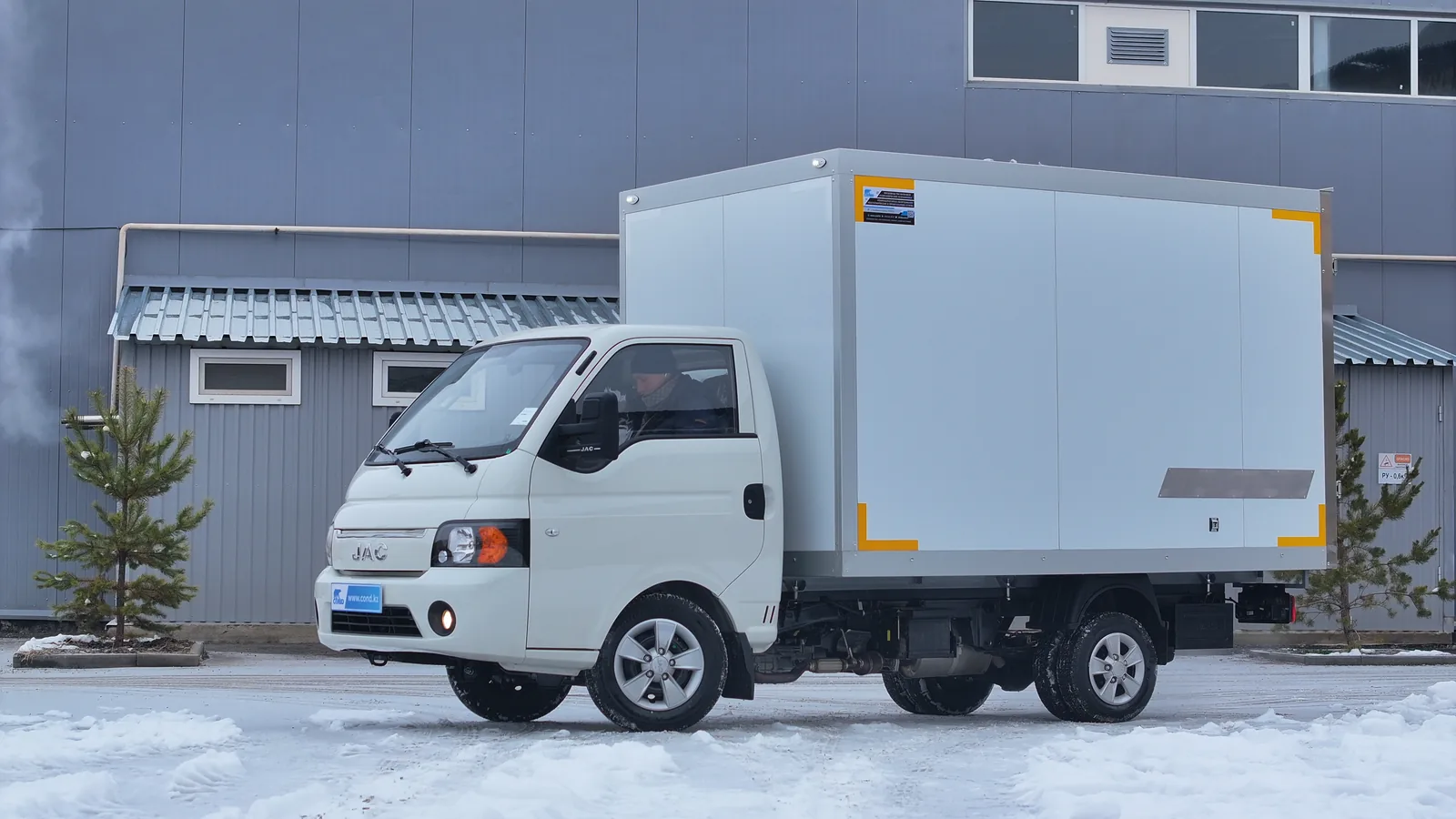
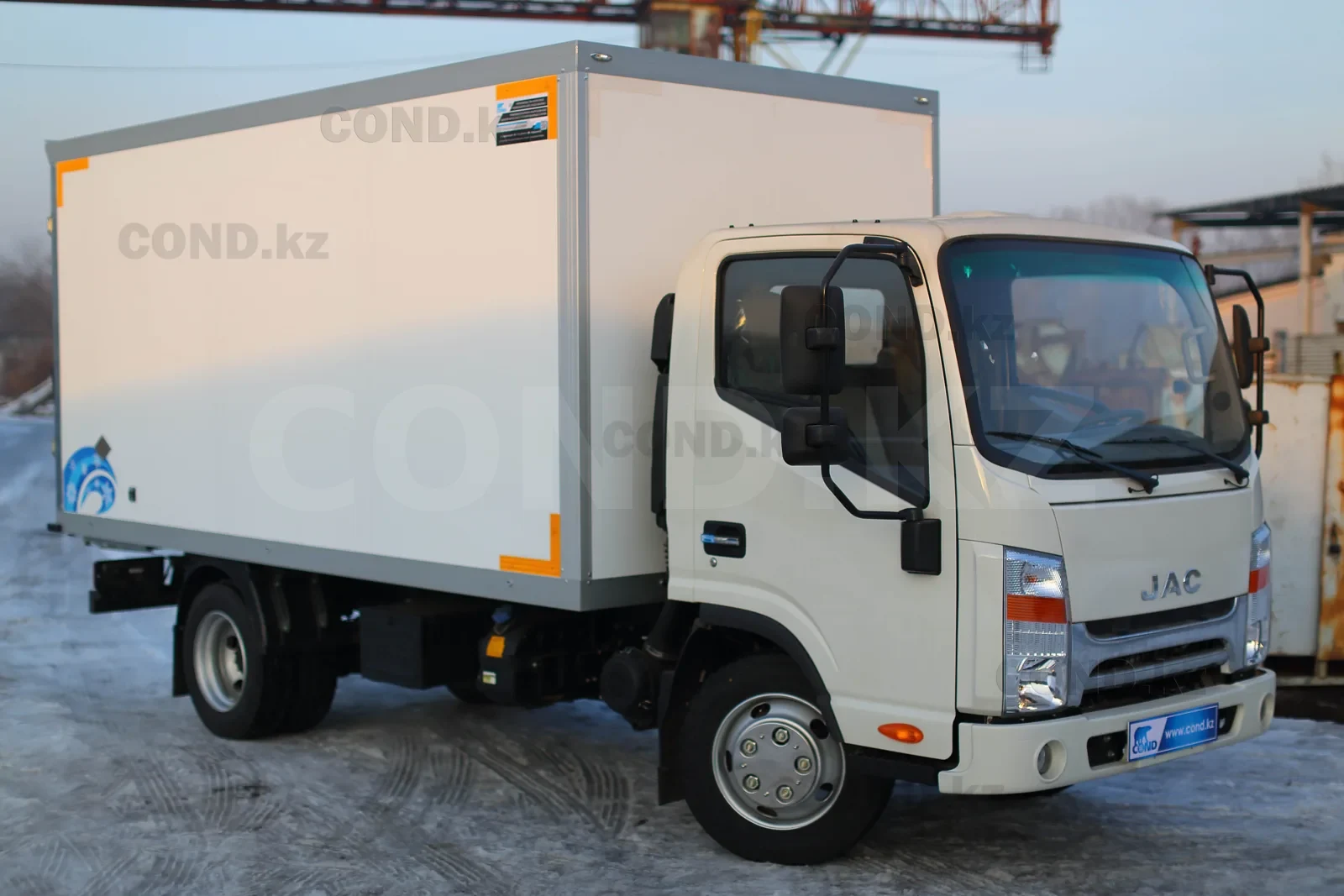
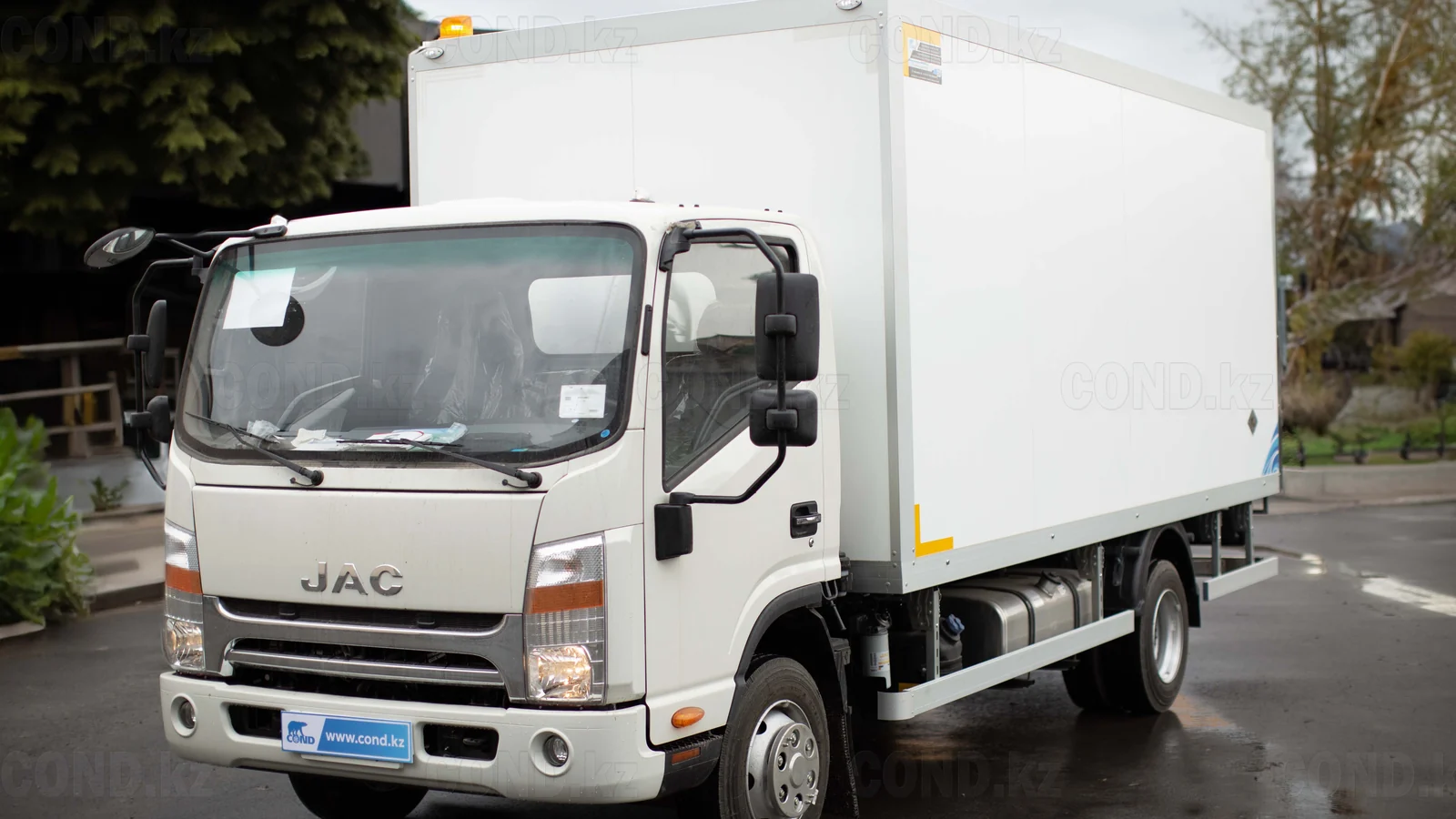
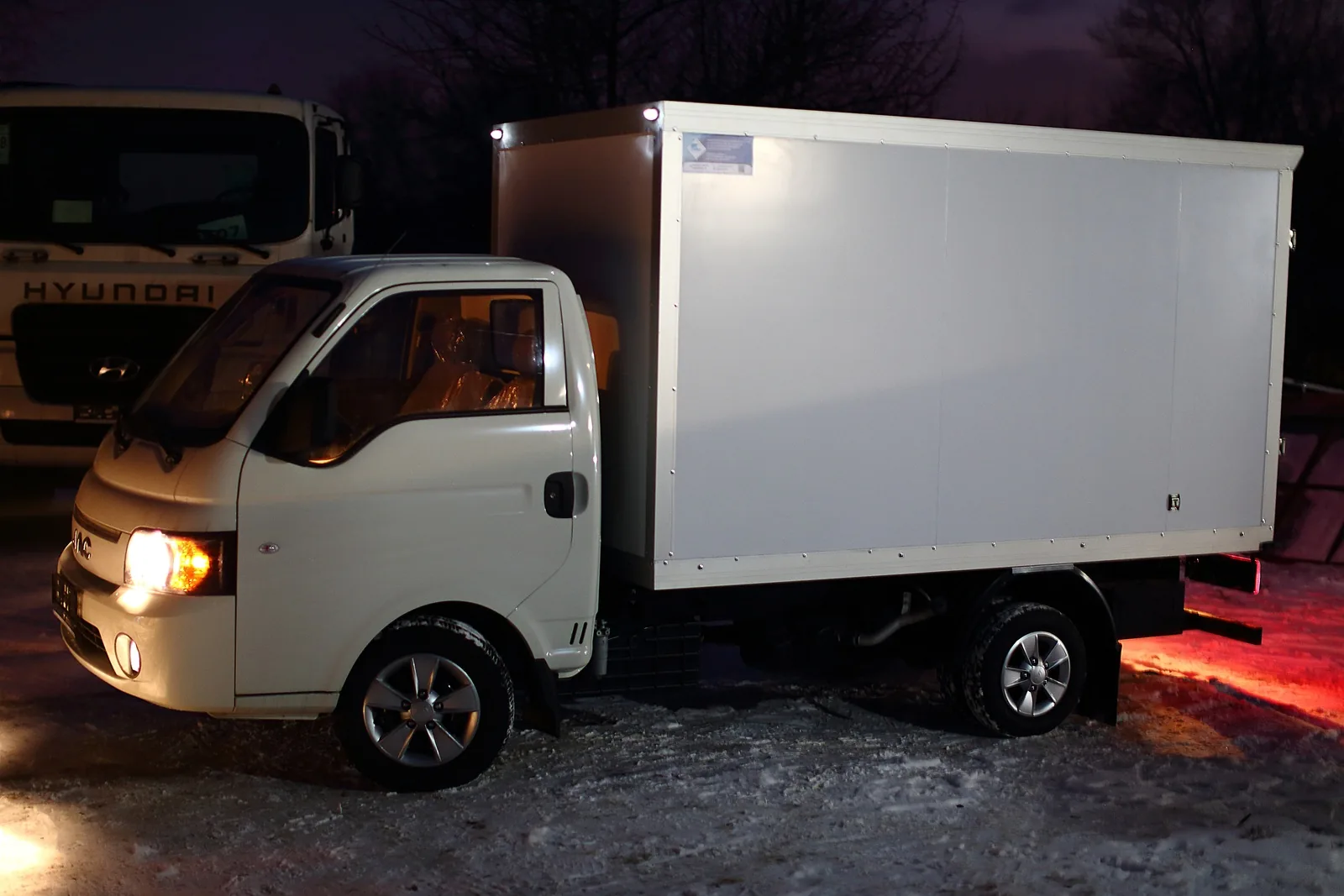
A 5.2-metre insulated body on a light chassis: 100 mm sandwich panel, chequered aluminium floor, a side door and rear barn doors with a folding ladder. A fairing sits on the cab roof and reflective tape runs around the body contour.
Chassis
| Make / model | Mercedes-Benz Sprinter |
| Chassis type | chassis cab |
| Body kit | roof fairing above the cab |
| Rear wheels | single |
| Vehicle category | B |
Compare with other light chassis in the comparison table.
Van
| Body type | insulated, sandwich panel |
| Body dimensions | 5,200 × 2,250 × 2,400 mm |
| Internal dimensions | 5,000 × 2,050 × 2,200 mm, 100 mm panel |
| Internal volume | ≈ 22.6 m³ (5,000 × 2,050 × 2,200 mm) |
| Panel thickness | 100 mm |
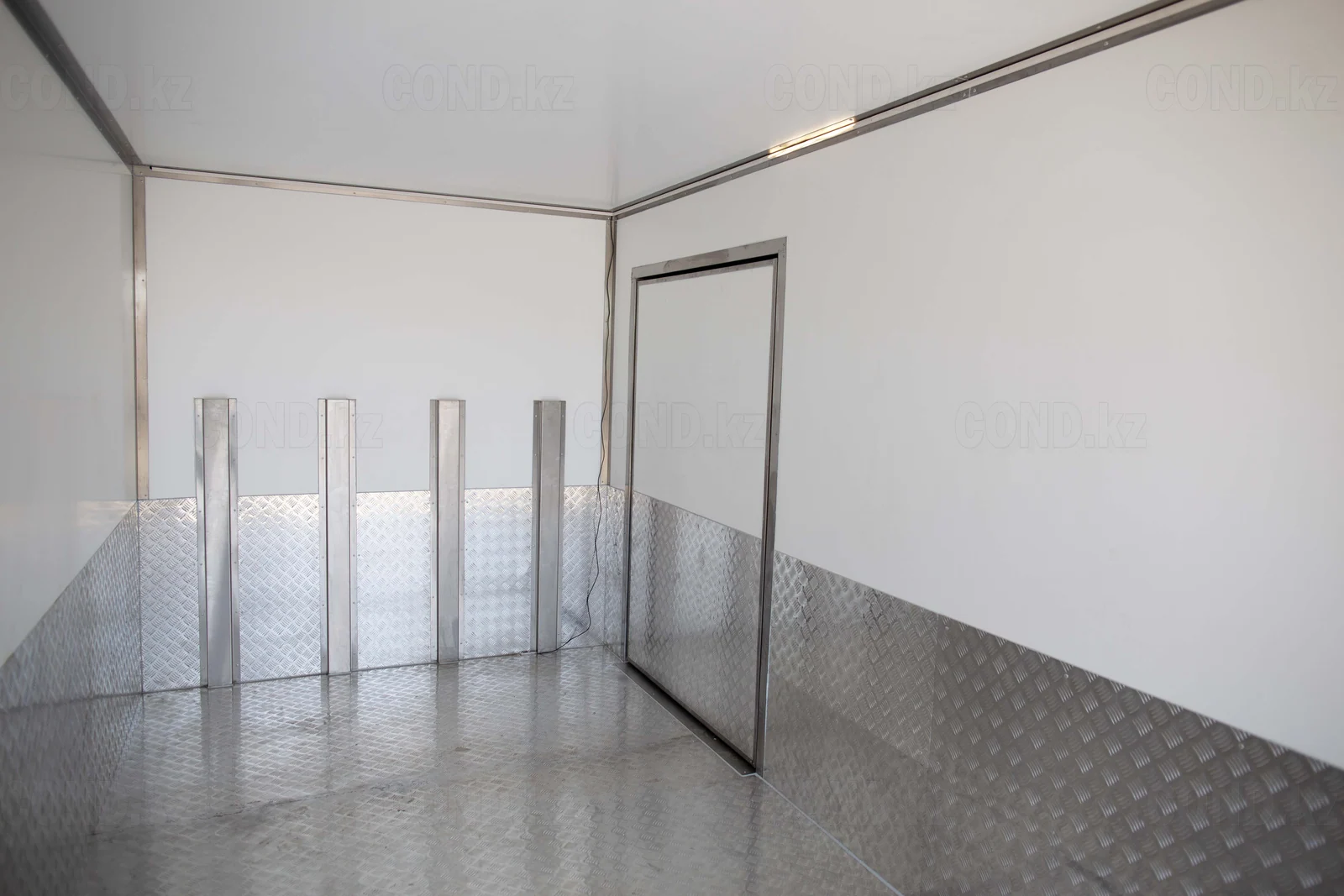
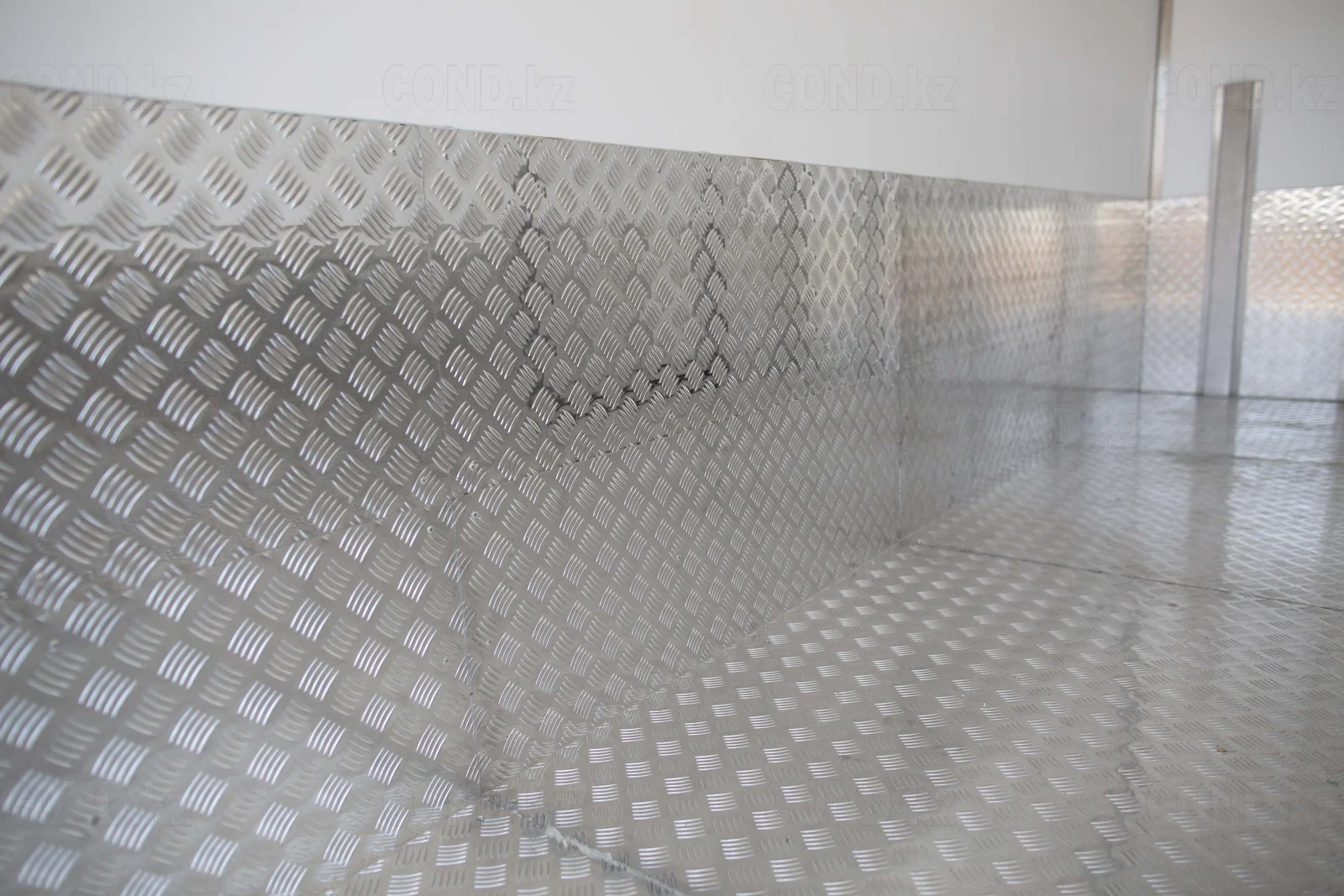
| Floor | chequered aluminium |
| Doors | rear barn doors + a side door |
| Specification | premium |
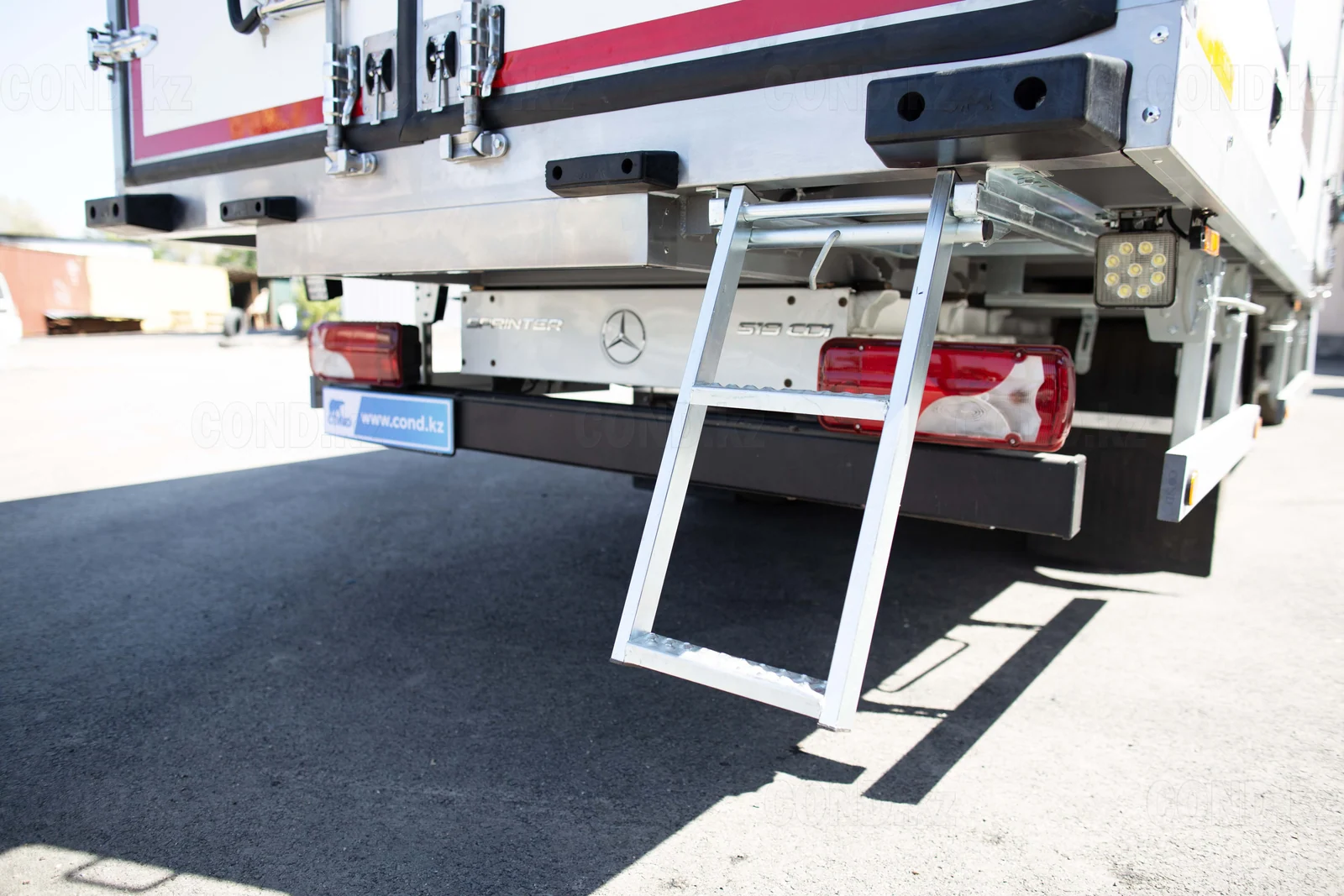
| Fit-out | reflective contour tape, folding ladder, rails for partitions |
More about the design on the page insulated vans.
How this body is built
The body is built on a Mercedes-Benz Sprinter chassis.
Body type — insulated, sandwich panel, external dimensions 5,200 × 2,250 × 2,400 mm. That leaves 5,000 × 2,050 × 2,200 mm, 100 mm panel inside: the panel thickness is subtracted on every side, floor and ceiling included. Usable volume is ≈ 22.6 m³ (5,000 × 2,050 × 2,200 mm), counted from the internal dimensions rather than by multiplying the external ones.
The floor is chequered aluminium. Doors: rear barn doors + a side door.
Fitted equipment: reflective contour tape, folding ladder, rails for partitions.
Why it is built this way
Ribbed aluminium flooring is chosen where cargo moves on trolleys: the sheet takes no moisture, hoses down and does not delaminate under wheels. It is heavier than plywood but outlasts it severalfold.
A side door changes distribution logistics: at each stop you open it rather than the whole rear portal — less cold escapes and the truck can park tight against its neighbour.
What is in the photos
- 5.2 m body on a Sprinter chassis, front-side view
- Front 3/4, roof fairing above the cab
- Side with the door and contour tape
- Side door open, chequered aluminium floor
- Rear barn doors and folding ladder
- Rear subframe, lights and folding ladder
- Body interior, rails for partitions
- Floor deck — chequered aluminium
Who it suits
An isothermal body does not produce cold — it slows heat exchange with the outside. Such a van is chosen for short runs and for cargo loaded already chilled: bread, confectionery, drinks, groceries. Usable volume here is ≈ 22.6 m³ (5,000 × 2,050 × 2,200 mm) — the block below estimates the load in pallets.
We will build the same — to your size and your chassis
This body is not a catalogue item but a project we actually built. We will make the same one to your dimensions: length, width and height are calculated for your cargo and the chassis payload, rather than fitting the cargo to a ready-made size.
We also fit it to your own chassis: bring the vehicle, we take the frame dimensions, build the body, mount it and hand it over with the conversion paperwork.
If you are still choosing a chassis, we have the same body on other bases as well: FAW 1027 (T80), Foton 5163, GAZelle Next A21R32, GAZon NEXT. They differ in payload, frame length and licence category.
How many pallets fit
A standard 1,200 × 800 mm europallet, single tier, no restacking. Internal dimensions with a 50 mm laying allowance — a pallet will not go in dead tight.
Inside 5 000 × 2 050 × 2 200 mm · 22,6 m³
The layout scheme is on the right: it shows how the rows sit and how much room is left.
Where the number comes from:How many pallets fit in an isothermal van
The same one, made to order
The body is built on the customer’s chassis or supplied turnkey with the chassis.
| Lead time | from 14 working days |
| Warranty | 2 years on the body |
| Price | per configuration |
Catalogue by body type:All insulated vans
FAQ about the Mercedes-Benz Sprinter insulated van
I want one like this: Mercedes-Benz Sprinter
Leave your contact details — we will confirm availability/lead time and quote a price.
📞Phone+7 777 233-69-28💬WhatsApp
Message us
Leave a request
Similar vehicles
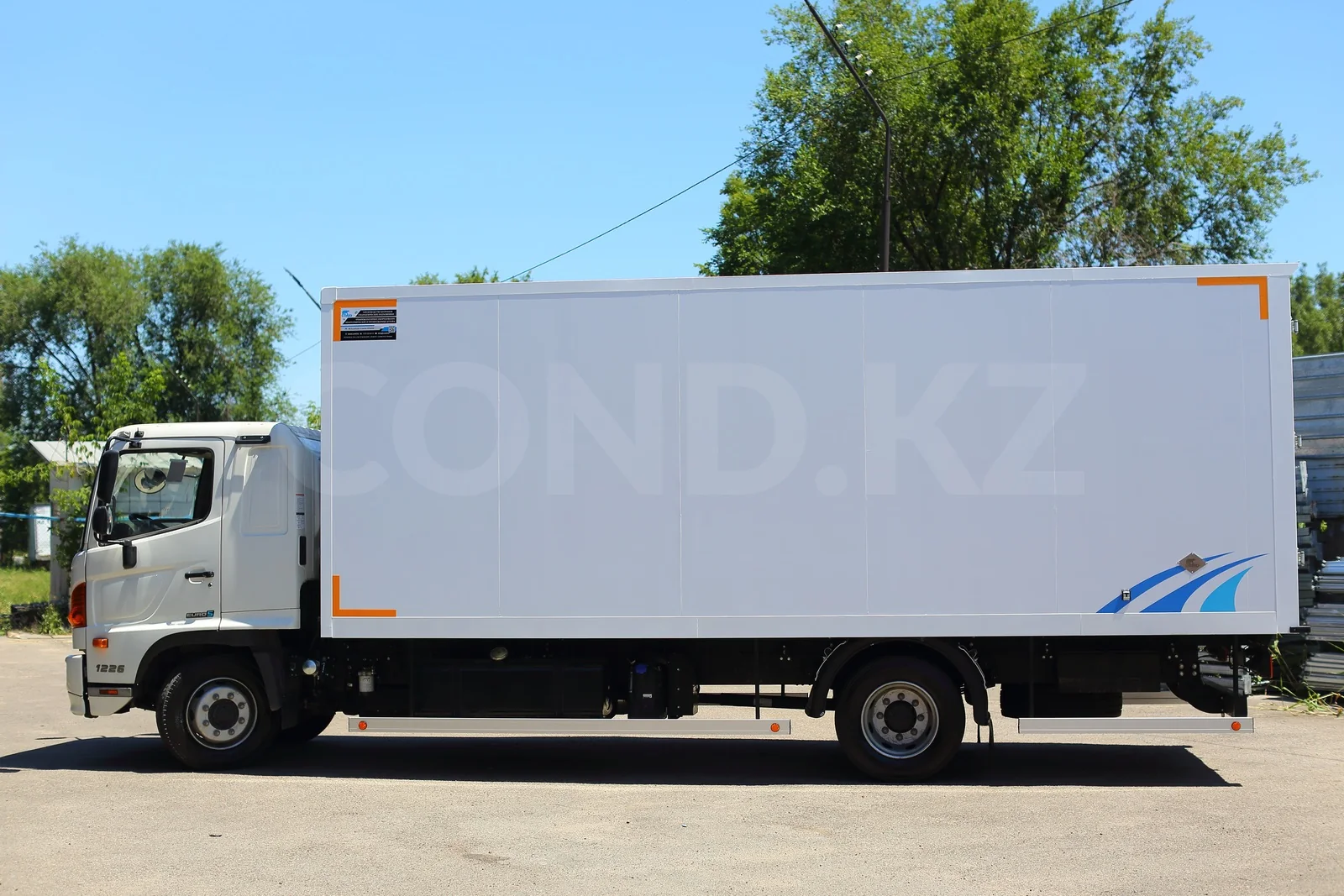
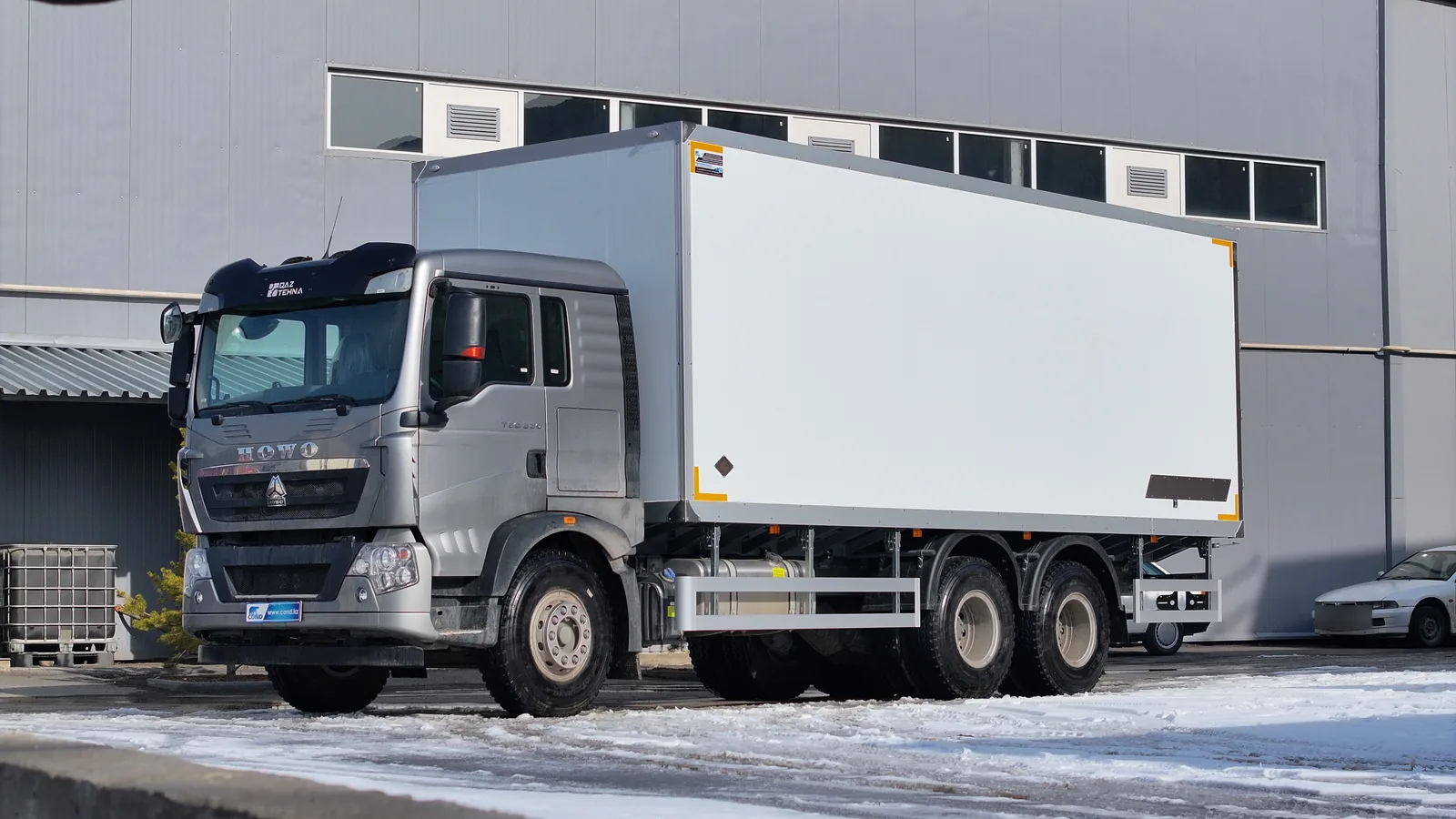
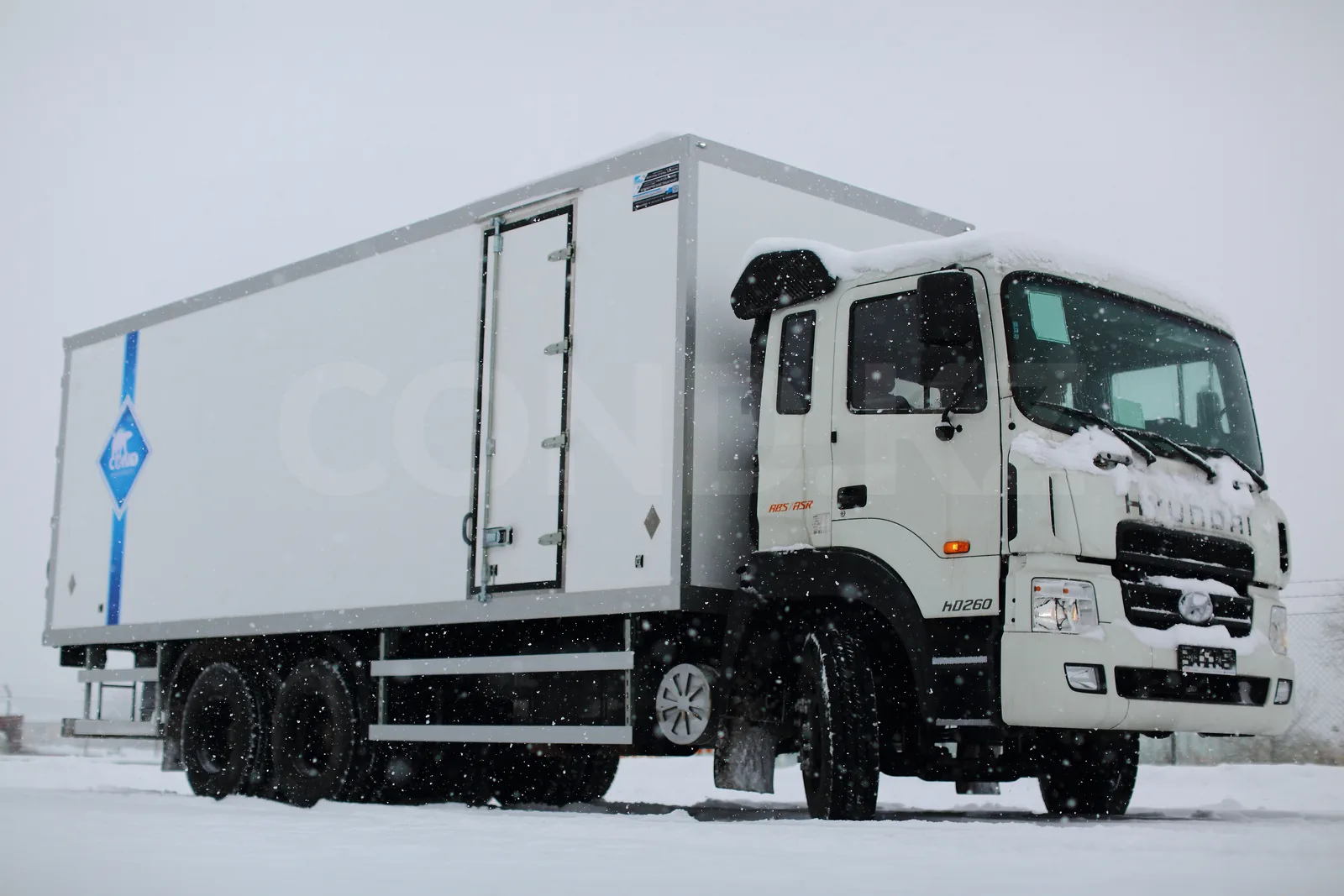
Our other projects in the “insulated van” category. All body types are in the “Vehicles” section.
 ⚪ Completed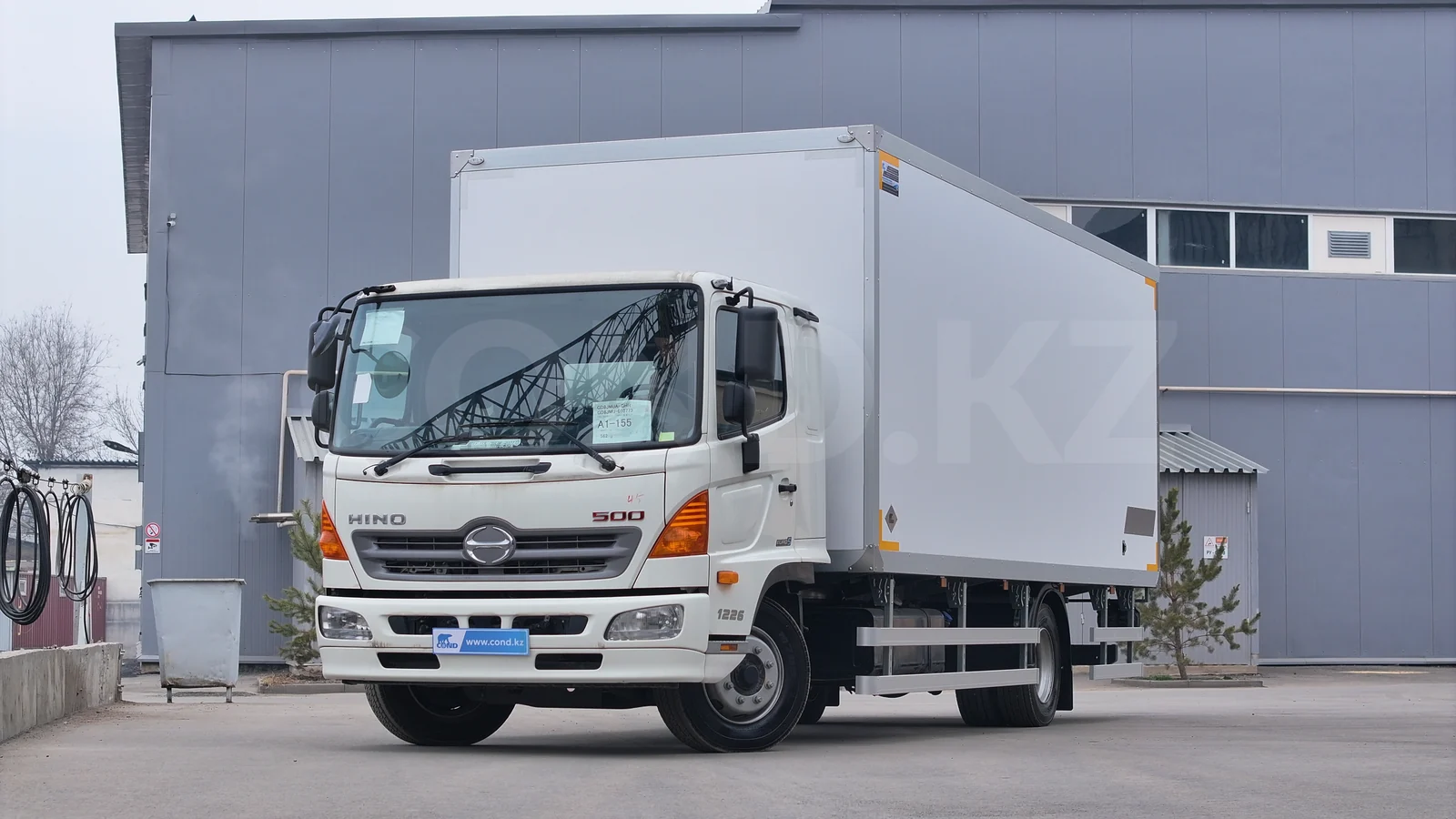
 ⚪ Completed
COND service for this vehicle
Maintenance and repair — at the COND workshop, Almaty.
Unit maintenance under contract · Refrigerant charging and diagnostics · Seal replacement · Body repair: floor, walls, doors, roof