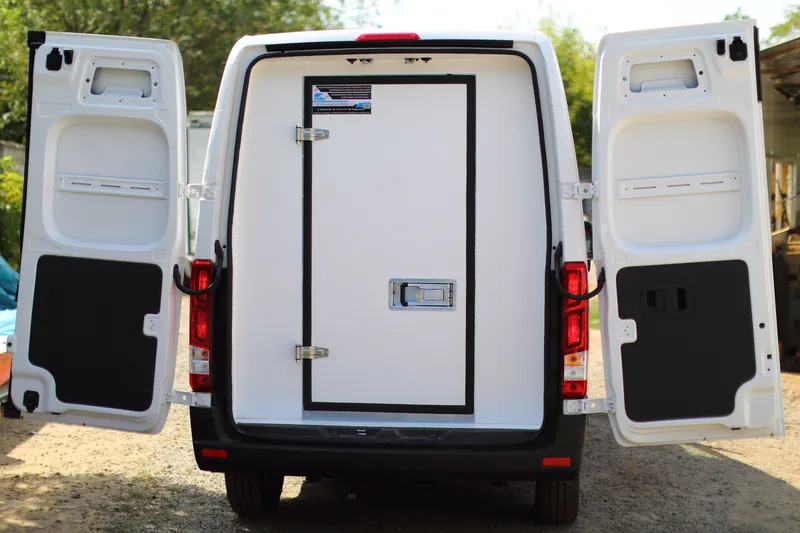
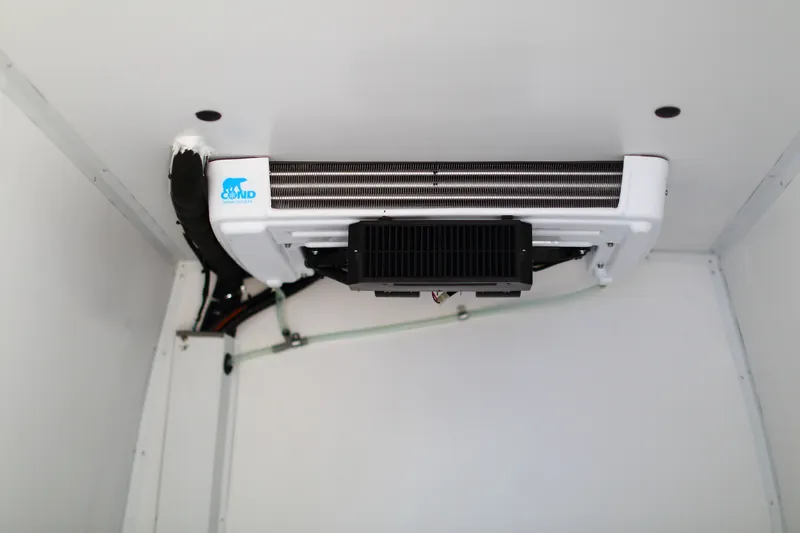
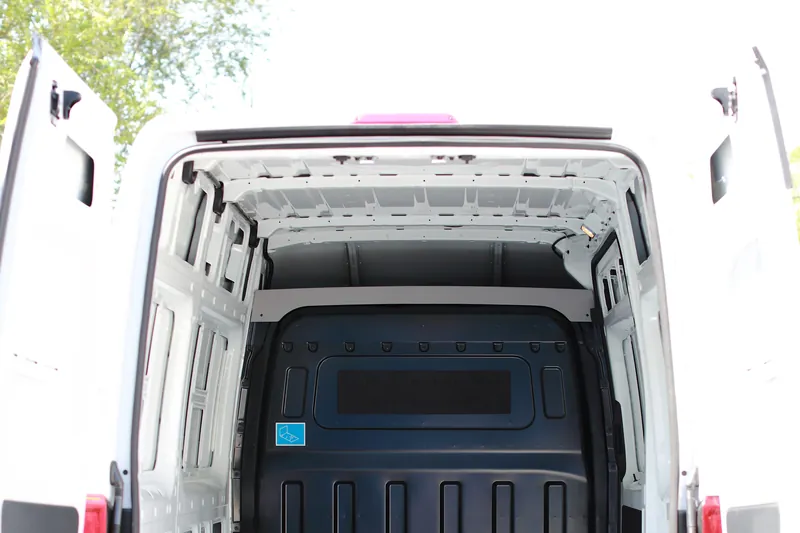
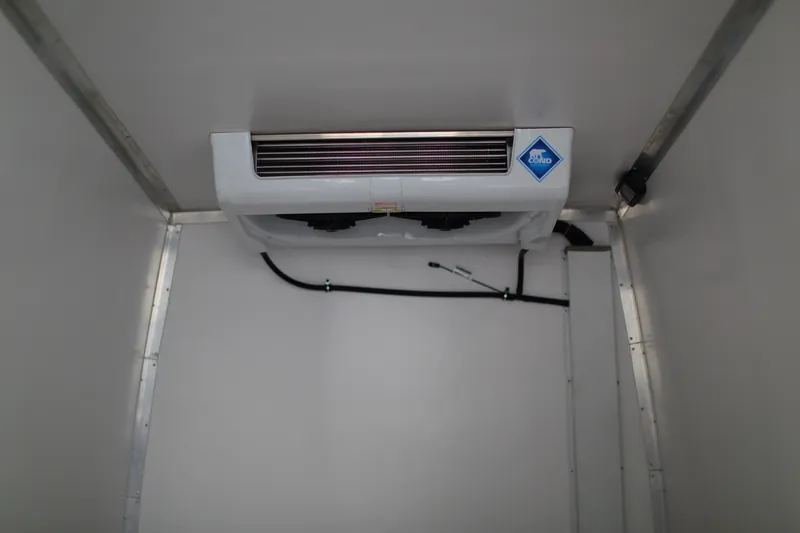
A panel van is converted from the inside: the cargo area is insulated with 50–100 mm polyurethane foam or sandwich panels, the walls are lined with FRP (fibreglass), anti-slip plywood or chequer-plate aluminium is laid on the floor, and a Carrier or Elinge refrigeration unit is mounted on the roof where required. Lead time from 4 weeks, price from 1,500,000 ₸; COND registers the conversion in the vehicle registration document.
A panel van is converted into a reefer from the inside: the walls, floor, roof and doors are covered with 50–100 mm of insulation, thermal bridges along the frame are eliminated, the walls are lined with FRP (fibreglass), anti-slip plywood is laid on the floor, and a Carrier or Elinge refrigeration unit is mounted on the roof. The insulation thickness sets the temperature mode: 50 mm — chilled 0…+6 °C, 80 mm — frozen down to −18 °C, 100 mm — frozen at +40 °C outside. The usable volume shrinks by twice the insulation thickness in each dimension. Lead time from 4 weeks, price from 1,500,000 ₸. COND registers the conversion in the vehicle registration document.
| parameter | value |
|---|---|
| Insulation | sprayed polyurethane foam and sandwich panels made by COND |
| Thickness | 50 / 80 / 100 mm — by temperature mode |
| Temperature mode | from 0…+6 °C to −18…−20 °C |
| Refrigeration unit | Carrier (Citimax), Elinge — selected by volume and mode |
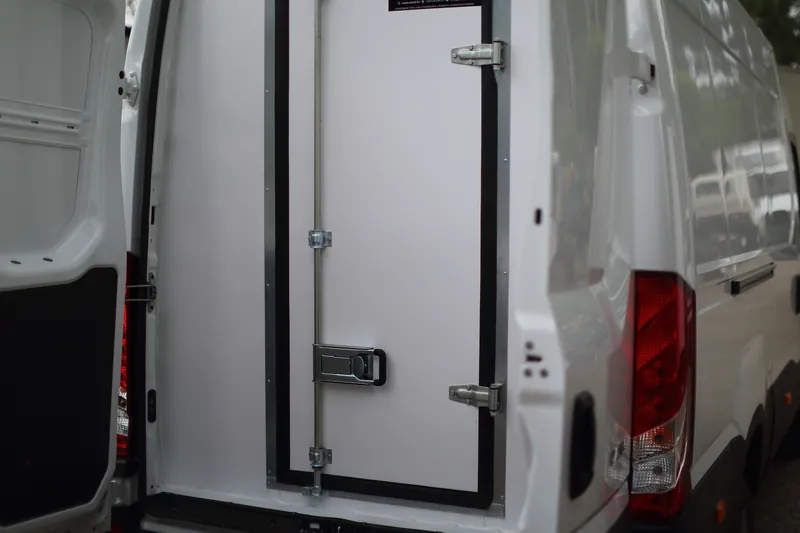
| Doors | insulated door leaves, insulated inner door in the opening, triple-chamber seal |
| Wall lining | FRP (fibreglass) |
| Floor | anti-slip plywood; option — chequer-plate aluminium |
| Documents | conversion entry in the registration document — handled by COND |
| Lead time | from 4 weeks |
| Price | from 1,500,000 ₸ |
| example | inside after conversion | volume |
|---|---|---|
| JAC M4, panels and spray foam along the inner contour | 2,300 × 1,550 × 1,200 mm | ≈4.3 m³ |
With 100 mm insulation the cargo area loses 200 mm in length, width and height; with 50 mm, 100 mm.
An insulated body is made from a panel van by insulating the cargo area from the inside: the walls, roof, floor and doors are covered with polyurethane foam or sandwich panels, thermal bridges along the frame are eliminated, the walls are lined with FRP (fibreglass), and the doors get a triple-chamber seal. Without a refrigeration unit an insulated body does not cool; it slows down the warming and cooling of the cargo. A unit can be added later — the body is already prepared for it. Thickness: 50 mm — for chilled cargo on short runs, 80–100 mm — if freezing is planned later.
| insulated body | reefer | |
|---|---|---|
| What it holds | cargo temperature, without active cooling | the set mode for the whole trip |
| Insulation | 50–100 mm | 50–100 mm by mode |
| Refrigeration unit | none (can be added later) | Carrier or Elinge |
| Used for | short runs, pre-chilled cargo | frozen goods, pharma, long routes |
| parameter | value |
|---|---|
| Insulation | polyurethane foam, sandwich panels made by COND |
| Thickness | 50 / 80 / 100 mm |
| Doors | insulated door leaves, triple-chamber seal |
| Wall lining | FRP (fibreglass) |
| Floor | anti-slip plywood; option — chequer-plate aluminium |
| Lead time | from 4 weeks |
The cargo area walls of a panel van are lined with FRP (fibreglass) — a sheet that protects the body from cargo impacts and moisture, does not corrode and withstands regular washing. In an insulated body the lining goes over the insulation; in a dry van it is fixed to the frame. Joints are sealed, corners are finished with aluminium profiles.
| parameter | FRP fibreglass |
|---|---|
| Used for | food, pharma, general cargo; insulated bodies and reefers |
| Properties | does not corrode, does not absorb moisture, withstands washing |
| Colour | white |
| Corners and joints | aluminium profile, sealant |
The cargo floor of a van is laid with anti-slip plywood: the mesh-textured surface keeps cargo and footwear from slipping, and the laminated face does not absorb water. Option — chequer-plate aluminium: unaffected by water and washing, takes trolleys. For reefers and insulated bodies the floor is sealed and turned up onto the walls so that moisture does not reach the insulation.
| material | use |
|---|---|
| Anti-slip plywood | standard floor |
| Chequer-plate aluminium | option: frequent washing, trolleys, heavy cargo |
Recessed and surface-mounted cargo securing rings and lashing rails are in the COND fittings catalogue.
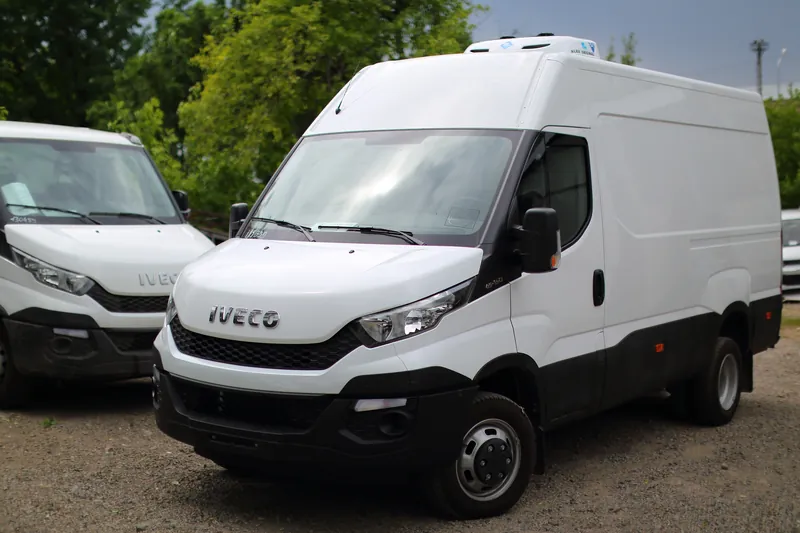
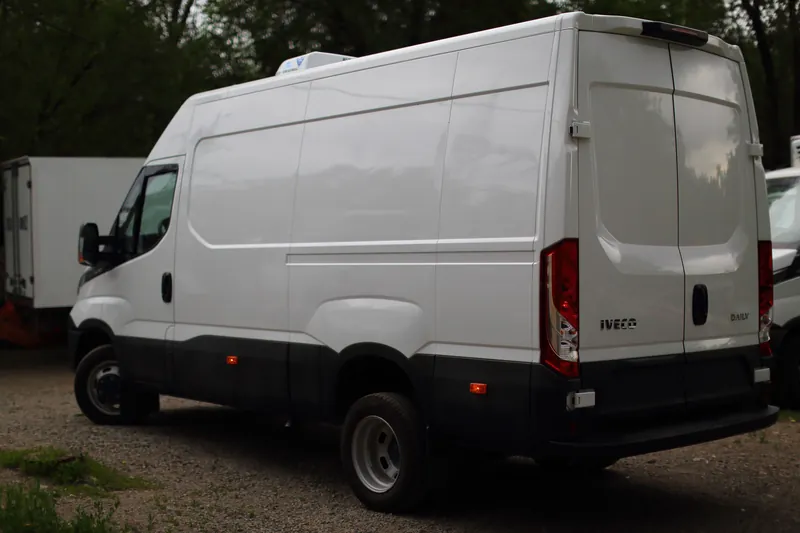
An Iveco Daily 45C15 panel van converted into a reefer: insulated cargo area, wall lining, floor, insulated inner door in the rear opening, roof-mounted refrigeration unit.


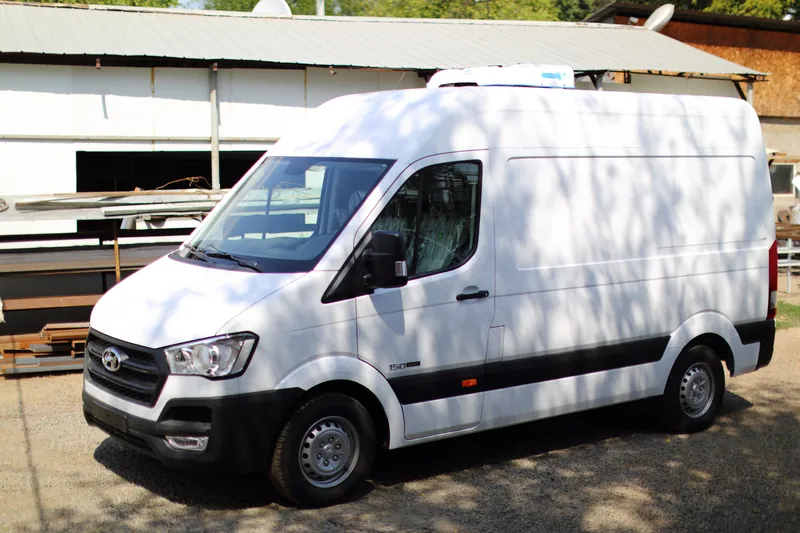
A Hyundai H350 panel van converted into a reefer: insulated cargo area, wall lining, floor, insulated inner door, roof-mounted refrigeration unit.


Another project: JAC M4 — reefer built from a panel van (Carrier Citimax 280, ≈4.3 m³). Lada Largus reefers with a roof-mounted unit.
Twice the insulation thickness on each side: with 100 mm, 200 mm in length, width and height.
It is selected by volume and temperature mode: Carrier Citimax (the JAC M4 has a Citimax 280) or Elinge.
80 mm — down to −18 °C in normal conditions, 100 mm — in heat up to +40 °C outside.
Yes, a reefer conversion is recorded in the registration document. COND handles the entry.
From 1,500,000 ₸, lead time from 4 weeks. The exact price depends on the van model, insulation thickness and refrigeration unit.
An insulated body slows down changes in cargo temperature; a reefer holds the mode with a refrigeration unit.
Yes, if the insulation thickness is designed for the required mode; with 50 mm, frozen transport is not possible.
Twice the thickness in each dimension.
Polyurethane foam and sandwich panels made by COND.
FRP fibreglass: it does not corrode, does not absorb moisture and withstands washing, so it suits food and pharma.
Yes: the sheet protects the body from impacts and moisture.
A lashing rail is fitted flush into the wall (as on COND dry-freight bodies).
Anti-slip: the mesh texture does not slip and the laminated face does not absorb water.
Anti-slip plywood is the standard; chequer-plate aluminium is fitted as an option when the floor is washed often and trolleys run on it.
Yes — recessed and surface-mounted.
Describe the job — we will discuss the details and timing.
📞Phone