| Version type | Crew bus |
| Chassis | KAMAZ 43502 (4×4), 240–300 hp |
| Wheel arrangement | 4×4 |
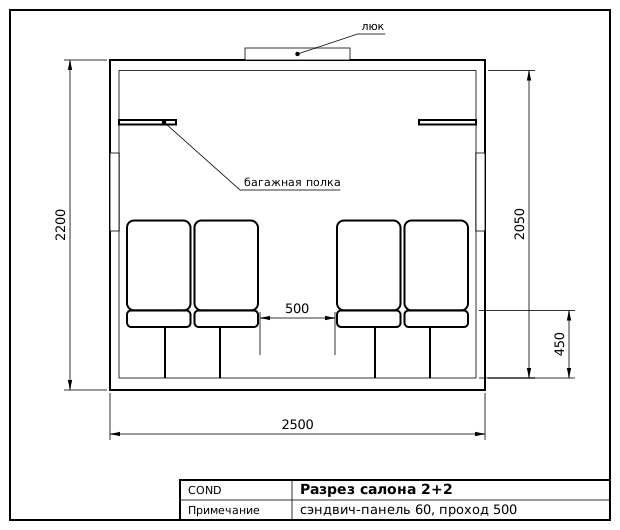
| Number of seats | 20 in the module + 2 in the cab |
| Berths | — |
| Module dimensions, external | 5000 × 2500 × 2200 mm |
| Module dimensions, internal | 4840 × 2340 × 2050 mm |
| Body panels | sandwich 60 mm; 80 mm — to order |
| Module heating | autonomous heater — in the base version |
| Cabin air conditioning | option, not included in the base equipment |
| Module weight | up to 3,000 kg with equipment |
| Vehicle category | C |
| Production time | 60–90 days |
| Place of delivery | Almaty, mounting on the customer's chassis or a new chassis to order |
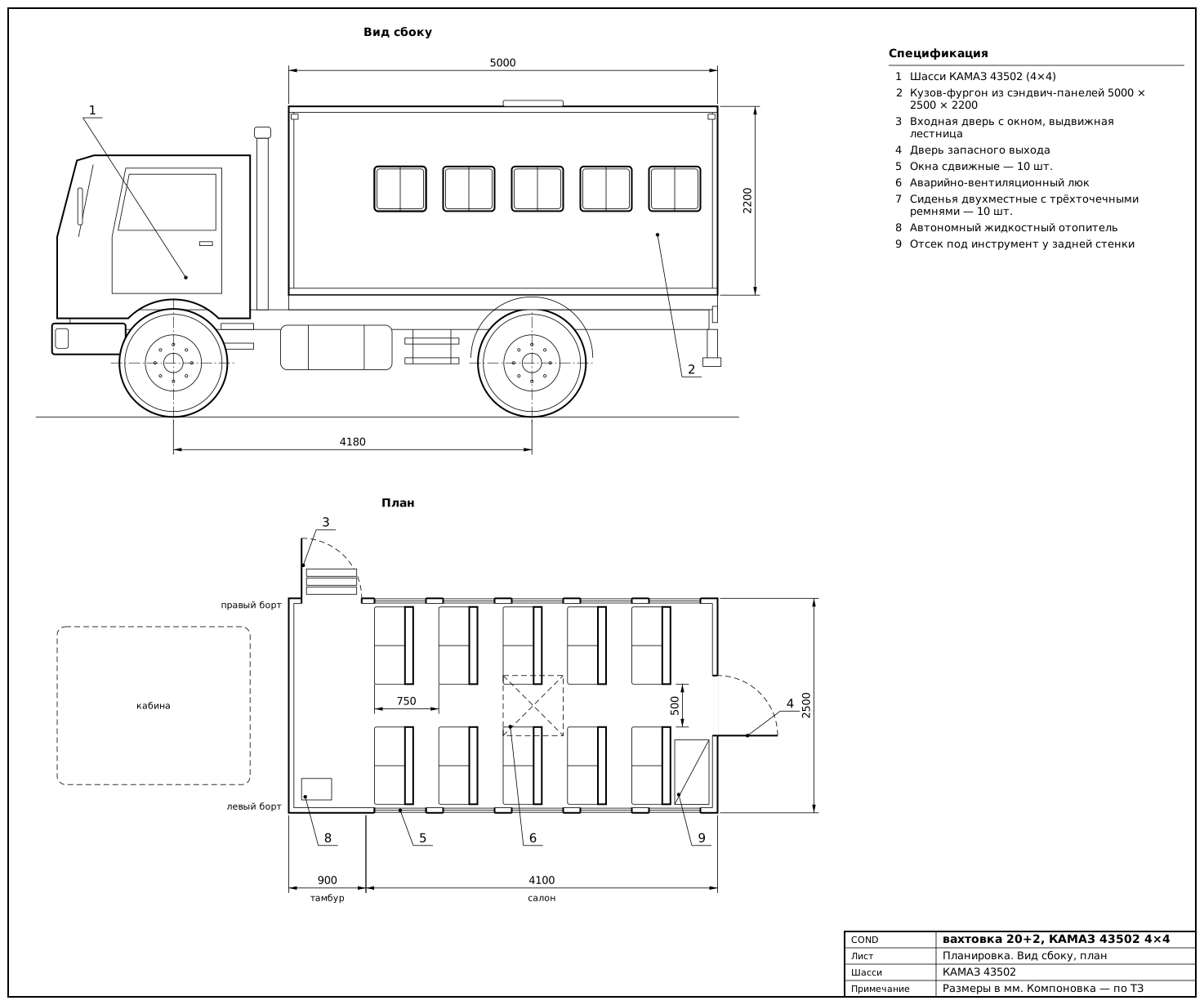
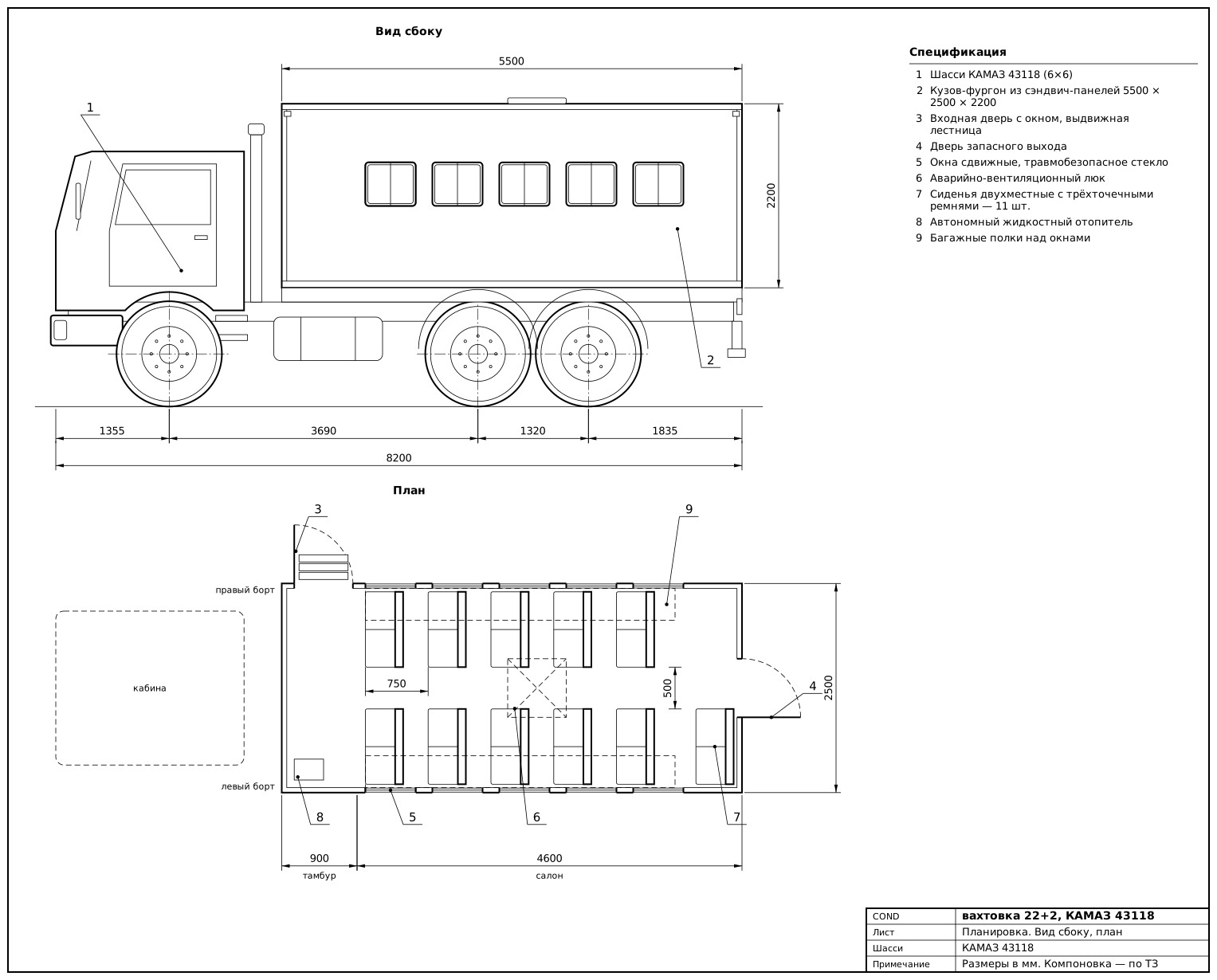
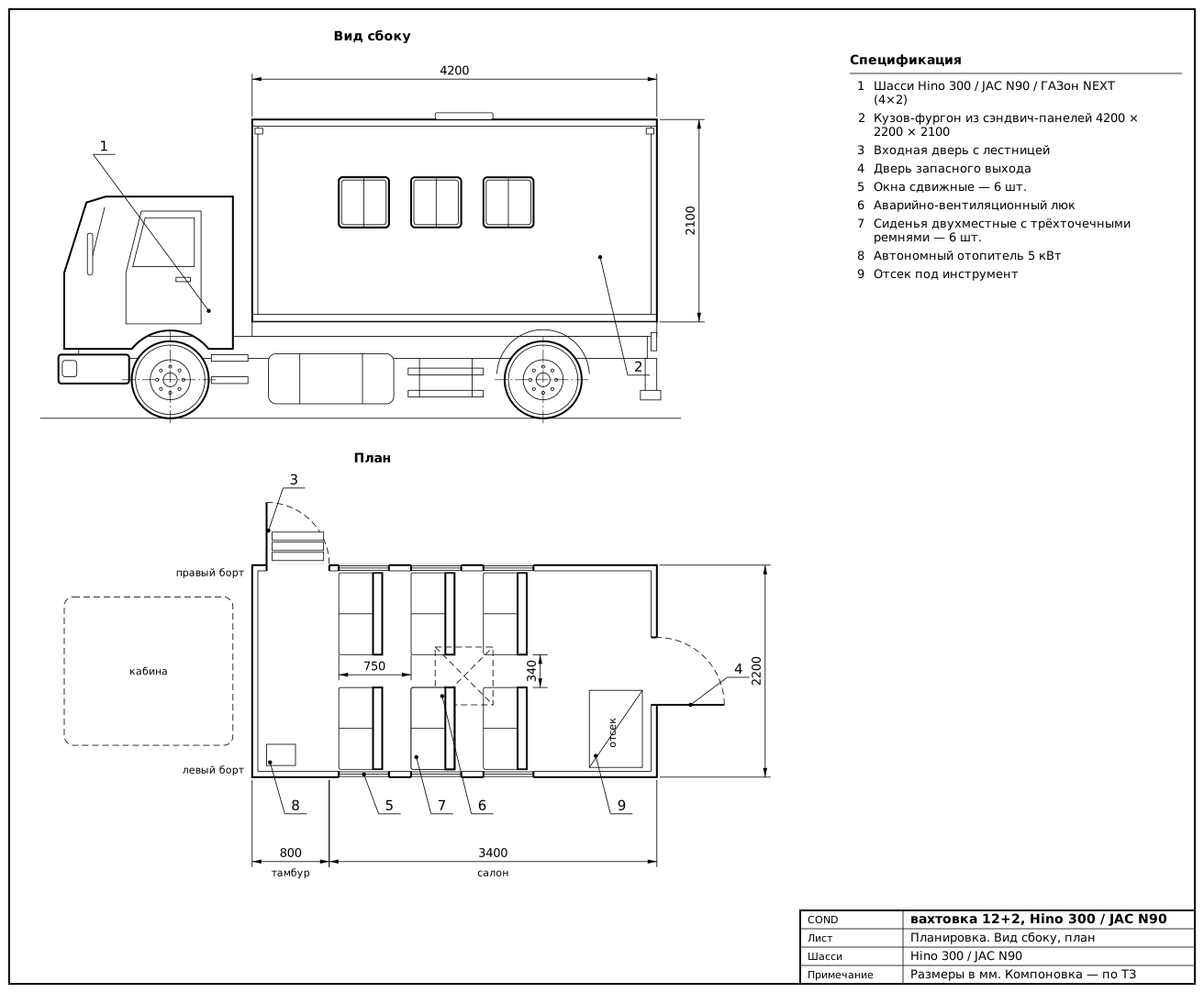
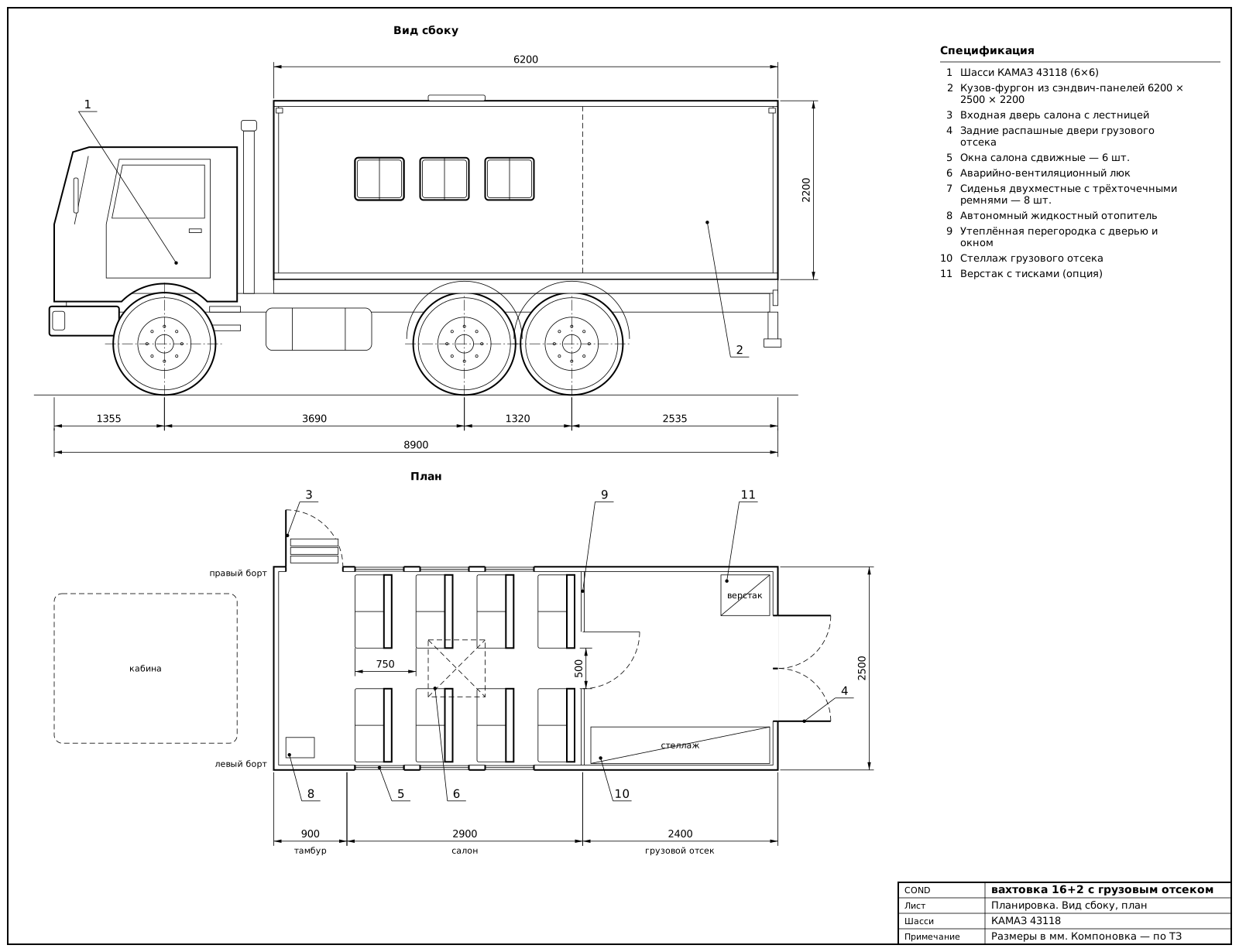
In the drawing the cab is on the left; the side view shows the left side, and in the plan the right side with the entrance door is at the top. The seats face the cab.
Vestibule 900 mm with the entrance on the right and a heater under the first row.
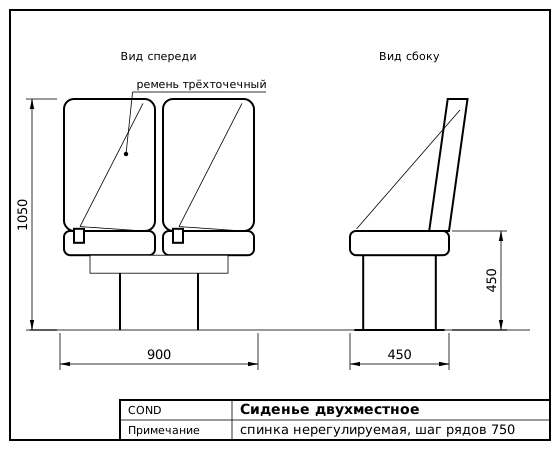
Cabin 4100 mm: five 2+2 rows — 20 seats, at the rear wall between the door and the side — a closed compartment for tools and workwear.
The arrangement in the drawing is the base one. The number of rows and the positions of partitions, doors and equipment are recalculated for the customer's task and the usable frame length of the specific chassis.
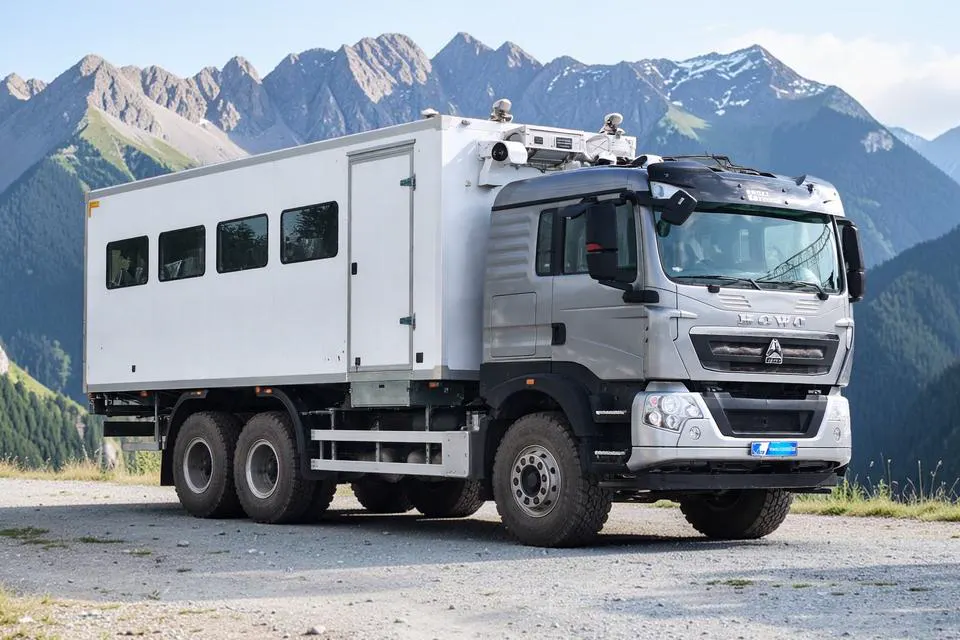
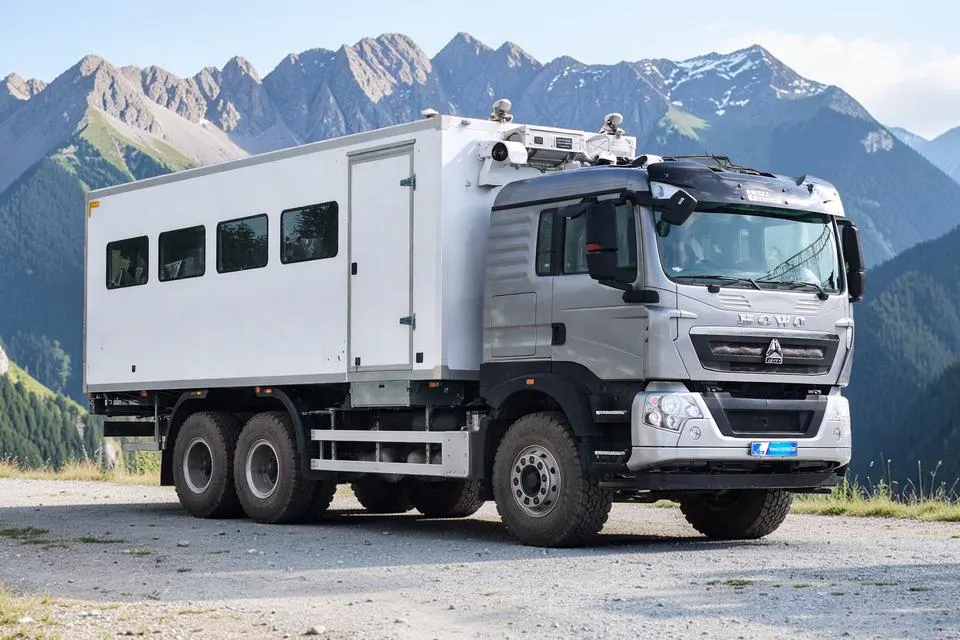
Panel-type van body of multilayer frame sandwich panels. The outer skin is galvanised sheet with a polymer coating; the inner skin is impact-resistant FRP plastic, which can be washed and withstands blows from tools and footwear. Panel thickness is 60 mm, 80 mm to order.
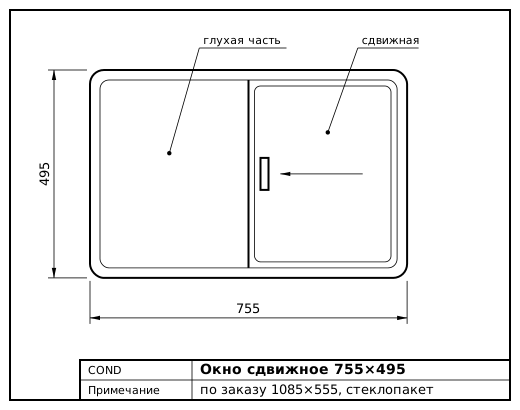
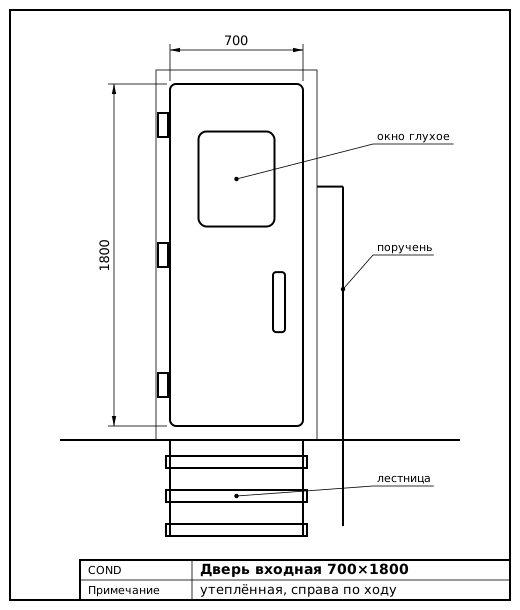
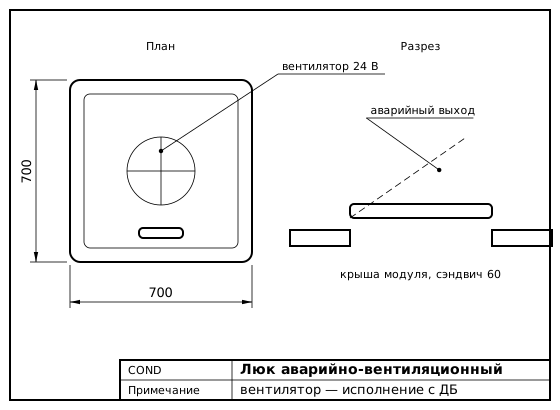
The entrance door is single-leaf, insulated, moisture- and dust-proof, with a fixed window; it is located on the right in the direction of travel. The emergency exit door is on the rear wall, of the same construction. Side windows are sliding, of safety glass, fixed on the angled corners. An emergency ventilation hatch is in the roof.
The main heating is an autonomous liquid heater; the emergency one is from the cooling system of the chassis engine. 24 V lighting, a “cabin — cab” intercom, a fire extinguisher, and an additional protective device (rear underrun protection) on the rear overhang of the chassis.

Leave your contacts — we will discuss your job and select the right option.
📞Phone