
A turnkey refrigerator: how to build a refrigerator vehicle in Kazakhstan
Published:
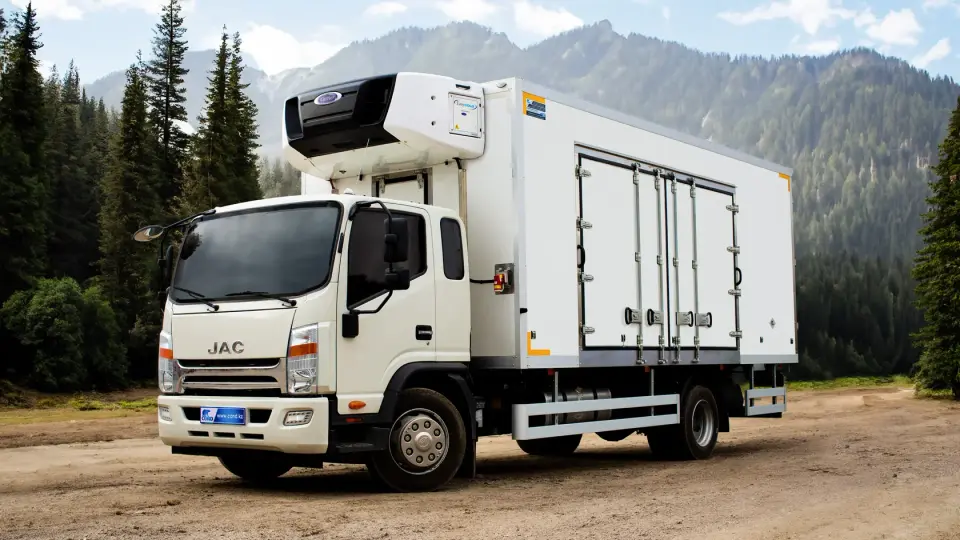
'Turnkey' means a finished vehicle: chassis, insulated body, refrigeration unit and documents. We break down what such a project consists of and how not to overpay for air.
Quote is based on body, chassis and temperature range.
What a 'turnkey' refrigerator means
'Turnkey' is a finished vehicle, not a set of jobs: you get a chassis, an insulated body, a refrigeration unit of the right power, installation, charging and the documents for registration. The contractor's task isn't just to 'fit a unit' but to assemble a 'chassis + body + cold' package that holds the right temperature on your routes and in our climate. Below is how such a project is built step by step.
Step 1. Cargo, mode and temperature
The starting point is what you carry and at what temperature. The whole project depends on it:
- chilled goods (dairy, vegetables, fruit) — 0…+6 °C;
- freezing (meat, fish, semi-finished products) — −18…−20 °C;
- ice cream and deep freezing — down to −24 °C and below;
- multi-mode — two chambers with different temperatures in one body.
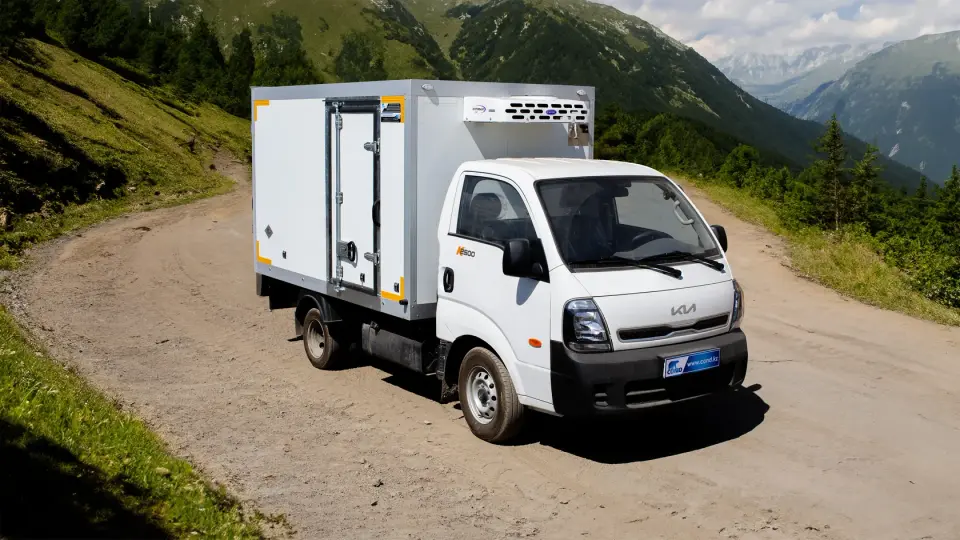
Here the temperature deep in the cargo at loading is also taken into account, and whether you'll carry already-chilled goods (correct) or plan to further cool them en route (then a unit with a capacity reserve is needed). Different cargoes have their own requirements: strawberries and berries fear freezing and need mild cold and ventilation, fresh meat — a steady 0…+2 °C, freezing — a stable −18 °C without spikes.
Step 2. Body: insulation for the climate
The body is a 'thermos' on which whether the unit copes depends. The key parameter is the wall insulation (the heat-transfer coefficient — the lower the better). The sandwich-panel thickness is chosen for the mode: 50–60 mm for chilling, 80 mm for a mild minus, 100 mm for freezing allowing for the summer +40. The 'weak spots' matter too: the rear portal, door seals, the absence of through cold bridges. A cheap body cancels out any unit.
Step 3. Volume and pallet capacity
The body's length and width are determined by the number of pallets per trip, not 'by eye'. Calculate the capacity in the van configurator: it will show how many europallets fit, the resulting internal volume allowing for panel thickness, and how to arrange the cargo. Allow gaps for airflow — a body packed to the ceiling won't cool evenly.
Step 4. Refrigeration unit: selection by heat gain
The unit is selected not 'by eyeball volume' but by the body's calculated heat gain and the required mode, with a power margin for the climate. Drive types:
- engine-driven (Carrier Citimax, Elinge, Kaida) — compact, without separate fuel, for the city and medium hauls;
- self-powered (their own diesel) — hold cold when parked and on long hauls;
- with an electric drive 220/380 V (backup mains power) — for multi-temperature and long-haul transport, running on mains power at the warehouse.
We select brands to suit the task and budget: Carrier — the world leader, Elinge — the price/quality optimum, Kaida — budget models, in stock. A ready example for a light chassis — fitting refrigeration equipment on a GAZelle.
Step 5. Documents and registration
Conversion to a refrigerator is a design change that is registered: in Kazakhstan this is changing the vehicle-passport entry. We prepare a set of documents for the body and the installed equipment so the vehicle is registered without trouble.
What the price is made of
Cost = chassis + insulated body + refrigeration unit + installation and charging. The body depends on the length and thickness of the panels, the unit — on power and drive type. The engineering department calculates an exact estimate on request. If the budget is limited, it's often more profitable to take a ready standard vehicle — see the section ready vehicles.
Lead times, warranty and an acceptance checklist
A typical project: body — from 15 working days, unit — 5–7 days. On new chassis the factory warranty is preserved; we give a separate warranty on the equipment. When accepting the vehicle, check:
- the unit reaches the set mode and holds it with the doors closed;
- the doors close tightly, the seals fit along the whole contour;
- there are no extraneous compressor noises, the defrost cycle works;
- there's a passport for the equipment, warranty documents and papers for the vehicle passport.
FAQ
How much does a turnkey refrigerator cost?
Which to choose: build turnkey or buy a ready refrigerator?
Which unit to choose — engine-driven or self-powered?
The service page:A refrigerated van body in Almaty