
Which body pays off on a JAC N90: dry freight, isothermal or reefer
Published:
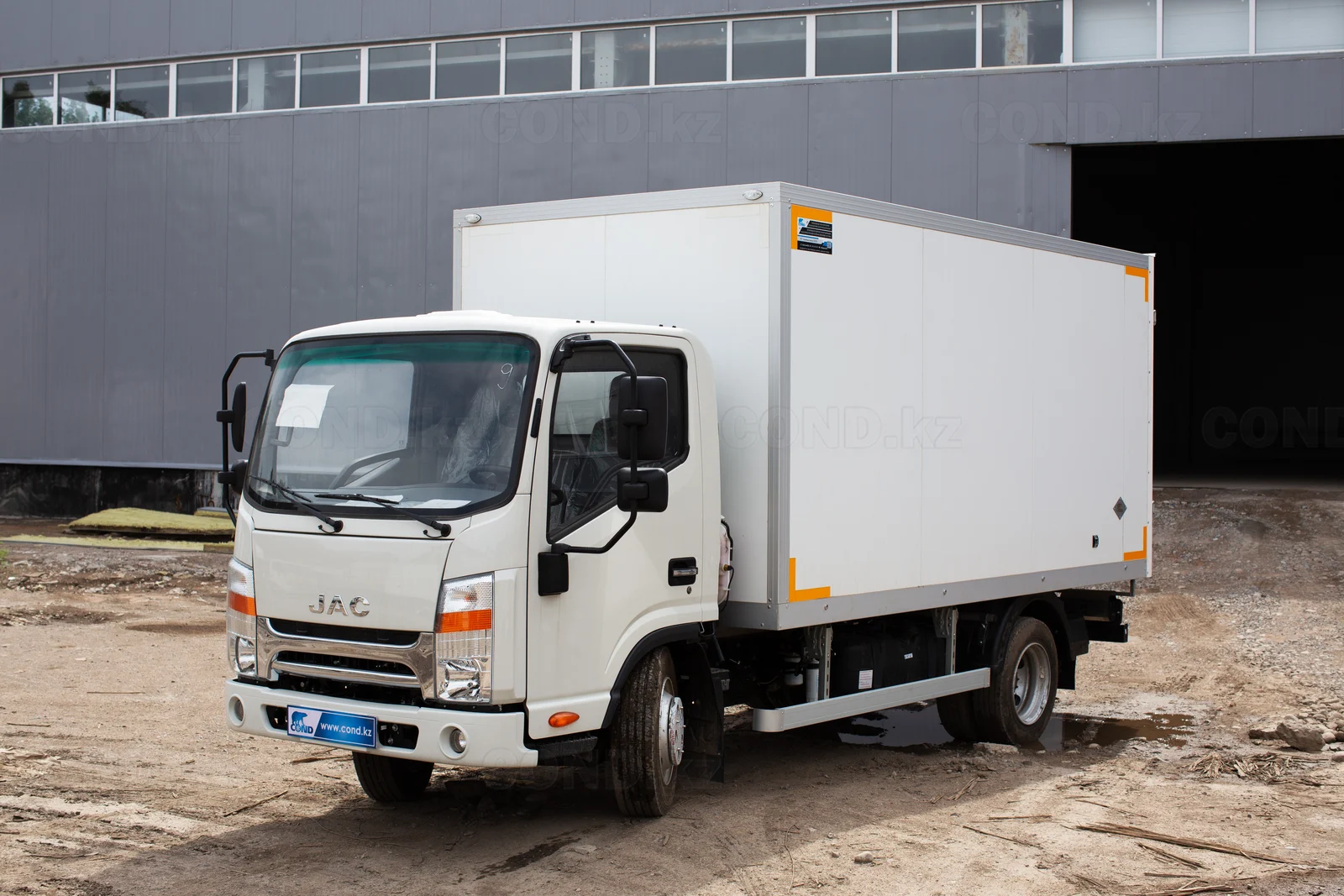
The same truck — three different bodies and three different economics. We break down in numbers which body on a JAC N90 pays off faster.

JAC N90 is one of the most popular chassis in Kazakhstan for urban and intercity delivery. But the body on it can be very different, and how much the vehicle earns depends on this choice.
Quote is based on body, chassis and temperature range.
Dry-freight: maximum volume for minimum money
The lightest and cheapest option. A frame and 25–50 mm sandwich panels without insulation for a temperature mode. Suits furniture, appliances, building materials and packaged goods. It pays off the fastest, but the transport rate is also lower.
Insulated: mid-priced, a wider list of cargo
It holds the cargo in range for 6–8 hours without a refrigeration unit, thanks to slow warming. That opens up food haulage on short runs — the same city delivery for retail chains. The body costs about a third more than a dry freight one, but the rate for food is noticeably higher.
Refrigerated: an expensive entry, the highest rate
With a refrigeration unit the vehicle carries frozen, chilled and pharma goods — cargo with the highest rate per kilometre. Entry is more expensive: a body with a unit. But competition among carriers with working 'cold' is lower, and contracts are longer.
Conclusion
- Carry packaged goods around the city — dry-freight, the fastest return on investment.
- You have access to food retail chains on short hauls — insulated is optimal for price/capability.
- Ready to invest for expensive freezing and pharma contracts — a refrigerator.
Our channel has a video version of this comparison with volume, fuel and profit calculations — see the video section on the home page.