JAC N35 or JAC N56: where the line between categories B and C runs
Published:
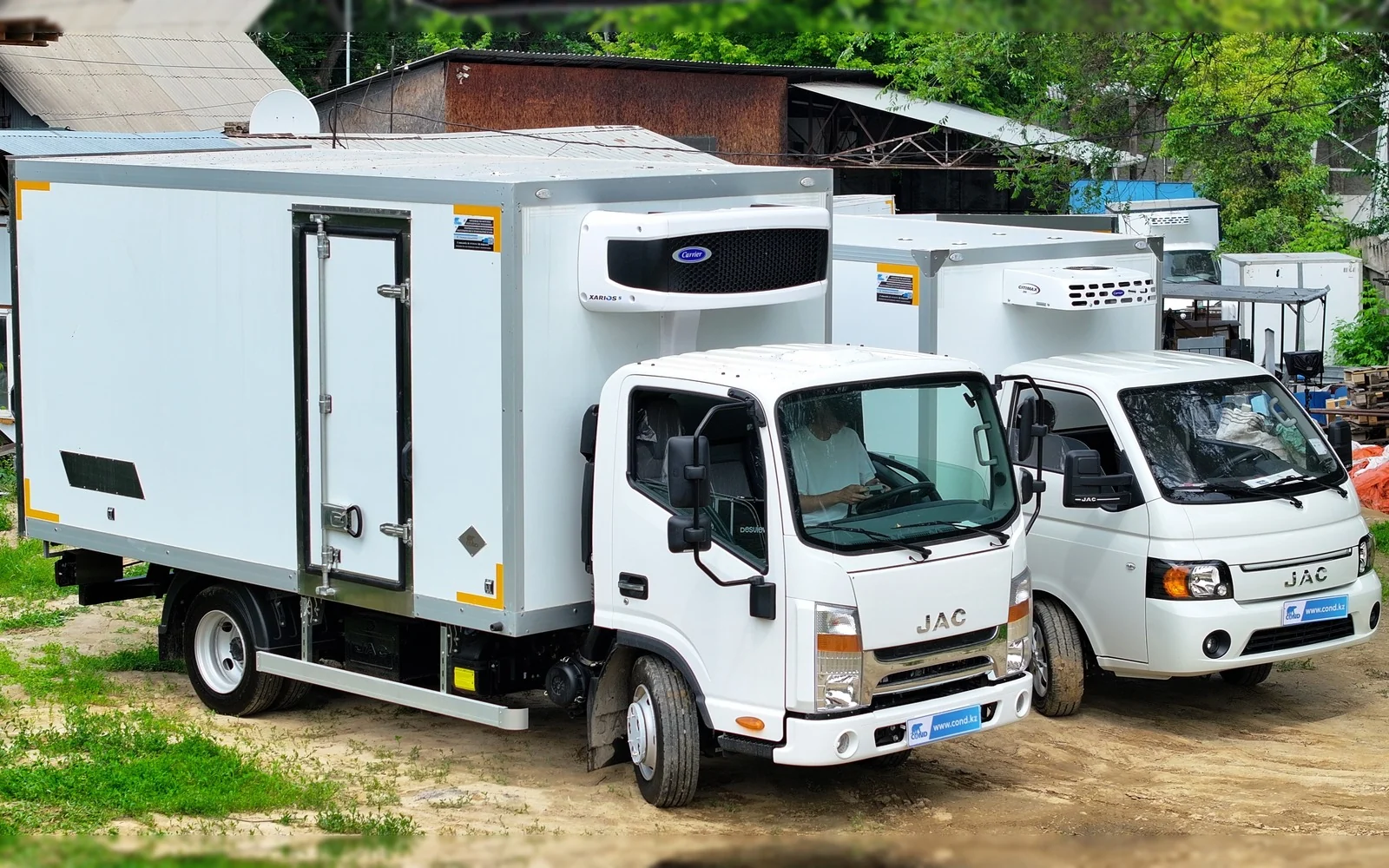
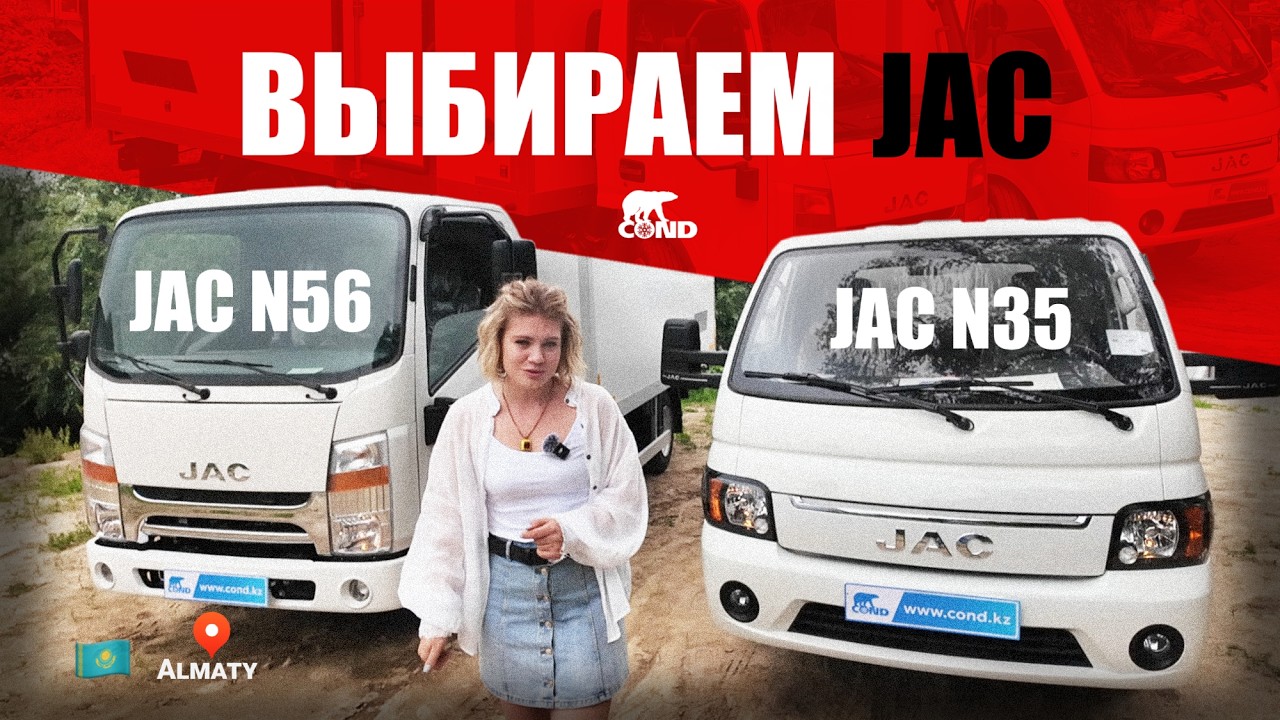
Both are JACs, both diesel, both six-speed manual. Yet the main dividing line in delivery vehicles runs between them: a 3,500 kg gross weight. On one side an ordinary licence, on the other category C and a different driver.
Quote is based on body, chassis and temperature range.
The line runs through the licence
JAC N35 — a gross weight of 3,490 kg. Ten kilograms below the threshold, and that is no accident: the chassis is deliberately kept inside category B. Any driver with an ordinary licence can take the wheel.
JAC N56 — 5,600 kg, which is category C. You need a driver with that category and, with them, different rules on driving and rest hours. If you have no such driver on staff, the payload difference starts not with kilograms but with hiring.
The table
| Parameter | JAC N35 | JAC N56 |
|---|---|---|
| Engine | HFC4DB2-1D diesel, Common Rail | HFC4DE1-1D diesel, Common Rail + SCR |
| Power | 136 hp | 150 hp |
| Torque | 285 N·m at 2,200–2,600 rpm | 355 N·m |
| Gearbox | manual, 6-speed | manual, 6-speed |
| Wheelbase | 2,640 mm | 3,360 mm |
| Gross weight | 3,490 kg | 5,600 kg |
| Chassis payload | 1,900 kg | 3,445 kg |
| Licence category | B | C |
| Body length | up to 3.5 m | 4.2–4.6 m |
| Chassis warranty | 3 years or 200,000 km | — |
What actually changes when you move up to the N56
Nearly double the payload. 3,445 kg against 1,900 kg. For a reefer that is decisive: a body with a refrigeration unit eats into the payload, and on the N35 the margin melts fast.
A body over a metre longer. On the N56 the frame mounting length is 4,295 mm, so a 4.2 m body fits — six Euro pallets in a single row. On the N35 the body is noticeably shorter: that truck is built for boxed delivery, not pallets.
Torque. 355 N·m against 285 N·m. Fully loaded on a climb you feel it at once.
What you give up
Manoeuvrability. A 3,360 mm wheelbase against 2,640 mm — nearly three quarters of a metre. The N56 no longer gets into every yard or underground car park.
Simplicity with drivers. Category B means you can put a storekeeper — or the owner — behind the wheel. With the N56 that is no longer an option.
Which bodies fit
On the JAC N35 we build reefer and isothermal van — the city-delivery format under category B.
On the JAC N56 the range is wider — this is our most popular medium-duty chassis: reefer, insulated van, ice-cream van (and the version with a roof-mounted unit), flatbed and a curtain-side.
How to decide
Work from two numbers: the weight of an average run and whether you have a category C driver. If a run fits into a tonne and a half and you have one driver, the N35 does the job cheaper and gets through where the N56 cannot turn. If you keep hitting the weight limit or carry pallets, moving up to the N56 pays for itself and you will not want to go back.
The in-between case is when the weight is right on the edge. Then we look at the body: a reefer is heavier than an insulated van, an insulated van heavier than a dry-freight one. Sometimes the same task is solved by changing the body type rather than the chassis.