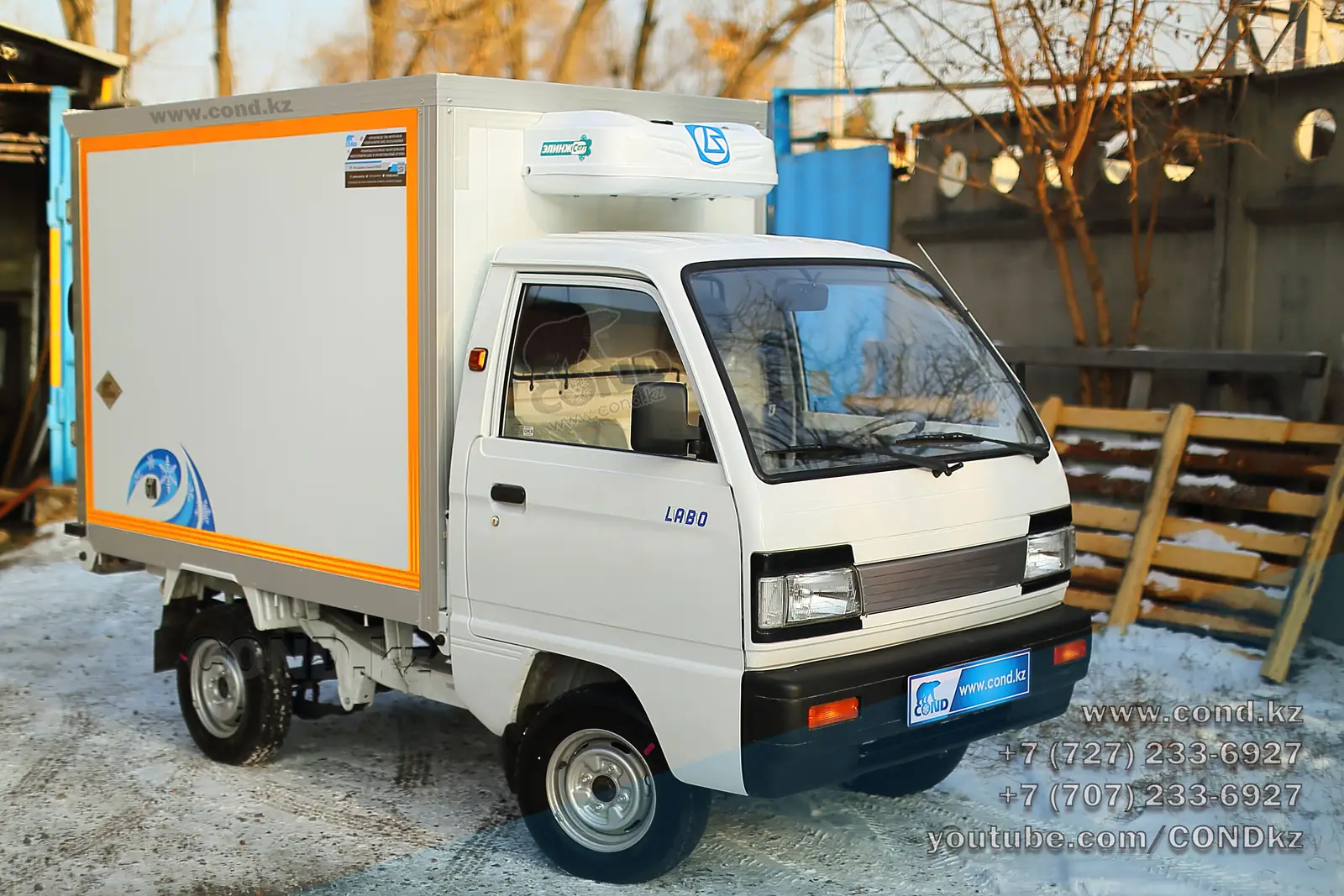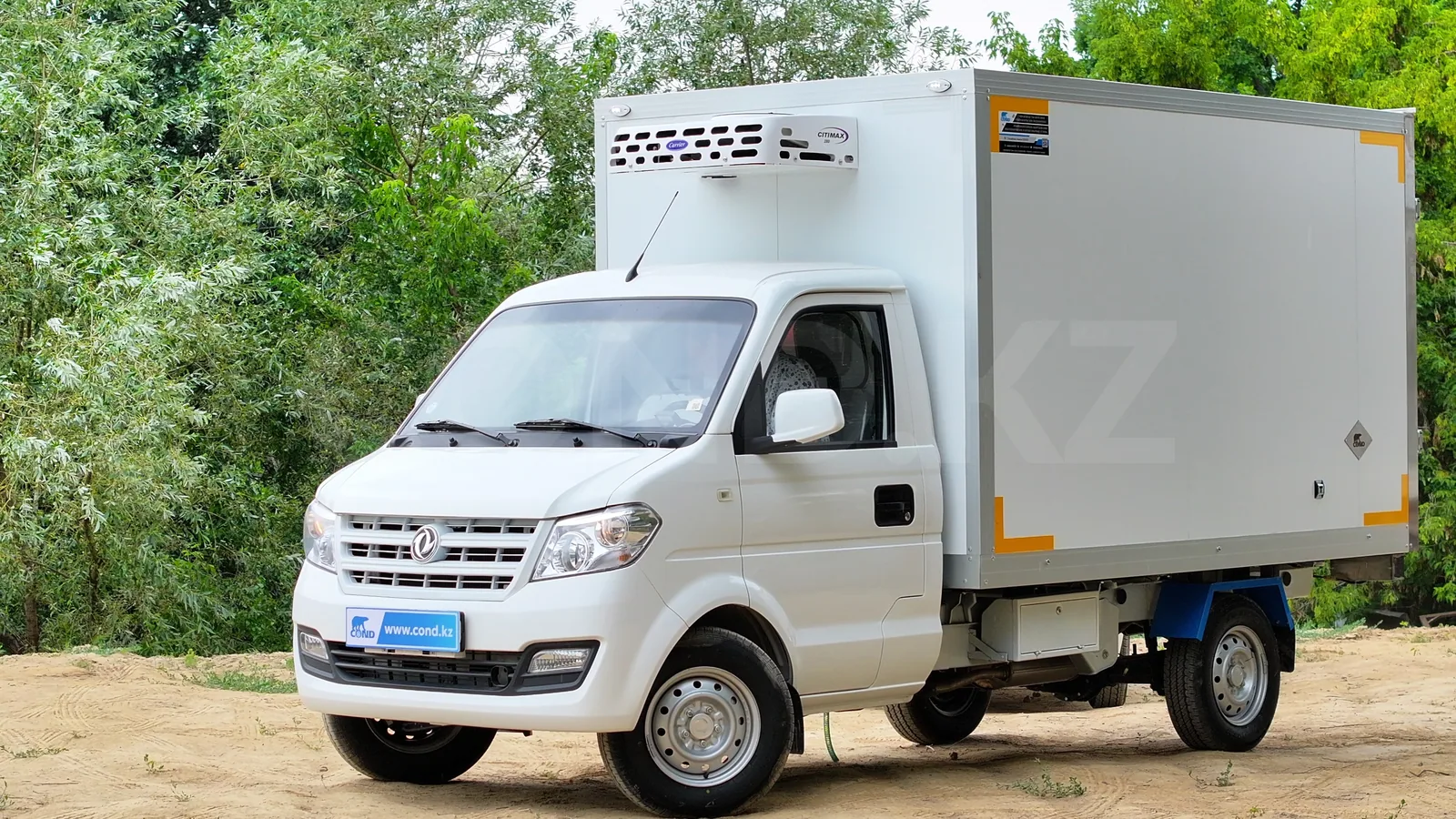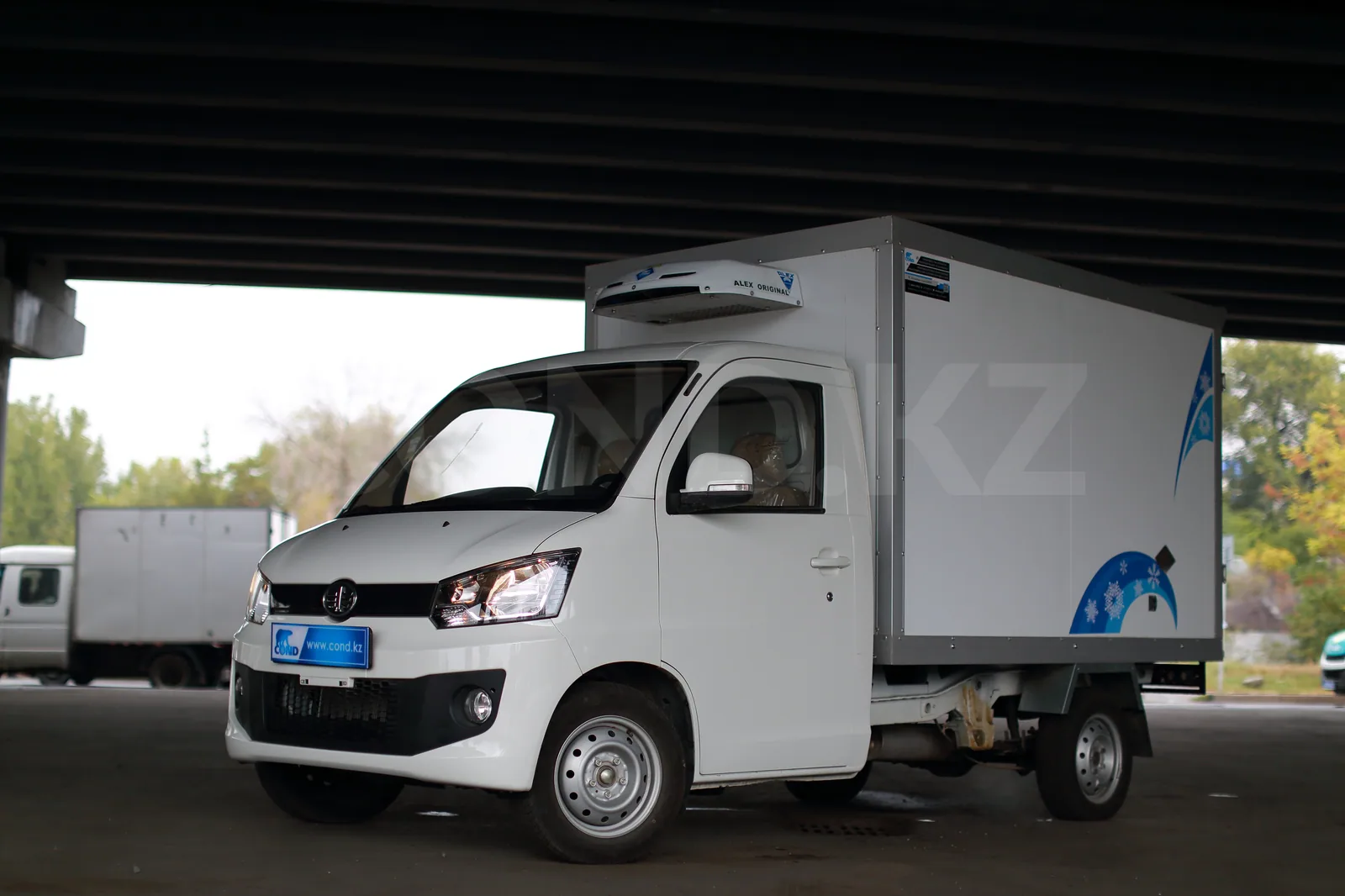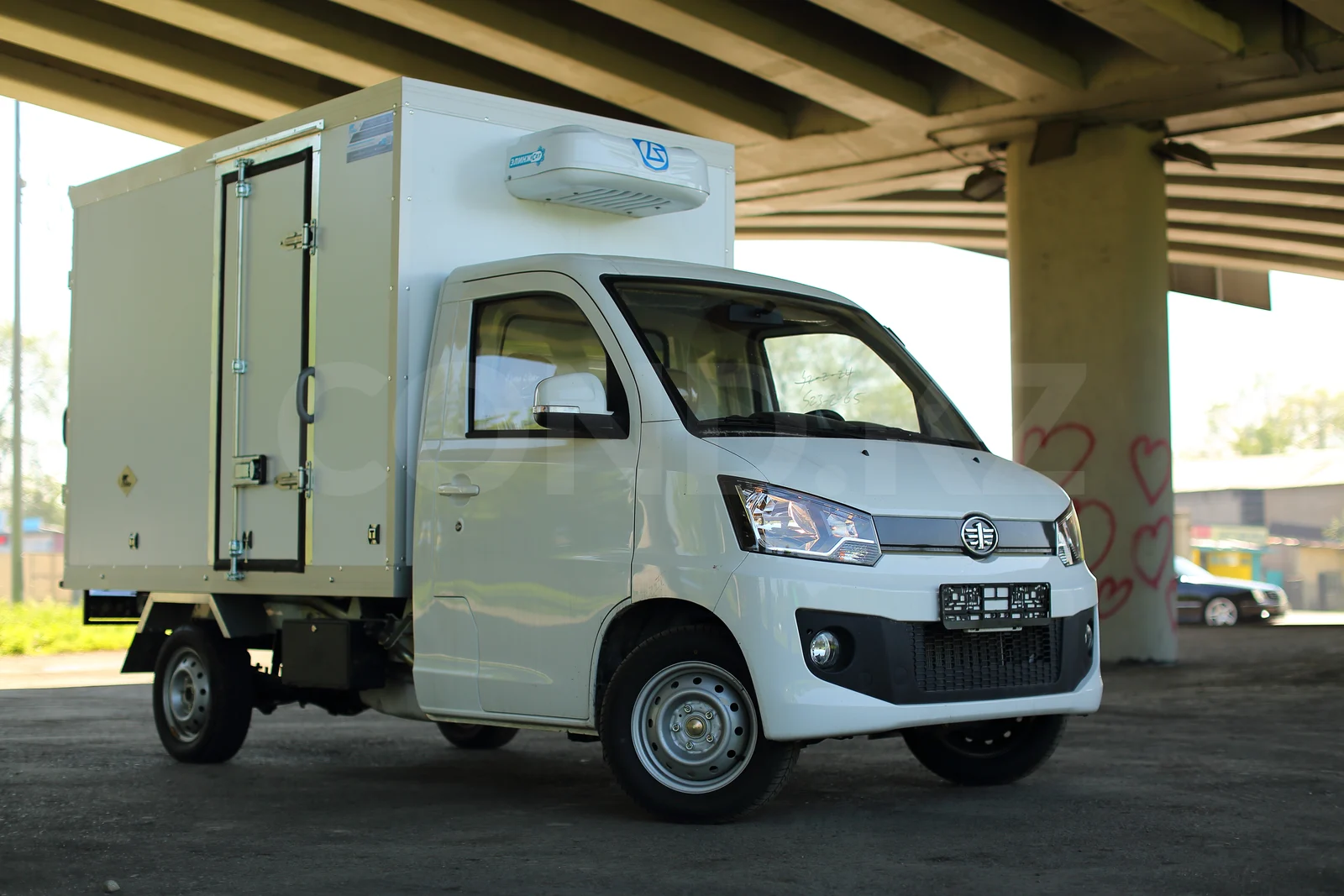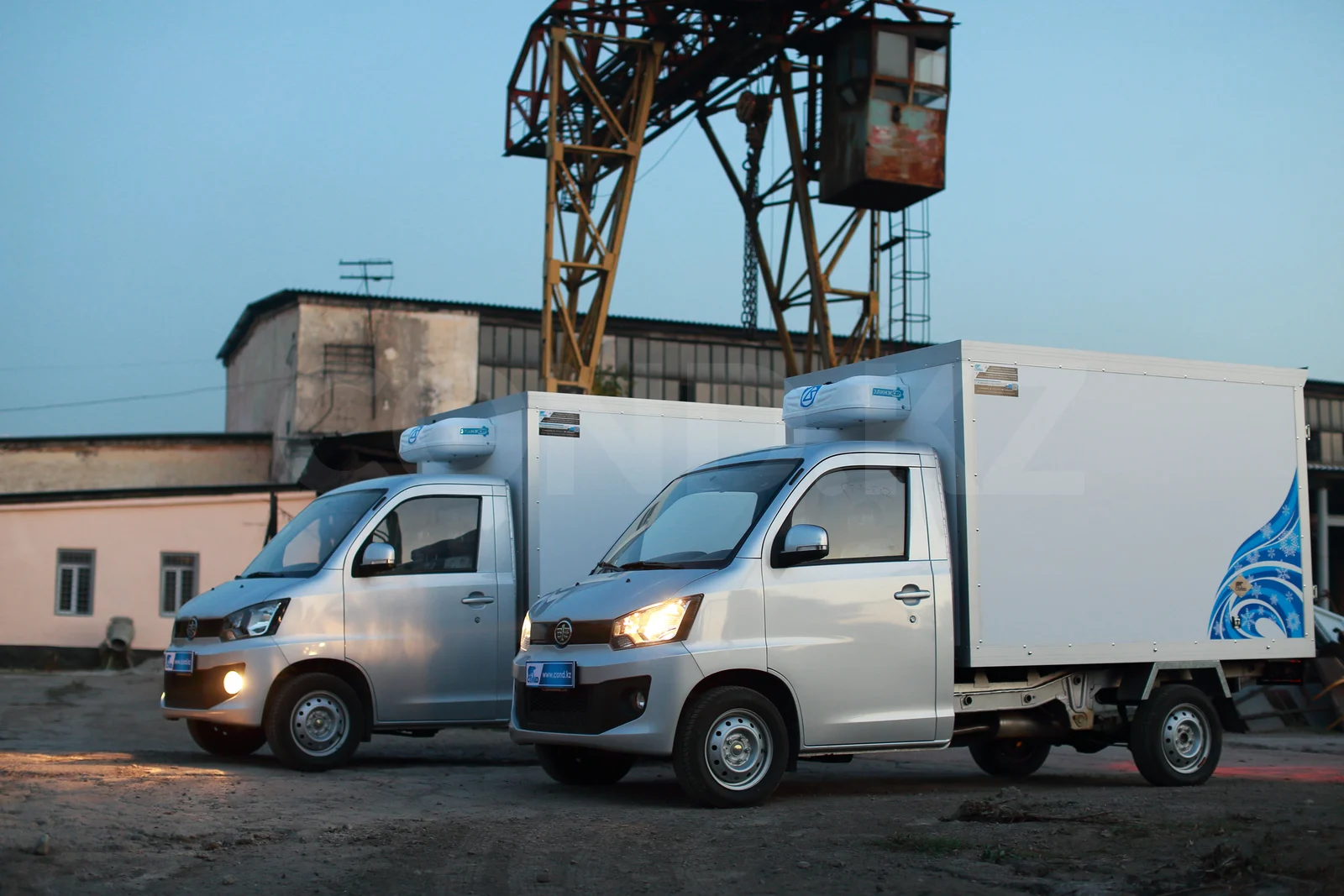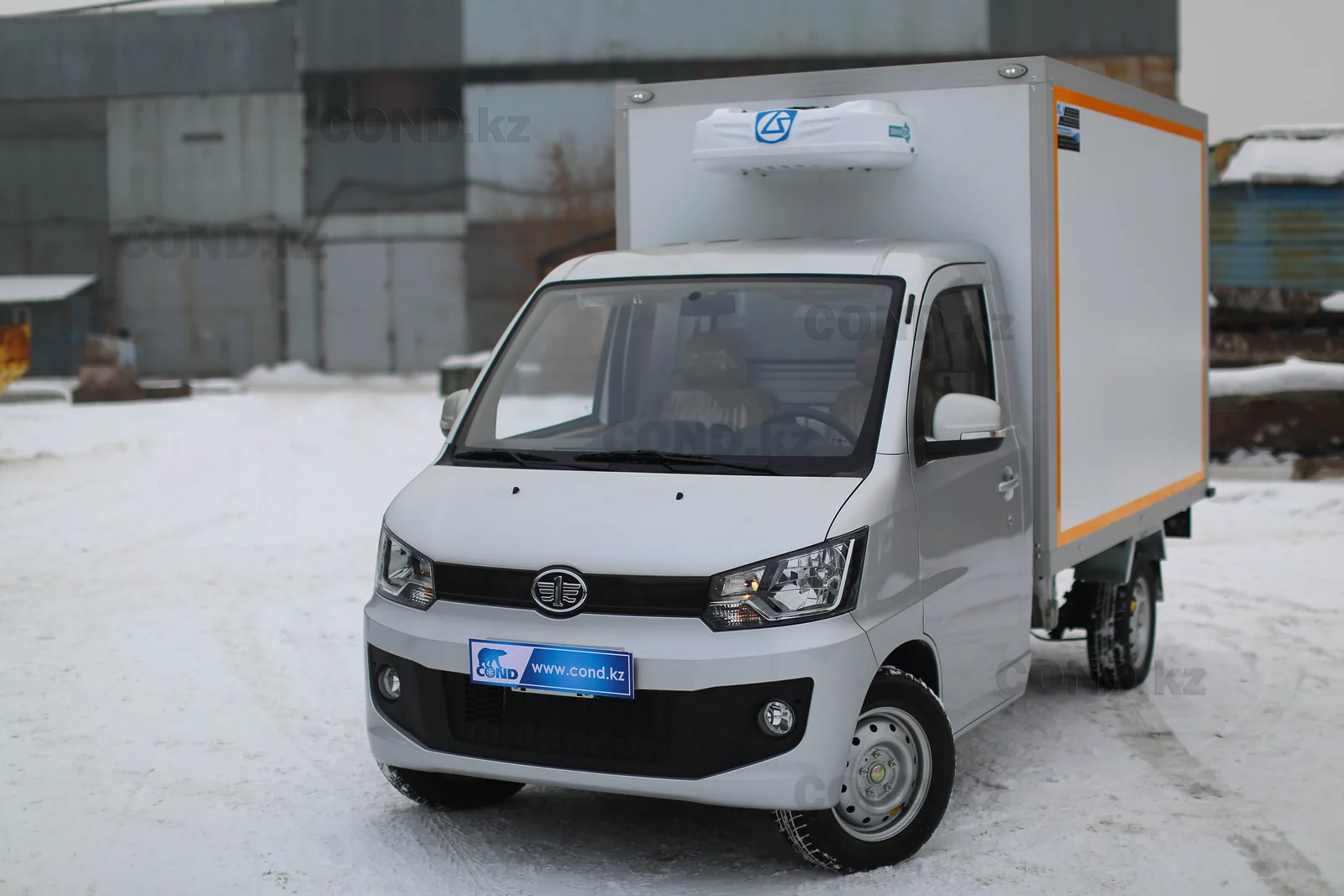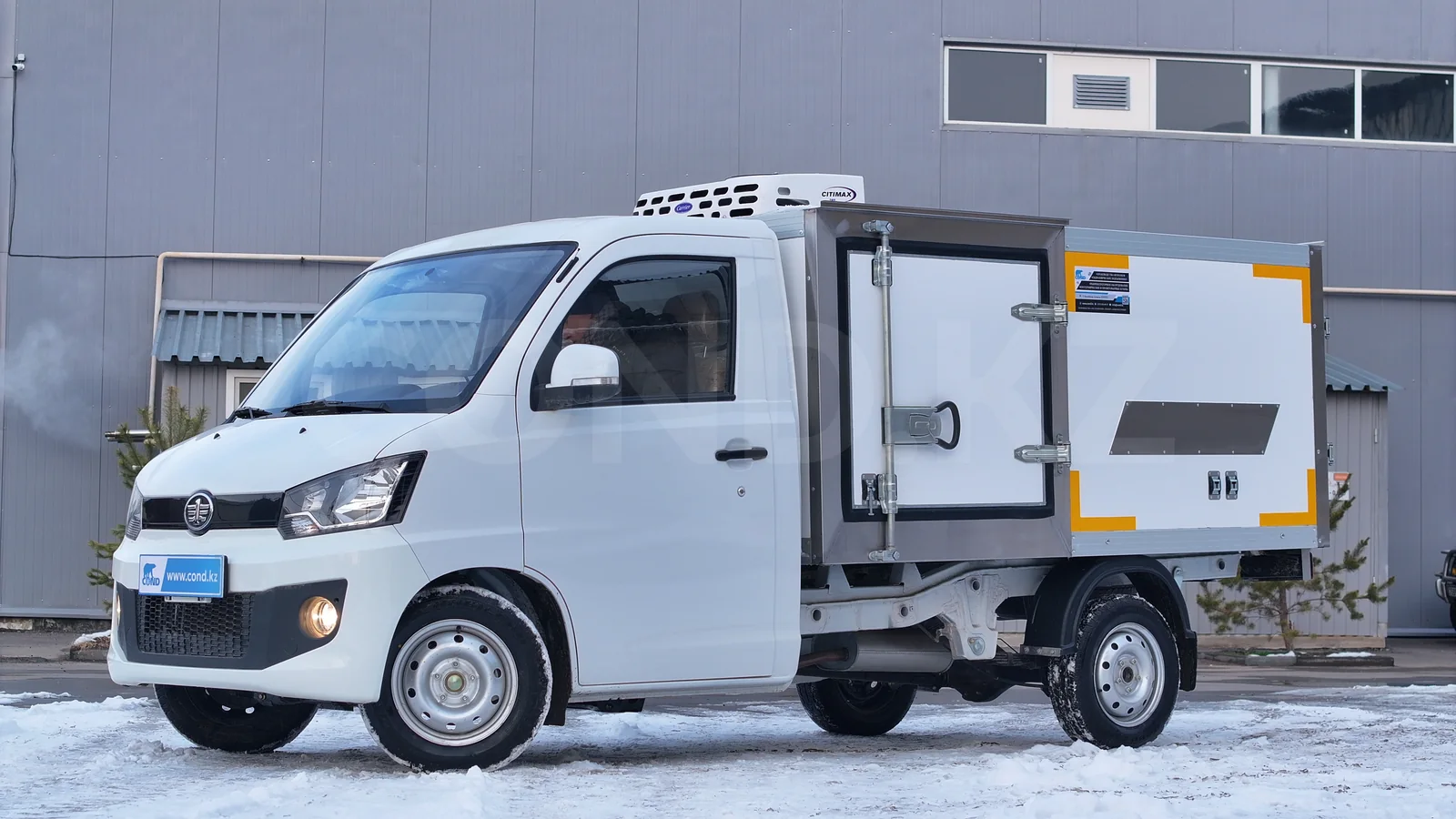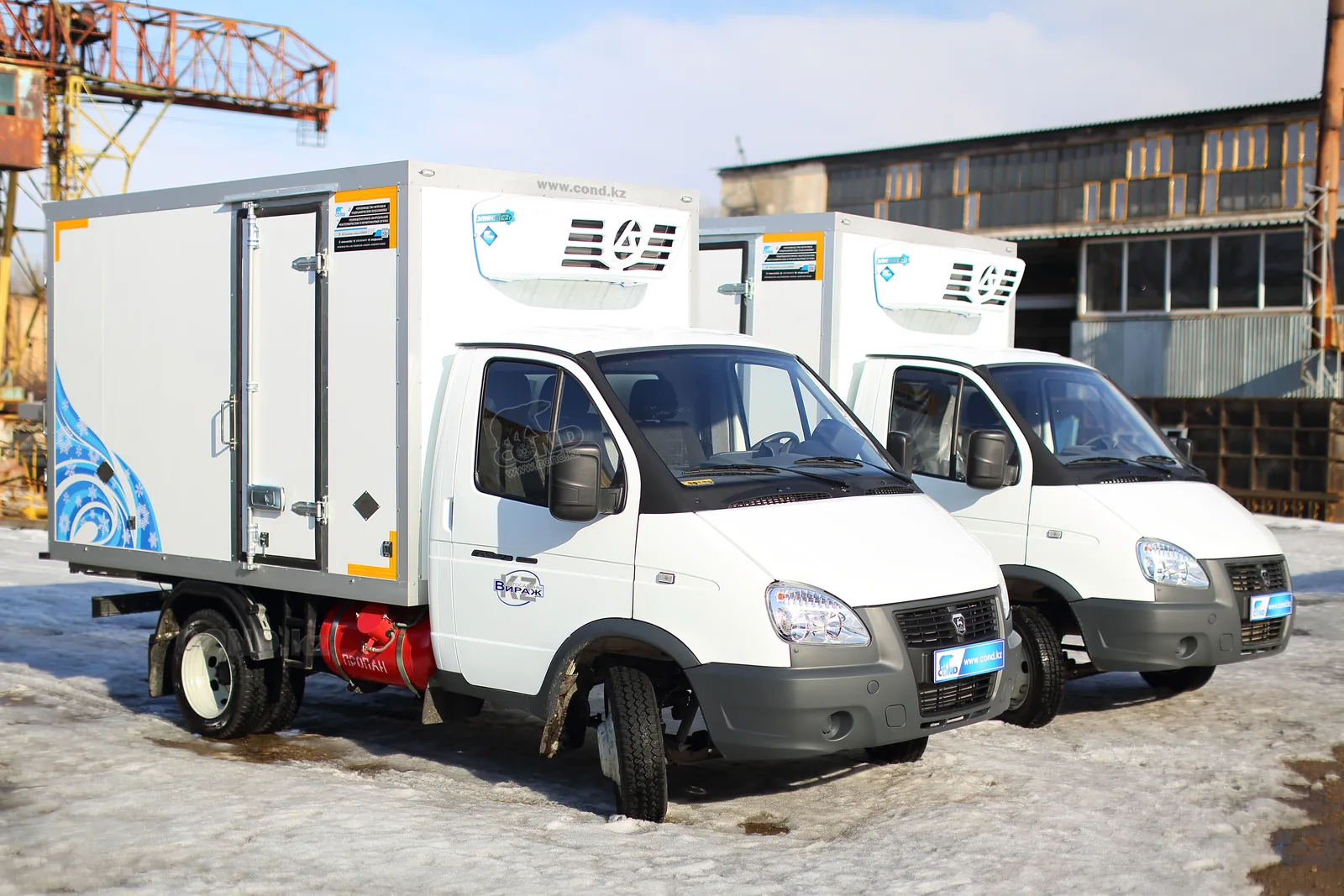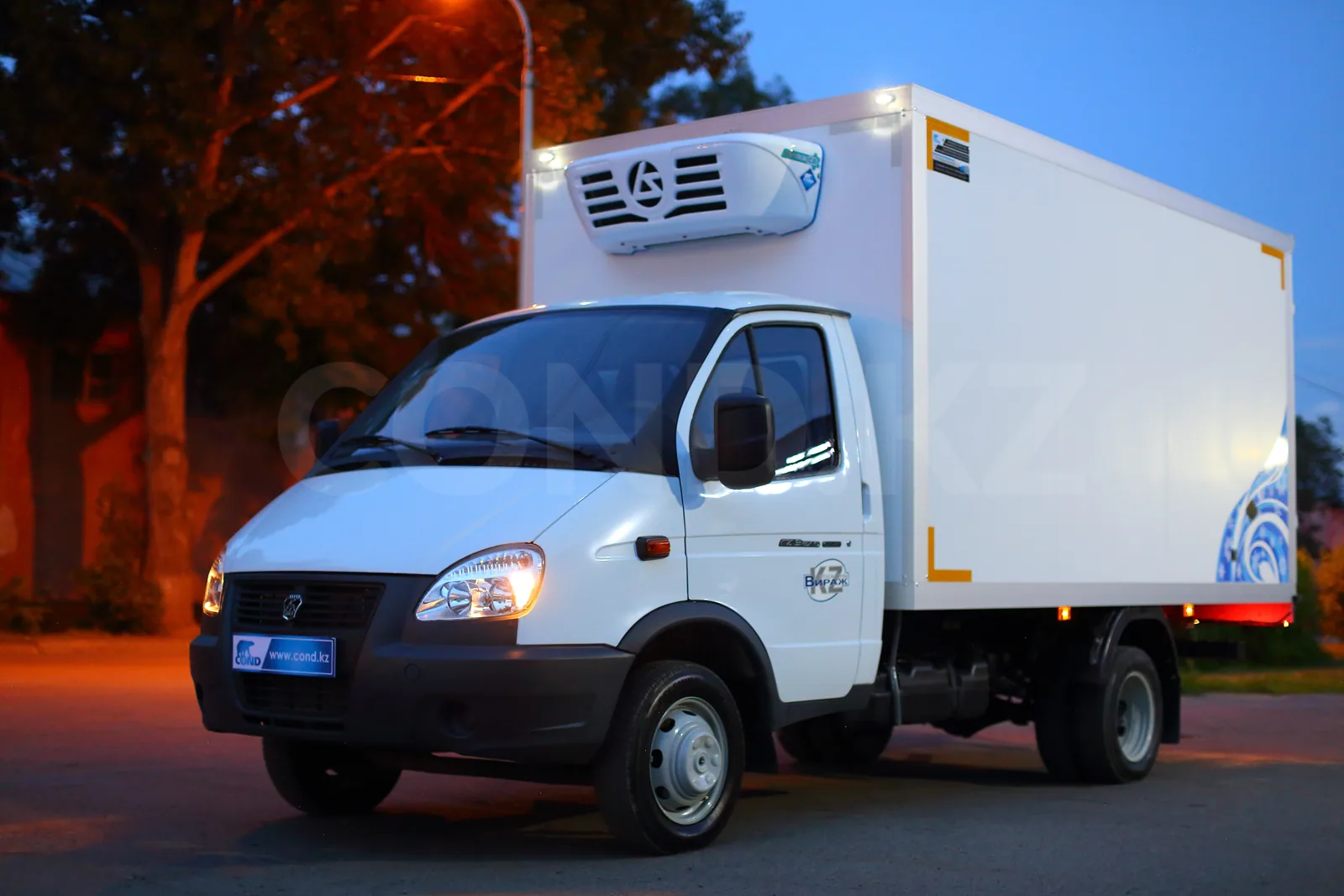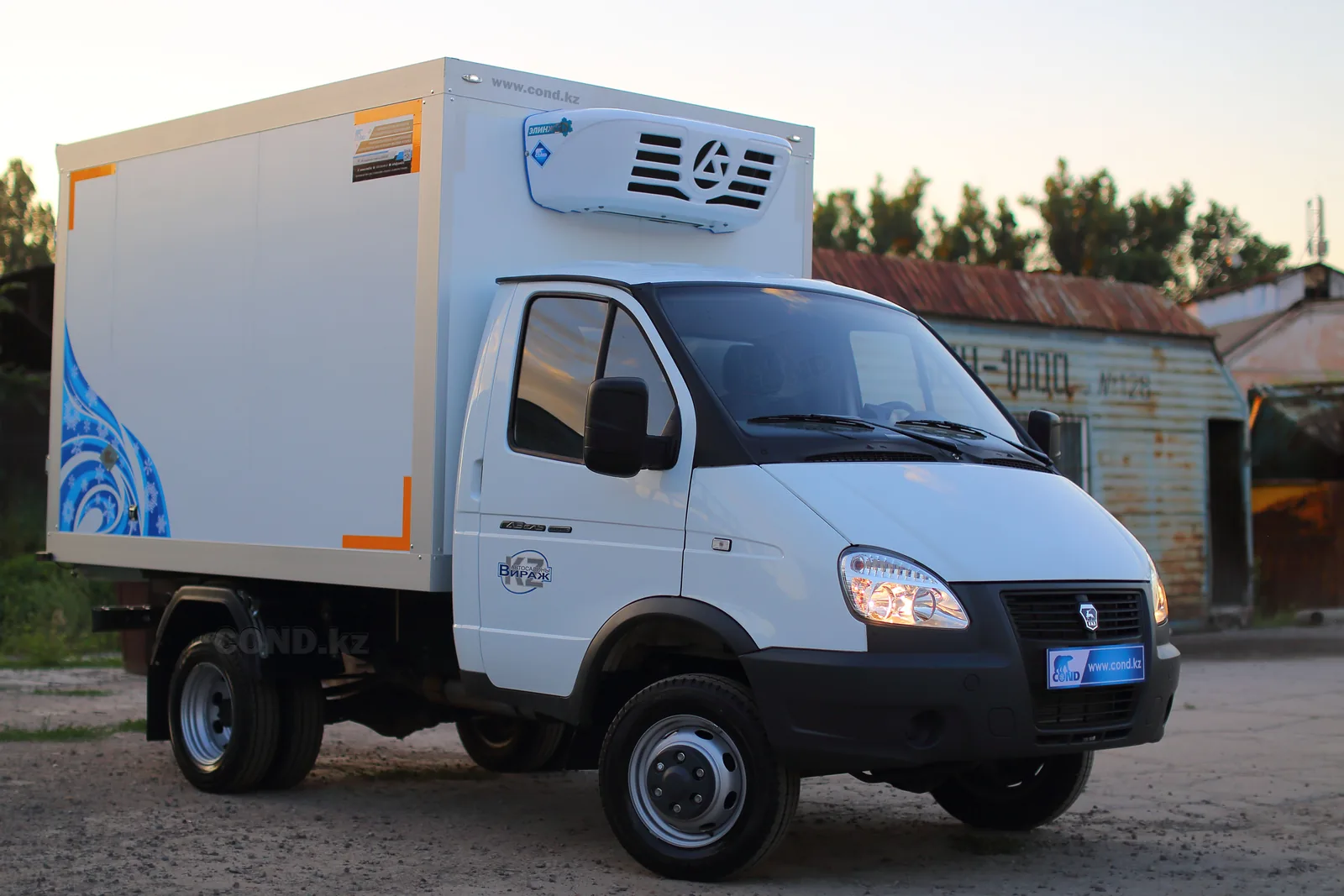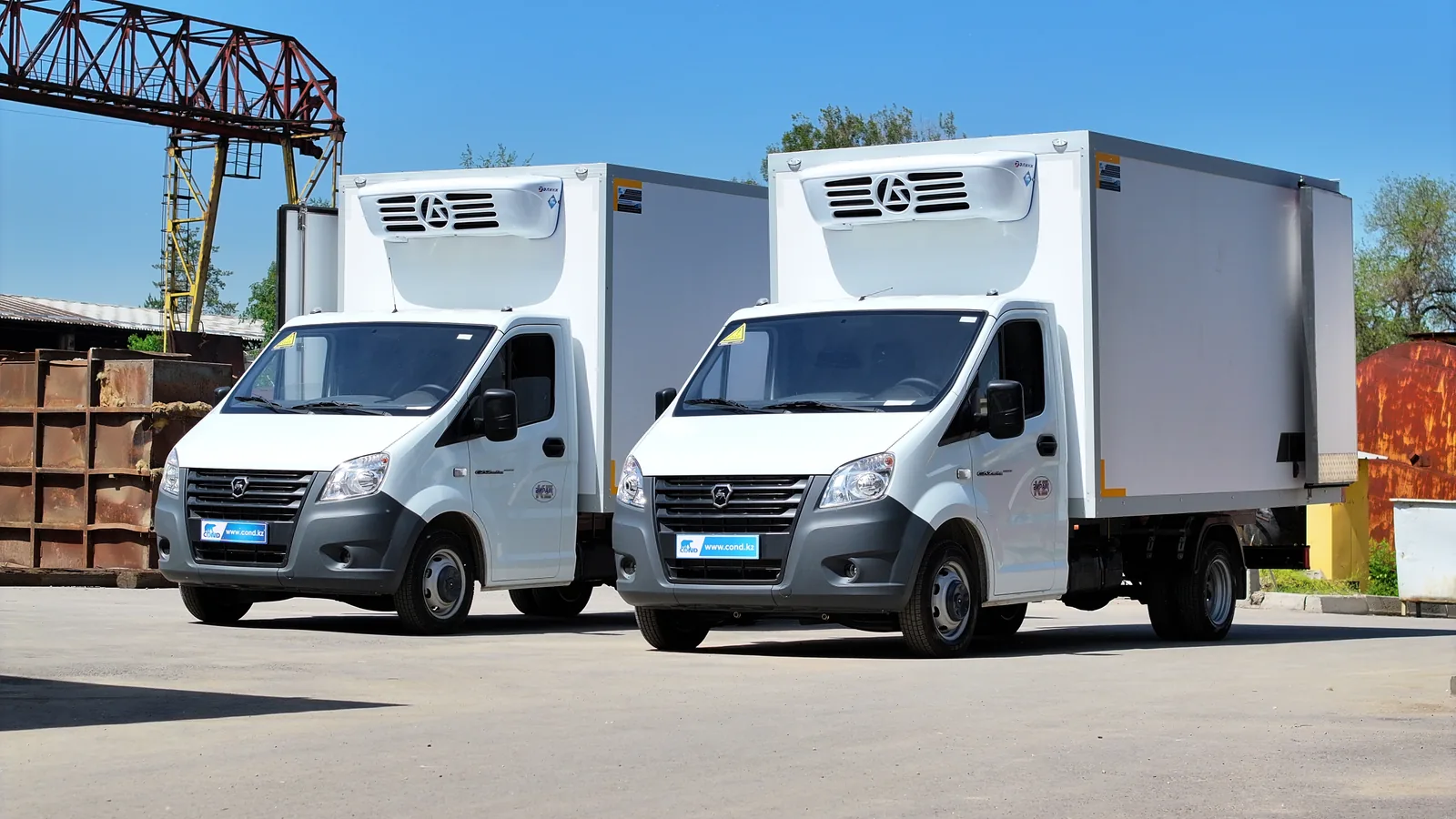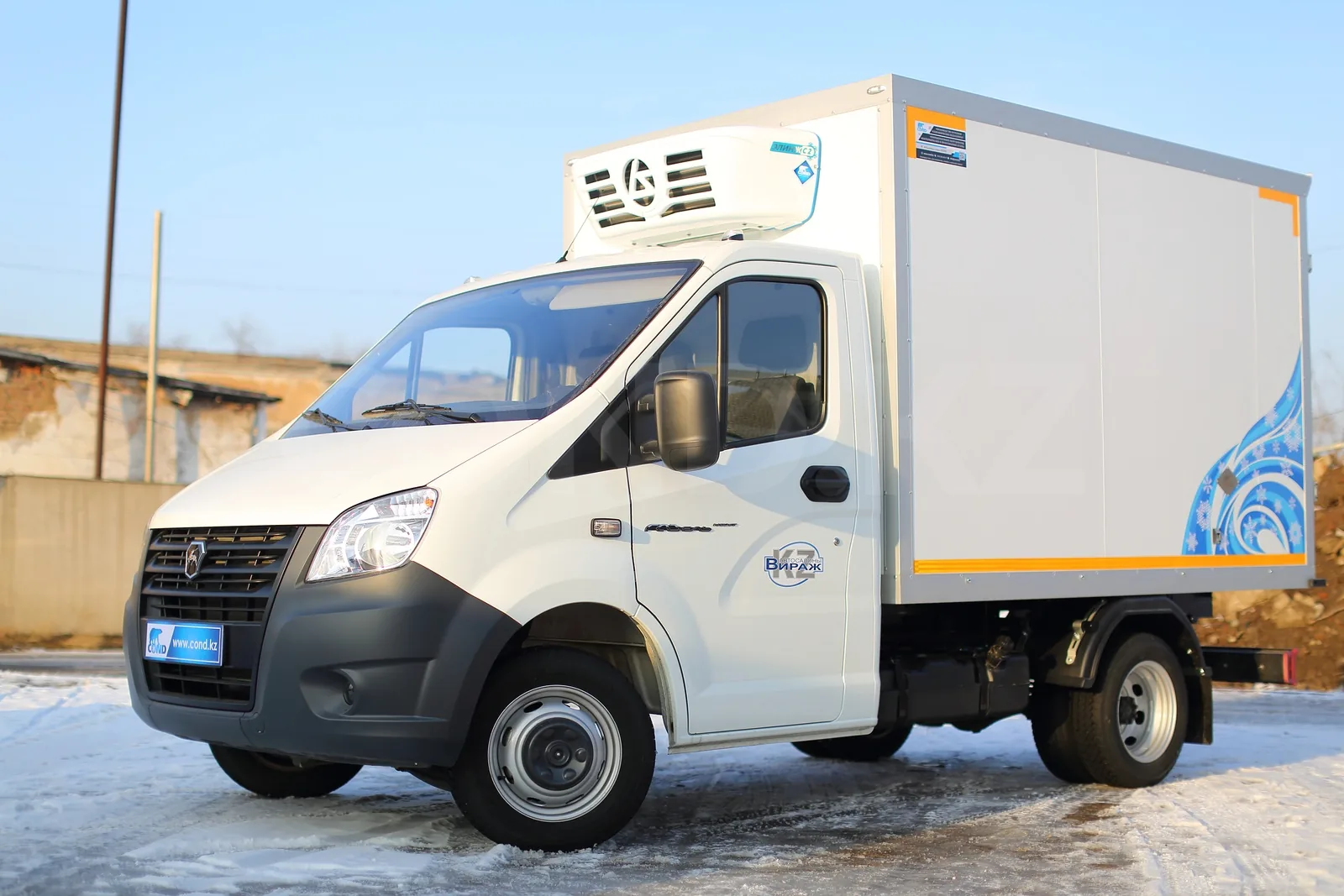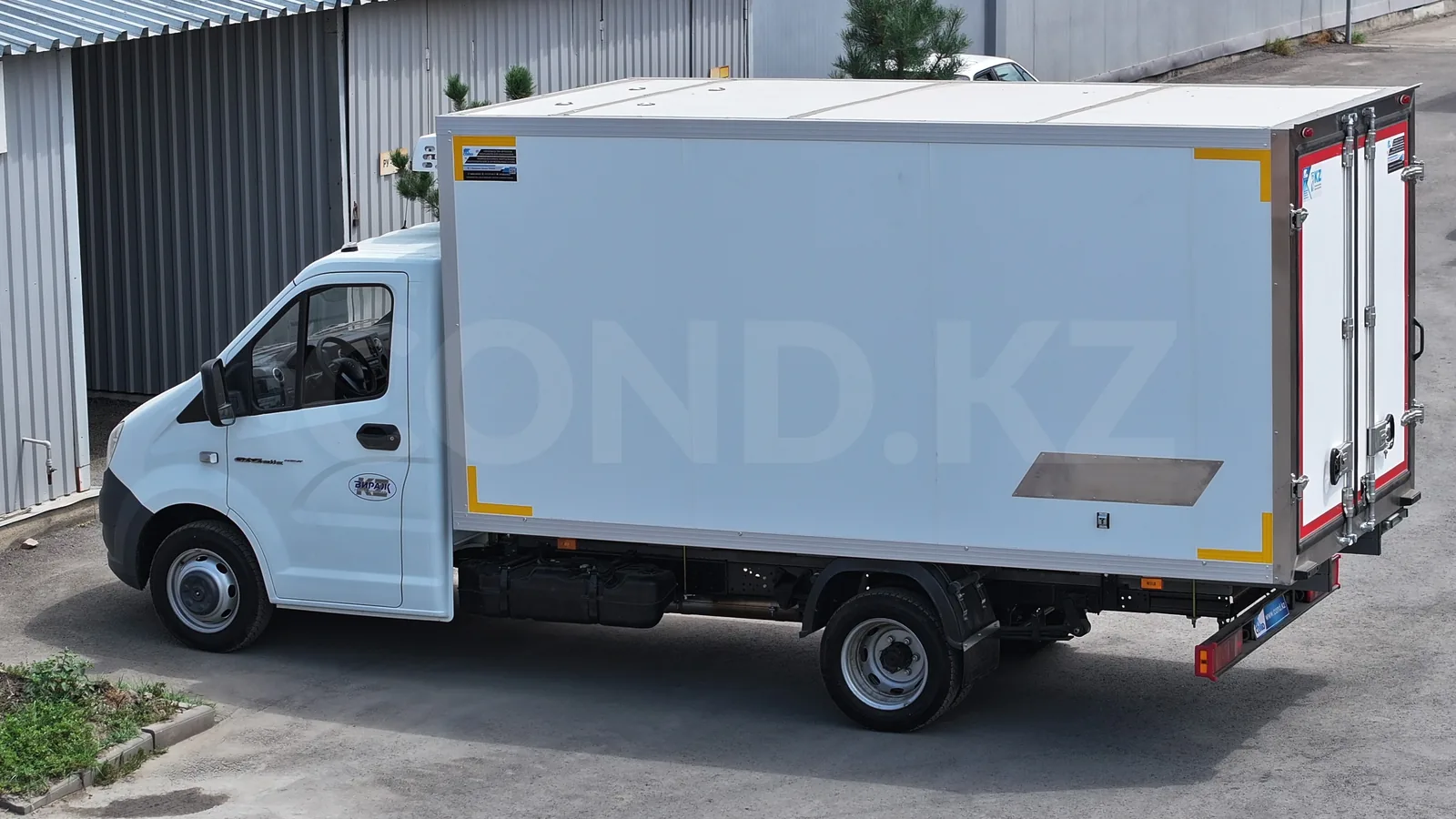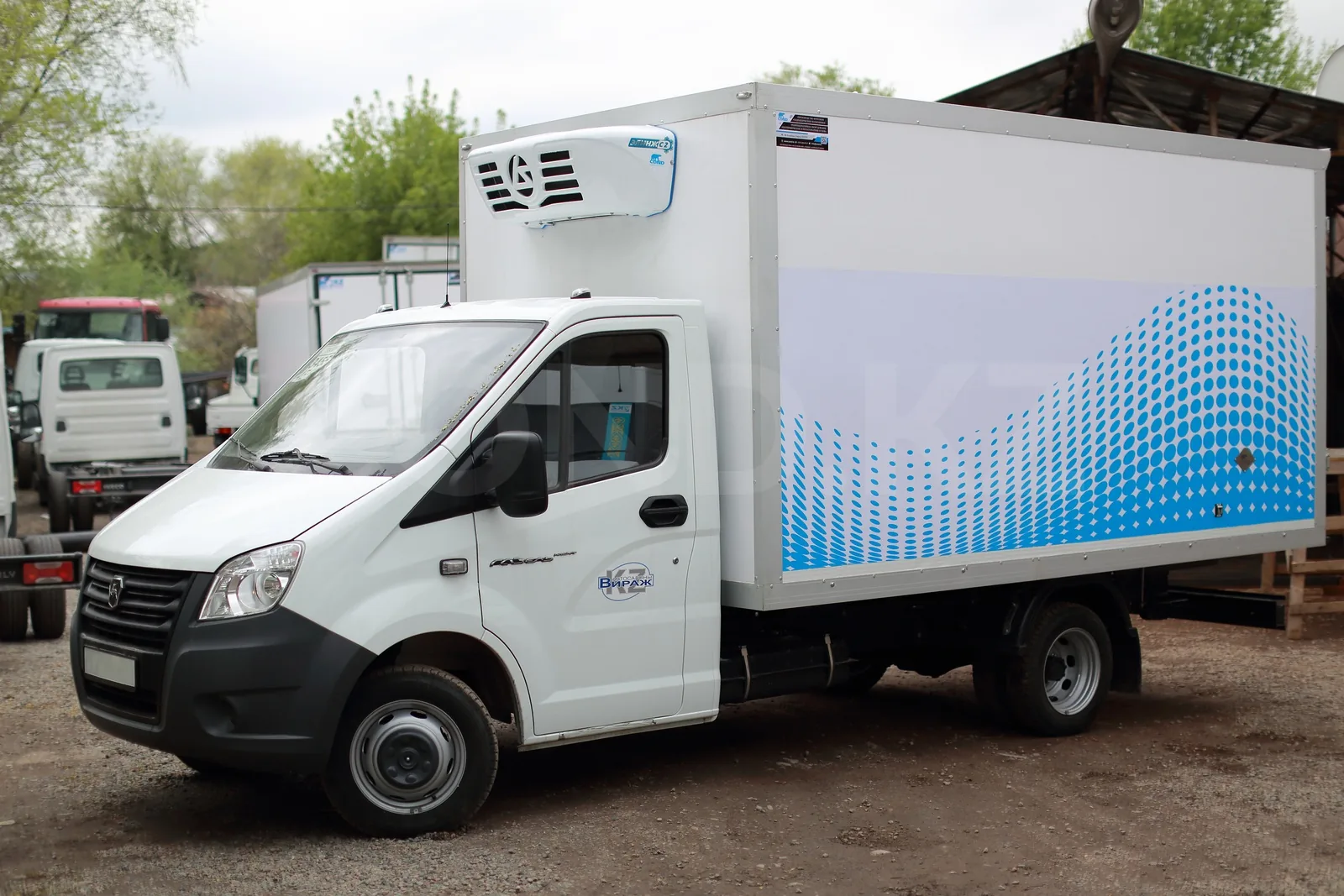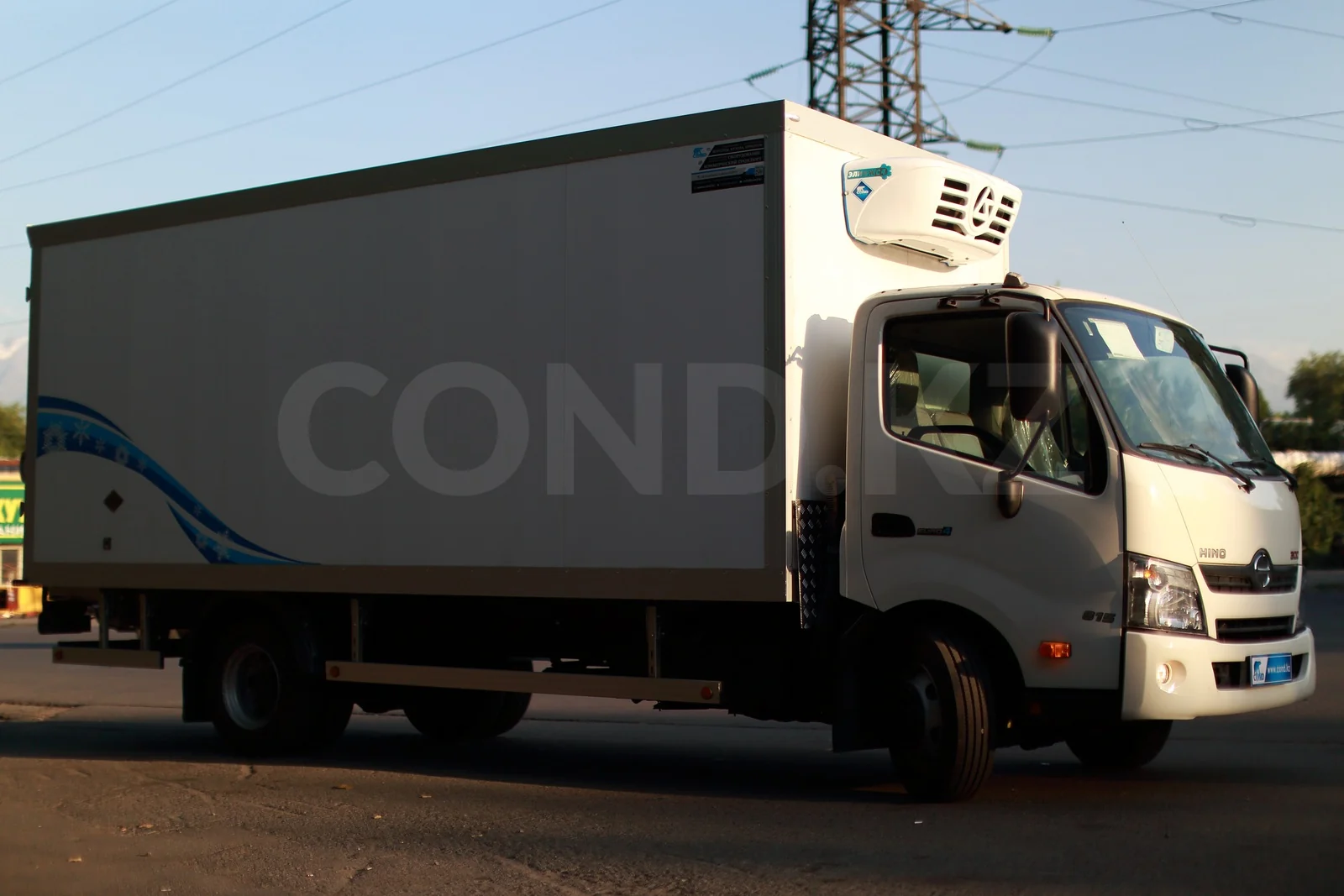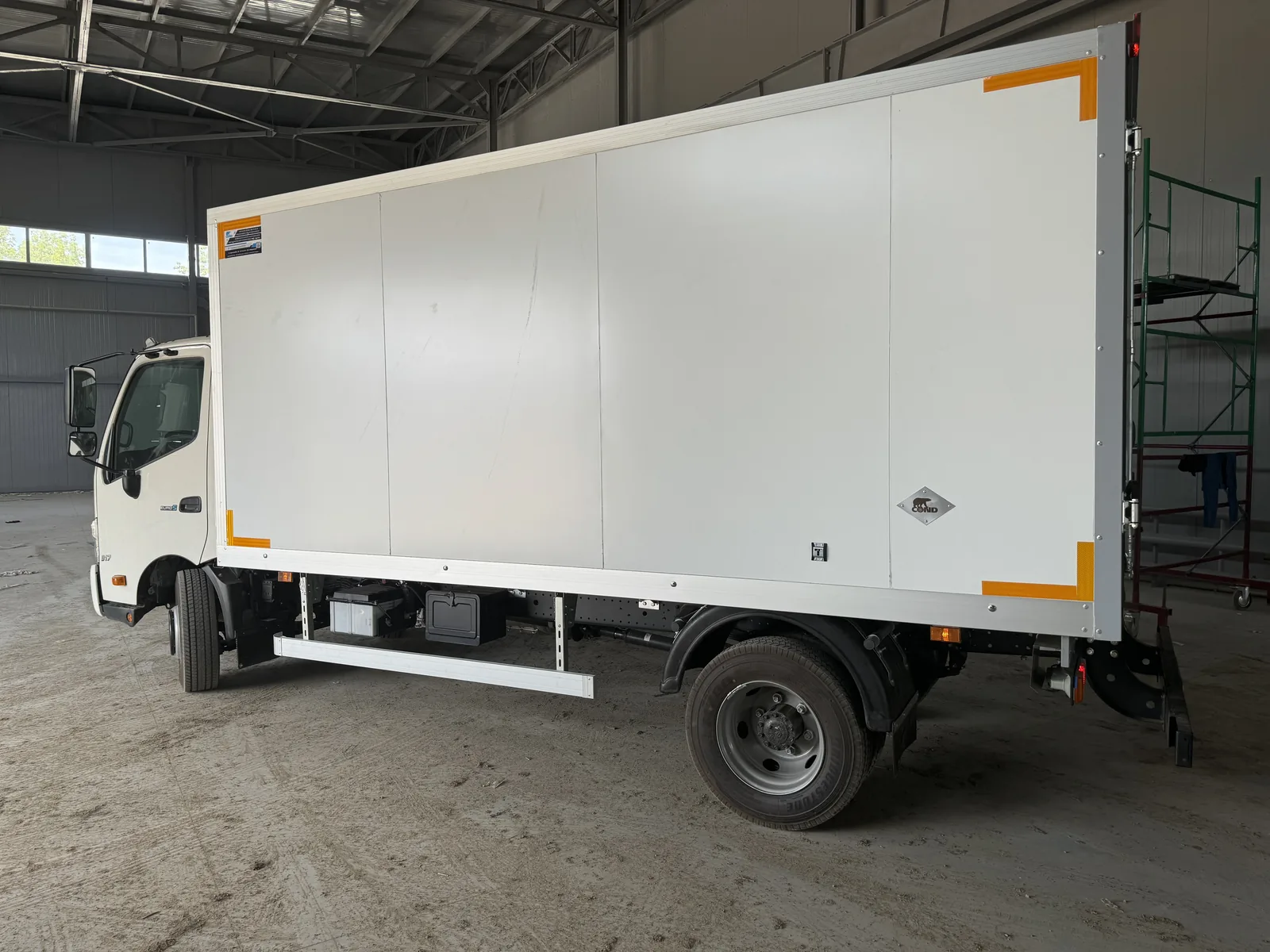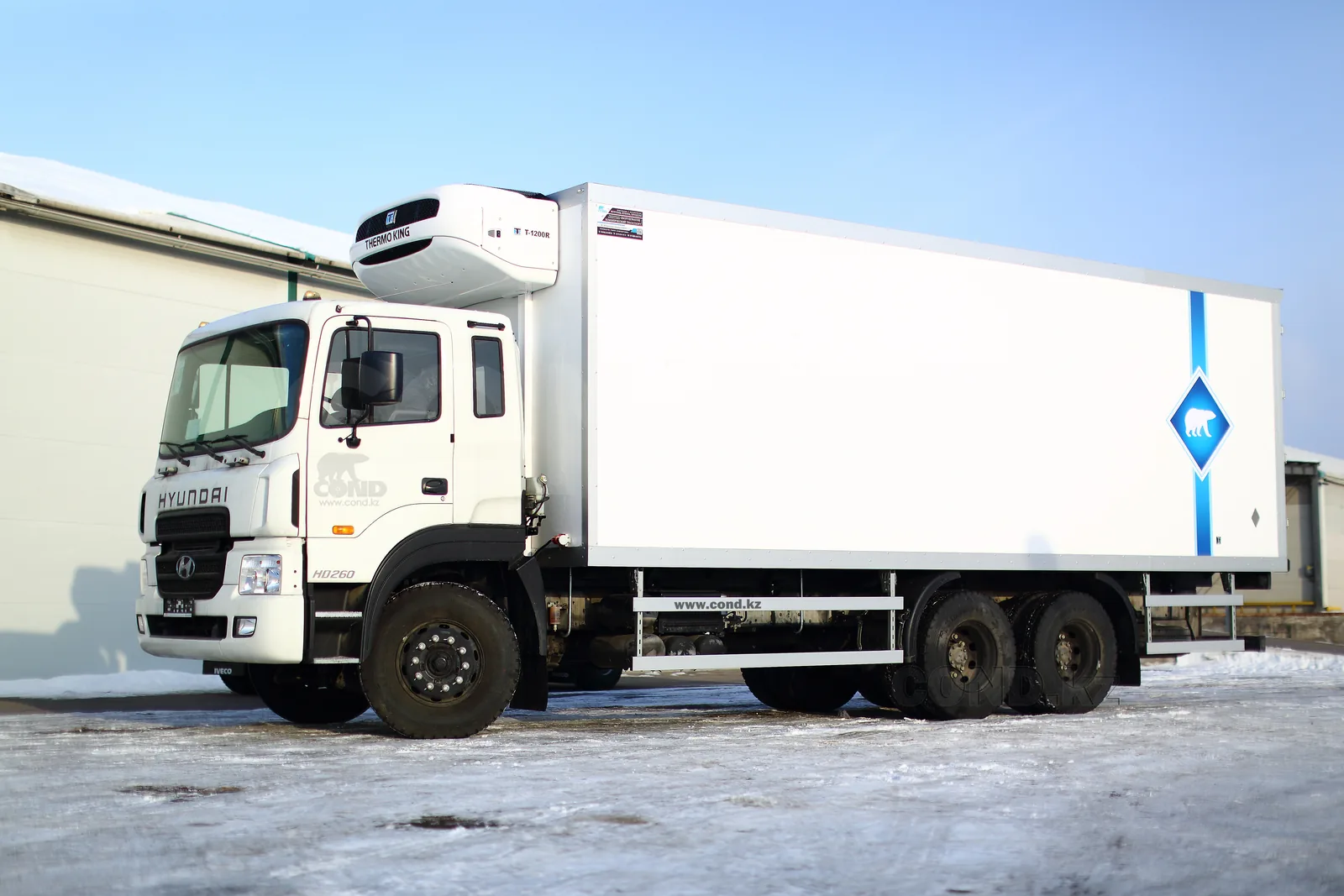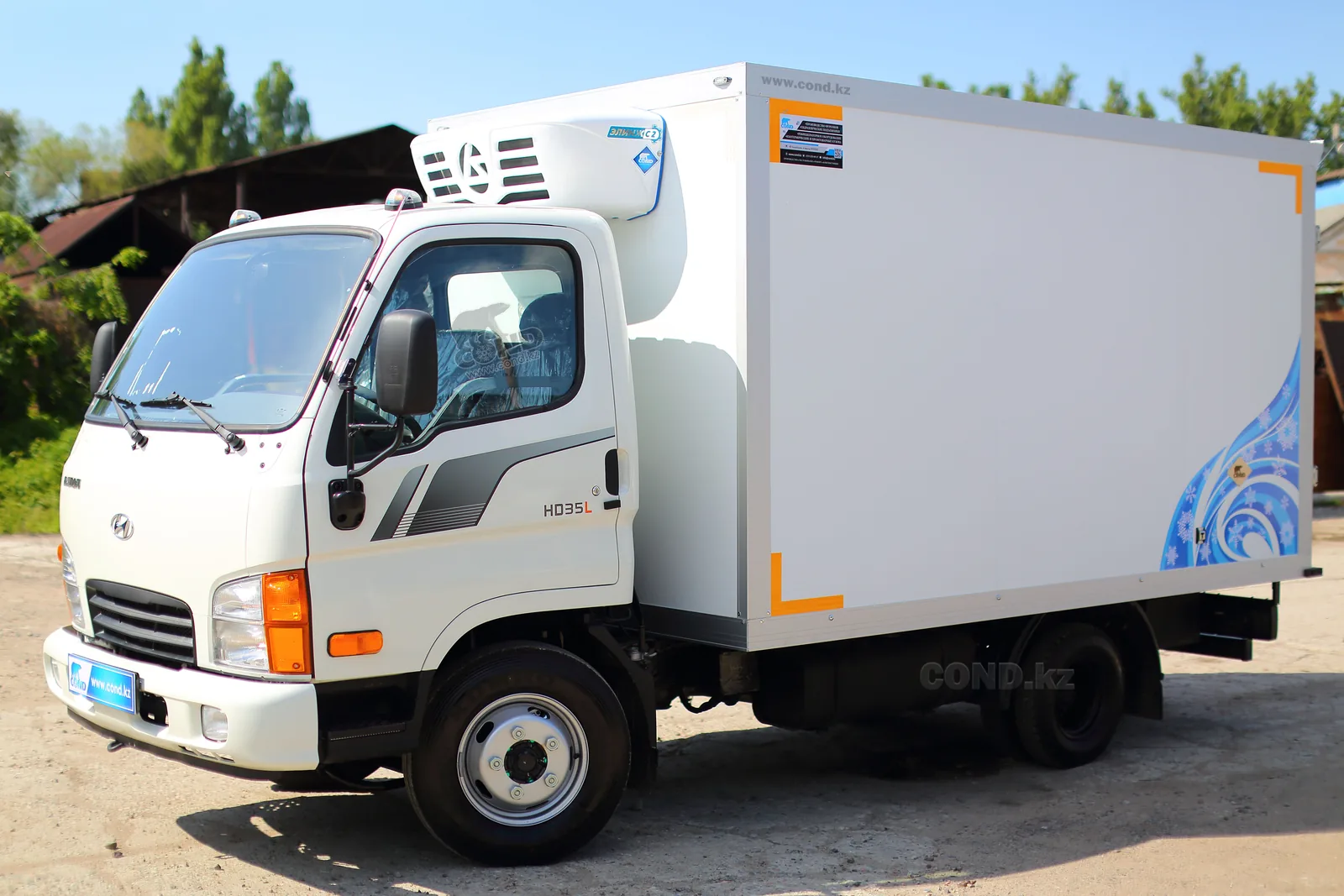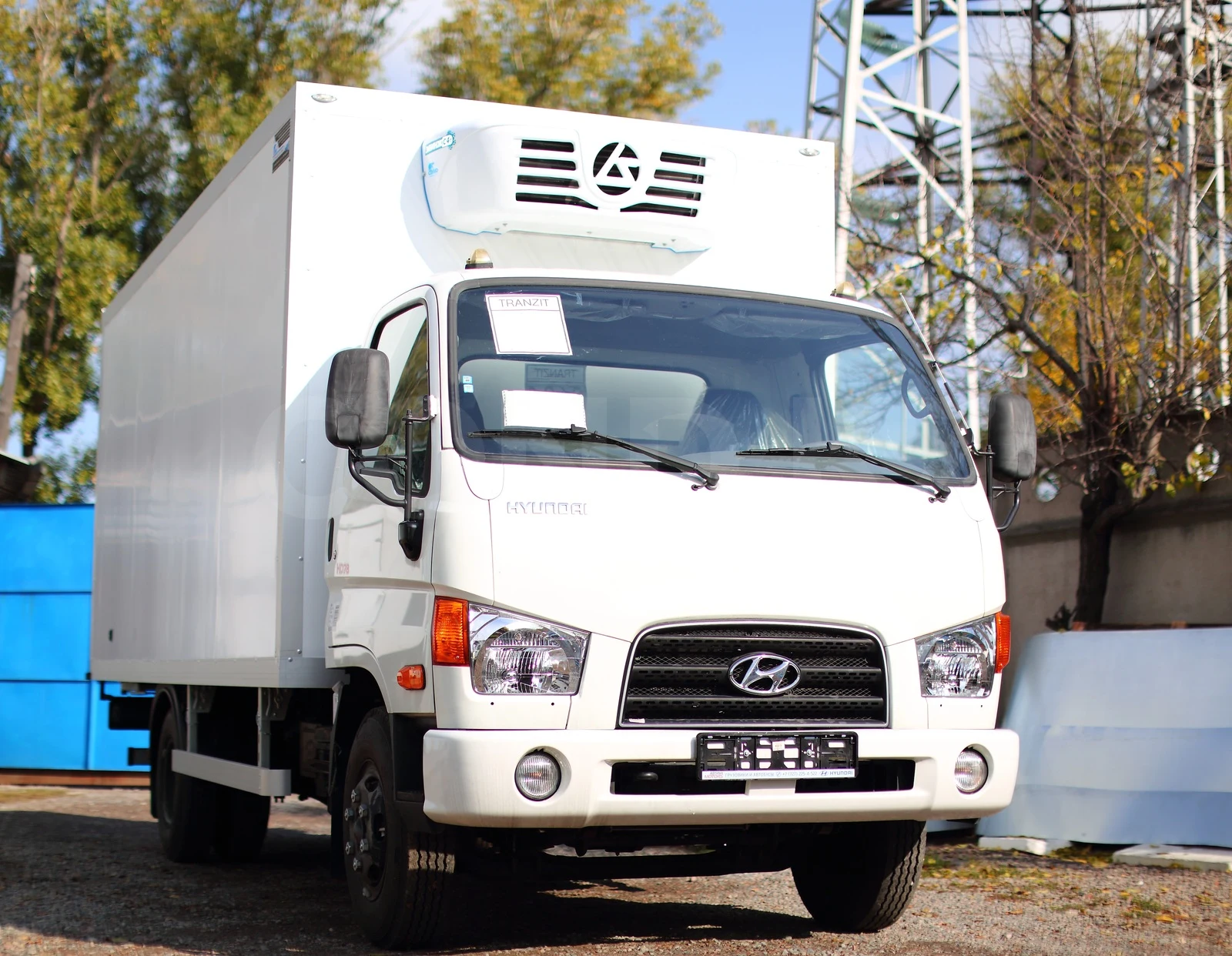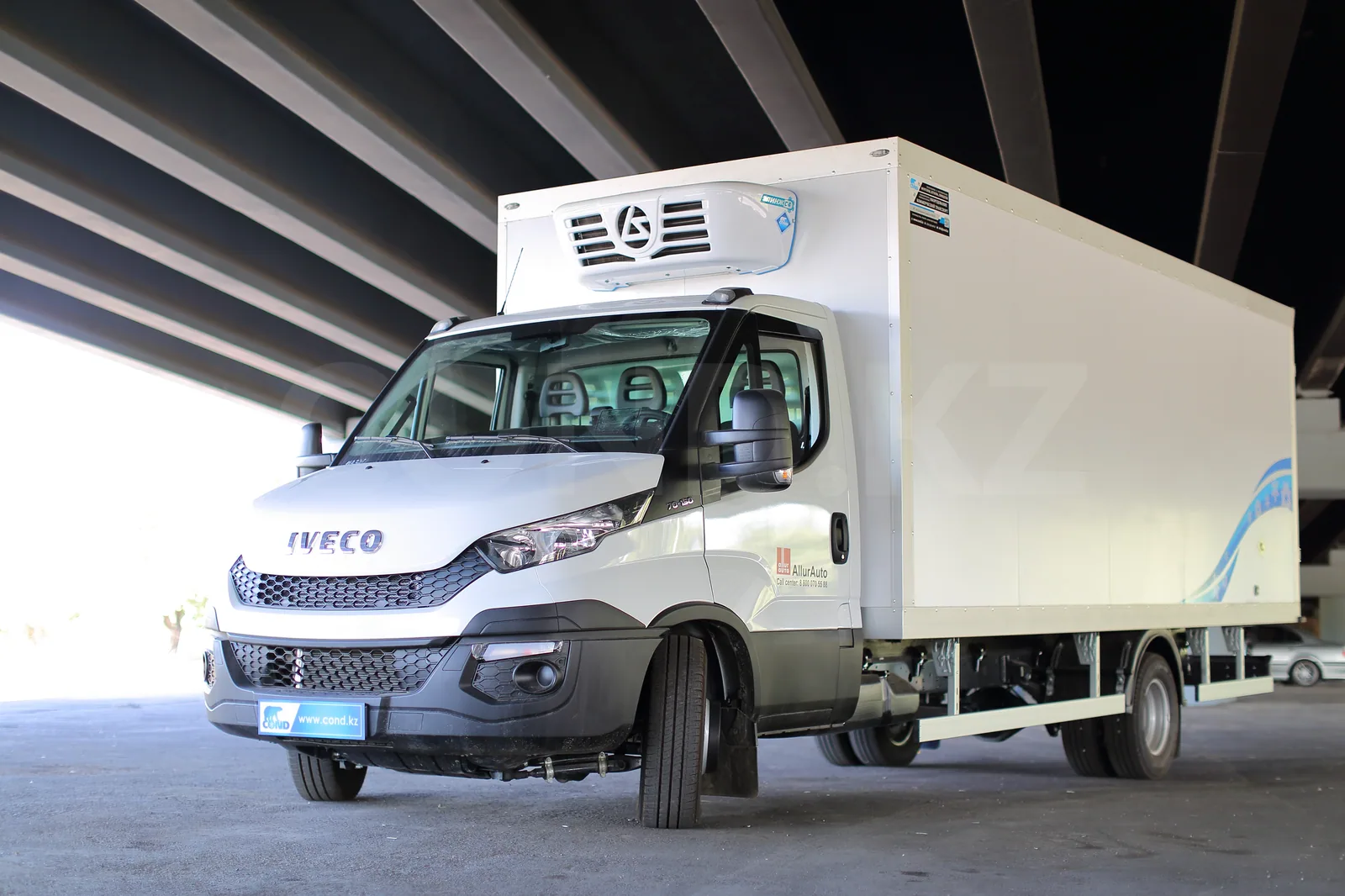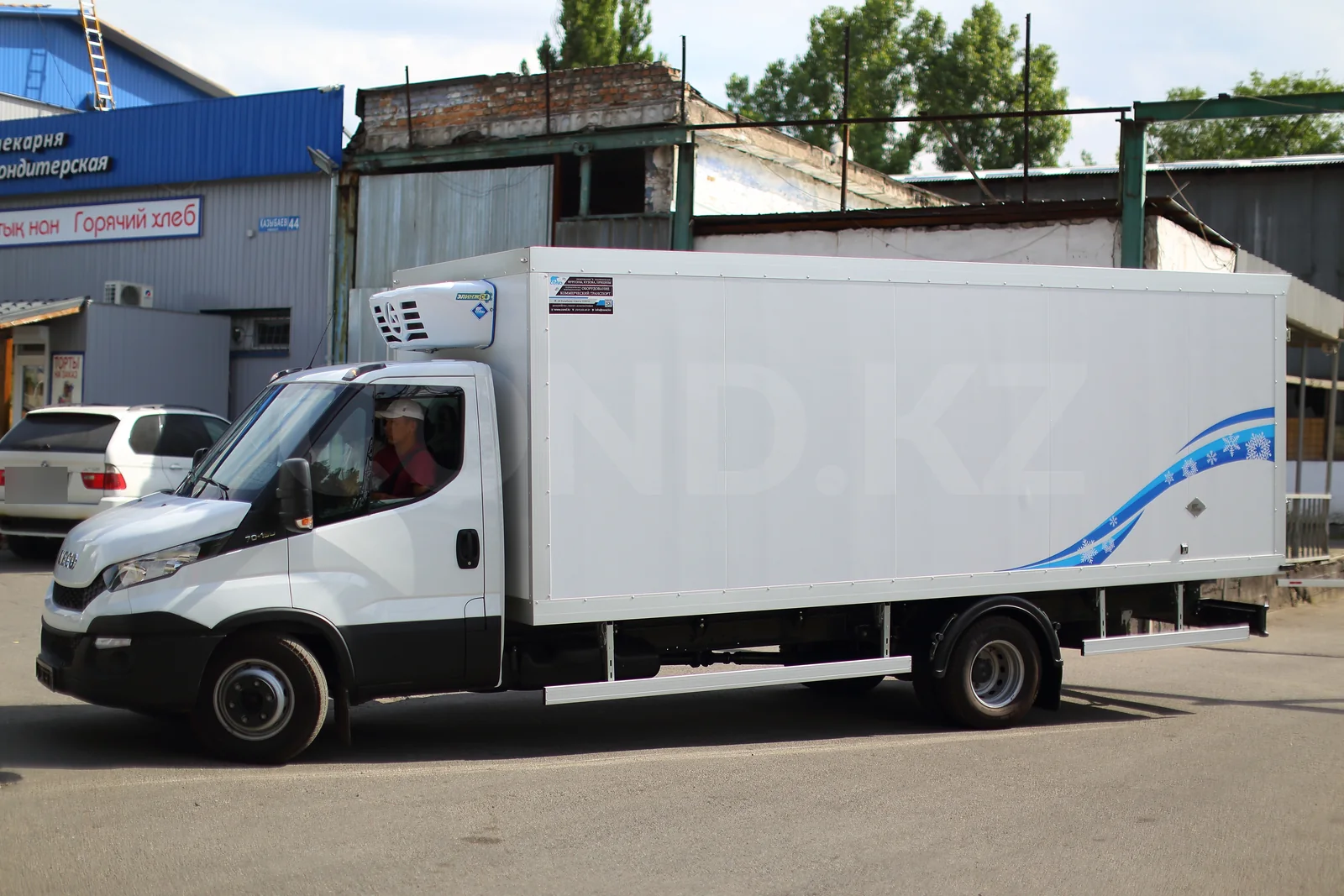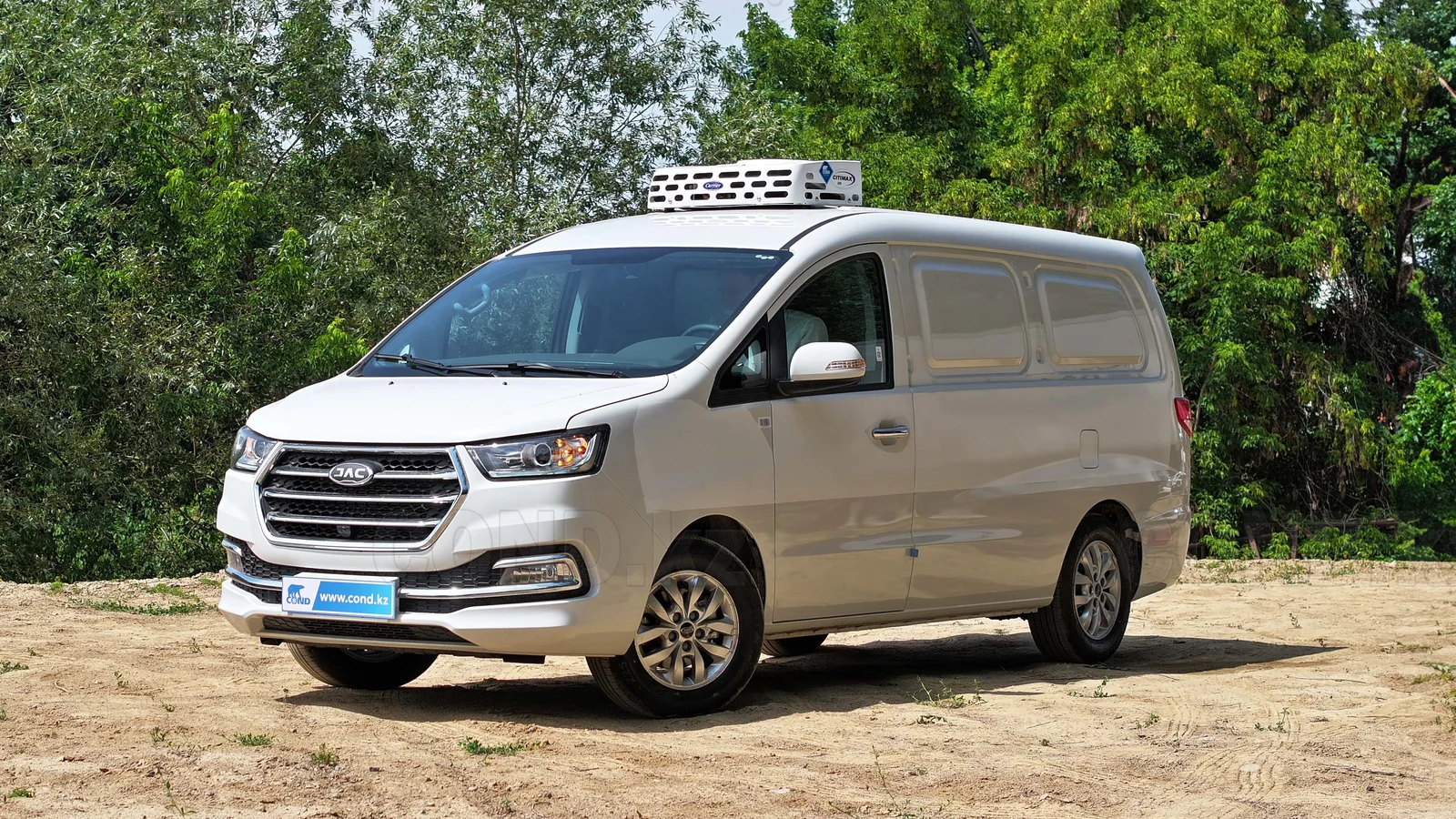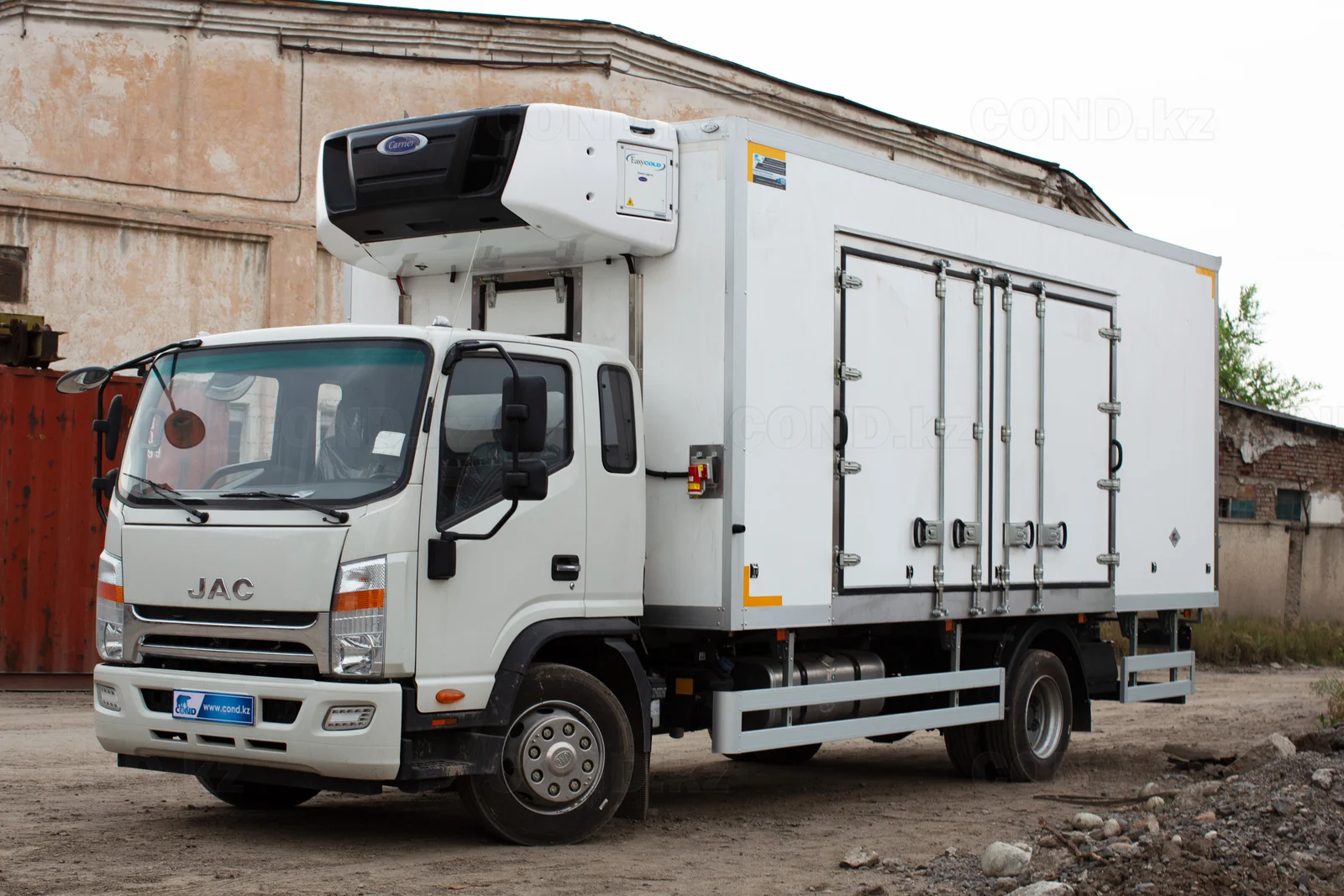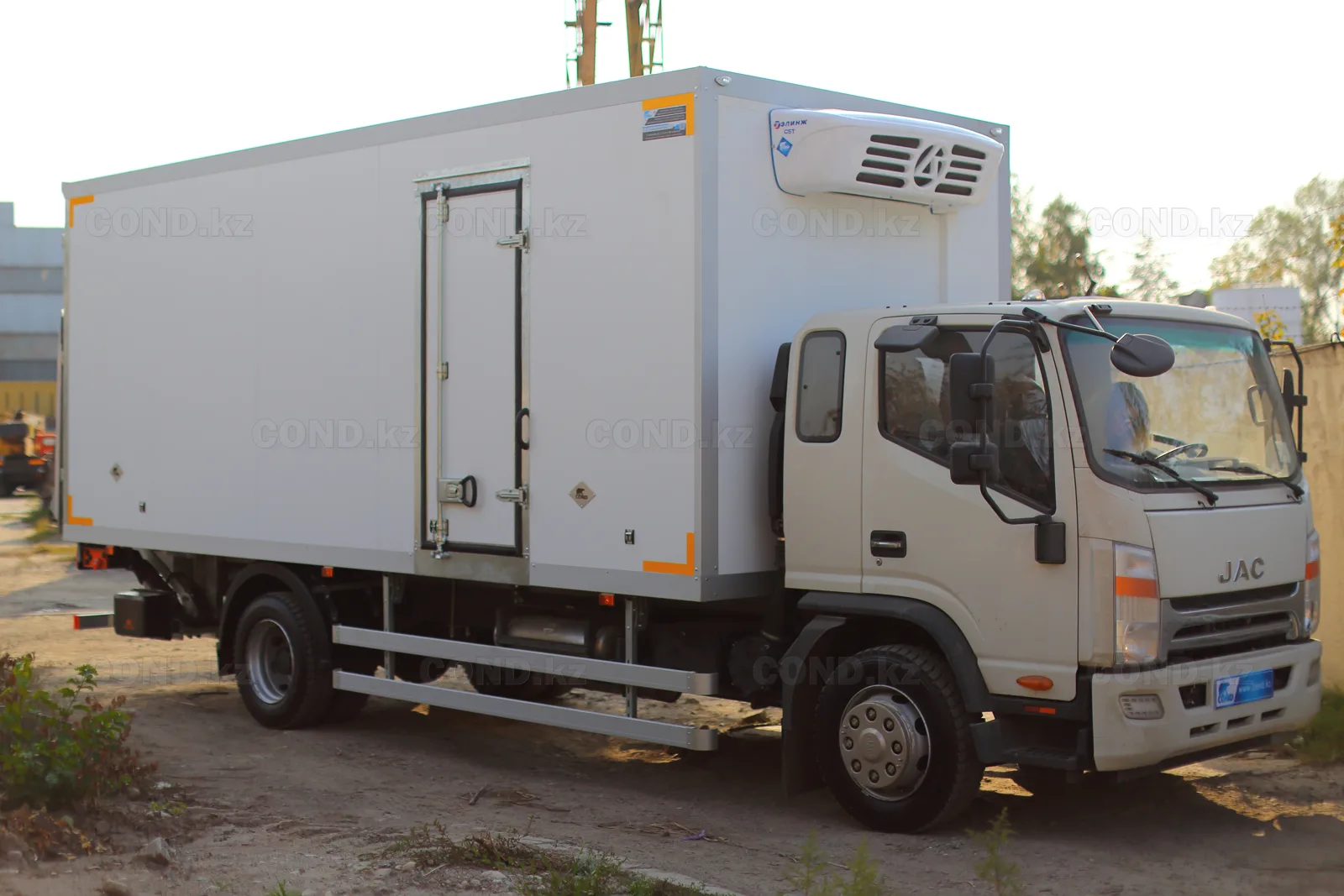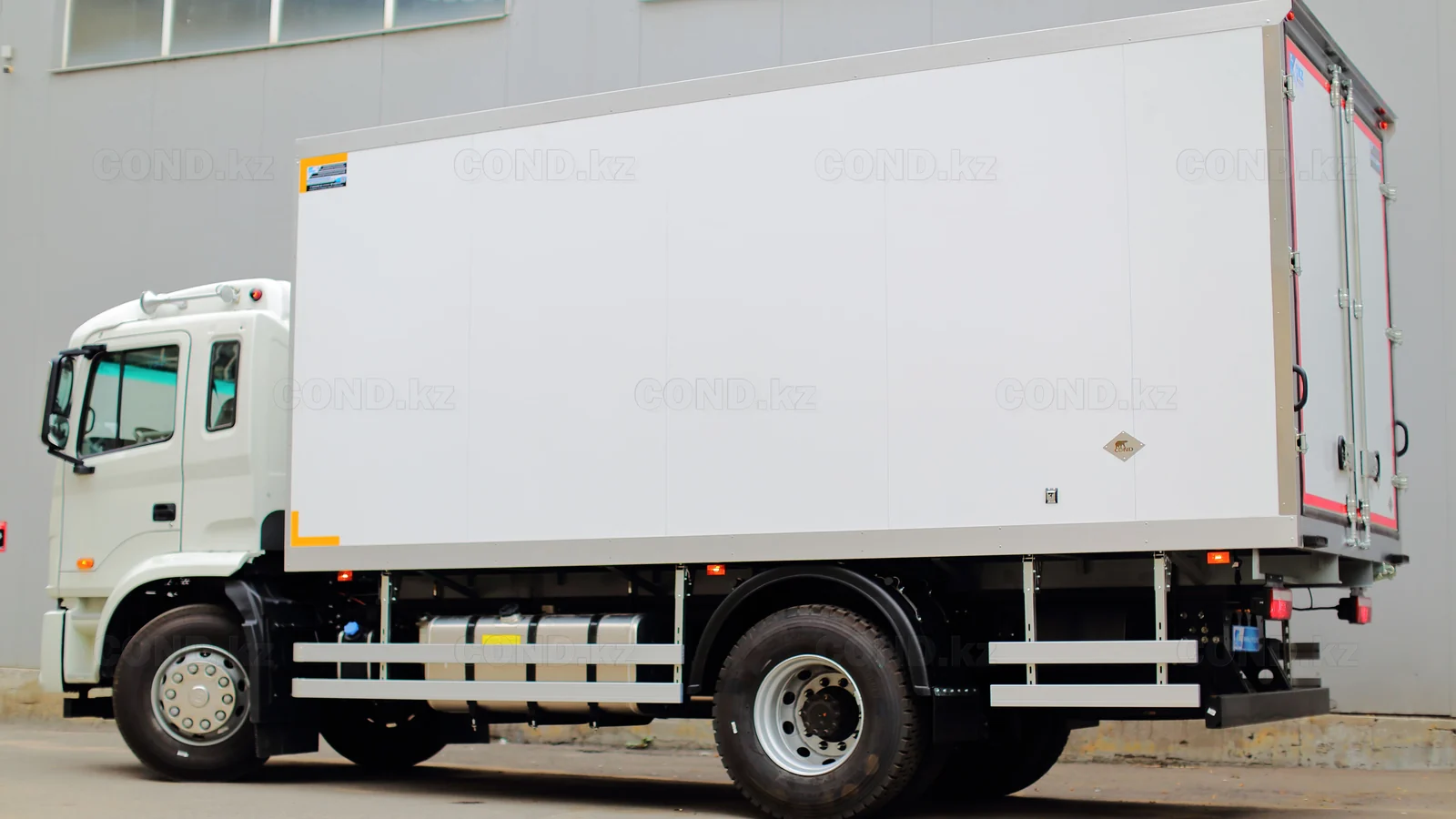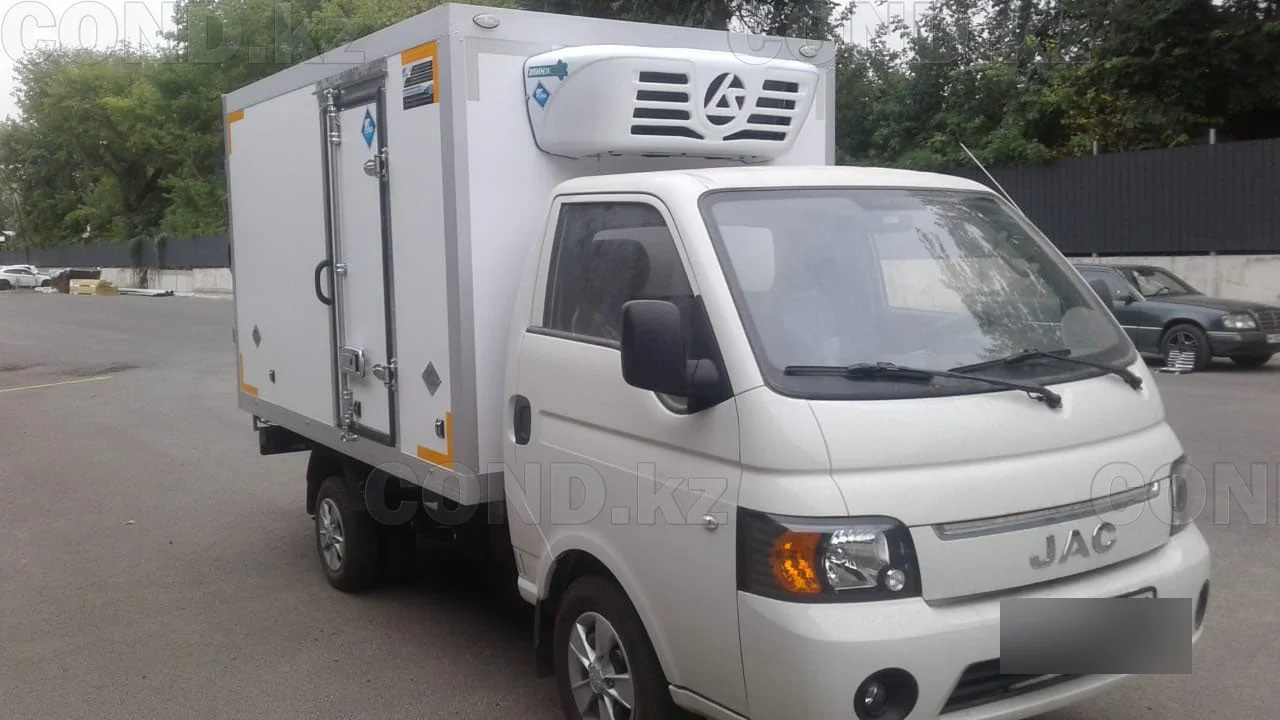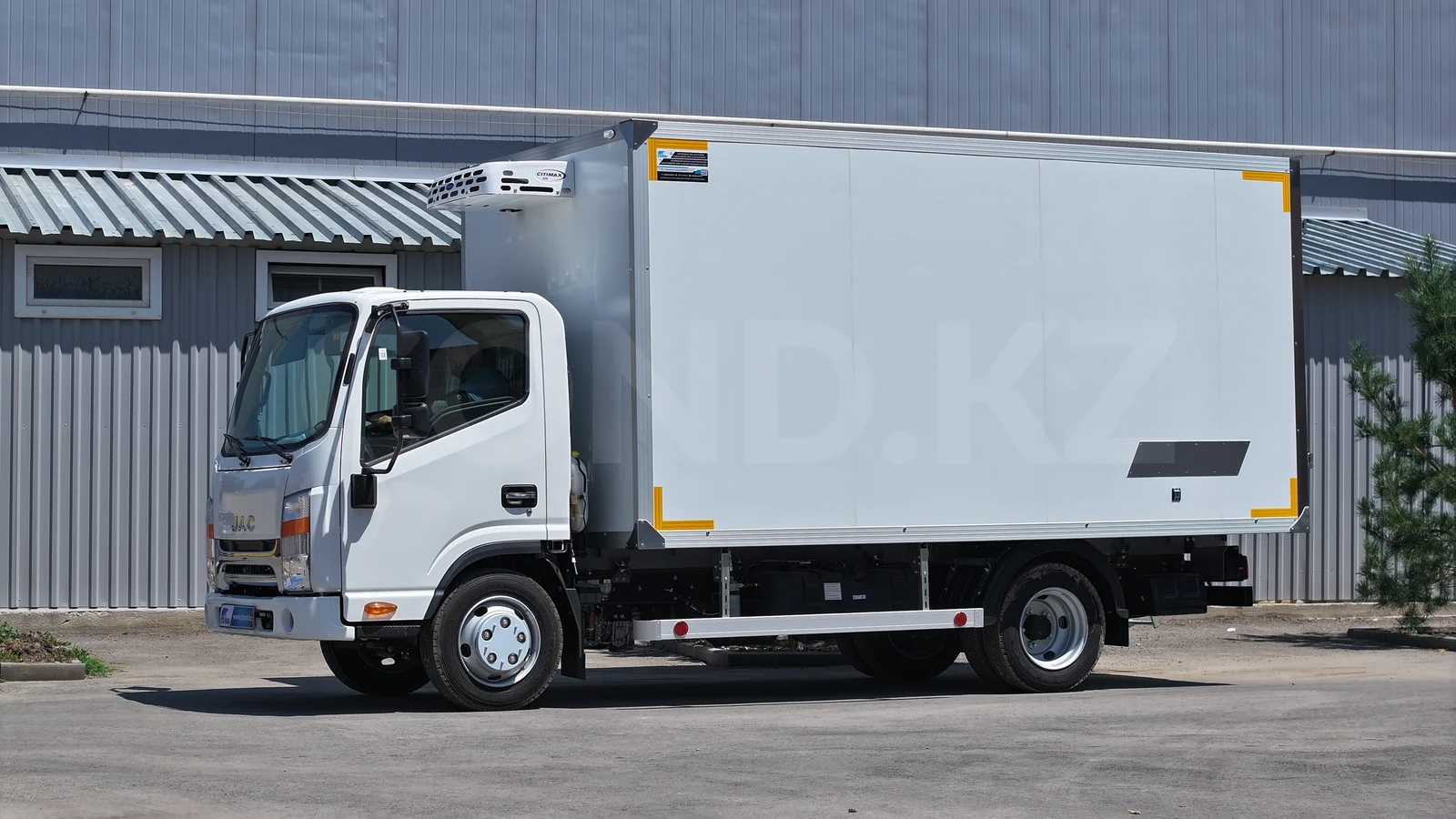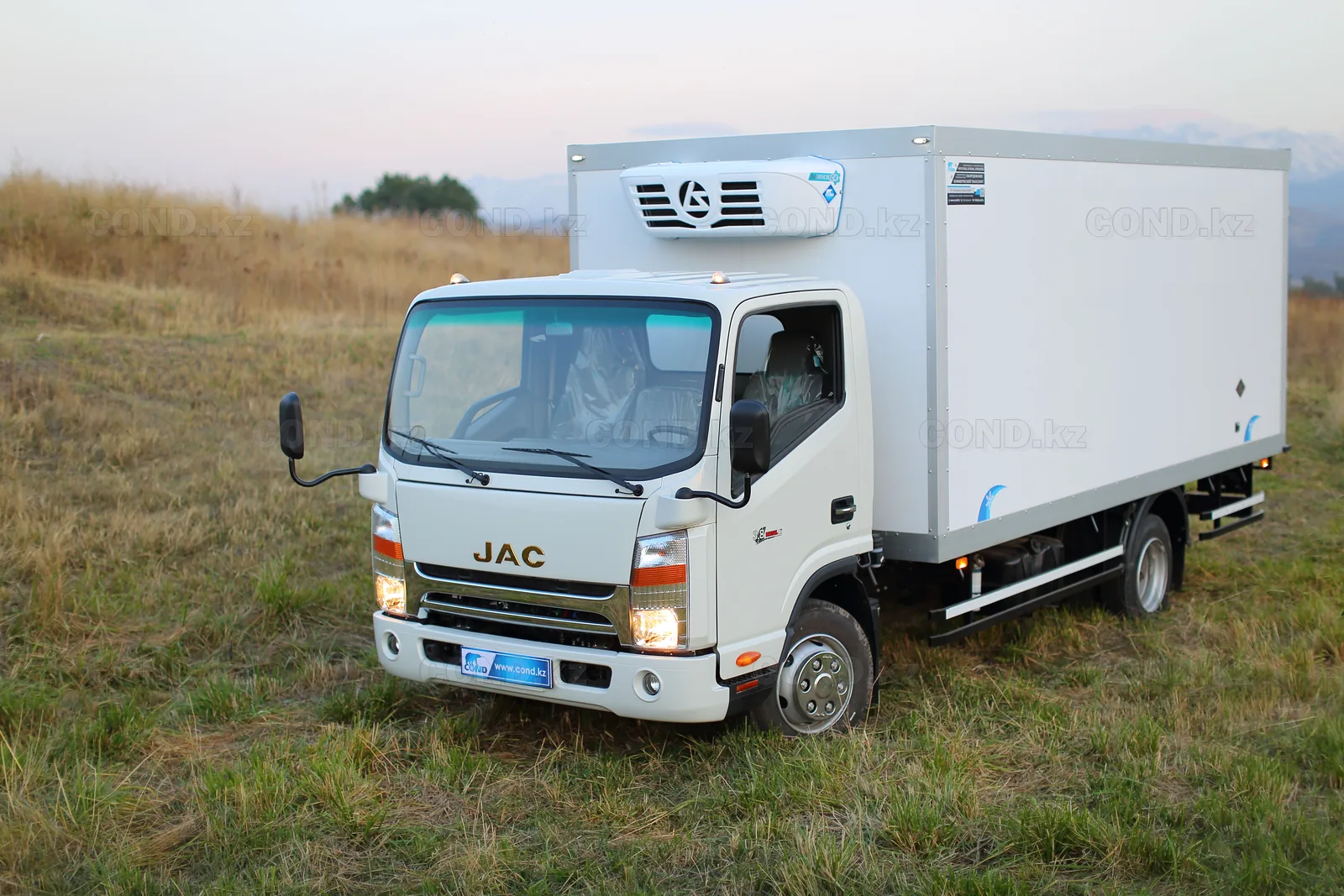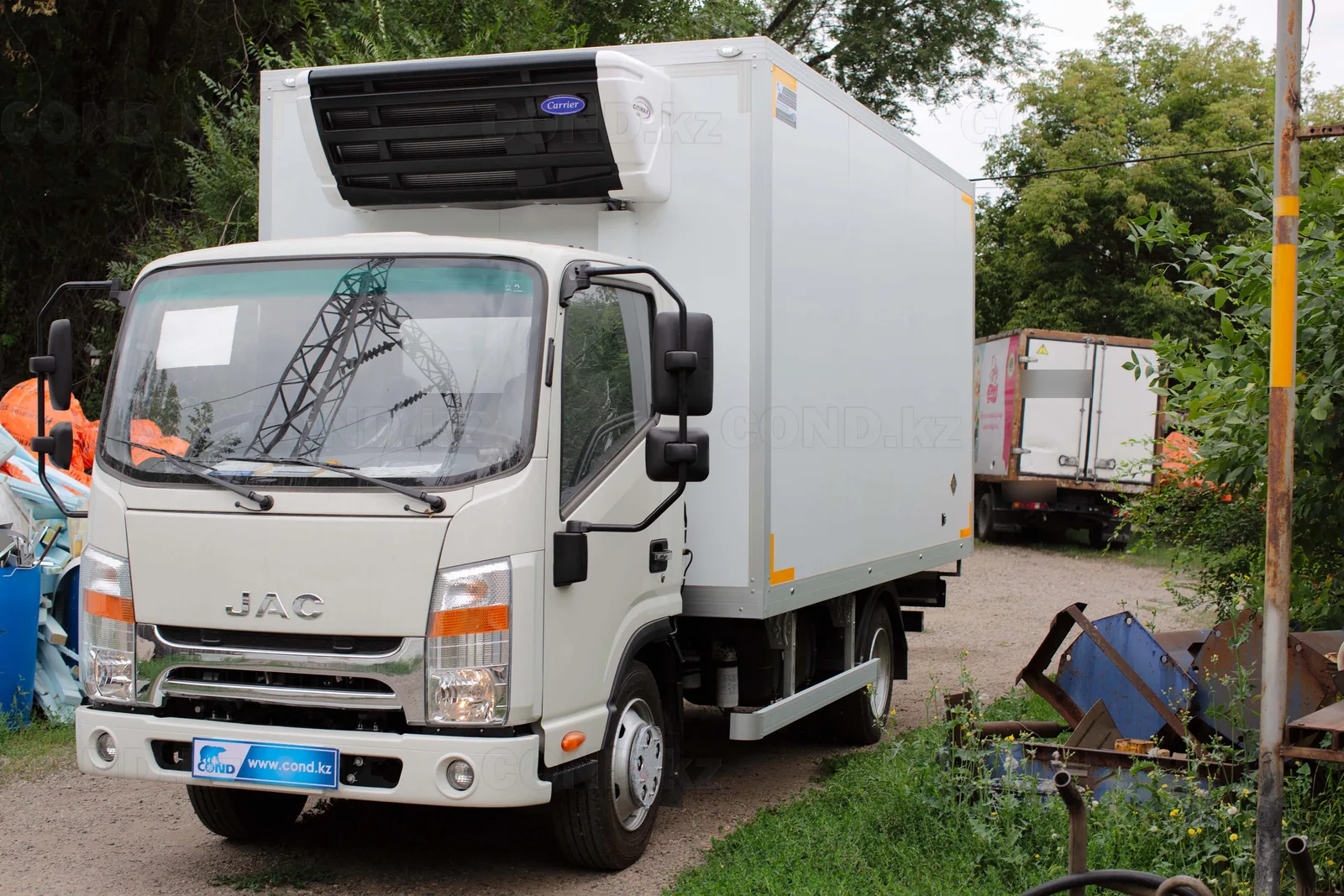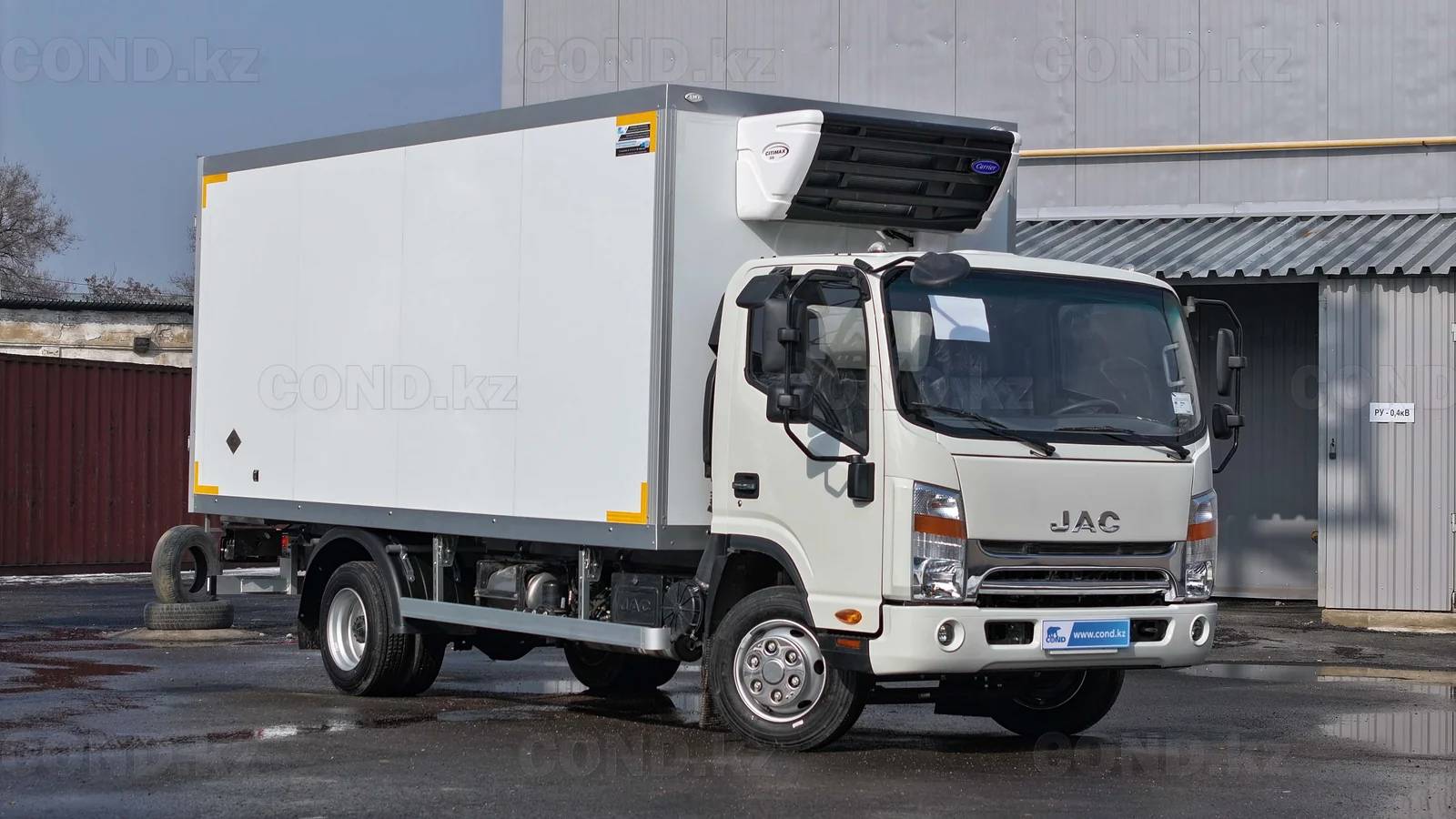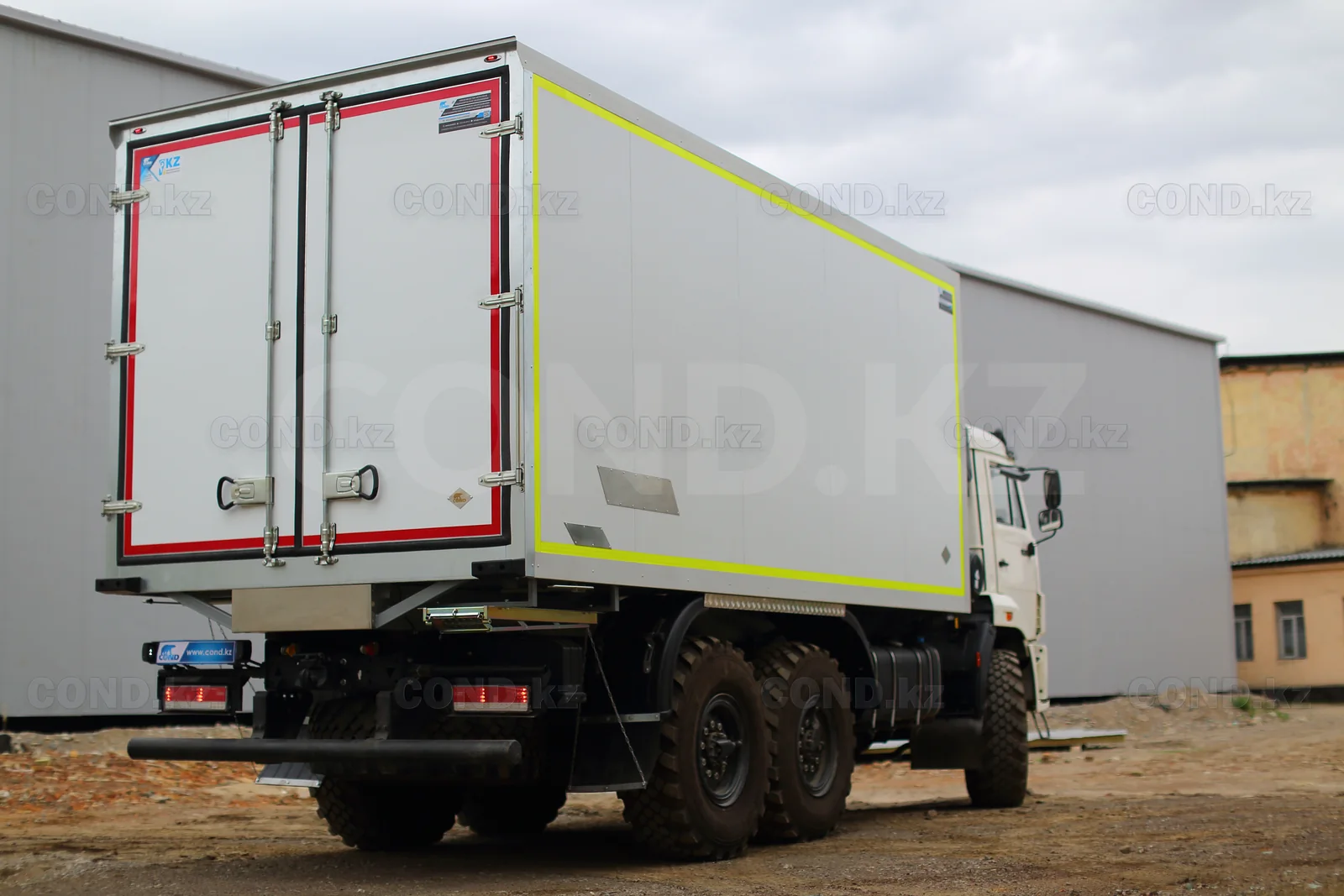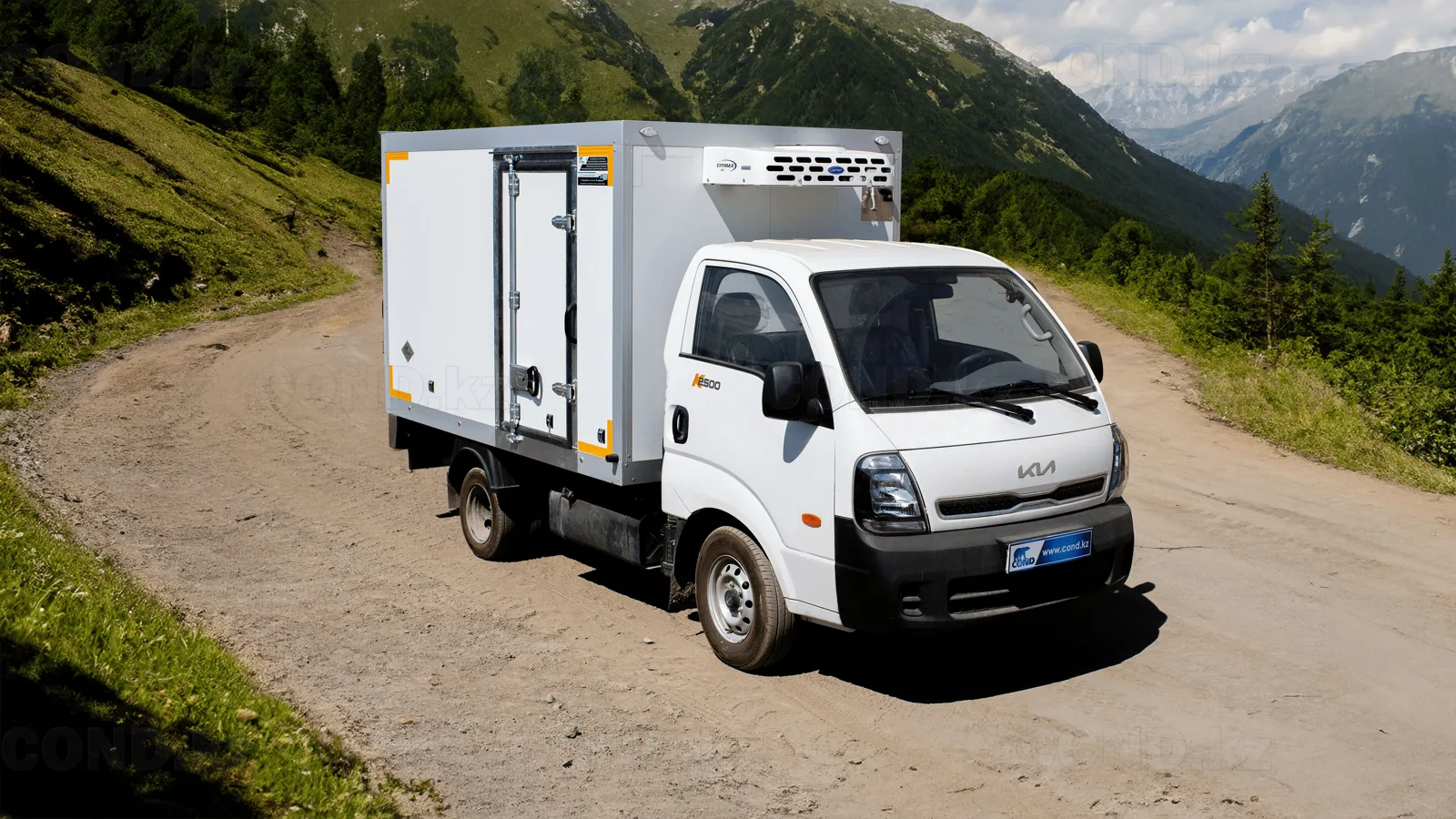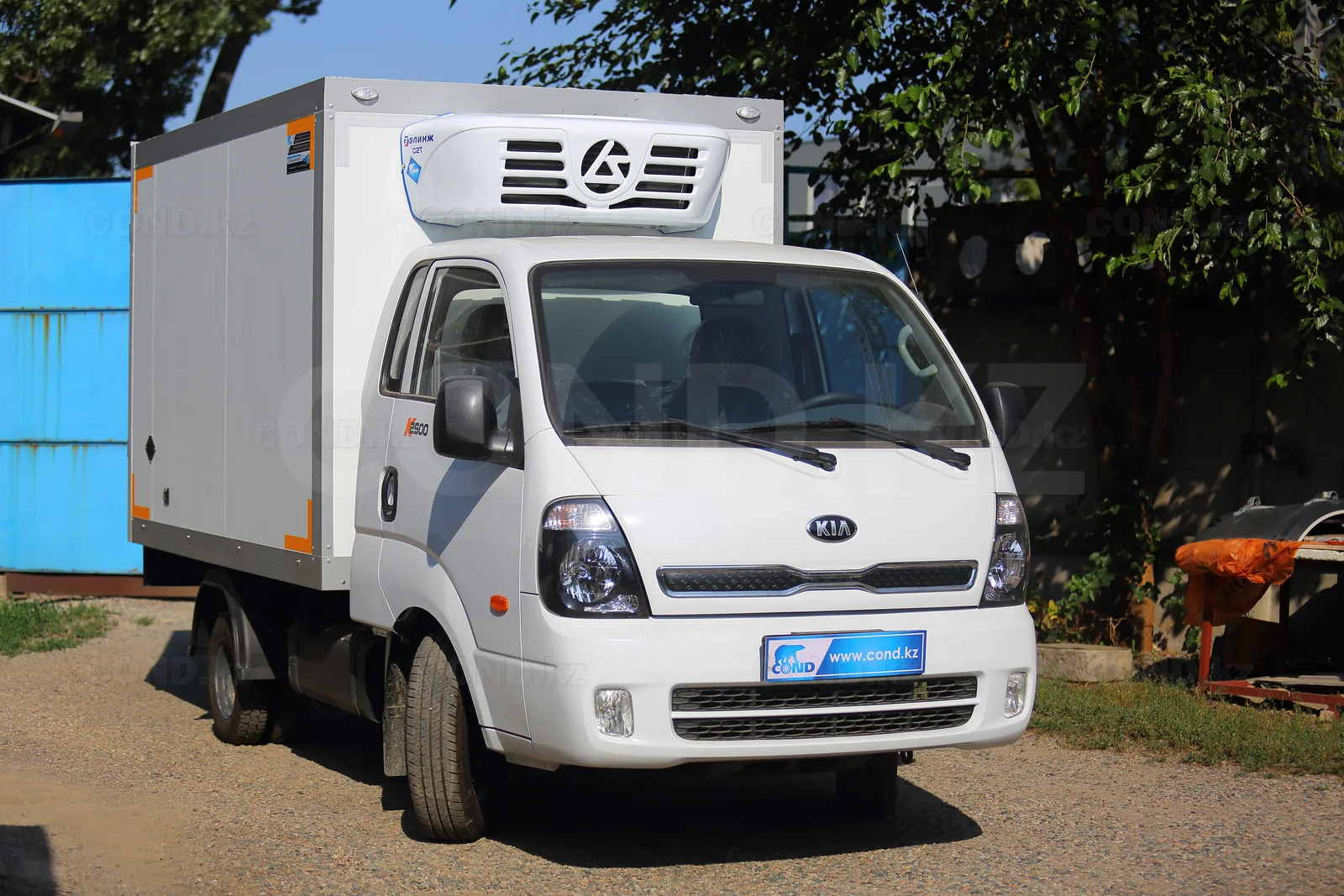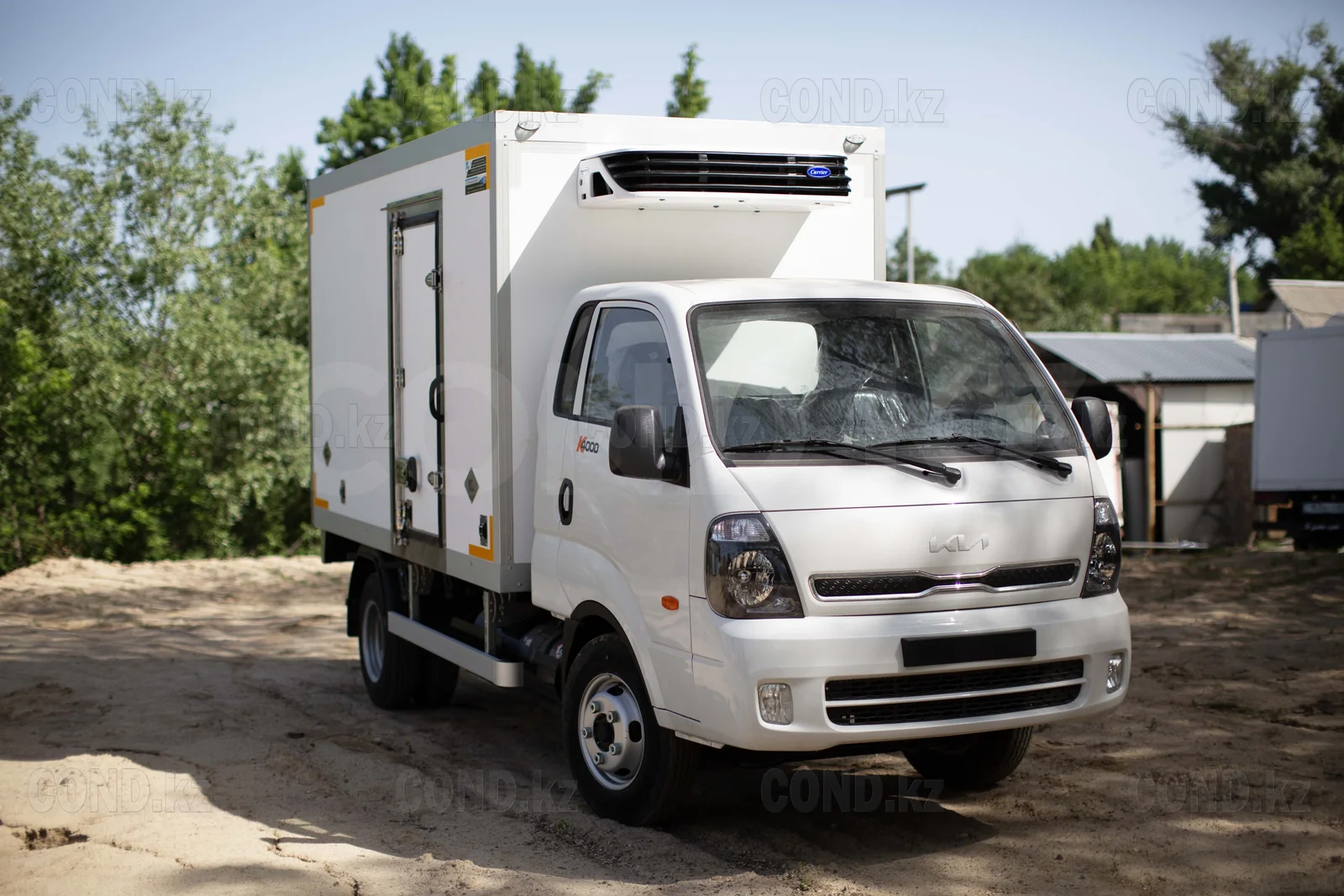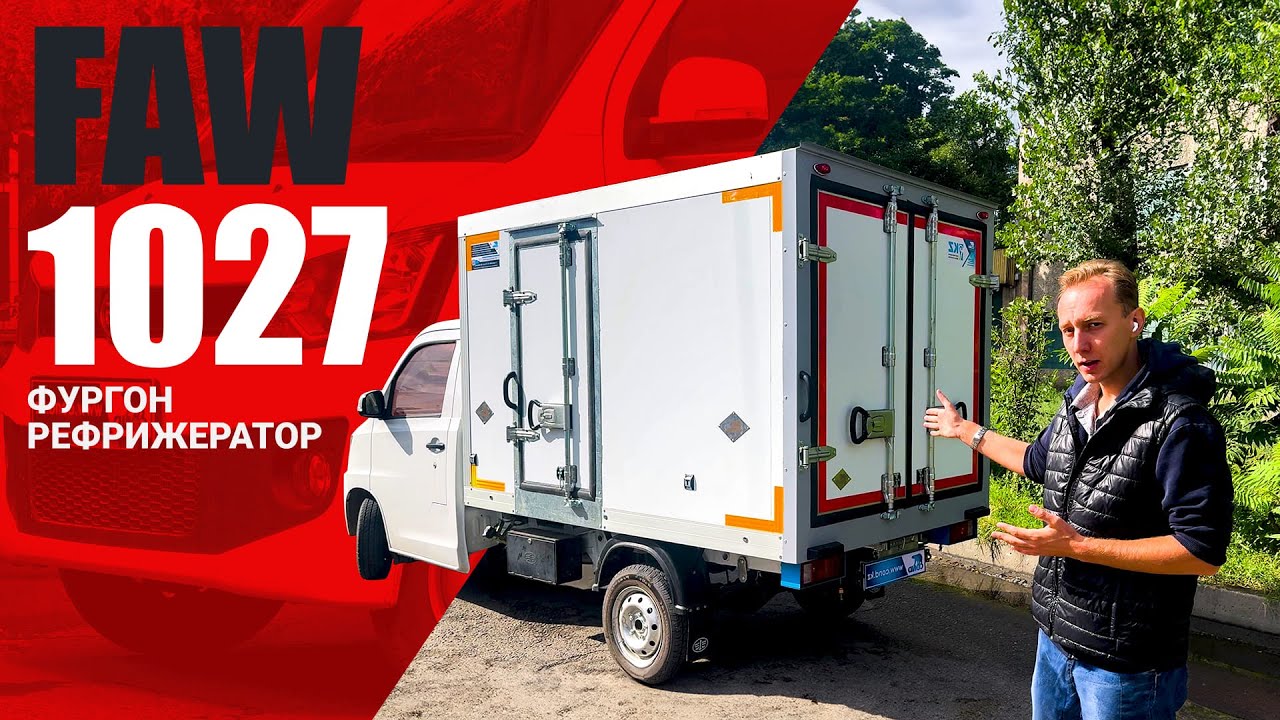
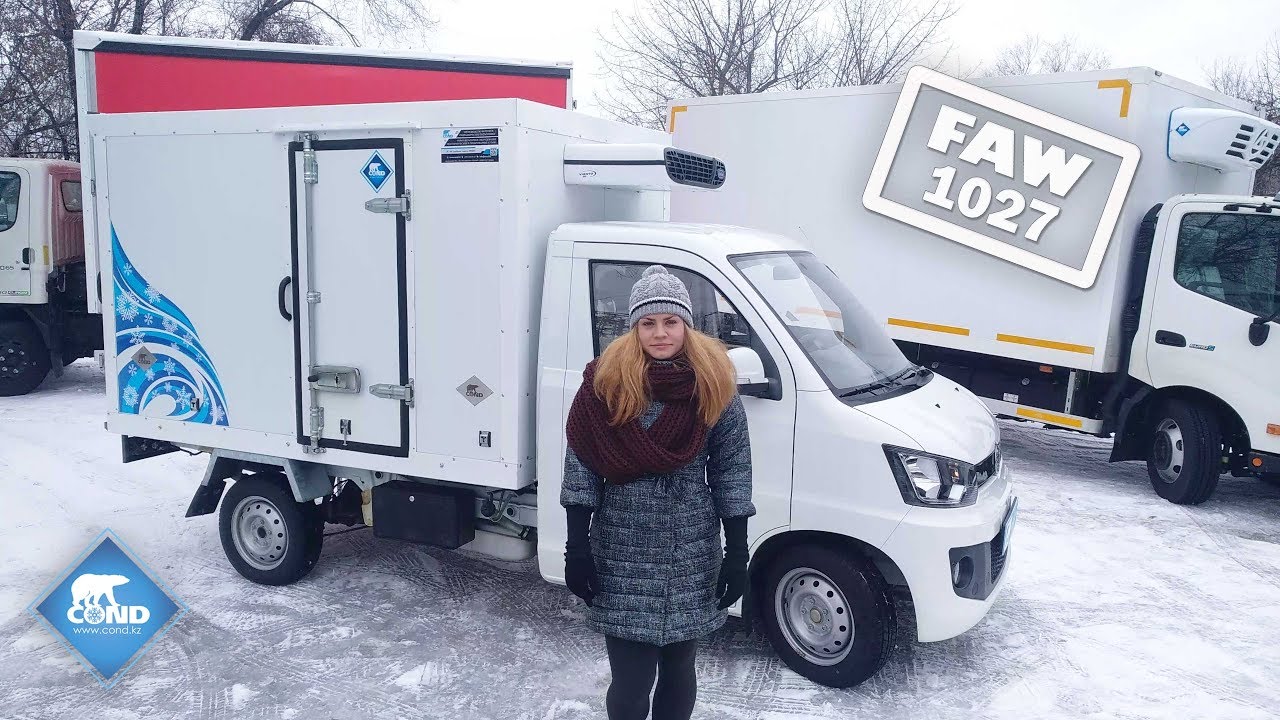
FAW 1027 (T80) walk-around — a COND refrigerated van
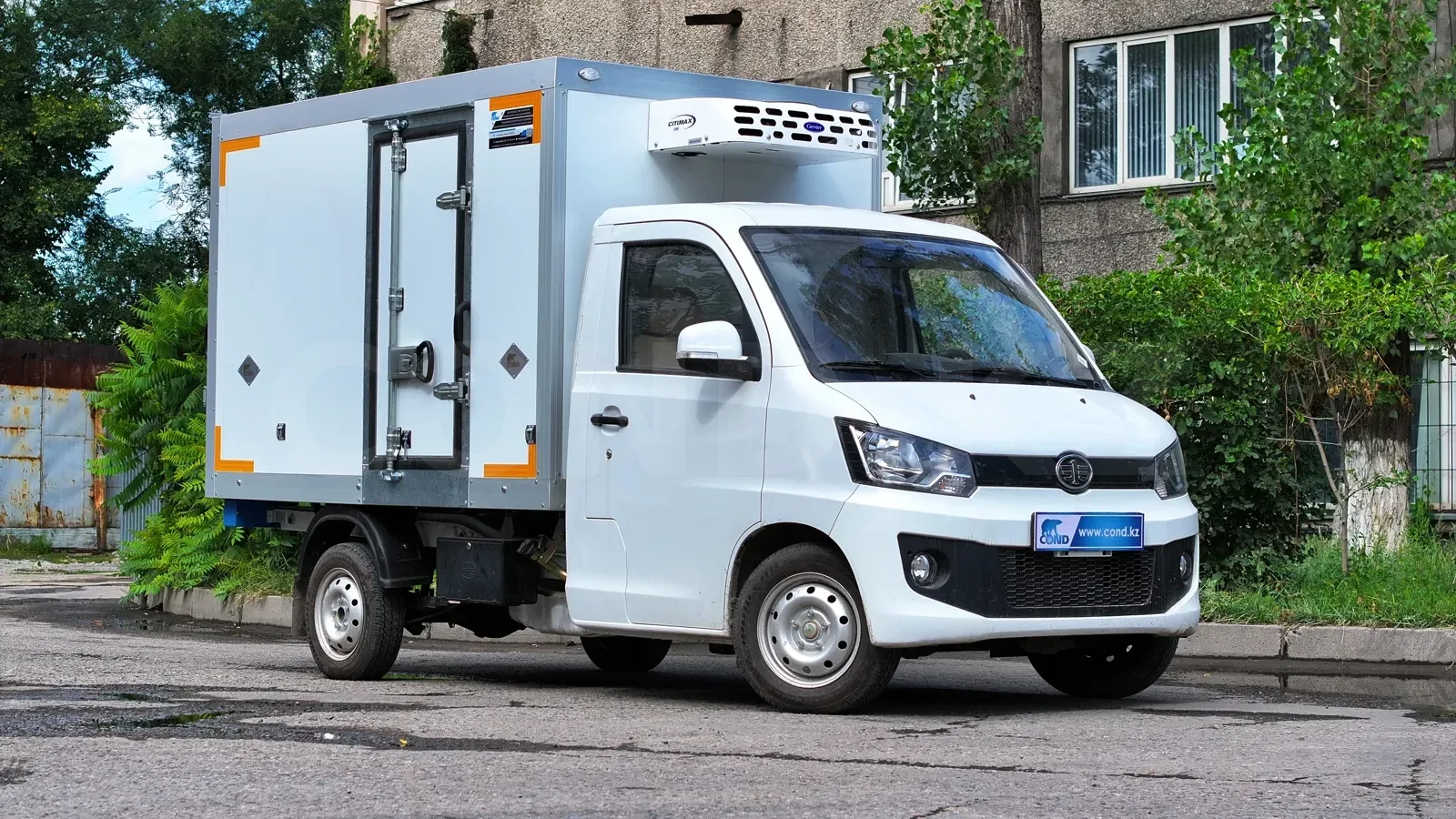
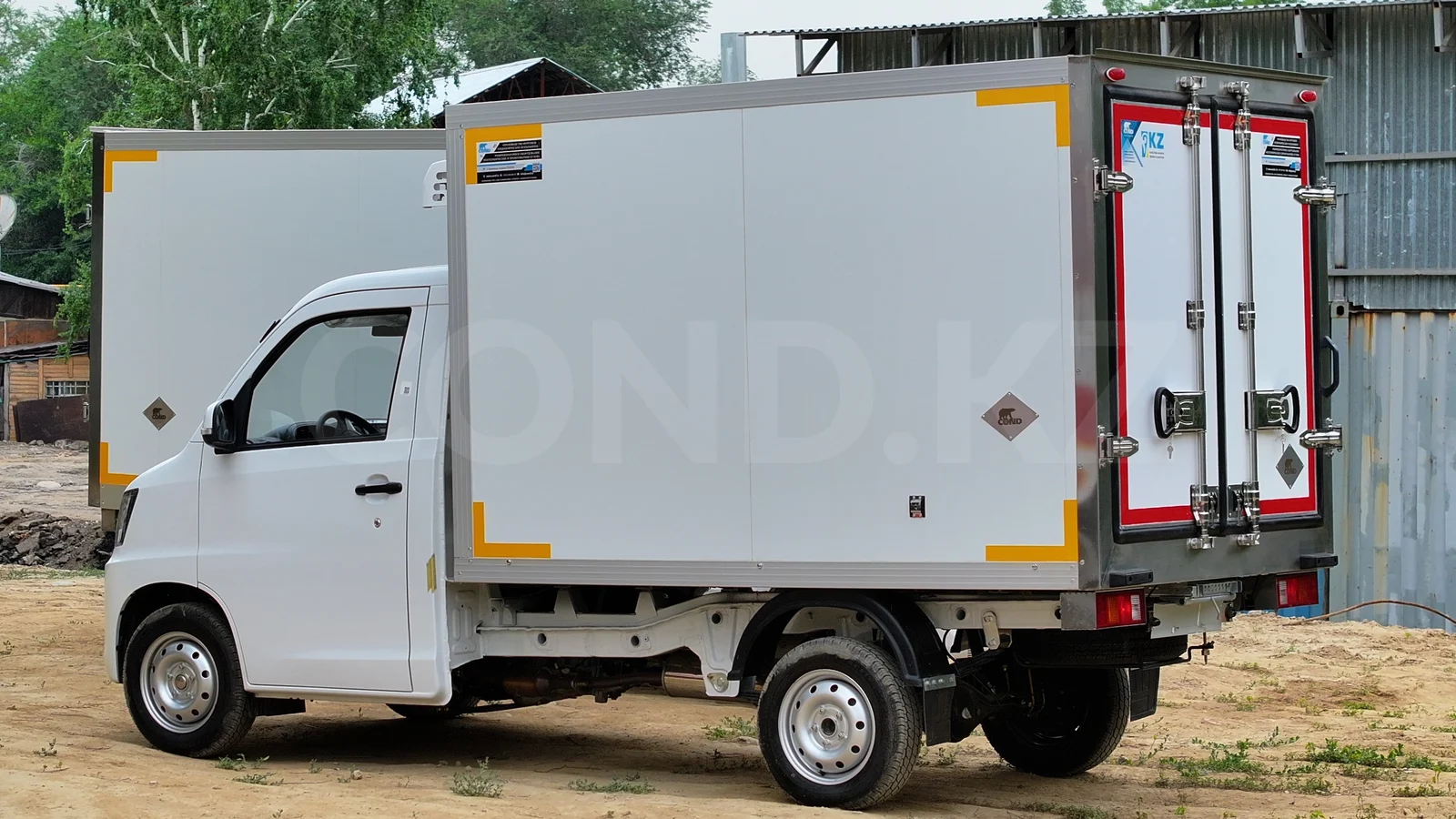
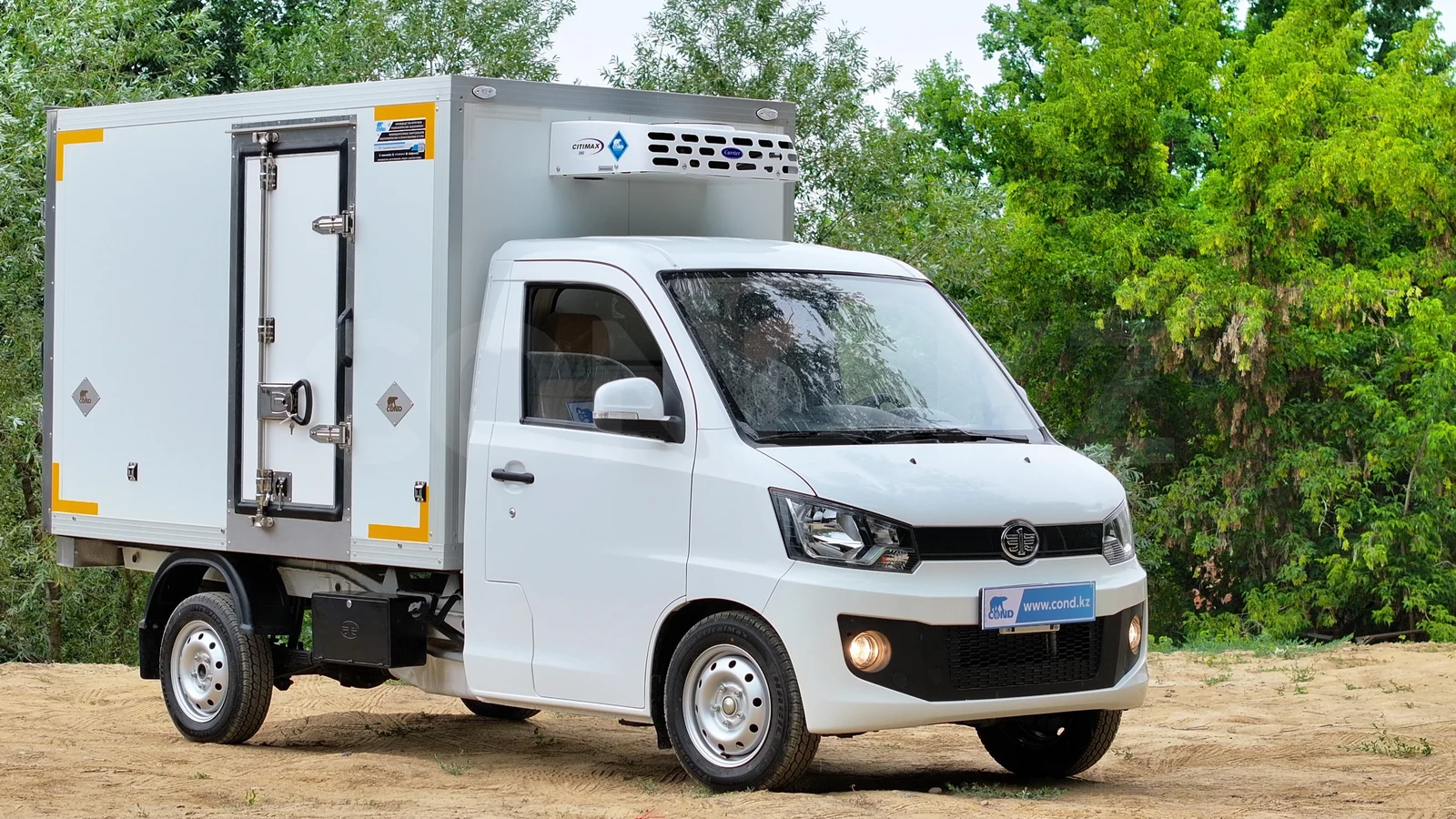
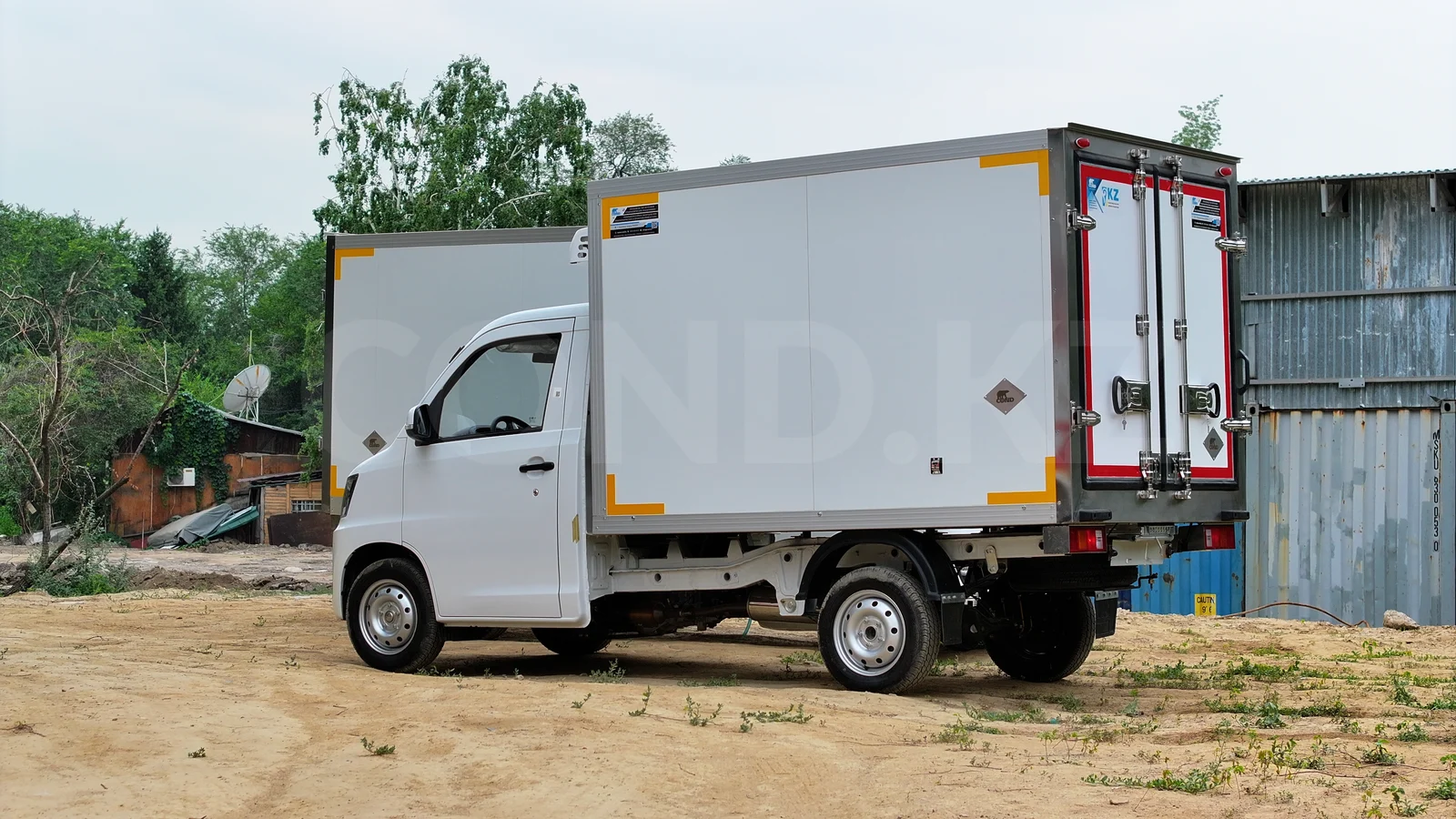
The same FAW 1027 (T80) in licence category B, but with a tall body: 2,650 × 1,650 × 1,700 mm — about 5.3 m³ of usable volume instead of the 3.3 of the short version. The plan dimensions are unchanged, so it still gets through where a medium-duty truck cannot turn around, while the body holds two cubic metres more boxes. It is bought for city delivery of light bulky goods — bakery and confectionery, flowers, greens, pharmacy: when a GAZelle is more space than you need but the cold has to be real.
| Make / model | FAW 1027 (T80) |
| Engine | petrol CA4GX15, 1,495 cc, Euro 5 |
| Power | 102 hp (75 kW) |
| Gearbox | manual, 5-speed |
| Drive | rear |
| Wheelbase | 2,960 mm |
| Gross weight | 2,005 kg |
| Vehicle category | B |
| Payload | up to 800 kg |
Chassis specifications are on a separate page.
| Body type | refrigerated — a body with a heating/refrigeration unit |
| Body dimensions | 2,650 × 1,650 × 1,700 mm |
| Internal dimensions | 2,450 × 1,450 × 1,500 mm, 100 mm panel |
| Internal volume | ≈ 5.3 m³ (2,450 × 1,450 × 1,500 mm) |
| Sandwich panel thickness | 100 mm |
| Refrigeration unit | Carrier Citimax 280 |
| Unit position | roof-mounted, above the cab |
| Temperature duty | from −20 to +12 °C |
| Doors | rear swing doors with rod locks plus a side door |
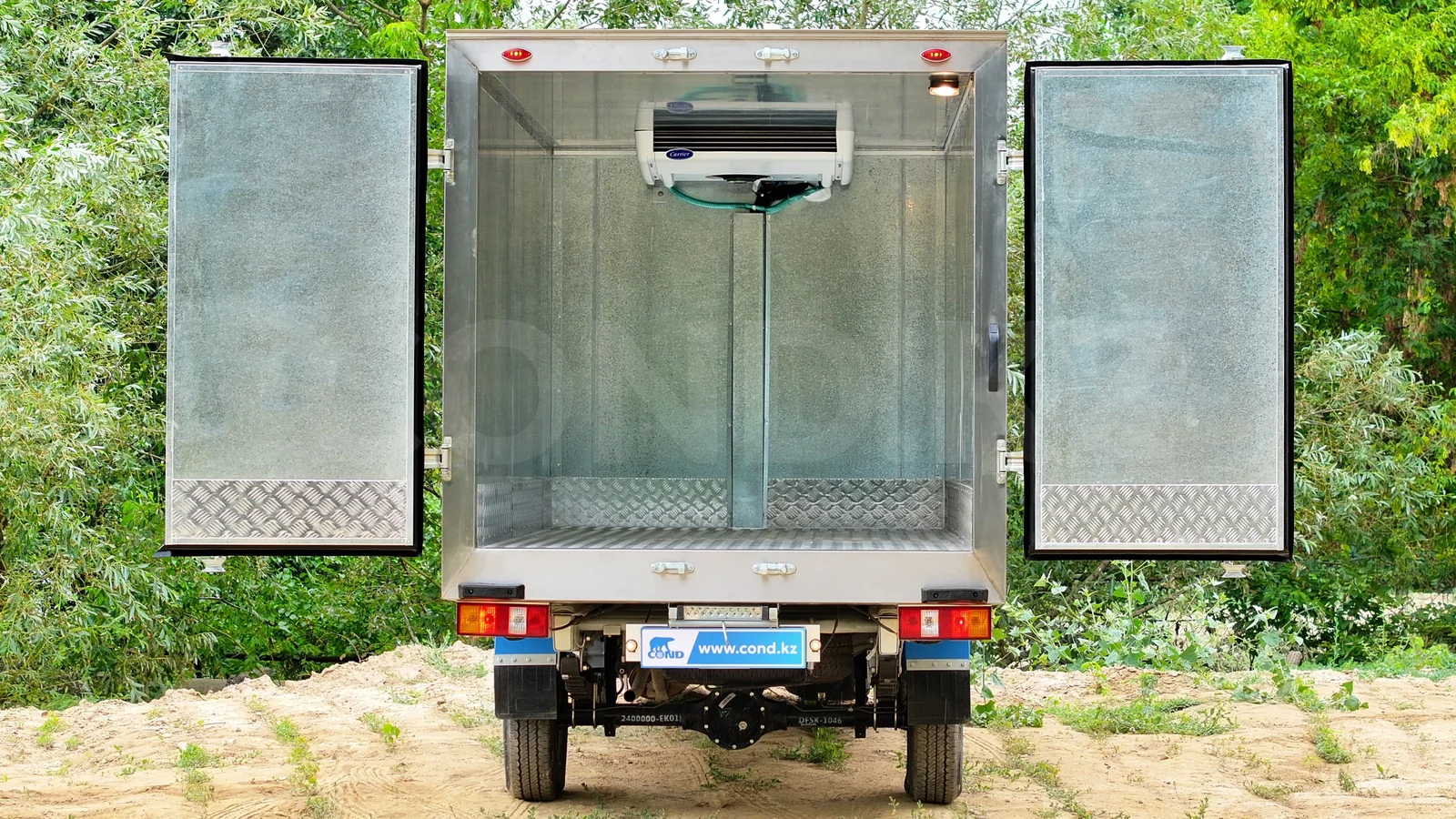
| Floor | GRP with quartz grit |
| Interior lining | galvanised sheet with a chequered-aluminium kick rail along the bottom |
| Production time | from 14 working days |
More about the design on the page refrigerated vans.
The vehicle is built on a FAW 1027 (T80) chassis with a 2,960 mm wheelbase. The engine is petrol CA4GX15, 1,495 cc, Euro 5, 102 hp (75 kW). Gross weight 2,005 kg — a category B licence is enough.
Body type: refrigerated — a body with a heating/refrigeration unit, external dimensions 2,650 × 1,650 × 1,700 mm. That leaves 2,450 × 1,450 × 1,500 mm, 100 mm panel inside: the panel thickness is subtracted on every side, floor and ceiling included. Usable volume is ≈ 5.3 m³ (2,450 × 1,450 × 1,500 mm), counted from the internal dimensions rather than by multiplying the external ones.
The interior lining is galvanised sheet with a chequered-aluminium kick rail along the bottom. The floor is GRP with quartz grit. Doors: rear swing doors with rod locks plus a side door.
The refrigeration unit is Carrier Citimax 280. Operating range: from −20 to +12 °C.
A fibreglass floor with quartz grit does not slip even when wet and has no seams for water to seep into — the choice for food and pharma work where the body is washed daily.
Walls and ceiling are lined with galvanised sheet — the factory standard for a van body: it shrugs off moisture, takes a pallet-corner knock and is replaced in sections rather than whole panels.
A side door changes distribution logistics: at each stop you open it rather than the whole rear portal — less cold escapes and the truck can park tight against its neighbour.
This body is not a catalogue item but a project we actually built. We will make the same one to your dimensions: length, width and height are calculated for your cargo and the chassis payload, rather than fitting the cargo to a ready-made size.
We also fit it to your own chassis: bring the vehicle, we take the frame dimensions, build the body, mount it and hand it over with the conversion paperwork.
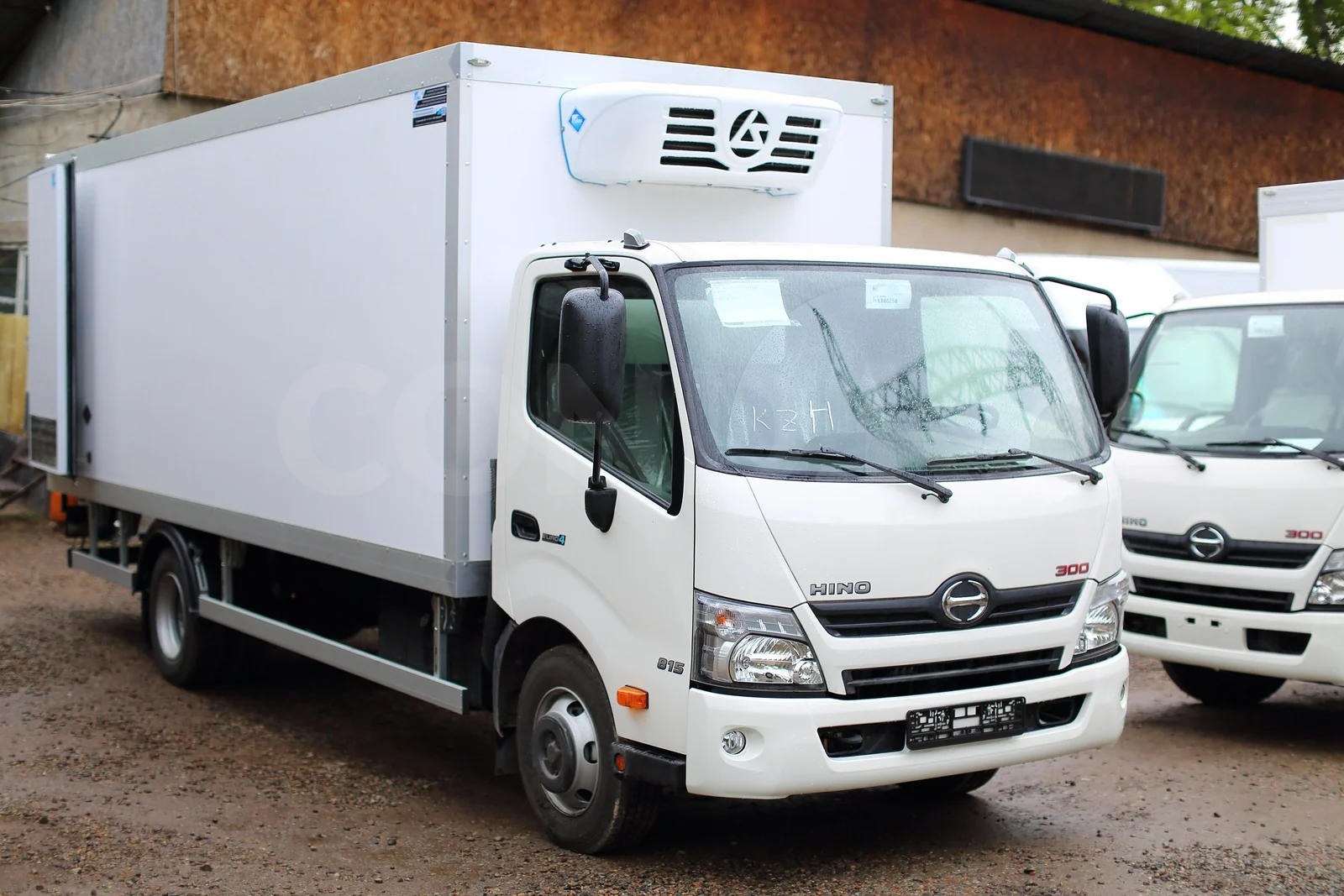
If you are still choosing a chassis, we have the same body on other bases as well: Chevrolet Labo, DongFeng C31, GAZelle Business 3302, HINO 300. They differ in payload, frame length and licence category.
A standard 1,200 × 800 mm europallet, single tier, no restacking. Internal dimensions with a 50 mm laying allowance — a pallet will not go in dead tight.
Inside 2 450 × 1 450 × 1 500 mm · 5,3 m³
The layout scheme is on the right: it shows how the rows sit and how much room is left.
This is a budget refrigerated van in the literal sense: the vehicle, the body and the servicing all cost less than any medium-duty truck. The 1.5-litre petrol engine needs no pre-heater in winter, FAW parts are available in Almaty, and ordinary workshops handle repairs.
What matters about a light delivery reefer: the payload here is up to 800 kg, and the weight of the refrigerated body has already been deducted. A tall body adds volume, not payload — it is for light, bulky goods: bread and confectionery, flowers, greens, pharmacy crates, prepared food in gastronorm containers. If you carry pallets, look at a GAZelle or a Kia Bongo.
We fit Carrier unit roof-mounted above the cab — the condenser sits on the roof over the cab and the evaporator under the body ceiling, so usable volume is not lost. The range runs from −20 to +12 °C: it suits frozen goods, chilled products and pharmaceuticals alike. On request we fit Elinge or Kaida — chosen by budget and mode.
A 100 mm sandwich panel of our own production, frameless — no cold bridges along the ribs. The body measures 2,650 × 1,650 × 1,700 mm is 400 mm taller than the “little one”, which means ≈ 5.3 m³ of usable volume against 3.3: two cubic metres more at the same footprint, so the truck stays just as short and parks by the entrance just as easily. Loading is through the side swing door: on a city round that is faster than opening the whole load space from the rear, and less warm air gets inside.
Walk-arounds from our YouTube channel.

Where the number comes from:How many pallets fit in a refrigerated body — a capacity calculation
All projects of this make:All refrigerated bodies on FAW
Leave your contact details — we will confirm availability/lead time and quote a price.
📞PhoneOur other projects in the “refrigerated van” category. All body types are in the “Vehicles” section.
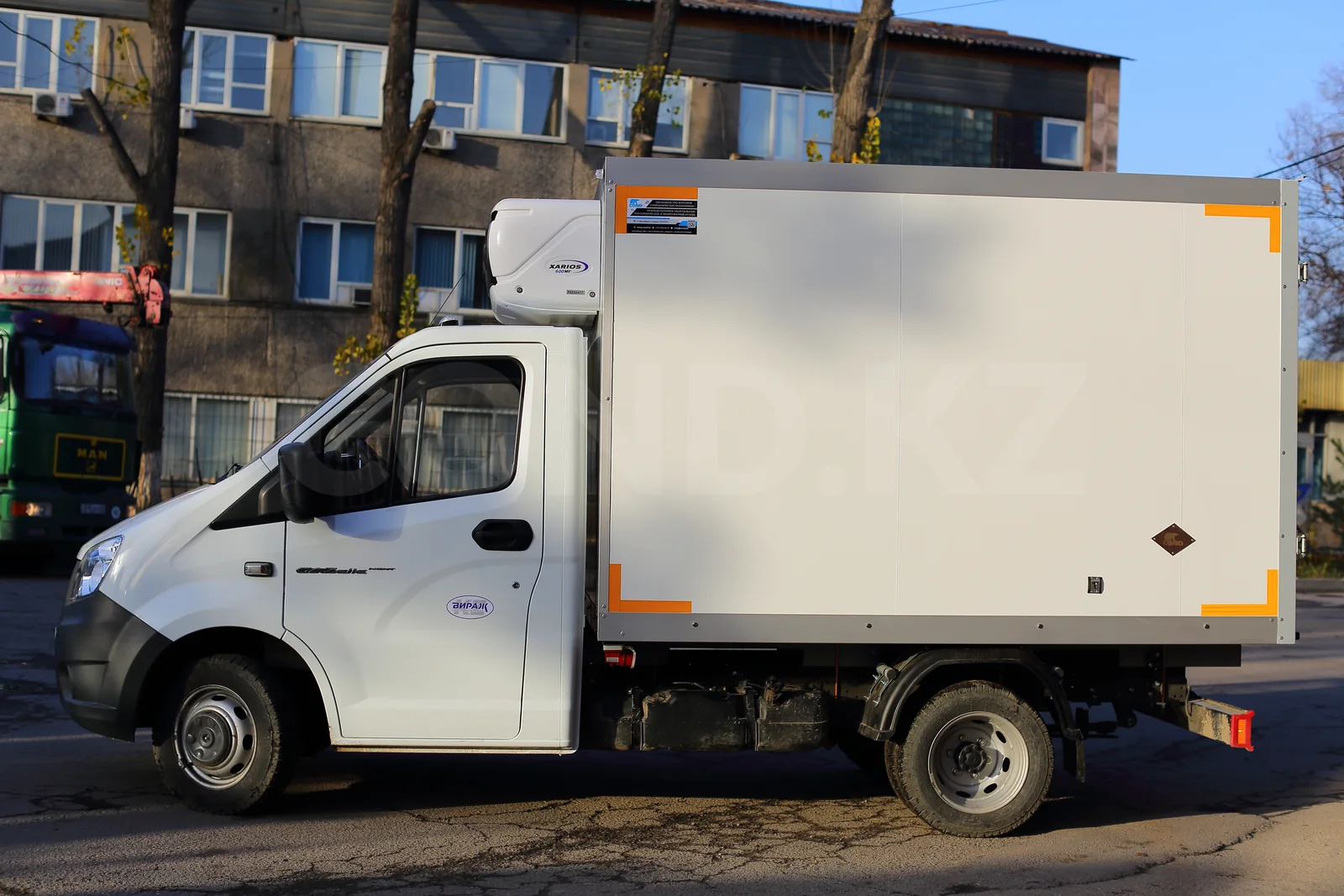 ⚪ Completed
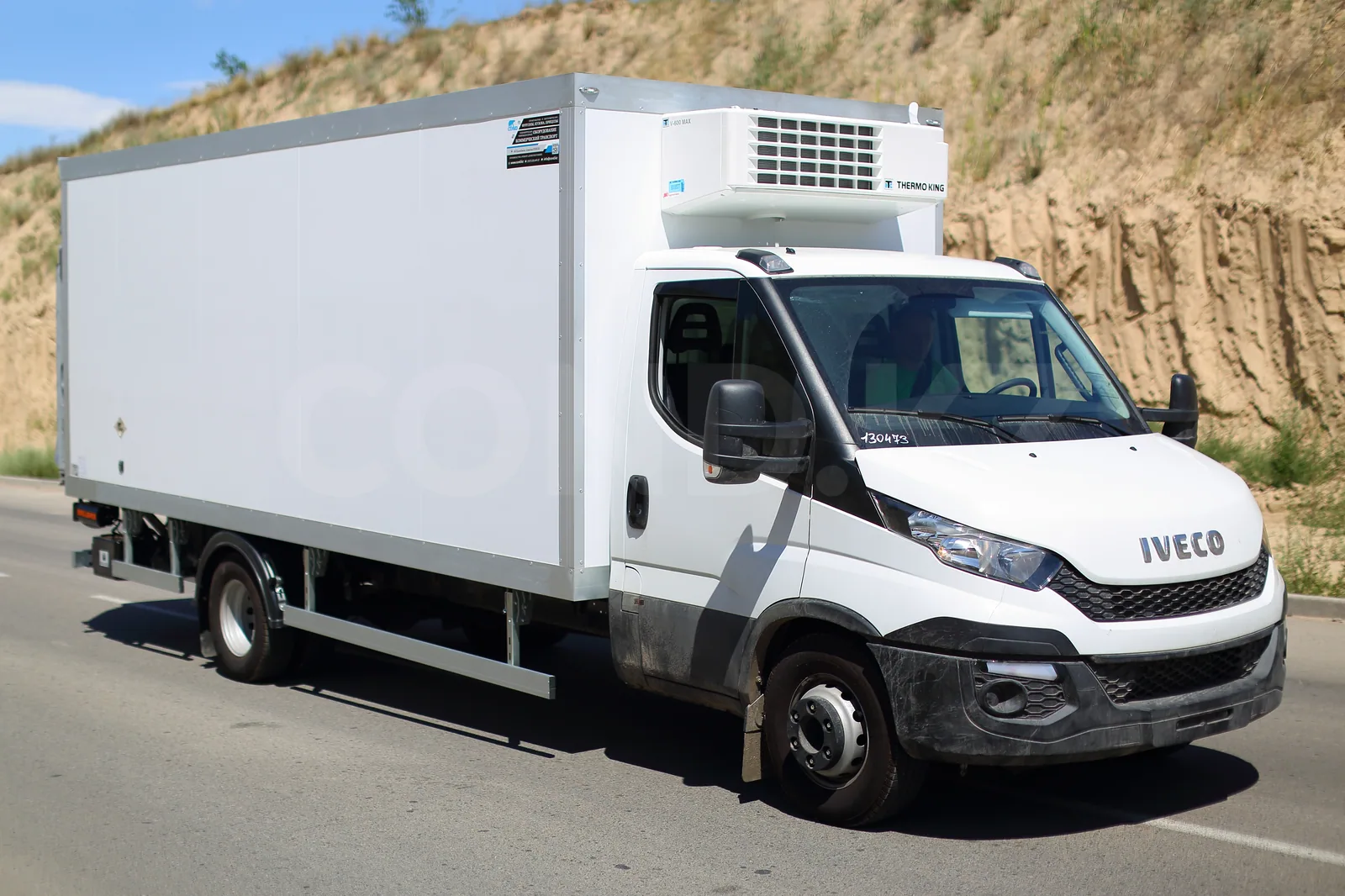 ⚪ Completed