Published:
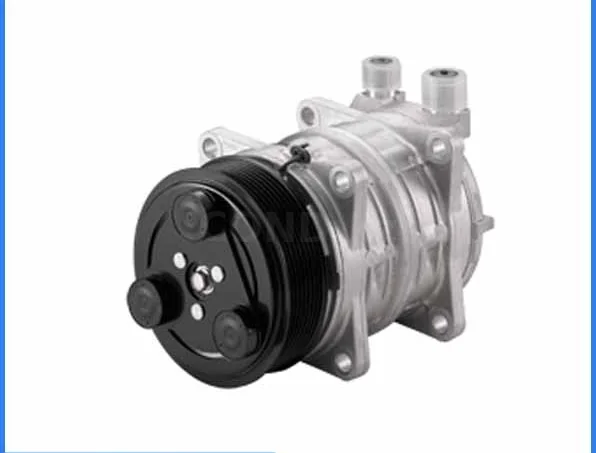
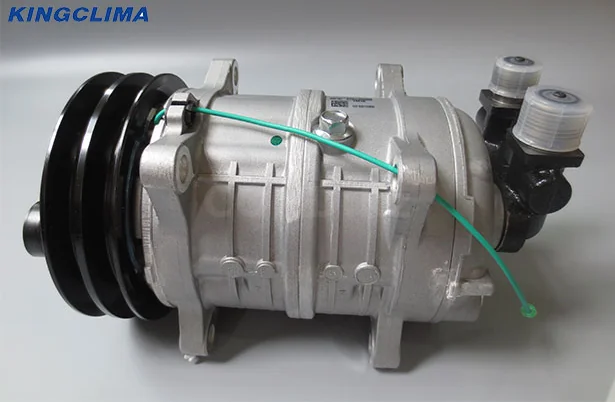
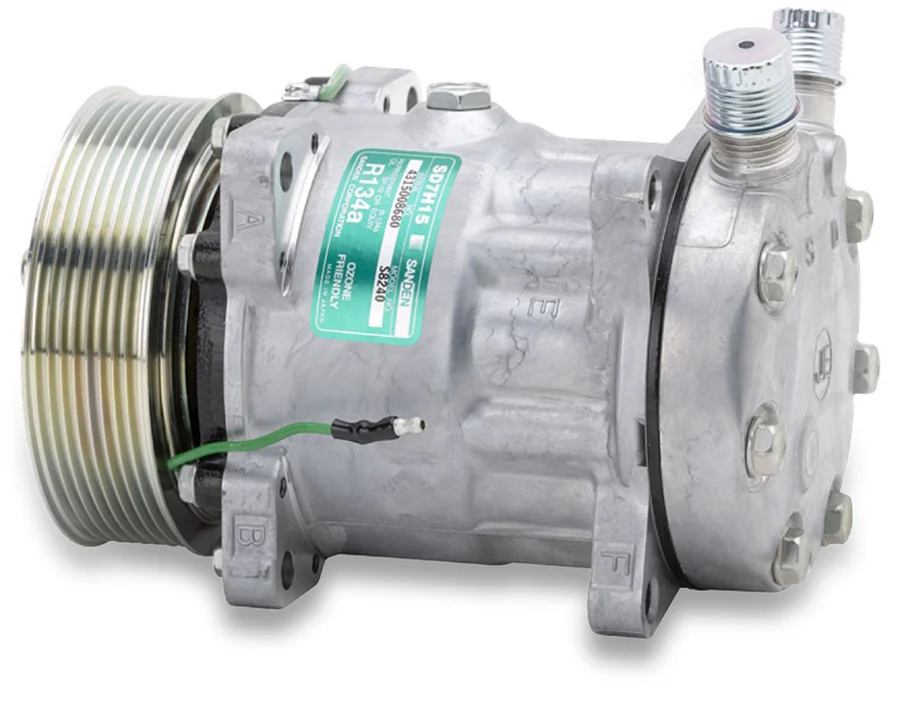
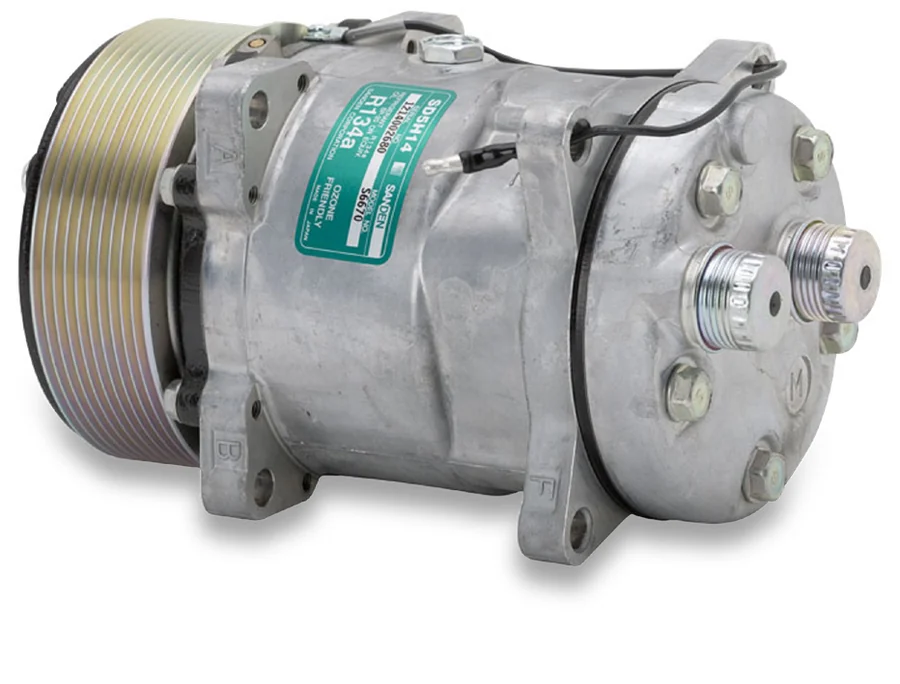
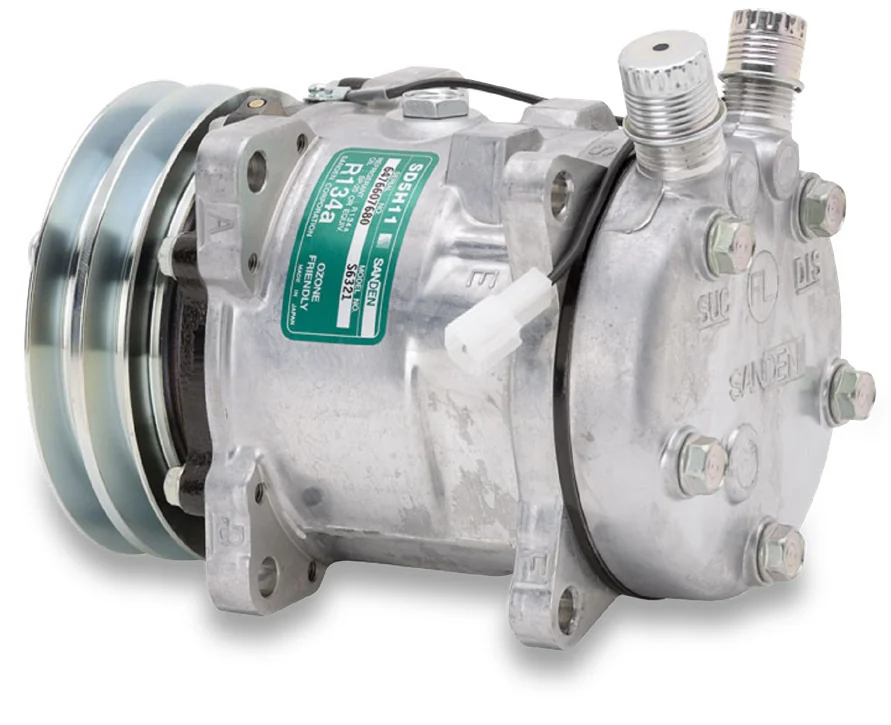
An open-type piston compressor of a transport refrigeration unit consists of a housing with the cylinder-piston group, a valve plate, a front cover with the shaft seal, a rear cover with discharge and suction ports, and an electromagnetic clutch with a pulley. Inside is a swash plate mechanism that converts shaft rotation into the reciprocating motion of the pistons.
Versions differ in pulley (2A/2PK V-belt or 8PK poly-V), port position (rear vertical or rear horizontal straight) and clutch voltage — 12 V or 24 V, to match the electrical system of the specific chassis.
The compressor pulley is driven by the engine belt continuously, but the compressor shaft engages only on command. When voltage is applied to the clutch coil, the electromagnet pulls the front plate against the pulley — the shaft starts turning and the compressor pumps. When the unit's thermostat decides the set temperature is reached, power is cut, the plate releases, the compressor stops, and the pulley keeps spinning freely.
The clutch is powered from the vehicle's electrical system: the clutch voltage (12/24 V) must match the chassis voltage. A voltage mismatch is a common cause of a burnt coil.
The coil supply wires exit the clutch. Wire colors vary between manufacturers — there is no single standard — so a wire's purpose is determined not by color but by continuity testing: the clutch coil reads as a few ohms of resistance to ground or between terminals. Before connecting, check the wiring diagram of your specific refrigeration unit.
The compressor mounts to the chassis engine via a dedicated bracket — each engine takes its own bracket, which sets the pulley alignment. Drive is by a belt from the crankshaft: V-belt or poly-V, depending on the pulley.
Belt tension is critical: a loose belt squeals and slips (the clutch and pulley overheat, the belt burns), while an overtightened one overloads the pulley bearing and the shaft seal. Tension the belt so the span deflects about 10–15 mm under moderate pressure, and re-check tension after the first hours of operation — a new belt stretches.
The compressor draws power and torque from the engine — with the clutch engaged, engine load rises noticeably. This is normal: on small-engine chassis, switching the unit on can be felt in the idle speed.
From the factory, the compressor contains shipping oil. It is intended only for preservation during storage and transport. When the system is installed and charged, the compressor is filled with working oil — of the type and in the amount specified in the manual of the specific refrigeration unit (Carrier, Elinge, Thermo King, etc.).
Too little oil leads to scuffing and seizure; too much causes liquid slugging and loss of cooling capacity. Dirty oil (after a burnt clutch, moisture in the circuit or a burnt-out old compressor) spreads wear debris throughout the system — before installing a new compressor, the circuit is flushed and the filter-drier replaced.
A pressure relief valve is fitted on the housing: if pressure rises to an unacceptable level (overcharge, condenser fan failure, blocked line), the valve vents refrigerant, protecting the compressor and lines from bursting. A tripped valve is a reason to find the cause of the high pressure, not to simply top up the charge.
Diagnosis with gauges and a visual inspection takes minutes — finding the root cause matters more, otherwise the new compressor will share the fate of the old one.
Leave your contacts — we will select and quote. Reply within a day.
📞Phone