
Electric Truck with a Van Body or Refrigerated Body: Experience from 15 Countries, Winter, Economics and Breakdowns
Published:
In brief. An electric truck (an electric truck with a van body) pays off on a city route of up to 150–200 km a day with overnight charging at the operator's own depot. Calculations from China, Canada and Germany agree: the advantage over diesel begins at roughly 60,000–75,000 km a year. The main limits have been tested in Norway, Korea and Japan: the traction battery weighs hundreds of kilograms and takes them out of the payload, and frost and the refrigeration unit cut the range by 20–40%. COND in Almaty builds insulated van bodies and refrigerated bodies on electric chassis of any make.
— Below twelve percent the battery drains fast. Once I got to the charger with one percent. — driver of an electric Volvo FM, the Netherlands
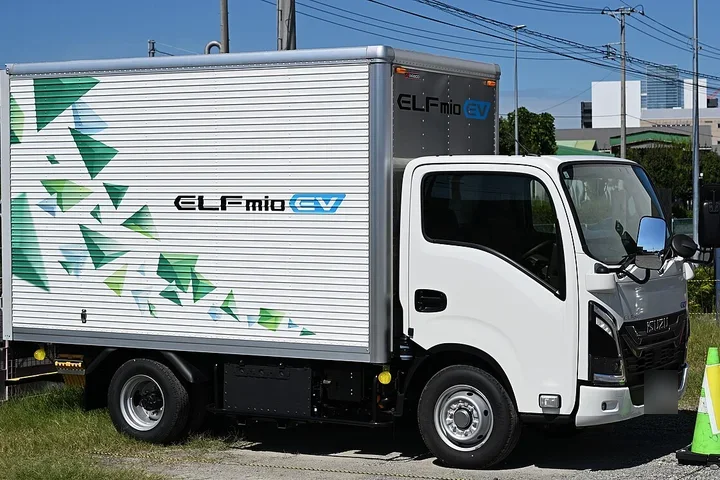
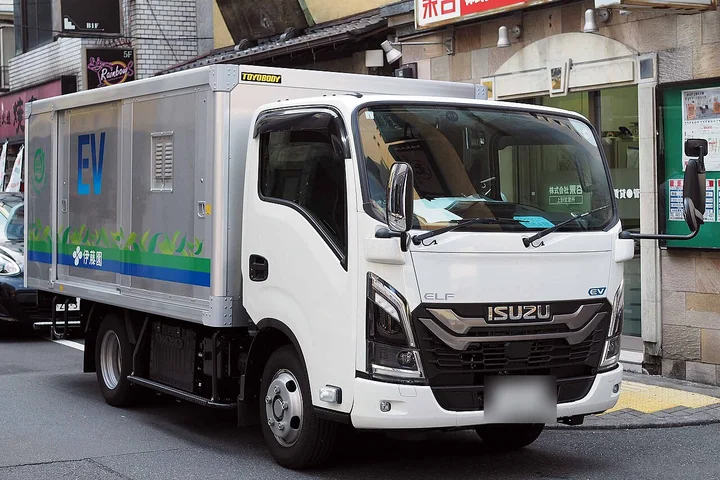
A Japanese transport company has been hauling cargo on an electric Isuzu Elf for a year and a half. The truck covers about 40 km per shift, and by the time it returns to the depot about 60% of the battery is left, with the air conditioning running. The drivers say it drives better than a diesel: no vibration, less tiring by evening. What worries them is something else: there are no chargers at highway terminals, and in an electric truck "the engine has been replaced by a computer", so it can no longer be repaired in your own garage.
That is the whole subject. On the right route an electric truck is hardly noticed; on the wrong one it stands idle. We collected the experience of operators in Kazakhstan, Russia, China, Japan, Korea, the USA, Australia, the United Kingdom, Norway, Germany, France, the Netherlands, Italy, Spain and Poland. Below: what owners and fleets write, how much the battery weighs, how a refrigerated body works on an electric chassis, what frost does, where things break, and how to calculate the economics for your own route.
Quote is based on body, chassis and temperature range.
What an electric truck is (electric lorry, battery-electric goods vehicle) and what types there are
An electric truck is a goods vehicle with an electric motor that takes energy from a traction battery. In listings it is also called a "battery-electric goods vehicle"; the light closed version is called an "electric van". It has no internal combustion engine, gearbox or exhaust. The traction battery is charged from the grid, either slowly (alternating current, AC) at the depot or quickly (direct current, DC) at a station.
Battery capacity is measured in kilowatt-hours (kWh). Range and vehicle weight depend on it. Energy consumption is given in kWh per 100 km.
ePTO (electric power take-off) is an output from the traction battery for auxiliary equipment: a refrigeration unit, a tail lift, a crane. eTRU is an electric transport refrigeration unit.
Three classes of electric chassis are used for van bodies worldwide.
| Class | Gross weight | Example models | Battery | Range (manufacturer or test data) |
|---|---|---|---|---|
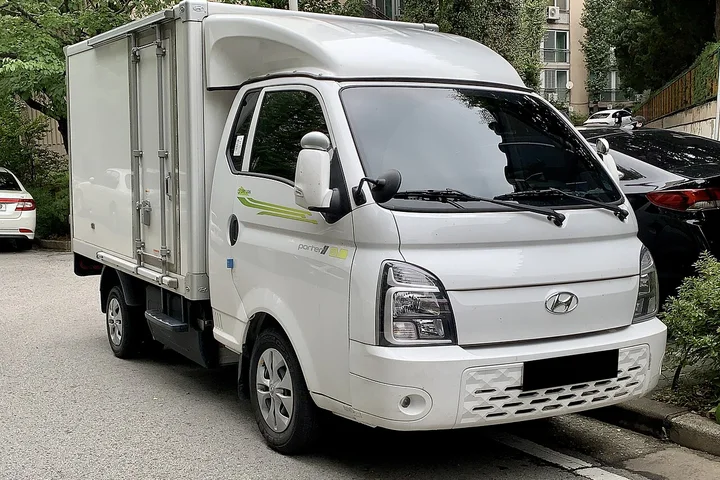
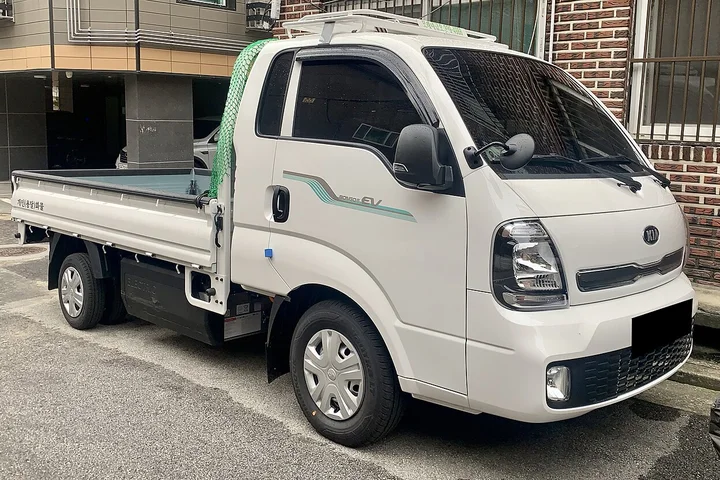
| Light, up to 3.5 t | up to 3,500 kg (in China up to 4,495 kg) | BYD T4, Hyundai Porter II EV, Kia Bongo III EV, Hyundai Mighty EV, Isuzu Elf Mio EV | 58.8–82 kWh | 205–330 km |
| Medium, 5–7.5 t | 5,500–7,500 kg | JAC N55 EV, Fuso eCanter, Yutong TE7, Isuzu Elf EV | 83–132 kWh | 100–300 km |
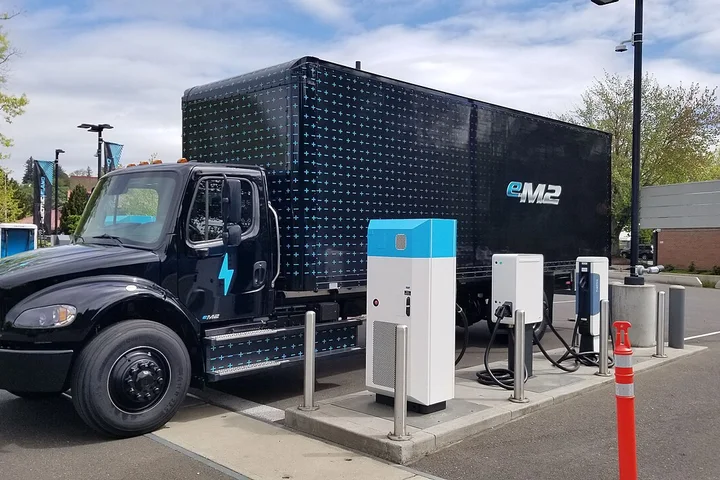
| Distribution, 8–16 t | 8,500–16,000 kg | MAN eTGL, Volvo FL Electric, Freightliner eM2 | 81–540 kWh | 200–450 km |
The figures in the table are factory figures. The section on winter and cold shows how much of them is left in practice.
Where electric trucks already work: 15 countries
China. The largest market. Electric truck sales grew from 2,600 in 2020 to almost 231,000 in 2025, and 139,800 in the first half of 2026. Growth was started by government measures; now, in the estimate of an industry publication, it is driven by economics: batteries have become cheaper and chargers more numerous. In Shenzhen all buses and taxis are electric, as are 87% of refuse trucks and 24–30% of dump trucks and lorries. PRC policy requires at least 80% of urban cold-chain delivery to run on "new energy" by the end of 2026. For this the Ministry of Industry registers whole batches of electric refrigerated trucks, from light 4.5-tonners to 25-tonners.
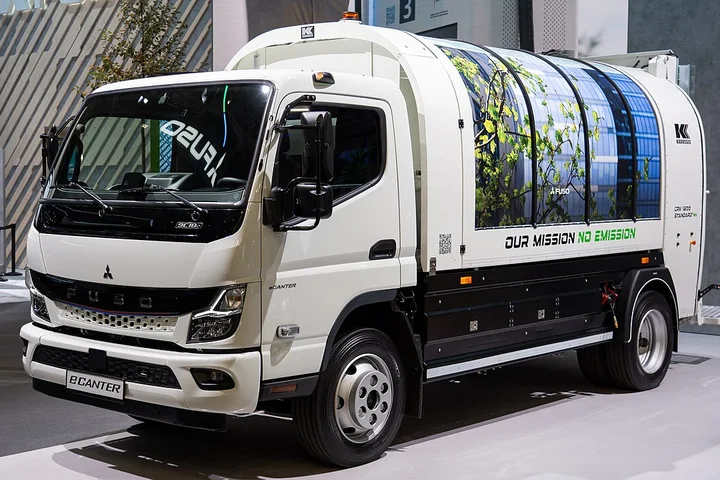
Japan. As of 31 March 2025, electric and hydrogen trucks make up 1.06% of the fleet, or 4,582 vehicles. The government's target is 20–30% electric vehicles in sales of trucks up to 8 t by 2030. The Ministry of Transport subsidy covers two thirds of the price difference with a reference diesel. The largest delivery service, Yamato, has already put 500 Hino Dutro Z EV and about 900 Fuso eCanter on the road, and by 2030 plans to bring its fleet of small electric vehicles to 20,000. Refrigerated trucks on electric chassis carry food to retail chains and medicines.
Korea. An example of boom and bust. For buying an electric truck, buyers were given a yellow commercial plate without having to buy a licence, and this started the demand for the Hyundai Porter II EV and Kia Bongo EV. Then the benefit was narrowed, queues formed at highway chargers, and in 2024 Porter EV sales fell by more than 60%, with more than 5,000 vehicles piling up in stock. Reviews from Korean owners are the most detailed of any we found. They are covered below, in the section on breakdowns.
Norway. According to a Norwegian business publication, electric makes up about 10% of truck sales. A survey of operators who bought electric trucks (the city of Oslo and the Norwegian Electric Vehicle Association): 60% bought because a customer required it, and only about 10% for the sake of savings. Drivers are almost all satisfied, about 90%. For more than half the main problem is range. The most important support measure was named as the state subsidy.
Germany. A three-year Öko-Institut project: 93% of companies that have run electric trucks for more than a year are satisfied or very satisfied. On technical problems, electric versus diesel, people more often say "fewer" than "more". Drivers who at first refused to get into such a truck now do not want to go back. There has been no federal subsidy for electric trucks since 2024, while the exemption from autobahn tolls runs until 30.06.2031.
Netherlands. A TNO pilot in 2024: 50 electric trucks in urban distribution. Technical availability was 98.5%, the same as diesel, and the average distance was 240 km a day with one top-up charge. The state gives a subsidy of up to ₸58 million (€115,200, AanZET 2026 programme) for a new electric truck.
United Kingdom. The main trouble of the 7.5 t class is in plain view here. It is the second-largest truck segment after tractor units, about 4,000 vehicles a year. Yet neither DAF, Mercedes, MAN nor Iveco makes a series-production 7.5 t electric truck: the battery eats the payload, and manufacturers move up to 12 and 16 t. The niche is taken by Chinese models, for example the Yutong TE7.
USA. The Freightliner eM2 electric chassis covers 290–400 km depending on class and supports ePTO for bodies. California obliges state fleets to buy zero-emission vehicles. The federal tax credit for commercial electric vehicles does not apply to those bought after 30.09.2025.
Australia. The electric JAC N55 is brought in as a chassis and the van body is fitted locally. The new-generation Fuso eCanter is sold in 14 variants, with batteries for 100, 200 and 300 km. Two states allow electric trucks a higher axle load because of the battery mass.
France, Spain, Italy, Poland. In Spain, according to the importer, the electric JAC iJAC 7.5 was the best-selling medium commercial vehicle three years running, 2023–2025. French operators, after tests, describe the switch like this: "possible, but demanding". An Italian ENEA study in 2026 reached the opposite conclusion: heavy electric trucks have the highest cost of ownership of the three types (electric, hydrogen, diesel), because the battery is expensive and will probably have to be replaced mid-life. Polish operators consider an electric refrigerated truck "not a universal solution": it works as long as the truck stands at a charger every night.
Russia. There are domestic brands of electric LCVs and trucks up to 12 t with an insulated van body and refrigeration equipment. The Magnit chain is testing the first Russian electric refrigerated truck with a 9 t payload on the Dmitrov–Moscow route.
Kazakhstan. The market is only taking shape. At an exhibition in Astana a 3.5 t Hyundai Mighty EV was shown, with a range of 250 km and charging in 71 minutes. In Almaty a public commission discussed a project of XCMG electric trucks from 5 to 16 t, including refrigerated trucks; a business publication headed the article with the question: "a solution for the environment or an expensive utopia?". New BYD electric trucks, the T4 and T5, including refrigerated versions, are sold on Kazakhstan marketplaces.
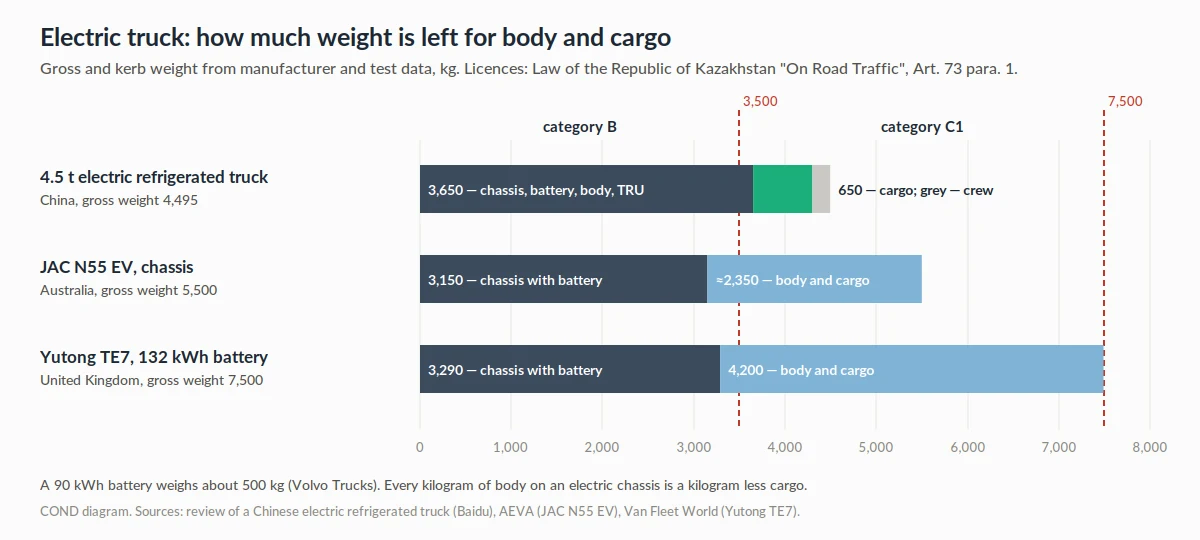
The battery eats the payload
This is the first thing drivers ask on a British forum: "How much payload will the weight of the batteries take away?". The answer is: a lot, and especially in the light class.
| Vehicle | Gross weight | Kerb weight | Payload | Battery |
|---|---|---|---|---|
| Chinese 4.5 t class electric refrigerated truck | 4,495 kg | 3,320–3,650 kg | 650–1,045 kg | LFP |
| Hyundai Porter II EV (chassis) | — | 1,970 kg, heavier than the diesel | — | 58.8 kWh |
| JAC N55 EV (chassis) | 5,500 kg | 3,150 kg | about 2,500 kg for body and cargo | — |
| Fuso eCanter (test) | 6,000 kg | — | 2,500 kg with a tail lift | 83 kWh |
| Yutong TE7 | 7,500 kg | 2,970–3,290 kg | 4,200–4,430 kg for body and cargo | 100 / 132 kWh |
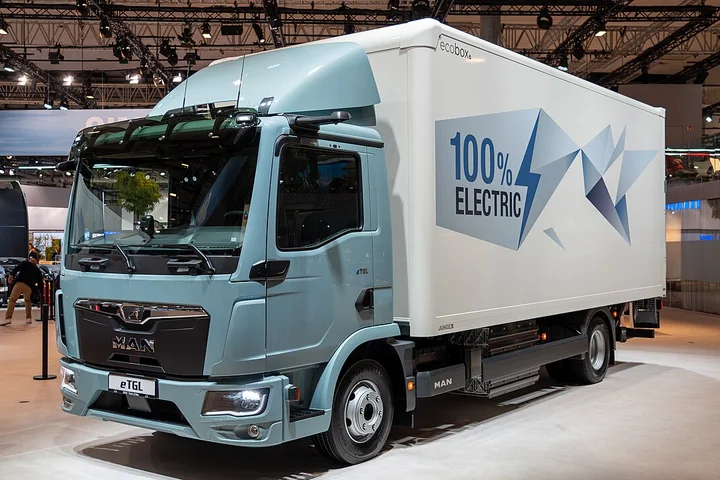
| MAN eTGL with a refrigerated body | 12,000 kg | — | up to 6,600 kg | 160 kWh |
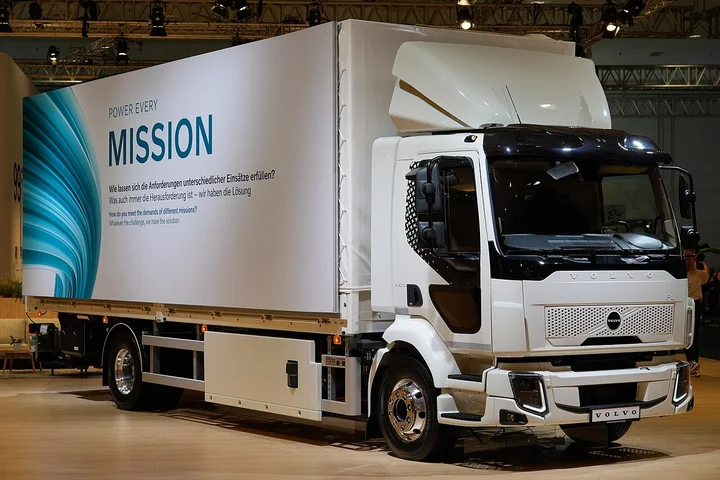
Volvo gives a reference for the weight: a 90 kWh battery pack weighs about 500 kg. A Scania 416 kWh pack weighs 2,300 kg, and a 520 kWh pack 2,920 kg. That is why Scania advises against taking a battery "with a reserve": surplus capacity lowers the payload and raises consumption. For city distribution at 10–12 t and 300 km a day, by their calculation, 320 kWh of usable capacity is enough.
The author of a review of a light Chinese electric refrigerated truck names its weak point himself: at a gross weight of 4,495 kg, after the battery, the body and the refrigeration unit, 650 kg is left for cargo. By payload it is a passenger-car van, by size a 4.5-tonner.
Licences in Kazakhstan. Under Article 73 of the Law of the Republic of Kazakhstan "On Road Traffic", a vehicle with a maximum permitted mass of up to 3,500 kg is driven with category B, and one of 3,500 to 7,500 kg with C1. The Kazakhstan law gives no allowance for battery mass: a heavy electric van with a gross weight above 3.5 t requires C1.
Europe has introduced such an allowance. In the United Kingdom a category B driver may drive an electric or hydrogen van of up to 4,250 kg; since June 2025 the additional five-hour training is no longer needed for this. EU Directive 2025/2205 on driving licences allows category B holders to drive alternatively fuelled vehicles of up to 4.25 t. The European Commission explains this directly by the battery mass. EU countries are transposing the rule into their laws during a transition period. In the Netherlands the temporary rule ended on 1 July 2025: now an electric van of 3,501–4,250 kg requires a course of five hours or more and a certificate, and without it the insurer may refuse to pay a claim.
The conclusion for a buyer in Kazakhstan is simple. On an electric chassis up to 3.5 t, every kilogram of body is taken from the cargo. A light body here is direct money: an extra 100 kg of panel means 100 kg less goods on every trip.
The electric refrigerated truck: where the cold comes from on an electric truck
In a diesel refrigerated truck the engine turns the compressor. An electric truck has no engine for this, so cold is obtained in one of three ways.
1. From the traction battery. A refrigeration unit with an electric compressor is powered by the same battery as the wheels. This is how the Fuso eCanter (an ePTO under the cab drives the compressor "as on a diesel"), MAN eTGL, Kia Bongo EV and BYD T4 in the refrigerated version are built. Japanese experience with an electric Isuzu Elf and a refrigeration unit on the shared battery: over a year 21.3% less energy was used, and energy costs were 42.2% lower than those of a diesel refrigerated truck. The advantage of this scheme is that the temperature holds on stops too, while there is charge, without the engine idling. The drawback is that cold takes away range.
2. From a separate battery. A refrigeration unit gets its own battery, and the traction one is not touched. The German company Goldschmaus has carried chilled food since 2023 on an electric Volvo FL with a Mitsubishi refrigeration unit and a separate battery pack, "without loss of range". But the scheme has an everyday problem. In Korea a refrigerated Porter EV with an additional 15 kWh battery is charged through two connectors at once and occupies two charging posts, and fast charging there is limited to an hour. A Korean industry portal advises taking a factory refrigerated truck with a shared battery.
3. From eutectic plates. Plates with a freezable solution are "charged" with cold at night from the grid, and by day they release cold with no motor and no draw on the traction battery. Dutch sellers of electric refrigerated trucks name this option among the standard ones.
How much range cold consumes — the figures differ by mode:
- chilled food (0…+8 °C): the vehicle keeps 80–90% of its normal range; freezing (−18…−25 °C) requires 40–60% more energy, and range falls to 60–70% (estimate of a Dutch seller);
- a refrigeration unit together with a second battery: −30…−40% (Renault Trucks);
- a 26 t MAN with an electric refrigeration unit: no more than 180 km per charge, charging to full takes up to 1.5 h, and it is combined with loading;
- the Chinese BYD T4K refrigerated truck sold in Korea by GS Global: 10 hours at −18 °C in the body consume 10.7 kWh.
What refrigeration unit manufacturers state for electric chassis. Thermo King E-200e: about 60 kg plus an 8 kg power unit, cooling capacity about 1.6 kW (5,500 BTU/h at +2 °C in the body and +38 °C outside), powered by 340–420 V DC from the traction battery or 230 V from a socket at a stop. Carrier Pulsor eCool: 99 kg, 215–750 V, body up to 28 m³: 5.6 kW of cooling at 0 °C in the body and 3.6 kW at −20 °C (+30 °C outside). So in freezing mode the same unit gives a third less cooling. For larger bodies Carrier makes the Supra eCool with its own 38 kWh battery, which does not touch the traction one. No manufacturer publishes consumption in kilometres of range: the measurement conditions differ for everyone.
Two methods save energy for everyone. The first is to pre-cool the body while the vehicle is standing on charge. The second is to keep the unit in standby mode from a socket at a stop. And one method never works: a refrigerated truck is designed to hold cargo that is already cooled, and it cannot cool warm cargo quickly. This is stated directly in guides on choosing an electric refrigerated truck.
The body is a separate matter. A thick panel saves kilowatt-hours of cold, but adds mass and takes up volume. Dutch sellers warn: a freezer body is heavier, and its payload is lower. In a Japanese 7.5 t electric refrigerated truck the floor is insulated with 100 mm and the walls with 75 mm. In Chinese light electric refrigerated trucks the wall is from 40 to 100 mm. Panel thickness on an electric chassis is chosen by calculation.
Electric truck in winter: how much range frost takes
The most honest measurement was made by Daimler. A heavy electric truck drove 6,500 km through 10 countries to the Arctic Circle, at temperatures from −18 to +9 °C. At −2 °C on a dry road consumption rose by 25% compared with summer. Of these 25%:
- about 15 points — the resistance of cold, dense air and winter tyres;
- 5 points — heating the cab to 21 °C;
- 4 points — less regeneration;
- less than 1 point — battery heating.
On snow and ice consumption rose by almost 50%. A night in a warm cab at −7…+4 °C cost 2–5% of range.
A Norwegian driver of a heavy Scania tested the vehicle down to −15 °C and noticed no drop in range. The secret is that the battery is heated during charging, and the departure time is set in an app: by departure the cab and battery are already warm and are heated from the grid, not from the traction battery.
Light vehicles lose more. For the BYD T4K refrigerated truck in the Korean version the rated range is 205 km at room temperature and 164 km in the cold, 20% less. Kia says directly: when the battery has cooled to about −10 °C, fast charging of the Bongo EV from 0 to 80% takes more than three hours. Standard battery heating cuts it to 1 h 40 min.
For passenger electric cars there is a rough rule: at −10 °C allow for a loss of about a third of range, at −20 °C and below up to a half. In a Norwegian test at frost down to −31 °C, 24 electric cars lost on average 38% of rated range. An electric car owner in Almaty writes that in frost up to half the energy goes to the heater, but the car coped with a night outdoors at −28 °C without problems.
What follows from this for Kazakhstan:
- Choose a vehicle with battery heating and a heat pump. A heat pump, according to American researchers, is three times more economical than an ordinary electric heater.
- Warm the cab and battery from the grid before departure, while the vehicle stands on charge.
- Park the vehicle overnight in a heated bay if there is one. In Novosibirsk a heated car park gave an electric car about +30% of range.
- Calculate the route by the winter range.
Cost of ownership: electric truck versus diesel
An electric truck costs more to buy. In Norway the industry association puts the difference at 3.5 times for a zero-emission vehicle, and a German operator after testing a heavy electric truck at 2.5 times. It is cheaper in every kilometre: Volvo writes that its electric truck uses exactly half the energy of the best diesel, and Japanese engineers estimate the cost of energy at half the diesel cost or less. Scheduled maintenance, according to modelling by the American NACFE, is 30–50% cheaper: no oil, filters, clutch or exhaust system.
Where the purchase price difference is paid back is shown by measurements in three countries:
- China, Shenzhen — a pilot on 38 models of heavy trucks from 8 manufacturers: electric is cheaper than diesel by cost of ownership over 5 years at a mileage of more than 60,000 km a year;
- Canada, Montreal — a year of operation, about 200,000 km: with state subsidies electric equals diesel in 6 years at a mileage of about 74,000 km a year;
- Europe — an analysis by a European warehouse developer: electric competes with diesel from 75,000 km a year.
There are opposite figures too. The Italian ENEA study of 2026 gave electric trucks the highest cost of ownership: at high mileages the difference reached 52%. The cause is the price of the battery and its probable replacement.
How to calculate for your own route. A Dutch seller of refrigerated trucks offers a per-shift formula: energy for distance + energy for cold + other consumers + reserve. Take the distance from the heaviest working day; the brochure does not help here. Count cold in kWh per shift: the cooling capacity of the unit and its electrical power draw are different numbers, and the second has to be requested from the supplier. Set consumption and tariff separately for summer and winter. Catalogue consumption, warns a Ukrainian electric vehicle dealer, cannot be the sole basis of a business plan.
There is also a hidden cost: looking for a charger. In Shenzhen, for every 100 km of route there are 10 km to drive to one. That is why the whole economics rests on charging at your own depot. According to Scania, the depot covers 55–80% of the charging need. Connecting a high-power charger to the grid, by German data, can cost ₸50–250 million (€100,000–500,000).
The clear conclusion: an electric truck pays where it drives a lot and stands at its own socket every night.
What breaks: reviews from owners and fleets
Owners describe the good in the same way in different countries:
- quiet and no vibration, the driver is less tired by evening (Japan, Canada, Germany, the Netherlands);
- smooth acceleration and good pull from a standstill;
- in the Netherlands, on 50 vehicles, technical availability was 98.5%, like diesel;
- drivers "do not want to go back to diesel" — operators in the Netherlands, Germany and Volvo in four countries repeat this word for word.
The problems repeat too. Korean owners of light electric trucks gave the most detail:
- Tyres. A Porter EV owner: the tyres "wore out in 12,000 kilometres".
- 12 V battery. A tow-truck operator writes: if the vehicle will not start, it is almost always the small starter battery, and it rarely lasts up to two years.
- Suspension. The vehicle sways more than a diesel: a heavy battery and a long wheelbase. A British test of the Yutong TE7 complains of leaf springs that "bounce a lot" when empty.
- Range on the highway. At 80–90 km/h it is noticeably better than at 100; with cargo and air conditioning, instead of the stated 290–300 km, about 230 km is obtained.
- Battery repair. An owner with six months of experience writes of a traction battery repair costing up to ₸6.7 million (KRW 20 million).
European and American service articles add their own components: the charging port and on-board charger, pumps and radiators of the battery cooling, software. Wear of bearings and gears in the traction drive is first revealed by whistling and vibration on acceleration. A spread in battery cell voltage makes the management system (BMS) limit charging, and it seems that the battery has "lost capacity". Battery capacity falls by about 2% a year; it is considered unusable after a 30% loss, in the estimate of a service company after 10–15 years. Frequent fast charging wears the battery more than slow overnight charging.
There are failures from a wrong choice too. In the United Kingdom, plumbers took four vans with a 35 kWh battery, the vans constantly stood discharged, and the company went back to diesel. The owner of a van with a 75 kWh battery in the same discussion drives 150 km on the motorway and 190–200 km in town and saves about ₸200,000 (€400) a month on fuel. The difference is in the battery size matched to the route.
An electric vehicle needs different servicing. On heavy electric trucks the voltage is 600–900 V, and the mechanic works with insulated tools and under a certification. A Japanese operator names servicing as the main risk and the main condition of switching to electric: reliable after-sales support.
Who an electric truck suits and who it does not
Suitable:
- city and suburban distribution of up to 150–200 km a day; in Germany 78.6% of truck tonnage is carried within 150 km;
- the vehicle returns to its own depot every evening, and there is a charger there;
- the route is predictable, trips are similar to each other;
- the customer requires zero emissions or quiet night delivery.
Not suitable:
- intercity trips and unpredictable routes;
- no charger of your own, reliance only on city stations;
- heavy cargo in a vehicle up to 3.5 t, where every 100 kg counts;
- freezing at −18 °C over a long leg with frequent door opening.
Korean freight dispatchers sometimes do not give a job to an electric truck simply because it will stand on the highway for 30–40 minutes of charging. Canadian experience says the same from the other side: the best results were obtained by fleets that rebuilt their work around electric rather than trying to drive it like a diesel.
Electric truck with a van body: what changes in the body on an electric chassis
A body on an electric chassis solves the same tasks as on a diesel one, but in a different mass and energy budget.
- Weight. The battery has already taken part of the payload, and the body must not take the rest. The COND sandwich panel is frameless, with extruded polystyrene insulation and no metal frame inside the wall. We choose the thickness for the mode: 50 mm for general goods and short city routes, 80 mm for chilled food, 100 mm for freezing. What insulation costs in kilograms is seen in an American example: on an electric chassis of 4.5 t gross weight, a 4.9 m refrigerated body with a refrigeration unit weighs about 1,360 kg, and a dry van of the same length about 1,025 kg. The difference is 336 kg of payload (1,955 kg against 2,290 kg).
- Energy for cold. Every kilowatt-hour that does not escape through the wall stays in the range. That is why in the COND insulated body the floor is insulated without cold bridges, the opening is stainless steel, the seal is three-chamber, and the roof is white. A side door lets you unload at stops without opening the rear doors and releasing the cold from the whole body.
- Refrigeration unit. Yide, whose units COND installs, has a separate electric series for electric trucks: YD-180DE, YD-318DE, YD-318E, YD-450E and YD-480E, for bodies from 5 to 22 m³, freezing down to −18 °C. Power is 200–720 V from the traction battery, the compressor is electric, and the chassis engine is not needed for it. We select the model by body volume, mode and the battery voltage of the specific chassis. More on the page about refrigeration unit installation.
- Without a unit. For short distribution of chilled cargo consider eutectic plates. They are "charged" at night from the grid and do not draw on the traction battery by day.
COND fits insulated and refrigerated bodies on electric chassis of any make. We start with a calculation: the gross weight of the chassis, the battery mass, the required volume and the mode. From these we calculate how much cargo will be left after the body and the unit, and only then choose the panel thickness.
Send the make and model of the electric chassis, the route and the cargo in a request or on WhatsApp, and we will calculate the body, the weight and the refrigeration unit for your route.
If you are still choosing what to close the body with, read the comparison insulated van or refrigerated truck and how to choose a refrigerated truck. How the fleets of large companies where electric trucks already work are organised is in the article on fleets of global companies. What can be driven with category B is in the review of trucks for category B. Ready COND refrigerated trucks on light chassis, for example FAW 1027 with an Elinge S07 unit and an insulated van on a GAZelle Next 4.2 m.
FAQ
Electric truck price: how much does it cost and when does the difference pay back? It costs more than a diesel of the same class: in Europe 2.5–3.5 times for heavy vehicles, with a smaller gap in the light class. The difference is paid back by cheap energy and maintenance. According to measurements in China, Canada and Europe, this happens at a mileage of 60,000–75,000 km a year or more.
Electric truck range: how many kilometres in practice? For light electric trucks up to 3.5 t the rated range is 205–330 km, for medium 5–7.5 t 100–300 km, for distribution 12–16 t up to 450 km. In winter and with the refrigeration unit running, 20–40% less is left in practice.
Can an electric truck be driven in winter in Kazakhstan? Yes, if the vehicle has battery heating and the cab and battery are warmed from the grid before departure. By Daimler's measurement, at −2 °C consumption rises by 25%, and on snow and ice by almost 50%. Calculate the route by the winter range.
Electric refrigerated truck: how does the refrigeration unit work? A refrigeration unit with an electric compressor is powered by the traction battery, by a separate battery, or replaced by eutectic plates that are frozen at night from the grid. In chilling mode the vehicle keeps 80–90% of its range, in freezing mode 60–70%.
What licence is needed for an electric truck in Kazakhstan? The same as for any truck, under Article 73 of the Law of the Republic of Kazakhstan "On Road Traffic": up to 3,500 kg of maximum permitted mass, category B; from 3,500 to 7,500 kg, C1. The European allowance of up to 4,250 kg for electric vehicles does not exist in Kazakhstan.
How much does an electric truck battery weigh? According to Volvo, a 90 kWh pack weighs about 500 kg. A Scania 416 kWh pack weighs 2,300 kg. For a light Chinese electric refrigerated truck of 4,495 kg gross weight, 650–1,045 kg is left for cargo.
How long does an electric truck take to charge? Fast charging to 80% takes 35–75 minutes, slow charging from the grid at the depot 5–10 hours. In frost fast charging takes longer: for the Kia Bongo EV with the battery at about −10 °C, more than three hours without heating and 1 h 40 min with heating.
How long does an electric truck battery last? The traction battery has a separate warranty, longer than that on the vehicle: for the Yutong TE7 in the United Kingdom, 8 years or 400,000 km against 3 years on the truck. The life is shortened by frequent fast charging, charging to 100%, deep discharges, heat and severe frost; overnight charging at the depot spares the battery more than fast charging on the highway.
What breaks in an electric truck? Owners write of fast tyre wear, of the 12 V starter battery that rarely lives longer than two years, of suspension sway, and of failures of the charging port and on-board charger. The battery is expensive to repair. There is no engine, gearbox or exhaust, so scheduled maintenance is 30–50% cheaper.
Does an electric truck pay off? It pays off on a city route with high mileage and overnight charging at its own depot. Without your own charger and on unpredictable trips the advantage disappears: in Norway only about 10% of buyers named savings as the reason for buying.
Electric trucks in Kazakhstan: where to buy and which models are there? Of electric trucks, the BYD T4 and T5 are sold in Kazakhstan, the Hyundai Mighty EV has been shown, and an XCMG project from 5 to 16 t is under discussion. An electric truck from China is the most common option: China makes electric vans and refrigerated trucks of JAC, Geely, Dongfeng, FAW Jiefang, HOWO and other makes. The Chinese Yutong TE7 of 7.5 t is sold in Europe.
Which electric truck up to 3.5 tonnes can be driven with category B in Kazakhstan? Any one whose maximum permitted mass in the registration certificate is no more than 3,500 kg: BYD T4, Hyundai Mighty EV, Kia Bongo EV and similar. The battery weighs hundreds of kilograms, so these vehicles are left with less for cargo and body than diesel ones. They need a light body.
How does an electric van differ from an electric truck with a van body? An electric van, or battery-electric van, is the name for a light closed electric truck. An all-metal electric van arrives from the factory ready. On an electric chassis the body is fitted separately, insulated, refrigerated or dry-goods, and its mass together with the refrigeration unit comes out of what is left of the payload after the battery.
Can a van or refrigerated body be fitted on an electric chassis? Yes. COND fits insulated and refrigerated bodies on electric chassis of any make and selects a refrigeration unit with an electric compressor, powered from the 200–720 V traction battery. First we calculate how much cargo will be left after the body and the unit.
Source legislation
Full texts in the official Kazakh legal database Adilet:
- Law of the Republic of Kazakhstan of 17.04.2014 No. 194-V "On Road Traffic", Article 73 para. 1: https://adilet.zan.kz/rus/docs/Z1400000194