
Trucks Entering Almaty: Why an Old KamAZ Gets Into the Eco-Zone While a New Diesel May Be Restricted
Published:
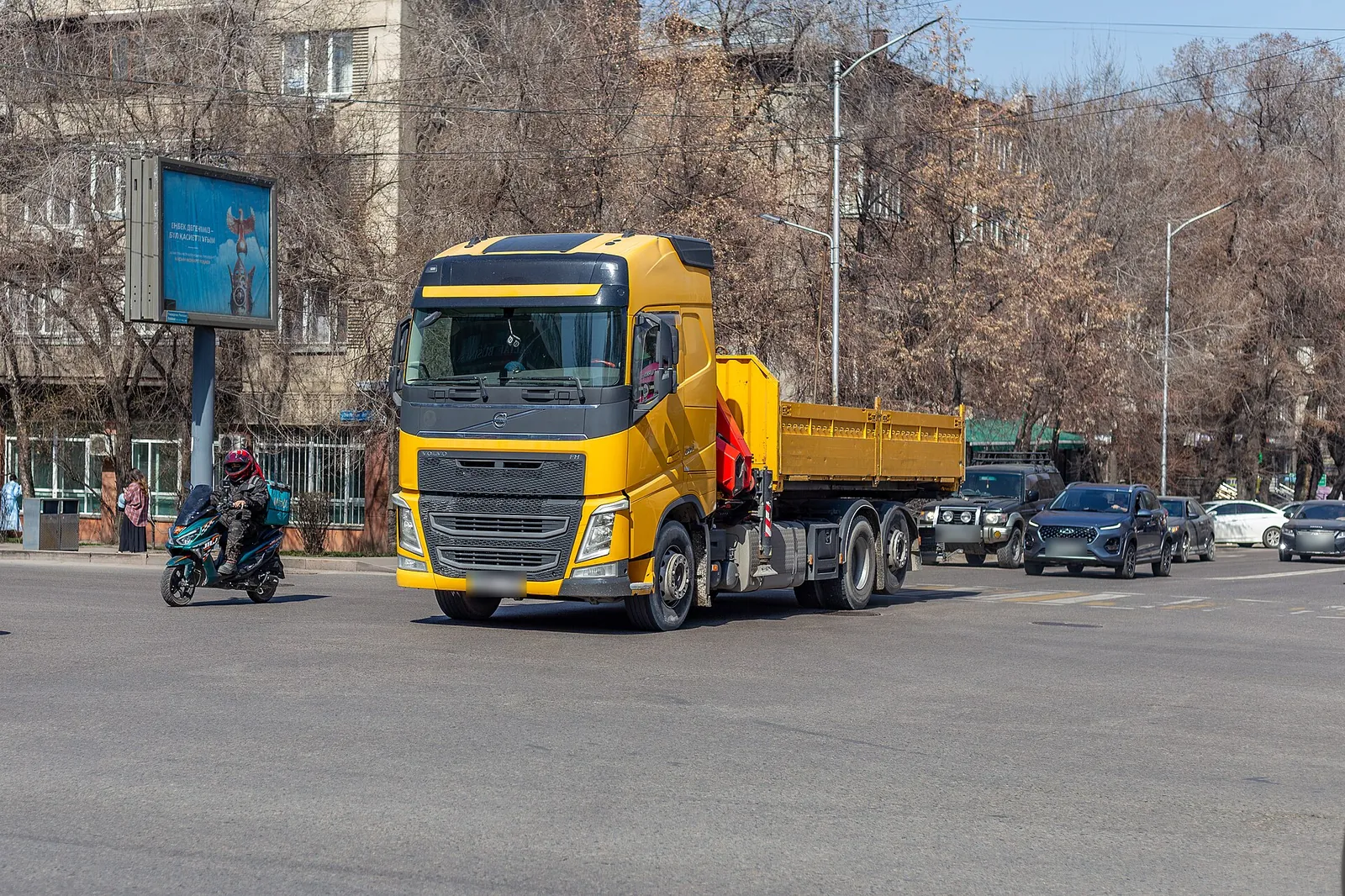
Almaty will admit a truck to its low emission zone (LEZ) on the strength of an exhaust measurement. People in town call it the eco-zone. The Euro class on your papers is not the threshold. So an old KamAZ with a sound engine will get full access, while a new diesel with a faulty exhaust aftertreatment system will get restricted access. That is what the city’s Air Protection Rules say.
Today there is no environmental ban on trucks entering Almaty. The zone in the centre runs in test mode until 31 December 2026, with no fines and no charge. A different restriction does apply: in the daytime, trucks with an axle load above 8 t may not enter the centre. Below, in order: what applies now, how vehicles will be admitted to the zone, what changes at the turn of 2026–2027 and what to check on your own truck.
Quote is based on body, chassis and temperature range.
What Applies to Trucks in Almaty Today
| Requirement | From | Who it affects |
|---|---|---|
| Emissions inspection before the next roadworthiness inspection | 1 September 2026 | all vehicles with an internal combustion engine (ICE), including trucks of categories N1, N2, N3 |
| Smoke opacity and toxicity checks at roadside emissions checkpoints | in force | all vehicles |
| Test low emission zone in the centre, no restrictions | 28 April – 31 December 2026 | all vehicles |
| Daytime ban for axle load above 8 t | 25 July 2026 | heavy trucks |
Low emission zone. The akimat (city administration) launched the first low emission zone (LEZ) on 28 April 2026. It covers a block of streets: south of Bogenbay Batyr, north of Abay, east of Zheltoksan and west of Dostyk. The zone operator is the municipal enterprise ‘Almaty Parking’.
Until the end of 2026 the zone runs in test mode. There are no traffic restrictions, no fines and no entry charge. The city is testing the equipment: smart cameras, radar sensors, number plate recognition and air quality sensors. In the pilot zone, 134 road signs have been put up and markings applied on 15 streets.
You do not need to get a pass to enter. A camera reads the plate and checks in the system whether the vehicle has passed its environmental inspection.
Low Emission Zone (LEZ) in Almaty: Requirements for a Truck
The Almaty maslikhat (city council) approved the Air Protection Rules by decision No. 272 of 30 December 2025. Most of the Rules already apply. The clauses on access to the zone and on fleets take effect one year after the decision is officially published, that is, around the end of 2026 or the start of 2027. The akimat has not named an exact date.
A vehicle will be admitted to the zone if it has confirmed compliance with emission standards by a positive emissions inspection (clause 53). The Rules split vehicles into two levels of access (Appendix 2):
| Access level | Which vehicles |
|---|---|
| Unrestricted without an inspection | electric and hydrogen vehicles |
| Unrestricted with an inspection | ICE vehicles of any environmental class, from carburettor engines to classes above 5, cars and trucks |
| Restricted | ICE vehicles without an inspection, or with exhaust emissions found above the limits |
There is no ‘Euro N or better’ threshold in these Rules. The Rules do not say what ‘restricted’ access actually means. That, and the boundaries of the zone, will be set by a separate akimat resolution.
What this means in practice. In London and Stuttgart they look at the vehicle’s papers: whichever Euro class is recorded, that is the access you get. The Almaty Rules look at an instrument put into the exhaust pipe at the inspection station or at a roadside checkpoint.
- An old KamAZ with a sound engine passes the measurement and gets unrestricted access.
- A new Euro 5 truck with a faulty or disabled aftertreatment system fails the measurement and gets restricted access.
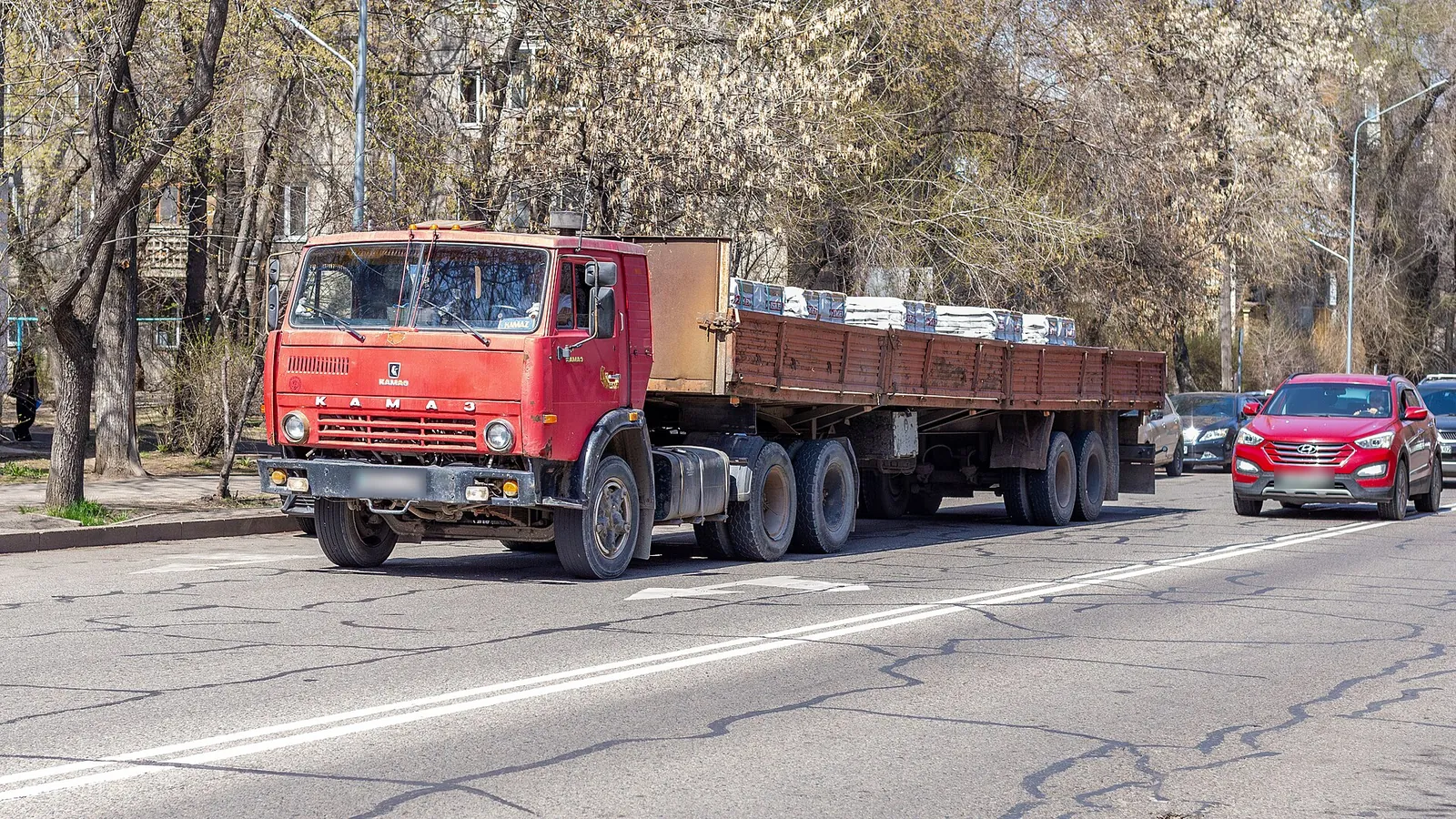
Which Engine to Choose for Work in Almaty
The Rules look at what comes out of the pipe, and that points to how to choose a vehicle.
- Light-duty city transport: electric, petrol or gas. An electric truck gets unrestricted access to the zone without an inspection. Petrol and gas vehicles are checked for exhaust toxicity. They have no SCR system with AdBlue reagent, so there is nothing of that kind to look after.
- Heavy-duty transport: diesel. What matters here is a sound exhaust aftertreatment system: it is the smoke opacity of a diesel that is measured at the station and at the roadside checkpoint.
We wrote about electric vehicles for the city in the article ‘Electric Truck’. You can pick a chassis for your load and route in the chassis section.
Truck Emissions Inspection: What Is Checked
Since 1 September 2026 Almaty has had a technical inspection for compliance with environmental standards. It is carried out under standard ST RK 1433-2023.
- Diesel is checked for exhaust smoke opacity.
- Petrol and gas are checked for toxicity: carbon monoxide and hydrocarbons.
The emissions inspection is a separate procedure and does not replace the roadworthiness inspection. But without it you cannot pass the next roadworthiness inspection. The requirement applies to vehicles whose inspection falls due after 1 September 2026. There is no need to take the inspection early.
Only accredited stations carry out the inspection, with a verified gas analyser and smoke meter on every lane. The akimat publishes the list of stations on almaty-parking.kz. The result is valid for 12 months.
Checks also take place on the road. At fixed and mobile roadside emissions checkpoints, the police stop a vehicle and a laboratory measures the exhaust. From January to early November 2026 the city checked more than 15.5 thousand vehicles. Exceedances were found in about 3.2 thousand cases, one vehicle in five. In the first seven months of 2026 the police held more than 16 thousand truck drivers to account. Of these, 229 were punished for exceeding exhaust limits, and 42 trucks were sent to an impound lot.
Axle Load Restriction: No Entry to the Centre in the Daytime
For heavy trucks the toughest restriction today concerns the roads. Since 25 July 2026, trucks with an axle load above 8 t may not drive in the zone every day from 07:00 to 22:00. The zone is the block of streets formed by Sain, Al-Farabi, the Eastern Bypass Road (VOAD) and Ryskulov.
For city deliveries this means something simple. In the daytime, vehicles with an axle load up to 8 t work. Heavy trucks bring their loads at night or transfer them to a warehouse outside the block. Delivery vehicles, from the GAZelle to medium-duty trucks of about 12 t gross weight, normally fall outside the restriction when carrying a standard load: on a medium-duty truck the load on the most heavily loaded axle reaches 7–8 t. Take the axle load from the chassis data sheet: gross weight does not show it.
We covered the zone, exceptions, fines and detours in a separate article: ‘Ban on Trucks with an Axle Load Above 8 Tonnes in Almaty’.
What Changes at the Turn of 2026–2027: Even Two Trucks Count as a Fleet
The obligations of fleets will take effect together with the access clauses.
Under the Rules, a fleet is the vehicles of an organisation, enterprise or private individual that work in business: carrying goods or passengers, providing maintenance and repair (clause 3). The owner of two or three delivery trucks is a fleet too. The Rules place the following obligations on fleets:
- Equip ICE vehicles with autonomous heaters or electric preheaters (clause 38).
- Carry out monthly or quarterly internal environmental monitoring under ST RK 1433-2023 (clause 39). The measurements in the text of the clause are spelled out for buses; the record-keeping on exhaust aftertreatment systems applies to all vehicles.
- For diesels of class 4 and above with an SCR system, buy AdBlue reagent at a rate of not less than 15 l per 1,000 km and report quarterly (clause 40). The norm is written for buses; the Rules do not say how it will be applied to trucks.
Clause 41 hits inspection stations. If a vehicle is caught exceeding limits more than three times in a year after inspection at the same station, the city may seek cancellation of the diagnostic card.
The Rules also provide for buying back and scrapping vehicles of low environmental classes registered in Almaty before 1 September 2025 (clauses 33–36). In practice such a buy-back does not work yet.
Euro 4 in the Master Plan: Eco-Zones in 2027–2030
The new Almaty master plan to 2040 provides for ecological zones in 2027–2030. They are planned in the centre, in Almaly District and in the foothill part of Medeu District. There it is proposed to restrict entry for trucks below Euro 4, cars below Euro 3 and diesel buses older than 10 years. The authorities also want parking charges to differ by environmental class.
The master plan sets out a plan; it will become a rule for drivers later. Boundaries, deadlines and procedure will be set by an akimat resolution. Paid entry is not being introduced in 2026: according to the deputy akim, that needs amendments to the Environmental Code.
So the European ‘by the papers’ criterion will come to Almaty as well. For now it exists only in the plan.
Why Almaty Watches the Exhaust
The city lies in a foothill basin, and the Air Protection Rules themselves begin with that fact. Climate and relief stop the air from carrying emissions away, and they build up at ground level.
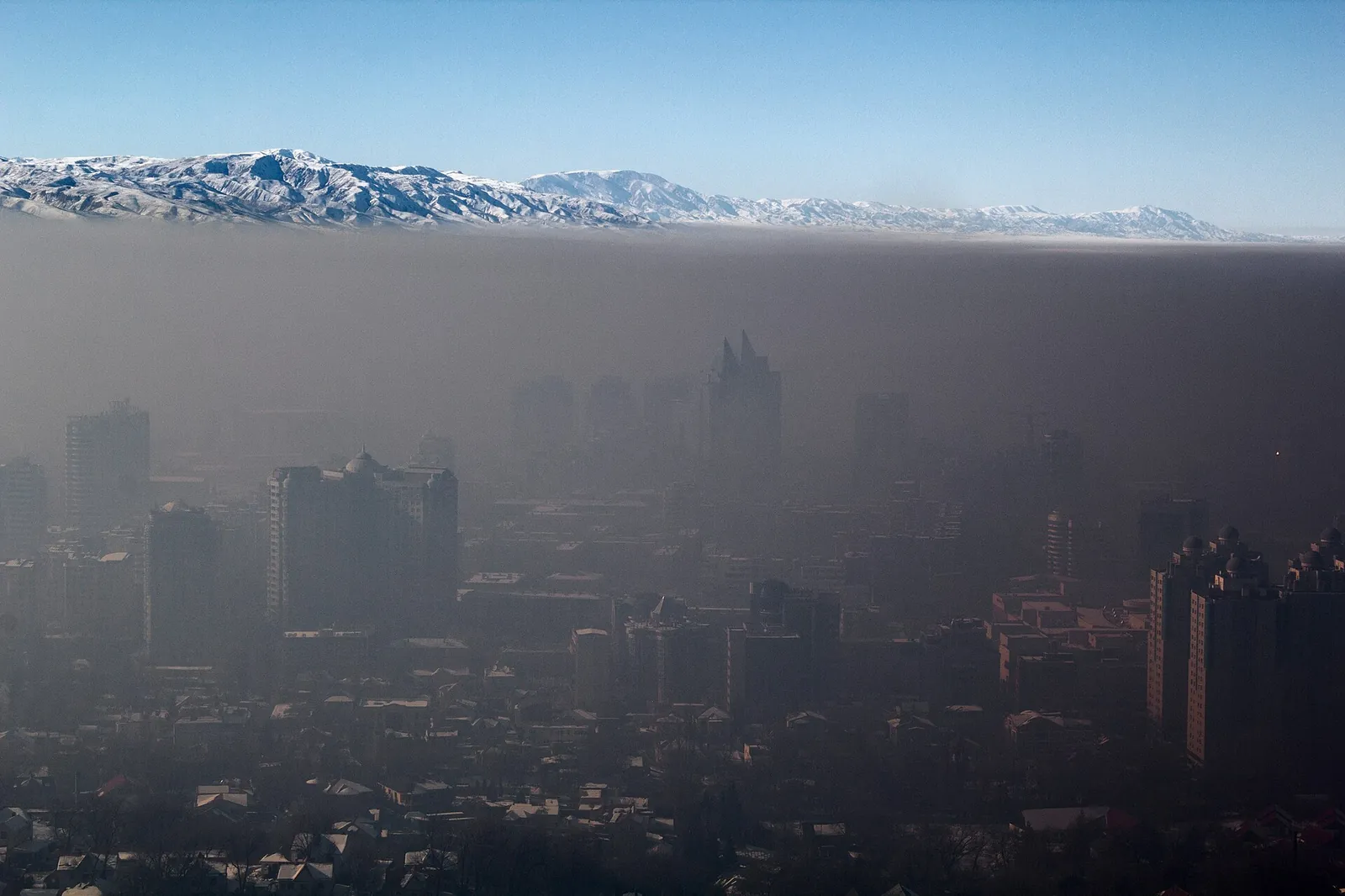
The ecology department names the main source. Road transport produces about 60 % of the city’s annual emissions, some 113 thousand t out of 189 thousand t. In winter, private houses heated with coal and firewood add to it. There are many trucks in the city: according to the police department, in August 2026 more than 48 thousand trucks were registered in Almaty.
How London, China and Stuttgart Fought Smog and Exhaust
Almaty is not the first. London, China and Stuttgart went down this road earlier, and each got its own result.
London: from the killer fog to a charge for old diesels. On Friday 5 December 1952 fog settled over London. The weather was cold and windless, the city was heated with coal, and the smoke had nowhere to go. The smog lasted until Tuesday and got indoors. In the first weeks, government medical reports counted up to 4,000 deaths; later studies put the figure at 10–12 thousand.
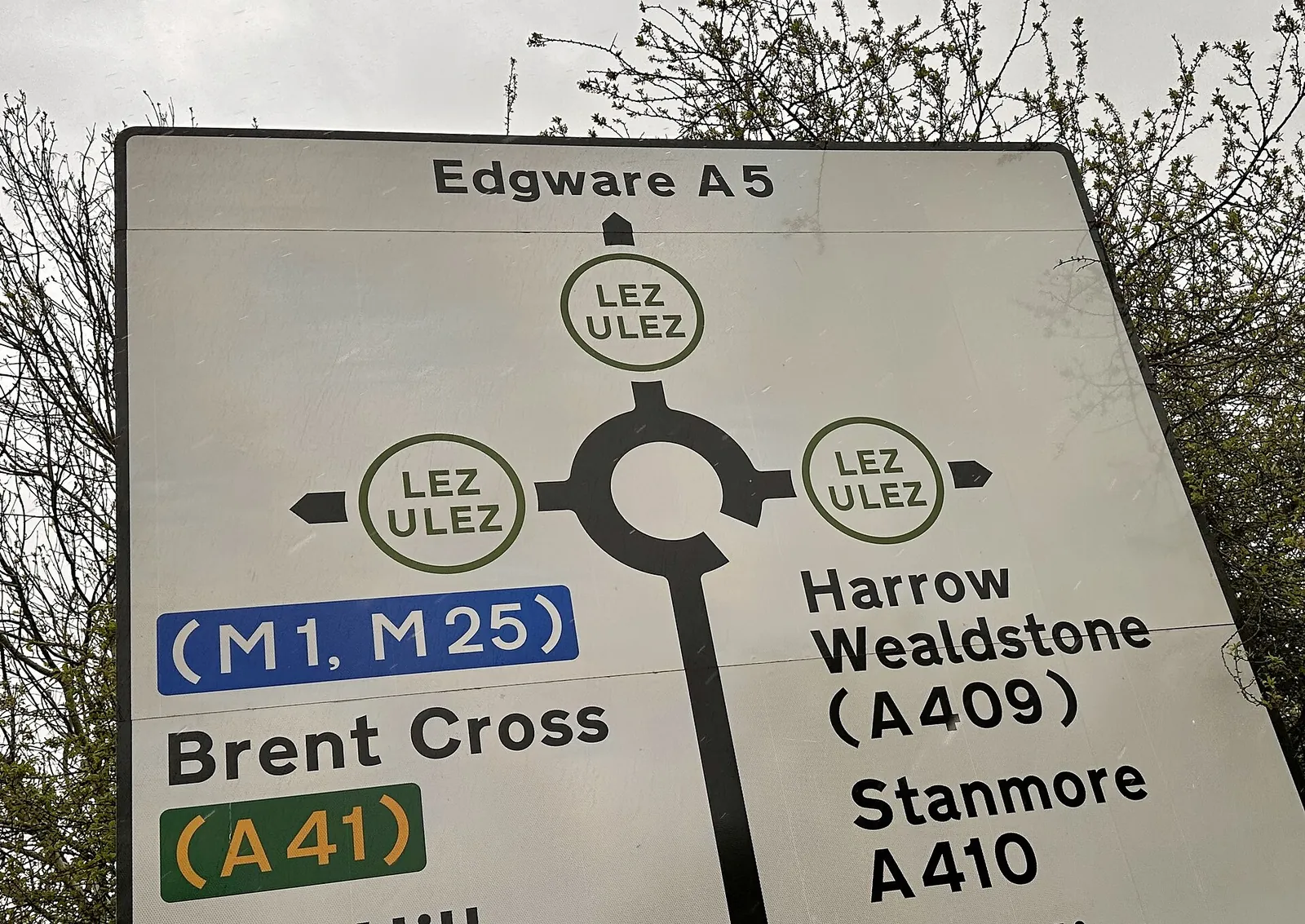
What was done. Four years later Britain passed a clean air act. And on 4 February 2008 a low emission zone for commercial vehicles started operating in London. Since 1 March 2021 a truck heavier than 3.5 t must have a Euro VI engine, or pay for every day in the zone.
What came of it. According to Transport for London, in May 2019 70 % of vehicles met the requirements, and by March 2021, when the standards were tightened, almost 90 % did. The fleet was renewed in time.
China: it started with coal. In January 2013 smog covered seventeen provinces, a quarter of the country’s territory, and affected about 600 million people. In November and December of that year, fine particle concentrations in eastern China averaged about 350 µg/m³ and in some districts reached 500–900. Airports, motorways and schools were closed. The conditions are familiar: winter, weak wind, coal in stoves and power stations.
What was done. On 12 September 2013 the government adopted an air pollution action plan. The main blow fell on coal: dirty factories were closed, and millions of homes and businesses were switched from coal to gas. In Shanghai in December 2013, at the height of the smog, the authorities took almost a third of official vehicles off the roads.
What came of it. From 2013 to 2017 the average concentration of fine particles, PM2.5, in 74 cities fell by 33 %.
For Almaty this case carries an uncomfortable lesson. Transport accounts for about 60 % of the city’s emissions, but in winter the coal burned in private houses is added to it. The Chinese experience says that vehicles alone will not solve the problem.
Stuttgart: a ban by Euro class. Since 1 January 2019, Euro 4 and lower diesels have been banned across the whole city all year round. Since 1 July 2020, Euro 5 diesels are banned too in the small zone in the centre.
Other cities chose their own rules.
- Netherlands. Since 1 January 2025, 14 municipalities have introduced zero-emission zones for vans and trucks. At first the dirtiest vehicles are kept out. In time, only vans and trucks with no exhaust emissions will be able to enter. Each municipality gives at least six months without fines.
- Tashkent. By the end of 2026 all vehicles in the city will receive eco-stickers. The city is divided into ‘red’, ‘yellow’ and ‘green’ zones with different levels of access.
- Bishkek. No environmental class is required. From 20 May to 1 October 2025 the mayor’s office banned trucks over 18 t from driving from 09:00 to 19:00 when the temperature was +28 °C or higher. The aim was to protect the roads. The ban did not apply to vehicles carrying food, fuel and humanitarian aid.
- Astana. Since 10 August 2026, transit heavy trucks have been banned from entering inside the bypass road.
Bottom Line: What a Truck Owner Should Do
An old KamAZ gets in and a new diesel may be restricted, for three reasons.
- The basin: what matters to the city is the smoke that actually comes out of the pipe today.
- The criterion: the Rules grant access on the result of a measurement, and the Euro class is not a threshold in them.
- Enforcement: the measurement is taken once a year at a station and on any day at a roadside checkpoint.
For a truck owner the conclusion is practical. You will have to watch the condition of the vehicle: injectors, filters, the SCR system and AdBlue. The Euro class on your papers will matter later, when the master plan’s eco-zones start working.
Tell a COND manager what your load is and what your route through the city looks like: we will pick a chassis with a suitable class and axle load.
What to Check on Your Truck: A Checklist
- Inspection date. If it falls after 1 September 2026, first take the emissions inspection at an accredited station.
- Diesel smoke opacity. Faulty injectors, a clogged air filter and a worn engine produce smoke. Check before you go to the station.
- SCR system and AdBlue. A Euro 4 or Euro 5 diesel with SCR runs on AdBlue reagent. Make sure there is reagent in the tank and the system works.
- Axle load. If it is above 8 t, do not drive into the Sain – Al-Farabi – VOAD – Ryskulov block in the daytime. Details are in the article ‘Ban on Trucks with an Axle Load Above 8 Tonnes in Almaty’.
- Environmental class on your papers. You will need it for the master plan’s eco-zones from 2027.
- Preheating. From 2027 a fleet needs an autonomous heater or an electric preheater.
COND builds bodies on new chassis, and the site states their environmental class. For example, the Foton S35 is listed with a Euro 5 diesel with an SCR system, and the FAW Tiger 6G with Euro 5. If a ‘Euro 4 or better’ threshold enters the rules, such a vehicle clears it by class with room to spare. The exhaust is still measured at the station. You can pick a chassis for your load and route in Almaty in the chassis section and on the ‘Made to Order’ page.
Photo at the top of the article: Nikolai Bulykin, CC BY-SA 4.0, Wikimedia Commons.
FAQ
Can I drive a truck into the centre of Almaty now?
Yes. As of 21 November 2026 there is no environmental ban: the low emission zone runs in test mode until 31 December 2026. A different restriction does apply: from 07:00 to 22:00 you may not drive with an axle load above 8 t in the Sain – Al-Farabi – VOAD – Ryskulov block.
LEZ Almaty roadworthiness inspection: what is an emissions inspection?
It is an exhaust measurement at an accredited station under ST RK 1433-2023. For a diesel, smoke opacity is measured; for petrol and gas, toxicity. Since 1 September 2026 you cannot pass the next roadworthiness inspection without it. The result is valid for 12 months.
What is an LEZ in Almaty?
LEZ stands for Low Emission Zone. It is an area of the city where a vehicle’s access depends on its exhaust. In Almaty the first such zone has been running in test mode since 28 April 2026.
LEZ Almaty map: where is the low emission zone?
The pilot zone is a block of streets south of Bogenbay Batyr, north of Abay, east of Zheltoksan and west of Dostyk. The boundaries of the permanent zone will be set by an akimat resolution.
What environmental class does a truck need to enter Almaty?
There is no ‘Euro N or better’ threshold in the Air Protection Rules. The access levels do not depend on the Euro class: an ICE vehicle of any class with a positive emissions inspection is admitted to the zone. The master plan for 2027–2030 proposes restricting entry for trucks below Euro 4 in the eco-zones of the centre, Almaly District and Medeu District.
LEZ Almaty: what are the requirements for a vehicle?
Access to the zone will depend on the emissions inspection. An ICE vehicle that has passed the measurement will get unrestricted access at any Euro class. Electric and hydrogen vehicles will get it without an inspection.
Will there be a charge to enter the centre of Almaty?
Not in 2026. A charge for entering the eco-zone needs amendments to the Environmental Code. There are no tariffs and no decisions on a charge.
When will vehicles without an emissions inspection stop being admitted to the eco-zone?
Clause 53 of the Rules takes effect one year after the official publication of maslikhat decision No. 272, around the end of 2026 or the start of 2027. After that, a vehicle without an inspection, or one exceeding the limits, gets restricted access.
Where may a truck not drive in Almaty in the daytime?
Since 25 July 2026, every day from 07:00 to 22:00, trucks with an axle load above 8 t may not drive in the Sain – Al-Farabi – VOAD – Ryskulov block.
What is the penalty for exceeding exhaust limits?
At a roadside emissions checkpoint the police stop the vehicle and a laboratory measures the exhaust. The ecology department receives the materials on the exceedance, and the penalty is imposed under Article 324 of the Administrative Offences Code (clause 92 of the Rules). In the first seven months of 2026, 229 truck drivers were punished for exceeding exhaust limits and 42 trucks were sent to an impound lot.
What obligations will fleets have?
One year after the Rules were published, that is, around the end of 2026 or the start of 2027, municipal and private fleets, including private individuals with vehicles used in business, must fit autonomous heaters or electric preheaters, carry out internal environmental monitoring under ST RK 1433-2023 and report on AdBlue reagent for diesels with SCR.
Do I need a pass to enter the Almaty eco-zone?
No. Cameras read the plate and check in the system whether the vehicle has passed its environmental inspection.
Source legislation
Full texts in the official Kazakh legal database Adilet:
- Решение маслихата г. Алматы от 30.12.2025 № 272 «Об утверждении Правил охраны атмосферного воздуха», зарегистрировано МЮ РК 31.12.2025 № 37770 — https://adilet.zan.kz/rus/docs/V25R0037770 (открыт 21.11.2026, первоисточник)