
Refrigerated Semi-Trailer: Why It Is the Only Big Rig Allowed to Be Wider Than the Rest
Published:
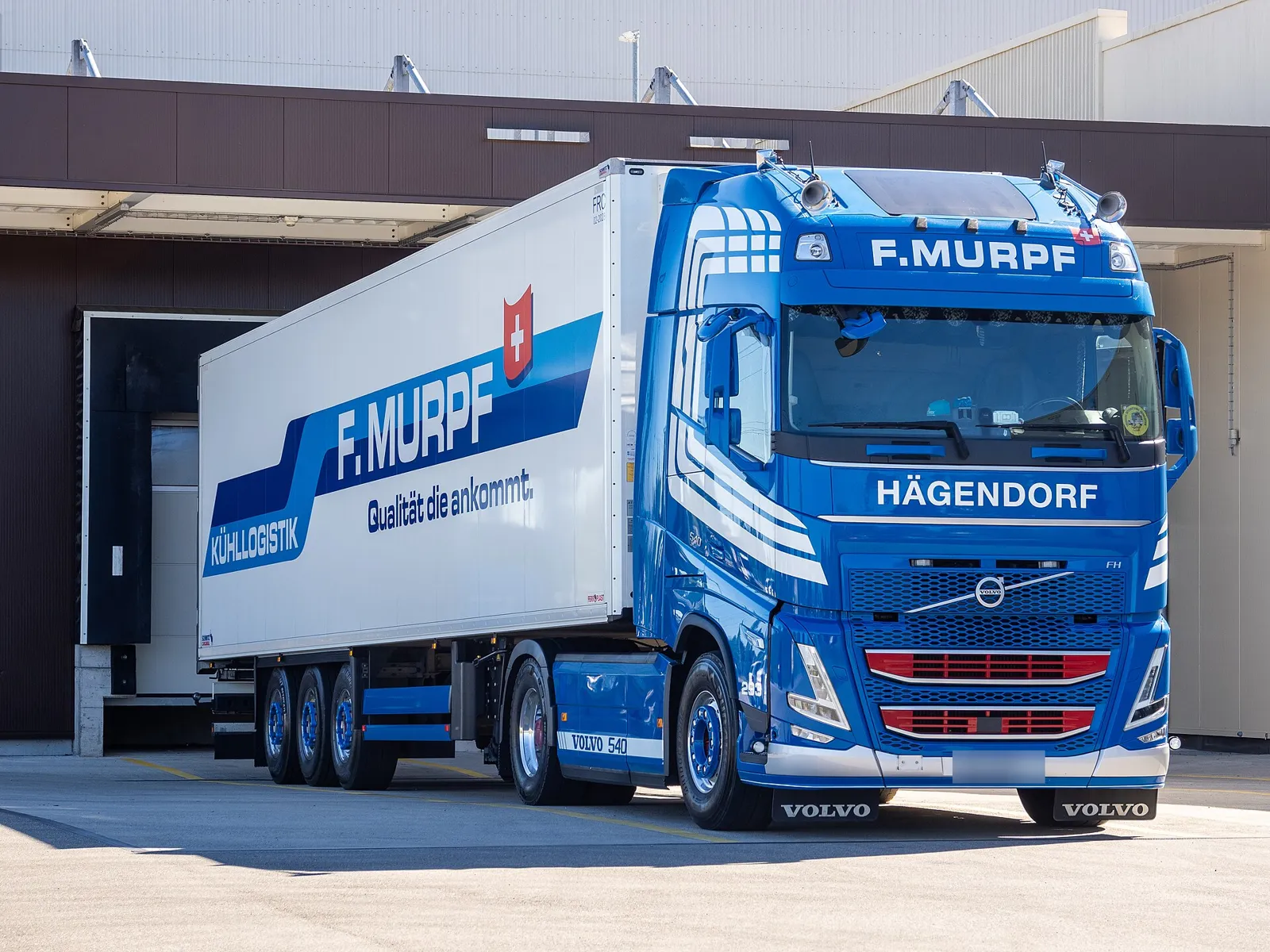
A white rig with a refrigeration unit on its front wall looks like an ordinary semi-trailer with a ‘backpack’. But it has a privilege that neither curtainsiders nor container carriers have: the law lets it be wider. Every truck is allowed 2.55 m; a reefer gets 2.60. That is the rule in Europe, and the same in Kazakhstan.
Five centimetres that hauliers fought over for years. Those centimetres explain almost everything else: why exactly 33 pallets fit in the body, why a fifteen-year-old Schmitz from kolesa.kz is no longer quite a reefer, and why LLPs still buy new. Three figures unlock the rest: 2.60, 33 and K. But let us start with the chickens.
Quote is based on body, chassis and temperature range.
Chickens, a $6 Bet and a Scrapyard: Where the ‘Backpack’ Came From
Before mechanical refrigeration, perishables travelled on ice. The first successful trucks with a refrigeration machine appeared in the USA in 1925, and they carried ice cream.
In the summer of 1938, two men were playing golf in Minneapolis: Harry Werner, who owned a haulage company, and Joseph Numero, who made sound equipment for cinemas. Werner complained: a truck had broken down on a run, the salted ice had melted and the load was lost. Numero replied that he would build him a proper refrigerator for a trailer in 30 days. That is how Transport Topics described the scene. Thermo King itself adds chickens and a $6 bet.
It fell to Frederick Jones, who had worked for Numero since 1927, to make good on the promise. Jones left school at 11, was repairing cars in a garage at 14 and taught himself the rest. He built the first prototype from scrapyard parts. The cooling he sorted out quickly. The harder part was making a frame and tubing that would not shake apart on the road.
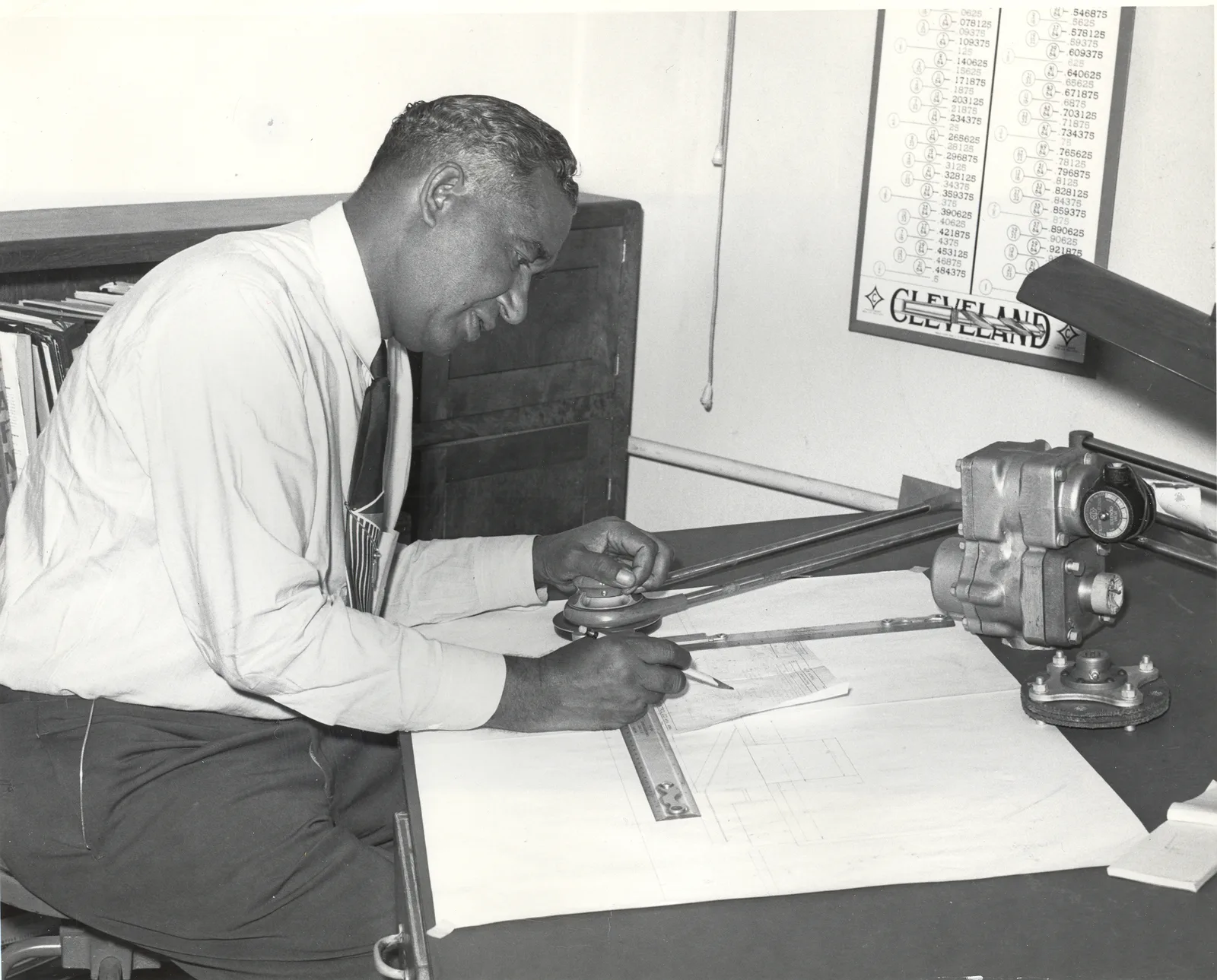
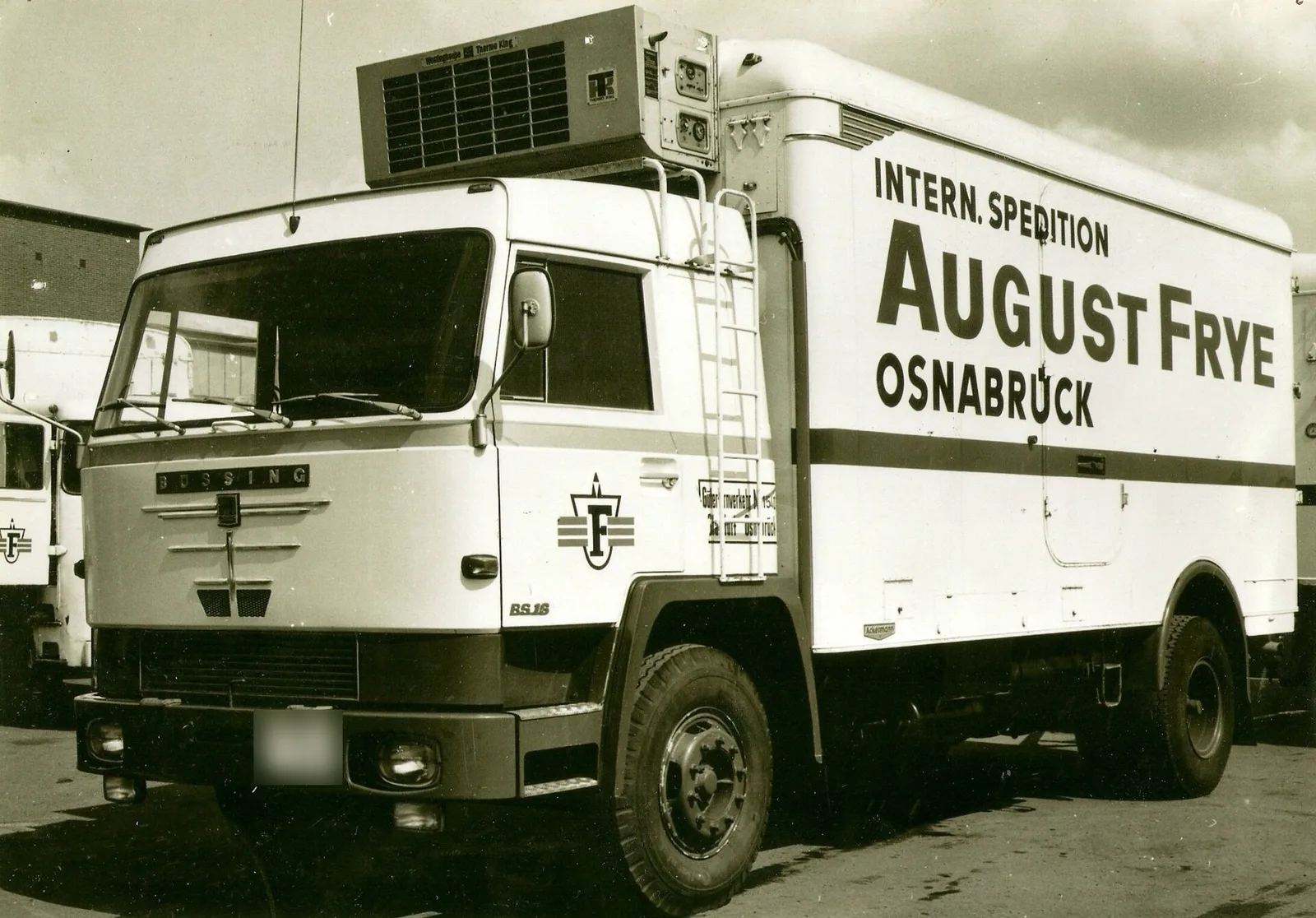
The first two models were hung under the trailer. Around 1940 came the Model C, the first unit mounted on the front wall of the body. The reefer’s ‘backpack’ has hung there ever since. During the war such units kept blood, medicines and food safe for army hospitals and troops.
Jones received more than 60 patents. In 1991 he and Numero were awarded the US National Medal of Technology, both posthumously. The six dollars paid off: their company is called Thermo King, and we will come back to its units.
Refrigerated Semi-Trailer Dimensions: Five Centimetres They Fought Over for Years
So, the refrigerator exists. Now the walls get in the way.
To hold −20 °C, the body wall has to be thick. But the outside dimensions of a truck are limited by law. Thick walls eat into the width inside, and pallets stop fitting in a row. A Euro pallet is 1200 × 800 mm. To put two across or three lengthways, you need 2.40 m inside, plus a gap for air.
The industry association Transfrigoroute lobbied for an exception for years. In the late 1970s reefers in Europe were allowed a width of 2.60 m. According to the association, those centimetres gave 20% more capacity and better insulation, and later made double-deck loading possible.
Then the arithmetic. Three pallets in a row and 11 rows of 1.2 m make 13.2 m and 33 pallets. A 13.6 m curtainsider body takes 34: two pallets across, 17 rows of 0.8 m. Inside a reefer there is 13.41 m, and the 34th does not fit: the insulation takes up room along the length too.
| What | Value |
|---|---|
| 13.6 m body, inside | 13.41 × 2.46 × 2.65 m |
| Volume | about 87 m³ |
| Euro pallets 1200 × 800 | 33 |
| Two decks | up to 66 Euro pallets |
The European five centimetres reached us as well. Kazakhstan’s Order No. 342 on permissible vehicle parameters repeats the same exception: a width of 2.55 m for everyone and 2.6 m for an insulated body.
A Blacksmith, a ‘Thermos’ and a Blue Elephant: Where Schmitz Came From
In 1892 Franz Heinrich Schmitz took over his father’s forge in Altenberge. The town stood on the ‘Dutch road’ with a customs post, the road ran over hills, and travellers had to stop. Schmitz forged horseshoes and mended the iron tyres of cart wheels. A bad road turned out to be an excellent business model.
In 1935 the firm built its first trailer. In the 1950s it began making bodies for temperature-controlled loads, which were called ‘thermos trailers’. And in 1978 it patented FERROPLAST panels: polyurethane foam between two steel sheets. Steel does not let water vapour through, so the insulation does not take on moisture. After that, according to the firm’s own data, its share of box semi-trailers in Germany passed 70%.
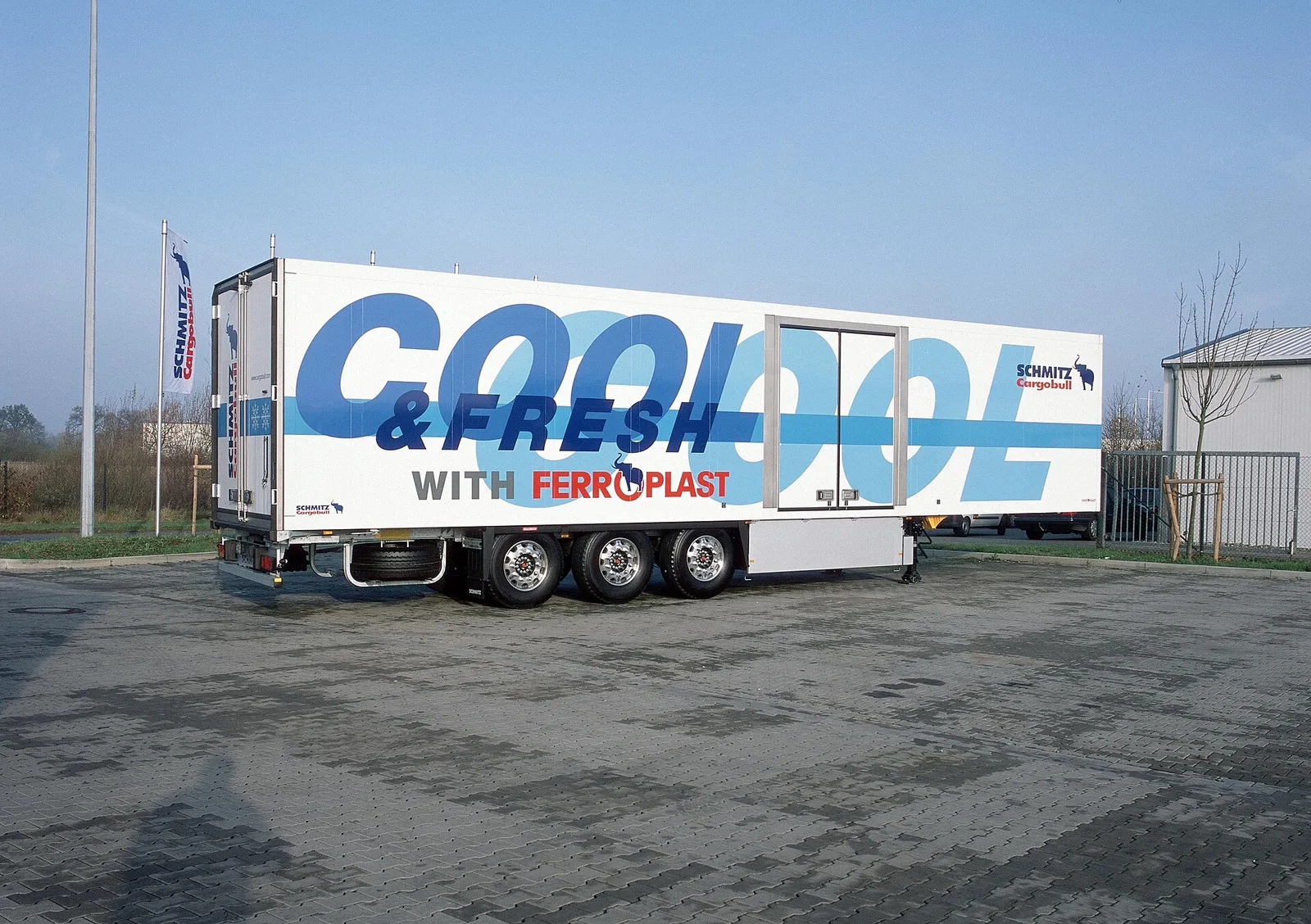
The familiar name Cargobull appeared only in December 1998. The word Anhänger (‘trailer’) was not understood abroad and was hard to pronounce because of the umlaut ‘ä’. It was replaced with an invented one: cargo for load, bull for that same blue elephant from the logo.
The French took a different path. Chereau produced its first insulated body in 1953 and its first reefer in 1955. It makes its bodies using polyester technology, that is, from fibreglass. That is how two schools came about: the German steel school (Schmitz, Krone) and the French fibreglass school (Chereau, Lamberet). They are still arguing.
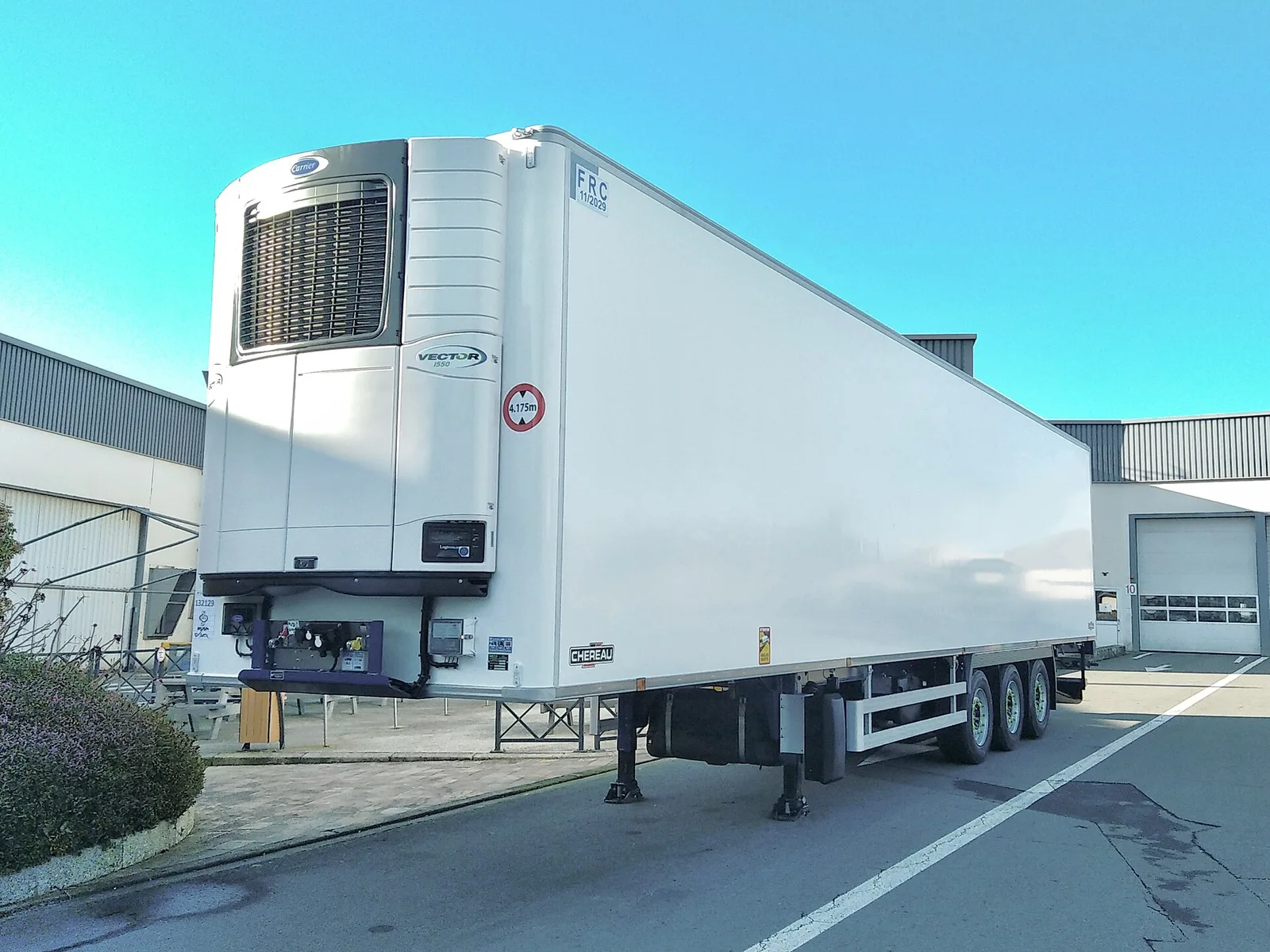
The schools measure themselves by a single letter. K is the heat transfer coefficient of the body in W/(m²·K): the lower it is, the better the body holds the cold. The ATP Agreement requires K of no more than 0.40 for reinforced insulation and no more than 0.70 for normal insulation. Schmitz gives K from 0.295 for its panels; Chereau gives 0.27 for a body with vacuum panels. Remember this letter: it becomes the main character later.
In 2026 the French school had a drama. According to French Wikipedia, Lamberet entered court-supervised restructuring in the summer, and Schmitz Cargobull offered to buy it out. The blacksmiths from Altenberge, judging by Wikipedia, are eyeing France too.
Why Two Thirds of the Reefers on kolesa.kz Are 2011 Schmitz
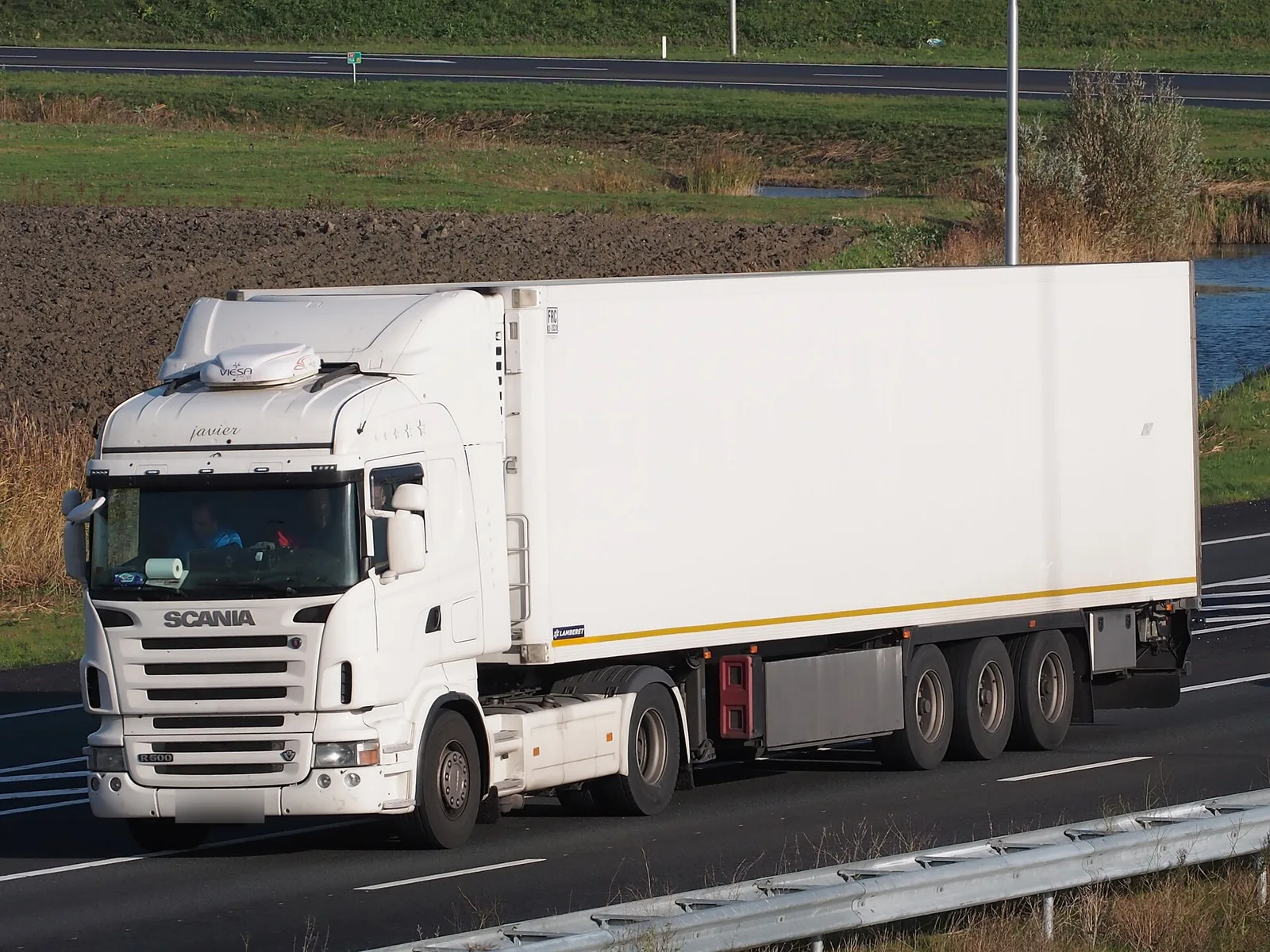
I counted the listings in the ‘Refrigerator’ section of kolesa.kz on 24 November 2026. There are 212: the used market is large.
| Make | Listings | Median year |
|---|---|---|
| Schmitz Cargobull | 140 | 2011 |
| Krone | 20 | 2013 |
| Lamberet | 11 | 2000 |
| Others | 41 |
There are 12 units from 2020 or newer. The typical reefer on kolesa is a Schmitz that is 15 years old.
And this is where K comes on stage. Since 1953 the French laboratory Cemafroid has measured the coefficient every year on hundreds of bodies aged 12 years and older. An analysis of this data at the International Institute of Refrigeration congress in 2019 showed that over the first 12 years K of refrigerated trucks rises by 65% on average, and the next six years add about 5%. The insulation ages, and moisture gets into the panel through damage.
Now work it out yourself. If K has risen by 65%, a body that started at 0.30 ends up at about 0.50. That is already normal insulation. In real life the spread is wide: in the Cemafroid sample of 110 bodies, about 30% kept reinforced insulation after 12 years, and the rest fell within the norm for normal insulation. The ones that survive are the ones that were looked after. That is why, for any body, new or used, ask for a test report with the figure for K.
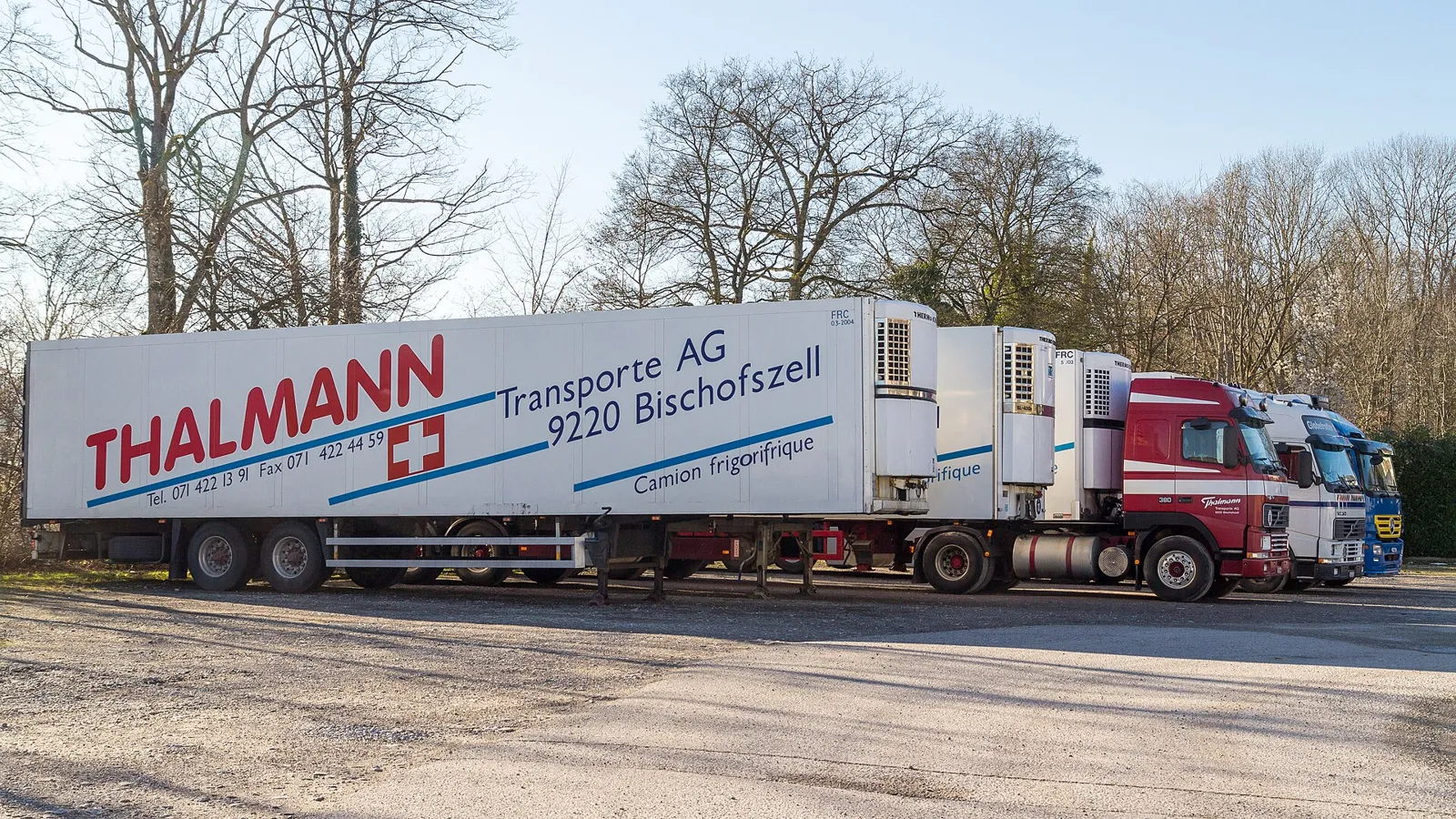
On the body you can see it in three letters. FRC means a refrigeration unit, reinforced insulation, and a temperature from +12 to −20 °C. FNA means normal insulation and only from +12 to 0 °C. An ATP certificate is issued for six years, and at inspection an old body can be moved from R to N. You will not carry ice cream in one of those.
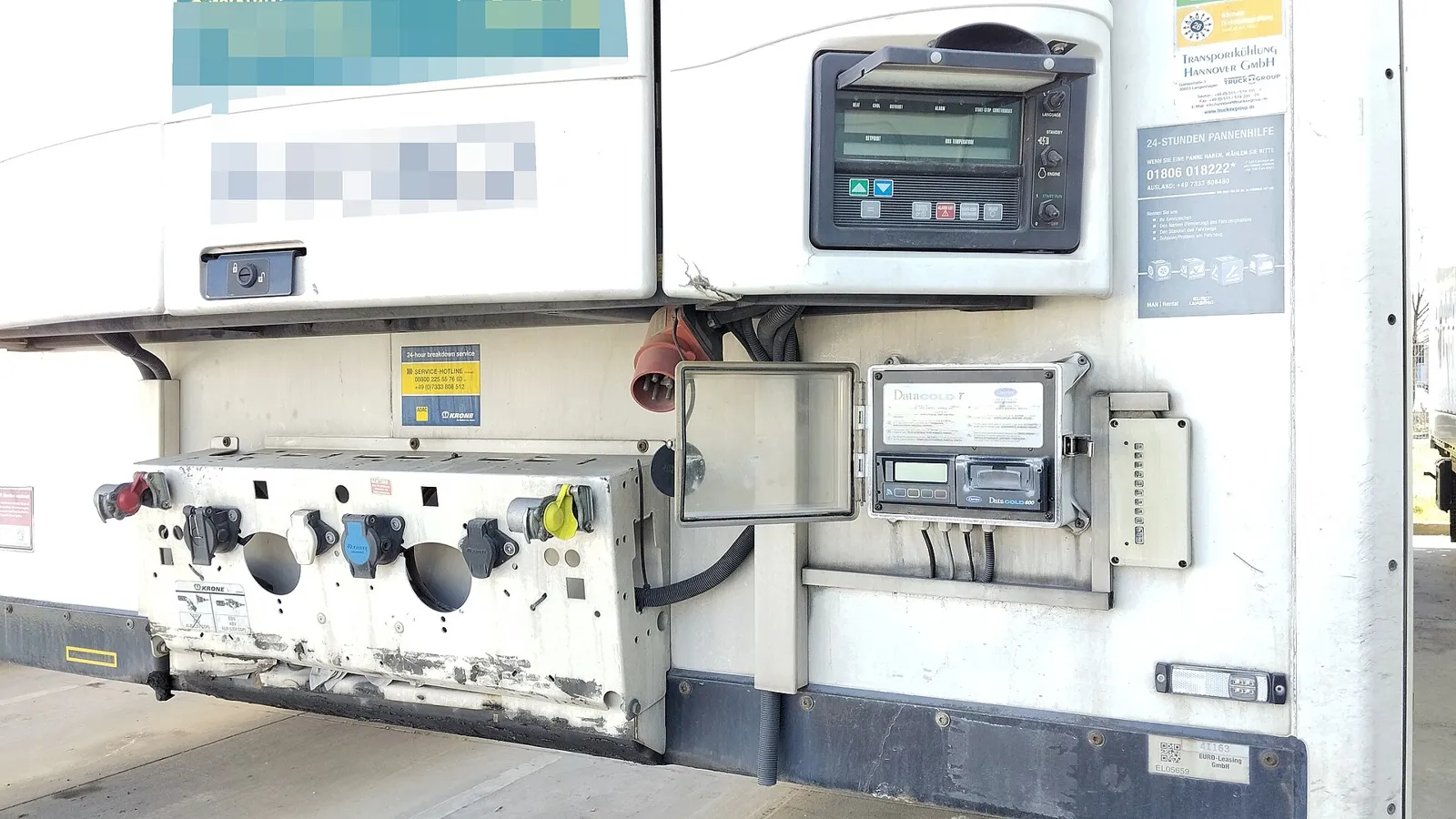
The second surprise is engine hours. Reis magazine wrote that a unit with 15,000–20,000 engine hours has used up about 70% of its life before a major overhaul. In a Dutch sale listing I found a unit with 19,299 hours on the diesel and another 5,015 on mains power. There are two counters; ask for both.
Why Companies Buy a New Refrigerated Semi-Trailer
A used semi-trailer is cheaper than a new one. So why do companies and LLPs buy new ones?
The first reason is boring and therefore the main one: accounting. The company needs a semi-trailer that can be officially entered in the accounting books as a fixed asset. With a new one everything arrives as one package from the supplier: contract, invoice, vehicle passport, type approval, warranty. With a vehicle from a private seller the accountant has to assemble the file alone: a sale and purchase agreement with the price, a handover certificate, re-registration and a director’s order accepting the asset into the books. That is how accounting consultancies describe the procedure.
The second reason is that same letter R. A new body gets an ATP certificate for six years, and the question ‘does it still hold −20?’ does not arise.
The third is the warranty and clear servicing, for the semi-trailer and for the unit separately.
These are the documents to check on a new semi-trailer:
- Vehicle type approval (OTTS) and vehicle passport. The approval number is valid across the whole EAEU.
- ATP certificate with the body class, for example FRC.
- Certificate of approval for transport under customs seals, for TIR journeys. Seals must be applied in a ‘simple and reliable way’, and the body is inspected every two years.
- Warranty terms for the semi-trailer and for the refrigeration unit.
European, Russian and Chinese Refrigerated Semi-Trailers: Who Makes New Ones
Europe. Schmitz and Krone use steel panels; Chereau uses fibreglass and vacuum insulation. Krone fits the Cool Liner with a forklift floor rated at 5,500 kg per axle. A point for our region: in March 2022 Schmitz closed its business in Russia, even though it had been assembling semi-trailers near Saint Petersburg since 2013.
Russia. The market there is now held by domestic plants: according to Rosspetsmash estimates cited by the Monopoly blog, they had 79% of semi-trailer sales in 2023. For an LLP in Kazakhstan these plants have a practical advantage: the type approval is valid across the whole EAEU.
Grunwald from Kaliningrad belongs to the fibreglass school. The Gr.RF body is built from one-piece panels by vacuum infusion: fibreglass, extruded polystyrene foam, 60 mm walls, a floor up to 100 mm. The factory gives K as 0.4, the reinforced insulation level under ATP. The floor is an aluminium tray, the brakes are disc brakes with EBS, and the front axle is liftable. Gross weight is 38 t, unladen weight from 8 t. In 2023 the model became ‘Semi-Trailer of the Year in Russia’ in the Za Rulem magazine competition. The warranty is 12 months.
SibEuroVan from Novosibirsk has been operating since 2010 and built its first body for a 13.5 m semi-trailer in 2015. The panels are reinforced fibreglass with higher-density polystyrene foam. The subframe in 09G2S steel is hot-dip galvanised, and the fittings are stainless. The factory gives the service life of the body as 12 years.
Tonar from the Moscow region fits its own axles and gives a warranty of up to 36 months. It also has the 4-axle R4-16V for 39 pallets, which we discuss below.
China. Here is the main surprise: a Chinese refrigerated semi-trailer is often assembled from European components. The same blog described a CIMC model with SAF axles, Wabco brakes and a Carrier unit, and another make with the same set. CIMC, according to the blog, ranks 11th in the world among semi-trailer manufacturers. And in 2014 Schmitz itself launched production in Wuhan together with Dongfeng. So the question ‘European or Chinese?’ is out of date. Ask for the body test report with the figure for K and the address of a service point in Kazakhstan.
Length and 4 Axles: Where Kazakhstan Says ‘Stop’
Since October 2024 a combination with a semi-trailer in Kazakhstan may be 24 m long; before it was 20. It is too early to celebrate. The same Order No. 342 kept a second limit: from the front point of the body to the rear point of the semi-trailer, no more than 16.4 m.
| Kazakhstan norm | Value |
|---|---|
| Length of combination, tractor unit + semi-trailer | 24.0 m |
| From the front point of the body to the rear point of the semi-trailer | 16.4 m |
| Combination weight: 5 axles / 6 axles | 40 t / 44 t |
| Three-axle bogie, single tyres | 23.5 t |
| Group of four axles, per axle | 7.5 t |
An ordinary 13.6 m body passes with room to spare. The Tonar R4-16V, at 17,190 mm long, falls outside the permissible parameters. Find out before buying how such a semi-trailer would be allowed on the road.
Why have 4 axles at all, then? For weight. A 4×2 tractor unit with a three-axle semi-trailer is 5 axles and 40 t. With a 4-axle one it is 6 axles and 44 t. But the 4-axle trailer itself is heavier by over a tonne, and in Kazakhstan it runs into the length limit.
Paperwork is only half the story. There is also the road.
The order requires any combination to fit into a turn between a radius of 12.5 m on the outside and 5.3 m on the inside. The longer the semi-trailer, the more its rear axles cut the corner. With a body close to 16.4 m you feel it wherever space is tight: on U-turns, flyover slip roads, junctions. In a city you can simply get stuck with such a semi-trailer: you drive into a warehouse yard and then cannot get out.
The second cost is rubber. The bogie axles sit parallel and cannot steer. In a sharp turn one axle rolls along the arc while the others are dragged sideways over the asphalt. The sharper the turn and the more axles, the faster the tread wears. A self-steering (steered) axle cures this. BPW claims it saves more than four tyres and up to 1,000 litres of fuel per 100,000 km. Ask the factory whether it is in the specification.
The conclusion is simple. A stretched 4-axle semi-trailer is good on a straight trunk leg between two spacious warehouses. If the route includes a city, old interchanges or tight yards, an ordinary 13.6 m is safer.
Look at weight soberly. The order gives a three-axle bogie 23.5 t, although factories write 27 t in the passport. Every 100 kg of the semi-trailer’s own weight takes 100 kg off the payload, so ask for the empty weight together with the unit.
The running gear is similar everywhere: BPW or SAF axles, with ROTOS of Schmitz’s own, and 385/65 R22.5 tyres. But ask for the floor load as a figure, in kilograms per forklift axle. Reis magazine described a typical failure: the floor was not set level with the dock, and the forklift ‘literally jumps inside’. The floor breaks, the frame bends.
A Refrigeration Unit for a Semi-Trailer: Diesel, a Socket and an Axle Generator
Semi-trailers carry the descendants of that very Model C: self-contained Thermo King and Carrier Transicold units with their own diesel. They hold the temperature independently of the tractor unit, including when parked.
Many units, for example the Carrier Vector 1550, have a second mode: running from a socket while parked. There is slightly less cooling power, but it is quieter, and the diesel is saved.
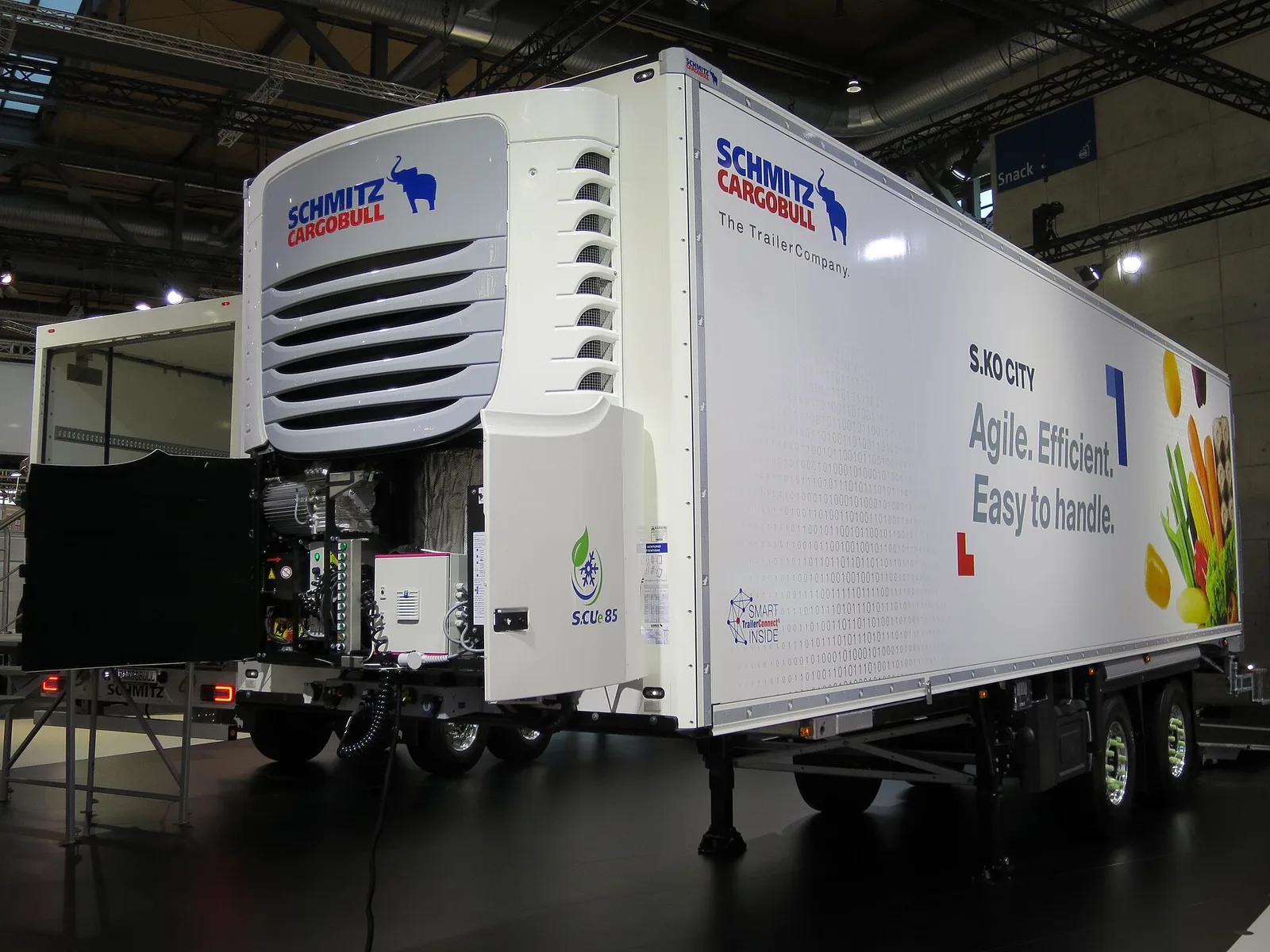
And now an experimental novelty. Schmitz makes the S.KOe semi-trailer, which has no diesel at all. A battery sits between the axles, and an axle generator charges it: it produces current during braking and coasting. The unit makes about 60 dB of noise instead of the 100 dB of a diesel one. A semi-trailer that makes its own electricity from its own braking is something Jones with his scrapyard would have appreciated.
If the load goes to retail chains or to pharmaceutical companies, order a temperature data logger. A printout of the temperature for the trip settles a dispute with the consignee faster than any lawyer.
So Why Is It Allowed 2.60?
Back to the question from the start. The reefer was allowed to be wider because three things met at one point.
- Physics: cold needs a thick wall, and you cannot talk heat transfer round.
- The pallet: 1200 × 800 mm, and it cannot budge.
- People: hauliers who spent years proving to officials that five centimetres give a fifth more capacity.
The whole refrigerated semi-trailer works the same way: every advantage is paid for with something. A thicker wall holds the cold better but takes fewer pallets. Four axles carry more load but are harder to turn. That is why there is no ‘best’ semi-trailer. There is the one that suits your load and your roads.
Left out are semi-trailers for meat on hanging rails. They have their own rails, hooks and a reinforced roof, and that is a topic for a separate article.
What to Ask the Factory or the Seller
- ATP class, the body’s coefficient K and the validity of the certificate.
- Floor load in kilograms per forklift axle.
- Empty weight of the semi-trailer with the unit, and the load on the bogie.
- Make of axles and brakes, whether EBS is fitted, and where to get spare parts in Kazakhstan.
- Unit model, engine hours on diesel and on mains, service interval.
- Warranty period and who honours it in Kazakhstan.
- OTTS number and the set of documents for registration.
COND builds reefers and insulated vans on trucks, and supplies Grunwald and SibEuroVan semi-trailers to order. Tell the manager what your load and route are, and we will select the body, the unit and the document package for registration. All 2.60 m of width will be yours. For bodies on trucks, read the article ‘Insulated Van or Reefer’; for the limits of the units, the article ‘How Low Can a Refrigeration Unit Go’.
Photo at the top of the article: JoachimKohler-HB, CC BY-SA 4.0, Wikimedia Commons. Number plate blurred.
FAQ
Refrigerated semi-trailer dimensions: how much space is inside?
A 13.6 m body is about 13.4 × 2.46 × 2.65 m inside, with a volume of about 87 m³ and 33 Euro pallets. The outside width is 2.6 m.
Why is a reefer wider than an ordinary rig?
An insulated body is allowed a width of 2.6 m instead of 2.55 m. Thick walls take up space, and two Euro pallets must still fit across the inside.
What should you check if you are buying a Chinese refrigerated semi-trailer?
The body test report with the coefficient K, the ATP certificate, the makes of axles, brakes and unit, and service in Kazakhstan.
Grunwald refrigerated semi-trailer: how does it differ from Tonar?
Grunwald (in Russian people search for it as ‘грюнвальд рефрижератор’) has a vacuum-infusion fibreglass body and an aluminium floor tray, with a 12-month warranty. The Tonar refrigerated semi-trailer has its own axles and a warranty of up to 36 months.
Can you drive in Kazakhstan on a 4-axle semi-trailer of 16.5 m?
Under Order No. 342, from the front point of the body to the rear point of the semi-trailer must be no more than 16.4 m. A longer semi-trailer falls outside the permissible parameters. And even within the limit, a long semi-trailer is harder to turn in a city, and on sharp turns it wears tyres faster.
Refrigerated semi-trailer: buy new or used?
A used one is cheaper, but on a body older than 12 years the insulation is often already normal, not reinforced. A new one comes with the full package of documents for the accounting books, an ATP certificate for six years and a warranty.
Buying a refrigerated semi-trailer with documents: what is in the set?
Contract, invoice, vehicle passport, type approval (OTTS), ATP certificate, warranty terms. For TIR journeys, a certificate of approval for transport under customs seals.
Schmitz refrigerated semi-trailer: why are there so many in Kazakhstan?
Used reefers are brought from Europe, and Schmitz is the mass-market make there. On kolesa.kz on 24 November 2026 Schmitz appeared in 140 of 212 listings.
Schmitz Cargobull reefer specifications: what is worth knowing?
FERROPLAST panels: polyurethane foam between steel sheets. K from 0.295, inside width 2,460 mm, 33 Euro pallets, a floor for a 5.5 t forklift.
How does reefer insulation age?
According to Cemafroid, over the first 12 years the coefficient K rises by 65% on average. The ATP certificate is checked at least once every six years.
What servicing does a semi-trailer refrigeration unit need?
Thermo King allows up to 2 years or 3,000 engine hours before changing the oil and filters. Belts, leaks and sensors are checked more often.