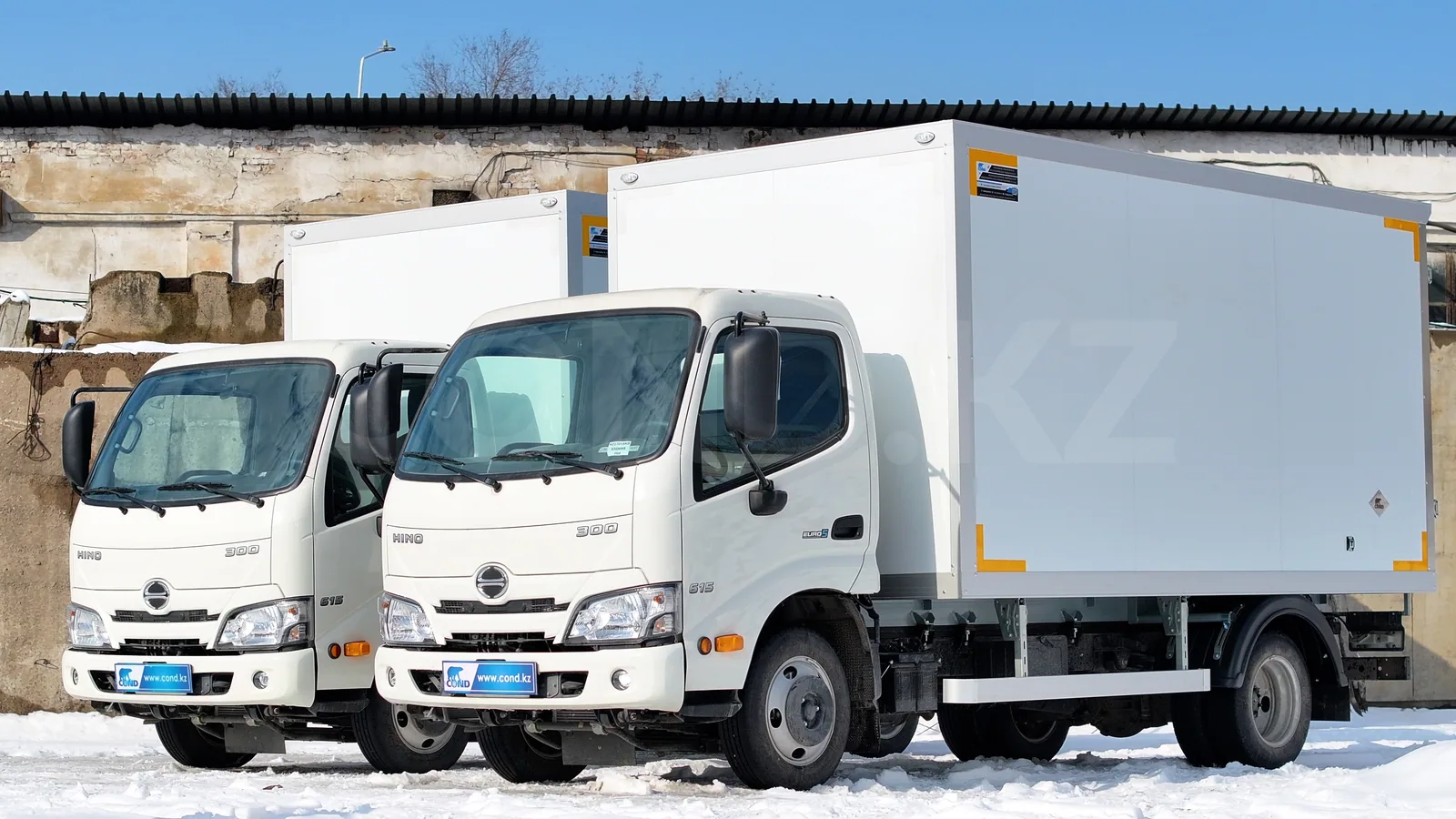
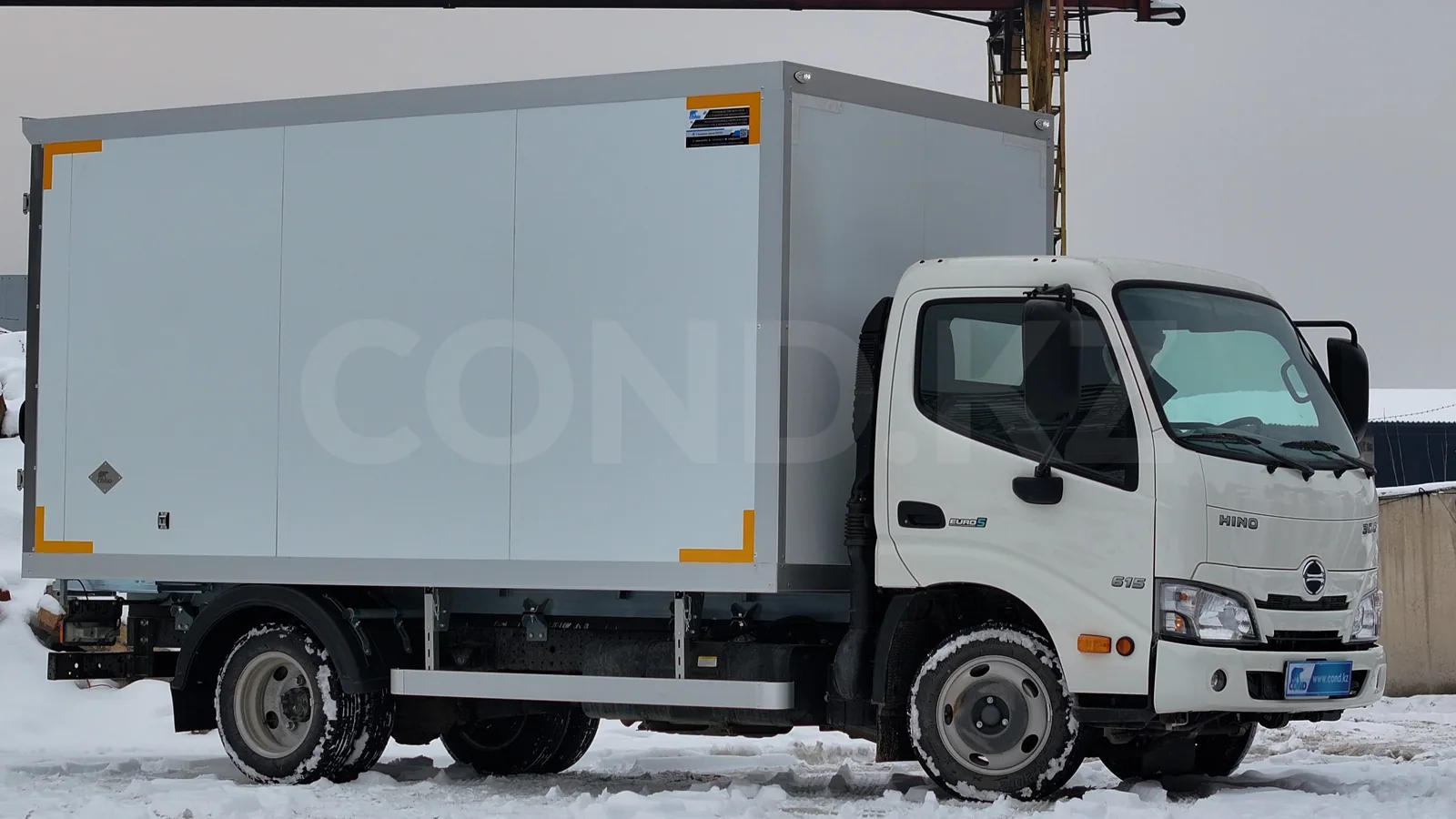
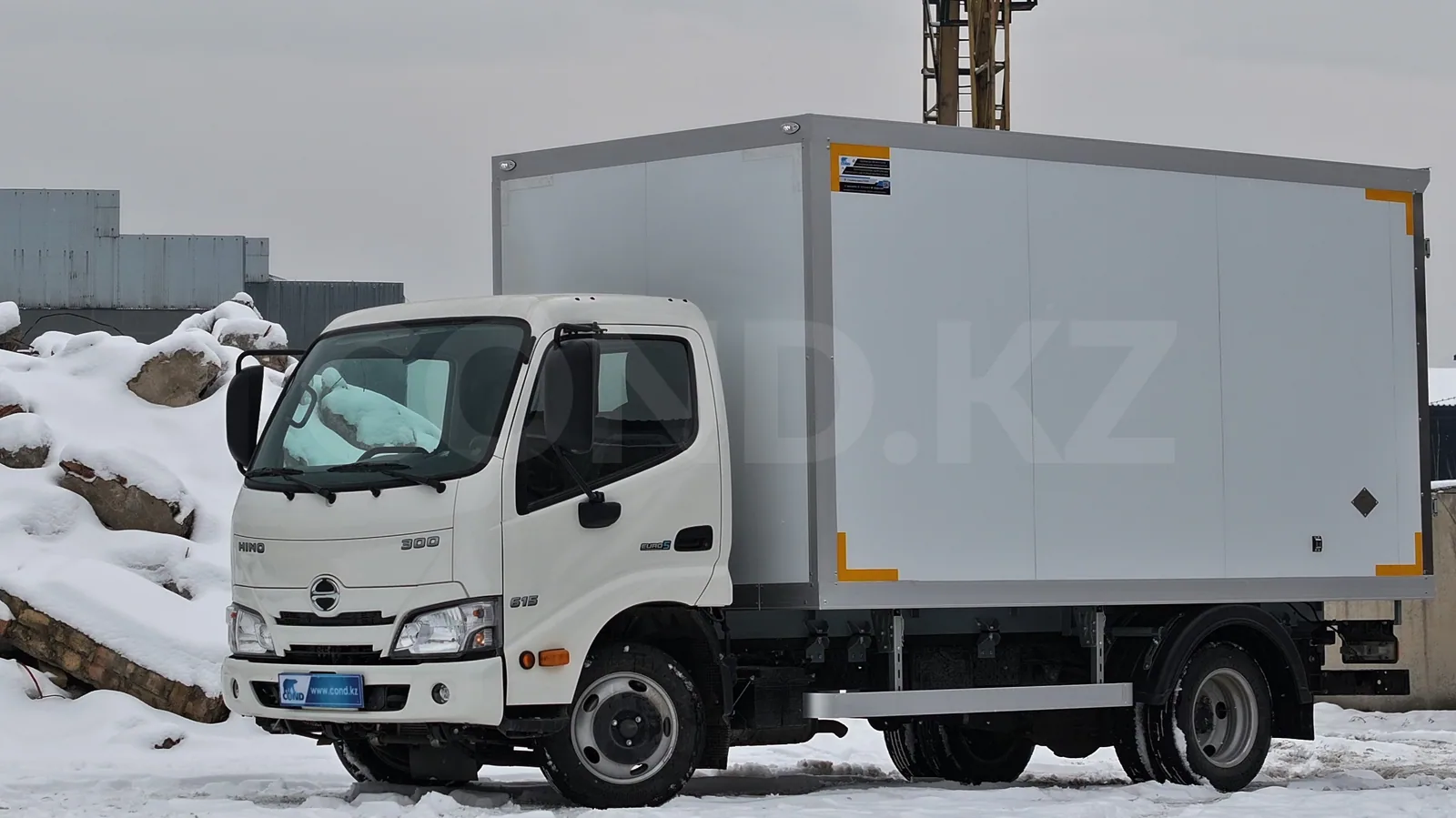
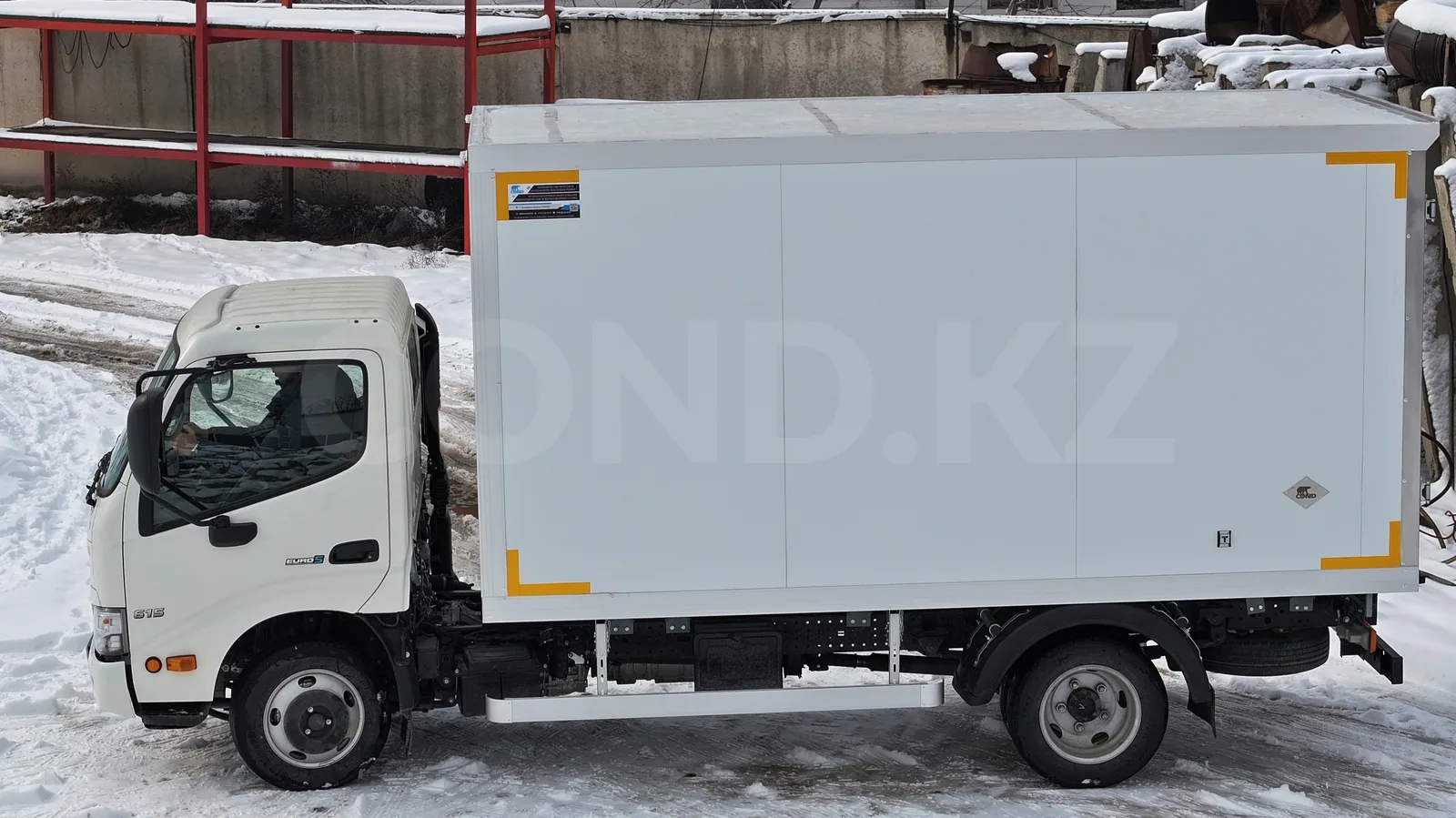
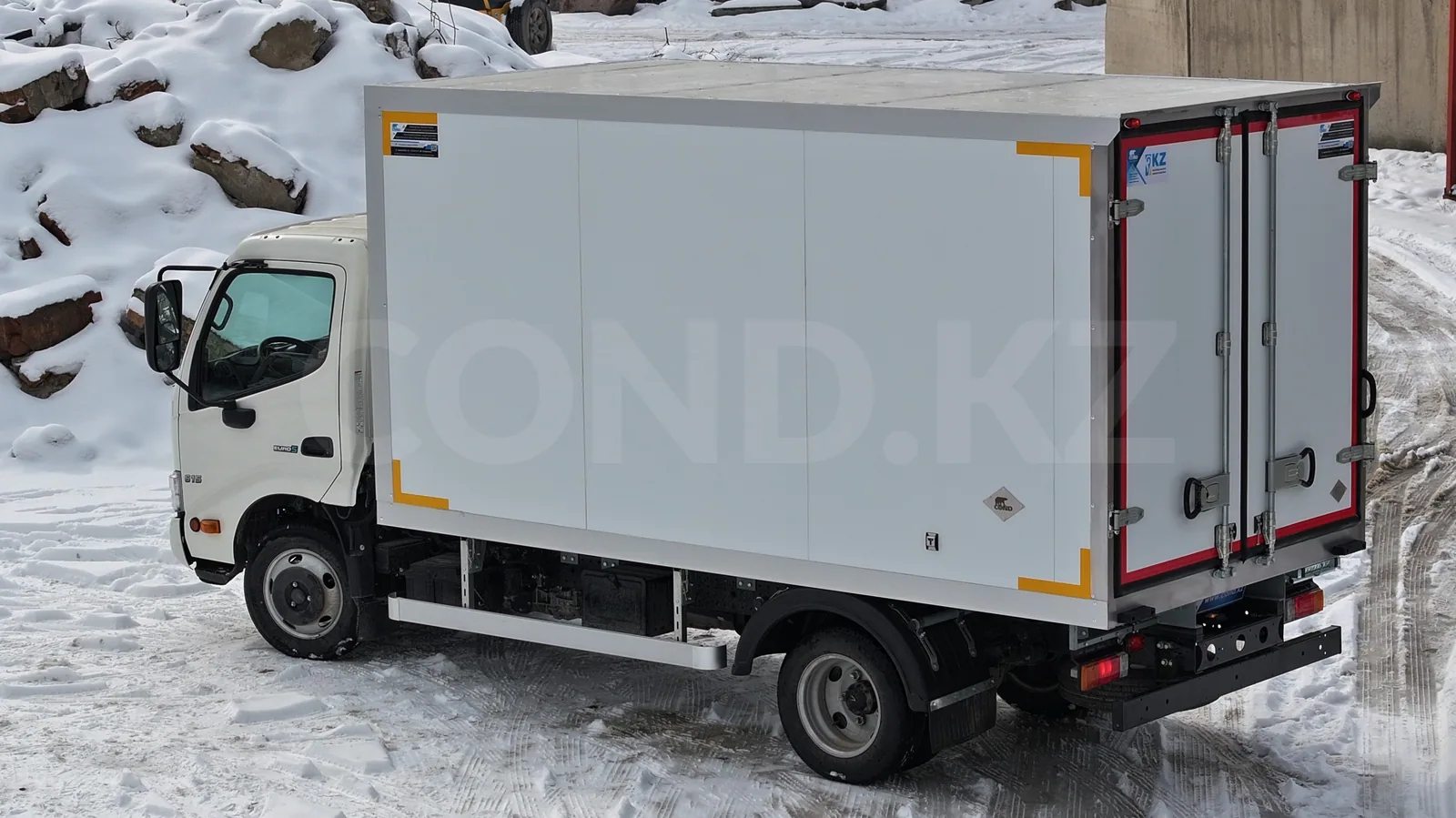
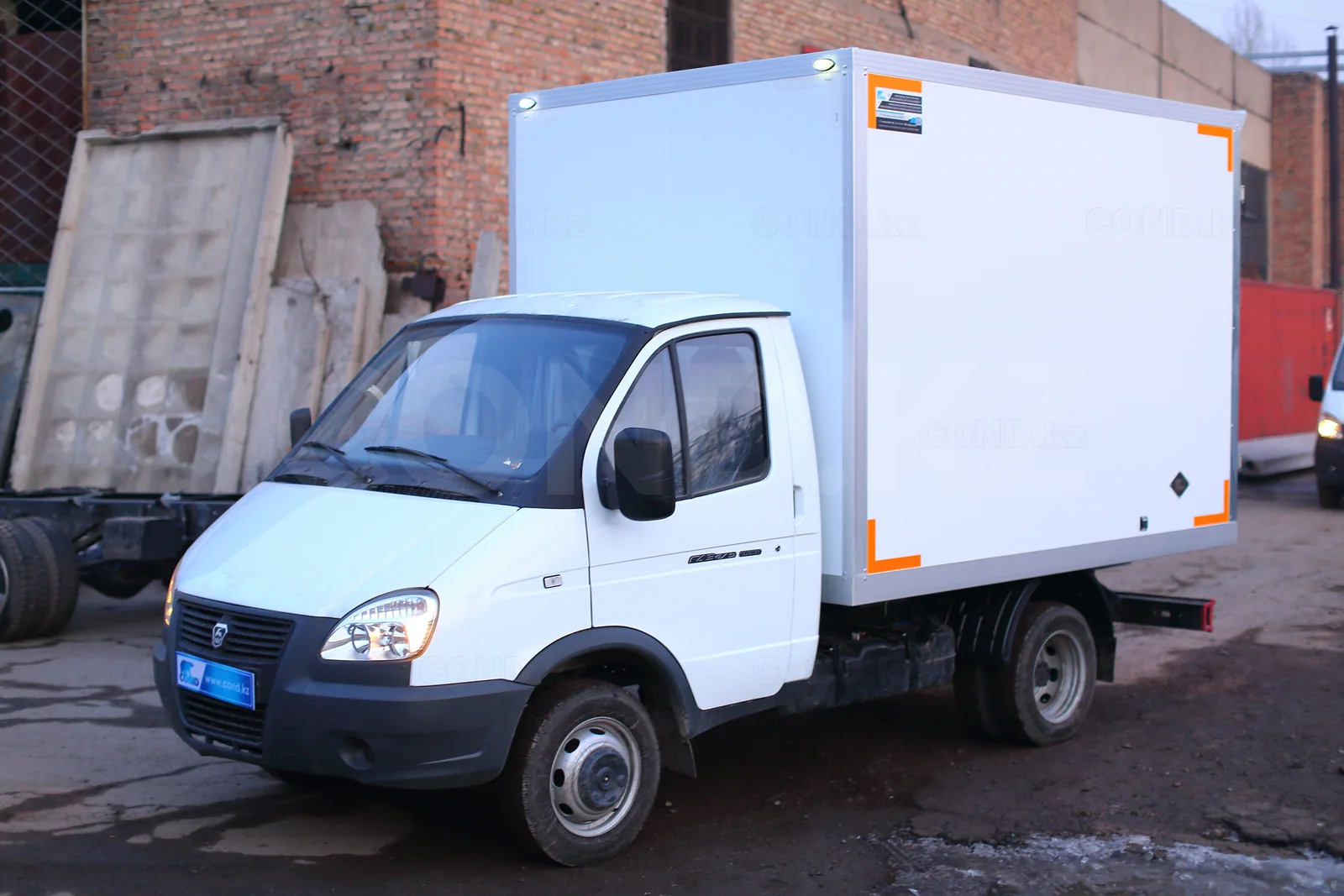
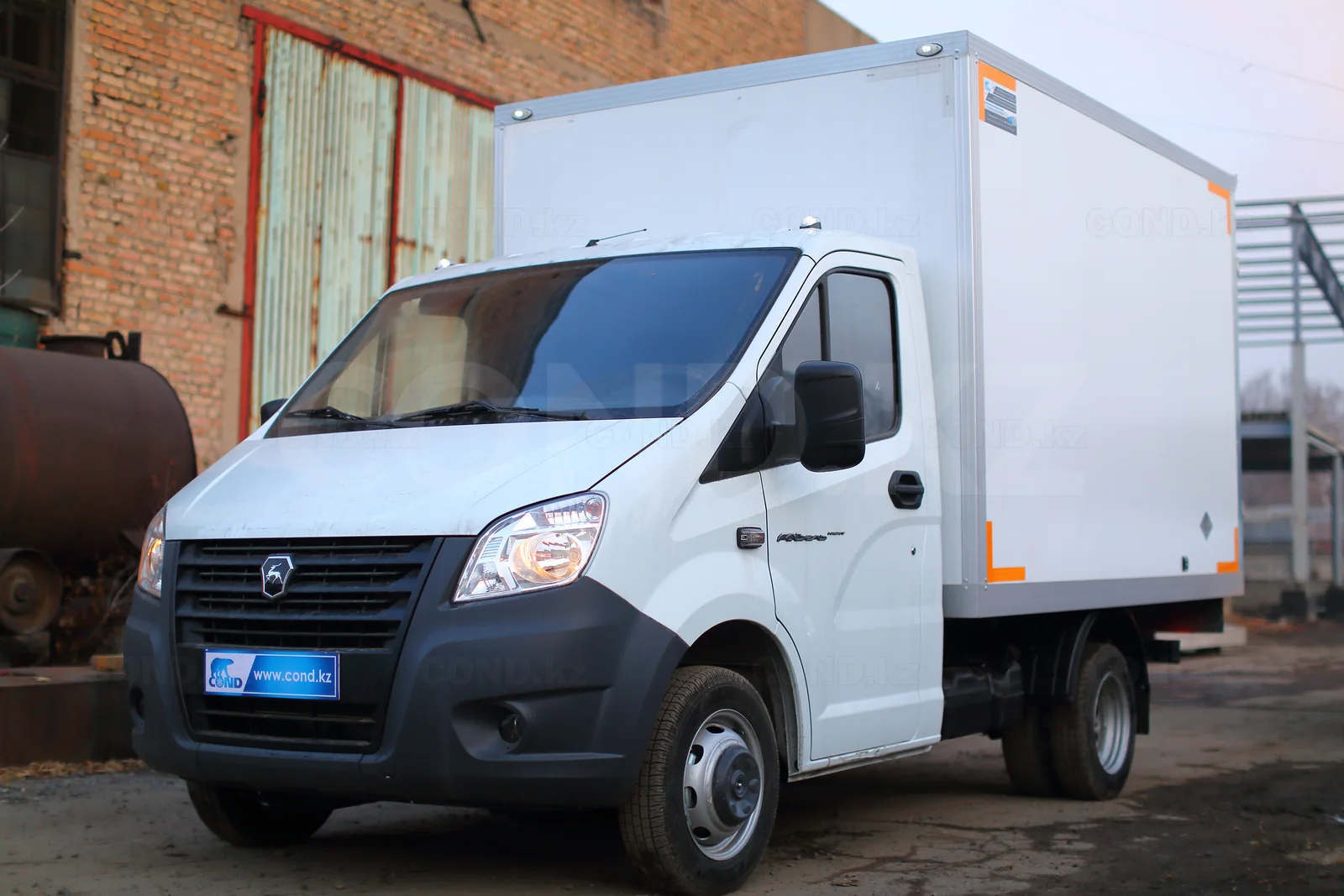
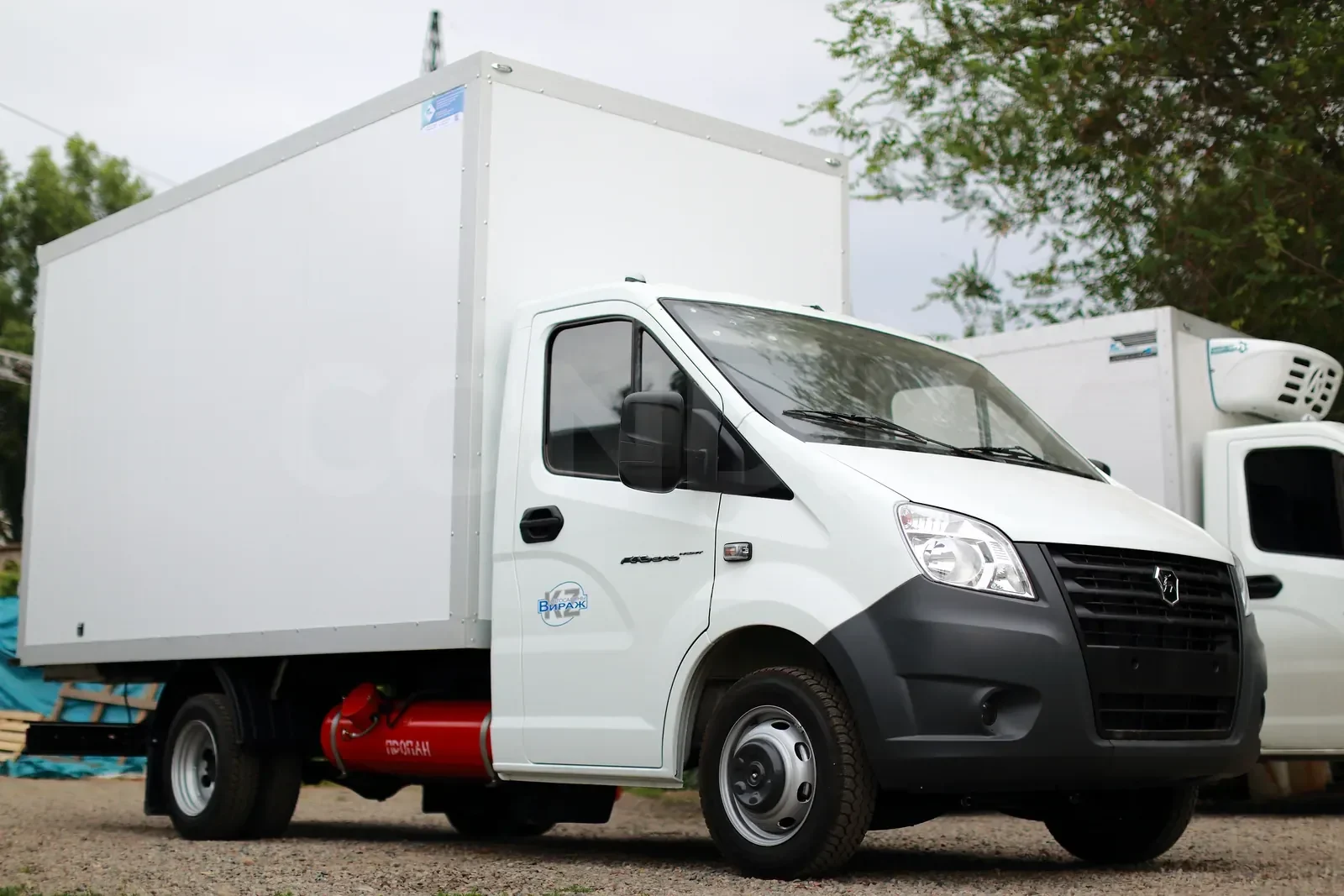
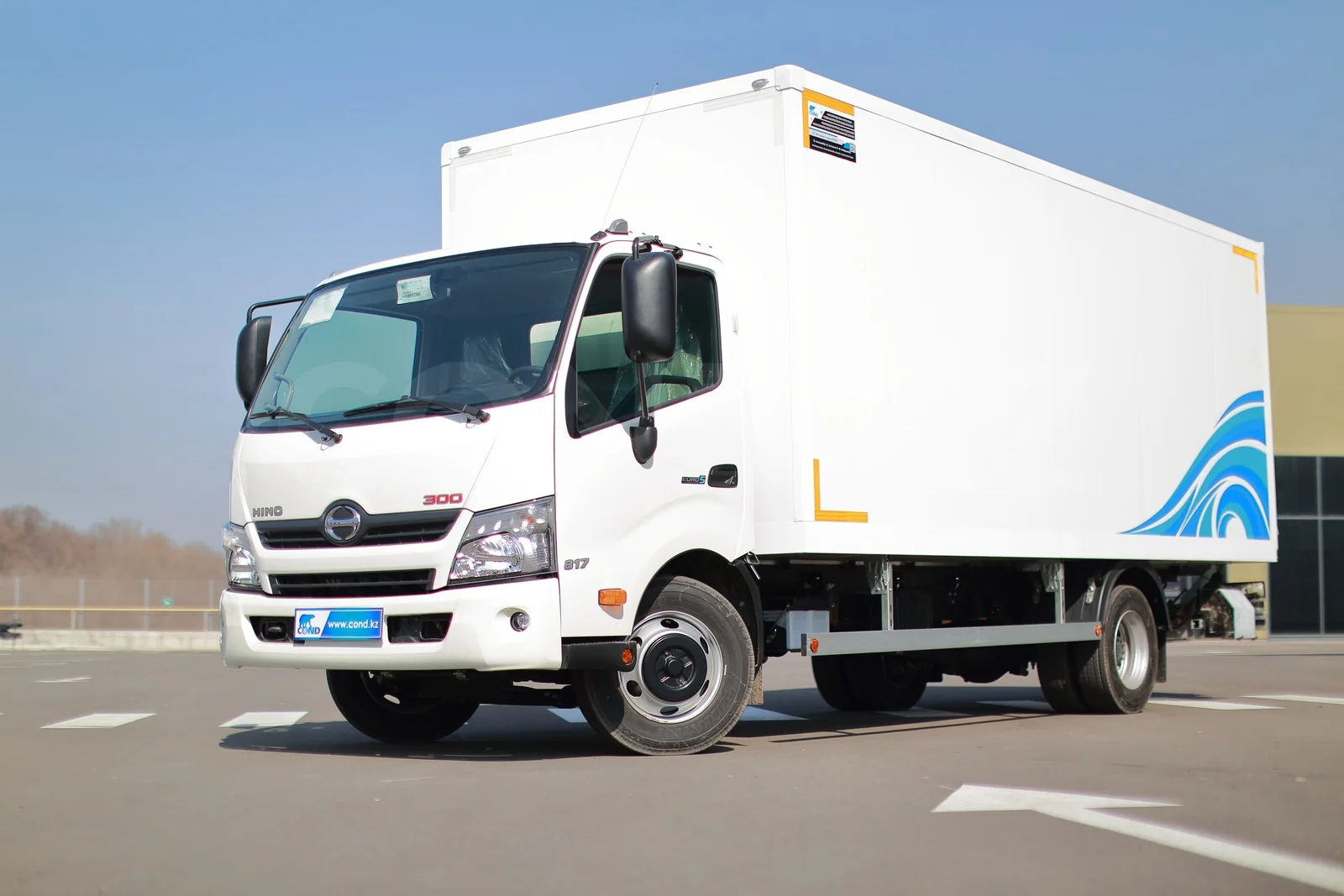
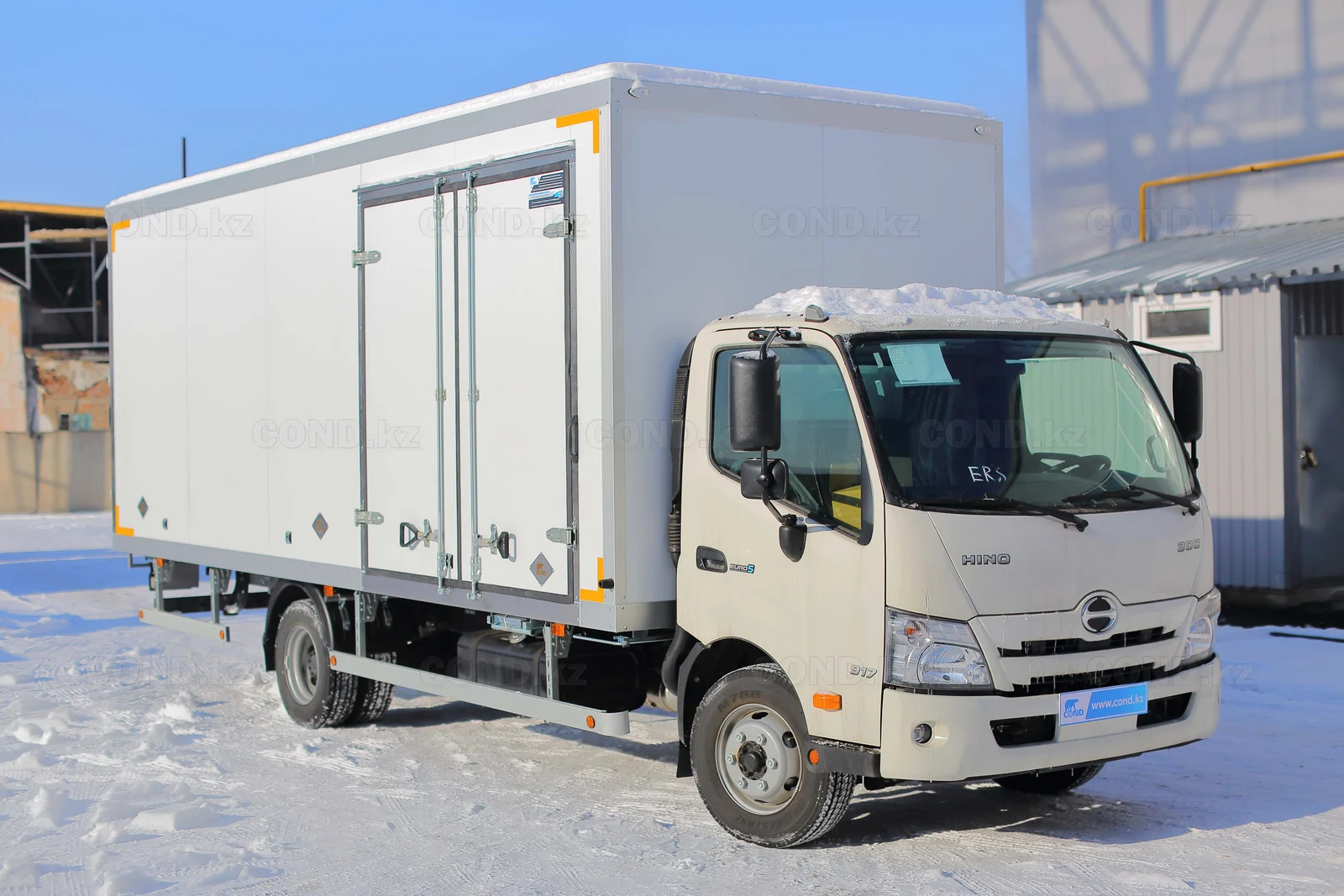
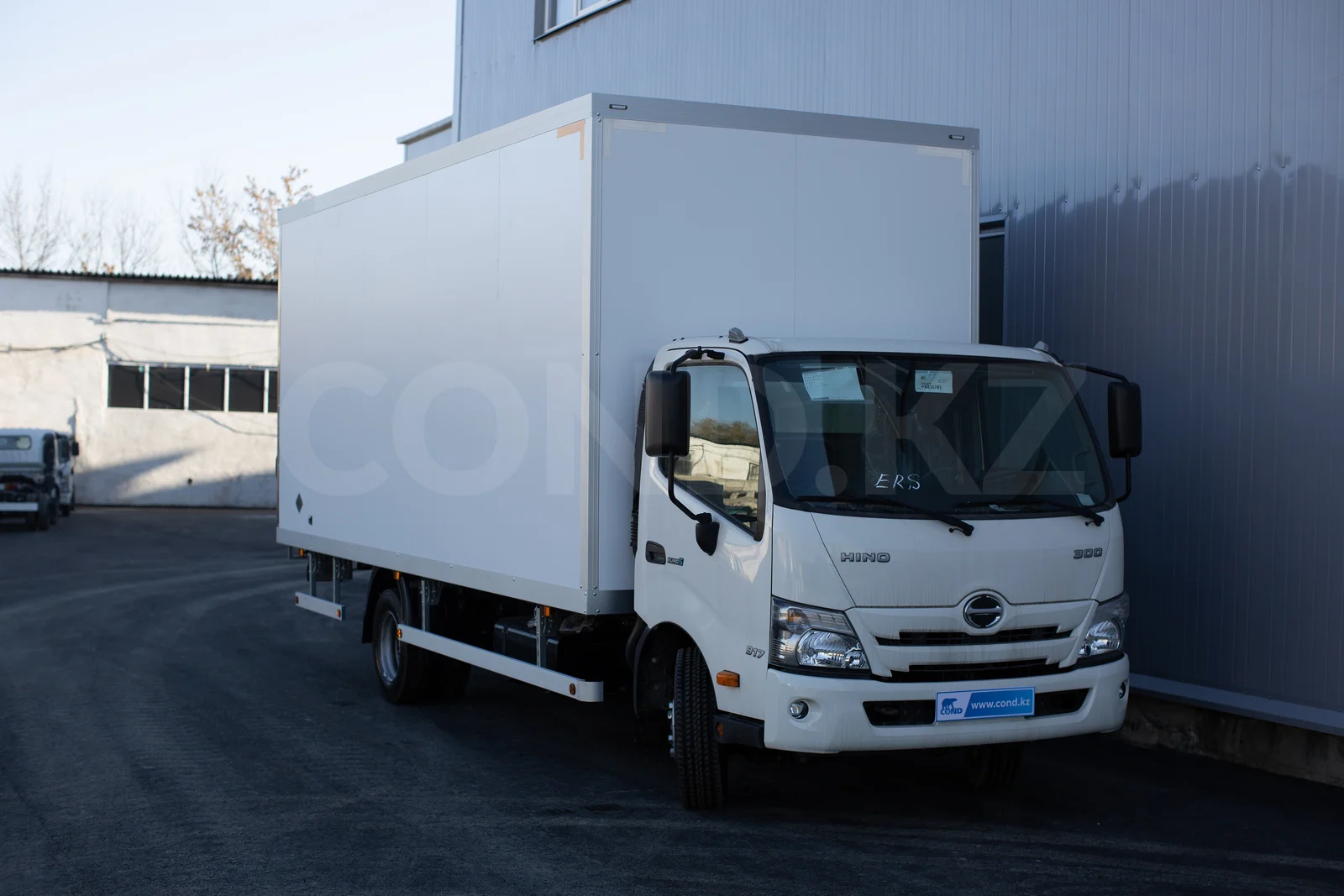
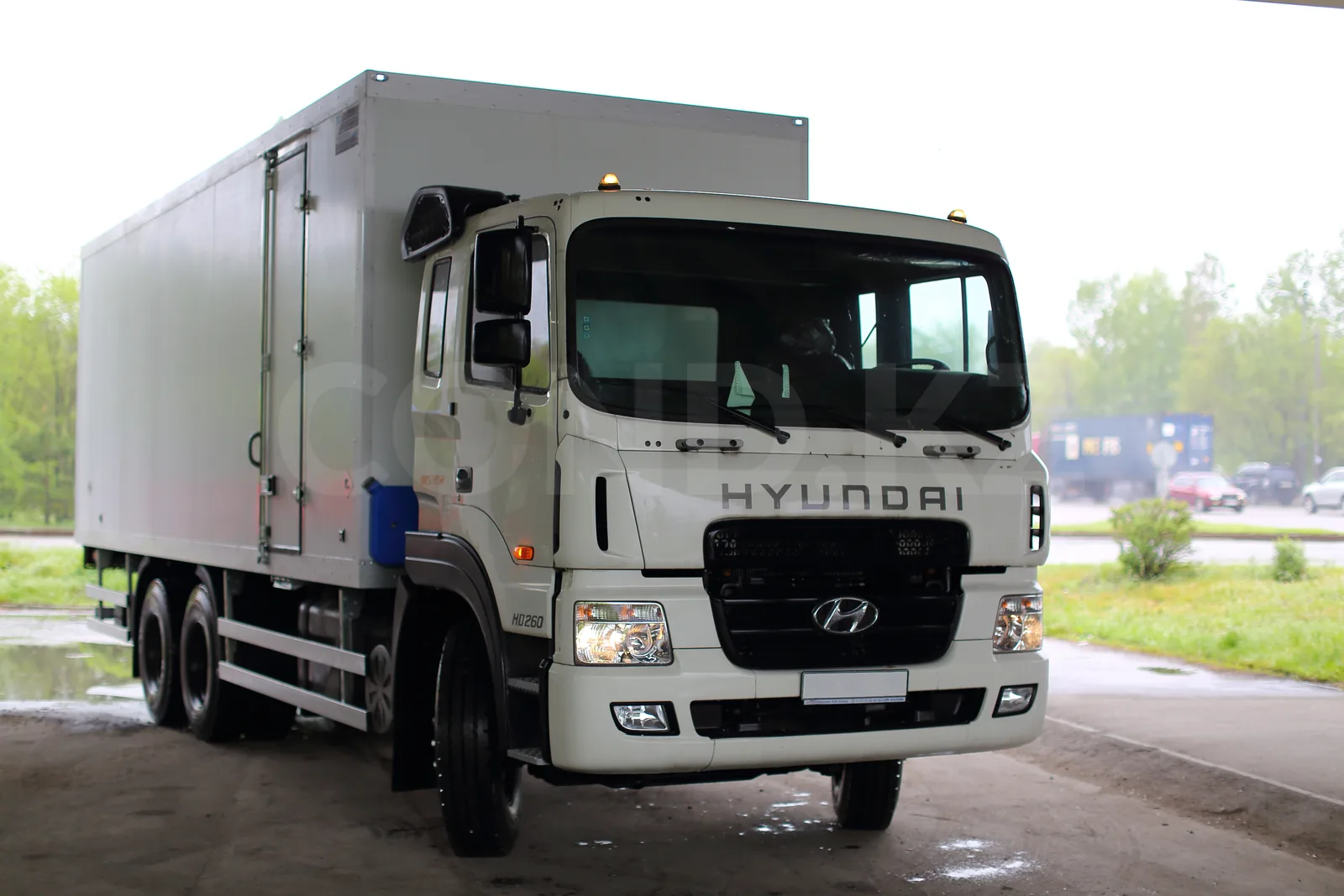
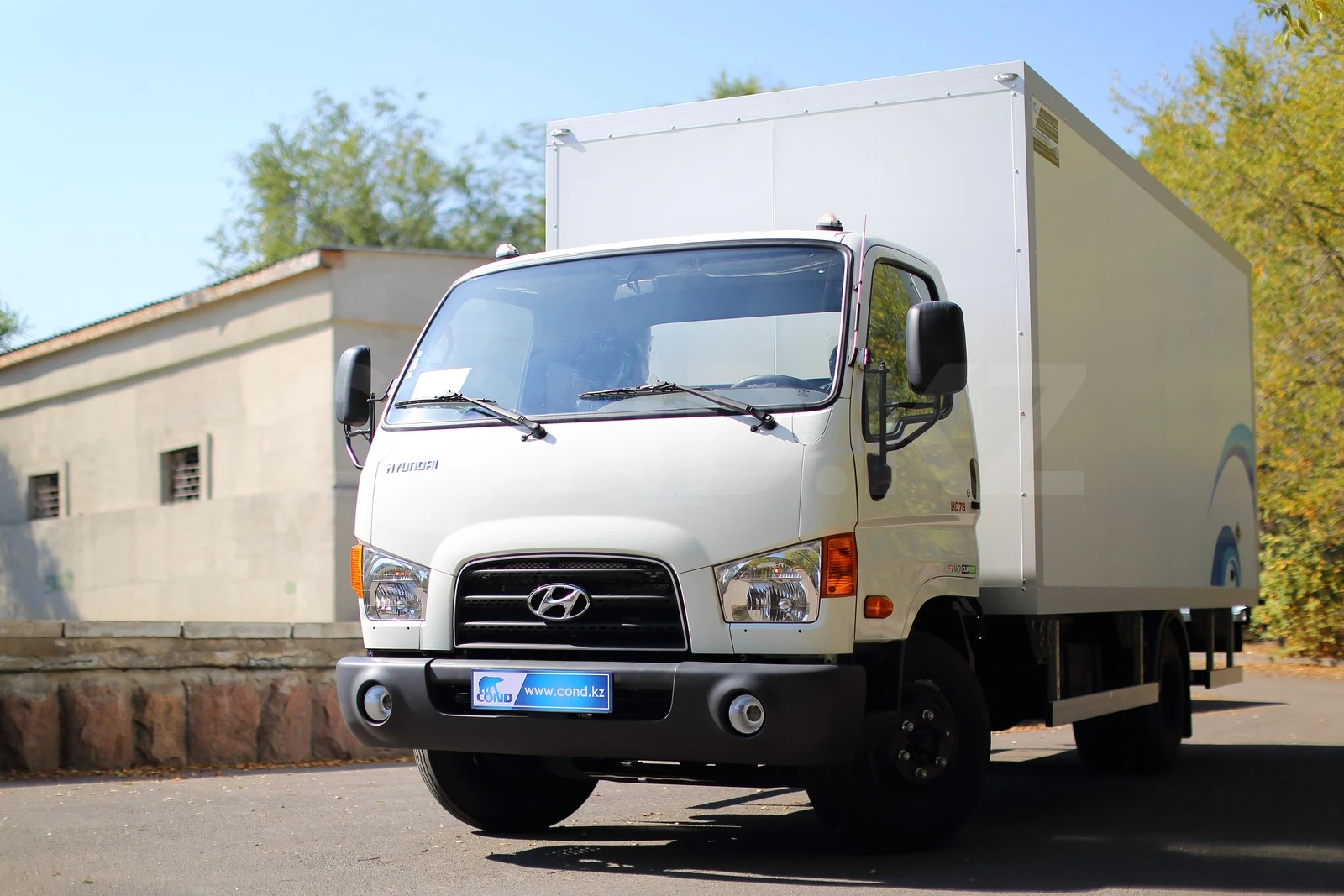
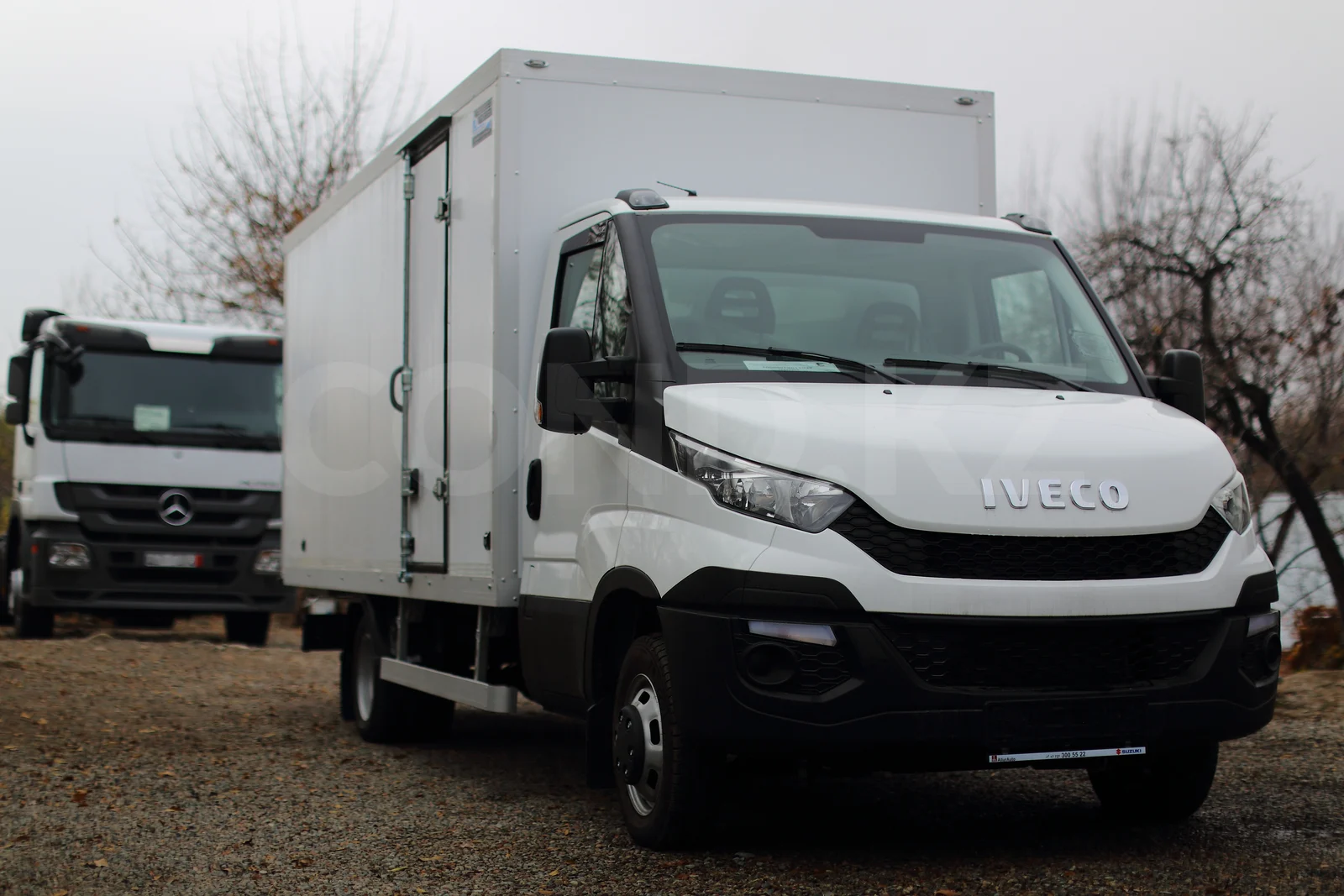
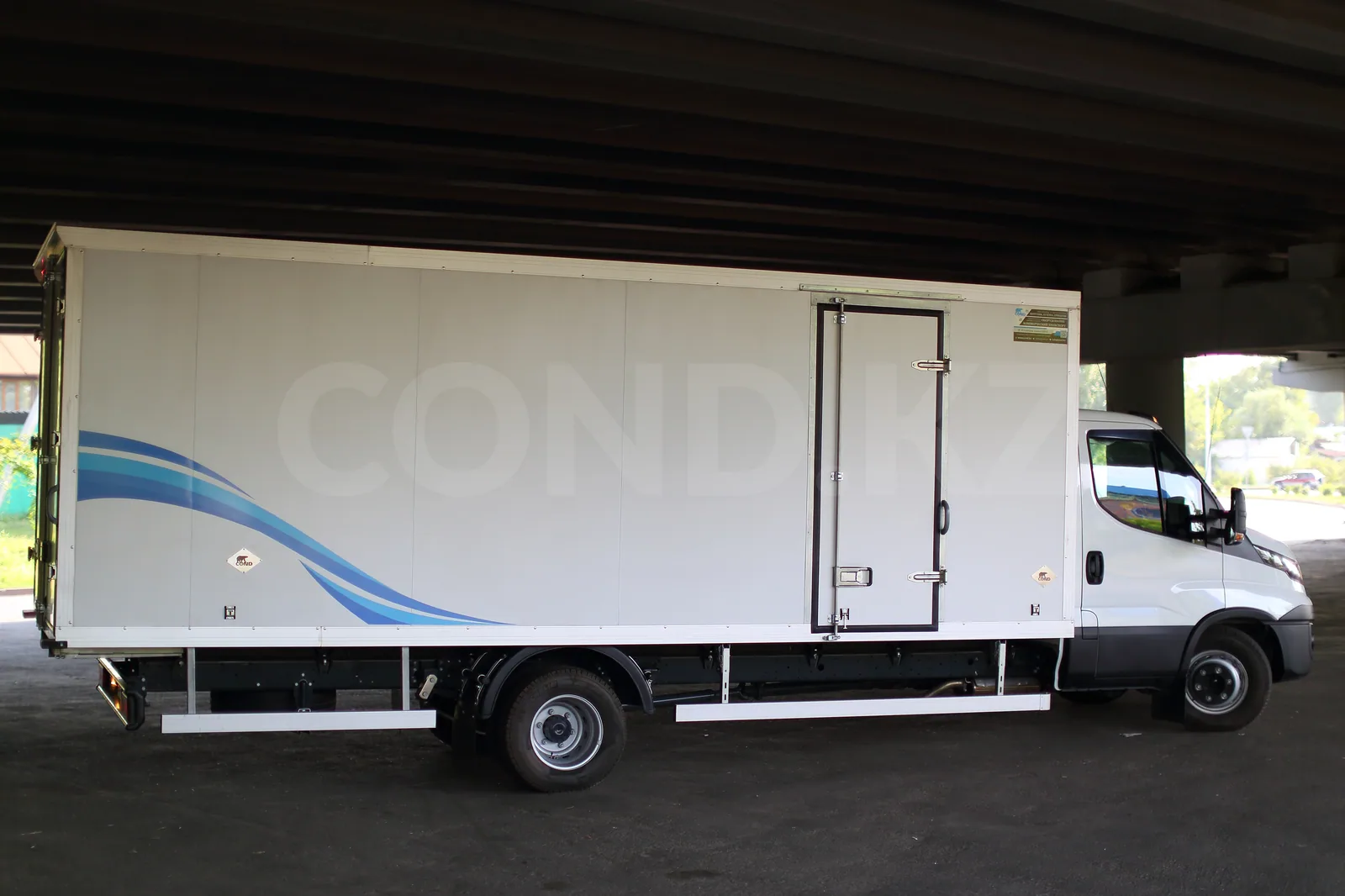
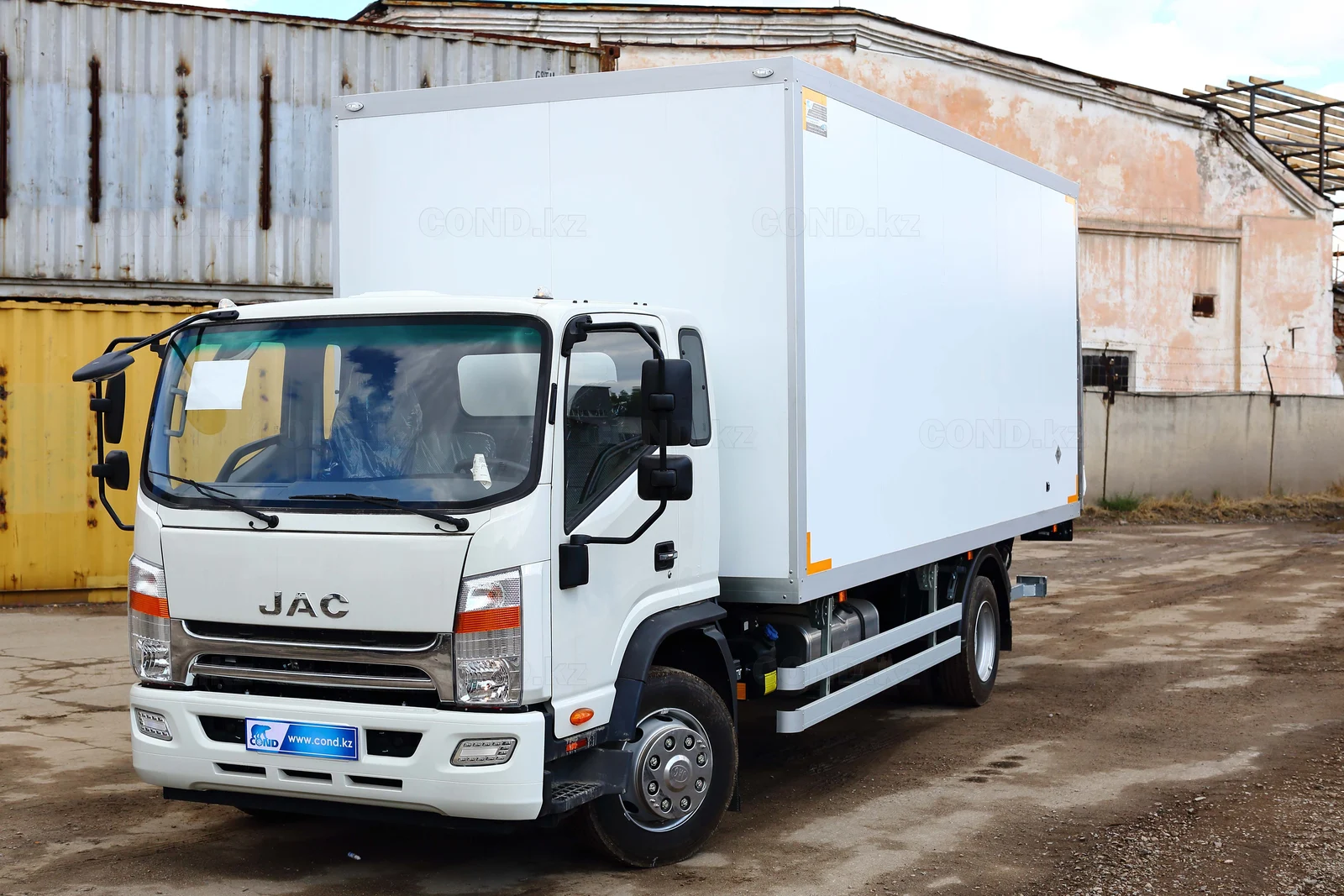
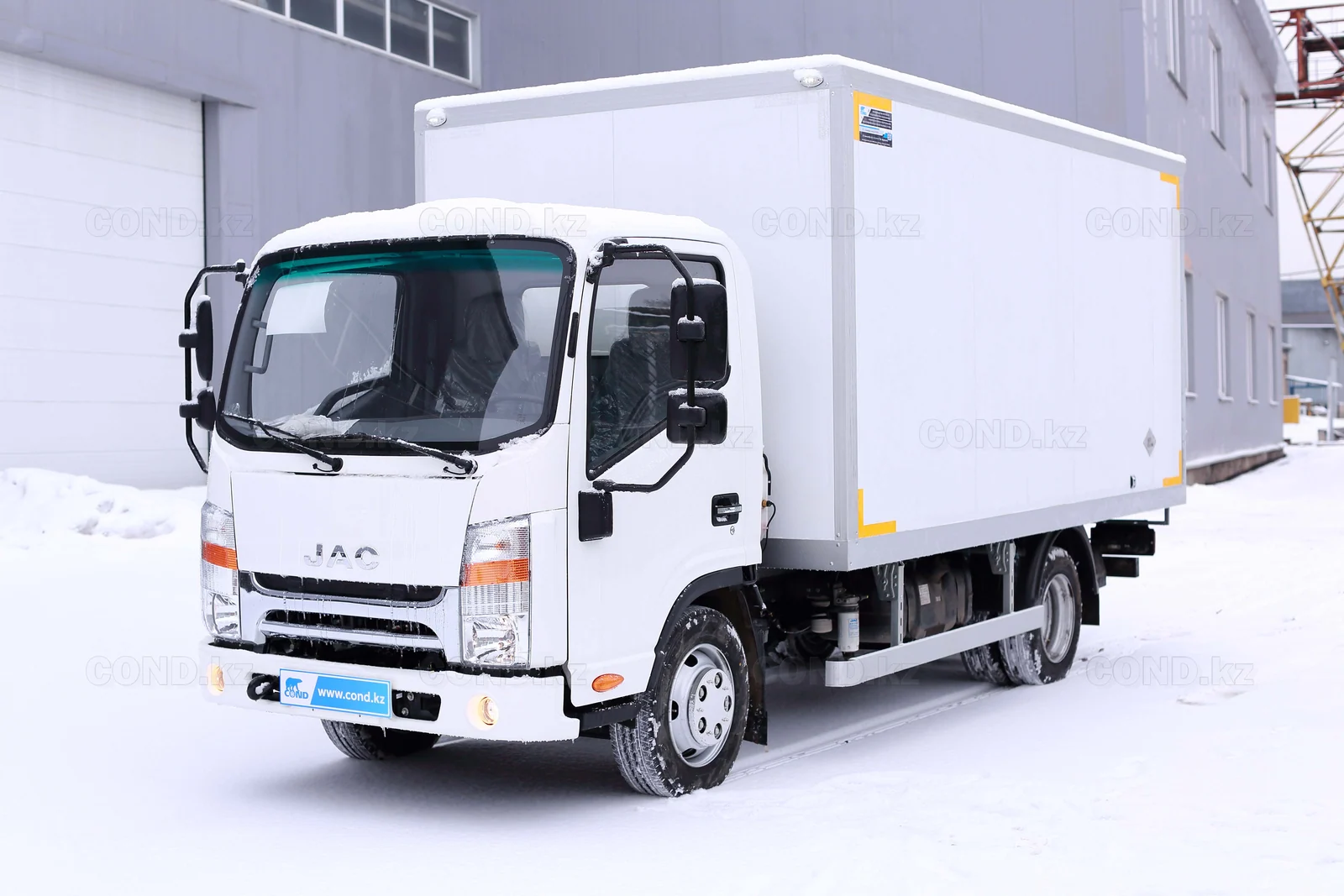
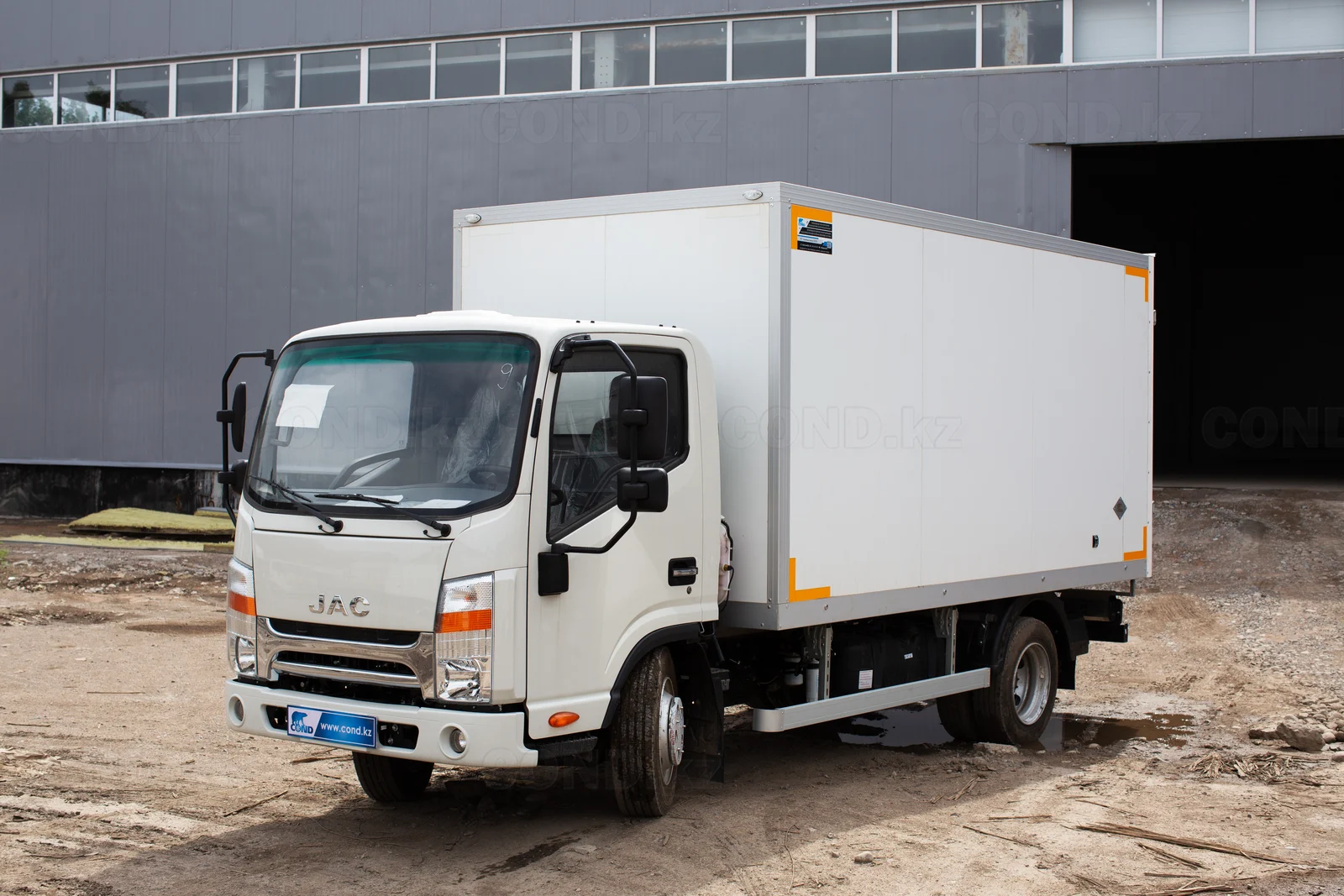
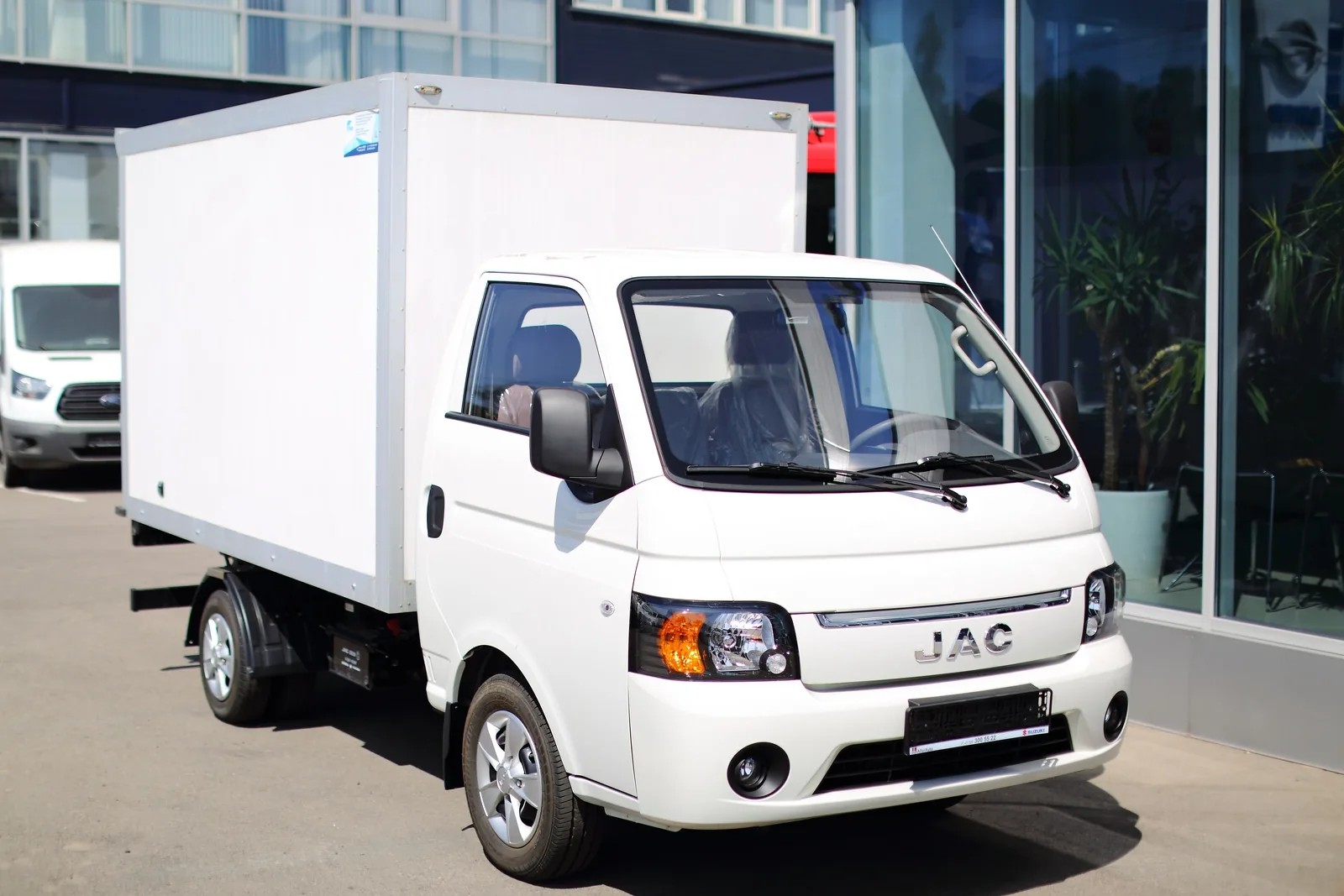
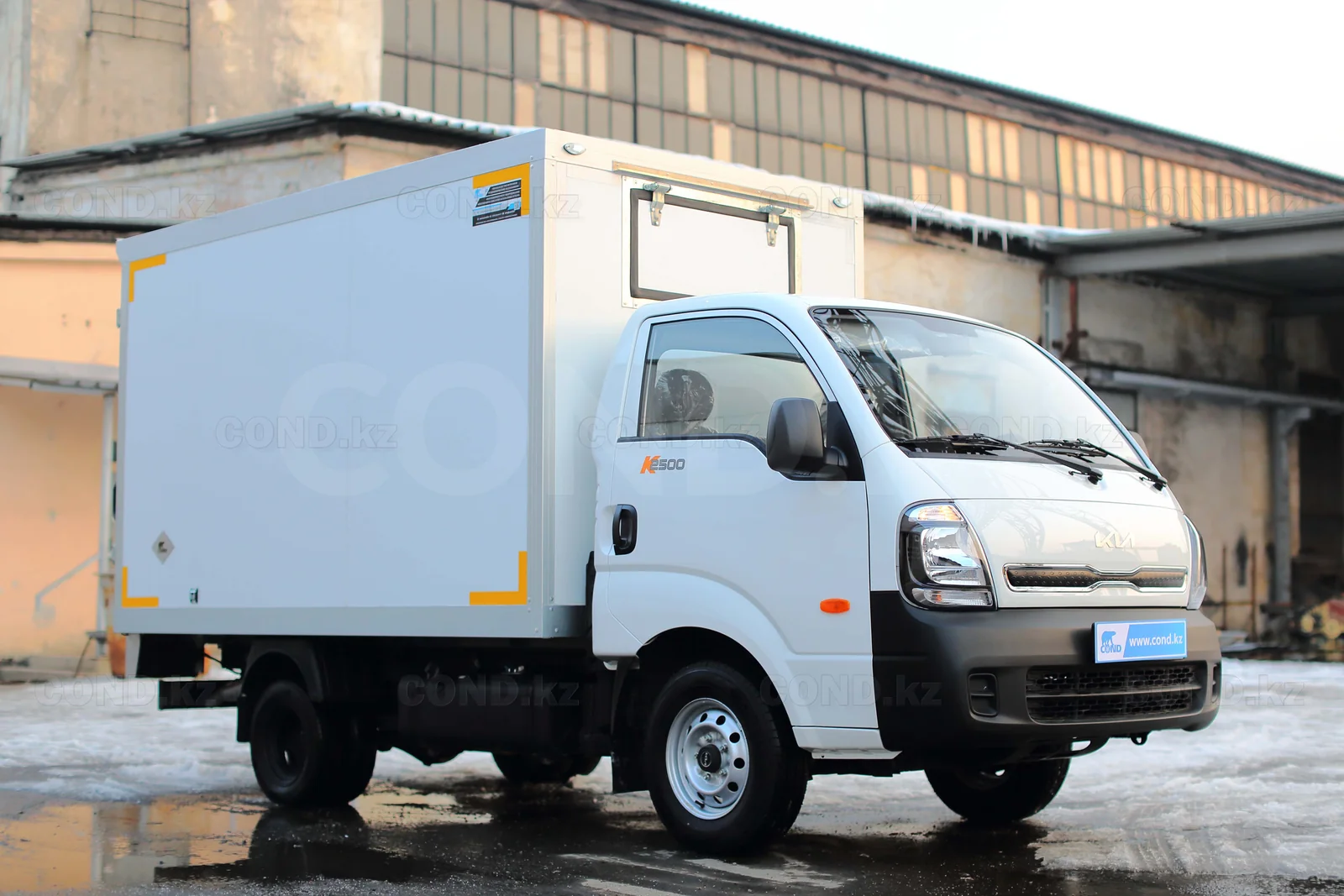
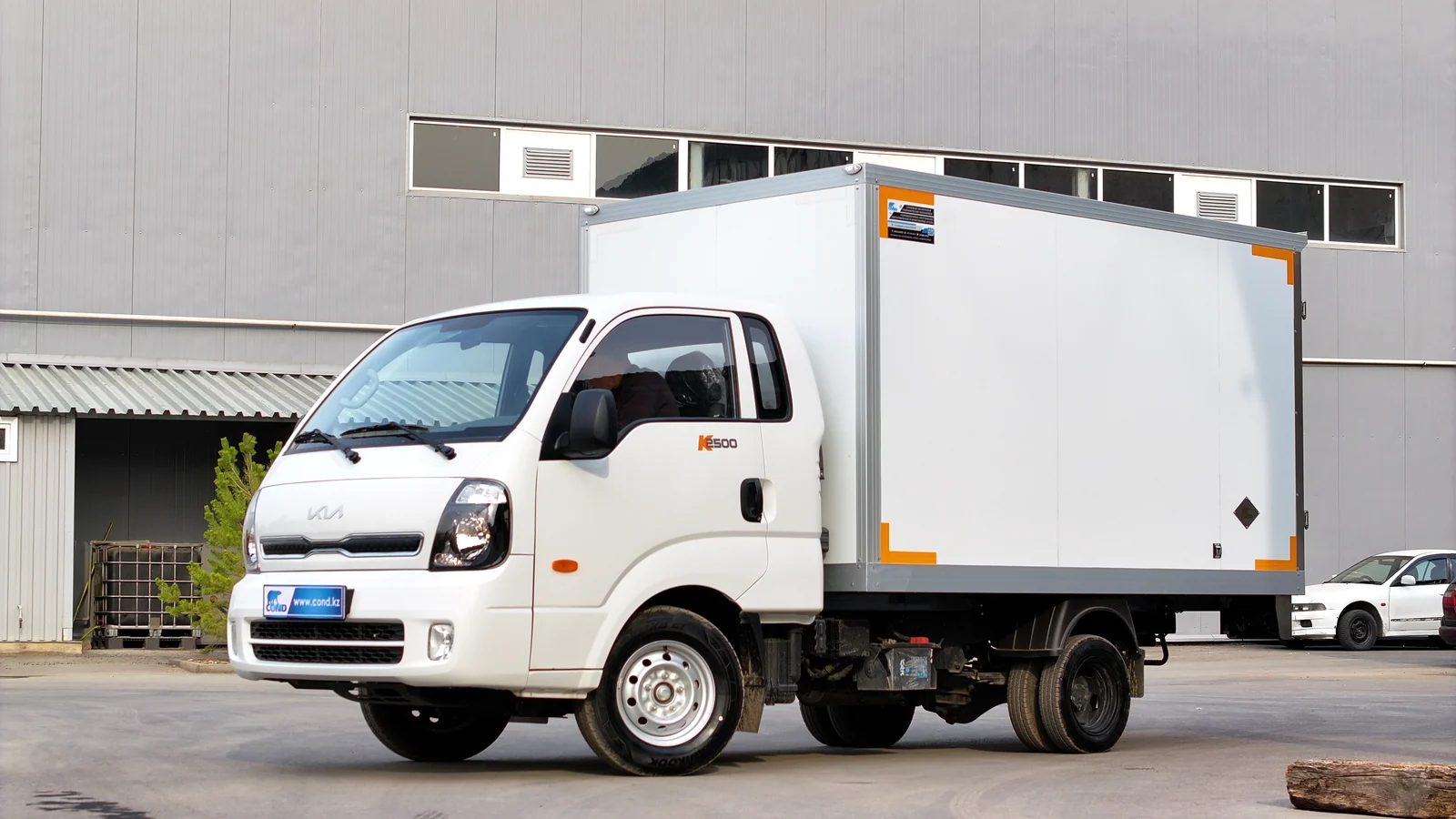
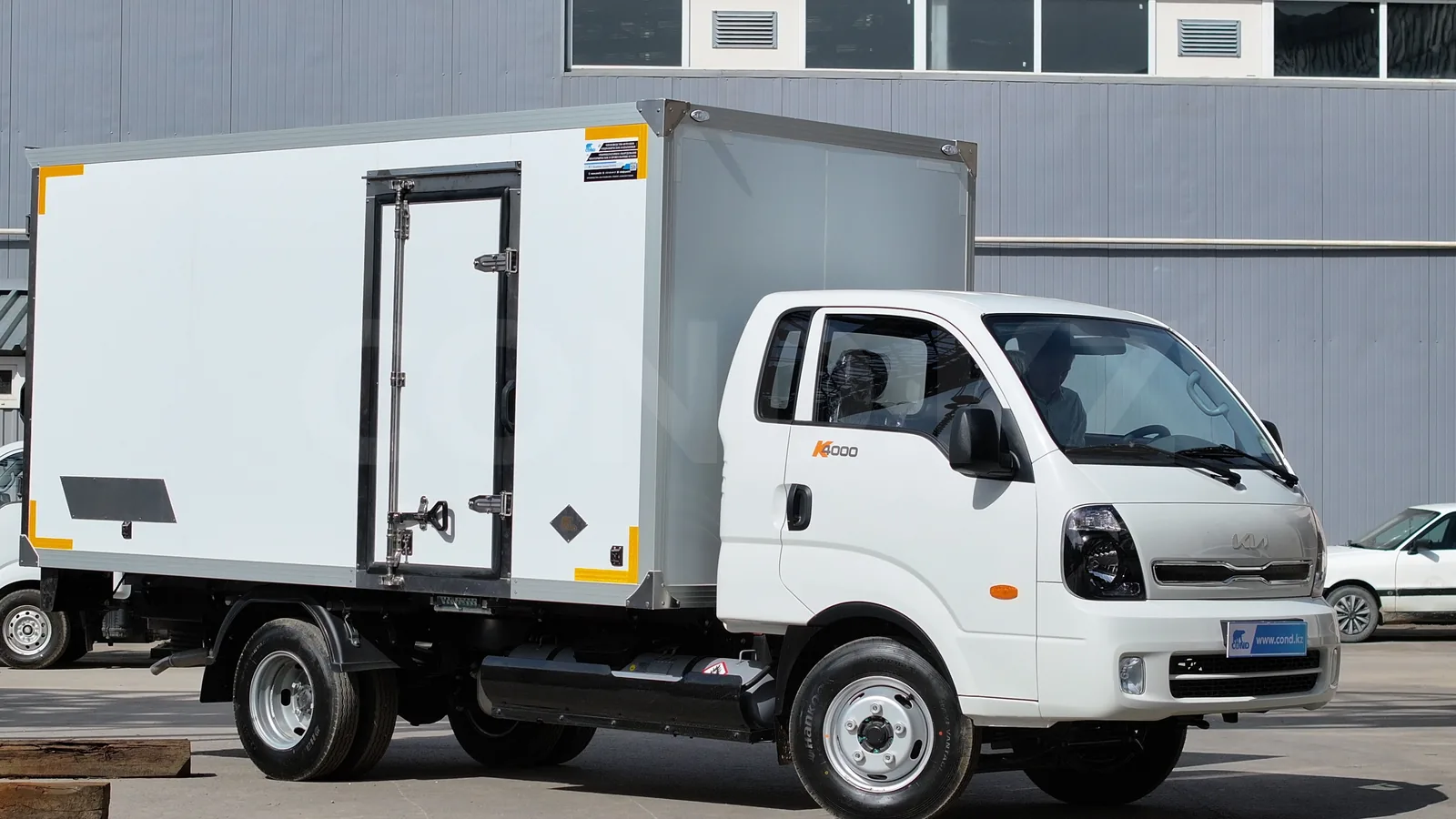
The vehicle is built on a HINO 300, 615 version chassis.
Body type — dry-freight (non-insulated) body, external dimensions 4,200 × 2,200 × 2,200 mm. That leaves 4,150 × 2,150 × 2,150 mm, 25 mm panel inside: the panel thickness is subtracted on every side, floor and ceiling included. Usable volume is ≈ 19.2 m³ (4,150 × 2,150 × 2,150 mm), counted from the internal dimensions rather than by multiplying the external ones.
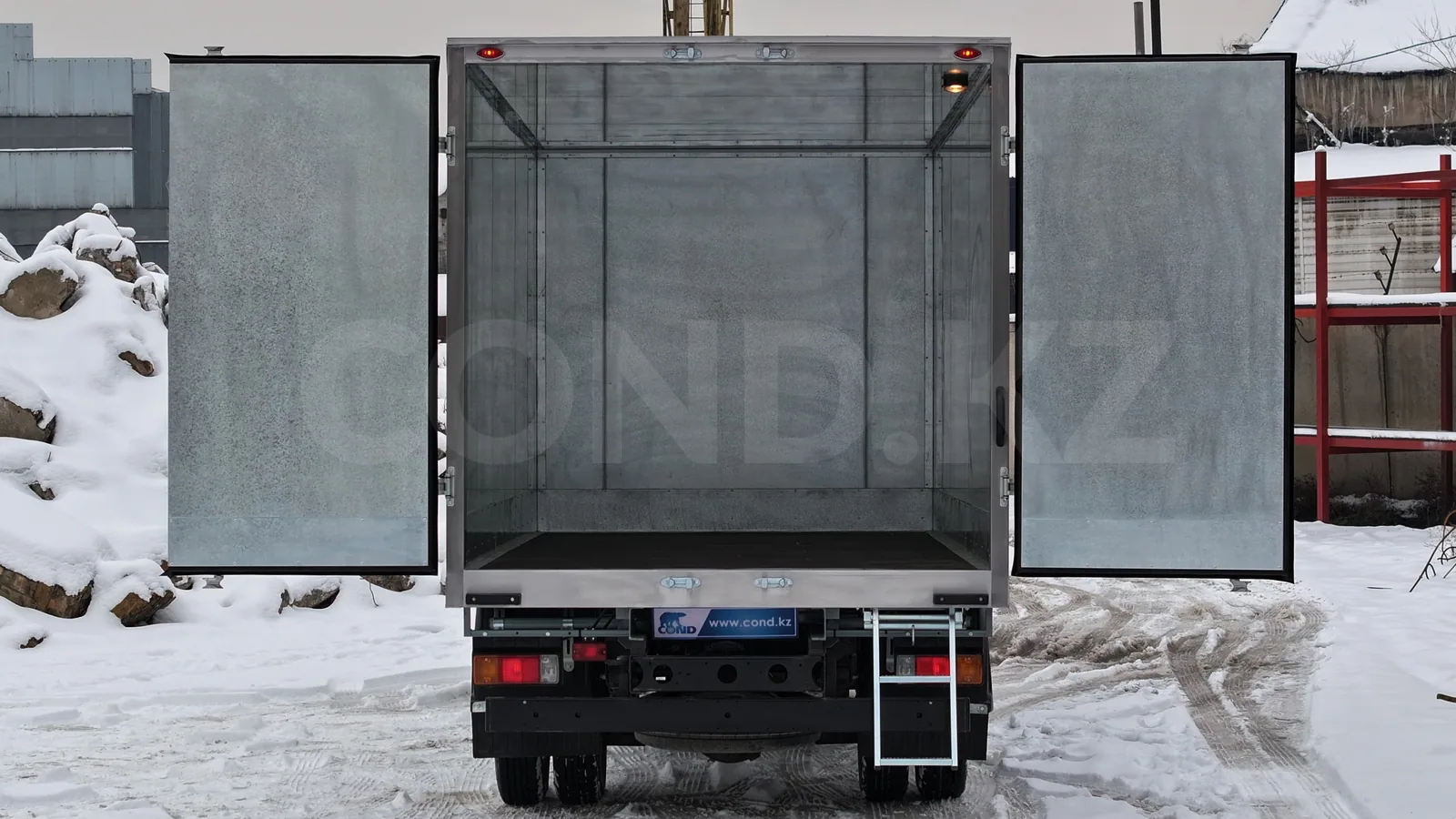
The interior lining is galvanised sheet. The floor is laminated plywood. Doors: full-width rear hinged doors.
Fitted equipment: reflective contour tape, rear bar.
Why it is built this way
Laminated transport plywood is lighter than metal, does not rattle under boxes and resists moisture thanks to its coating. A sensible floor for boxed cargo; daily trolley work calls for aluminium.
Walls and ceiling are lined with galvanised sheet — the factory standard for a van body: it shrugs off moisture, takes a pallet-corner knock and is replaced in sections rather than whole panels.
What is in the photos
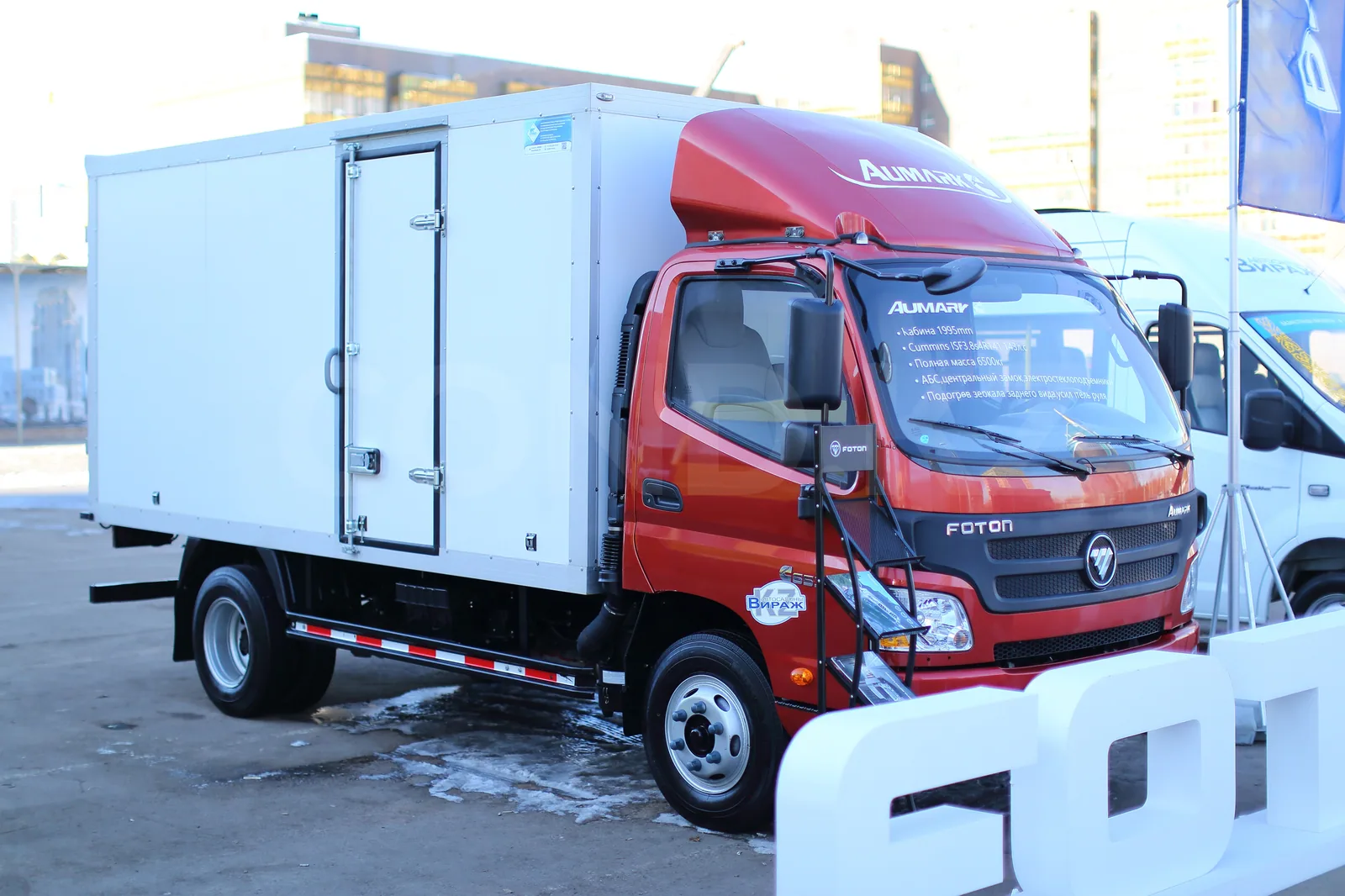
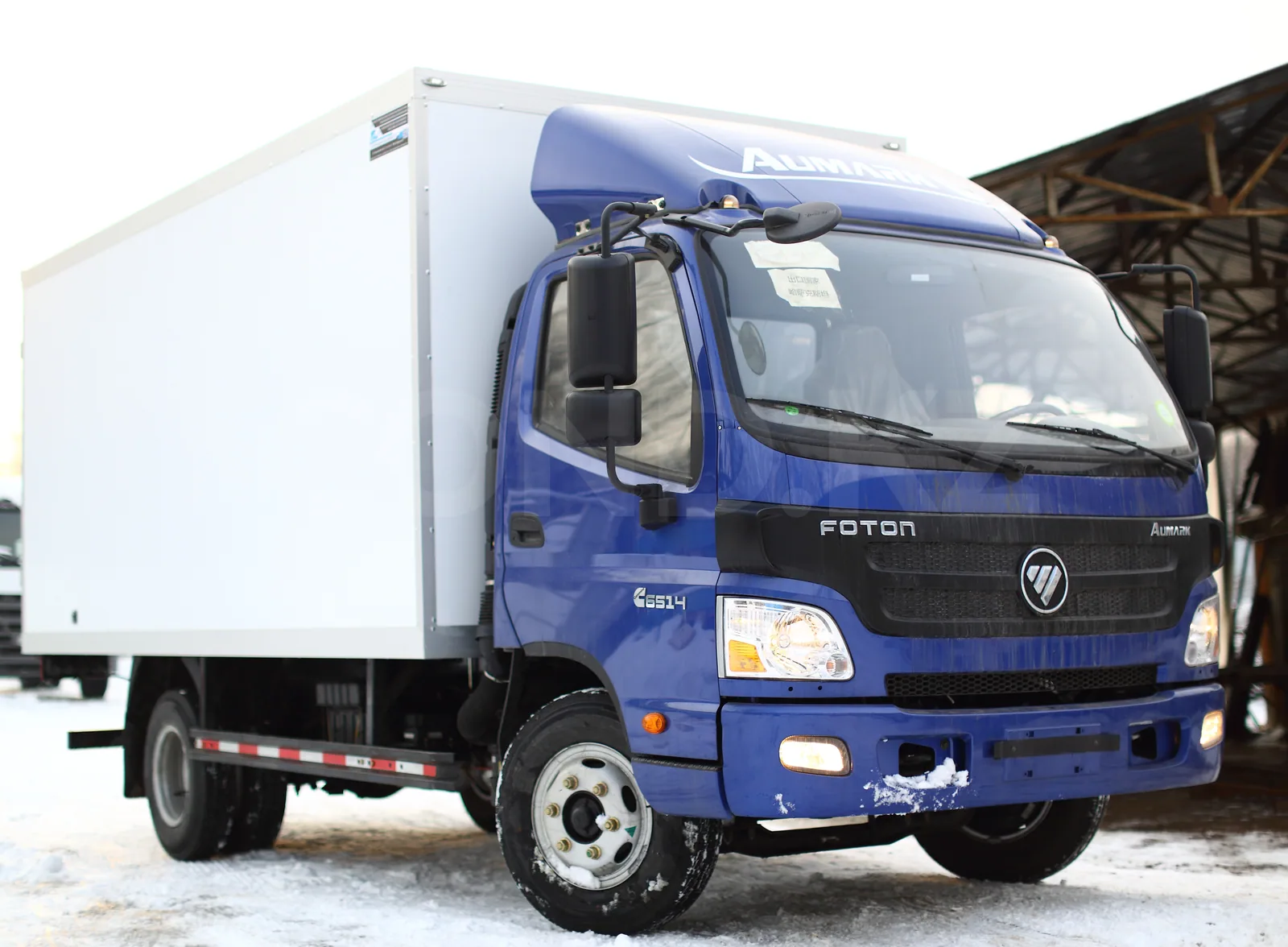
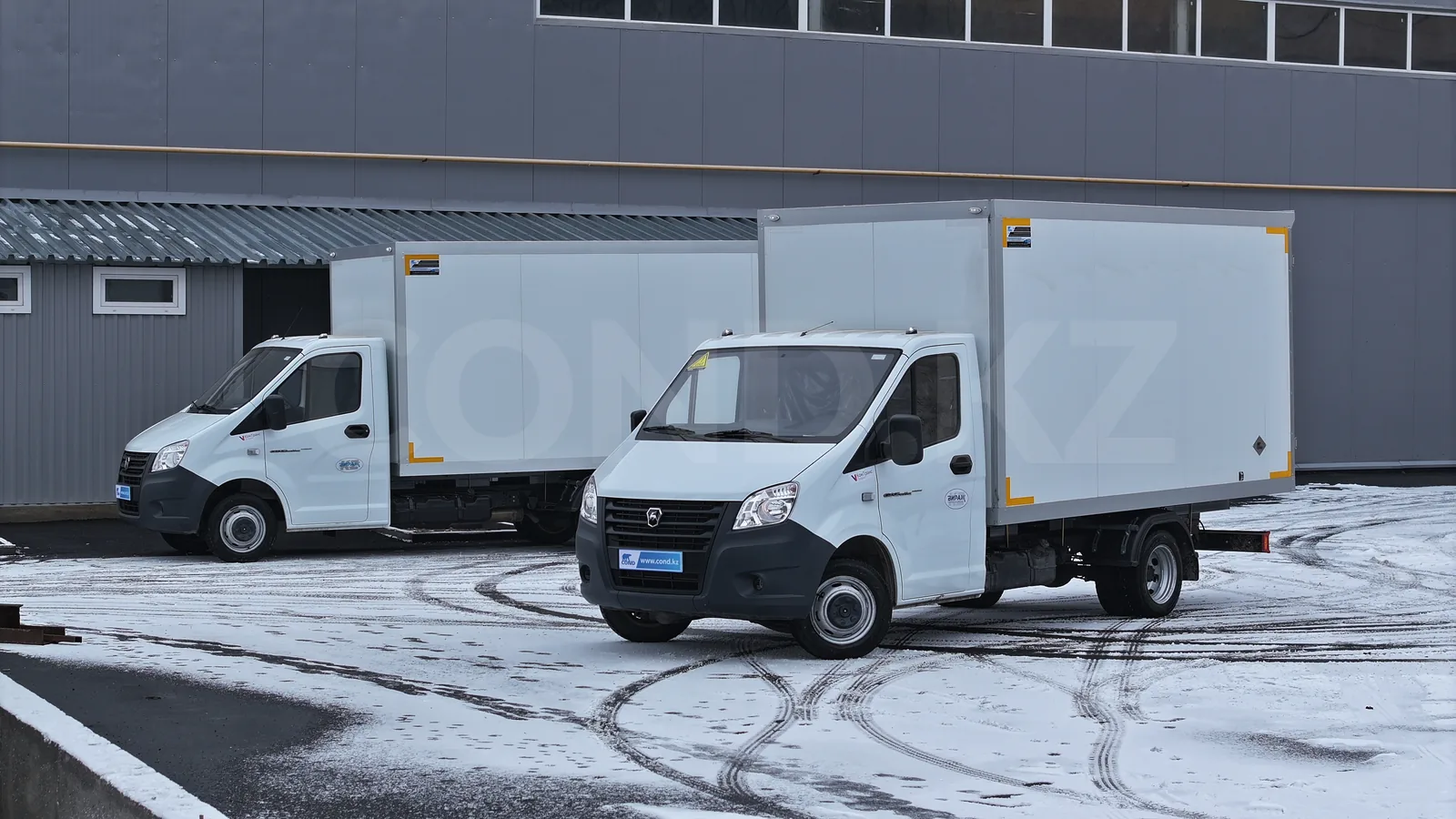
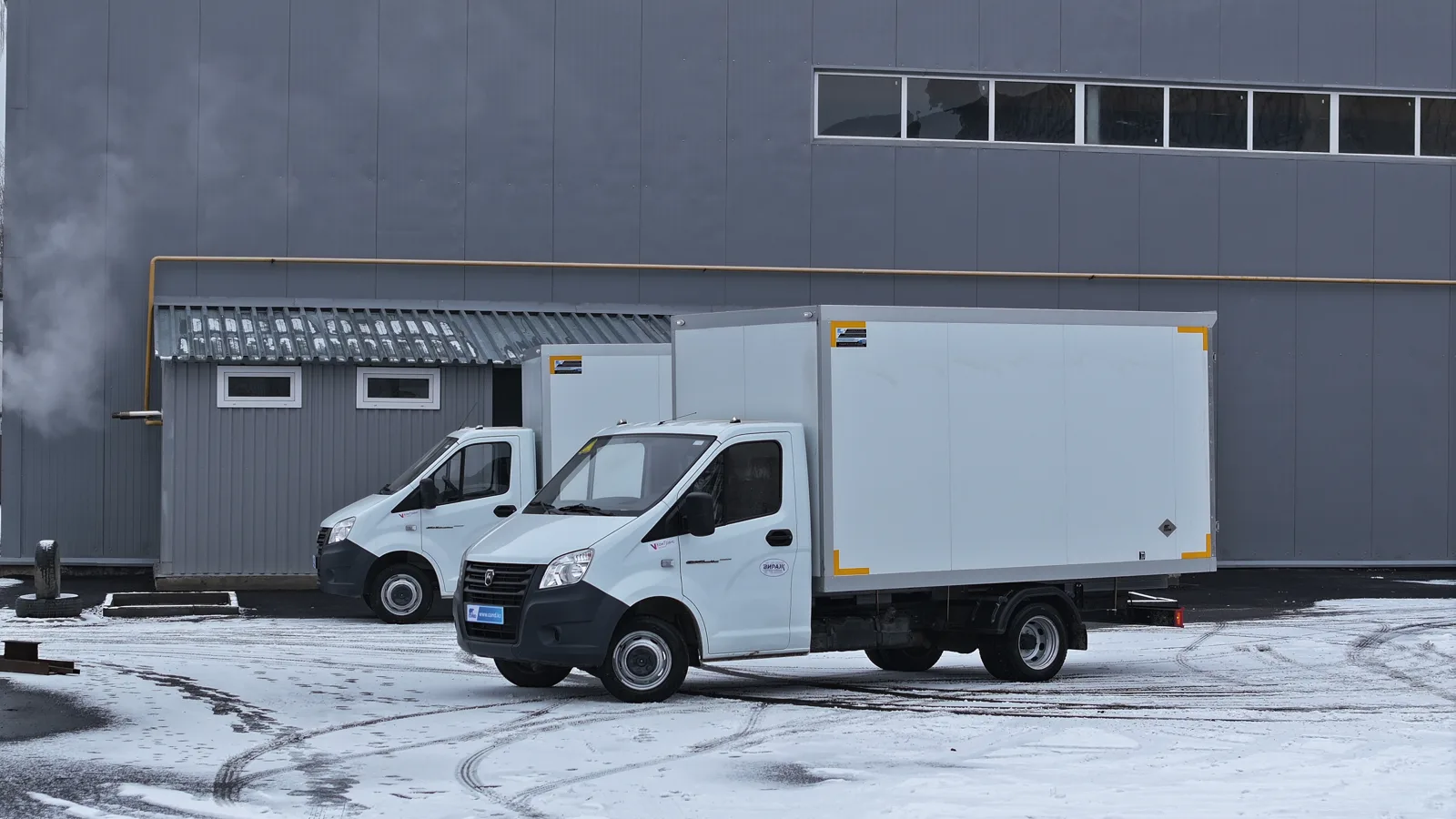
- Both trucks of the batch, front three-quarter view
- The whole truck, right-hand side
- The left side and the HINO 300 cab
- The full length of the body with reflective corner strips
- Rear three-quarter view, hinged doors
- Doors open: the body inside with galvanised lining
Who it suits
A dry van is about volume and protection rather than temperature: furniture, appliances, building materials, boxed goods, removals. The cargo is shut away from rain, dust and prying eyes. Usable volume here is ≈ 19.2 m³ (4,150 × 2,150 × 2,150 mm) — the block above estimates the load in pallets.
We will build the same — to your size and your chassis
This body is not a catalogue item but a project we actually built. We will make the same one to your dimensions: length, width and height are calculated for your cargo and the chassis payload, rather than fitting the cargo to a ready-made size.
We also fit it to your own chassis: bring the vehicle, we take the frame dimensions, build the body, mount it and hand it over with the conversion paperwork.
If you are still choosing a chassis, we have the same body on other bases as well: Foton Aumark (4.2 m), GAZelle Business 3302, Iveco Daily 50C15, JAC N120. They differ in payload, frame length and licence category.