
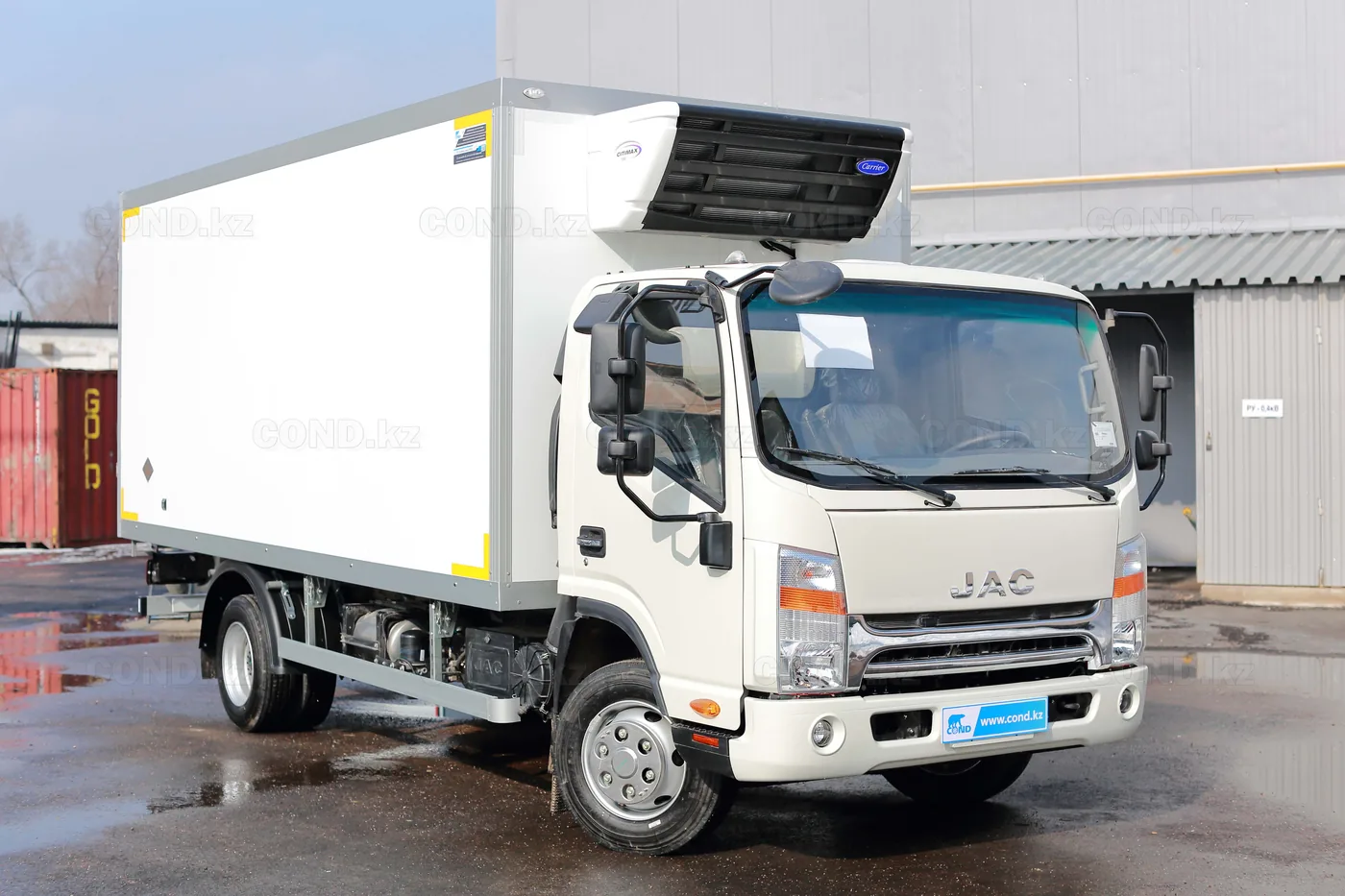
JAC refrigerated van — body from the COND plant in Almaty
Almaty, 1 Kazybayev Street · delivery across Kazakhstan · completed projects
In brief: A JAC refrigerated van is a JAC chassis plus an isothermal body made of sandwich panels and a refrigeration unit. The chassis is bought from a dealer, while the body and the unit are built and fitted by us: COND is a plant in Almaty operating since 2001, with more than 2,000 bodies delivered. The entire JAC range is suitable for a refrigerated conversion — from the N35 (category B licence) to the N200.
A COND refrigerated body on a JAC N90 (price for the body with a Kaida YD-480 unit, no chassis) — from 6,110,000 ₸.
Quote is based on body, chassis and temperature range.
What a JAC refrigerated van is made up of
A refrigerated vehicle is often thought of as a single product, yet it is assembled from three independent parts, and each of them decides whether the cargo arrives at the required temperature:
- JAC chassis — the base: engine, frame, payload, wheelbase. It determines the length and the weight of the body that can be fitted.
- Isothermal body — the “thermos flask”: frameless sandwich panels, sealed joints, door seals. Without a sound body even a powerful unit will not hold the temperature — the cold will escape through the walls.
- Refrigeration unit — the part that actively draws heat out of the body and discharges it outside. It is selected according to volume, temperature mode and climate.
You buy the JAC chassis from an authorised dealer. The body and the unit are built by us: we bond the panels ourselves on vacuum tables, weld the steelwork in house, and our own service team carries out the installation and the charging of the refrigeration circuit. How the refrigeration cycle itself works is explained in the article what a refrigerated van is.
The JAC range for refrigerated conversions
We fit a body to any JAC chassis — from all-metal vans to heavy-duty trucks. Click on a model to see its full specification.
| Model | Gross weight | Payload | Vehicle category | Engine | COND body |
|---|---|---|---|---|---|
| JAC M4 | 2,900 kg | — | B | petrol 2.0 · 136 hp | all-metal, 2.3×1.55×1.2 m |
| JAC M3 | 3,490 / 4,200 kg | — | B | petrol 2.0 / diesel 2.75 | all-metal, ~7.5 m³ |
| JAC N35 | 3,490 kg | 1,900 kg | B | diesel · 136 hp | van body 3.4–4.2 m |
| JAC Sunray | 4,200 kg | — | C | diesel 150 / petrol 190 hp | all-metal, up to 12 m³ |
| JAC N56 | 5,600 kg | 3,445 kg | C | diesel · 150 hp | van body up to 4.4 m |
| JAC N90 | 9,030 kg | 4,300 kg | C | Cummins ISF3.8 · 152 hp | van body up to 6 m |
| JAC N120 | 11,980 kg | 7,690 kg | C | Cummins · 166 hp | van body up to 30 m³ |
| JAC N200 | — | up to 13.5 t | C | Cummins ISD285 · 271 hp | heavy-duty body |
Specifications vary with the production batch and the trim level. All models are shown on the page of the JAC range.
Which refrigeration units we fit to JAC
We select the unit not “from a catalogue” but by heat gain: body volume, temperature mode, panel thickness and the climate of the region.
Carrier
Elinge
Kaida
Temperature modes and panel thickness
| Range | Typical cargo | Panel |
|---|---|---|
| 0…+5 °C | dairy produce, chilled meat, vegetables, fruit, flowers, confectionery | 50–80 mm |
| −5…+5 °C | mixed runs, convenience foods | 80 mm |
| −18…−20 °C | meat, fish, frozen convenience foods, ice cream | 80–100 mm |
| + heating in winter | bread, beverages, medicines, cosmetics | 80–100 mm |
The heart of the unit is the compressor. We keep in stock TM13, TM16 and Sanden SD7H15; how the unit is built is examined in our review of compressor design.
The body: why it matters no less than the unit
A refrigeration unit will hold the temperature only in a sound isothermal body. Fitting a refrigeration unit to an uninsulated box is pointless — the cold will escape through the walls.
COND bodies — frameless sandwich panels of our own manufacture. Each panel is bonded on vacuum tables: the adhesive is distributed without voids, so the panel behaves as a monolith. The absence of a metal frame inside the wall means there are no “cold bridges” — the places through which heat enters the body fastest.
The body of a JAC refrigerated van additionally features: stainless steel in the rear aperture (the most heavily loaded part of the loading area — it does not rust from knocks and washing), three-chamber door seals, a reinforced floor for pallet loading, galvanised and stainless-steel hardware. We manufacture and stock all of this ourselves — so a repair or a replacement does not turn into a hunt for parts on the open market.
How to choose a JAC refrigerated van for your task
Selection begins not with the chassis model but with the cargo. We ask four questions:
- What you carry and at what temperature. Dairy products and vegetables — 0…+5 °C, frozen goods and ice cream — −18…−20 °C, bread and medicines in winter — a mode with heating. This determines both the unit and the panel thickness.
- How much cargo per trip. We count in pallets and cubic metres rather than “by eye”: the volume can be calculated in the van configurator.
- Which route. Urban distribution with dozens of door openings and a long-distance run place different demands on the capacity of the unit and on the speed of temperature recovery.
- Where it will be operated. Southern Kazakhstan in summer means a steady +35…+40 °C, and we size the unit for it with a margin.
The Kazakhstan heat is the real test
At +42 °C outside and −20 °C inside, the difference across the wall of the body is 62 degrees. Every extra tenth of thermal conductivity and every gap turns into hours of compressor running time, litres of fuel and the risk of the cargo thawing in a traffic jam. That is why for Kyzylorda, Shymkent and Taraz we always recommend a thicker panel and a unit with a margin on heat gain.
An important limit: every manufacturer of refrigeration units states a maximum ambient temperature up to which operation of the unit is guaranteed (usually of the order of +40…+50 °C in the model's data sheet). Beyond that limit the condenser stops rejecting heat and the pressure in the circuit rises — and the unit fails, which is not a warranty case.
The brand is often written in Cyrillic, so a «JAC» refrigerated truck is exactly the same thing as a JAC refrigerated truck. The chassis comes from local assembly at the SaryarkaAvtoProm plant in Kostanay; we build and fit the refrigerated body in Almaty.
What we do and on what terms
🏭 Our own plant
📐 In-house design department
⏱ From 14 days
🛡 The chassis warranty remains valid
📋 Documentation
🔧 After-sales service
COND refrigerated bodies on JAC
Bodies built on this make: each has its own page with full specifications and photographs.
| Chassis | Category | Refrigeration unit |
|---|---|---|
| Refrigerated van on a JAC N35 chassis | B | Элинж |
| Refrigerated van on a JAC N56 chassis | C | Carrier серии Citimax |
| Reefer body on a JAC N75 chassis | C | Элинж С4 |
| Reefer body on a JAC N80 chassis | C | Carrier Citimax 500 |
| Refrigerated van on a JAC N90 chassis | C | Carrier Citimax 500 |
| Refrigerated van on JAC N120 chassis | — | Элинж С5Т |
| Premium refrigerated body on a JAC N120 chassis with a Carrier Supra 1050 unit | C | Carrier Supra 1050 |
| Refrigerated van on a JAC N200 chassis | C | Carrier Citimax 1000 / Supra |
| JAC M4 refrigerated panel van | B | Carrier Citimax 280 |
JAC refrigerated vans built by COND — photographs
Real vehicles from our own production, not catalogue pictures.
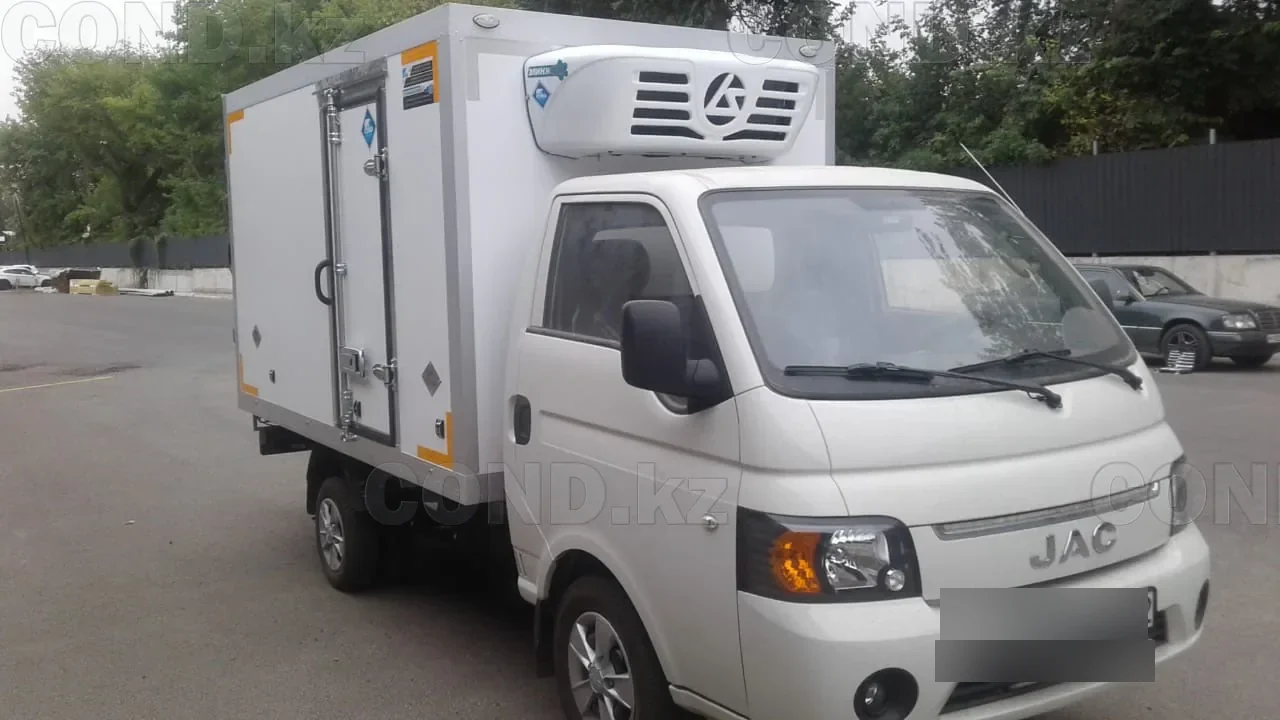
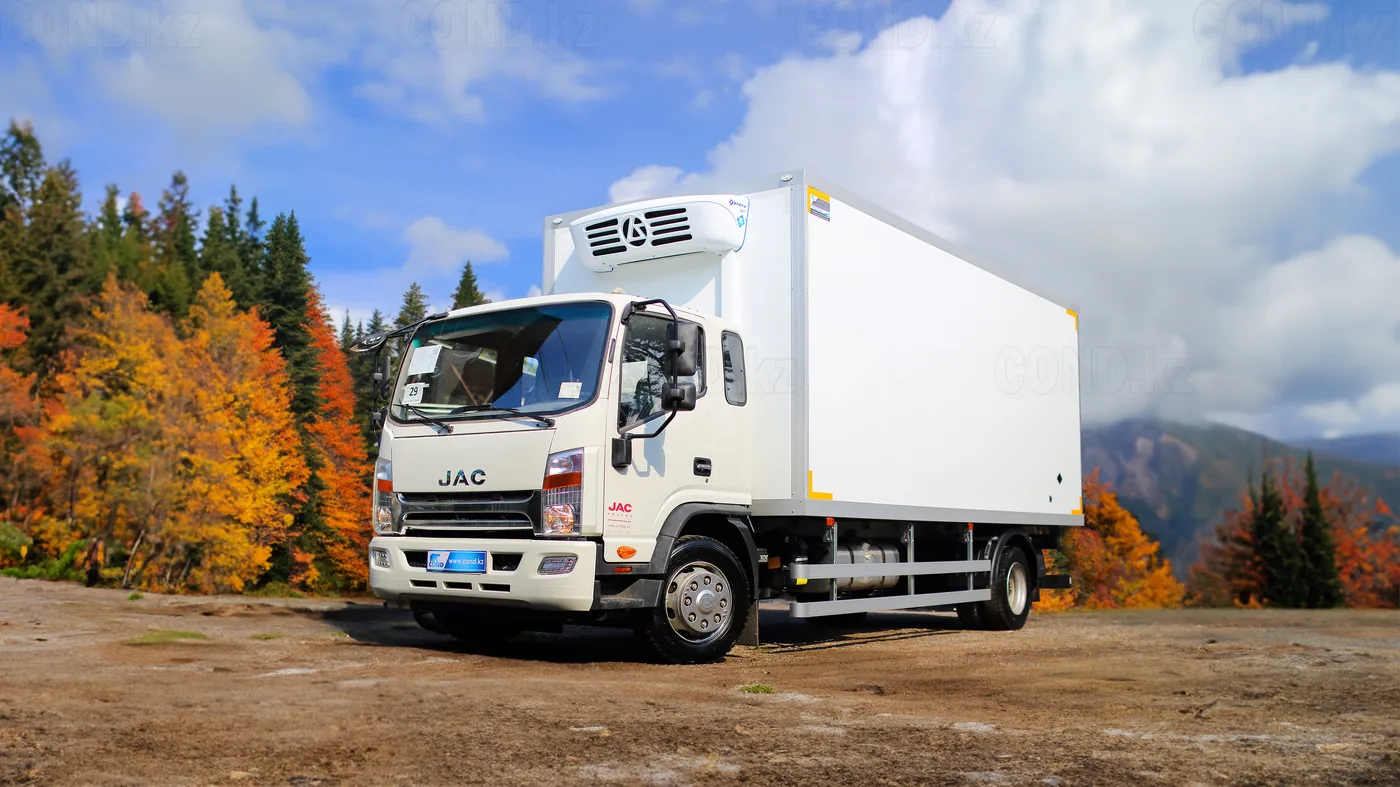
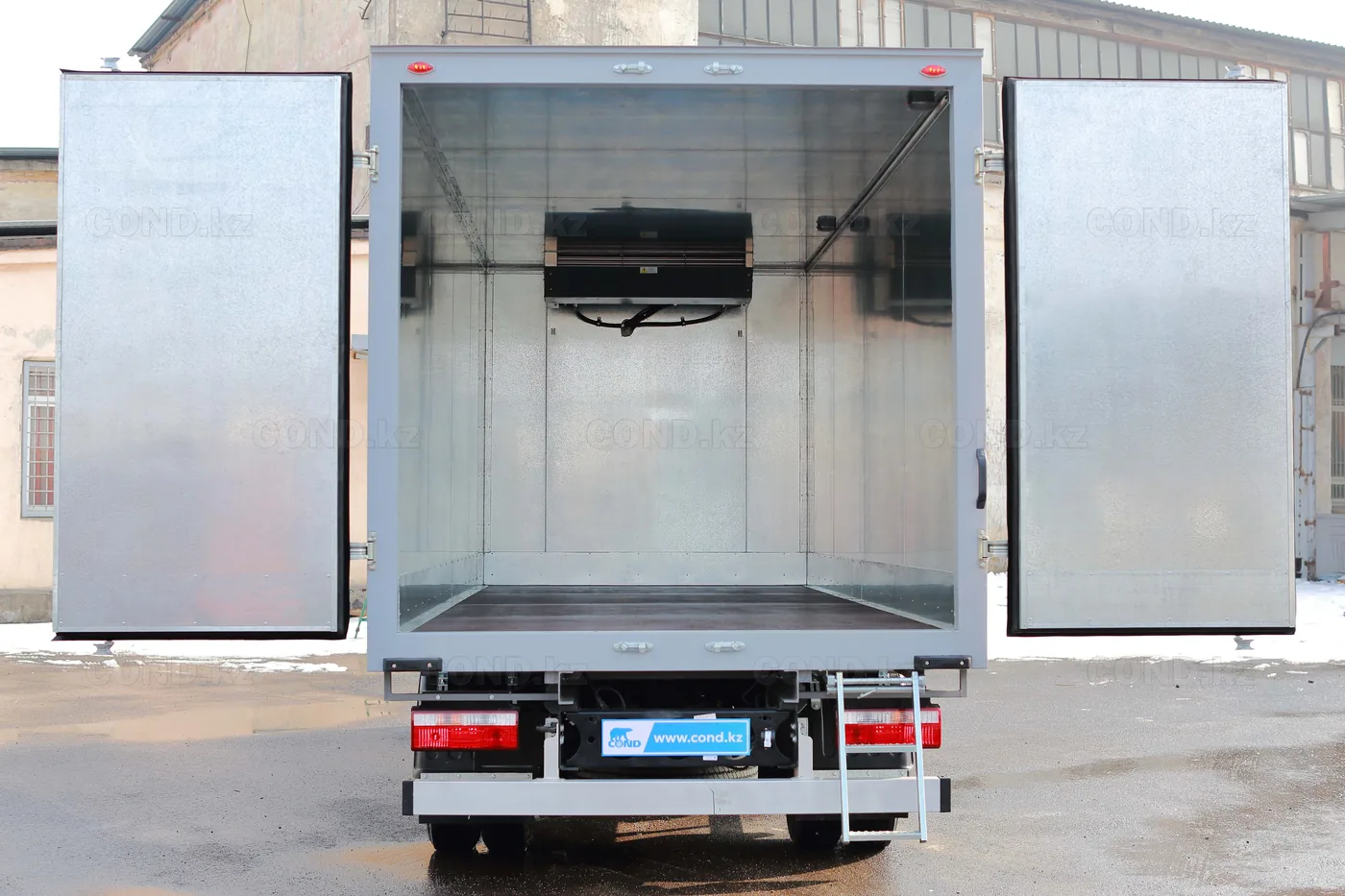
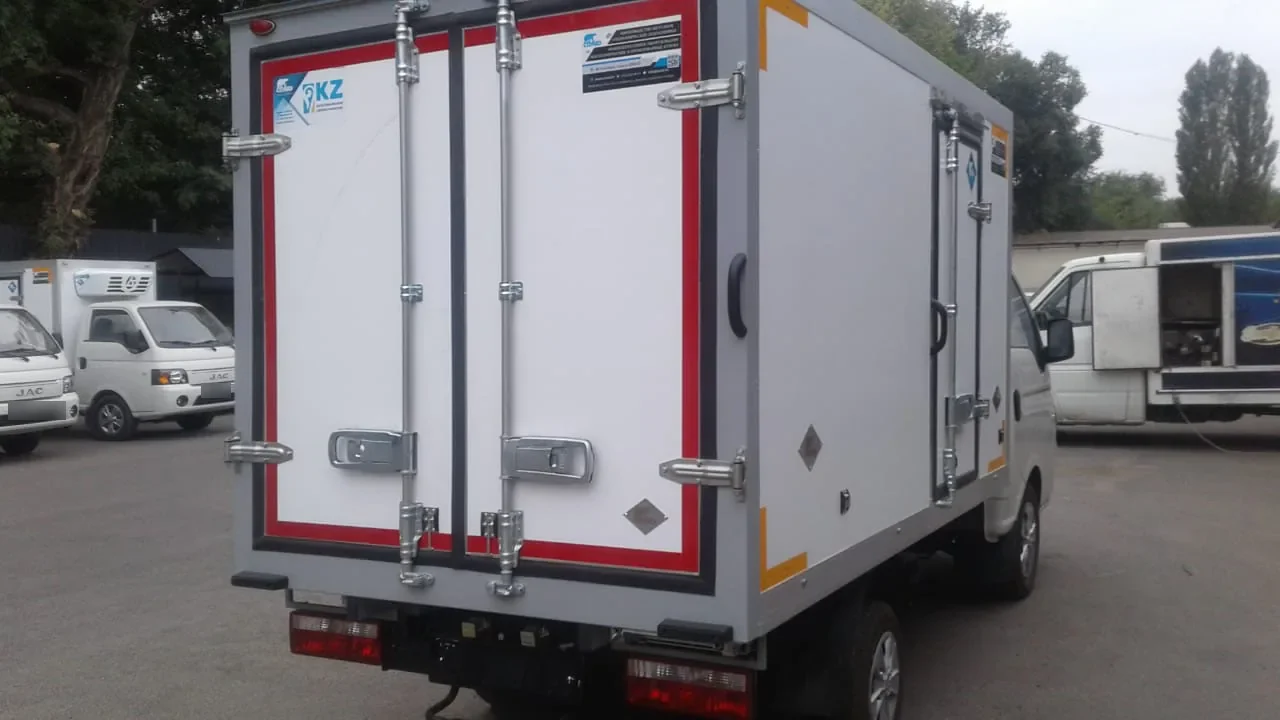
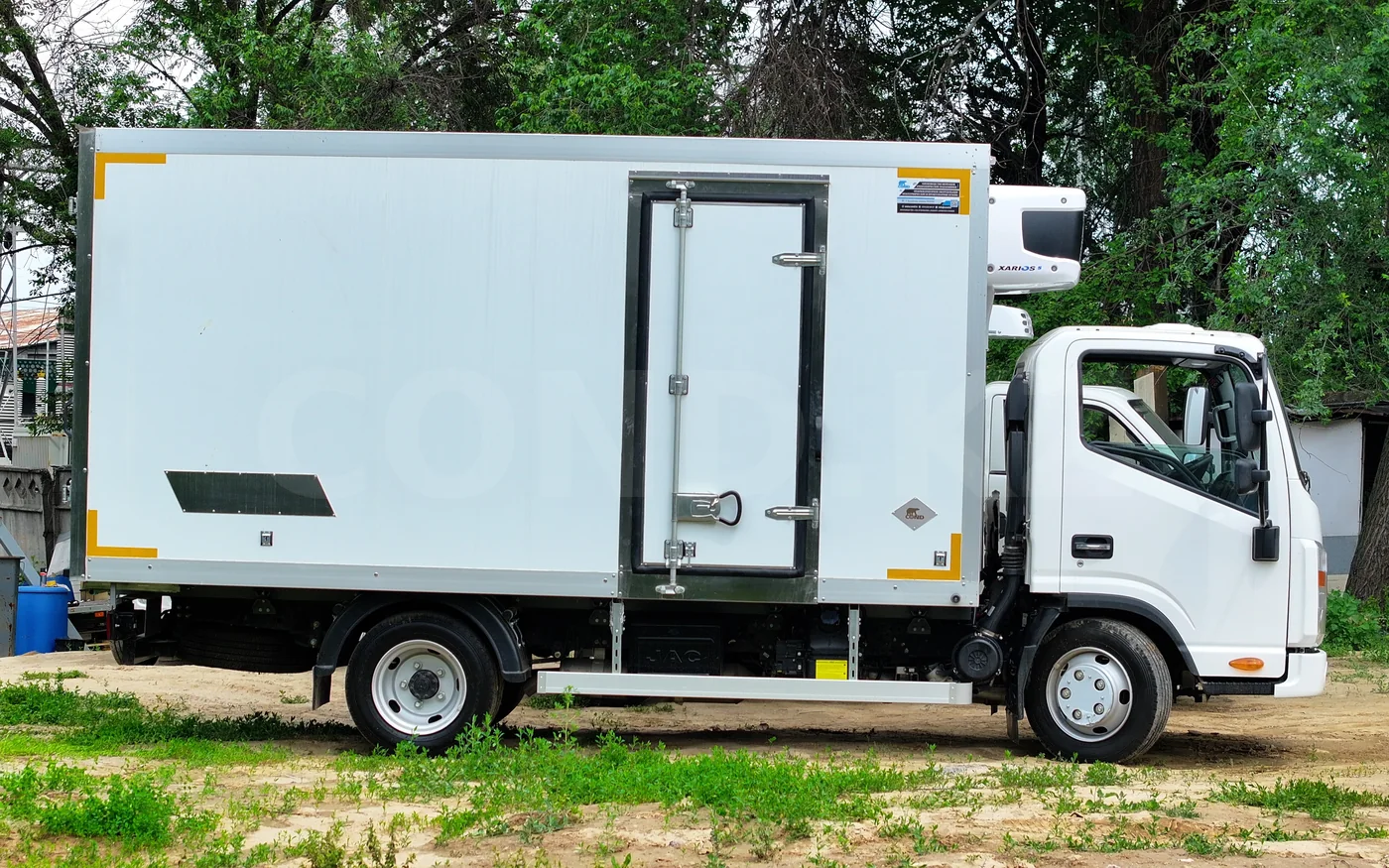
Click a photo to open it at full size.
Who we have built JAC refrigerated vans for
- Dairy logistics. Deliveries to shops and cafés: 0…+5 °C mode, dozens of door openings per shift — the speed of temperature recovery matters, so we specify a unit with a margin.
- Ice cream and deep-frozen goods. A mode of −20 °C and below, 100 mm panel. For multi-drop distribution we build eutectic bodies: the plates are charged overnight and hold the cold all day without the compressor running.
- Confectionery and cakes. A gentle mode without “over-blowing”, sectional doors — while one drop is being unloaded, the remaining sections stay closed.
- Pharmaceuticals. A steady +2…+8 °C and temperature monitoring: the airtightness of the body and a capacity margin on the unit are critical.
- Bread and baked goods. In winter it is heat that is needed rather than cold: we fit a heating and refrigeration unit, and the body is a bakery van with trays.
Frequently asked questions about the JAC refrigerated van
How does a refrigerated van on a JAC differ from an isothermal van?
An isothermal van is only an insulated body: it slows down the warming but does not cool. A refrigerated van is the same body plus a refrigeration unit that actively holds the set temperature for as long as required. If the cargo travels for more than 2–3 hours, or it is hot outside, a refrigerated van is precisely what is needed.
Which JAC model should be chosen for a refrigerated van?
It depends on the volume of cargo and the temperature mode. Up to 1.9 t and a 4.2 m body, the JAC N35 with a category B licence is enough. For 3–4 t the N56 or N90 is chosen, for 7.7 t and a body of up to 30 m³ — the N120, and for trunk-haul volumes — the N200. We calculate the specification free of charge for your cargo and route.
Which refrigeration unit do you fit to a JAC?
Carrier, Elinge or Kaida — we select by body volume, temperature mode and climate. For chilling at 0…+5 °C an entry-level unit is sufficient; for freezing at −18…−20 °C in the Kazakhstan heat you need a unit with a capacity margin and an 80–100 mm panel.
What temperature does my cargo need?
Dairy products, chilled meat, vegetables and flowers — 0…+5 °C. Frozen foods, fish and ice cream — −18…−20 °C. Bread, beverages and medicines in winter require heat rather than cold: for these we fit a heating and refrigeration unit.
How long does it take to build a refrigerated body on a JAC?
The standard lead time is from 14 days from the moment the configuration is agreed. The exact time depends on the size of the body, the model of the unit and the current production workload.
Does the warranty on the JAC chassis remain valid?
Yes. We fit the body without interfering with the chassis assemblies that affect the factory warranty: the body is mounted on a subframe and the fixings are calculated for the load and the weight distribution.
Do the changes have to be recorded in the vehicle registration document?
Yes — fitting a new body or refrigeration equipment is a change of construction, and it is registered officially. We help with the manufacturer's documents that are normally required for this procedure.
Can a refrigerated body be fitted to a JAC chassis that has already been bought?
Yes, this is the most common arrangement: you bring us your own chassis, and we build the body and fit the unit. We work with a JAC bought from any dealer.
How much does a JAC refrigerated van cost?
The price is made up of three parts: the chassis, the body and the refrigeration unit. The spread is wide — a light N35 with a basic unit and an N120 rated for −20 °C differ several times over. We calculate for the specific task, and the quotation is free of charge.
See also: refrigerated van · isothermal van · all JAC models · which body is more cost-effective on the JAC N90
Calculate a JAC refrigerated van
Leave your contacts — we will discuss your job and select the right option.
📞Phone+7 777 233-69-28💬WhatsApp
Message us