Ice cream is stored and transported at −18…−24 °C. The main challenge is route distribution: the doors open at every stop, and an ordinary refrigerator does not manage to restore the temperature between stops. Partly melted and re-frozen ice cream is defective.
A sectioned body with eutectic plates maintains deep-freeze temperatures all day without the compressor running: the plates “charge” overnight from a 380 V mains supply and release cold during the day. Separate sections with their own doors prevent heat shock to the whole volume when a single tray is unloaded.
We make both the bodies and the eutectic plates ourselves, so the system is calculated as a whole: volume, number of sections and number of plates for your shift. Watch a video review of a deep-freeze van down to −35 °C on our channel.
A refrigeration unit holds temperature only while the doors are shut. On a kiosk-and-shop round the doors open fifteen to twenty times a shift and the air in the body is replaced completely in a minute. The unit needs time to pull back to −24 °C, but the next stop is ten minutes away — so the temperature never fully recovers before the round ends.
Eutectic plates work the other way round: the cold is stored in the plate itself during an overnight charge from the mains and is released into the body continuously, whether the door is open or not. That is why on ice cream plates beat a unit exactly where the unit is weakest.
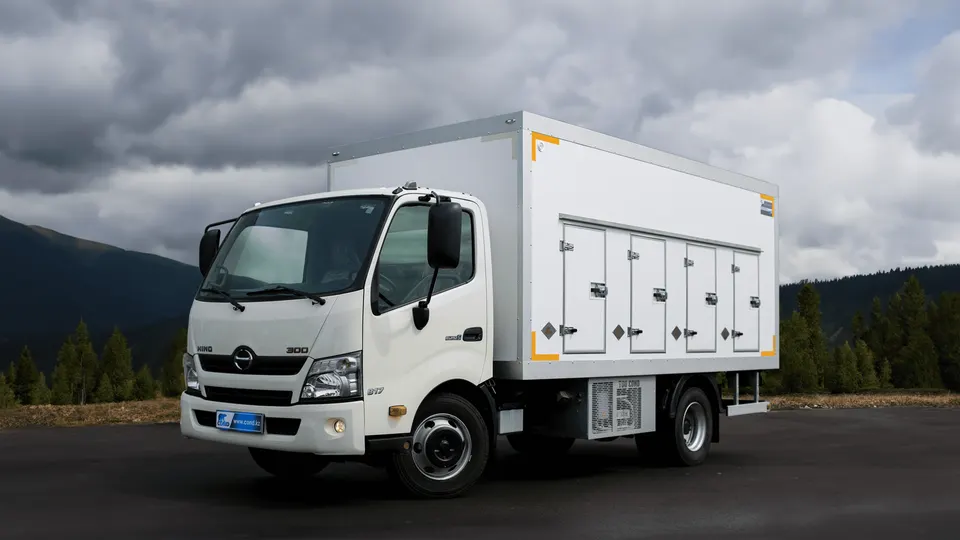
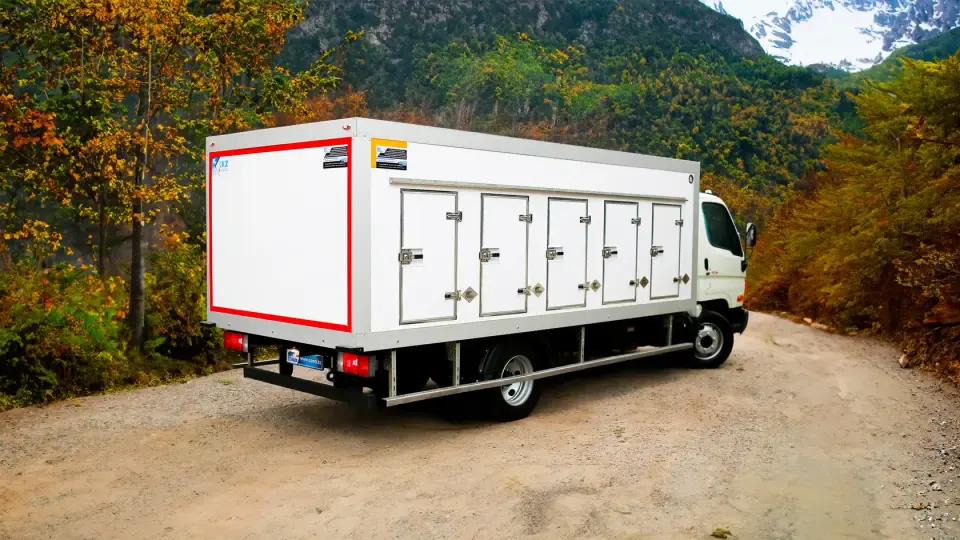
An ice-cream body is divided into sections with their own doors — 3+3, 4+4 or 6+6 hatches along the sides. Open one section and only that section loses its cold; the rest of the load is untouched.
Sections also lay out the round: goods are loaded in the order of the stops, so the driver does not have to dig through the body at every delivery.
Each cargo has its own temperature range and its own body fit-out.
Ice cream in Almaty is delivered to dozens of stops, and an ordinary refrigerated van does not manage to recover the range between them on such a route. So we build a eutectic body: the plates are charged overnight from the mains and release cold all day. We build it in Almaty, and the vehicle can be collected from the plant yard.
A body for this cargo:A refrigerated van in Almaty
Come to the production site:Van plant in Almaty
Leave your contacts — we'll discuss your task and select a suitable vehicle.
📞Phone