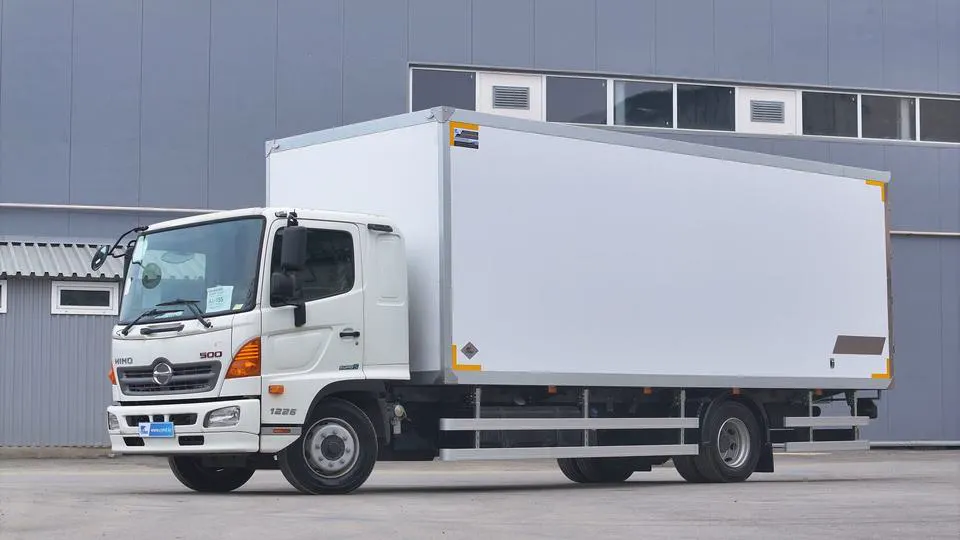
Milk, fermented dairy products and cheeses are transported at 0…+6 °C without breaks in the cold chain — this is required by Kazakhstan's sanitary standards and retail chains' acceptance. Exceeding the mode even by a couple of hours shortens the batch's shelf life, and the chain has the right to turn the vehicle away at the ramp.
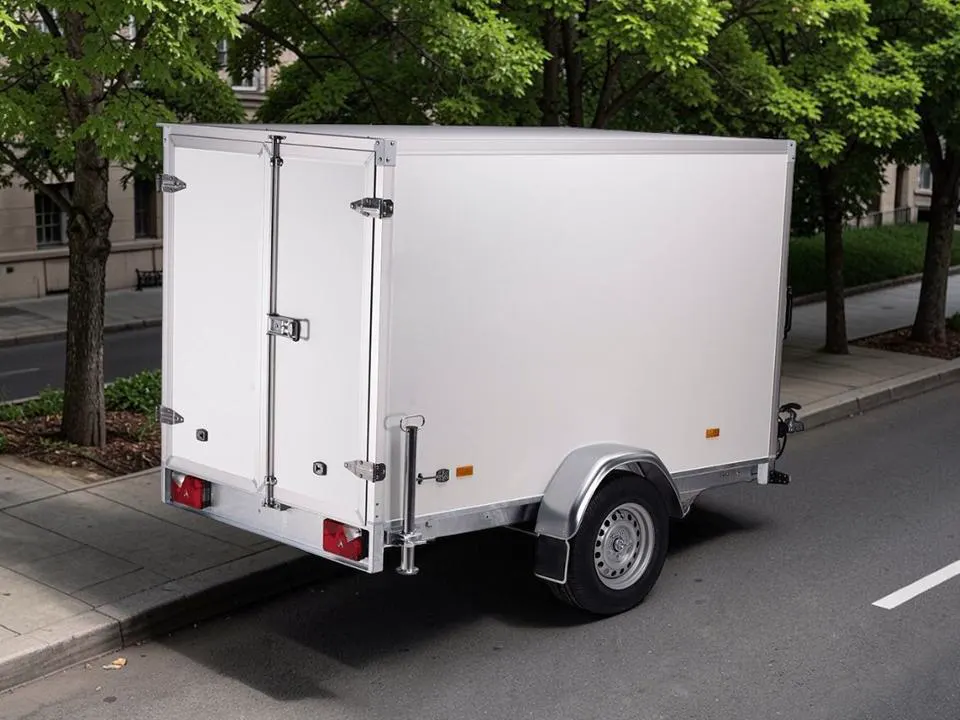
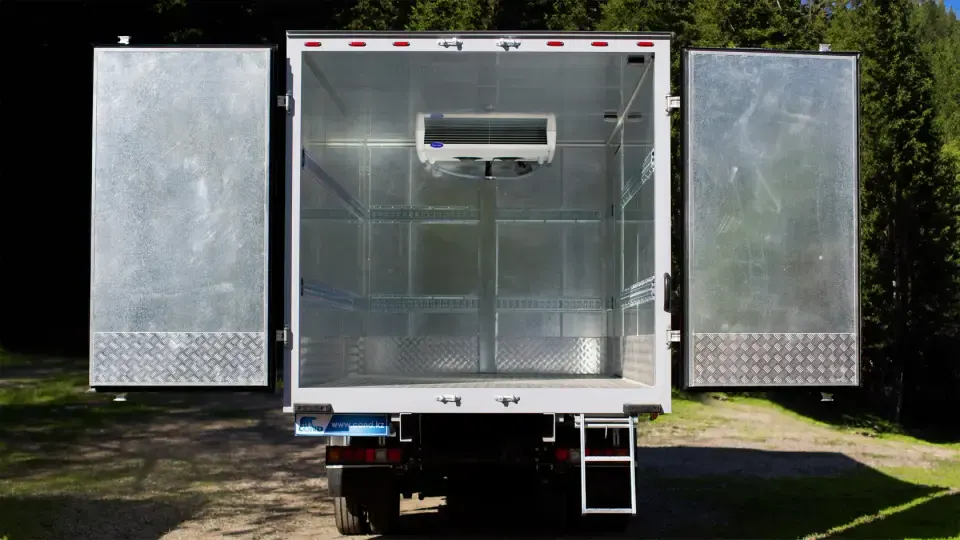
For city distribution within a shift an isothermal van is enough: the goods are loaded chilled, the insulated body warms up slowly, and the cargo stays in range for 6–8 hours. For intercity and long runs a reefer with a unit is required — it actively holds 0…+6 °C along the whole route. The interior finish is hygienic and washable, with sealed panel joints.
Bodies from our own sandwich panels, three-chamber door seals, a rear portal of stainless steel — the components on which both temperature and sanitation depend. Experience supplying dairy distributors across Kazakhstan since 2001.
Not on the road but during loading and unloading. A pallet that has stood twenty minutes in the sun at the dock enters the body already warm, and the unit then spends half a day evening out the consignment. The second weak point is the doors opening at every stop.
So with dairy it is not peak unit power that matters but how fast the body reaches its set point and how well the doors seal: a multi-lip gasket, closely fitted leaves, locks in good order.
A washable floor sloping to a drain — dairy leaks, and the body is washed more often than most. Smooth wall lining with no pockets where soiling collects. Lashing tracks so the pallet cannot wander and crush cartons on a bend.
The usual setting is 0…+6 °C, which covers milk, cultured products and cheese alike. If ice cream travels on the same trip, the body is built dual-temperature with a bulkhead.
Each cargo has its own temperature range and its own body fit-out.
Dairy delivery around Almaty means dozens of door openings per shift, and each one lets hot air in. We build that into the selection: a unit with a margin of cooling capacity and seals all round the opening. The vehicle is assembled at our own production site in Almaty and handed over from the yard, with no transfer run.
A body for this cargo:A refrigerated van in Almaty
Come to the production site:Van plant in Almaty
Leave your contacts — we'll discuss your task and select a suitable vehicle.
📞PhoneRefrigerated vans — catalogue · Volume and pallet calculator